


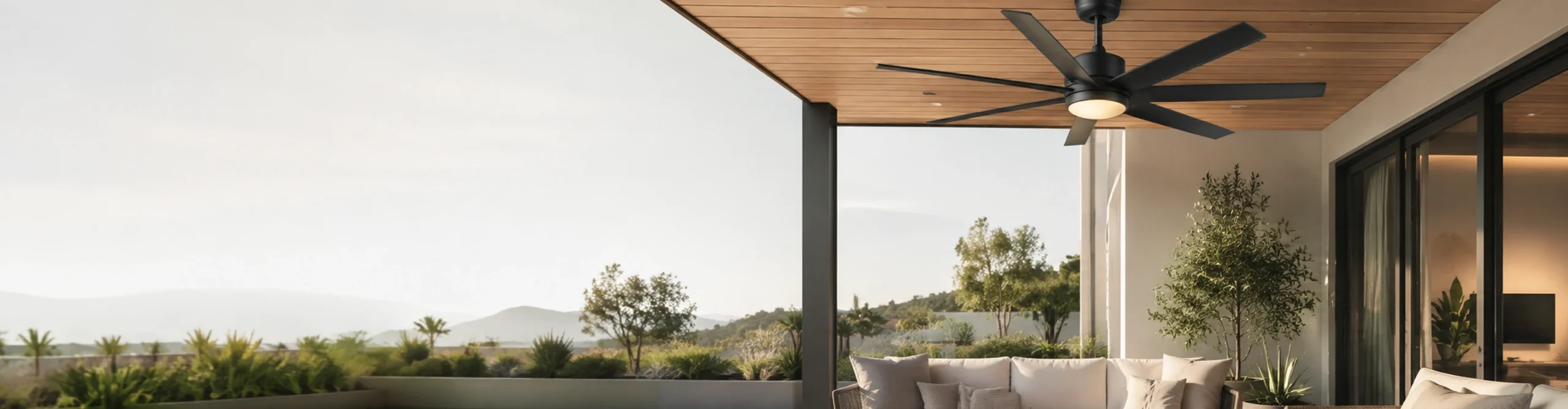
Patio Spaces Need Integrated Airflow and Lighting
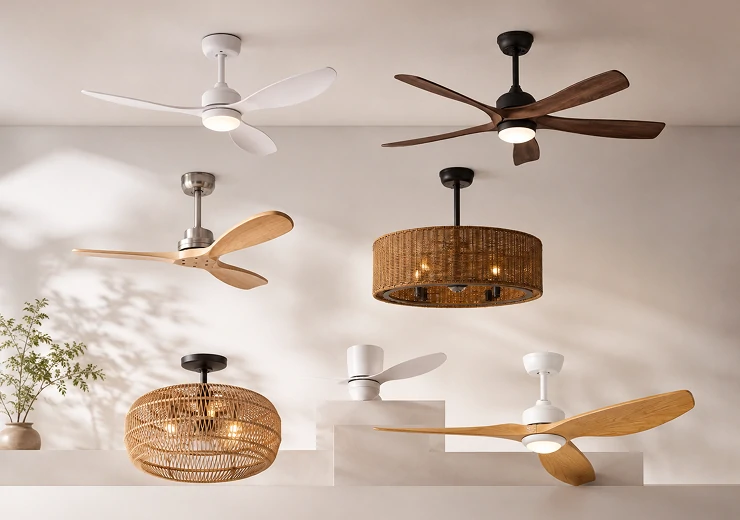
For brands and project buyers, patio ceiling fans are more than an outdoor fixture category. They combine airflow, overhead lighting, and visual design in one coordinated product solution, making them suitable for covered patios, outdoor dining areas, residential terraces, and backyard living spaces.
For importers and wholesalers, product selection also needs to consider installation requirements, control preferences, styling, packaging, and the expectations of different target markets. An OEM manufacturer can help align these elements with a brand’s product strategy instead of forcing buyers to work around a fixed retail model.
Flexible Product Structures for Outdoor Patio Applications
Different patio projects call for different product structures. Flush-mount and low-profile designs can suit spaces with limited overhead clearance, while other installations may allow more flexibility in blade design, lighting configuration, and control options.
For OEM and ODM buyers, these choices can become part of a broader product development program. Depending on the final design brief, manufacturers may coordinate features such as LED lighting, remote control, reversible airflow, blade styling, mounting structure, and finish selection. Final specifications should be confirmed during product development rather than assumed from a general product category.
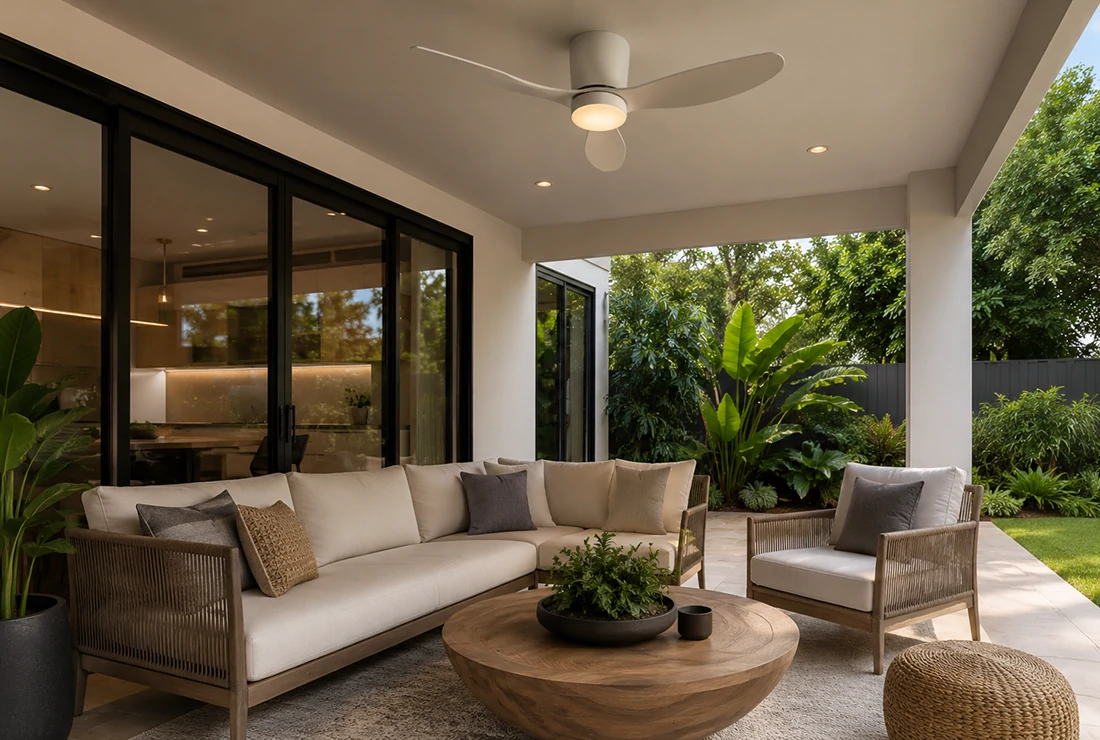
A space-conscious ceiling fan light concept for covered patios with a clean, contemporary visual direction.
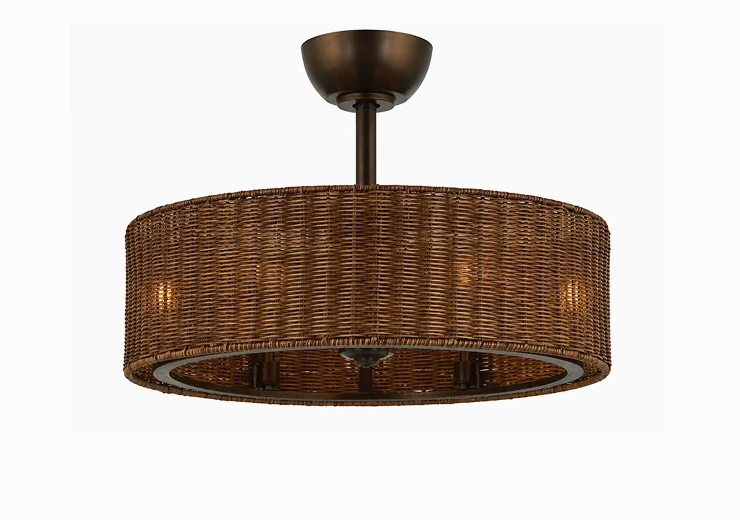
Designed for outdoor dining environments where coordinated airflow, lighting, and furniture aesthetics matter.
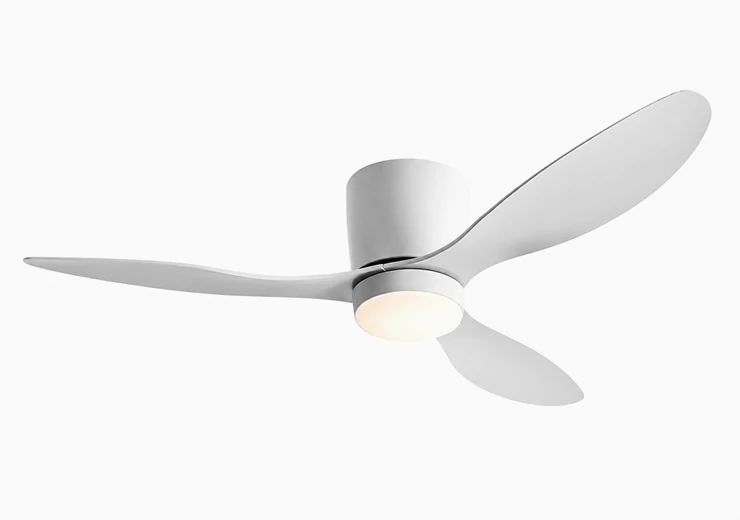
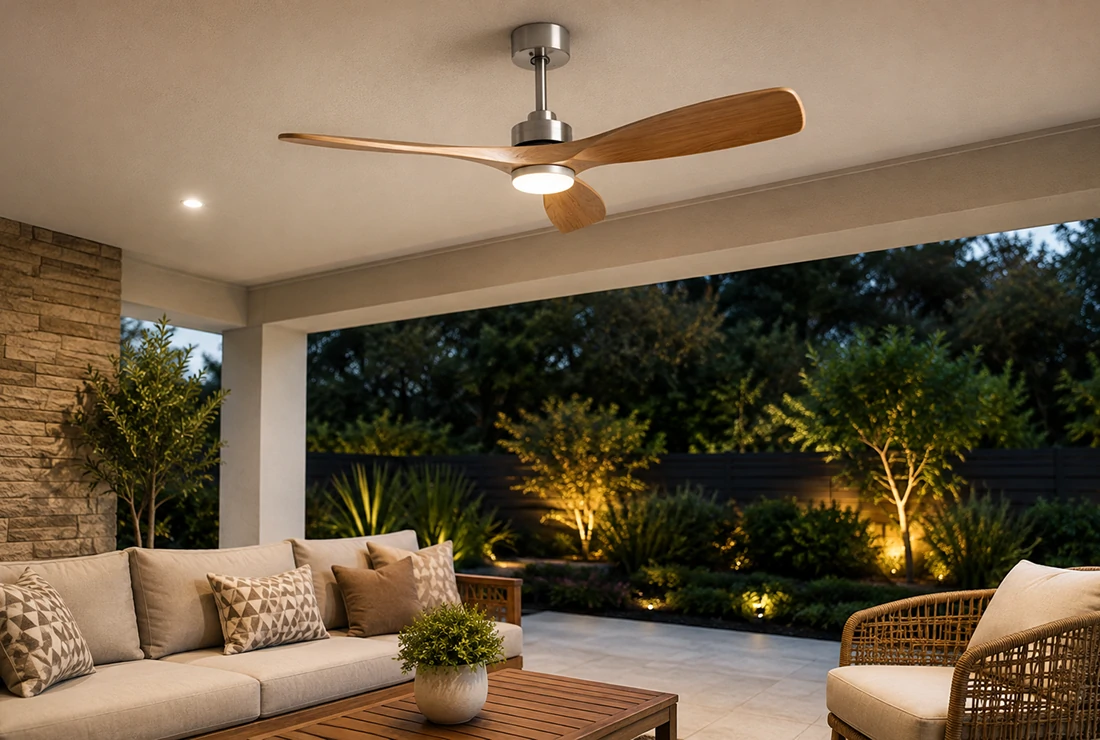
A minimalist product direction for brands developing clean, architectural outdoor lighting and fan collections.
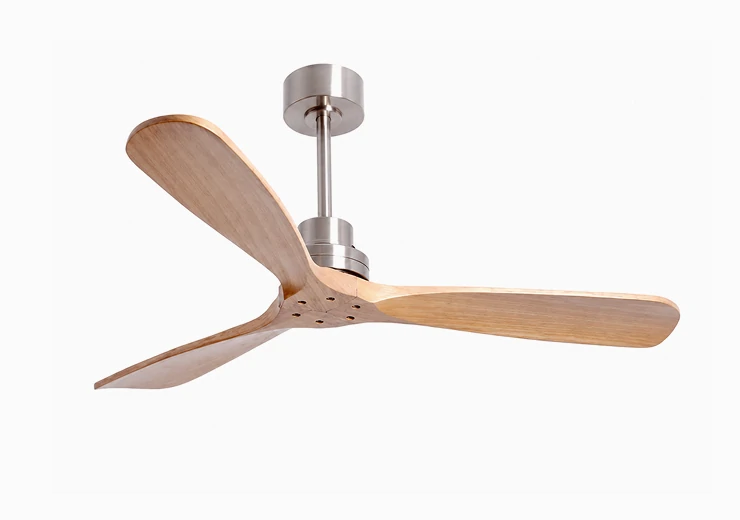
A convenience-focused configuration combining fan operation and lighting control for residential outdoor spaces.
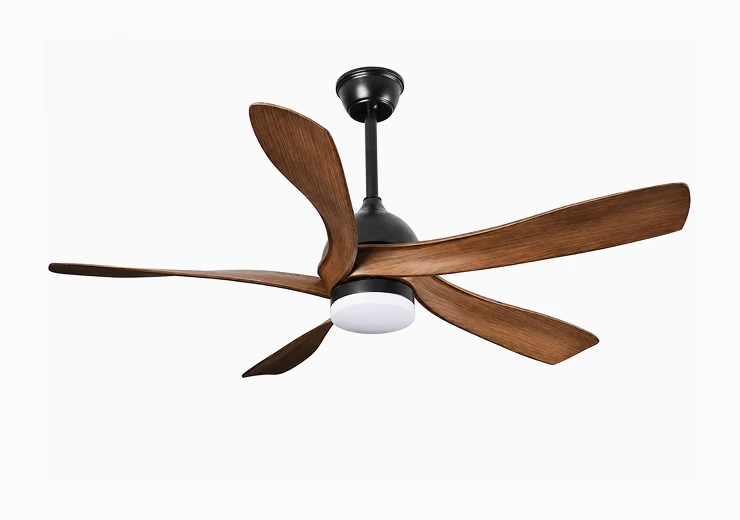
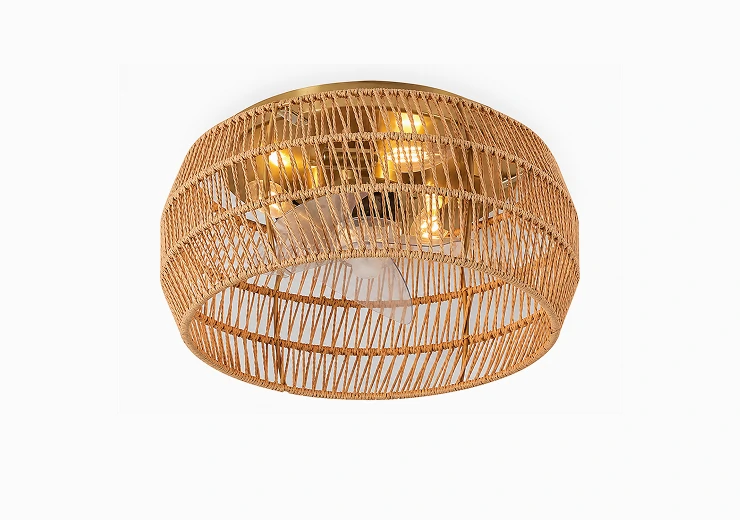
A design-led solution for brands seeking distinctive blade forms and stronger visual differentiation across collections.
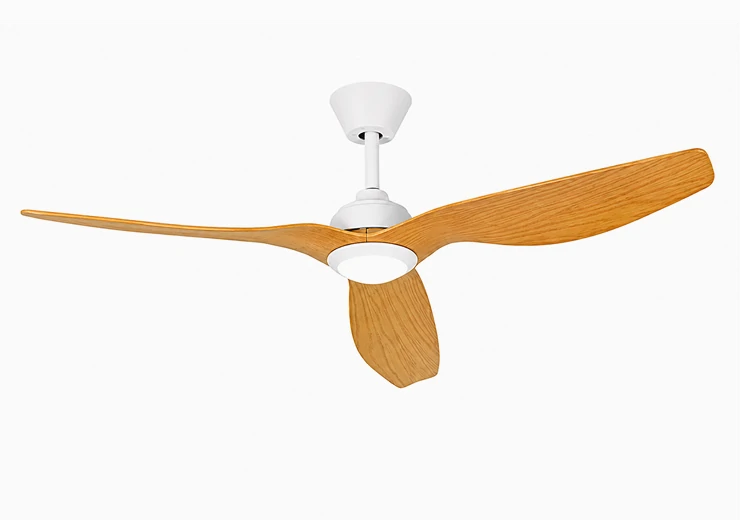
A customizable product platform for private label programs requiring coordinated design, packaging, and market positioning.
Patio Applications for Different Residential Spaces
Different outdoor living environments require different product approaches, from compact residential patios to larger entertaining spaces and planned housing projects.
-
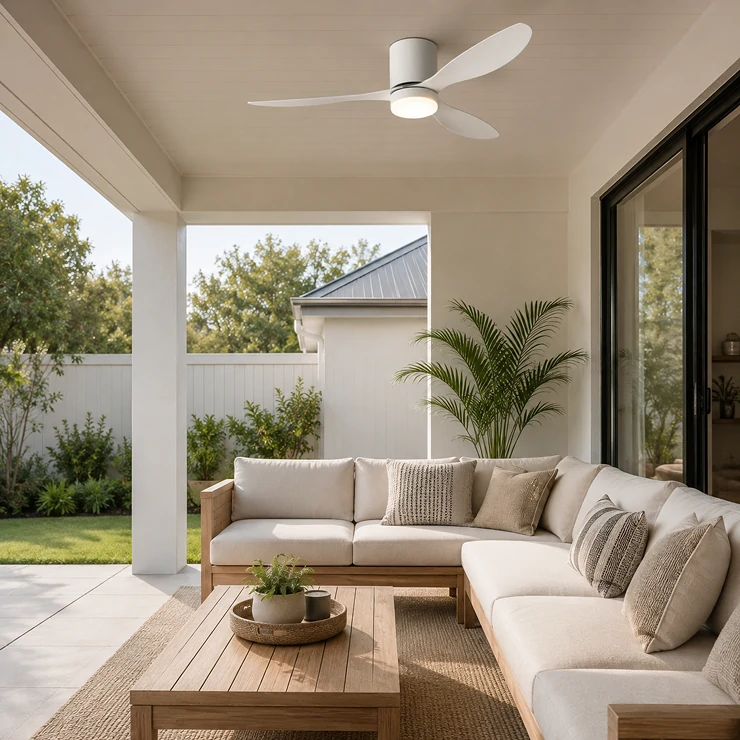
Ceiling fan light solutions for homeowners and residential brands developing comfortable, coordinated covered outdoor living areas.
-
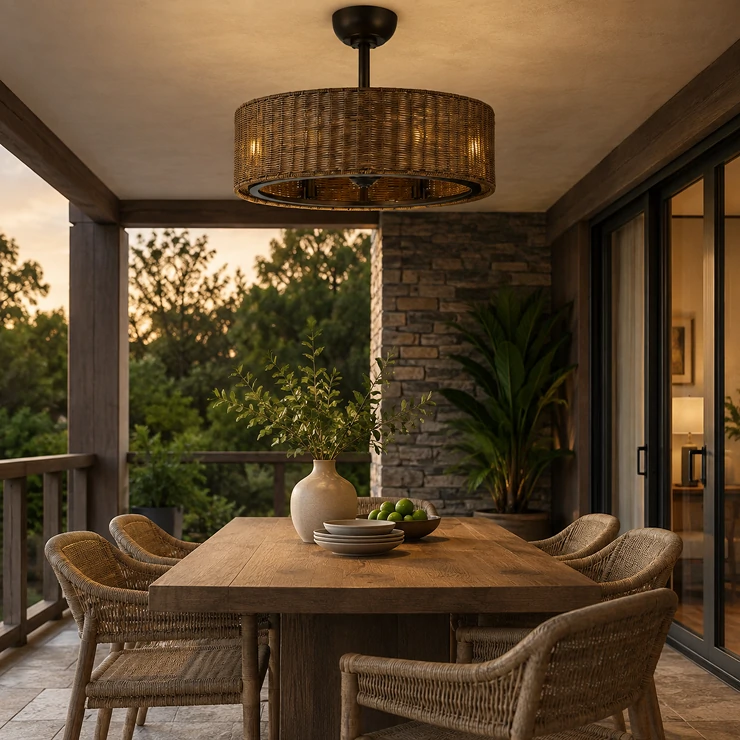
Integrated fan and lighting concepts help brands address outdoor dining projects where space planning and visual consistency matter.
-
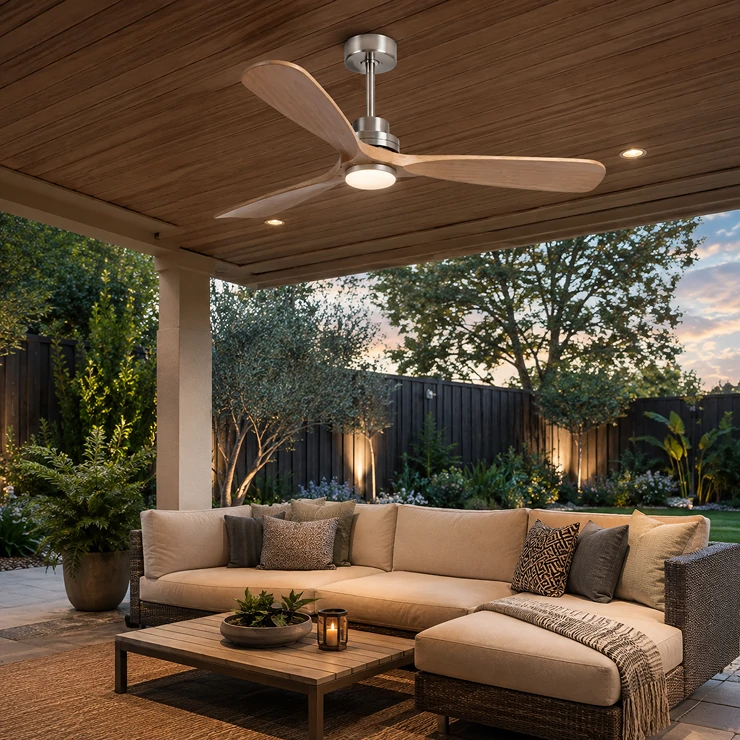
Suitable product concepts for residential brands serving backyard lounges, entertaining areas, and extended outdoor living environments.
-

Compact outdoor fan light concepts can support apartment and multi-unit residential projects with coordinated space requirements.
-
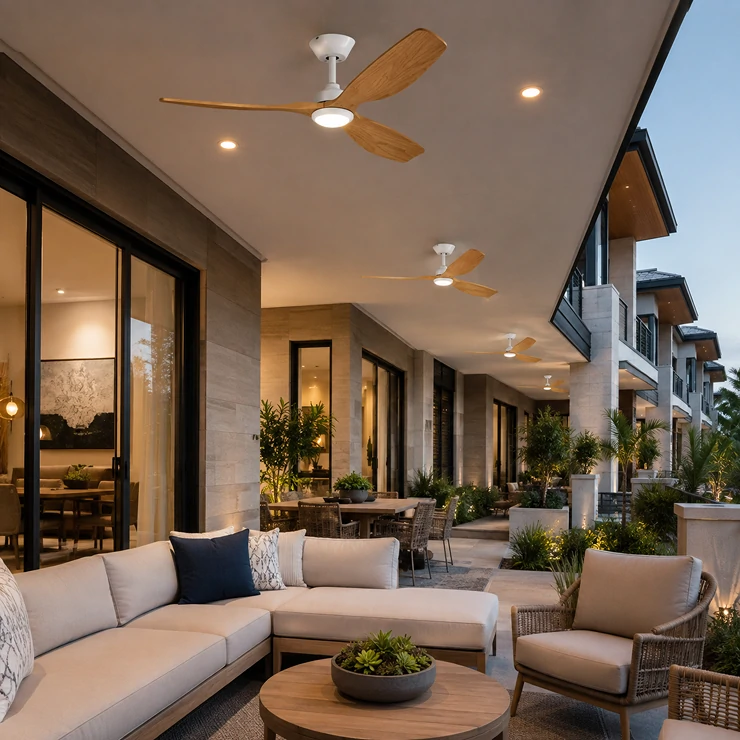
Project buyers can develop consistent fan light specifications across residential units, shared outdoor areas, and planned developments.
Core Features and Configuration Options
Product configuration can be adjusted around installation, lighting, controls, appearance, packaging, and target-market requirements during OEM and ODM development.
-
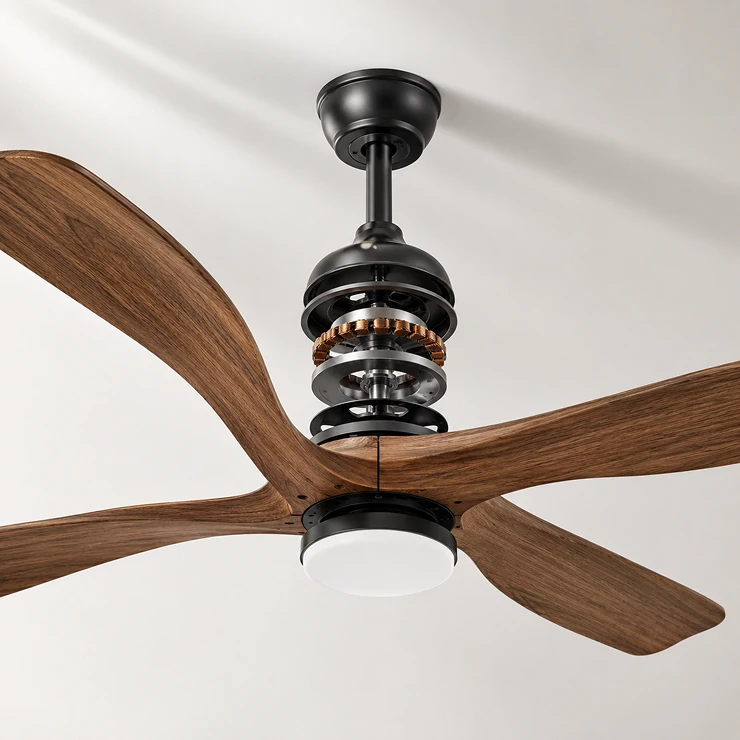
Motor selection influences the overall product configuration, operating experience, and positioning of different private label fan collections.
-
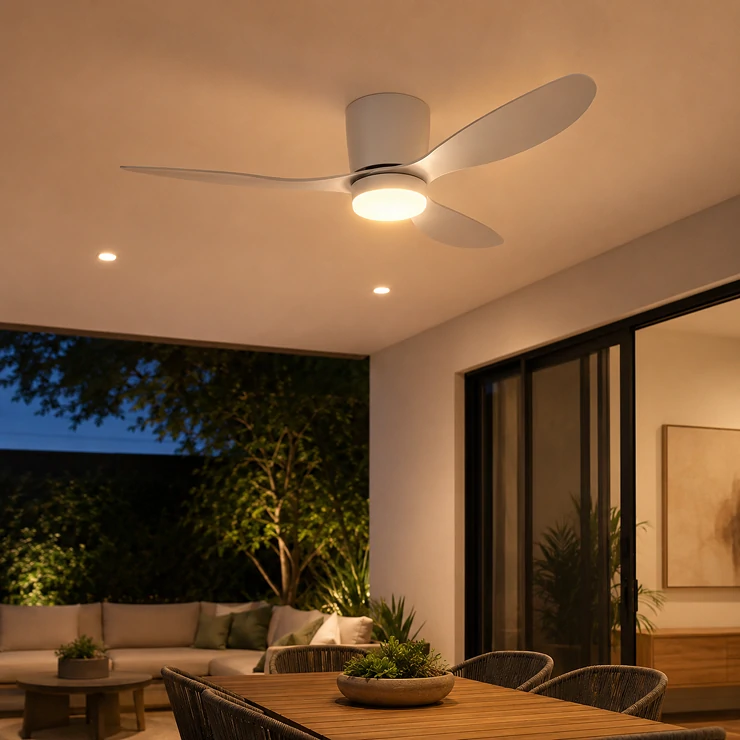
Integrated lighting creates a coordinated fixture concept while allowing brands to define their preferred lighting configuration during development.
-
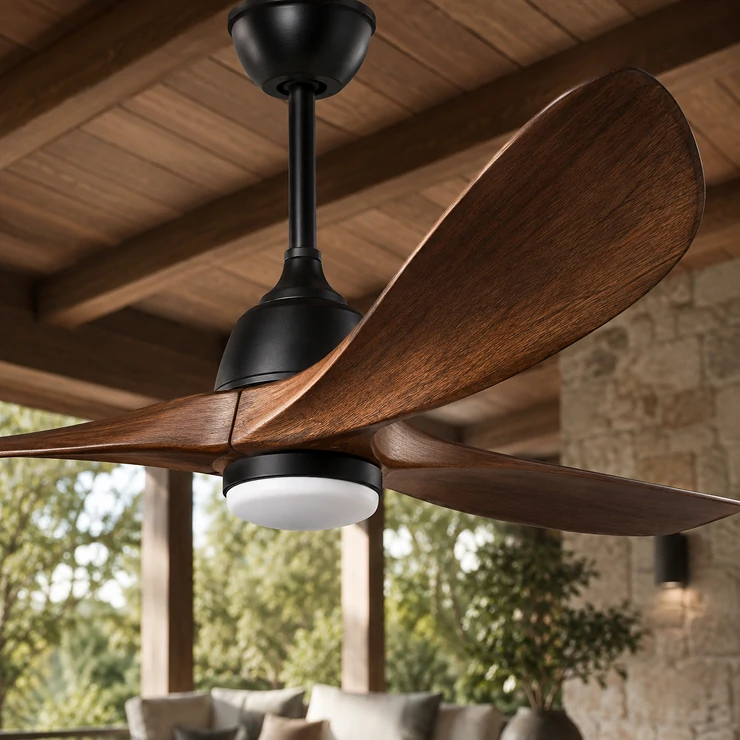
Blade shape and visual proportions can support different design languages, from minimalist residential collections to distinctive private label ranges.
-
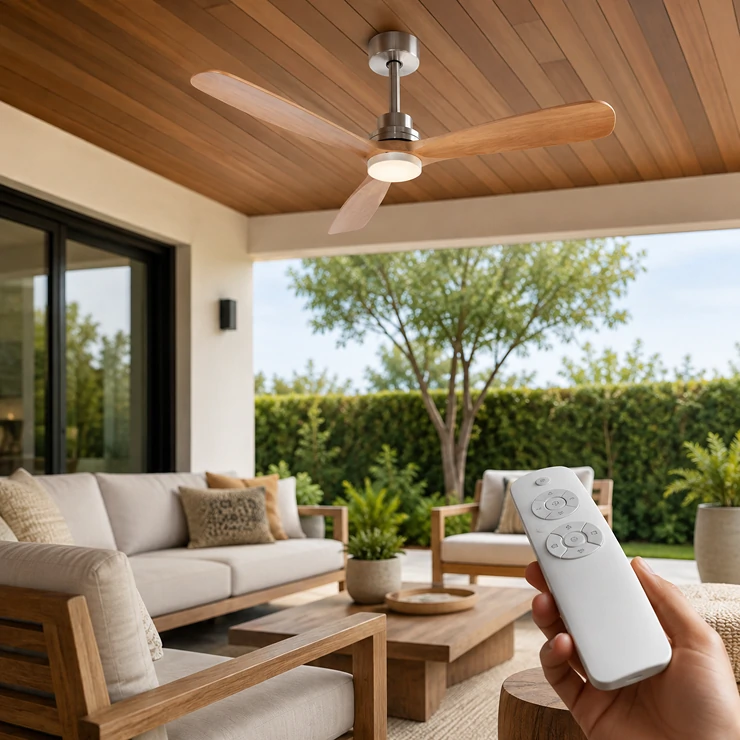
Control configurations can be planned around the intended user experience, product architecture, and requirements of the target market.
-
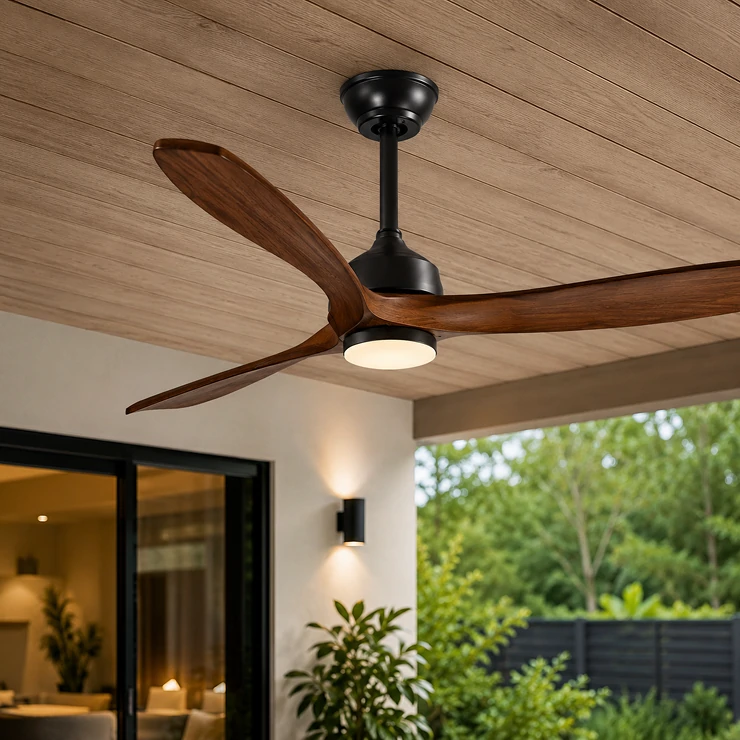
Mounting structure should be selected according to installation conditions, product architecture, and the final application environment.
-
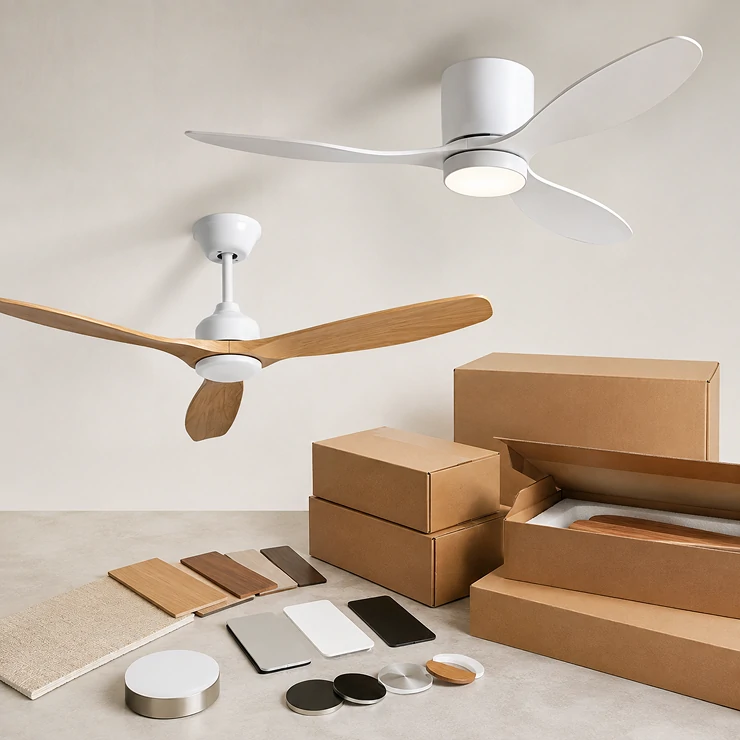
Finish selection and branded packaging help private label buyers maintain a consistent product identity from factory shipment to retail presentation.

From Product Concept to Bulk Sourcing
Choosing a supplier for outdoor fan light products involves more than comparing product appearance. B2B buyers need to understand how the product can be adapted to their target market, brand positioning, installation environment, packaging strategy, and purchasing model.
Our OEM and ODM approach is designed around these development questions. Detailed specifications, testing requirements, certification needs, and commercial conditions can be reviewed according to the final product configuration and destination market.
- OEM Customization
- Product Structure
- Lighting Options
- Project Sourcing
- Quality Control
OEM Customization for Patio Ceiling Fan Programs
For brands, importers, and project buyers, OEM customization helps align product design, functions, branding, and packaging with specific market requirements.
A custom patio ceiling fan program can be developed around the intended application, product style, lighting configuration, control options, mounting structure, and private label requirements. Final specifications are reviewed according to the product concept and target market.
Custom Product Design
Develop the overall fan appearance around your brand direction, including blade style, housing design, finish, color, and visual details.
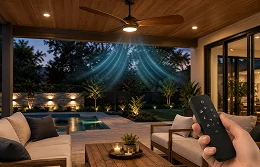
Functional Configuration
Define the required product functions, such as LED lighting, remote control, reversible airflow, and other configuration options.
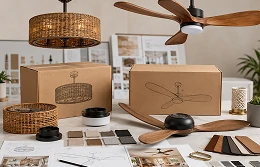
Private Label Support
Adapt product presentation around your brand with options for labeling, branded packaging, product identification, and related materials.
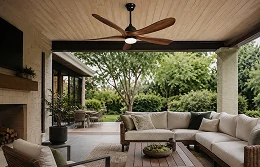
Application-Based Structure
Review mounting structure, product proportions, and installation requirements according to the intended patio or outdoor living application.
Build Your Product Specification
Share your target market, room applications, preferred design, and functional requirements. Our OEM and ODM team can help define a suitable product direction.
Product Structure for Patio Ceiling Fan Lights
A coordinated product structure helps brands and project buyers balance installation requirements, airflow, integrated lighting, controls, and overall product design.
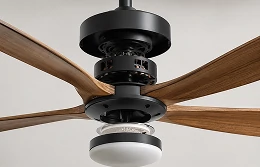
Fan Body
The main housing brings the motor, lighting, and related components together into one coordinated ceiling fan structure.
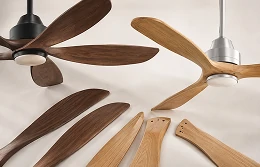
Blade System
Blade shape and proportions contribute to the product’s appearance while forming an important part of the overall fan structure.
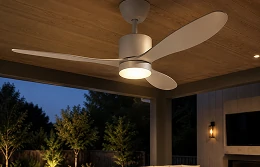
Lighting Unit
An integrated lighting unit combines illumination with the fan structure for a coordinated outdoor ceiling fixture.
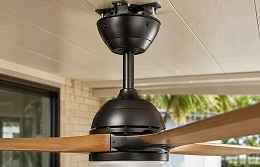
Mounting Structure
Mounting components connect the fan to the installation environment and should match the intended application and product configuration.
Structure by Application
Covered Patios
Product structure can be reviewed around covered outdoor living spaces where airflow, lighting, and ceiling installation need to work together.
Outdoor Dining
A coordinated fan and light structure can support outdoor dining areas while maintaining a clean and organized overhead design.
Residential Terraces
Compact structural approaches can be considered for apartment terraces and residential spaces with specific installation conditions.
Backyard Living
Product design can be aligned with larger residential outdoor areas where appearance and overall fixture integration are important.
Configuration Focus
Low-Profile Design
A lower-profile structure may be considered where ceiling space and overall visual proportions are important.
Blade Configuration
Blade shape, proportions, and styling can be reviewed as part of the complete product design.
Integrated Lighting
Lighting can be incorporated into the fan structure to create a combined ceiling fixture.
Control Options
Control configuration can be reviewed according to the intended user experience and target market.
Ready to Review Your Product?
Share your preferred product structure, application, functions, and target market. Our team can review the requirements for your OEM or ODM project.
Lighting Options for Patio Ceiling Fans
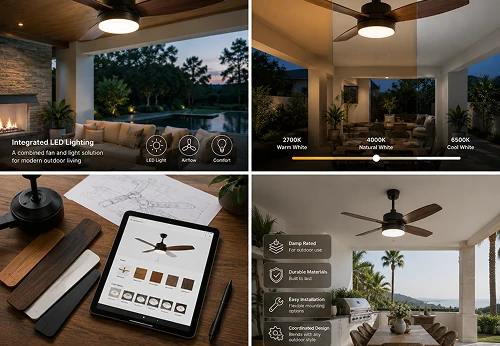
Integrated lighting gives brands more flexibility when developing ceiling fan products for residential patios, outdoor dining areas, terraces, and project applications.
Lighting Configuration
1. Integrated LED
An integrated LED light creates a combined fan and lighting solution while keeping the overall ceiling fixture visually coordinated.
2. Light Appearance
Lighting appearance can be considered together with the fan housing, blade design, finish, and overall product style.
3. Control Integration
Lighting controls can be reviewed alongside the fan control system to support a consistent user experience.
4. Brand Design Direction
The lighting element can become part of the product identity, helping private label buyers maintain a consistent design language.
Lighting by Application
Residential Patio
Combine airflow and lighting into one coordinated fixture for everyday residential outdoor living spaces.
Outdoor Dining
Position integrated lighting around outdoor dining environments where fixture appearance and functional coordination are important.
Project Spaces
Develop consistent lighting configurations across residential units, terraces, or other planned outdoor project areas.
Plan Your Lighting Configuration
Share your preferred lighting concept, control requirements, product style, target market, and application. Our OEM and ODM team can review the configuration for your ceiling fan light project.
Project Sourcing for Patio Ceiling Fans
From product requirements to bulk sourcing, a clear project brief helps buyers and manufacturers align product, packaging, and market requirements before production.
Plan Your Sourcing Project
01 — Define Requirements
Share the target market, application, product direction, functions, branding, packaging, and purchasing requirements.
02 — Review Product Direction
Review the proposed product structure, appearance, functions, and other requirements according to the project brief.
03 — Confirm Configuration
Align the product configuration, branding direction, packaging expectations, and applicable market requirements.
04 — Sample Development
Develop and evaluate samples according to the agreed product requirements before moving toward production preparation.
05 — Bulk Order
After the final requirements are confirmed, production and bulk sourcing arrangements can be coordinated according to the project.
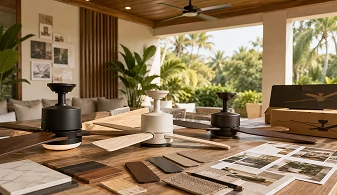
Brand Owners
Develop differentiated patio ceiling fan products around your brand and target market.
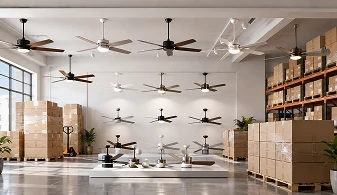
Wholesalers
Source coordinated product configurations for distribution and bulk purchasing needs.

Project Buyers
Align product requirements with residential and outdoor project applications.
Ready to Source?
Share your product requirements, target market, packaging needs, and estimated quantity with our team.
Quality Control for Patio Ceiling Fans
Quality control is integrated into product development, inspection, and production preparation according to each project’s product configuration and requirements.
Quality Checkpoints
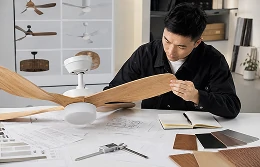
Product Review
Review product structure, appearance, functions, and agreed requirements.
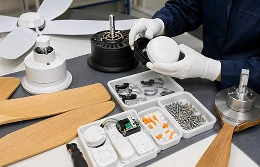
Component Check
Review relevant components, lighting parts, controls, and other product elements.
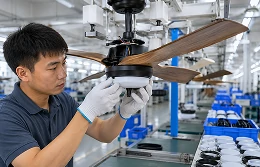
Assembly Inspection
Check assembly condition, component fit, wiring, and overall product construction.
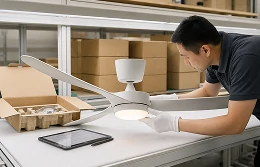
Final Check
Review product appearance, functions, packaging, and agreed quality requirements before shipment preparation.
Product Quality
- Product Structure
- Component Condition
- Functional Checks
- Appearance Inspection
Project Quality
- Specification Review
- Sample Evaluation
- Quality Requirements
- Packaging Requirements
Quality Through the Project
Development → Sample → Production → Final Review
Quality requirements are reviewed according to the final product configuration, agreed specifications, and destination-market requirements.
Need to Discuss Quality Requirements?
Share your product specifications, inspection requirements, packaging expectations, and destination market with our team.
Explore Related Ceiling Fan Solutions

Factory Capability for Patio Ceiling Fan Production
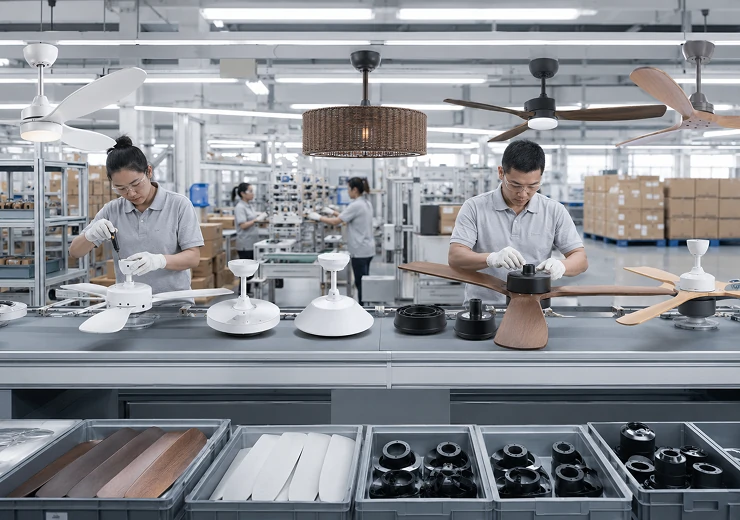
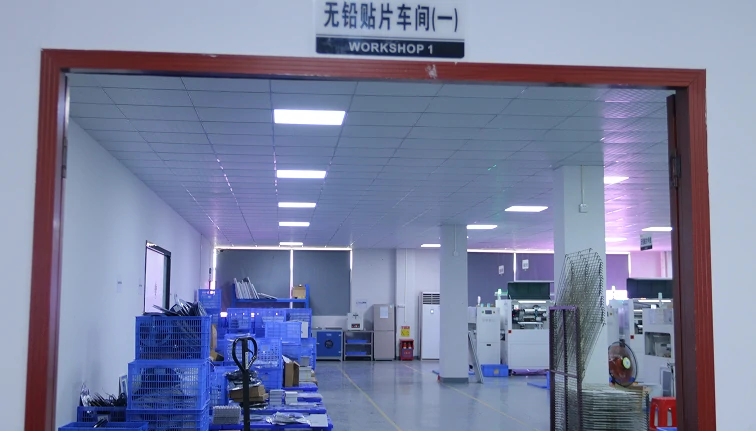
For brands, importers, and project buyers, factory capability should be evaluated through the manufacturer’s ability to understand product requirements, coordinate development, manage production processes, and maintain consistent quality standards. A reliable OEM relationship is not simply about finding an existing fan model. It is about creating a workable product program around the buyer’s market, application, design direction, and purchasing requirements.
Our manufacturing approach supports OEM and ODM discussions around ceiling fan light development, product structure, functional configuration, appearance, packaging, and market requirements. Specific factory information such as production capacity, facility size, workforce, equipment quantity, and certifications should be confirmed according to the current manufacturing documentation.
Key Factory Advantages
OEM and ODM Development
Support can be organized around buyer-defined product concepts, design requirements, functional configurations, and private label objectives rather than relying only on fixed catalog products.
Flexible Product Planning
Different markets may require different product structures, control systems, lighting configurations, finishes, and packaging approaches. These requirements can be reviewed during product development.
Manufacturing Coordination
Product development, production requirements, quality checkpoints, packaging specifications, and shipment preparation need to remain aligned throughout the sourcing process.
Market-Oriented Product Thinking
The product can be evaluated from both technical and commercial perspectives, helping buyers create ceiling fan light collections suited to their intended market positioning.
R&D Team for Custom Ceiling Fan Development
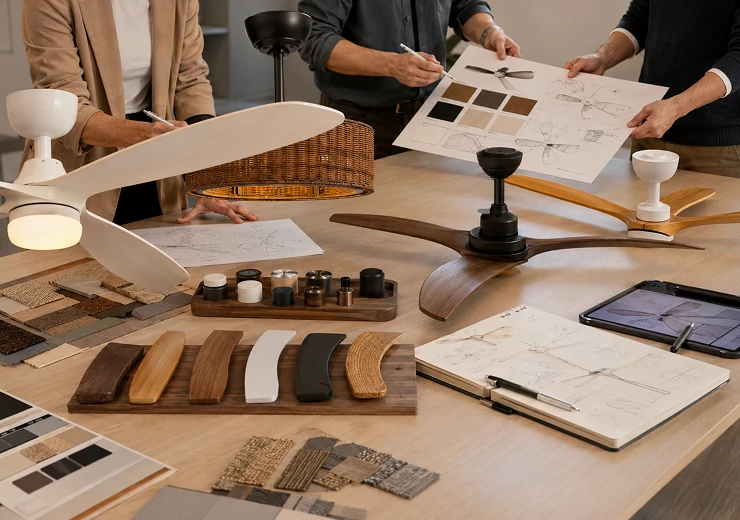
Product development for OEM buyers often starts with a clear understanding of the intended application. A residential patio fan may need a different structural approach from a compact apartment terrace product or a broader project-based collection. R&D work therefore needs to consider product architecture, user experience, appearance, installation structure, functional configuration, and manufacturing feasibility together.
For private label and ODM customers, this development stage can help transform a product concept into a clearer technical brief. Final engineering capabilities, team size, equipment, development cycle, and testing resources should be confirmed from current company documentation rather than assumed.
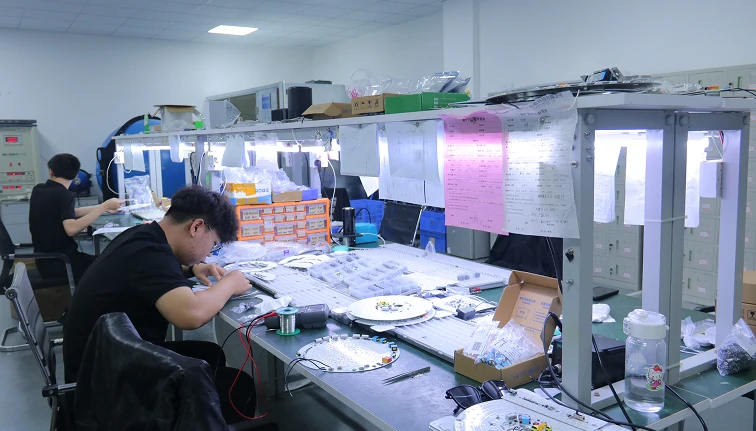
Key R&D Advantages
Application-Based Product Development
Product concepts can be evaluated according to the intended installation environment, target users, market positioning, and overall product strategy.
Structural Optimization
Fan body structure, blade design, lighting integration, mounting components, and control architecture can be reviewed as part of the overall product concept.
Function Integration
Lighting, airflow control, remote operation, and other requested functions can be considered together to avoid treating each feature as an isolated addition.
Design-to-Production Thinking
ODM development should balance visual differentiation with manufacturing feasibility, assembly requirements, quality control, packaging, and target-market expectations.
Production Management for Consistent OEM Supply
Production management plays an important role when a buyer moves from product development into repeat purchasing. For OEM programs, the manufacturing process needs to follow the approved product configuration, component requirements, assembly standards, packaging instructions, and quality checkpoints.
A structured production process also helps reduce communication gaps between product development, manufacturing, quality inspection, packaging, and export preparation. Exact production capacity, lead times, factory equipment, and production-line information are not stated here unless confirmed through current factory documentation.
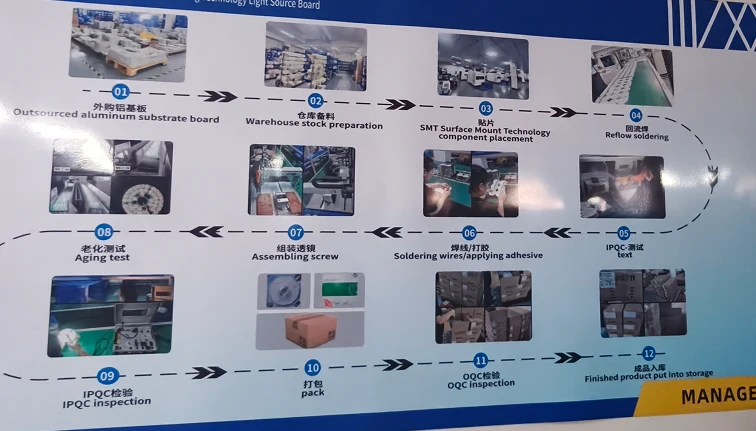
Key Production Advantages
Specification Control
Approved product requirements should be clearly communicated before production so that manufacturing follows the agreed product configuration.
Process Coordination
Product assembly, inspection, packaging, and shipment preparation should work as connected steps rather than separate activities.
Order Management
Bulk sourcing requires clear communication around product configuration, packaging requirements, documentation, and destination-market needs.
Production Traceability
Where applicable, production and quality records can help buyers review whether the required product and process standards have been followed.
Reference Lead Times
Production Stage |
Reference |
|---|---|
| Standard Sample | 7–10 days |
| Mass Production | Usually 25–35 days after order confirmation |
| Final Lead Time | Depends on confirmed configuration, packaging, testing requirements and order quantity |
Quality Assurance for Outdoor Fan Light Programs
Quality control is particularly important for buyers developing products for different residential and project markets. The focus should not be limited to the finished appearance. Product structure, components, assembly, electrical functions, lighting configuration, controls, packaging, and other agreed specifications may all need to be reviewed according to the final product design.
Testing and certification requirements also depend on the destination market and final configuration. Certification and testing support can be arranged based on the final product configuration and destination market. Specific certifications such as CE, FCC, RoHS, ETL, or UL should only be stated when supported by valid documentation for the relevant product.
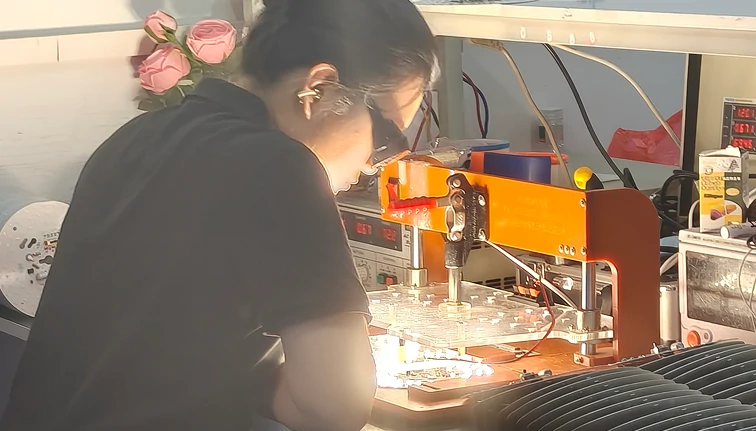
Key Quality Advantages
Quality Control Process |
Description |
|---|---|
| R&D Laboratory | Product development and validation |
| Airflow Testing | Wind speed and airflow efficiency |
| Balance Testing | Fan stability and vibration control |
| Lighting Inspection | Lamp holder and illumination check |
| Noise Testing | Operating sound verification |
| Aging Test | Continuous operation reliability |
| Voltage Test | Unstable voltage simulation |
| Appearance Inspection | Surface finish and assembly quality |
| Functional Testing | Remote control and speed verification |
| Packaging Inspection | Shipment safety confirmation |
Approved Sample Inspection
The approved sample provides an important reference for OEM and ODM production. Before bulk production and shipment, the confirmed product configuration, appearance, packaging, and other agreed requirements should be reviewed against the approved sample and order specifications.
Export Services for Global Ceiling Fan Sourcing
International sourcing requires more than manufacturing the product itself. Buyers may need support with product documentation, packaging specifications, destination-market requirements, shipping preparation, and communication between the factory and their own purchasing or logistics teams.
For overseas brands, wholesalers, distributors, ecommerce sellers, and project buyers, export coordination should be based on the actual product configuration and destination market. Shipping terms, documentation requirements, certification needs, packaging specifications, and commercial conditions should therefore be confirmed during the order process.
Key Export Advantages
International B2B Communication
Clear communication helps buyers align product specifications, packaging requirements, purchasing details, and project expectations with the manufacturing team.
Packaging Coordination
Private label and wholesale programs may require specific packaging structures, product identification, labeling, manuals, or carton requirements.
Destination-Market Review
Market-specific requirements can be reviewed according to the destination country and final product configuration.
Shipment Preparation
Production completion, quality review, packaging, documentation, and shipment preparation can be coordinated as part of the overall sourcing process.
Patio Ceiling Fan FAQs
It is a ceiling-mounted fan designed for suitable outdoor or semi-outdoor applications, typically combining airflow with optional lighting. For B2B buyers, the final structure should match the intended installation environment, product design, electrical requirements, and target market.
No. Suitability depends on the installation environment and the final product design. Covered patios, terraces, and other semi-outdoor spaces may have different requirements. Buyers should confirm mounting conditions, environmental exposure, electrical requirements, and applicable market standards before selecting a product.
Yes. OEM and ODM programs can be developed around requirements such as product appearance, blade design, lighting configuration, controls, finish, packaging, and branding. The exact customization scope depends on the proposed product structure and should be reviewed during product development.
Yes. Bulk sourcing can be discussed for wholesalers, distributors, importers, retailers, ecommerce sellers, and project buyers. Before quotation, buyers should provide the preferred product type, target market, configuration, packaging requirements, estimated quantity, and any applicable certification or testing requirements.
It depends on the project. A useful starting brief includes the intended application, product style, target market, lighting requirements, control preferences, installation concept, branding, packaging, estimated order volume, and certification needs. The manufacturer can then identify additional technical information required for development.
Yes. LED lighting can be integrated into many ceiling fan designs, depending on the product architecture. Buyers should define the preferred lighting concept, control method, appearance, and target-market requirements during development. Final lighting specifications should be confirmed before production.
It depends on the destination market and final product configuration. Buyers should identify the countries where the product will be sold before development is finalized. Certification and testing support can be arranged based on the final product configuration and destination market.
Yes. Nebola can discuss OEM and ODM requirements for brands, importers, wholesalers, retailers, and project buyers. Buyers can provide their intended market, product concept, functional requirements, packaging needs, and purchasing plan so the appropriate development and sourcing information can be reviewed.