

Integrated LED and replaceable bulb socket fan lights solve different problems. If you want a cleaner light module, more controlled optical design, and a compact finished look, integrated LED often feels stronger. If you want easier lamp replacement, flexible bulb choice, and simpler maintenance messaging, a replaceable bulb socket fan light may be easier to explain. The right choice depends on how you expect the product to be installed, serviced, and judged after sale.
For socket fan light projects, you should compare more than brightness. Look at driver quality, heat control, socket safety, bulb access, replacement instructions, market voltage, certification scope, packaging language, and after-sales parts. If you are building a category around replaceable lamp designs, NEBOLA’s socket fan lights page is the natural place to start before you shortlist models.
What Is the Core Difference Between Integrated LED and Replaceable Bulb Fan Lights?
How does integrated LED change the product structure?
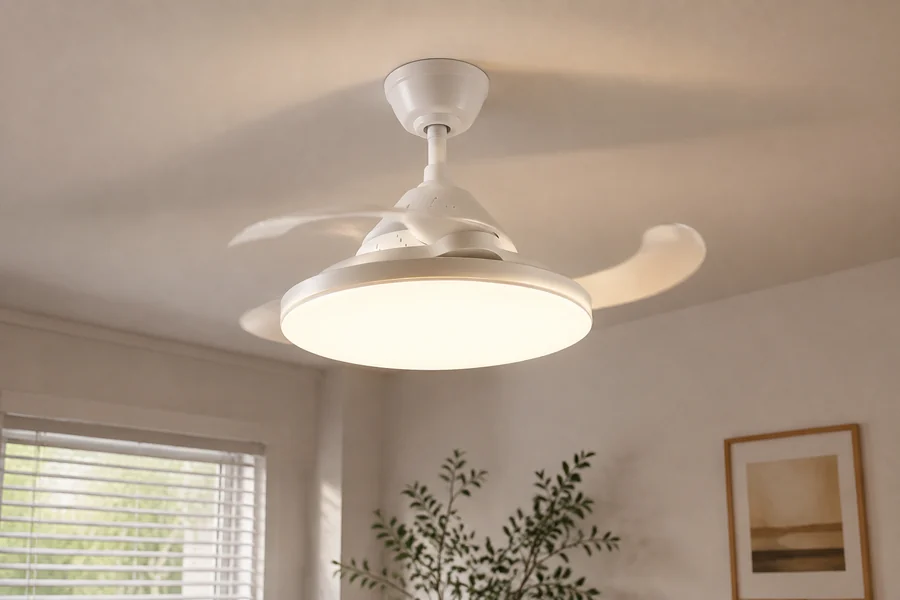
An integrated LED fan light uses a built-in LED module and driver instead of a standard replaceable bulb. That lets the fixture design the diffuser, LED board, driver location, and heat path as one system. The result can look cleaner and more controlled when the design is done well.
The trade-off is serviceability. If the LED module or driver fails outside the warranty process, the repair path may require a replacement part or full fixture service. That is why you should check parts availability before you treat integrated LED as the lower-maintenance answer.
How does a replaceable bulb socket design change maintenance?
A replaceable bulb socket fan light keeps the lamp as a serviceable component. You can replace the bulb when it reaches end of life or when the room needs a different colour temperature. This can be useful for channels where simple maintenance is a strong selling point.
The limitation is that bulb choice affects the final experience. If someone installs a poor bulb, the fan light may look dim, harsh, too cool, too warm, or incompatible with dimming. The product needs clear bulb requirements in the manual and listing.
Which choice is easier to sell clearly?
Replaceable bulb models are often easier to explain in simple terms: install the fan light, replace the bulb later if needed. Integrated LED models need stronger specification language because people must trust the LED module, driver, diffuser, and warranty path.
The cleanest comparison is not which technology sounds more advanced. It is which structure makes daily use simpler for your target room and channel. Integrated LED controls the light experience inside the fixture, while replaceable bulbs give you a clearer maintenance path.
That difference changes the way you should write the product page. Integrated LED needs confidence around light quality and spare parts. Replaceable bulb designs need confidence around allowed bulbs, socket safety, and replacement instructions.
The search intent behind this topic is practical: you want to know which structure will create fewer complaints after installation. That is why the comparison should include service, bulb access, driver quality, and clarity of instructions, not only style.
The strongest comparison is the one that survives daily use, not just the one that sounds easiest in a title. That is why integrated LED and replaceable bulbs should be judged by maintenance, brightness control, and after-sales comfort together.
How Should You Compare Light Quality Instead of Wattage?
Why is wattage not enough?
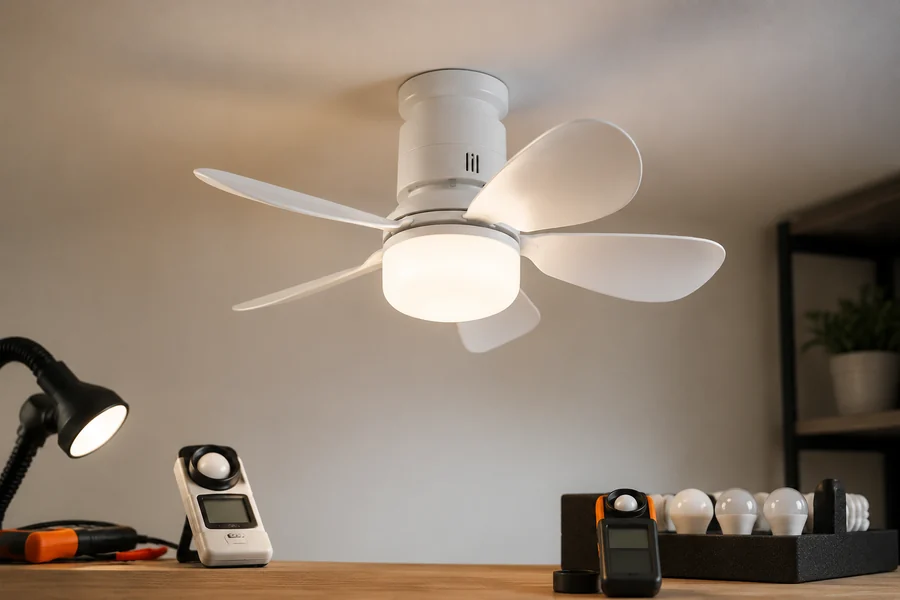
Wattage tells you input power, not how the room feels. You need lumens for output, CCT for colour appearance, CRI for colour quality, diffuser design for glare control, and dimming behaviour for evening comfort. This is true for both integrated LED and replaceable bulb socket fan lights.
NIST’s LED measurement work is a useful reminder that LED performance depends on measured light qualities, not only casual brightness claims. In product selection, this means you should request real lighting data where it matters.
What should you ask for in an integrated LED sample?
Ask for lumen output, CCT range, CRI, LED module type, driver information, diffuser material, dimming method, heat management notes, and replacement-part policy. Then test the product in a real room, because a clean spec sheet can still become glare or uneven light after installation.
What should you ask for in a replaceable bulb sample?
Ask what bulb base, wattage limit, bulb shape, bulb length, dimming type, and heat limit the fixture allows. If the product accepts an E27 bulb, the manual should clearly explain safe bulb selection so the final user does not install something unsuitable.
When you compare samples, do not judge brightness under warehouse lighting only. Install the product in a normal room, turn off other lights, and check whether the diffuser creates glare, hot spots, or colour that makes the room feel cheap.
For replaceable bulb designs, repeat the test with the exact bulb you plan to include or recommend. A different bulb can change the whole impression, so the bulb spec is part of the product experience.
If you can, photograph the same room under each sample at night. A side-by-side record makes uneven light, harsh colour, and diffuser problems much easier to discuss with a supplier than subjective comments alone.
If you sell through retail or marketplace channels, the light structure also changes how many questions your support team receives. A clear structure usually reduces confusion before it starts.
How Do Heat, Driver Quality, and Airflow Affect Long-Term Use?
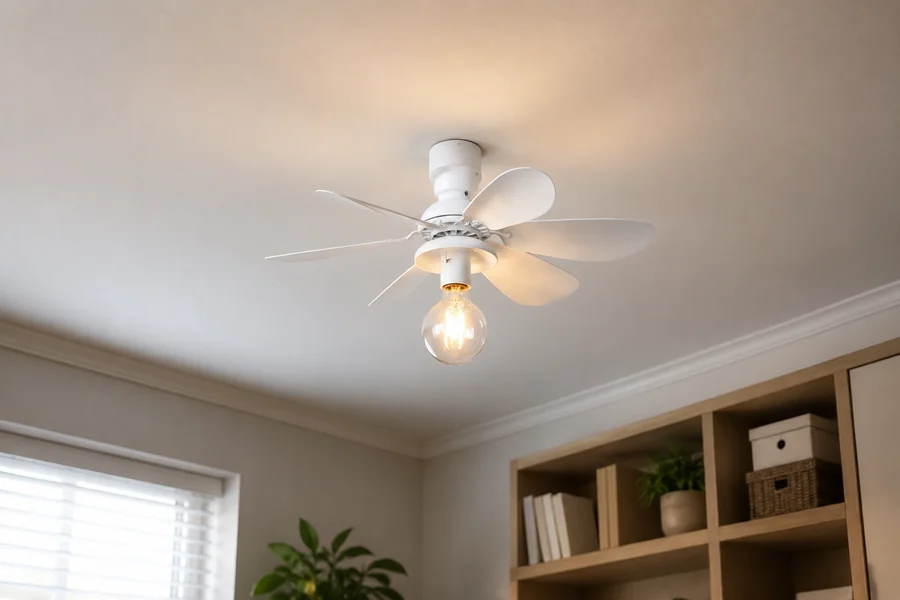
Why does heat matter in a compact socket fan light?
A compact socket fan light puts motor, light, receiver, and mounting parts into a small body. Heat can affect LED output, driver life, plastic ageing, and user comfort. Integrated LED designs need a good heat path, while replaceable bulb designs need enough space around the bulb.
When you test samples, run both the light and fan together. Some problems only appear when the product is operating as a combined fixture, not when the light or fan is tested separately.
How should driver quality be judged?
Driver quality shows up through flicker, buzzing, heat, dimming smoothness, and whether the light resets awkwardly after power cycling. A low-quality driver can make an otherwise attractive product feel cheap. We should never judge a fan light only from a still product image.
Does airflow change the lighting decision?
Yes, airflow changes how people use the product. If the fan is weak, the light may still work but the product fails as a fan. If the fan is noisy or unstable, the lighting quality will not save it. Compare air delivery, speed control, and noise together with light quality.
Heat is especially easy to underestimate in a compact product. The fan may make the room feel cooler, but the driver, LED board, bulb chamber, and receiver still need enough thermal control inside the fixture.
A good test is to run the fan and light together, then inspect the housing and diffuser after use. You are looking for abnormal heat, odour, colour shift, buzzing, and any part that feels stressed by combined operation.
Heat testing should be repeated after packaging changes too. A diffuser, shade, or housing update can change airflow around the light source, so a visual revision can become a thermal revision.
You should also consider whether the room owner likes to change the lighting mood over time. If they do, a replaceable bulb path can feel more flexible. If they want one consistent look, integrated LED can feel calmer.
When Does a Replaceable Bulb Socket Fan Light Make More Sense?
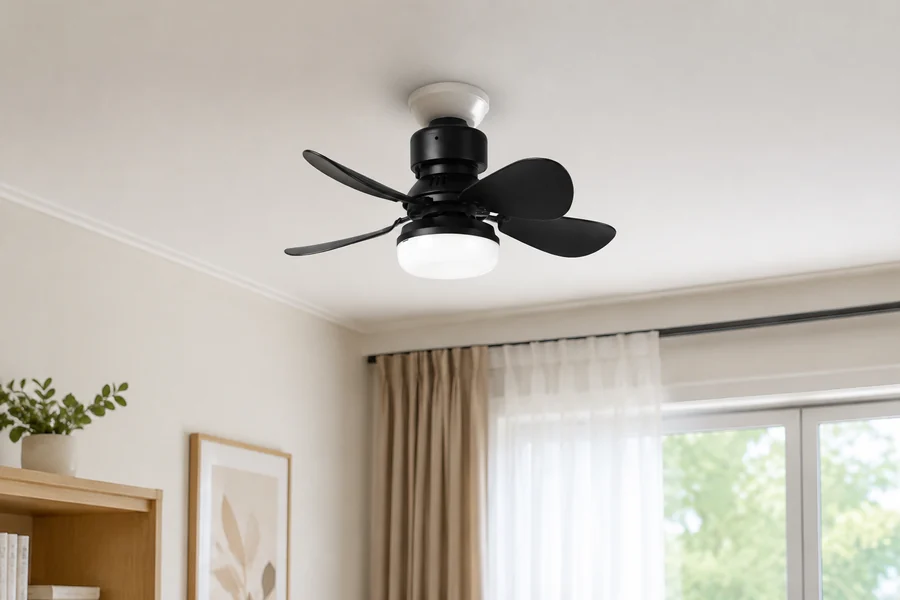
When is replacement flexibility valuable?
Replacement flexibility matters when you want a simple maintenance story, wider bulb availability, and room-by-room lighting adjustment. For small apartments, rental units, dorm rooms, kitchens, and utility spaces, a socket design can be easier to understand than a sealed LED module.
A ceiling fan with replaceable bulbs can also help if your channel wants to separate the fan-light body from the bulb choice. You can adapt brightness and colour temperature by market as long as the manual gives clear limits.
What are the weaknesses of replaceable bulbs?
The biggest weakness is inconsistency. Different bulbs create different brightness, colour, beam spread, heat, and dimming behaviour. If you do not control the bulb recommendation, two customers may experience the same fan light very differently.
How should you reduce that risk?
Give a clear bulb specification: base type, maximum wattage, recommended LED bulb type, suitable shape, dimming compatibility, and installation warnings. If the bulb is included in the box, make sure the certificate, label, and manual still match that exact kit.
Replaceable bulb designs work best when you control the bulb story. If the box includes no bulb, the manual should still tell people what to buy. If the box includes a bulb, the product page should not imply that every bulb will behave the same way.
This is also where customer support becomes easier or harder. Clear bulb limits prevent dimming complaints, heat concerns, and incorrect colour temperature expectations before they reach your service team.
For replaceable bulb products, decide whether the bulb is part of the selling package or part of the customer choice. That one decision affects the listing, warranty explanation, certification scope, and after-sales script.
For product development, the bulb path can be easier to explain but harder to control. Integrated LED can be harder to service but easier to design into a premium-looking product family.
NEBOLA Socket Fan Light Support
Comparing integrated LED and replaceable bulb designs?
Tell us your target room, socket type, voltage market, and maintenance preference. We can help you narrow the socket fan light structure before sample approval.
When Does Integrated LED Make More Sense?
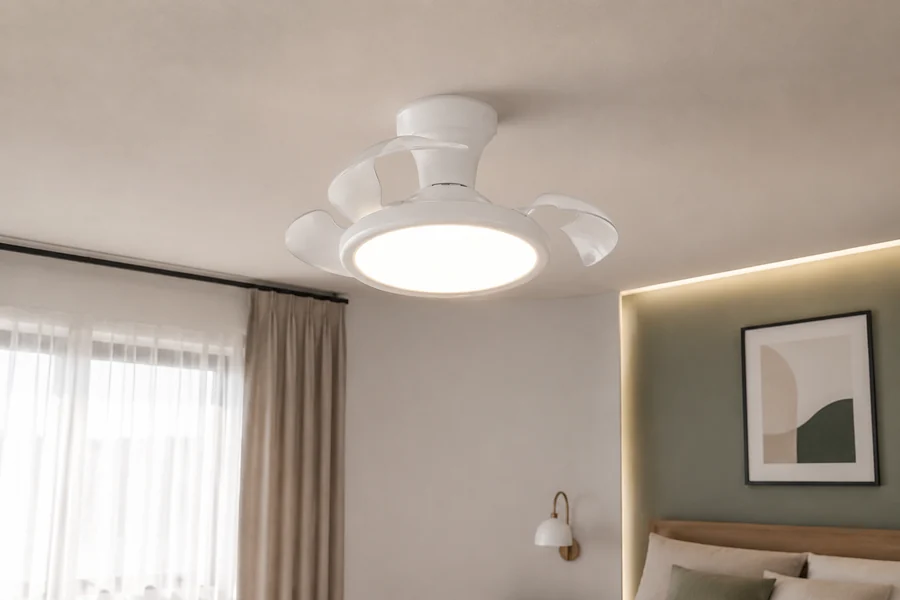
When is a sealed light module better?
Integrated LED is stronger when you want a cleaner product appearance, predictable light distribution, matched driver and LED board, and fewer decisions for the person installing the product. This can suit modern interiors and retail listings that need a finished fixture look.
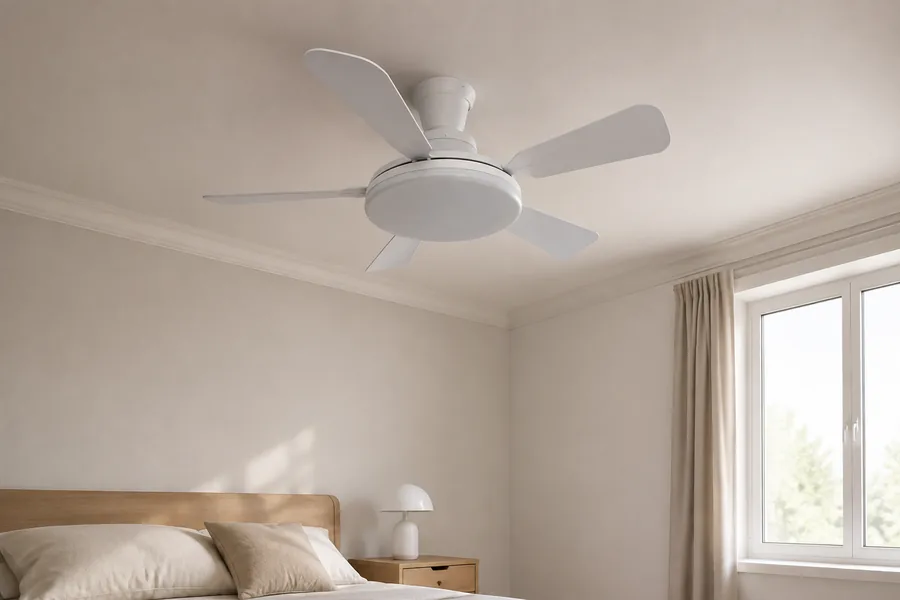
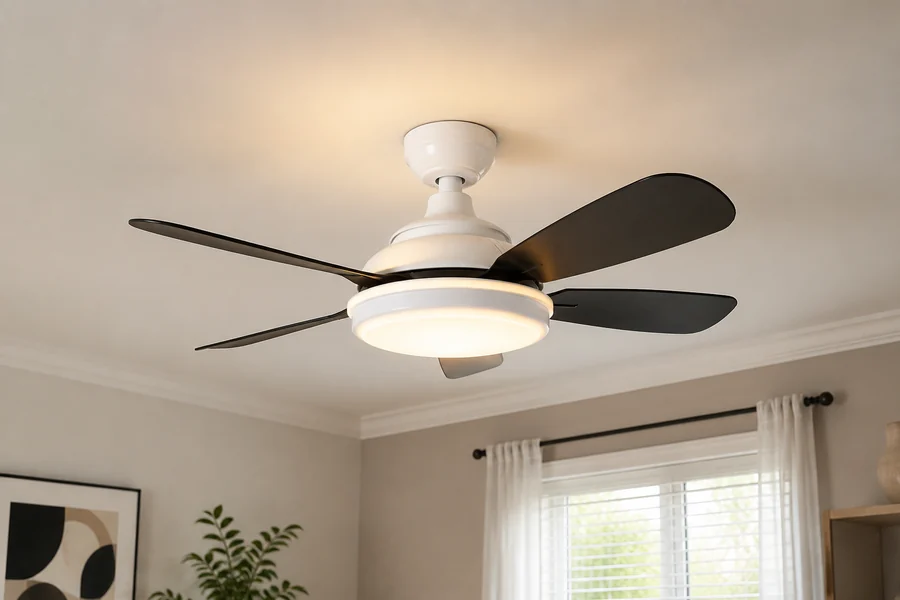
A white integrated model can be a better fit when the product should look like a designed ceiling fixture rather than a bulb replacement accessory. That distinction matters in living rooms and design-conscious spaces. A cleaner finish can also help the listing feel more architectural, which matters when the ceiling fixture is visible from the sofa, dining area, or entry view.
What are the weaknesses of integrated LED?
The main weakness is repair clarity. If the LED module is not replaceable by the user, your product page and warranty path must explain what happens when the light fails. Without that information, people may worry that one LED issue means replacing the whole fixture. In real channels, the question is not whether the light looks modern on day one. The question is whether the owner still understands the repair path after the product has been installed for a year or more.
How should you test integrated LED samples?
Run dimming, memory, colour temperature, heat, flicker, and noise tests. Also check whether the diffuser creates hot spots. Integrated LED gives you more control, but only if the optical and electrical design are both strong.
Integrated LED should be judged like a complete lighting product, not like a simple accessory. The LED board, driver, diffuser, dimming curve, and memory function all decide whether the product feels refined in a real room.
The weak point is not always performance at the start. It is what happens later if the LED module fails or if a customer wants a different colour temperature. That answer should be planned before launch.
For integrated LED products, ask how the LED module is identified. If spare parts are available, the part code should be easy to connect to the model, otherwise service teams may struggle later.
That trade-off is one reason to keep the product page plain and honest. People usually appreciate knowing what they can and cannot replace after installation.
How Should Certification and Labelling Differ Between the Two Designs?

Why does the exact construction matter?
Certification files should match the exact construction. Integrated LED models involve LED modules, drivers, thermal design, housing, and wiring. Replaceable bulb models involve socket rating, bulb limits, lamp holder construction, and user replacement warnings. Similar shell designs can require different documentation.
What should the label say for replaceable bulbs?
The label and manual should say the allowed bulb base, maximum wattage, intended bulb type, voltage rating, frequency, model number, and safety warnings. If the product uses E26 or E27, that should be clear and consistent across the listing, package, and manual.
How do you connect this with E26 and E27 planning?
Use the earlier E26 vs E27 guide when socket compatibility is the main question. A replaceable bulb design is not automatically easier if the socket and market requirements are unclear.
Documentation should mirror the structure. Integrated LED documents need to support the installed module and driver. Replaceable bulb documents need to support socket rating, bulb limits, replacement access, and warning language.
If the same housing is offered in both structures, do not let one certificate or one manual casually cover both versions. Treat each construction as its own file set unless your compliance partner confirms otherwise.
When certification is being reviewed, keep the language plain: this report applies to this exact construction under these ratings. That sentence prevents many unsupported assumptions from entering sales copy.
A good sample test should also ask whether the fixture still looks good at low brightness. Some products are fine when bright and awkward when dimmed, which matters a lot in living rooms and bedrooms.
How Should You Compare Packaging and After-Sales Support?
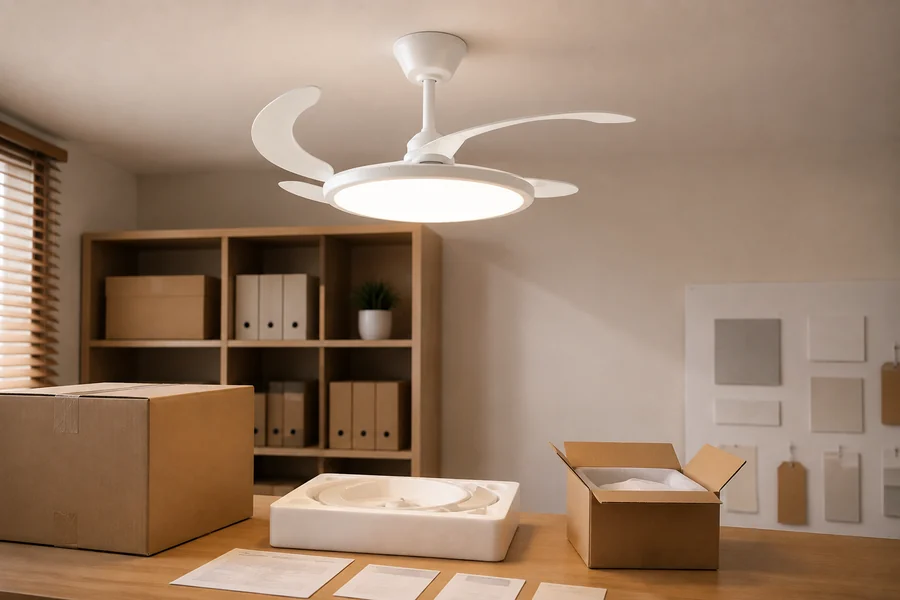
What should packaging explain first?
Packaging should make the product type obvious: integrated LED or replaceable bulb. It should also explain voltage, socket type, bulb limits if any, remote function, installation conditions, and room suitability. Clear packaging reduces wrong expectations.
Which after-sales questions should be answered early?
Ask how the light is serviced, whether spare parts are available, whether the remote can be replaced, how pairing works, and what happens if the driver or bulb fails. These questions belong in product planning, not only after complaints appear.
What should you avoid in listing language?
Avoid vague claims like works everywhere, lasts forever, or fits any bulb. Replace them with exact compatibility, rated input, allowed bulb range, and model-specific support. Clear limits feel more professional than overpromising.
After-sales support should be part of the comparison table, not an afterthought. A beautiful fan light can still become a poor choice if the remote, bulb, diffuser, or LED module has no clear replacement path.
You should also decide how much responsibility you want the final customer to carry. Replaceable bulbs give flexibility, but they also move more choices to the user. Integrated LED keeps the experience more controlled, but the supplier must own more of the service story.
After-sales planning should include the first six months after launch. Early questions often reveal whether the manual, remote layout, bulb guidance, or listing images need improvement.
If the ceiling fan light will be used as the main room light, the optics matter even more. The design should guide the light into the room rather than make the diffuser look like a glowing hotspot.
How Should You Choose Between Integrated LED and Replaceable Bulb Designs?
Which path fits simple replacement needs?
Choose a replaceable bulb socket fan light when you want easy lamp replacement, flexible CCT selection, and simple maintenance language. This path works best when the bulb spec is controlled and the socket compatibility is clearly documented.
Which path fits controlled design needs?
Choose integrated LED when you want a cleaner ceiling fixture, controlled light distribution, and a product experience that does not depend on third-party bulb choice. This path works best when spare parts, warranty, and LED performance data are clear.
What is the safest final check?
Before ordering, compare the real sample under power, the document set, the label, the packaging, and the after-sales plan. Then return to NEBOLA’s socket fan light category if you need to match the product structure with your market and room-use plan.
The safer final choice is the one you can explain in one honest paragraph without hiding the weak point. If replacement matters most, choose the bulb path and define the bulb limits. If design consistency matters most, choose integrated LED and define the service path.
When the decision is close, order samples in both structures and test them in the same room. Side-by-side testing makes glare, noise, heat, remote logic, and maintenance access much easier to judge.
The final choice is strongest when the weak point is clearly managed. Replaceable bulb designs need bulb discipline; integrated LED designs need service discipline. Choose the weakness you are prepared to control.
The best comparison gives you an answer you can use in sales, sourcing, and service without rewriting the logic each time. That usually means the article should be direct about which use case each structure suits best.
NEBOLA Socket Fan Light Support
Ready to compare socket fan light options?
Send NEBOLA your room use, socket base, voltage market, and packaging needs. We can help you shape a clearer sample and document checklist.
FAQ
Is a replaceable bulb socket fan light easier to maintain?
Yes, it can be easier to maintain because the bulb can usually be changed, but only if the manual clearly states the correct bulb base, wattage limit, shape, and dimming requirement.
Is integrated LED always better than replaceable bulbs?
No, integrated LED can look cleaner and control light better, but it also needs a clear spare-part and warranty path if the LED module or driver fails.
Should wattage decide the better fan light?
No, wattage is only power input. You should compare lumens, CCT, CRI, dimming, diffuser quality, heat, and controls.
Can a ceiling fan with bulbs use any LED bulb?
No, it should only use bulbs that match the stated base, wattage, shape, voltage, heat, and dimming requirements for that model.
Does socket type still matter with replaceable bulbs?
Yes, socket type matters because E26 and E27 market expectations, voltage environments, and labelling requirements are not the same everywhere.