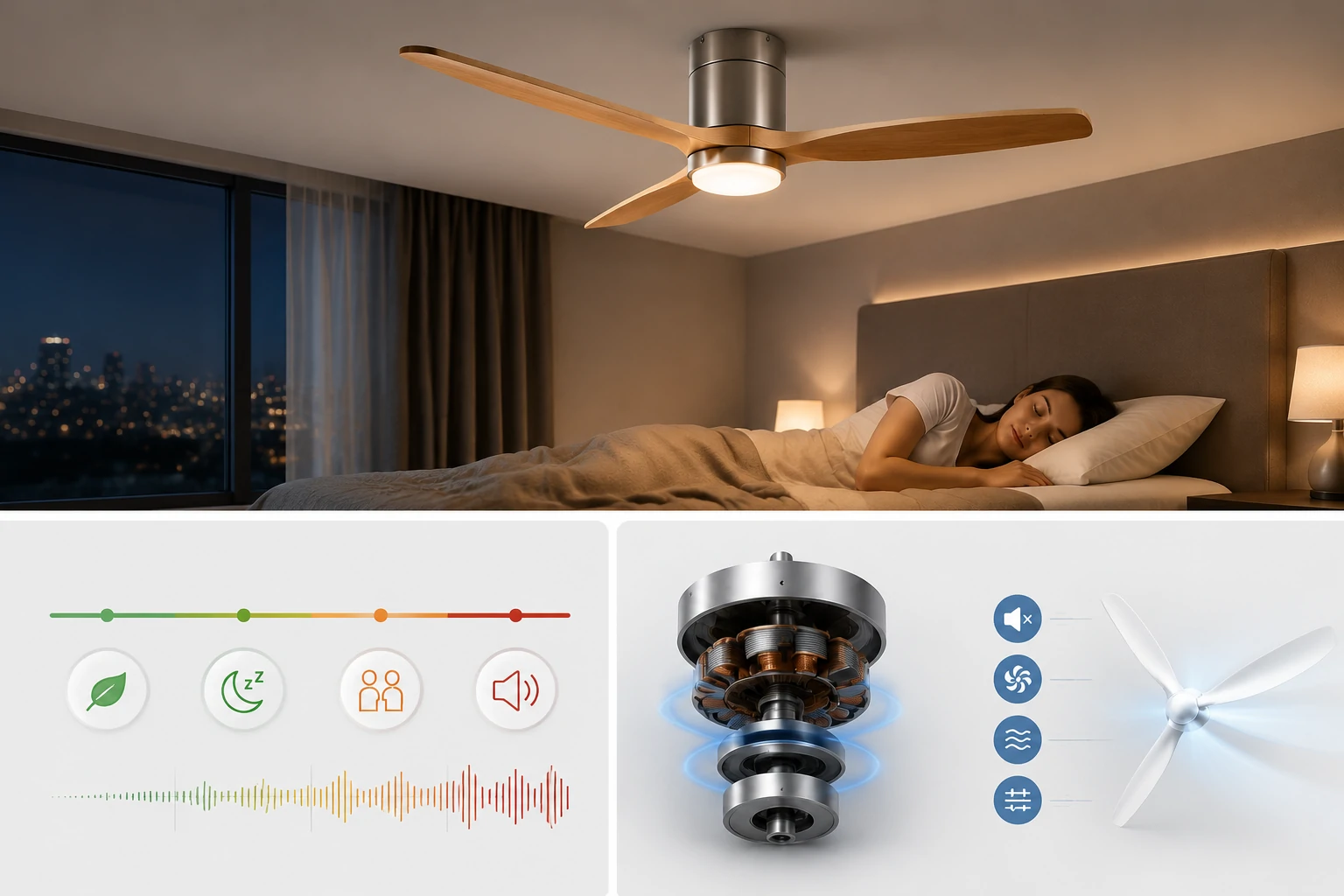


If you are considering buying a Smart Ceiling Fan Lights, the key question is not how many features it has, but whether those features truly improve your everyday experience.
For most households, a smart ceiling fan light is worth considering. It provides both lighting and air circulation, while making daily use more convenient through app control, remote control, voice control, and timer functions—whether in a bedroom, living room, or study.
It is not for everyone. If you simply want a basic, affordable, and reliable ceiling fan light, then smart features may not be necessary.
We’ll cover the pros, cons, use cases, and real-world value to help you decide if a smart ceiling fan light is worth buying.

TABLE OF CONTENT
1.What Are Smart Ceiling Fan Lights?
1-1.Beginner’s Guide
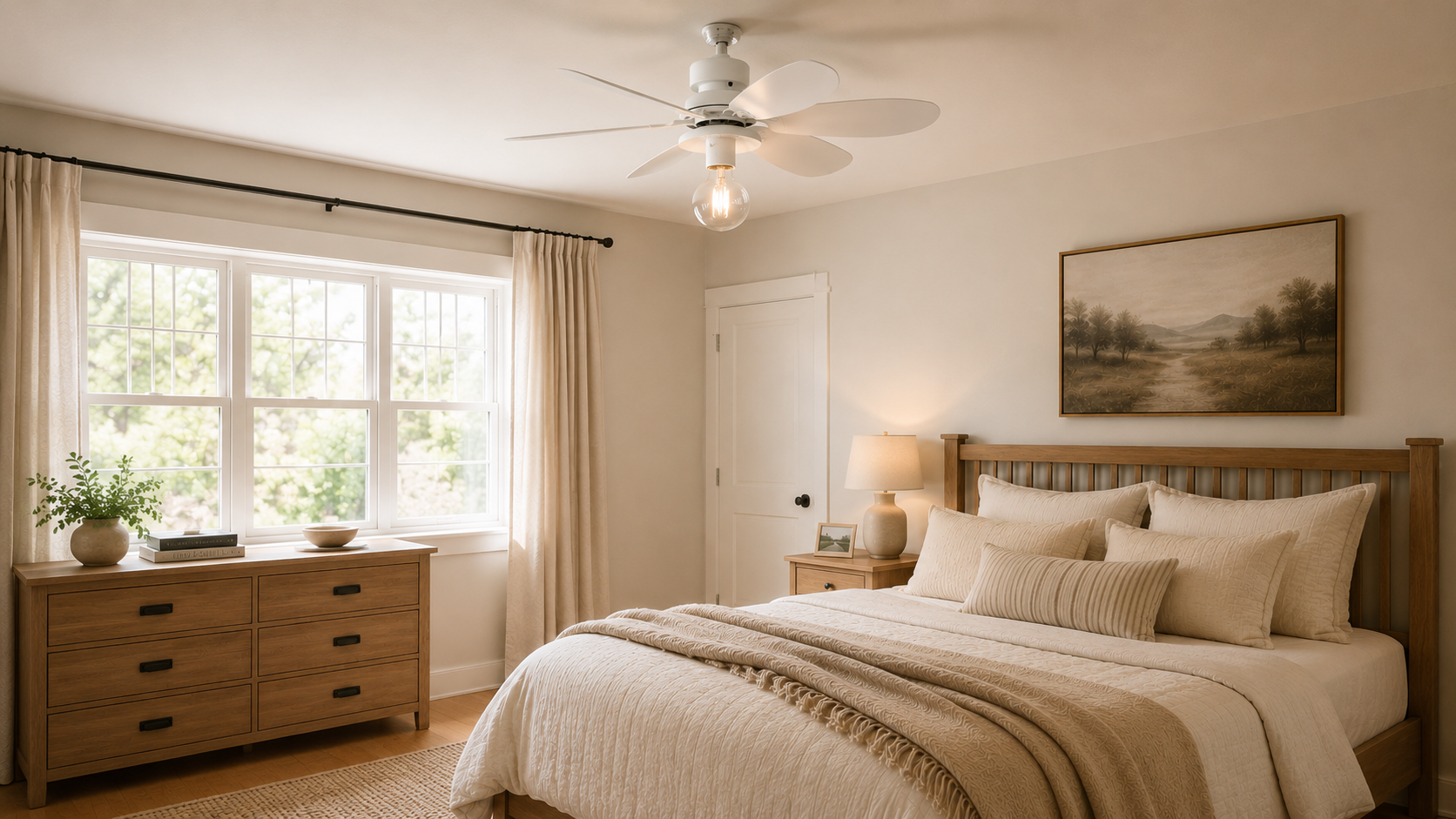
Smart ceiling fan lights are like combining a ceiling fan, a light, and smart home control into one product. They cool your room, light your space, and can be controlled easily with your phone or voice.
Inside, a motor moves the fan, an LED provides light, and a smart system connects everything so you can control it easily.
1-2. Key Components Explained
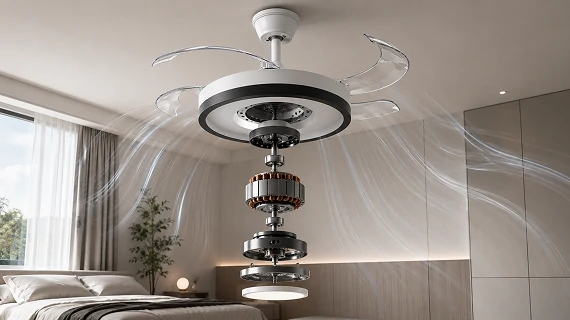
A smart ceiling fan light is built from four core systems that determine performance, efficiency, and smart functionality.
- Motor System (AC VS DC Motor System):
Drives the fan and directly affects airflow strength, energy efficiency, and noise level. DC motors are more commonly used in smart models because they offer smoother speed control, lower power consumption, and quieter operation compared to traditional AC motors.
- LED Lighting System (Lighting Module):
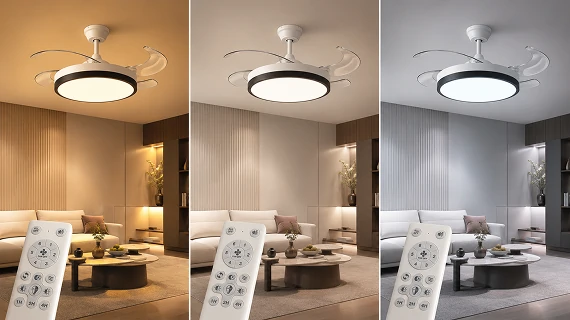
Provides stable and energy-efficient illumination with adjustable brightness and color temperature (CCT), allowing users to switch between warm, neutral, and cool lighting for different room atmospheres.
- Airflow System (Blade & Aerodynamic Design):
Controls how air is generated and distributed across the room. Blade shape, angle, and material are optimized to improve air circulation efficiency, reduce turbulence, and enhance overall comfort.
- Smart Control System (Connectivity Module):
Acts as the control hub of the product, enabling app control, voice commands (Alexa / Google Home), remote control operation, and integration with smart home ecosystems for automation features such as timers and schedules.
1-3. Working Principles
The working principle of smart ceiling fan lights is based on two main systems: air circulation and lighting control.
The motor spins the blades to generate airflow and improve room ventilation, while the LED lighting system works separately, allowing brightness and color temperature adjustments without affecting fan operation.
A smart control module manages the system, enabling control via app, remote, or voice commands. Some advanced models also support timers and automatic adjustments based on usage or environmental conditions.
1-4. Main Features at a Glance
Smart ceiling fan lights integrate multiple advanced features that improve comfort, efficiency, and user experience:
- App Control: Full remote control via smartphone
- Voice Control: Works with Alexa and Google Home
- Adjustable Lighting: Dimmable brightness and CCT
- Smart Scheduling: Automatic on/off based on routines
- Energy Efficiency: DC motor reduces power consumption
- Quiet Operation: Low-noise design for bedrooms and living spaces
2.What Makes a Ceiling Fan Light Smart?
2-1.Smartphone App Control
A smart ceiling fan light can be controlled directly from a smartphone app on iOS or Android devices. Users can turn the fan on or off, adjust fan speed, change light brightness, switch color temperatures, or set timers without using a wall switch.
This is especially useful for bedrooms, living rooms, and home offices where users want quick control from a sofa, bed, or desk. Some apps also allow multiple devices to be managed in one place, which is helpful for larger homes or multi-room setups.
2-2.Voice Control with Alexa and Google Home
Many smart ceiling fan lights support voice control through Alexa, Google Home, or other smart home platforms. Users can control the fan and light with simple voice commands, such as turning the light on, changing brightness, or adjusting fan speed.
This feature is convenient when your hands are full, when you are cooking, relaxing, or getting ready for bed. It also makes the ceiling fan light easier to use for elderly users or families who prefer hands-free operation.
2-3. Fan Speed, Lighting, and Scene Adjustment
Smart ceiling fan lights usually allow users to adjust fan speed, LED brightness, and light color temperature based on different daily needs. For example, users may choose bright white light for working, warm dim light for relaxing, or a quiet low-speed airflow mode for sleeping.
Some models also support scene modes. A user can create settings like “Sleep Mode,” “Reading Mode,” or “Movie Mode,” combining fan speed and lighting in one preset. This makes the product more than a basic ceiling fan light—it becomes part of the room’s comfort system.
2-4.Timer and Scheduling Automation
Timer and scheduling functions are one of the most practical smart features. Users can set the fan or light to turn on or off automatically at specific times. For example, the fan can turn off after two hours at night, or the light can turn on before you arrive home.
This helps improve comfort, save energy, and reduce unnecessary operation. In bedrooms and kids’ rooms, timer settings are especially useful because users do not need to wake up to turn off the fan or light manually.

3.Smart Ceiling Fan Lights vs. Traditional Ceiling Fan Lights
3-1.Smart Control vs Manual Control Systems
Smart ceiling fan lights allow users to control speed, lighting, and modes through apps, remotes, or voice assistants, while traditional ceiling fans rely on manual switches or pull chains.
3-2.Adjustable LED Lighting vs. Basic Lighting
Smart integrated units combine fan and LED lighting in a single fixture, improving space efficiency and design consistency. Traditional setups often require separate ceiling lights or lamps, increasing installation complexity.
3-3.Automation Features vs Fixed Operation
Advanced systems support automation such as timers, scheduling, and sensor-based adjustments, allowing the device to adapt to user behavior. Conventional fans operate at fixed speeds without intelligent response capabilities.
3-4.User Experience and Convenience Comparison
Smart ceiling fan lighting systems offer a more seamless and convenient user experience, with remote and smart controls making daily operation easier and more flexible. They are especially suitable for compact or low-ceiling spaces where designs like flush mount or low profile models are commonly used.
In contrast, traditional ceiling fans focus mainly on basic airflow and lighting, with limited control options and less adaptability to different living environments.
4.Pros of Smart Ceiling Fan Lights
4-1.Energy Efficiency and Lower Electricity Cost
Modern fan lighting systems typically use DC motors and LED technology, which significantly reduce energy consumption compared to traditional AC fan and lighting combinations. This helps lower electricity bills while maintaining strong airflow and stable lighting performance.
4-2.All-in-One Design
The integrated structure combines cooling, lighting, and smart control into a single ceiling fixture. This reduces installation complexity, saves ceiling space, and improves overall design consistency in residential and commercial environments.
4-3.Smart Home Integration Convenience
These systems can connect with smart home platforms such as Alexa and Google Home, allowing users to control fan speed, lighting, and schedules through voice commands or mobile apps, improving daily convenience.
4-4.Quiet and Comfortable Operation
Due to improved motor engineering and blade aerodynamics, modern units run quietly while maintaining smooth and stable airflow, making them ideal for bedrooms, offices, and other noise-sensitive spaces.
5. Cons of Smart Ceiling Fan Lights
5-1.Higher Initial Purchase Cost
Compared to traditional ceiling fans or basic ceiling fan with light and remote models, smart integrated systems usually have a higher upfront cost due to advanced electronics, DC motors, and smart control modules. However, this cost is often balanced by long-term energy savings and durability.
5-2.Installation Requires More Technical Setup
Installation can be more complex than standard low profile ceiling fan with light or flush mount ceiling fan with light models, as smart systems may require wiring configuration, remote pairing, or app setup. Professional installation is often recommended for best performance.
5-3. Network Dependence and Offline Limitations
Advanced models rely on stable power supply and WiFi connectivity for full functionality. If the network is unstable or power is interrupted, some smart features such as app or voice control may be limited, although basic fan operation still works.
5-4.Compatibility Limitations with Older Smart Systems
Some smart ceiling systems may not fully integrate with older smart home ecosystems or non-standard platforms. This can limit cross-device compatibility, especially in mixed-brand environments or older smart home setups.

Ready to Find the Right Smart Ceiling Fan for Your Home?
6. Where Can Smart Ceiling Fan Lights Be Used?
6-1. Bedroom Use
Bedrooms need a comfortable and quiet environment. The main purpose of using a smart ceiling fan light in a bedroom is not only cooling, but also creating gentle airflow, soft lighting, and easier night time control.
A ceiling fan with light and remote is practical for bedrooms because you can adjust airflow, lighting, and timer settings directly from the bed.
For low ceilings or compact bedrooms, a flush mount ceiling fan with light or low profile ceiling fan with light is a better choice. It stays close to the ceiling, saves space, and keeps the room feeling open.
6-2. Living Room Use
Living rooms need wider airflow and brighter lighting for daily activities such as relaxing, watching TV, family gatherings, and receiving guests.
A ceiling fan with light and remote makes control easier. Users can choose stronger airflow and brighter lighting during the day, then switch to lower fan speed and warmer dimmable lighting in the evening.
6-3. Kitchen and Dining Use
Smart ceiling fan lights can also be used in kitchens and dining areas, especially where space is limited and users want lighting and airflow in one fixture.
In dining rooms, soft lighting and low-speed airflow can make meals more comfortable. In kitchens, better air circulation can help reduce stuffiness, but the fan should not blow directly over cooking surfaces or disturb smoke and steam patterns.
For these spaces, easy-to-clean materials, stable lighting, and simple control are important. A compact or low-profile design is often a better choice for smaller kitchens or dining areas.
6-4. Home Office Use
Home offices and study rooms benefit from steady airflow, comfortable lighting, and quiet operation. Since people may spend several hours working in one space, airflow and lighting comfort can directly affect focus and productivity.
A smart ceiling fan light with adjustable brightness and color temperature is useful for different tasks. Neutral or cool white light can support work and reading, while lower brightness can create a more relaxed environment after work.
6-4. Kids’ Room Use
Kids’ rooms need gentle airflow, safe operation, and comfortable lighting. A smart ceiling fan light can help keep the room comfortable without using strong direct wind.
For children’s rooms, low-speed airflow, quiet operation, warm dimmable lighting, and timer settings are especially useful. Parents can set the light to a softer brightness before bedtime or schedule the fan to turn off after the child falls asleep.
6-5. Apartment Use
Apartments and small spaces often need compact, multifunctional products. A low profile ceiling fan with light is useful because it combines lighting, airflow, and smart control in one ceiling fixture without taking up too much overhead space.
6-7. Commercial Project Use
Smart ceiling fan lights can be used in selected commercial projects, including cafés, restaurants, boutique hotels, retail stores, reception areas, offices, meeting rooms, and multi-room developments.
For commercial buyers, the key value is not only comfort, but also project consistency. A good ceiling fan light should provide stable airflow, reliable lighting, easy control, and simple maintenance across multiple rooms or spaces.
In design-focused commercial projects, product style also matters. For example, rustic ceiling fans can be a good choice for farmhouse-style restaurants, cafés, boutique hotels, vacation rentals, and warm hospitality interiors. They help add decorative character while still providing practical airflow and lighting.
For larger projects, buyers should also consider bulk supply capability, matching finishes, installation type, packaging safety, and after-sales support. This makes smart ceiling fan lights a practical option for both functional comfort and commercial interior design.

7.What Should You Consider Before Buying a Smart Ceiling Fan Light?
7-1.Room Size and Fan Size Match
The first thing to check is whether the fan size fits your room. A fan that is too small may not move enough air, while a fan that is too large may feel too strong or look visually heavy in a compact space.
| Room Size | Recommended Fan Size | Best For |
|---|---|---|
| Under 75 sq ft | 29"–36" | Small bedroom, kids’ room, study, kitchen |
| 75–144 sq ft | 36"–44" | Bedroom, small dining room, home office |
| 144–225 sq ft | 44"–52" | Master bedroom, living room, dining room |
| 225–400 sq ft | 52"–60" | Large living room, open space, suite |
| Over 400 sq ft | 60"+ or multiple fans | Large room, commercial space, open area |
Ceiling height also matters. For low ceilings, a flush mount or low profile smart ceiling fan light is usually safer and more practical. For higher ceilings, a downrod ceiling fan light can help improve airflow coverage.
7-2.Smart Home Compatibility
Smart home compatibility determines whether the fan light can work smoothly with your daily smart devices. Before buying, check whether it supports app control, Alexa, Google Home, or your preferred smart home platform.
Use low or medium fan speed for daily comfort instead of running the fan at high speed all the time. In summer, use the fan with your air conditioner to improve air circulation and reduce the need for stronger cooling.
Dimming is also useful. Warm, lower-brightness lighting is often enough for relaxing, watching TV, or getting ready for bed. This helps avoid unnecessary lighting energy use.
Regular maintenance can also help. Keep the blades clean, make sure the fan is balanced, and check that the remote or app controls work properly. A clean and stable fan usually runs more smoothly and efficiently.
What to check:
- Does it support your mobile app system?
- Does it work with Alexa or Google Home?
- Does it require 2.4GHz WiFi?
- Can it still work if WiFi disconnects?
7-3.Airflow and Noise Levels
Smart home compatibility determines whether a ceiling fan with light and remote can work smoothly with your daily smart devices. Before buying, check whether it supports app control, Alexa, Google Home, or your preferred smart home platform.
A DC motor smart ceiling fan light is usually quieter, more energy efficient, and offers smoother speed adjustment than a traditional AC motor model. More fan speed levels also give users better control over daily comfort.
When comparing models, do not only look at the highest fan speed. A good fan should stay stable and quiet at low, medium, and high speeds.
7-4.Lighting Setup
A smart ceiling fan light is also a lighting fixture, so lighting quality is just as important as airflow. Before buying, check the brightness, color temperature, dimming function, and lighting coverage.
For bedrooms and living rooms, warm light creates a softer and more relaxing atmosphere. For kitchens, study rooms, and work areas, neutral or cool white light may be more practical.
A model with 3CCT and dimmable LED lighting is more flexible because users can adjust the light for sleeping, reading, working, or relaxing.
| Lighting Feature | Why It Matters |
|---|---|
| Brightness | Determines whether it can be the main room light |
| 3CCT | Allows warm, neutral, and cool light options |
| Dimming | Adjusts brightness for different activities |
| LED efficiency | Helps reduce energy use and maintenance |
7-5.Control Options
Control options affect how convenient the product feels in daily life. A smart ceiling fan light may support remote control, app control, voice control, wall switch control, and timer settings.
Remote control is simple and easy for daily use. App control is better for users who want scheduling, multi-device control, or remote access. Voice control is useful when your hands are full or when you want a hands-free experience.
Timer settings are especially useful at night. Users can set the fan or light to turn off automatically after a certain time, which improves comfort and reduces unnecessary energy use.
7-6.Budget and Feature Selection
Smart ceiling fan lights usually cost more than basic ceiling fan lights, so budget should be evaluated together with long-term value.
A basic model may be enough if you only need simple fan speed adjustment, remote control, and standard lighting. A higher-end model may be worth considering if you want app control, voice control, quiet DC motor performance, dimmable LED lighting, 3CCT, timer settings, and better airflow control.
Do not compare price only. A better motor, more stable control system, lower noise level, better LED quality, and reliable after-sales support can make the product more valuable over time.
A smart ceiling fan light is worth buying when it matches your room, your control habits, your lighting needs, and your long-term budget.

8.Do Smart Ceiling Fan Lights Actually Save Money?
8-1.Motor and LED Efficiency
The motor and LED light are the two main parts that affect daily energy use. In many smart ceiling fan lights, a DC motor is more efficient than a traditional AC motor. It can provide smoother speed control, quieter operation, and lower power consumption during long-term use.
This matters most if you use the fan every day, especially in bedrooms, living rooms, dining rooms, or home offices. A more efficient motor may not seem like a big difference in one hour, but over months or years, the savings can become more noticeable.
LED lighting also helps reduce energy use. Compared with traditional bulbs, LED modules usually use less power while providing stable brightness. If your smart ceiling fan light supports dimming, you can lower the brightness when full light is not needed, which further reduces energy waste.
From a practical point of view, you should not only look at the wattage. You should also check whether the fan provides enough airflow and whether the LED light is bright enough for your room. A low-watt product is only useful if it still meets your comfort and lighting needs.
8-2.Smart Standby Power
Smart ceiling fan lights may continue to use a small amount of power even when they are not actively running. This is called standby power. It usually comes from the WiFi module, receiver, control board, or voice-control connection.
Use low or medium fan speed for daily comfort instead of running the fan at high speed all the time. In summer, use the fan with your air conditioner to improve air circulation and reduce the need for stronger cooling.
Dimming is also useful. Warm, lower-brightness lighting is often enough for relaxing, watching TV, or getting ready for bed. This helps avoid unnecessary lighting energy use.
Regular maintenance can also help. Keep the blades clean, make sure the fan is balanced, and check that the remote or app controls work properly. A clean and stable fan usually runs more smoothly and efficiently.
8-3.Timers and Auto-Off
Timers and auto-off functions are some of the most practical ways a smart ceiling fan light can reduce waste. Many people forget to turn off the fan or light, especially at night. A timer helps solve this problem automatically.
For example, you can set the fan to turn off after two hours when you go to sleep. You can also schedule the light to turn off after bedtime or set the fan to run only during the warmest part of the day. This prevents unnecessary operation without needing manual control every time.
Auto-off is especially useful in bedrooms, kids’rooms, guest rooms, and rental apartments. These are spaces where people may leave the fan or light running longer than needed.
If the product supports app scheduling, you can create more flexible routines. For example, you can set a lower fan speed at night, turn off the light automatically, or run the fan before you return home.
8-4.Airflow and AC Savings
A ceiling fan does not lower the room temperature by itself, but it helps move air and improves how the room feels. When air circulates better, you may feel more comfortable without setting the air conditioner as low.
This is where a smart ceiling fan light can help reduce cooling costs. In summer, using the fan together with the air conditioner may allow you to raise the thermostat slightly while still feeling comfortable. The fan helps distribute cool air more evenly across the room.
This is especially useful in bedrooms, living rooms, dining rooms, and open spaces where air can feel uneven. A good fan can reduce hot spots, improve air movement, and make the cooling effect feel more natural.
However, the fan should be sized correctly for the room. If the fan is too small, it may not move enough air. If it is too large, you may need to run it at lower speeds to avoid discomfort.
8-5.Best Use Cases for Savings
Smart ceiling fan lights are more likely to save money in rooms that are used often. If you use a bedroom, living room, or home office every day, the energy-saving features have more chances to make a difference.
Bedrooms are one of the best use cases because timers, quiet operation, dimming, and low-speed airflow are all useful at night. Living rooms can also benefit because they are often used for long periods, especially in warm seasons.
Home offices and study rooms can benefit from steady airflow and adjustable lighting. If you spend many hours working in one room, using a fan instead of relying only on air conditioning can help reduce energy use.
On the other hand, rooms that are rarely used may not show obvious savings. For example, if a guest room is used only a few times a year, the energy-saving benefit may not justify a higher price.
8-6.Cost and Long-Term Value
A smart ceiling fan light usually costs more than a basic ceiling fan light. That is why you should compare not only the purchase price, but also the long-term value.
Use low or medium fan speed for daily comfort instead of running the fan at high speed all the time. In summer, use the fan with your air conditioner to improve air circulation and reduce the need for stronger cooling.
Dimming is also useful. Warm, lower-brightness lighting is often enough for relaxing, watching TV, or getting ready for bed. This helps avoid unnecessary lighting energy use.
Regular maintenance can also help. Keep the blades clean, make sure the fan is balanced, and check that the remote or app controls work properly. A clean and stable fan usually runs more smoothly and efficiently.
8-7.When Savings May Be Limited
A smart ceiling fan light may not save much money in every situation. If you rarely use the room, the energy savings will be small. A smart model is less valuable when the fan and light are only used occasionally.
Savings may also be limited if you buy a product with too many features you do not use. For example, if you never use app control, voice control, scenes, or scheduling, then paying more for those features may not provide enough practical value.
Incorrect sizing can also reduce savings. A fan that is too small may need to run at high speed all the time. A fan that is too large may feel uncomfortable and be used less often. Poor installation can also cause noise, vibration, or lower efficiency.
Low-quality products can create extra costs as well. If the motor, LED module, remote receiver, or control board fails too quickly, repair or replacement costs may cancel out the energy savings.
8-8.How to Save More Energy
A smart ceiling fan light usually costs more than a basic ceiling fan light. That is why you should compare not only the purchase price, but also the long-term value.
At night, use low-speed airflow and timer settings instead of running the fan at high speed all night. During the day, use natural airflow or medium speed when possible. If the light is dimmable, lower the brightness when full brightness is not needed.
In summer, use the fan together with the air conditioner. You may be able to keep the room comfortable without setting the AC temperature too low. In mild weather, the fan alone may be enough for comfort.
Regular maintenance also helps. Clean dust from the blades, check whether the fan is balanced, and make sure the remote or app settings are working properly. Dust buildup and imbalance can make the motor work harder and reduce comfort.
9.Common Smart Ceiling Fan Light Questions for Families
9-1. Are Smart Ceiling Fan Lights Senior-Friendly?
For many seniors, the challenge is not the fan light itself, but learning how to use it. If they need to open an app, connect WiFi, or search through settings just to turn on the light or adjust the fan speed, the product can feel complicated.
A better solution is to keep setup and daily use separate. A younger family member can handle the app connection and smart settings first. After that, seniors should be able to use the fan light through a familiar remote control or wall switch.
For daily use, the key functions should be simple: power on/off, fan speed, light brightness, color temperature, and timer settings. Clear buttons, memory function, and stable basic control can make the product much easier to use.
Brands such as Haiku, Modern Forms, and Nebola combine smart control with familiar options like remote controls, wall switches, and voice control, making the product easier for different family members.
If you are buying a smart ceiling fan light for parents or grandparents, choose a model that is easy to learn and easy to repeat. Smart control should add convenience, not make daily use harder.
9-2.Is It Safe and Comfortable for Kids?
Yes, a smart ceiling fan light can be suitable for a baby or kids’ room, but you should choose the right model and use it properly.
Remote control is simple and easy for daily use. App control is better for users who want scheduling, multi-device control, or remote access. Voice control is useful when your hands are full or when you want a hands-free experience.
Timer settings are especially useful at night. Users can set the fan or light to turn off automatically after a certain time, which improves comfort and reduces unnecessary energy use.
The best choice is a model that supports more than one control method, so basic operation remains available even when WiFi is unstable.
9-3.Do I Have to Use the App Every Time?
No, you do not have to use the app every time if the smart ceiling fan light supports multiple control options.
In daily life, most users do not want to open a phone app just to turn on the light or adjust the fan. That is why remote control, wall switch control, and voice control are important. The app is useful for scheduling, advanced settings, and smart home automation, but it should not be the only way to operate the product.
Timer settings are especially useful at night. Users can set the fan or light to turn off automatically after a certain time, which improves comfort and reduces unnecessary energy use.
The best choice is a model that supports more than one control method, so basic operation remains available even when WiFi is unstable.
9-4.Will It Still Work If WiFi Goes Down?
In most cases, basic functions should still work if WiFi goes down, as long as the product supports remote control or wall switch control.
When WiFi disconnects, app control and voice control may stop working temporarily. However, the fan and light should not become unusable. A reliable smart ceiling fan light should still allow you to turn the light on or off and adjust basic fan functions through the remote or local control.
This is especially important for bedrooms, kids’ rooms, and family spaces. You do not want the light or fan to depend completely on an internet connection.
Before buying, check whether the product supports offline basic control.
9-5.Will It Remember My Light and Fan Settings?
Some smart ceiling fan lights can remember previous light and fan settings, but this depends on the model.
A memory function is useful if you often turn the product off through a wall switch. For example, if you set the light to warm color and medium brightness, a good memory function may restore the same setting when you turn it on again.
This is helpful for seniors, bedrooms, and daily-use rooms because users do not need to reset the brightness, color temperature, or fan speed every time.
However, not every product has the same memory behavior. Some models may remember only the light setting, while others may also remember fan speed or timer settings.
9-6.Can It Adjust Automatically During Sleep?
Yes, many smart ceiling fan lights can support sleep-friendly control through timers, schedules, or smart scenes.
At night, you may not want the fan to run at the same speed all night. A timer can turn the fan off after a set time, while a schedule can lower the fan speed later in the night. Some advanced models may also support automation based on room temperature or smart home scenes.
This is useful for bedrooms and children’s rooms. For example, you can use stronger airflow before sleep, then switch to low speed or turn the fan off automatically after one or two hours.
Dimmable lighting is also helpful at night. You can lower the brightness before bed or use warm light to create a more comfortable sleep environment.
10.Final Verdict: Are Smart Ceiling Fan Lights Worth Buying?
10-1.Who Should Buy a Smart Ceiling Fan Light?
You may benefit from a smart ceiling fan light if you:
- Want to control the fan and light with a remote, app, or voice assistant
- Need a quiet fan for bedrooms, kids’ rooms, or home offices
- Want dimmable LED lighting and adjustable color temperature
- Use timers or schedules to reduce unnecessary energy use
- Want better air circulation while using air conditioning
- Prefer a clean ceiling design with fewer separate fixtures
- Live in an apartment, small home, or room with limited ceiling space
- Want a modern ceiling fan light that fits smart home systems
For families, smart ceiling fan lights can make daily use easier. Parents can set timers for kids’ rooms, seniors can use a simple remote control, and users can adjust lighting and airflow without getting up.
For homeowners, landlords, hotels, and rental properties, they can also improve room comfort while keeping the ceiling design clean and functional.
10-2.Who May Not Need One?
You may not need a smart ceiling fan light if you:
- Rarely use the room where it will be installed
- Do not need app control, voice control, timers, or automation
- Prefer a simple wall switch only
- Have a very limited budget
- Already have separate lighting and fan systems that work well
- Do not want to deal with WiFi setup or smart home pairing
- Need only temporary or short-term use
10-3.Final Buying Advice
If you are choosing a smart ceiling fan light, focus on practical value instead of the number of smart features. A good product should be easy to use, quiet, stable, energy efficient, and suitable for your room size.
Before buying, check these points carefully:
- Room size and fan size match
- Ceiling height and installation type
- Airflow performance and noise level
- LED brightness, dimming, and color temperature
- Remote control, app control, voice control, and wall switch support
- WiFi and smart home compatibility
- Timer, scheduling, and memory functions
- Motor quality, product reliability, and after-sales support