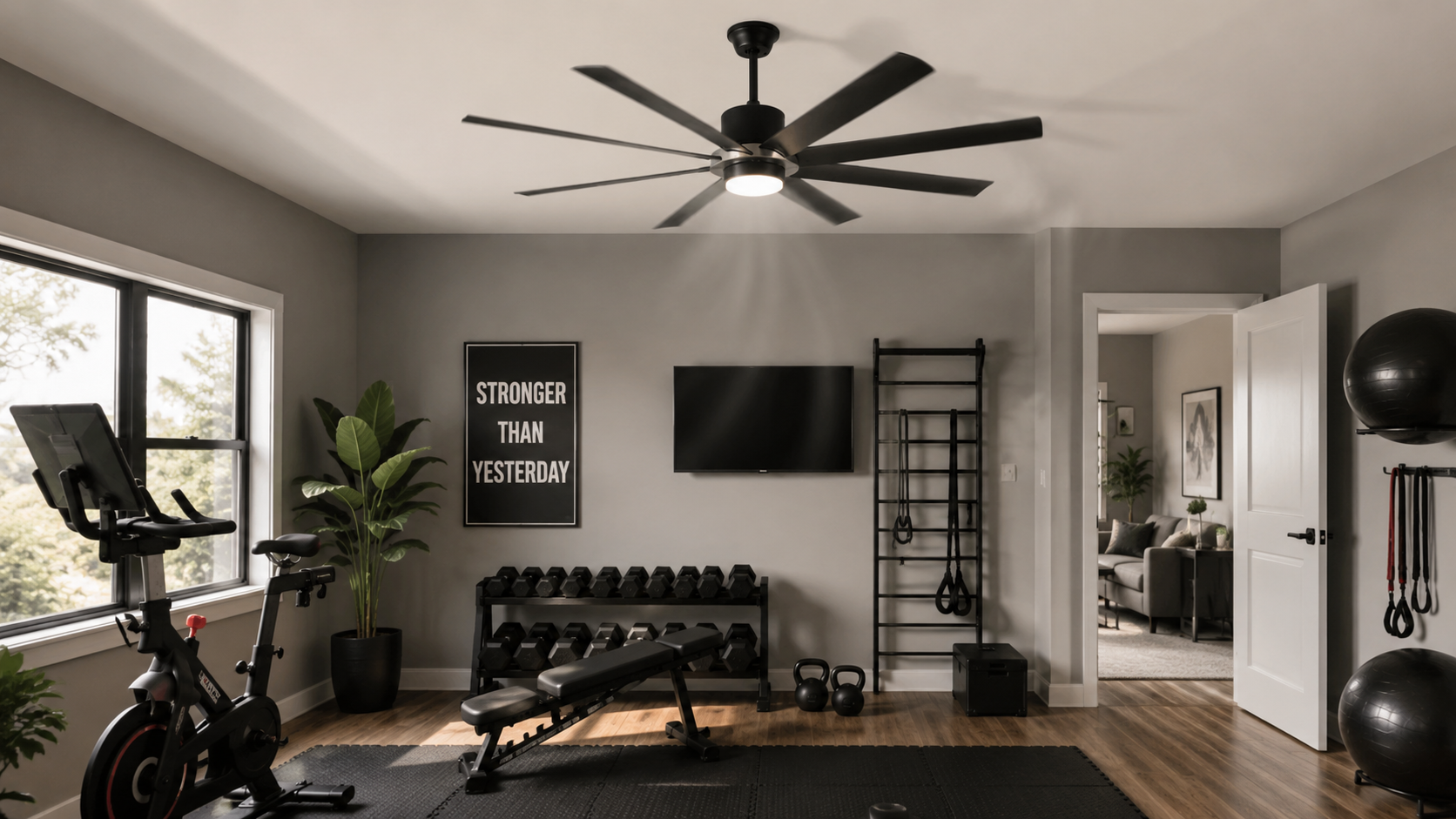


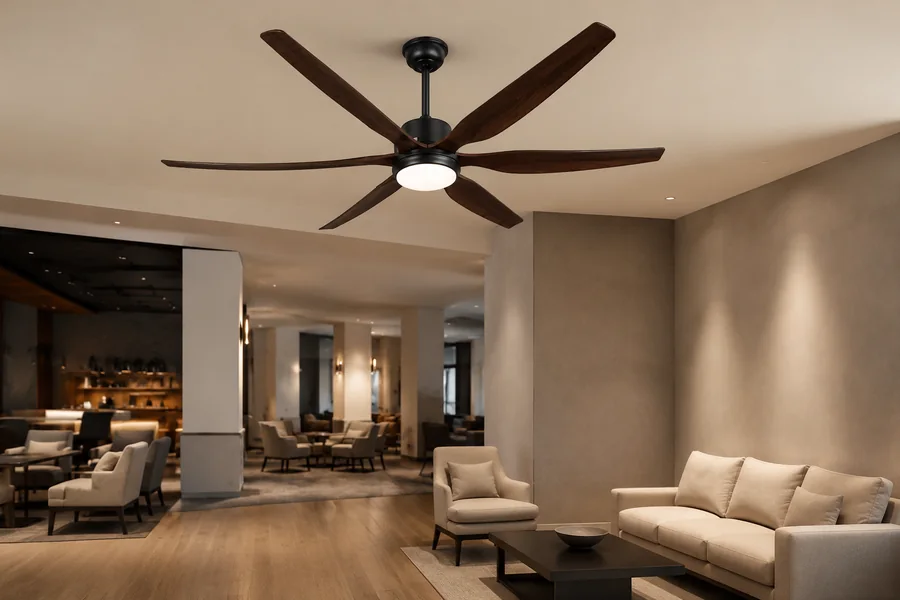
Choosing between a commercial ceiling fan and a residential fan is not just a matter of size. It is about how the space is used, how long the fan will run, how much air it must move, and how easy it is to maintain over time. If you are comparing fan types for a home, hotel, shop, warehouse, office, or project space, a wider commercial ceiling fan guide can help you see why the same fan may feel right in one room and wrong in another.
A ceiling fan in a bedroom may run quietly for a few hours in the evening. A fan in a restaurant, showroom, gym, warehouse, or hotel corridor may run for most of the day. That difference changes almost everything: motor choice, blade size, mounting method, airflow target, control system, safety checks, and after-sales planning.
This guide explains the key differences in plain terms, so you can choose with less guesswork and fewer costly mistakes.
1. Commercial and Residential Fans Are Designed for Different Jobs
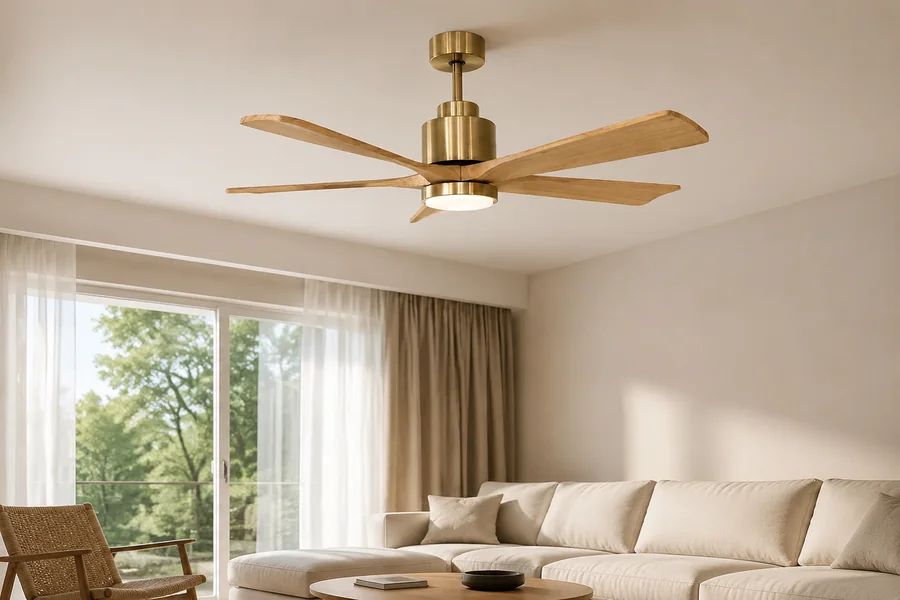
A residential fan is usually chosen for comfort. It needs to look good, feel quiet, match the room style, and give gentle airflow where people sit, sleep, cook, or relax.
A commercial ceiling fan has a different job. It often needs to move air across a larger area, run for longer hours, and support a wider use case. It may be installed in a hotel lobby, open office, covered terrace, warehouse, retail store, workshop, or hospitality project.
The aim is not always stronger wind. The aim is useful air movement over the right area, with stable performance and fewer service problems.
1-1. Residential fans focus on daily comfort
In a home, people notice small details. They notice noise at night. They notice whether the light is too cold. They notice whether the remote is easy to use. They notice if the fan looks too heavy for the room.
That is why a good residential fan often focuses on:
- Quiet low-speed airflow.
- Warm or dimmable lighting.
- Remote or smart control.
- A size that fits the room visually.
- Easy cleaning and simple use.
For example, a 52 inch modern ceiling fan with LED and DC motor can work well in many living rooms or bedrooms because it balances size, light, and quiet operation.
1-2. Commercial fans focus on area coverage and duty cycle
Commercial spaces are less forgiving. If airflow is weak, a large area may feel still. If the fan is noisy, guests, workers, or customers may complain. If parts are hard to replace, maintenance becomes expensive.
Commercial fans are often judged by:
- How much area they cover.
- How stable the airflow feels over time.
- Whether the motor can handle longer running hours.
- Whether the mounting system suits the ceiling height.
- Whether the fan can be maintained in a project environment.
For larger commercial spaces, a 70 inch industrial warehouse ceiling fan with LED is a better fit than a standard home fan because the blade span and airflow coverage are built for wider rooms.
1-3. The same fan size can feel different in different spaces
A 56 inch fan may feel large in a small bedroom, but modest in a wide lounge. A 66 inch fan may feel comfortable in a high-ceiling lobby, but too dominant in a low domestic room.
This is why fan choice should start with the space, not the product photo.
2. Space Size and Ceiling Height Change the Fan Choice
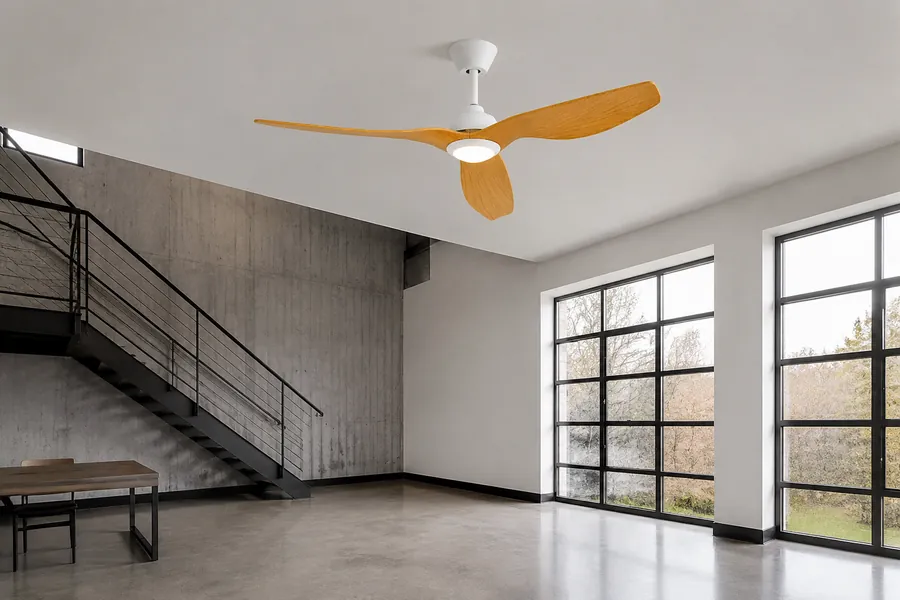
The biggest difference between commercial and residential fans is not the label. It is the space around the fan.
Homes usually have smaller rooms, lower ceilings, and furniture that creates clear zones. Commercial spaces are often wider, taller, more open, or used by many people at once.
| Factor | Residential Fan | Commercial Ceiling Fan |
|---|---|---|
| Typical room | Bedroom, living room, kitchen, apartment | Hotel lobby, shop, warehouse, office, restaurant |
| Ceiling height | Often 8-10 ft | Often higher or more varied |
| Main goal | Personal comfort | Wider air circulation |
| Running time | Intermittent | Longer daily use |
| Visual priority | Style and proportion | Coverage, safety, durability |
2-1. Residential rooms usually need balanced airflow
In a home, bigger is not always better. A fan that is too large may create too much direct airflow, especially over a bed or sofa. It may also look heavy in the room.
Most residential rooms need a fan that moves air gently and evenly. Low-speed control matters more than maximum speed.
2-2. Commercial spaces often need wider air circulation
In a shop, lobby, dining area, or open workspace, airflow must reach more than one person. It may need to move across seating areas, walkways, service counters, or work zones.
That is where a larger blade span can help. A 66 inch wood ceiling fan light with DC motor and remote can suit larger rooms where both airflow coverage and design value matter.
2-3. High ceilings need different mounting choices
Ceiling height affects comfort and safety. A fan that sits too high may not move air where people feel it. A fan that sits too low can feel unsafe or visually awkward.
For standard homes, flush mount or short downrod options may be enough. For commercial spaces, downrod length, ceiling structure, and installation access become more important.
3. Airflow, CFM, and Fan Performance Are Not the Same Thing
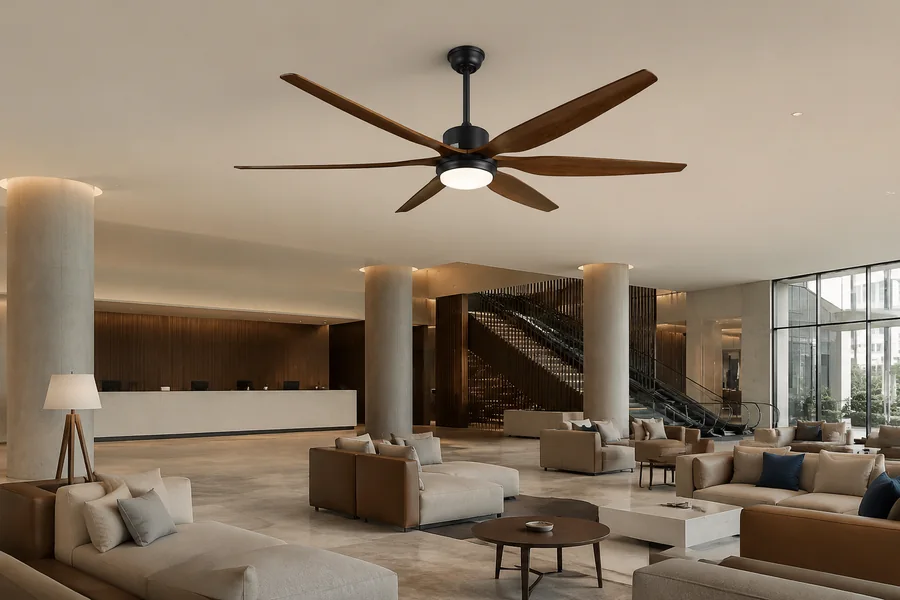
Many buyers look only at blade size or CFM. That is understandable, but it is not enough.
CFM shows how much air a fan can move. Fan performance also depends on motor quality, blade pitch, speed range, room layout, mounting height, and how the airflow feels in real use.
3-1. CFM matters more in larger spaces
In a small bedroom, comfort may come from quiet low-speed airflow. In a commercial space, the fan may need enough CFM to prevent still air across a larger area.
This is one reason commercial fans tend to use larger diameters, stronger motors, or more robust airflow design.
3-2. Motor quality affects long running hours
A fan that runs for two hours at home is not under the same load as a fan that runs all day in a hotel corridor or shop.
Commercial use places more pressure on the motor. A DC or BLDC motor can help reduce energy use and improve speed control, but the whole product must be built for the use case.
3-3. Air circulation should feel steady, not harsh
Strong wind is not the same as good air circulation. In hospitality and retail spaces, harsh airflow can annoy guests. In offices, it can disturb papers or make people feel cold.
Good commercial airflow should be wide, steady, and easy to control.
4. Installation and Safety Requirements Are More Demanding in Commercial Spaces
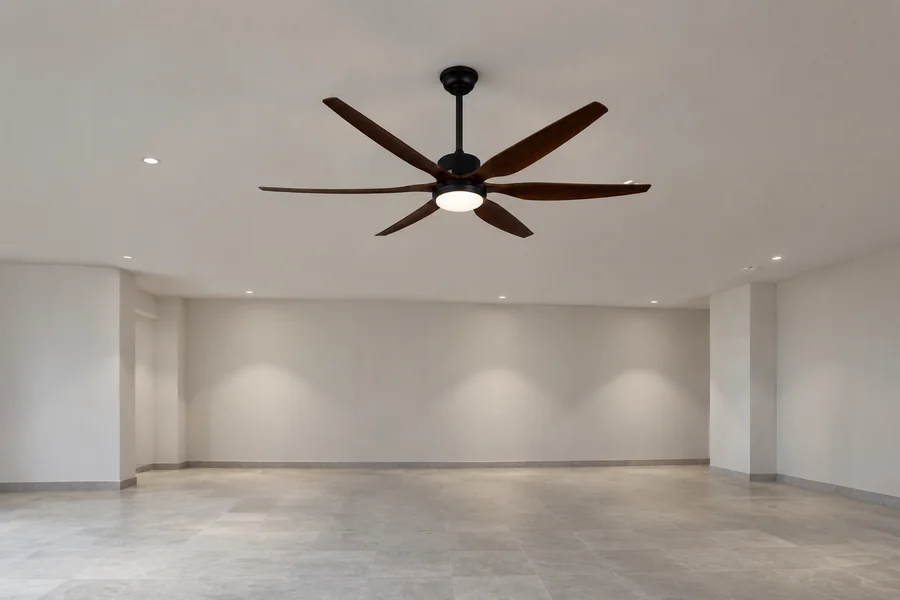
Installation is where commercial and residential fans start to separate clearly.
At home, the main checks are usually ceiling height, ceiling box support, blade clearance, wiring, and remote control setup. In commercial projects, the checks can be broader.
4-1. Commercial fans may need stronger mounting points
A larger commercial ceiling fan may be heavier and installed higher. The fixing point must be suitable for the load and the working environment.
Installers may need to check beams, brackets, ceiling structure, downrod length, and access for future service.
4-2. Clearance rules matter more in public spaces
Commercial spaces may include tall shelves, beams, sprinkler systems, lighting tracks, signs, or exposed ductwork. The fan must not clash with these.
Clearance also affects airflow. A fan too close to walls, beams, or furniture may not move air properly.
4-3. Outdoor and semi-outdoor areas need extra care
Covered patios, hotel terraces, restaurant verandas, and open corridors may need fans that suit moisture, dust, temperature changes, or salt air.
Not every residential fan is suitable for these areas. Always check the product rating and installation environment before using it in a semi-outdoor commercial space.
5. Residential Fans Give More Weight to Light, Style, and Comfort
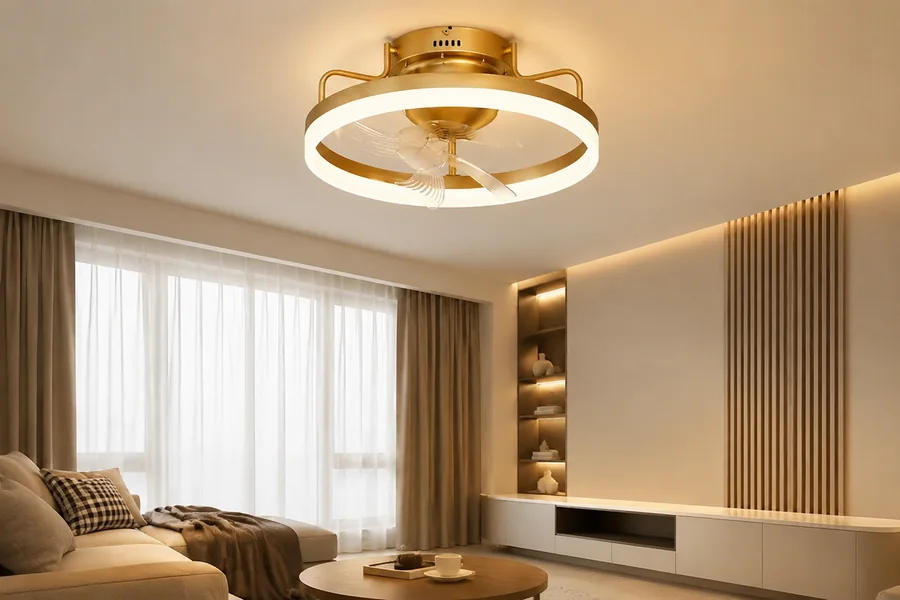
A residential fan is part of the room. It may sit above a bed, dining table, sofa, or kitchen island. That means style and light quality matter.
In many homes, the fan is also the main ceiling light. So the light cannot be an afterthought.
5-1. Integrated light is often important at home
Home users often want one fixture to handle both airflow and lighting. This is common in apartments, bedrooms, kitchens, and small living rooms.
A low profile hugger ceiling fan with light for small rooms can be useful where ceiling height is limited and the room still needs both light and air movement.
5-2. Noise is felt more strongly in bedrooms
In a home, especially in bedrooms, noise is personal. A slight hum may be acceptable in a shop but annoying during sleep.
That is why residential fans should offer quiet low-speed settings, stable rotation, and simple controls.
5-3. Style must match the room, not just the catalogue
A fan can be technically correct and still look wrong. A large industrial-style fan may feel out of place in a small soft bedroom. A small decorative fan may look weak in a large open living room.
The best residential fan should fit both the room size and the room mood.
Need the Right Ceiling Fan for a Home, Project, or Commercial Space?
Tell us your space type, ceiling height, airflow needs, lighting options, certification direction, and order plan. We’ll help match the right solution.
Get a Quote6. Commercial Fans Need Better Project Planning
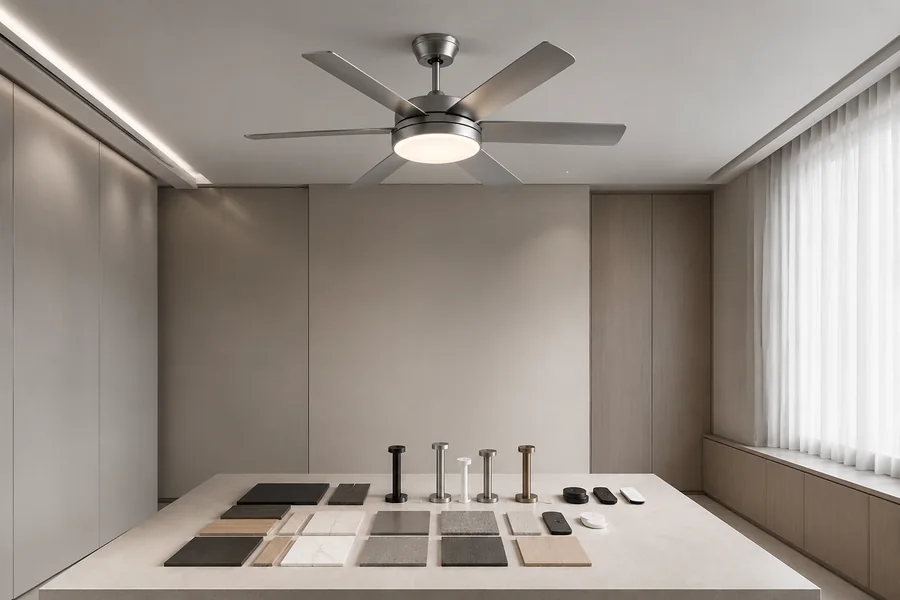
Commercial projects are rarely about one fan. Even when only one fan is used, the buyer often needs to think like a project manager.
That means checking quantity, spare parts, installation repeatability, packaging, lead time, certification, and long-term supply.
6-1. One model may need to work across many rooms
Hotels, apartments, serviced flats, offices, and retail chains often need a consistent product family. One fan may be used in guest rooms, another in public areas, and another in covered outdoor zones.
This is why a project buyer should plan by zones, not just by product style.
6-2. Spare parts and after-sales access matter
Commercial buyers should ask simple but important questions:
- Can replacement remotes be supplied later?
- Are downrods available in different lengths?
- Can LED parts or drivers be serviced?
- Are blades packed safely for project delivery?
- Can the same finish be repeated across batches?
These small points can save time when the project is already installed.
6-3. A supplier view helps reduce mistakes
As a ceiling fan light manufacturer, NEBOLA often looks at commercial fan choice from a supply and project angle: size range, motor option, lighting style, packaging, sample testing, and order planning. That view is useful because a fan that looks good in one sample room still needs to work across many real rooms.
7. Controls Are Different in Homes and Commercial Projects
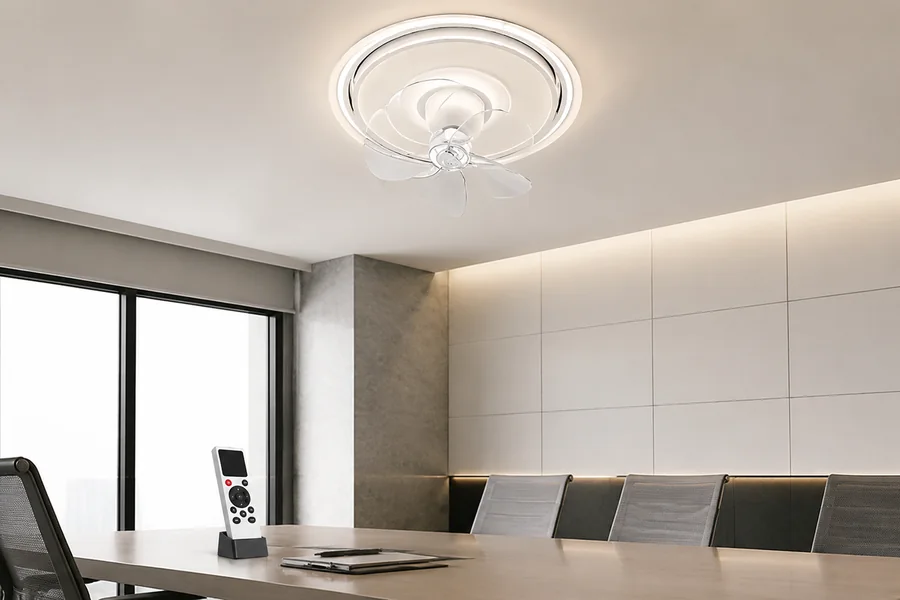
Control style changes how people use the fan every day.
At home, one remote control may be enough. In a commercial space, the control system may need to be simpler, more durable, or easier for staff to manage.
7-1. Residential users want convenience
Home users often prefer:
- Remote control.
- App or smart control.
- Dimmable light.
- Separate fan and light functions.
- Memory settings.
These features make daily use easier.
7-2. Commercial spaces need simple and repeatable control
In a hotel or office, controls should not confuse guests or staff. A fan with too many modes may create support calls.
For projects, simple wall control, central planning, or clearly labelled remote functions may be better than a complicated feature list.
7-3. Some semi-commercial rooms sit between both worlds
Garages, small studios, home offices, workshops, and rental properties sit between domestic and commercial use. They may need stronger airflow than a bedroom but less than a warehouse.
A black DC ceiling fan light for garage ceiling use can make sense in these mixed spaces because it combines a more practical look with stronger functional value.
8. Cost Should Include Energy, Maintenance, and Replacement Risk
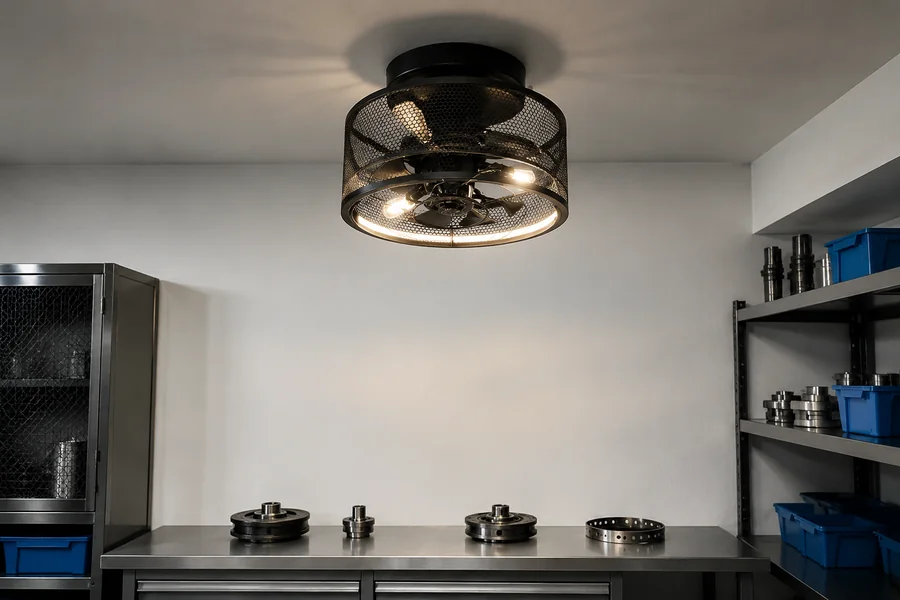
The cheapest fan is not always the lowest-cost fan. This is especially true in commercial use.
If a fan is hard to install, noisy, unstable, or difficult to service, the real cost rises after purchase.
8-1. Residential cost is often about comfort value
For a homeowner, value means the fan looks right, works quietly, lights the room well, and lasts without trouble.
The buying decision is usually personal. One or two fans may be enough.
8-2. Commercial cost is multiplied by quantity
In a project, a small mistake can repeat across many rooms. If the wrong size is installed in 40 rooms, the problem is not small anymore.
That is why project buyers should test samples, check installation details, and compare real airflow before placing larger orders.
8-3. Energy efficiency matters more with long running hours
The longer a fan runs, the more motor efficiency matters. A more efficient motor may cost more at first, but it can reduce running cost in spaces where fans operate daily.
Energy efficiency also supports quieter operation when paired with a good motor and sensible speed control.
9. How to Choose Between Commercial and Residential Ceiling Fans
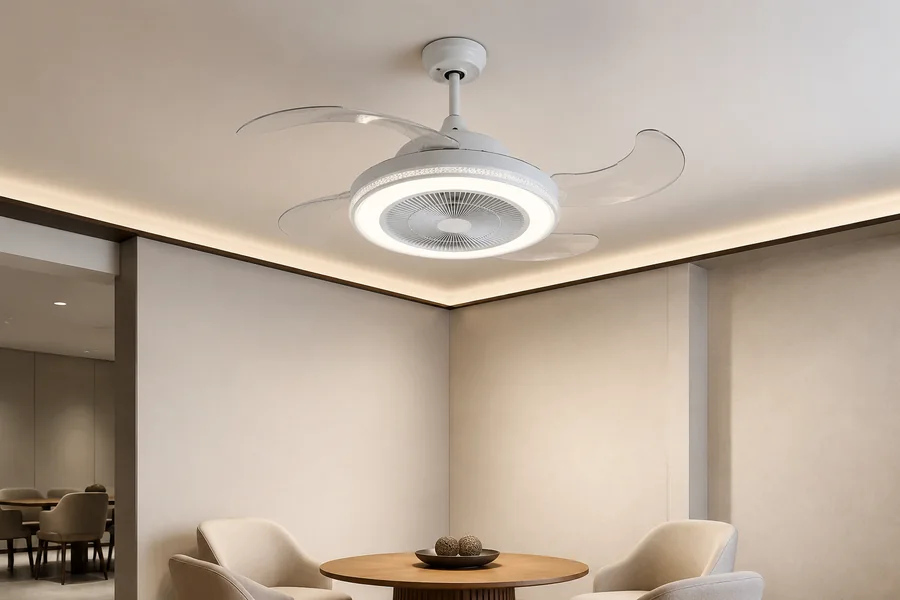
The easiest way to choose is to describe the room honestly.
Is it a private room or a public space? Will the fan run for a few hours or most of the day? Is the ceiling low or high? Do people need gentle comfort or wide air circulation?
9-1. Choose a residential fan when comfort is the main goal
A residential fan is usually the better choice when:
- The room is a bedroom, living room, kitchen, or apartment.
- The ceiling height is standard or low.
- Quiet operation is very important.
- Lighting comfort matters.
- The fan must match the interior style closely.
9-2. Choose a commercial ceiling fan when the space is larger or busier
A commercial ceiling fan is usually the better choice when:
- The space is large, open, or high-ceilinged.
- The fan will run for long hours.
- Air needs to reach many people or zones.
- Installation and safety checks are more demanding.
- Maintenance planning matters.
9-3. For hospitality spaces, comfort and project control both matter
Hotels are a special case. Guest rooms may need residential-level quiet comfort, while lobbies and public areas may need commercial-grade airflow planning.
For more detail on hotels, see this guide to hotel ceiling fan size, noise and energy efficiency.
10. A Practical Decision Checklist Before Buying
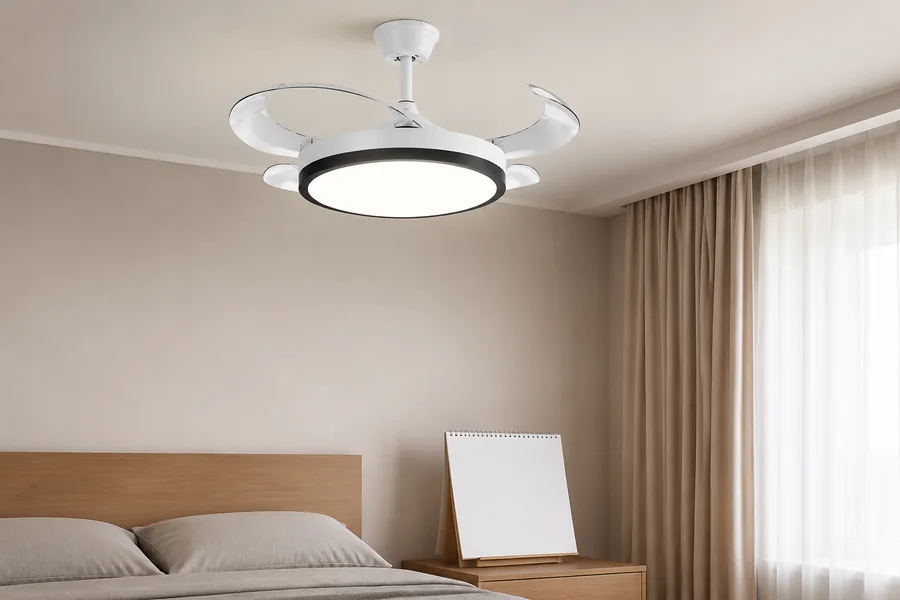
Before choosing a commercial ceiling fan or a residential fan, check these points:
- Room size and shape.
- Ceiling height and mounting method.
- Blade span and airflow coverage.
- Noise level at low and medium speed.
- Motor type and expected running hours.
- Light output and colour temperature.
- Control method.
- Clearance from walls, beams, shelves, and furniture.
- Installation access and service access.
- Spare parts and supply stability.
If the fan is for a project, order a sample first. Test it in a real room, not just in a showroom or on a product page.
11. A Better Way to Think About the Difference

Commercial and residential fans are not enemies. They are tools for different jobs.
A residential fan should make a room feel calm, comfortable, and easy to live in. A commercial ceiling fan should support a bigger space, longer use, and clearer project planning. The best choice is the one that matches the space without forcing the product to do the wrong job.
If you are comparing fan size, motor type, airflow and application space, NEBOLA can help you review the right options through a practical commercial ceiling fan guide. For small batches, samples, or project testing, starting with the right product range is usually safer than guessing from one photo.
Need the Right Ceiling Fan for a Home, Project, or Commercial Space?
Tell us your space type, ceiling height, airflow needs, lighting options, certification direction, and order plan. We’ll help match the right solution.
Get a QuoteFAQ
Is a commercial ceiling fan better than a residential fan?
No, a commercial ceiling fan is not always better than a residential fan. It is better only when the space needs wider airflow, longer running hours, stronger mounting planning, or more project-level durability. For bedrooms, apartments, and small living rooms, a residential fan may feel quieter, softer, and more suitable.
Can I use a residential fan in a commercial space?
Yes, you can use a residential fan in some light commercial spaces, but only if the room size, ceiling height, running hours, and safety requirements are suitable. A small office, studio, or private guest room may work with a residential-style fan. A warehouse, restaurant hall, or large lobby usually needs a more commercial airflow plan.
Do commercial ceiling fans always move more air?
No, commercial ceiling fans do not always move more air in every setting. Many commercial models are designed for wider air circulation and long running hours, but the real result depends on blade span, CFM, motor quality, mounting height, and room layout. Bigger only helps when the space can use that airflow properly.
Is a commercial fan too loud for a home?
Yes, some commercial fans can feel too loud or too strong for a home, especially in bedrooms or small rooms. However, not every commercial-style fan is noisy. The key is low-speed control, motor quality, blade balance, and correct room size. For homes, comfort at low speed matters more than maximum airflow.
What size fan is best for a commercial space?
No, there is no single best fan size for every commercial space. A small shop may need a 52 or 56 inch fan, while a warehouse or lobby may need 66 inches, 70 inches, or several fans in different zones. The best size depends on floor area, ceiling height, airflow target, and installation clearance.
Should commercial ceiling fans include lights?
Yes, commercial ceiling fans can include lights, but only when the lighting suits the space. Hotel rooms, small offices, and retail corners may benefit from integrated LED lighting. Warehouses, gyms, and large public spaces often need separate lighting plans, because one fan light may not provide enough even light coverage.