

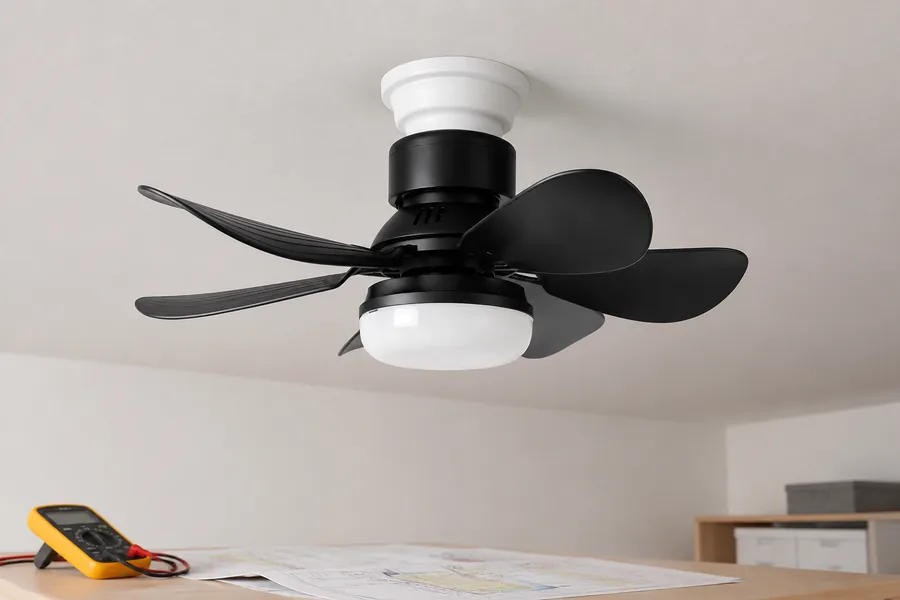
Socket fan light voltage and frequency requirements should be confirmed before you choose E26 or E27, before you print packaging, and before you promise one model for multiple countries. A socket fan light combines a lamp holder connection, LED driver, motor, remote receiver, and moving blades, so the local supply environment matters more than it would for a simple decorative bulb.
The safe approach is to plan each SKU by market: socket base, rated voltage, frequency, plug or adapter expectation if any, label language, certificate path, and manual warnings. If you are building a product family, start with NEBOLA’s socket fan lights category, then narrow each model by country requirement rather than by appearance alone.
Why Do Voltage and Frequency Matter for Socket Fan Lights?
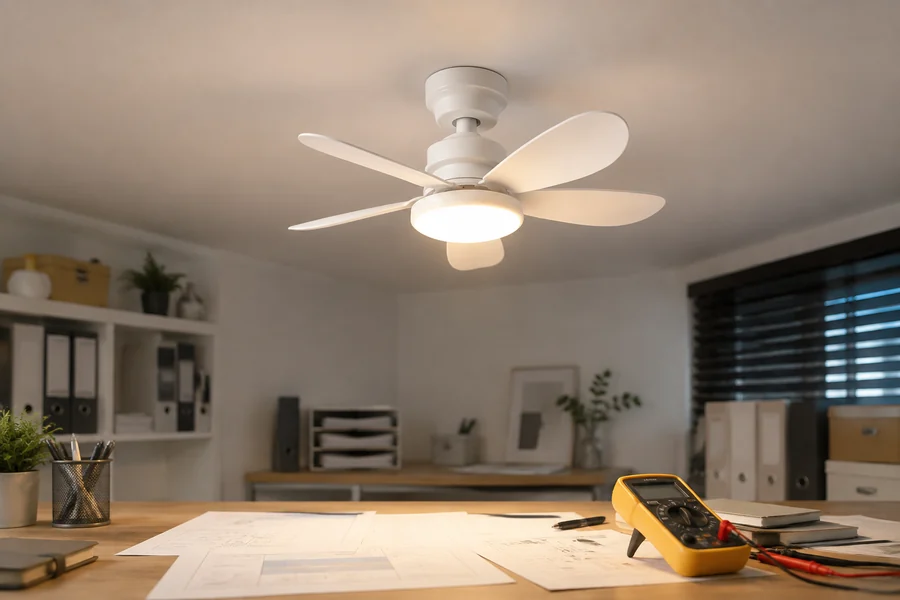
What can go wrong if voltage is mismatched?
A voltage mismatch can damage electronics, create heat, reduce performance, or make the product unsafe. Even if the product powers on briefly, that does not prove it is suitable for the market. The rating must match the supply and the product documents.
For socket fan lights, the risk is broader because the LED driver and fan motor operate together. You should check both lighting and motor behaviour under the target supply, not only one function.
What can frequency change?
Frequency can affect motor speed behaviour, heat, noise, and control stability depending on the design. Some modern products can be engineered for wide input, but that needs clear confirmation. Do not assume 50Hz and 60Hz support from the socket base alone.
Why is socket type not the whole answer?
E26 and E27 tell you about the lamp base direction, but they do not fully describe voltage, frequency, certification, or installation strength. Treat socket type as one field in the product file, not the whole market plan.
Voltage and frequency should be treated as design inputs, not only label fields. If the product is planned for more than one region, the motor, driver, receiver, LED system, and safety documents all need to support that plan.
A socket fan light can look small, but it is still an electrical product with moving parts. That combination makes vague electrical claims risky, especially when the same product photo is used across different country listings.
The search task here is not only learning a voltage list. You need a repeatable way to turn country information into a product decision, because the wrong electrical assumption can affect safety, returns, and market access.
A market matrix helps because it turns a long country list into a manageable sourcing tool. Once you can see which countries share a voltage story, you can group packaging, documents, and listings more efficiently.
How Should You Group Markets Before Choosing a SKU?
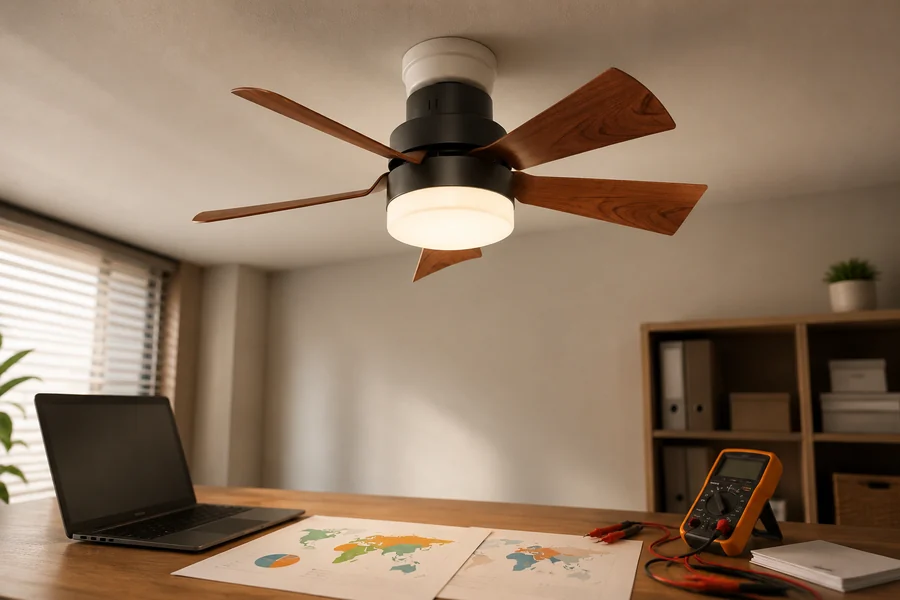
How should you start the grouping?
Start by grouping countries by voltage and frequency, then check common socket expectations and retailer requirements. A rough country list is useful early, but final confirmation should come from the channel, certification partner, or local regulation review.
For Europe and the UK, for example, official guidance such as UK electrical guidance shows why responsibilities, conformity, and documentation should be considered as part of product planning, not only after sales begin.
Why should E26 and E27 not be mixed casually?
Mixing E26 and E27 casually can confuse listings, cartons, support teams, and installers. Even if a model body is similar, the socket base, label, manual, and certification file may need separate versions. Clean SKU separation makes the market story easier to defend.
What should you confirm for regional channels?
Ask the retailer or distributor what socket base, voltage label, language, certification mark, barcode format, manual requirement, and packaging warnings they expect. Their checklist may be more specific than a general country overview.
Market grouping should happen before you ask for final artwork. Once cartons and labels are designed, it becomes harder to separate versions cleanly. A little early planning saves you from crowded labels and confusing listings.
I would keep a working table for every country you are considering. Include voltage, frequency, socket base, language, certification route, barcode, warning notes, and whether the product will be sold online, retail, or project-based.
Grouping also helps you decide where not to sell first. If one country creates too many extra requirements for the same early SKU, it may be smarter to launch in a cleaner group and add that country later.
If the product family is still flexible, voltage planning may actually decide the first launch countries. That is often safer than trying to force one SKU into a market that adds too many extra steps.
What Voltage Ranges Are Commonly Planned for E26 and E27 Socket Fan Lights?
How should you read common voltage patterns?
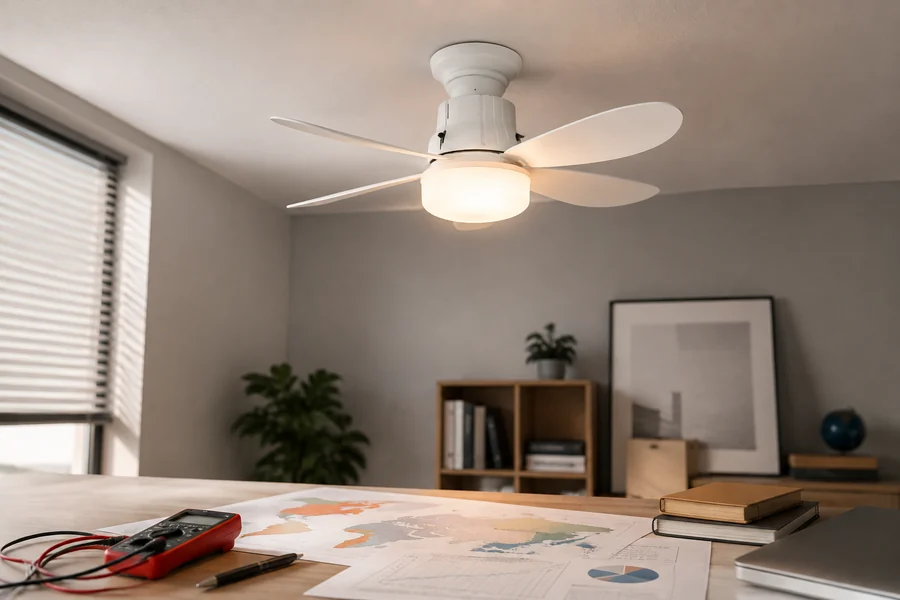
E26 socket fan light planning often points toward markets where household lighting commonly uses 120V, while E27 ceiling fan light planning often points toward 220-240V markets. That pattern helps early sourcing, but it should not become a blanket claim.
Some countries have mixed situations, special plugs, different regulatory expectations, or retailer-specific requirements. Always confirm the actual market before you approve labels.
What should a wide-voltage product prove?
If a product claims wide-voltage support, the claim should be visible in the test evidence, rating label, driver selection, and manual. Wide input is useful only when the exact product design supports it across the intended operating conditions.
How should you handle product-page wording?
Use precise wording. If the product is an E26 or E27 direction, say which version is being discussed and ask for the actual rated input. Do not let a product title carry more meaning than the rating label.
Common voltage patterns are useful for first filtering, but they should never replace final confirmation. Some markets have variations, and some channels impose stricter requirements than a general country list suggests.
If a product is described as wide-voltage, ask what that means in writing. The label, driver choice, test record, and manual should all show the same range. Otherwise, the claim is too soft for a serious SKU.
When a voltage range looks broad, ask what components make that possible. A real answer should mention the driver, motor control, thermal design, label, and testing scope, not just a short yes.
Frequency can look like a small detail until the fan is running at night or in a quiet shop. Then the difference becomes easier to notice in noise, heat, or speed control.
How Should You Test Samples Under Local Electrical Conditions?
What should you test first?
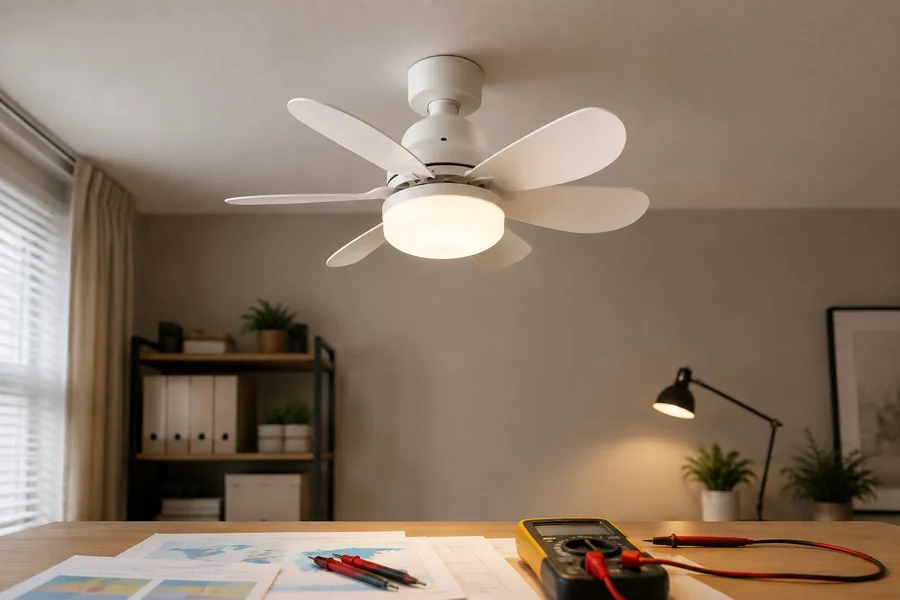
Test power-on stability, fan speeds, LED brightness, remote control, dimming if available, heat, noise, and restart behaviour under the target voltage and frequency. Run the fan and light together because combined operation is the real use case.
Why should testing include low and high settings?
Low settings reveal flicker, weak motor control, and receiver noise. High settings reveal heat, vibration, speed stability, and airflow complaints. A sample that only passes one speed has not been checked enough for market launch.
What should be documented in the test record?
Record voltage, frequency, test duration, room temperature, selected speed, light setting, remote function, heat observation, and any abnormal sound. This record helps you compare batches and answer technical questions later.
Sample testing should mimic the market you plan to enter. If you plan to sell into a 50Hz country, do not rely only on a 60Hz office test. If you plan to sell into a 120V country, do not approve the product based only on a 230V sample run.
Test also needs time. A fan light that works for one minute may still reveal heat, buzz, reset behaviour, or speed instability after longer operation. Write down the test duration so the result has context.
Sample testing should include restart behaviour after power interruption. In real homes and small shops, switches, outages, and remote resets happen, and the product should return to a predictable state.
A simple test record should mention the room and the supply because those two details make the result easier to trust later. Without them, the number on its own means less.
NEBOLA Socket Fan Light Support
Planning socket fan lights for several markets?
Share the countries, voltage range, socket base, and certification path you need. We can help you organise model versions before packaging and production are locked.
How Should Rating Labels and Manuals Reflect Market Requirements?
What should the label never hide?
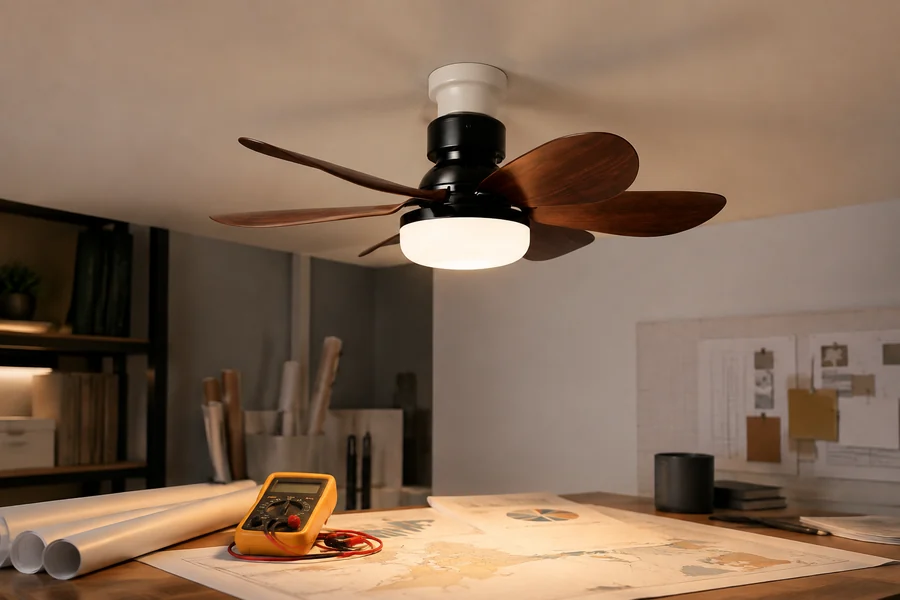
The label should never hide the rated voltage, frequency, socket type, model number, or key warnings. These details are part of the product identity. If they are unclear, the SKU is not ready for a serious channel.
How should the manual explain voltage and socket fit?
The manual should explain the intended socket, voltage, frequency, installation limits, and conditions where the product should not be used. If a product has a replaceable bulb, it should also state allowed bulb type and maximum wattage.
How should packaging support the label?
Packaging should repeat the most important compatibility details in plain language. The customer should understand the socket and voltage before opening the box. That prevents avoidable returns and negative feedback.
The rating label and manual should be boringly consistent. The same voltage, frequency, socket type, model number, and warning language should appear wherever the product is described. If one line changes, recheck every related file.
This is where many mistakes happen during translation. A translated manual may accidentally soften a warning or change a technical phrase. Review translated files against the approved technical source before printing.
Translation should be checked by someone who understands the technical meaning. A smooth sentence is not enough if it changes voltage limits, socket instructions, or warning strength.
When a listing crosses borders, the language on the page should not outrun the rating label. A clear label and a cautious title are more valuable than a broad promise that later needs editing.
How Do Voltage and Frequency Affect Product Selection?
When should you choose a compact socket model?
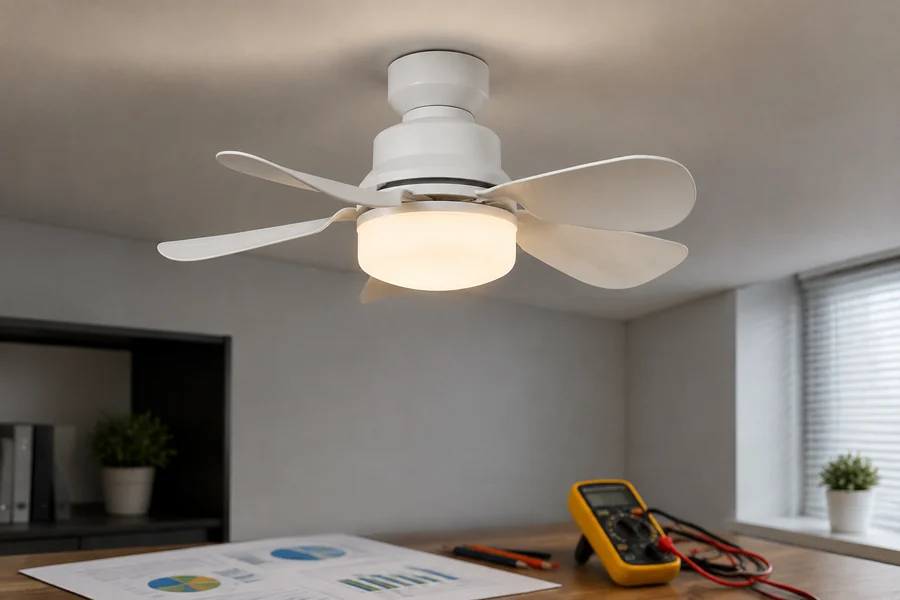
Choose a compact socket model when the market wants easy installation, smaller-room airflow, and simple bulb-style replacement. A ceiling fan with E27 bulb can be practical when the market and holder requirements match.
When should you choose a fixed ceiling fan light instead?
Choose a fixed ceiling fan light when the room needs a more stable ceiling fixture, broader airflow, or a more familiar residential look. A white residential fixture may be stronger for spaces where socket mounting feels too light-duty.
How do earlier articles help the choice?
Use the E26 and E27 compatibility guide, the LED versus bulb guide, and the document checklist together. Voltage is only one layer of a complete sourcing decision.
Product selection should respect the limits of the ceiling point. A compact socket fan light can be excellent in the right room, but a larger fixed fan light may be safer and more comfortable when the space needs stronger airflow or a more permanent fixture.
That choice should be made before voltage and certification work becomes expensive. If the room and installation method are wrong, even a perfectly rated product will disappoint the person using it.
If the room needs a fixed ceiling fixture rather than a socket-mounted product, make that decision early. Electrical compatibility cannot fix a product type that is wrong for the ceiling point or usage expectation.
If one market requires a slightly different version, capture that in the model code or suffix. That gives sales and production a way to keep the variants apart without inventing a new product family.
What Market Mistakes Should You Avoid?
Why is one global label risky?
One global label is risky when socket type, voltage, frequency, warnings, or certification marks differ by country. It may look efficient, but it can create market confusion. Separate labels are often cleaner than one crowded label that tries to say everything.
Why should you avoid vague universal claims?
Universal claims create support risk when the product is not actually universal. Replace broad claims with exact rated input, socket type, allowed market, and installation conditions. Clear limits build trust.
What should you verify before listing the product?
Before listing, verify product title, attributes, label photos, manual download, packaging text, and compliance statements. The online listing should not promise a wider market than the product file supports.
The most common market mistake is stretching a successful product beyond its evidence. A model that sells well in one country still needs proper review before it moves to another. Socket, voltage, frequency, label, and certification assumptions can all change. If you want the launch to feel calm, keep the first version narrow and prove the market logic before widening the range.
I would also avoid copying marketplace titles from one region to another. Titles often hide local assumptions. Your own listing should match your own product file, not someone else’s shorthand.
Listing teams should avoid copying the same compatibility block into every market. A short, accurate local version is better than a long global block that nobody trusts.
The best market plan is usually the one that is easiest to explain to a retailer or distributor. If they can understand the difference quickly, they are less likely to reject the SKU later.
How Should You Finalize a Market-Ready Socket Fan Light SKU?
What should be locked before production?
Lock the model code, socket type, voltage, frequency, driver, motor, label, manual, package, carton mark, certificate list, and sample approval. These items should travel together as one market-ready SKU file.
How should the category page support the final SKU?
When the SKU is ready, place it in the right part of the socket fan light range so the category message and product compatibility message support each other. A clean category path helps people compare without confusion.
What should you recheck after a design change?
Recheck everything that could affect electrical behaviour or market documents: driver, motor, LED board, socket base, housing, remote receiver, label, manual, and packaging. A small design change can create a large documentation gap.
A market-ready SKU should feel traceable. You should be able to open the folder and find the final label, manual, package proof, certificate list, sample approval, and country decisions without asking five people.
When you revise the product later, keep the old version. Version history helps you answer warranty questions, repeat orders, and retailer reviews without mixing batches.
When the SKU is final, keep a simple change-control habit. Every change to electrical parts, light source, remote, or label should trigger a quick check before the next purchase order.
You can think of voltage and frequency as the rules that keep the rest of the product honest. If those rules are clear, the document set, sample test, and package wording become much easier to align.
NEBOLA Socket Fan Light Support
Ready to compare socket fan light options?
Send NEBOLA your room use, socket base, voltage market, and packaging needs. We can help you shape a clearer sample and document checklist.
FAQ
Can one socket fan light work in both 50Hz and 60Hz markets?
Yes, it can only if the exact motor and driver design are rated and validated for both frequencies. You should confirm this in the product file before shipment.
Does E27 automatically mean 220-240V?
No, E27 is a base type, not a complete electrical rating. You still need to check the rated voltage and frequency on the exact product.
Should voltage be printed on the package?
Yes, voltage should be clear on the product label and normally reflected in the package or manual so wrong-market purchases are easier to avoid.
Can a wide-voltage claim replace certification review?
No, a wide-voltage claim does not replace market certification, label review, manual review, or channel-specific requirements.
Should E26 and E27 versions use different SKU codes?
Yes, they usually should use different SKU codes when the socket base, market rating, label, or certification file differs.