

A comfortable bedroom is not built by copying a mood board. It comes from practical choices that help the room feel calm at night, easy to use in the morning and simple to maintain over time. In 2026, bedroom design ideas are becoming quieter, more personal and more functional.
This guide looks at bedroom interior design through sleep comfort, lighting, airflow, storage, materials, colour, technology and layout. It also explains where ceiling fan lights can support a modern bedroom without making the ceiling feel busy.
1. What Should a Comfortable Bedroom Solve First?
The best bedroom design starts with how the room is used. A beautiful room that is too bright, too warm, too noisy or too cluttered will not feel restful for long.
1-1. Why should sleep comfort come before decoration?
Decoration matters, but sleep comfort sets the foundation. A bedroom should support darkness, stable temperature, low noise and easy movement around the bed. When these basics are right, the decorative layer feels better because the room already works.
Design decisions should be tested against daily use. Can you reach the switch at night? Is the fan or light too bright when lying down? Does the bed block a wardrobe door? These small details decide whether the room feels calm.
1-2. How does the room’s routine shape design?
Some bedrooms are only for sleep. Others also serve as dressing rooms, reading corners, work nooks or compact apartment living spaces. The layout should match the routine instead of forcing every room into the same hotel-style formula.
If the bedroom has several functions, keep the sleep zone visually quieter than the rest. Use softer lighting near the bed, closed storage for visual clutter and clear walking paths so the room does not feel crowded.
2. How Should You Plan the Bed Wall?
The bed wall usually controls the room’s mood. It sets the visual centre, affects lighting placement and determines how balanced the furniture feels.
2-1. Should the bed always face the door?
No, the bed does not always need to face the door. It should sit where the room feels stable, circulation is clear and the headboard has enough visual support. In small bedrooms, the most practical wall is often more important than the most dramatic view.
Avoid placing the bed where ceiling lights, fan blades or wardrobes feel awkward above or beside it. The room should feel settled when someone enters, but also comfortable when someone is lying down.
2-2. How can the headboard make the room calmer?
A headboard can soften the room, improve proportion and make the bed feel intentional. Upholstered headboards add quiet texture, while wood headboards add warmth and structure.
In 2026, oversized decorative panels are being replaced by more useful details: shallow ledges, integrated sockets, soft backlighting and easy-to-clean materials. The aim is comfort, not a display wall that is hard to live with.
3. What Bedroom Colours Feel Modern in 2026?
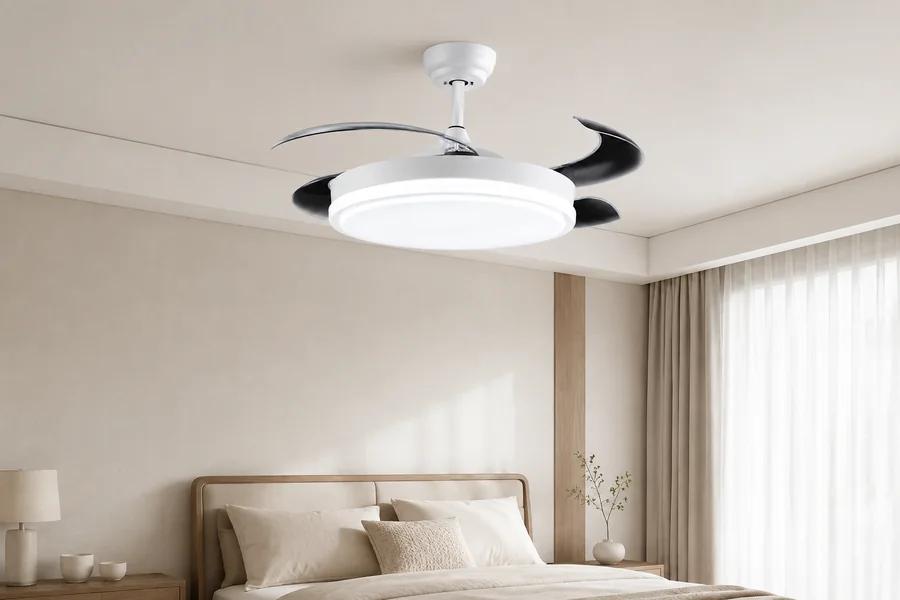
Modern bedroom ideas are moving away from harsh contrast and overly cold minimalism. The most useful palettes combine calm base colours with one or two warm or natural accents.
3-1. Are neutral bedrooms still popular?
Yes, neutral bedrooms are still popular, but they need texture and contrast to avoid looking flat. Warm white, soft grey, muted clay, pale green, wood tone and linen shades can make the room feel restful without becoming plain.
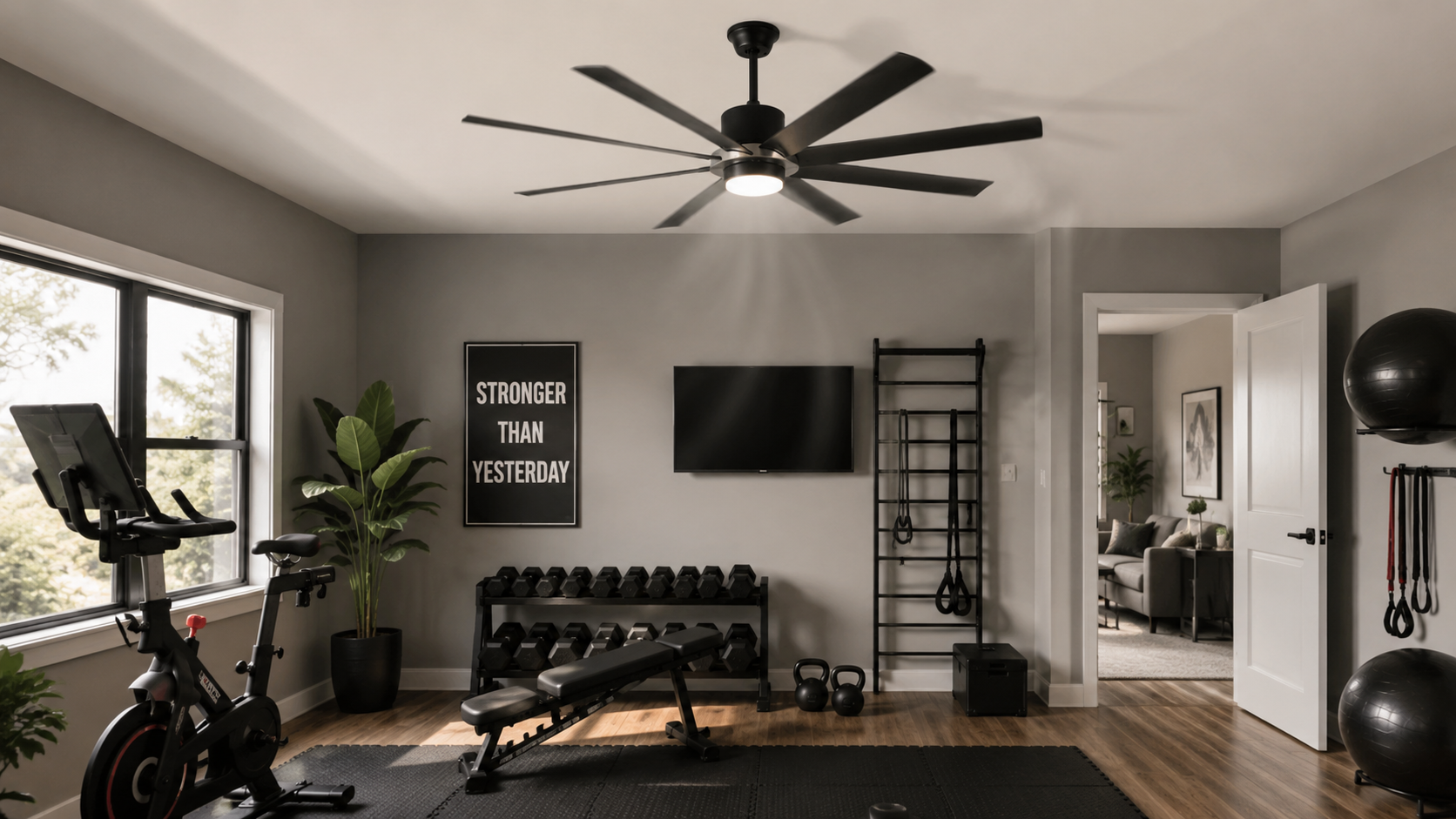
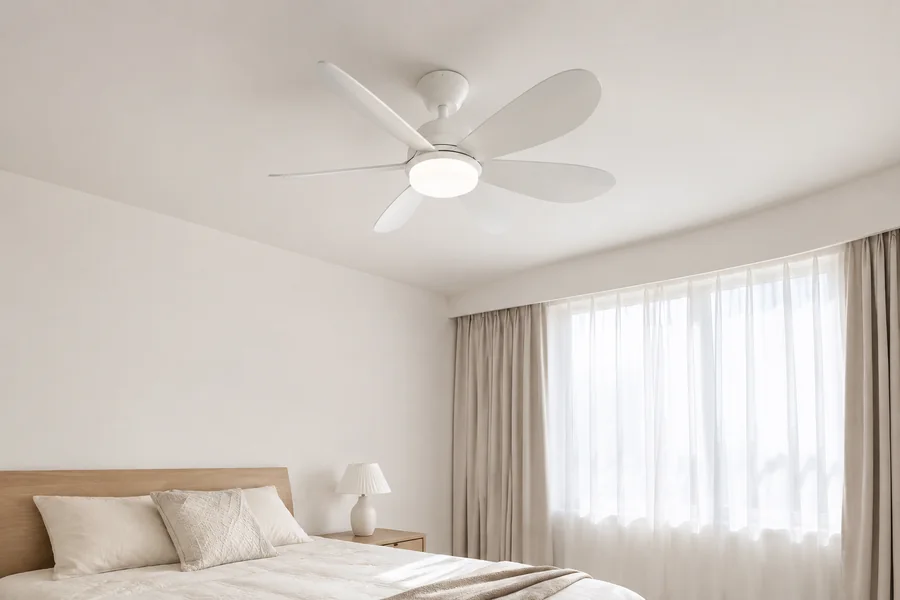
Use the ceiling, fan light, bedding and curtains as part of the same colour story. A white low-profile fan can disappear into a pale ceiling, while a black or wood-tone fan can become a deliberate design accent.
3-2. How should accent colour be used?
Accent colour works best when it is controlled. Use it on cushions, a throw, a bedside lamp, a small chair or artwork rather than every large surface. This makes the room easier to update and keeps the sleep zone calm.
For a modern bedroom, avoid too many competing finishes. If the fan, handles, lamps and curtain rod all use different metals, the room can feel accidental. Two finish families are usually enough.
4. How Should Bedroom Lighting Be Layered?
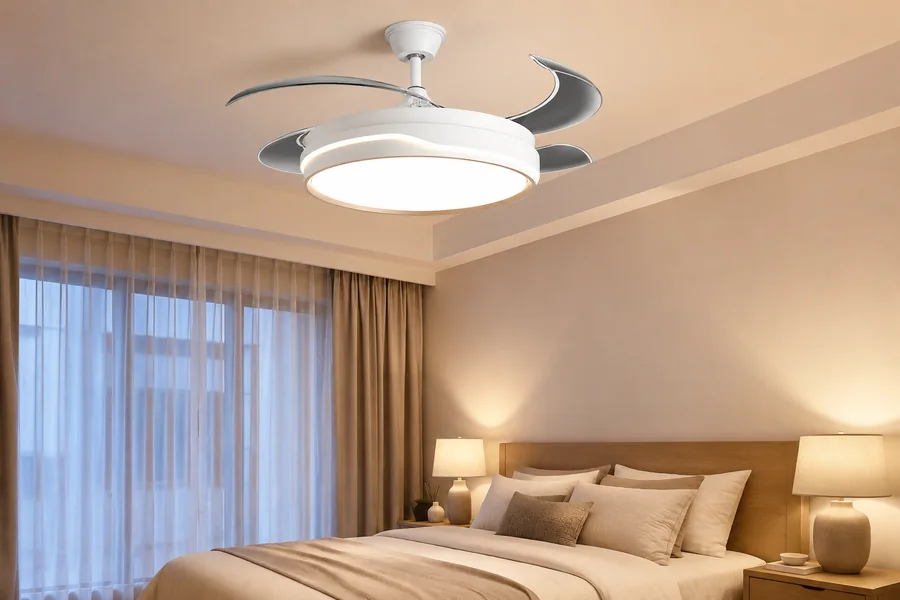
Bedroom lighting should not depend on one bright ceiling light. A comfortable room needs layers that support dressing, reading, relaxing and night movement.
4-1. What lighting layers does a bedroom need?
Most bedrooms need soft general light, focused reading light and low night light. General light helps with dressing and cleaning, reading light supports the bedside area, and low night light helps movement without waking the body too much.
Sleep specialists often connect bedroom environment with sleep quality; the Sleep Foundation’s bedroom environment guide is a useful reminder that light, temperature and noise all work together.
4-2. When is a ceiling fan with light useful?
A ceiling fan with light is useful when the room has one central fixture point and needs both air movement and general lighting. A low profile bedroom fan light can suit rooms where ceiling height is limited and a deeper fixture would feel heavy.
For the best effect, choose dimming, warm colour temperature options and a diffuser that avoids glare from the bed. A bedroom fan light should feel soft, not clinical.
5. How Can Airflow Make a Bedroom More Comfortable?
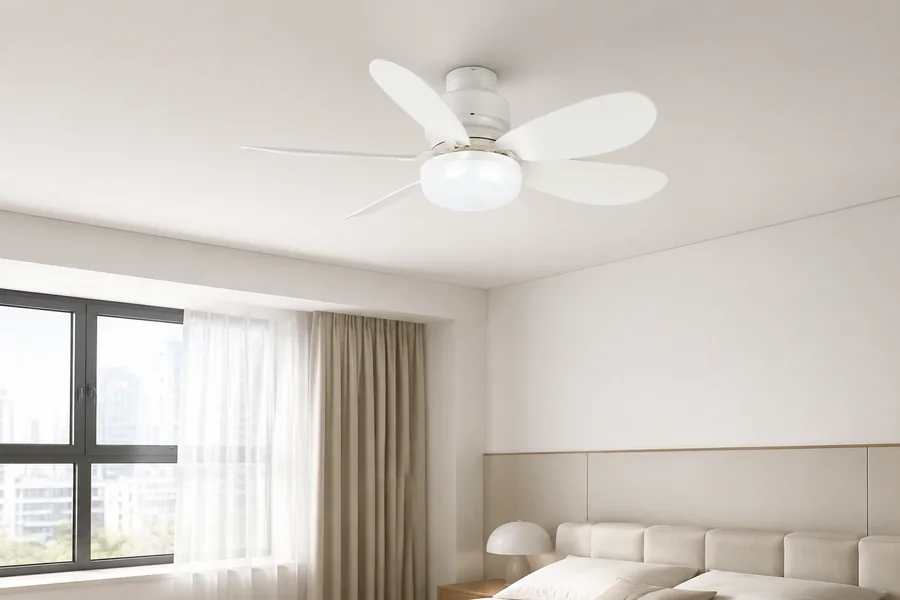
Airflow is one of the most overlooked parts of bedroom interior design. A still room can feel heavy even when the bedding and colour scheme are beautiful.
5-1. Why does gentle airflow matter at night?
Gentle airflow helps the room feel fresher and can support comfort during warm seasons. The goal is not strong wind. The goal is quiet movement of air across the occupied zone without direct discomfort.
A DC motor fan with stable low-speed control is especially useful in bedrooms. It lets the user adjust comfort without creating a loud or distracting ceiling fixture.
5-2. What fan size fits a modern bedroom?
The right size depends on room area, ceiling height and furniture layout. Small bedrooms may need compact flush mount fan lights, while larger bedrooms can accept 48 to 52 inch models if the ceiling scale allows.
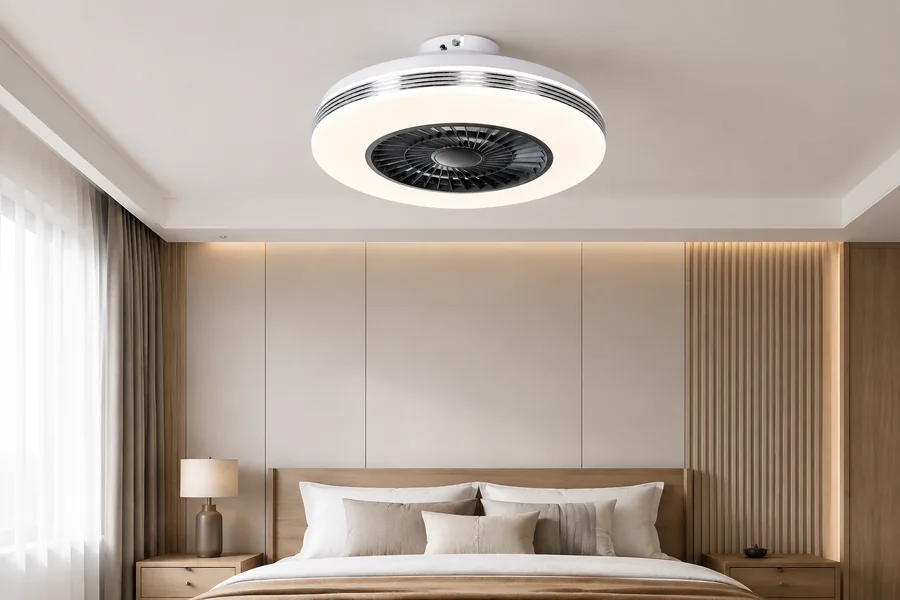
A modern 20 inch flush fan light can work in compact sleeping spaces, closets, kids’ rooms or apartment bedrooms where a large blade span would look uncomfortable.
Need the Right Ceiling Fan for a Home, Project, or Commercial Space?
Tell us your space type, ceiling height, airflow needs, lighting options, certification direction, and order plan. We’ll help match the right solution.
Get a Quote6. What Storage Ideas Keep Bedrooms Calm?
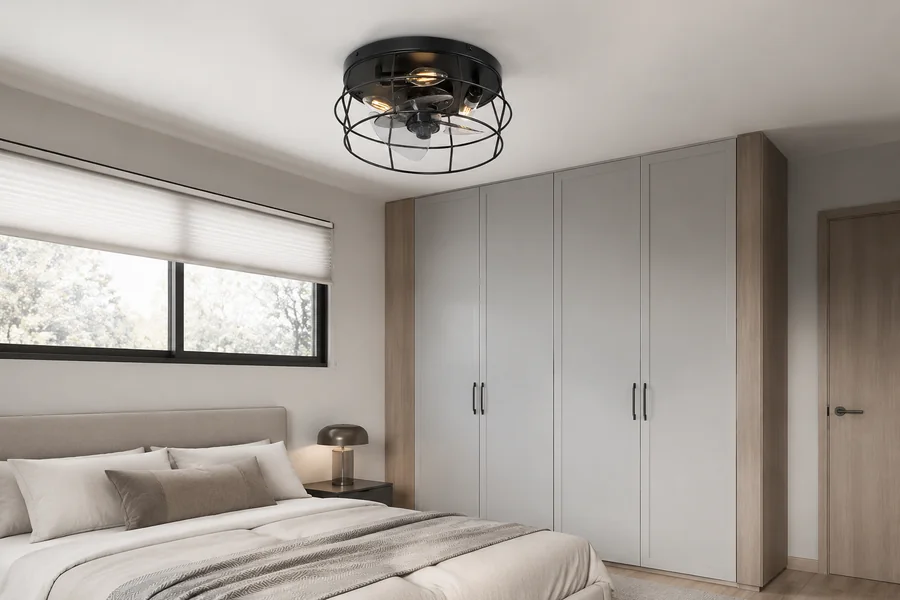
Storage is a design issue, not only a practical issue. When storage is poorly planned, the room quickly loses the calm feeling created by colour and lighting.
6-1. Should storage be hidden or displayed?
Most bedroom storage should be hidden. Closed wardrobes, drawers, under-bed storage and clean bedside units reduce visual noise. Display should be limited to items that add calm, such as one book stack, a small tray or a lamp.
Open shelving can work, but it needs discipline. If every shelf becomes a landing place for daily items, the room will feel busy no matter how good the furniture looks.
6-2. How can small bedrooms gain storage without crowding?
Small bedrooms benefit from vertical storage, wall-mounted bedside shelves, ottoman beds and wardrobes with sliding doors. The furniture should leave clear walking space around the bed.
Use furniture depth carefully. A wardrobe that is too deep for the room can make even a good layout feel tight. In compact rooms, shallow but organised storage is often better than bulky storage.
7. How Should Materials and Textures Be Chosen?
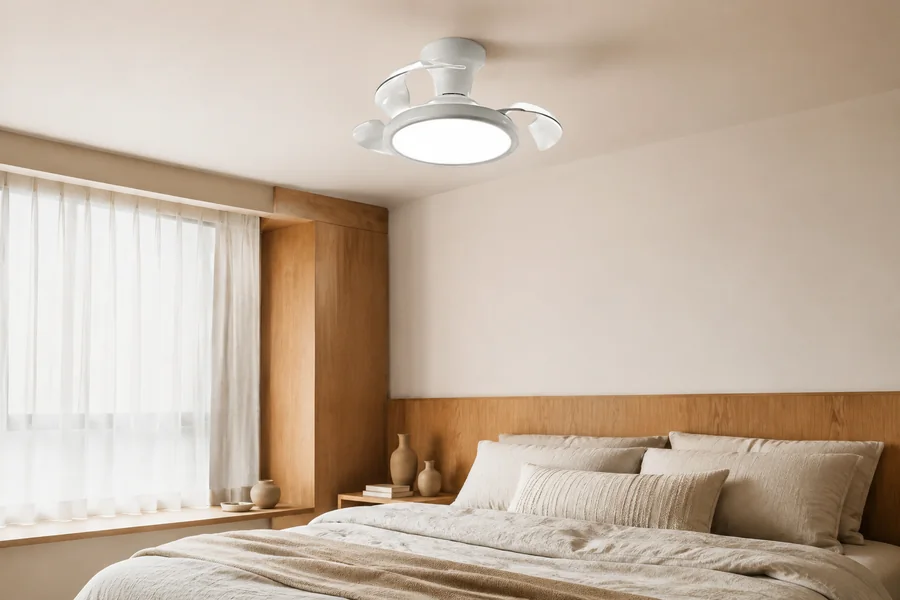
Material choice controls the emotional temperature of the bedroom. Hard shiny surfaces can feel cold, while too many soft textures can feel heavy.
7-1. Which textures make a bedroom feel softer?
Linen, cotton, wool, warm wood, woven shades and matte finishes can make a room feel restful. Use texture to create depth when the colour palette is simple.
The trick is balance. A smooth ceiling, soft bedding, natural wood and a clean fan light can work together without making the room look overly decorated.
7-2. What materials are easiest to maintain?
Bedrooms need materials that age well. Washable bedding, dust-friendly surfaces, wipeable bedside tables and fan blades that are easy to clean will keep the room fresh.
Avoid overly complex fixtures in dusty rooms. A decorative caged fan can look strong in the right interior; a black caged flush fan light suits industrial or vintage bedrooms, but it should be chosen with cleaning access in mind.
8. Should Bedrooms Use Smart Controls?
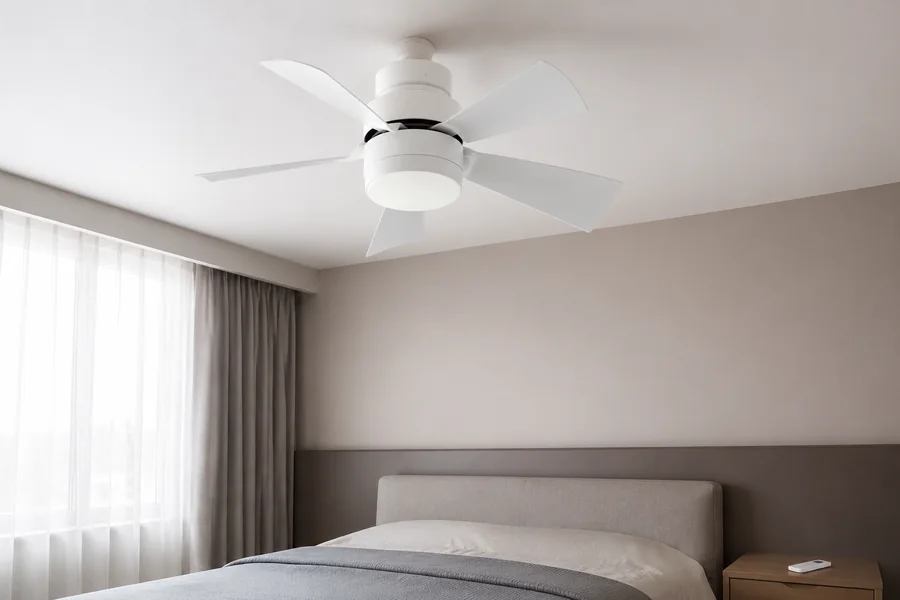
Smart bedroom design is useful only when it makes daily life simpler. Technology should reduce friction, not turn the bedroom into a control room.
8-1. Which smart features are worth adding?
Dimming, fan speed memory, timer settings, quiet remote control and warm-to-cool lighting adjustment can be useful. These features help the bedroom shift from evening relaxation to sleep and morning routine.
The best smart feature is often the one you stop noticing. If a control system requires too many steps at night, it may be less comfortable than a simple remote.
8-2. What should be avoided?
Avoid bright indicator lights, noisy beeps, complicated pairing steps and apps that are required for basic use. A bedroom should still work when a phone is not nearby.
For guest rooms, rental units and family homes, simple control is often more reliable than advanced control. Make the common actions obvious: light on, light dim, fan speed, timer and off.
9. How Can Small Bedrooms and Condos Feel Larger?
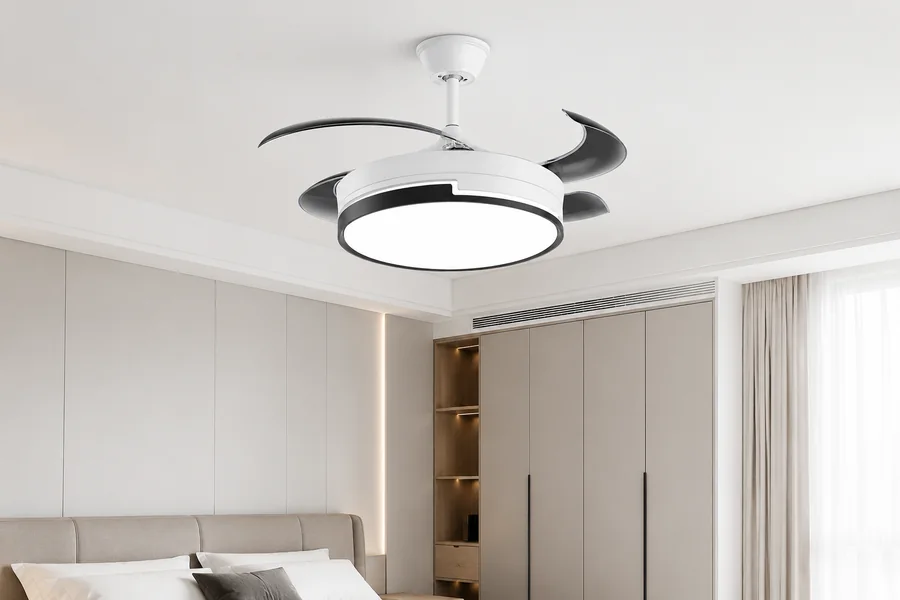
Small bedrooms need design discipline. Every item should have a reason, because crowded rooms feel warmer, louder and less restful.
9-1. What layout tricks help most?
Keep the bed accessible, choose narrower bedside furniture, use wall lights if floor space is tight and avoid deep furniture that blocks movement. Mirrors can help, but only when they reflect light or a calm view.
Use ceiling fixtures carefully. A fan light should be sized for the room so it does not overpower the bed, wardrobe or ceiling height.
9-2. How should visual clutter be reduced?
Choose fewer visible objects and better storage. Match cable management, switch locations and charging points to real habits. When daily items have a place, the room stays calmer.
Avoid adding too many decorative layers. In small bedrooms, one strong material, one soft textile story and one clean ceiling fixture usually feel better than a crowded styling scheme.
10. What Final Checklist Helps Create a Comfortable 2026 Bedroom?
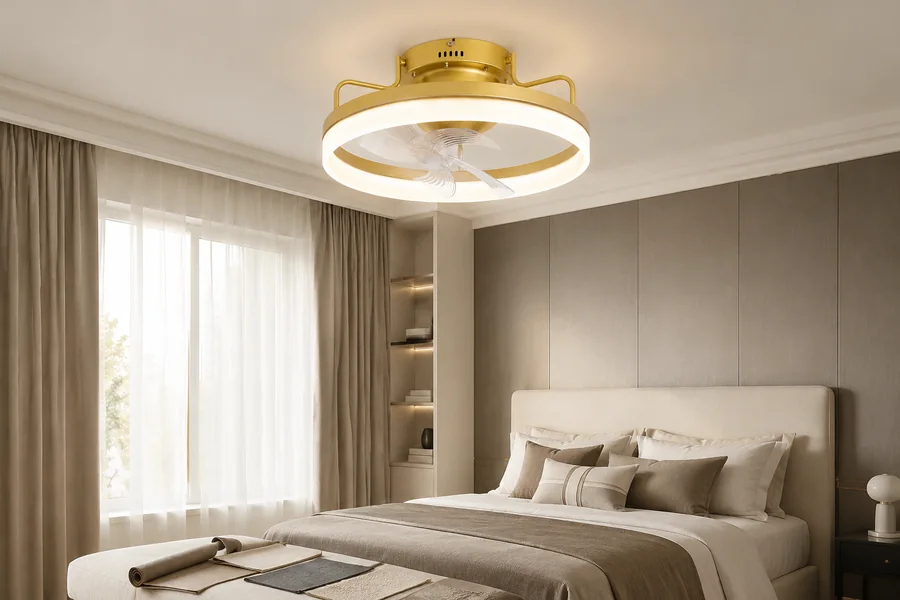
A good bedroom is not judged only when it is freshly styled. It should still feel comfortable after months of daily use.
10-1. What should homeowners check before buying furniture and fixtures?
Check bed size, walking paths, wardrobe swing, ceiling height, fixture depth, switch positions, light glare, fan airflow, night noise and cleaning access. These details decide whether the design survives daily life.
If you are choosing a ceiling fan light, ask for full dimensions, motor type, control functions, light output, colour temperature and installation method before ordering.
10-2. How should project buyers think about bedroom design?
Project buyers should choose bedroom fixtures that can repeat well across rooms. Consistent finish, easy installation, low noise, spare parts and reliable packaging matter because one issue can repeat across many rooms.
NEBOLA can support bedroom fan light selection with compact flush models, modern LED fan lights, decorative caged styles and OEM/ODM options for different bedroom design directions.
Need the Right Ceiling Fan for a Home, Project, or Commercial Space?
Tell us your space type, ceiling height, airflow needs, lighting options, certification direction, and order plan. We’ll help match the right solution.
Get a QuoteFAQ
Is a calm bedroom colour palette better for sleep?
Yes, a calm bedroom colour palette can support a more restful feeling because it reduces visual stimulation. The best palette still depends on the user, but soft neutrals, warm whites, muted greens and natural textures often work better than harsh contrast.
Should bedroom design start with the bed position?
Yes, bedroom design should usually start with the bed position because it affects circulation, lighting, storage, fan placement and the visual centre of the room. Once the bed wall works, the rest of the room is easier to organise.
Can a ceiling fan with light work in a modern bedroom?
Yes, a ceiling fan with light can work in a modern bedroom when the fixture is correctly sized, quiet and visually balanced. It is especially useful when the room needs both general light and gentle airflow from one ceiling point.
Is one ceiling light enough for a comfortable bedroom?
No, one ceiling light is usually not enough for a comfortable bedroom. Most rooms need layered lighting, such as general light, bedside reading light and a low night option, so the room can change from active use to sleep.
Should small bedrooms avoid large ceiling fixtures?
Yes, small bedrooms should usually avoid large ceiling fixtures because they can make the room feel lower and more crowded. A compact flush mount fan light or a shallow ceiling light is often more suitable.
Can smart controls make a bedroom less comfortable?
Yes, smart controls can make a bedroom less comfortable if they are too bright, noisy or complicated. Bedroom technology should make common actions easier, especially dimming, fan speed control, timers and night use.