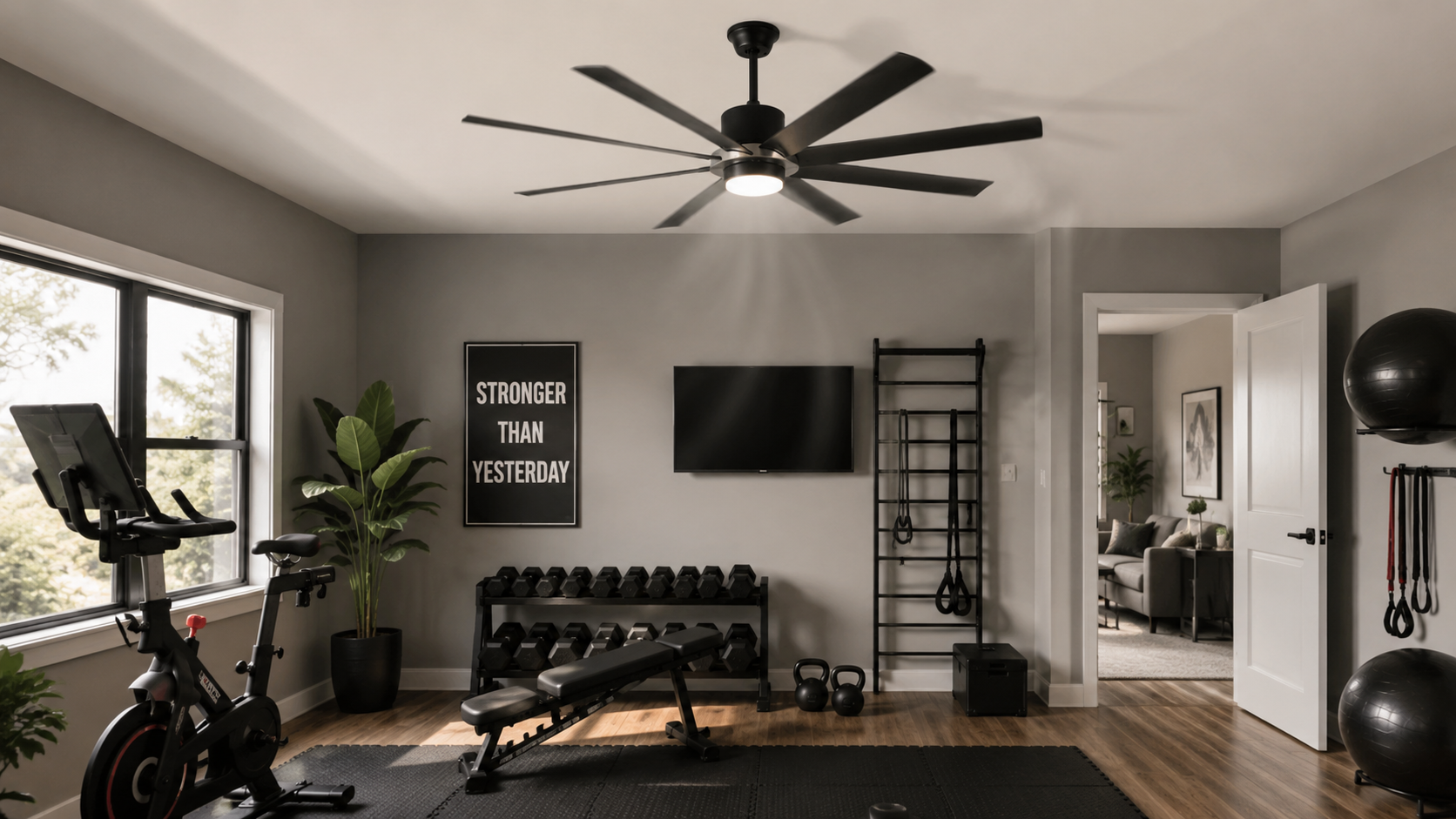


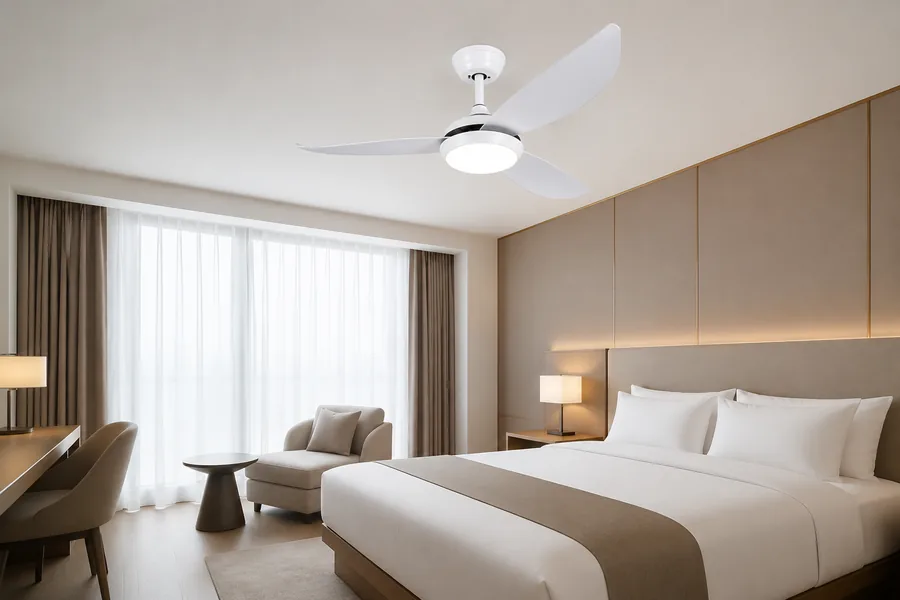
Choosing the best ceiling fans for hotels is different from choosing one fan for one private home. A hotel fan must work quietly, look consistent across many rooms, save energy every day, and still feel comfortable after hundreds of guests have used it. That is why a hotel project should start with the right commercial ceiling fans plan, not only a nice product photo.
In a hotel, comfort is repeated. The same fan may run through warm afternoons, late-night sleep, cleaning hours, and long holiday seasons. If the size is wrong, one guest feels no air. If the motor is noisy, another guest cannot sleep. If the light is harsh, the room feels cheap. If maintenance is difficult, the hotel team pays for it again and again.
So the question is not simply: which hospitality fan looks best? The better question is: which fan will stay quiet, stable, efficient, and easy to maintain in the exact hotel space where it will be installed?
As a ceiling fan light manufacturer, NEBOLA often looks at hotel projects from both sides: guest comfort and project control. The guest wants a calm room. The buyer wants reliable supply, matching finishes, practical sizes, and fewer problems after installation. This guide explains how to judge hotel ceiling fans with that balance in mind.
1. Why Hotel Ceiling Fans Need Different Selection Rules
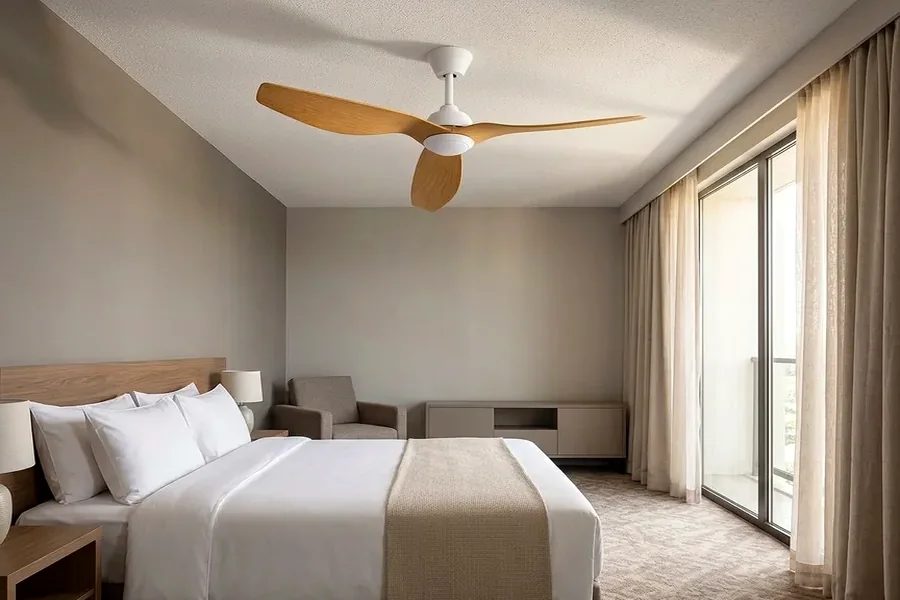
A hotel ceiling fan is part of the guest experience. It is also part of the operating system of the building. This makes the choice more serious than a simple home purchase.
In a home, one family can adapt to one fan. In a hotel, many people with different habits use the same room. Some sleep hot. Some dislike direct wind. Some use the fan with air conditioning. Some switch every control before calling reception. The fan has to be simple enough for all of them.
1-1. Guest comfort comes before maximum power
A powerful fan is useful only when the airflow feels right. In a hotel bedroom, harsh wind over the bed can feel worse than weak airflow. Guests usually want soft movement, low noise, and control at low speed.
This is why hotel fan selection should not chase the biggest diameter or the highest speed first. A good hotel fan should create steady air circulation without making the room feel windy or restless.
1-2. One bad fan can affect reviews
Hotels live with public feedback. A fan that clicks, wobbles, hums, or gives poor light can become a small but memorable complaint. Guests may not praise a quiet fan, but they will notice a bad one.
For this reason, noise, balance, control quality, and installation stability matter as much as appearance. A hotel fan should disappear into the comfort of the room. It should do its job without asking for attention.
1-3. Project buying needs repeatable results
For one hotel, you may need dozens or hundreds of fans. The product must be consistent. The finish should match. The remote should work the same way in every room. Spare parts should be clear. Installation should be easy for the project team.
This is where a hospitality fan differs from a single retail fan. The best choice is not always the most decorative model. It is often the model that can be supplied, installed, cleaned, controlled, and serviced with confidence.
2. Match Fan Size to Hotel Room Type
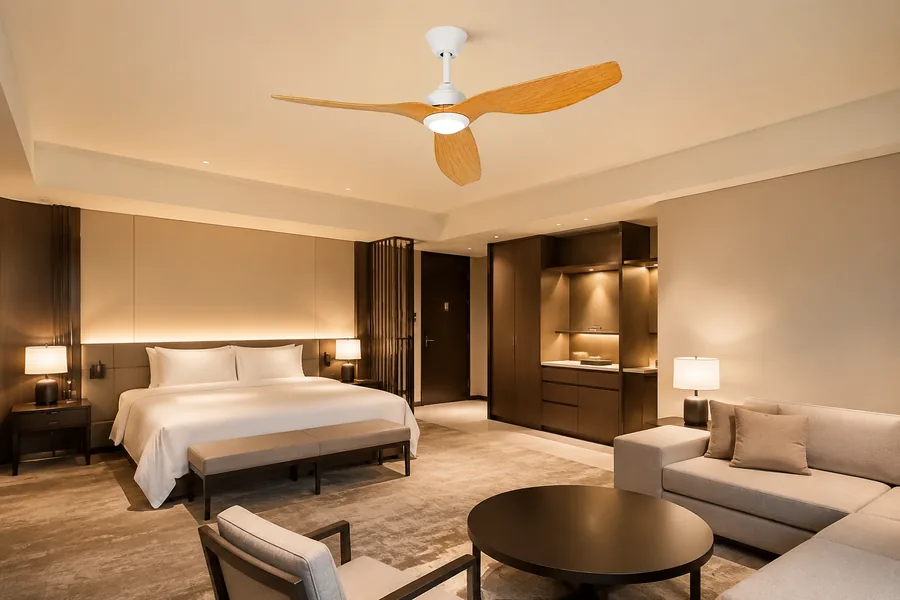
Size is the first practical filter. A fan that is too small may run fast and still feel weak. A fan that is too large may look heavy, sit too close to walls, or create too much air over the bed.
Hotel rooms also vary more than people think. A compact city room, a resort suite, a serviced apartment, and a villa bedroom may all need different fan sizes.
2-1. Standard guest rooms
Many standard hotel rooms sit in the small to medium room range. A 42 inch to 52 inch fan can often work, depending on room area, bed position, ceiling height, and furniture layout.
For a narrow room, a compact flush mount fan may feel safer. For a square room with more open ceiling space, a 52 inch fan can give wider air coverage at lower speed.
A product such as an ultra-thin 52 inch DC ceiling fan can suit hotel rooms where the design needs to stay clean and the ceiling should not feel crowded. The slim shape helps the room look simple, while the larger span can support gentle airflow.
2-2. Suites and serviced apartments
Suites often have separate sleeping, seating, or dining zones. A single fan in the wrong place may not cover the space well. In these rooms, placement can matter more than fan diameter.
If the suite has a clear bedroom zone, one 52 inch or 56 inch fan may work well. If the living area is wide or open-plan, a 60 inch or larger fan may be better. In a long suite, two smaller fans can sometimes give better comfort than one large fan in the centre.
The aim is not to fill the ceiling. The aim is to move air where guests actually sit, sleep, and relax.
2-3. Lobbies, lounges, and dining areas
Public hotel areas need broader airflow. Lobbies, lounges, breakfast rooms, and club spaces often have higher ceilings and larger open zones. A small residential fan may look lost and perform poorly.
For these areas, larger 60 inch, 66 inch, or 70 inch fans may be useful. The fan should move air slowly across a wide area, rather than spin fast like a small room fan trying too hard.
For example, a 70 inch large ceiling fan for high open spaces can make sense where the ceiling height and room scale need a wider airflow plan. The key is to match the fan to the visual scale and the comfort zone below.
3. Noise Is One of the Most Important Hotel Fan Standards
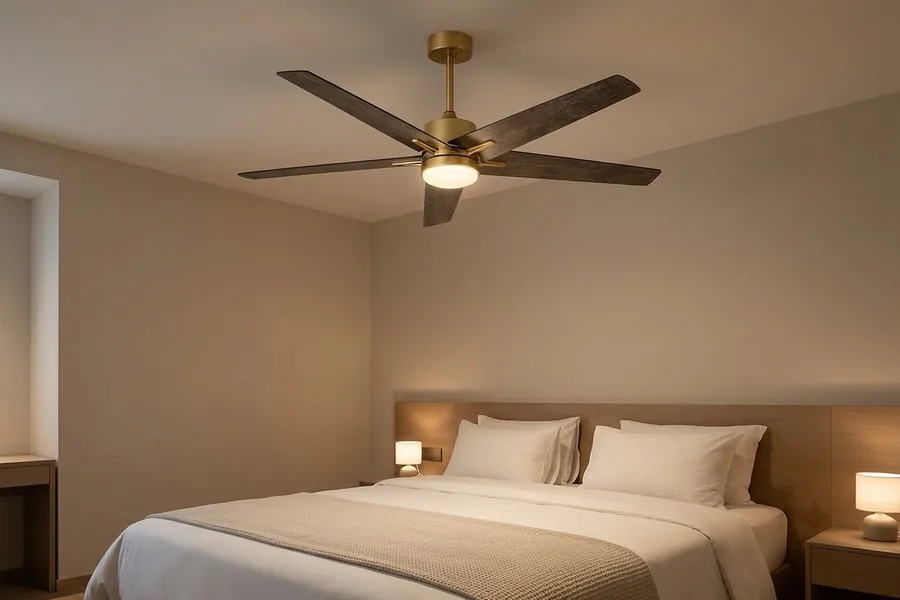
Noise is a deal breaker in hotels. A guest may accept a fan that looks plain. They may not accept one that disturbs sleep.
Hotel ceiling fan noise can come from the motor, blade balance, loose installation, poor bearing quality, low-grade remote receivers, or air movement at high speed. A fan that sounds fine in a showroom may feel loud at midnight in a quiet room.
3-1. Low-speed noise matters most
Guests usually use ceiling fans at low or medium speed, especially when sleeping. So low-speed comfort is more important than maximum speed.
A good hospitality fan should start smoothly, run steadily, and avoid hum. It should not click, buzz, or create a pulsing sound as the blades rotate. Quiet low speed is one of the strongest signs of a hotel-ready fan.
3-2. Wobble is also a noise problem
Wobble is not only visual. It can create small sounds, stress the mounting point, and make the room feel less premium. In a hotel, even a slight wobble can make guests feel the fixture is unsafe.
Balanced blades, a stable motor, a strong bracket, and correct installation are all important. For project orders, it is sensible to test sample units before full installation. One sample room can reveal issues that a catalogue cannot show.
3-3. Controls should feel quiet and simple
Remote control receivers and light drivers can also create noise. Some low-quality systems produce a faint electronic buzz. In a hotel bedroom, that can become annoying.
Choose controls that are simple, stable, and easy for guests to understand. A fan with too many modes may look clever but confuse guests. Quiet operation and clear control are better than unnecessary complexity.
4. Energy Efficiency Affects the Hotel Every Day
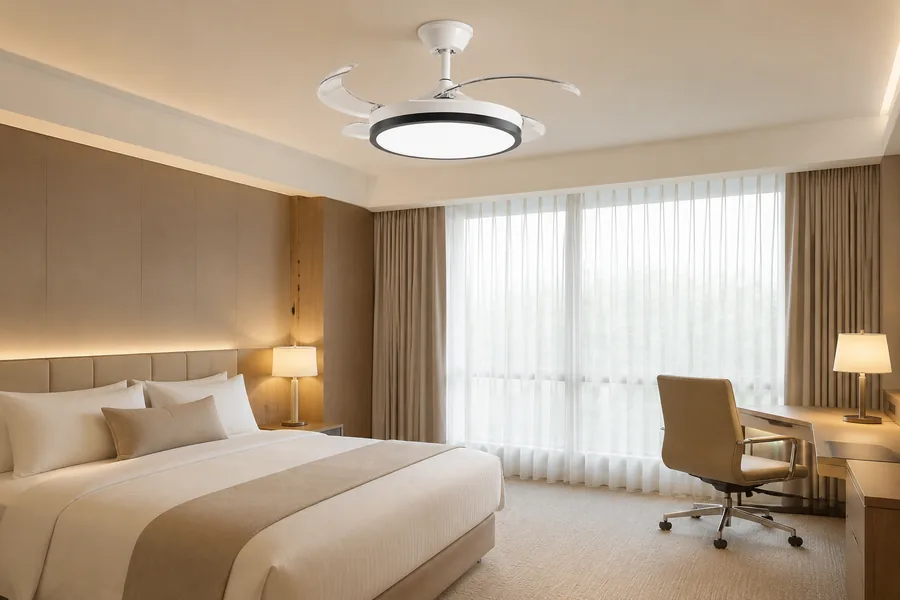
Energy efficiency is not only a sales feature. In hotels, a fan may be used for many hours across many rooms. Small differences can become real operating cost over time.
A ceiling fan cannot replace air conditioning in every climate, but it can support better comfort at a lower thermostat load. When air moves gently, guests may feel comfortable without setting the room colder than needed.
4-1. DC and BLDC motors are often better for hotel projects
DC and BLDC motors usually offer lower energy use, quieter control, and more speed options than many traditional AC motors. This can be helpful in hotels, where low-speed use is common.
They also allow smoother speed changes. For a guest room, that matters. A fan should not jump from too weak to too strong. It should offer a calm range between the two.
4-2. Efficiency should be judged with airflow
Low wattage alone is not enough. A fan must still move useful air. The best result is good airflow with modest power use.
For larger hotel rooms or public spaces, it may be more efficient to use a larger fan at low speed than a smaller fan at high speed. The large fan can move air across the space with less noise and less strain.
4-3. LED lighting should also save energy
Many hotel ceiling fans include lights. If so, the LED system should be efficient, comfortable, and suitable for long-term use. Harsh light can make a room feel less restful, while weak light can frustrate guests.
Dimmable warm white or adjustable colour temperature can be useful in guest rooms, but only if the controls stay simple. Hotels should avoid lighting systems that are difficult for guests or maintenance staff to understand.
5. Ceiling Height and Mounting Style Decide Real Comfort
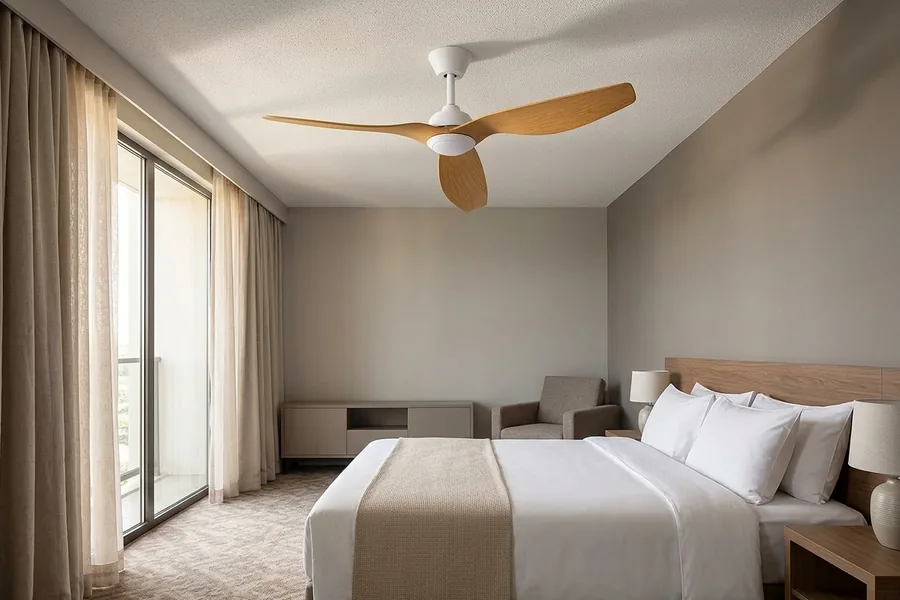
Even the right fan size can fail if the mounting style is wrong. Ceiling height affects safety, airflow, appearance, and noise.
Hotel rooms often use standard or slightly low ceilings. Resort villas, lobbies, and dining spaces may use higher or sloped ceilings. Each condition needs a different mounting plan.
5-1. Low ceilings need flush mount or low-profile fans
For lower ceilings, blade clearance is essential. The fan should not make the room feel compressed or unsafe. A low-profile ceiling fan can keep the fixture closer to the ceiling while still giving useful airflow.
However, not every flush mount fan performs well. Some compact models look neat but move too little air. For hotel rooms, check both the physical depth and the airflow result.
5-2. Standard ceilings need balanced downrod length
For standard hotel ceilings, a short downrod may help the fan sit at a better airflow height. If the fan is too close to the ceiling, airflow can be restricted. If it hangs too low, it may feel unsafe or visually heavy.
The aim is a calm blade height that supports air movement while keeping the room open and comfortable.
5-3. High ceilings need longer downrods
A high ceiling fan installed too close to the ceiling may move air above the guest, not around the guest. In lobbies, restaurants, and villas, longer downrods are often needed.
This is especially true for large fans. A wide fan on a high ceiling should be positioned so the airflow reaches the occupied zone without feeling like a strong downward blast.
Planning Ceiling Fans for a Hotel or Hospitality Project?
Tell us your room types, fan sizes, noise needs, lighting options, certification direction, and order plan. We’ll help match the right solution.
Get a Quote6. Lighting Needs Are Different in Hospitality Spaces
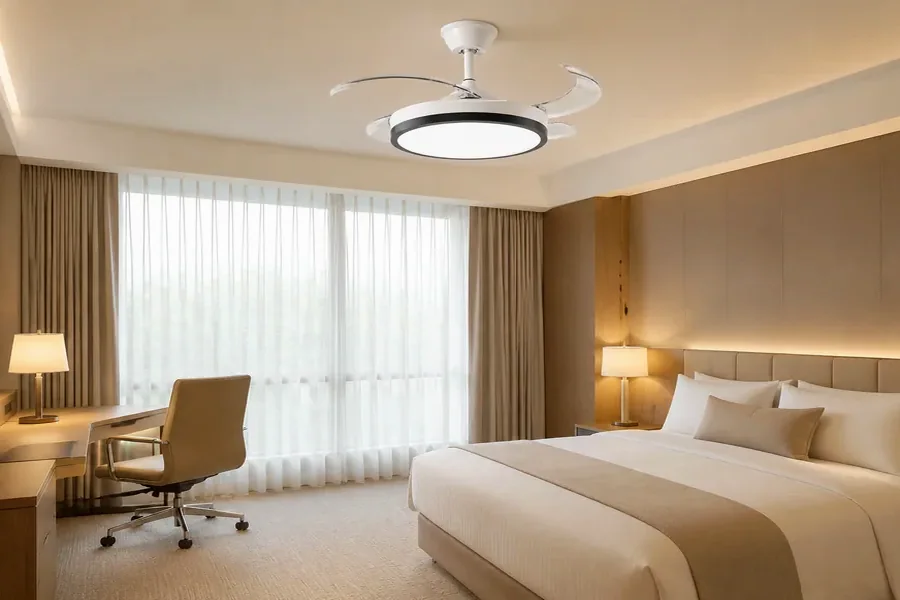
A hotel room does not need one bright light doing everything. It needs layered lighting: bedside lights, task lighting, mood lighting, and sometimes a ceiling fan light.
The fan light should support the room, not fight with the room. It should not create glare over the bed, harsh shadows on the ceiling, or a cold feeling in a warm interior.
6-1. Integrated lights are useful when ceiling space is limited
In compact rooms, one fixture that combines airflow and light can save ceiling space. This is useful in city hotels, serviced apartments, and small guest rooms.
A modern ceiling fan light with remote control can work in rooms where the fan needs to feel decorative but still practical. Retractable designs may also suit spaces where the fan should look more like a light when not in use.
6-2. Warm and dimmable light feels more hotel-friendly
Bedrooms and suites usually feel better with warm, soft light. Cool bright light may help cleaning staff, but it can feel harsh for guests at night.
If adjustable colour temperature is used, keep the interface clear. A guest should not need to read instructions to turn the light down before sleep.
6-3. Avoid blade shadows and flicker
Blade shadows happen when the light and blade position create moving shadows. Flicker can come from poor LED drivers or poor dimming systems. Both can make a room feel cheap and uncomfortable.
Before a full hotel order, test the fan light in a sample room. Look at the ceiling, walls, bed, mirror, and seating area. A lighting problem is easier to fix before installation than after.
7. Public Areas Need Wider Airflow and Stronger Visual Proportion
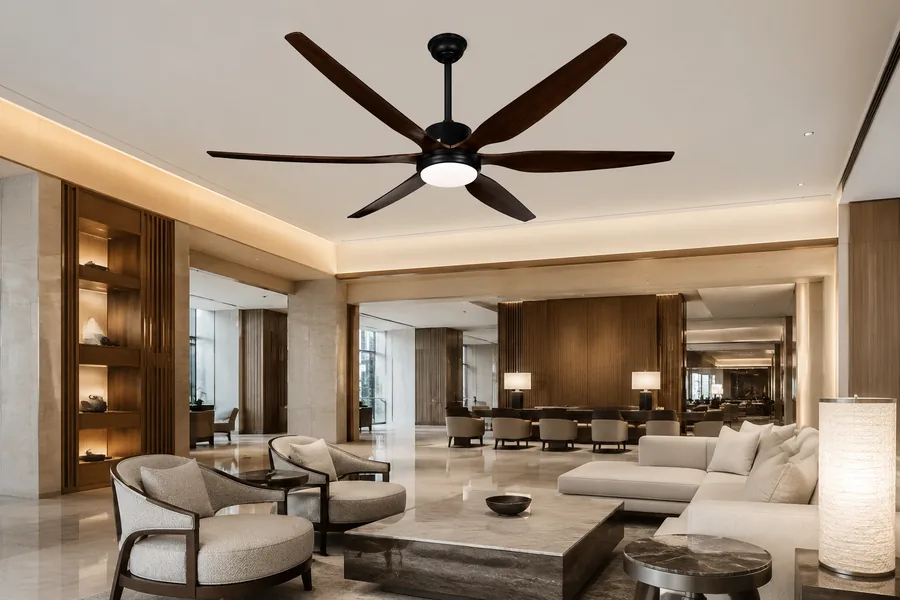
Hotel public areas are not the same as guest rooms. They are larger, busier, and often more visually designed. A fan in these areas must match the scale of the space.
Small fans in a large lobby can look weak. Large fans in a narrow corridor can feel heavy. The right choice depends on ceiling height, furniture layout, traffic flow, and the atmosphere of the hotel.
7-1. Lounges and restaurants need comfort without wind
Guests should not feel wind pushing at their food, papers, or hair. In lounges and restaurants, the best fan is often a larger model running slowly.
This creates soft air circulation across a wider area. It helps the space feel fresh without disturbing the guest experience.
7-2. Suites and villas may need a decorative fan
Some hospitality spaces need a more premium look. A luxury resort villa, for example, may need a fan that feels like part of the interior design.
A 60 inch wood fandelier ceiling fan light can suit larger hospitality rooms where the product needs both presence and practical airflow. In this type of space, proportion matters as much as power.
7-3. Large fans should not be used blindly
A large fan is not automatically better. If the ceiling is too low, the clearance is poor, or the room is narrow, a large fan can feel uncomfortable.
For wide public areas, use larger fans only when the room gives them enough space. For long spaces, two or more medium fans may create better air circulation than one oversized fan.
8. Outdoor and Semi-Outdoor Hotel Areas Need Extra Care
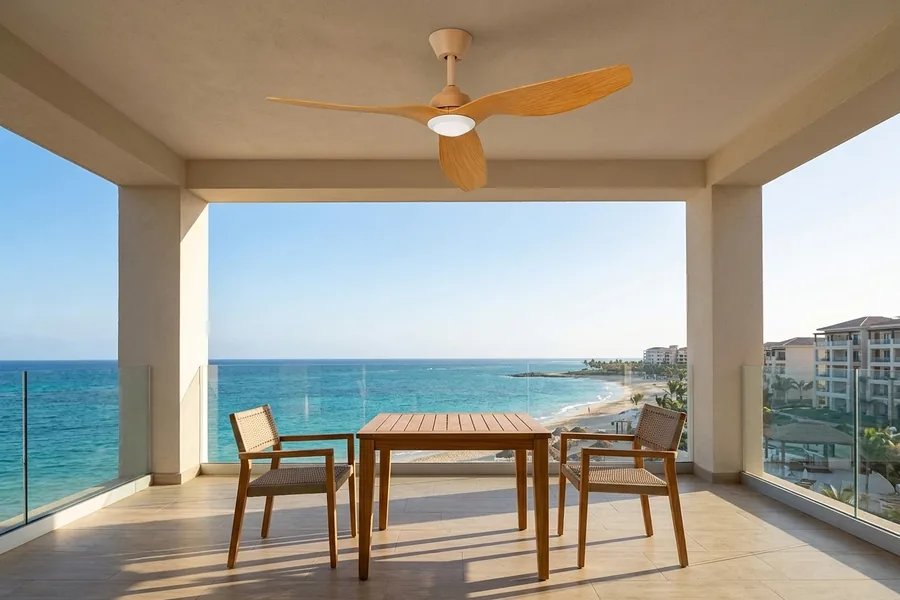
Hotel fans are often used in covered patios, balconies, poolside lounges, garden rooms, and outdoor dining areas. These spaces need more careful product selection.
Humidity, dust, salt air, temperature change, and wind can all affect fan life. A fan that works well indoors may not be suitable for a covered outdoor area.
8-1. Check the usage environment before choosing
Before selecting an outdoor or semi-outdoor hospitality fan, check whether the area is fully covered, partly exposed, humid, coastal, dusty, or close to pool chemicals.
The fan finish, blades, motor housing, and electrical parts must suit the environment. This is not a detail to leave until the end. It affects safety and long-term maintenance.
8-2. Outdoor guest areas need quiet airflow too
Outdoor fans are often chosen for stronger airflow, but comfort still matters. A poolside dining area does not need harsh wind. A villa balcony should feel calm, not noisy.
A product such as an outdoor ceiling fan with lights can fit covered hospitality spaces where airflow, lighting, and decorative finish need to work together. Always confirm the correct application and rating for the specific installation site.
8-3. Cleaning access is part of the design
Outdoor and semi-outdoor fans collect dust faster. In hotels, cleaning time is money. Choose blade shapes and finishes that can be cleaned easily.
Very complex blade details may look attractive at first, but they can become a maintenance burden. In busy hospitality spaces, simple and strong is often better.
9. Maintenance, Spare Parts, and Long-Term Supply Matter
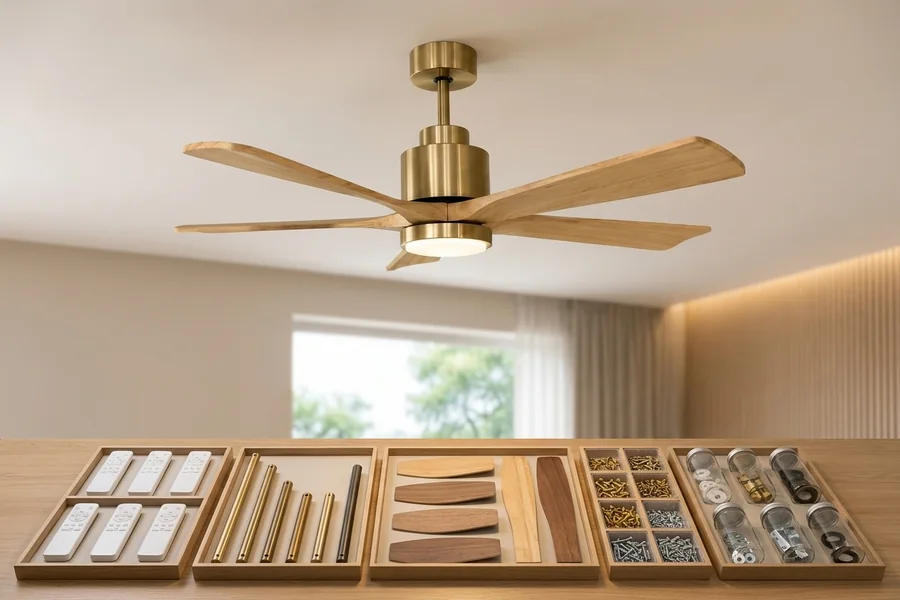
A hotel ceiling fan is not finished when it is installed. It must stay easy to manage over time.
For project buyers, maintenance planning should happen before the order. Ask about replacement remotes, receivers, LED modules, downrods, brackets, blade sets, and finishes. A fan that cannot be serviced easily can become expensive later.
9-1. Choose finishes that hide daily wear
Hotels deal with luggage, cleaning, humidity, dust, and frequent room turnover. White, black, wood, and brushed finishes can all work, but each behaves differently.
Glossy finishes may show scratches. Deep black may show dust. Very pale finishes may show marks. Wood-look blades can feel warm, but the finish quality must be stable.
9-2. Keep controls simple for guests and staff
The best hotel control is easy to understand. Guests should know how to change fan speed and light without calling the front desk.
For maintenance staff, the control system should also be clear. If a remote is lost or a receiver fails, the replacement process should be simple.
9-3. Product consistency is vital for repeat rooms
If a hotel has 80 rooms, the fan colour and light tone should not vary from room to room. Even small differences can look unprofessional.
This is why sampling, batch control, and clear product specifications matter. The buyer should confirm finish, motor type, light temperature, remote function, blade size, and packaging before bulk production.
10. How to Build a Hotel Ceiling Fan Specification
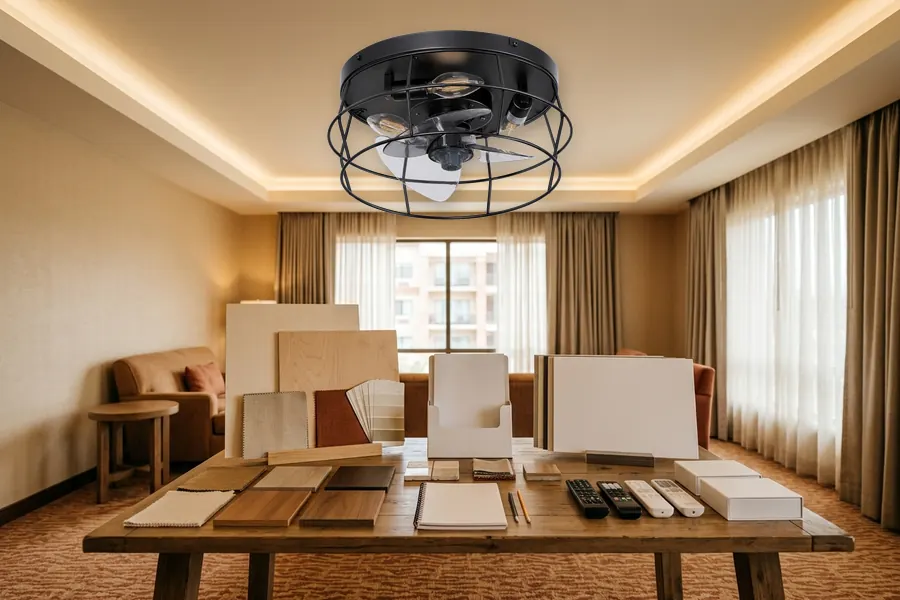
A good hotel fan choice becomes easier when the buyer writes a clear specification. This helps compare products fairly and reduces mistakes between design, purchasing, and installation teams.
The specification does not need to be complicated. It needs to be practical.
10-1. Start with room categories
List each space type first:
- Standard guest room
- Twin room
- Suite bedroom
- Suite living area
- Serviced apartment
- Lobby
- Lounge
- Restaurant
- Covered patio
- Villa balcony
Then define fan size, mounting type, light requirement, finish, control method, and expected airflow for each space.
10-2. Compare samples in real rooms
Do not judge only from a catalogue. Install sample fans in one or two real room types if possible. Listen at night. Check low speed. Test the light. Use the remote. Look at the fan from the bed, sofa, door, and mirror.
This small test can prevent a large mistake.
10-3. Choose a product range, not a single product
Many hotel projects need more than one fan type. A compact room may need a low-profile fan. A suite may need a wider fan. A covered patio may need a more durable model. A lobby may need a large fan with stronger visual proportion.
For example, a 66 inch DC wood ceiling fan light can suit larger spaces where wider airflow and a warmer finish are both important. But it should sit within a planned range, not be used everywhere.
11. A Practical Hotel Fan Buying Checklist
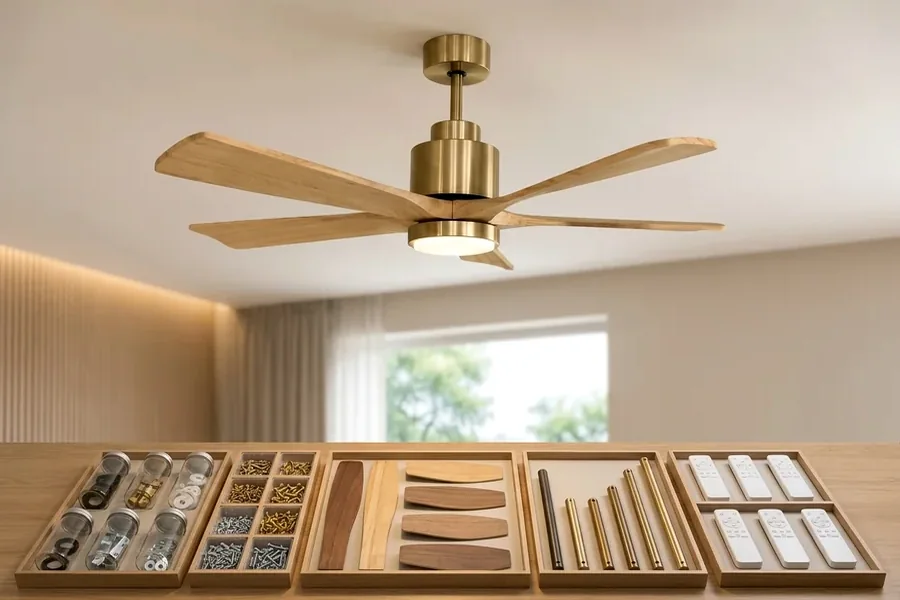
Before placing a hotel ceiling fan order, check the product as part of the whole project. A fan that looks right in one photo may not be right across a full property.
Use this checklist before final approval:
| Check Point | What to Confirm | Why It Matters |
|---|---|---|
| Room size | Fan diameter and airflow coverage | Prevents weak or harsh airflow |
| Ceiling height | Flush mount, downrod, or angled mounting | Protects comfort and safety |
| Noise | Low-speed motor sound and wobble | Supports sleep and guest reviews |
| Energy use | Motor type and wattage | Reduces operating cost |
| Lighting | LED tone, dimming, glare, and flicker | Improves room comfort |
| Controls | Remote, wall control, or smart option | Keeps guest use simple |
| Maintenance | Cleaning, spare parts, replaceable modules | Reduces long-term service issues |
| Finish | Colour, blade material, and batch consistency | Keeps rooms visually consistent |
| Environment | Indoor, covered outdoor, humid, or coastal | Protects product life |
| Supply | MOQ, lead time, packaging, and documentation | Supports project delivery |
11-1. What I would check first
If I were reviewing a hotel fan project, I would start with three things: noise, room size, and maintenance. These three decide whether the fan will feel good on day one and still make sense after a year.
A beautiful fan that is noisy will cause complaints. A quiet fan that is too small will not cool the guest. A strong fan that is hard to clean will become a burden for the hotel team.
11-2. Why hotel buyers should think in systems
The best hospitality fan is not just a fixture. It is part of a room system: air conditioning, lighting, ceiling height, bed layout, cleaning plan, and brand style.
When those parts work together, the fan feels natural. Guests sleep better. Staff handle fewer problems. The hotel keeps a cleaner and more comfortable room standard.
For hotel rooms, suites, villas, and public hospitality areas, the best choice is usually a carefully planned range rather than one fan used everywhere. Start with room size, noise, energy efficiency, and maintenance. Then choose the products that fit each zone. For a broader project selection, NEBOLA’s commercial ceiling fans page can help you compare suitable fan light directions for hospitality and project use.
Planning Ceiling Fans for a Hotel or Hospitality Project?
Tell us your room types, fan sizes, noise needs, lighting options, certification direction, and order plan. We’ll help match the right solution.
Get a QuoteFAQ: Hotel Ceiling Fans
Are ceiling fans good for hotel rooms?
Yes, ceiling fans can be very good for hotel rooms when they are quiet, correctly sized, and easy to control. They help air feel fresher and can support the air conditioning system. The key is comfort. A hotel room fan should move air gently at low speed without noise, wobble, or harsh direct wind over the bed.
Should a hotel ceiling fan have a light?
Yes, a hotel ceiling fan can include a light, especially in compact rooms where ceiling space is limited. But the light should be warm, comfortable, and simple to control. Harsh cool light, poor dimming, or blade shadows can make the room feel less restful. In premium rooms, layered lighting is still important.
Is a DC motor better for a hospitality fan?
Yes, a DC or BLDC motor is often better for a hospitality fan because it can support quiet operation, lower energy use, and smoother speed control. This is useful in guest rooms where low-speed comfort matters. However, the full product quality still matters, including blade balance, receiver quality, and installation.
Can one fan size work for every hotel room?
No, one fan size should not be used blindly across every hotel space. A compact room, suite, lobby, restaurant, and covered patio may all need different fan sizes or mounting styles. A planned product range usually works better than forcing one model into every room.
Do hotel ceiling fans reduce air conditioning costs?
Yes, they can help reduce air conditioning load when used properly. A ceiling fan moves air across the skin, making guests feel cooler without always lowering the thermostat. The saving depends on climate, guest habits, fan efficiency, and how the HVAC system is managed.
What is the biggest mistake when choosing ceiling fans for hotels?
No, the biggest mistake is not choosing a fan that is too plain. The bigger mistake is choosing by appearance alone. Hotel buyers should check room size, ceiling height, noise, energy use, control simplicity, lighting comfort, maintenance, and long-term supply before placing a bulk order.