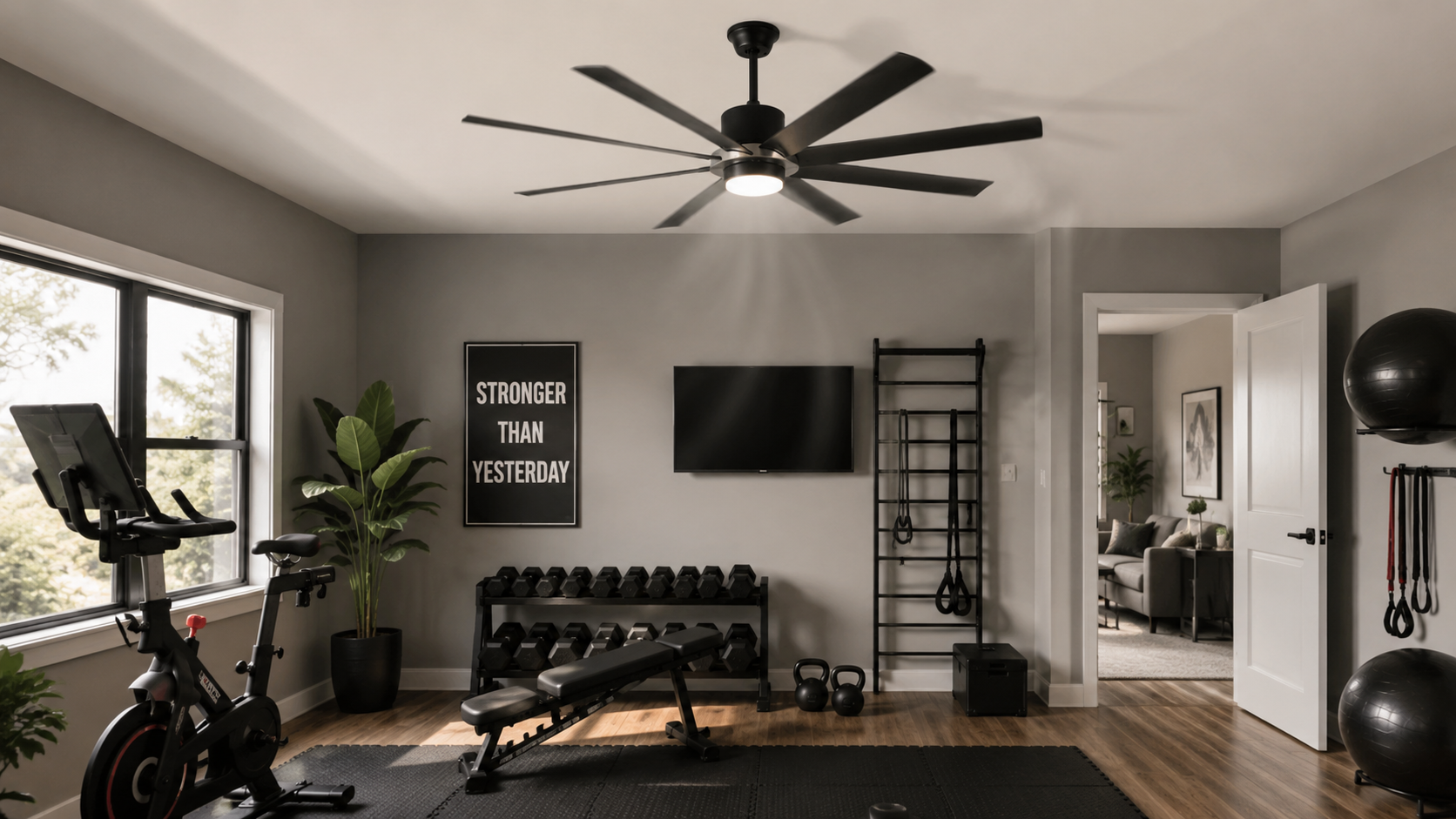


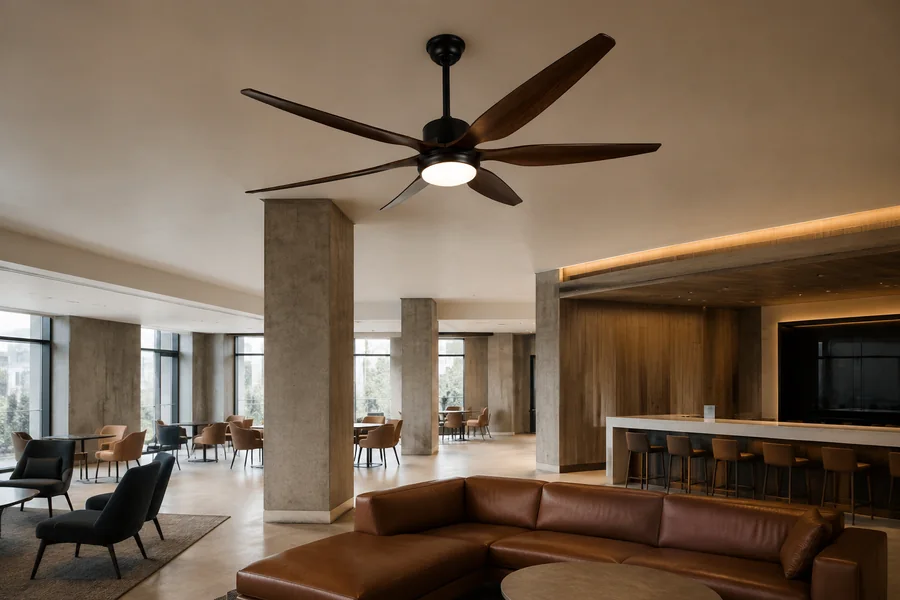
Choosing a ceiling fan for a large space is not the same as choosing one for a bedroom. A large room needs wider air movement, safer mounting, better motor stability, and a clearer plan for how people use the space. If you are comparing a large space fan for a lobby, warehouse, restaurant, showroom, hotel hall, or open-plan project, this commercial ceiling fan guide is a useful starting point.
The main mistake is simple: people look at the fan diameter first. Size matters, but it is not the whole story. A large fan with weak airflow can still leave dead zones. A powerful fan placed in the wrong position can feel harsh. Good industrial airflow is about coverage, comfort, and control.
1. Start With the Space, Not the Fan
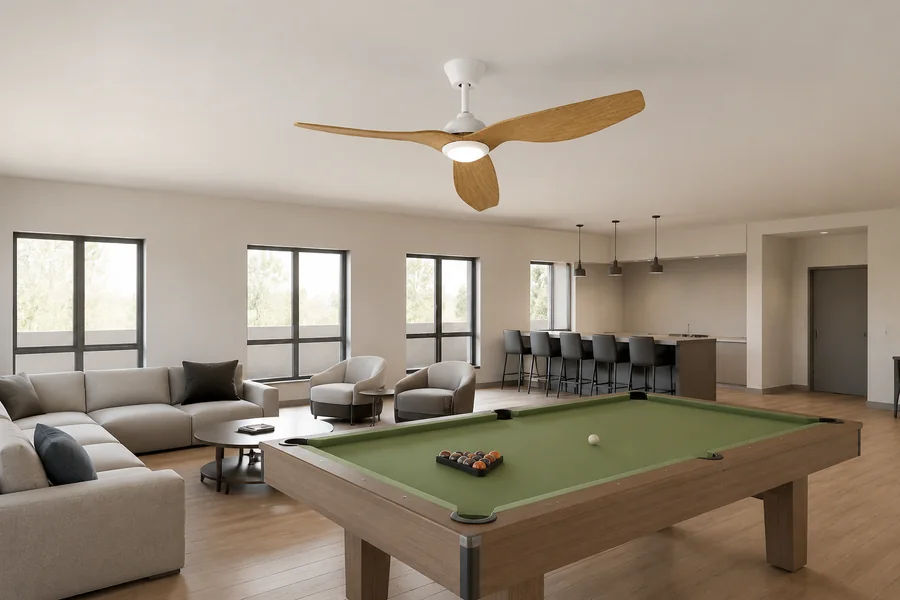
Large spaces are different because air has more distance to travel. The fan must cover people, furniture, machines, walkways, counters, or seating areas without creating uncomfortable wind in one place.
In a large room, the fan is part of the whole air plan. Before choosing a diameter, look at where people sit, where warm air gathers, where doors open, and whether the space is used all day or only at certain times.
Before choosing any model, map the room. Look at the length, width, ceiling height, doors, windows, air conditioning, lighting, beams, shelves, and how people move through the area.
1-1. Large spaces often have more than one airflow zone
A hotel lobby may have seating on one side and reception on another. A warehouse may have packing tables, storage rows, and loading doors. A restaurant may have dining zones, service paths, and terrace edges.
For example, a hotel lobby may have a waiting area, reception desk, and walkway in the same room. One fan may help the centre, but leave the corners still. Planning by zones makes the final fan layout feel more even.
One fan may not solve every zone. Sometimes two medium fans work better than one oversized fan.
1-2. Ceiling height changes how airflow reaches people
The higher the ceiling, the more carefully the fan must be mounted. If the fan is too high, people may not feel useful air movement. If it is too low, it may look unsafe or block lighting.
A fan mounted high can look correct but still feel weak at sitting level. The higher the ceiling, the more important blade span, downrod length, and motor strength become. The goal is not just moving air near the ceiling, but moving useful air where people are.
1-3. Open space does not always mean simple space
Open rooms can still have airflow barriers. Columns, beams, high furniture, shelves, and partitions can change how air moves. This is why real layout matters as much as floor area.
Open spaces often include beams, lighting tracks, partitions, counters, or tall shelves. These details can break airflow and change how a large space fan performs. A clean floor plan is useful, but a ceiling plan is just as important.
2. Understand What Industrial Airflow Really Means
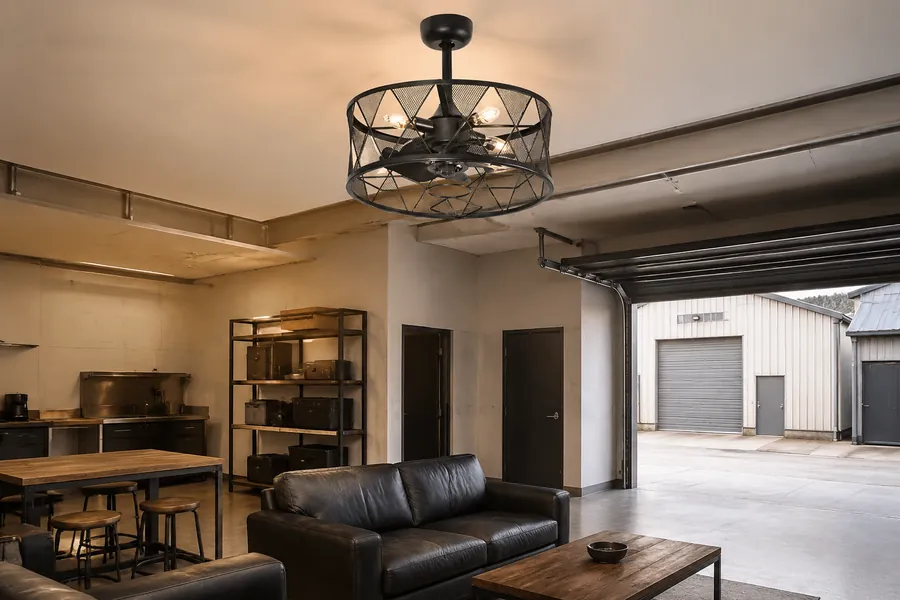
Industrial airflow is not about making a room windy. It is about moving a large volume of air in a steady and useful way.
Industrial airflow does not simply mean the fan is strong or fast. It means the fan can move a wide volume of air in a controlled way, often for long hours, without creating sharp wind, noise, or unstable operation.
In commercial and project spaces, airflow must support comfort, ventilation strategy, and energy use. It should help reduce still air, not create a strong draft over people.
2-1. Air movement should be wide and slow enough
For large areas, wide airflow is usually more comfortable than narrow high-speed wind. A larger blade span can move air across more area at a lower speed.
In large spaces, comfort usually comes from broad air circulation rather than a narrow blast. A slower wide fan can make the space feel fresher while reducing the direct wind feeling that often happens when a small fan is pushed too hard.
2-2. CFM is helpful but not enough
CFM tells you how much air a fan can move. But it does not tell you how the air feels in your exact room. Motor quality, blade design, mounting height, speed range, and layout all affect real performance.
CFM tells you how much air a fan can move under test conditions, but real rooms are not test labs. Mounting height, blade shape, furniture, and open doors can all change the result. Use CFM as a filter, then check whether the fan suits the room layout.
2-3. Stable airflow matters during long running hours
Large spaces often need fans that run for many hours each day. A fan should stay stable, quiet enough for the setting, and easy to control over time.
A large space fan may run for many hours in a lobby, hall, gym, or commercial room. If the motor heats up, the blades wobble, or the sound grows louder over time, the fan becomes a maintenance issue instead of a comfort solution.
3. Choose the Right Fan Size for the Room
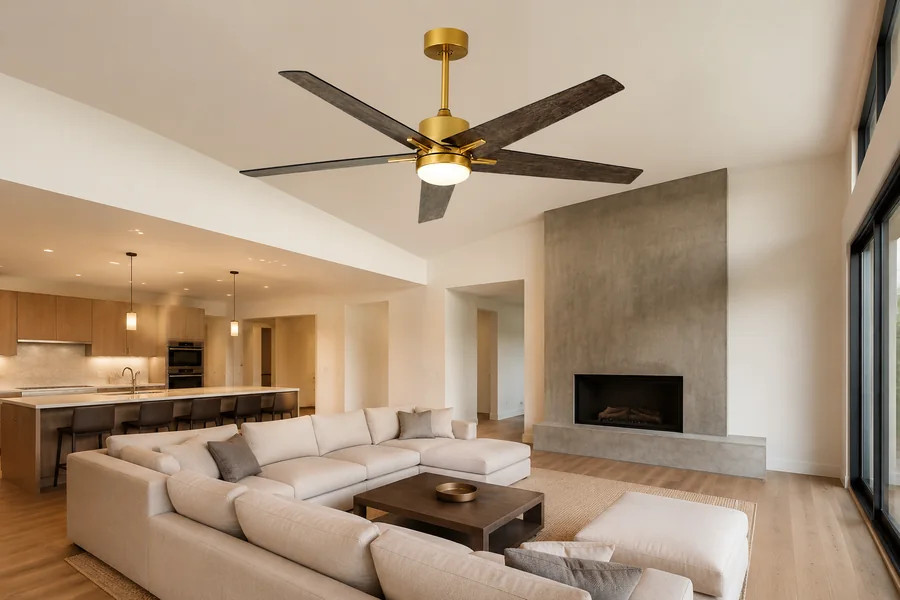
Large spaces usually need larger fans, but the right size depends on ceiling height and room shape.
Fan size should match both the floor area and the shape of the room. A square room, a long rectangular room, and an open-plan lounge can need different fan plans even when the total square footage looks similar on paper.
| Space Type | Common Fan Direction | Main Check |
|---|---|---|
| Large living area | 56-66 inch | Comfort and style |
| Hotel lobby | 60 inch or larger | Visual proportion and quiet airflow |
| Warehouse or workshop | 66-70 inch or multiple fans | Coverage and mounting strength |
| Covered terrace | Outdoor-rated fan | Moisture and clearance |
| Open-plan restaurant | Multiple zones | Airflow balance |
3-1. When a 60 inch fan is enough
A 60 inch fan can work well in a large living area, meeting room, small lobby, or wide covered terrace. It gives more coverage than a standard 52 inch fan without looking too heavy in every space.
A 60 inch fan often works well in larger residential rooms, hotel suites, covered lounge areas, and open living spaces where the ceiling height is not extreme. It gives wider reach than a 52 inch fan without becoming visually heavy in many rooms.
A 60 inch ceiling fan light for large decorative spaces can be useful when the room needs both airflow and a stronger design presence.
3-2. When 66 inch or larger makes more sense
If the room is very wide, high, or open, a larger fan can move air more gently across the space. A 66 inch wood ceiling fan light with DC motor suits bigger areas where comfort, appearance, and airflow coverage all matter.
A larger span becomes more useful when the room is wide, the ceiling is high, or people sit across a broad area. In these cases, a bigger fan can cover more space at a lower speed, which often feels quieter and more natural.
3-3. When one fan is not enough
One large fan may still leave still air in corners. For long rooms, L-shaped layouts, or spaces with columns, two or more fans may be better.
If the room is long, divided by furniture, or used by many people at the same time, two or more fans may work better than one oversized fan. Multiple fans can create balanced air zones and reduce dead spots.
4. Match the Fan to the Ceiling Height
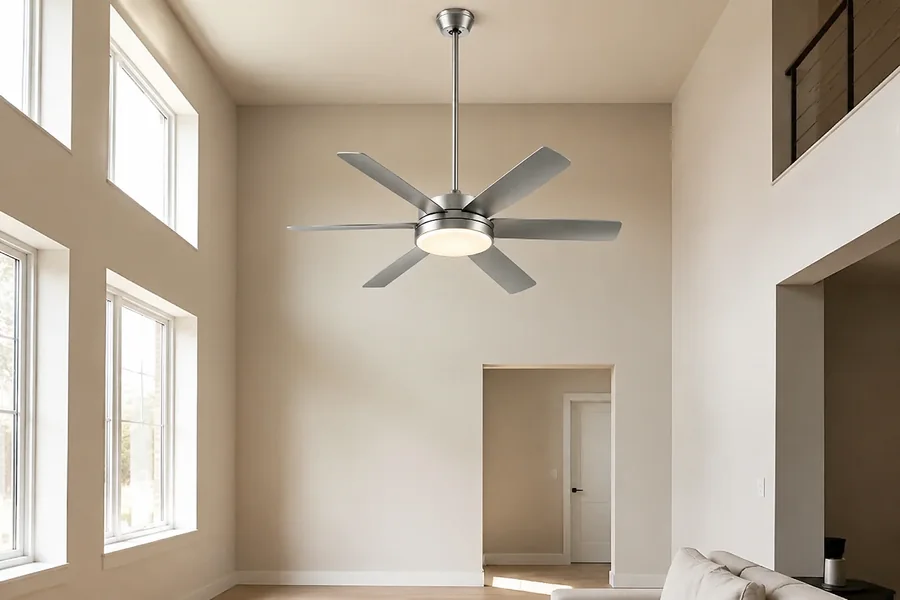
Ceiling height is one of the most important checks for a large space fan. It affects air delivery, safety, visual balance, and installation method.
Ceiling height affects safety, airflow, appearance, and installation type. A fan that is perfect for a 9-foot room may feel too low in one space and too weak in another if the mounting height is ignored.
4-1. Low ceilings need compact mounting
Low ceilings need fans that keep enough head clearance. A large downrod fan may be unsafe or visually heavy in this setting.
For lower large rooms, check the total drop height of the fan, not only the blade span. A slim body or low profile mount can protect head clearance, but the fan still needs enough space above the blades to move air.
4-2. Standard commercial ceilings may need downrods
For many commercial rooms, a downrod helps place the fan at a more useful height. The goal is not to hang it low. The goal is to put the blades where they can move air effectively.
A downrod helps bring the blades into a better working position. If the fan stays too close to a tall ceiling, much of the air movement can remain overhead. A correct downrod can improve comfort without increasing speed.
4-3. Very high ceilings need careful planning
Warehouses, atriums, and halls often need longer downrods, stronger mounting points, and more airflow planning. A 70 inch industrial warehouse ceiling fan with LED is built for larger coverage than a normal residential fan.
In very high spaces, one fan choice affects both comfort and safety. You may need a longer downrod, stronger mounting hardware, and a larger fan designed for high-ceiling use. Maintenance access should also be planned before installation.
5. Check Motor Type and Running Time
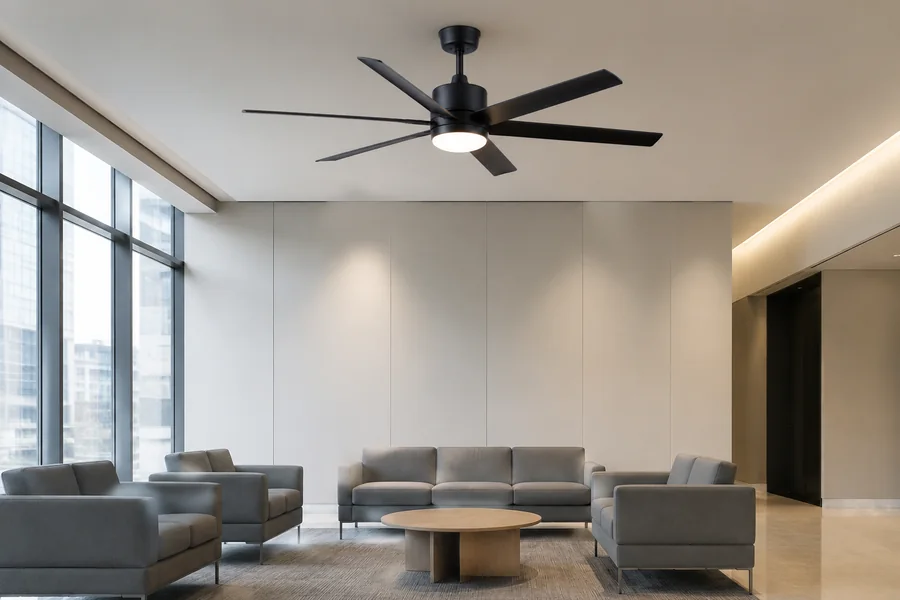
Large fans work harder than small fans. If the fan will run for long hours, motor quality becomes more important.
Large space fans place more pressure on the motor than small bedroom fans. The motor must handle blade weight, long running time, speed changes, and heat without creating vibration or wasting energy.
5-1. DC motors can improve control and efficiency
DC and BLDC motors can support better speed control and lower energy use. This is useful in spaces where the fan runs every day.
A DC motor can be useful when the space needs quiet low-speed operation for long hours. It can also make speed control smoother, which helps users fine tune comfort instead of switching between too weak and too strong.
5-2. Long running hours need stable parts
Commercial spaces place more stress on bearings, blades, brackets, remotes, drivers, and LED parts. A fan that works well for occasional home use may not be right for a busy project.
For commercial and project use, check the motor housing, blade connection, driver quality, and warranty direction. A fan that works well for a short test may still fail if it is not built for regular daily operation.
5-3. Noise still matters in large spaces
Large spaces are not always noisy. Hotels, offices, restaurants, and showrooms still need quiet operation. A fan should not become part of the room’s noise problem.
Large rooms can hide some sound, but not all sound. Reception areas, restaurants, meeting rooms, and hotel lounges still need quiet operation. Low-speed motor noise, blade hum, and vibration should be checked before bulk orders.
Need the Right Ceiling Fan for a Home, Project, or Commercial Space?
Tell us your space type, ceiling height, airflow needs, lighting options, certification direction, and order plan. We’ll help match the right solution.
Get a Quote6. Think About Installation and Clearance
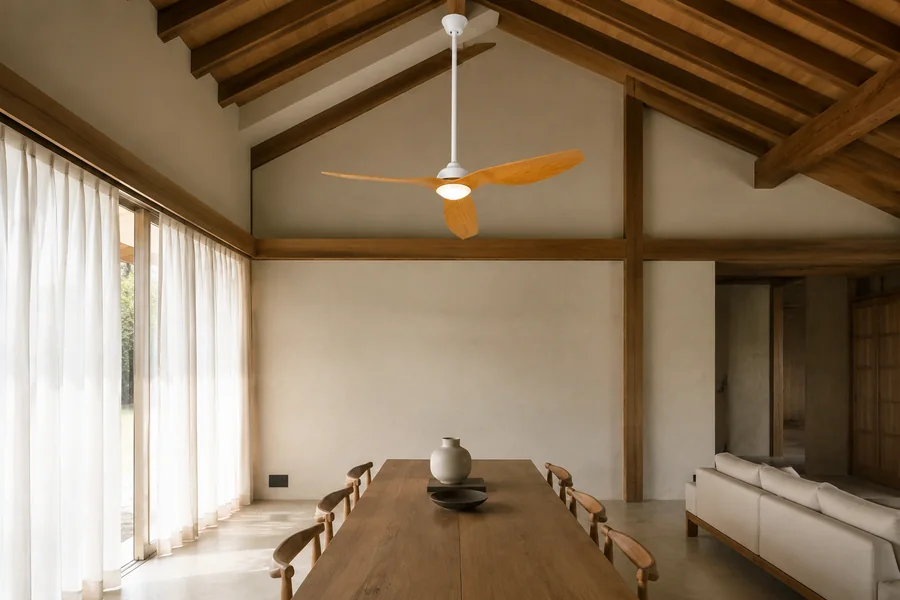
Large fans need more clearance. The blades must stay away from walls, beams, lights, signs, sprinklers, shelves, and tall furniture.
Installation is where many large space fan plans succeed or fail. The fan must have enough distance from walls, beams, lights, sprinklers, and tall objects, while also sitting at a height that is comfortable and safe.
6-1. Blade clearance affects safety and airflow
If a fan is too close to a wall or beam, airflow may become uneven. If it is too close to lighting or ductwork, installation may become unsafe.
Wide blades need more side clearance than small fans. If the blade tips sit too close to walls or beams, airflow can become uneven and noise can increase. Clearance also helps reduce the risk of accidental contact.
6-2. Mounting strength must match fan weight
Large fans may need stronger brackets and a suitable structural fixing point. This should be checked before ordering, not during installation.
A large fan can be heavier and create more movement force than a small fan. The ceiling box, bracket, screws, and support structure must be rated for fan use. This is especially important in commercial ceilings and renovation projects.
6-3. Maintenance access should be planned early
Project buyers should think about how the fan will be cleaned, serviced, and adjusted later. Hard-to-reach fans can create long-term maintenance cost.
If a fan is installed above a lobby, hall, or high room, future cleaning and service can be difficult. Plan how technicians will reach the fan, replace parts, and check the mount without disrupting the whole space.
7. Choose Controls That Fit the Space
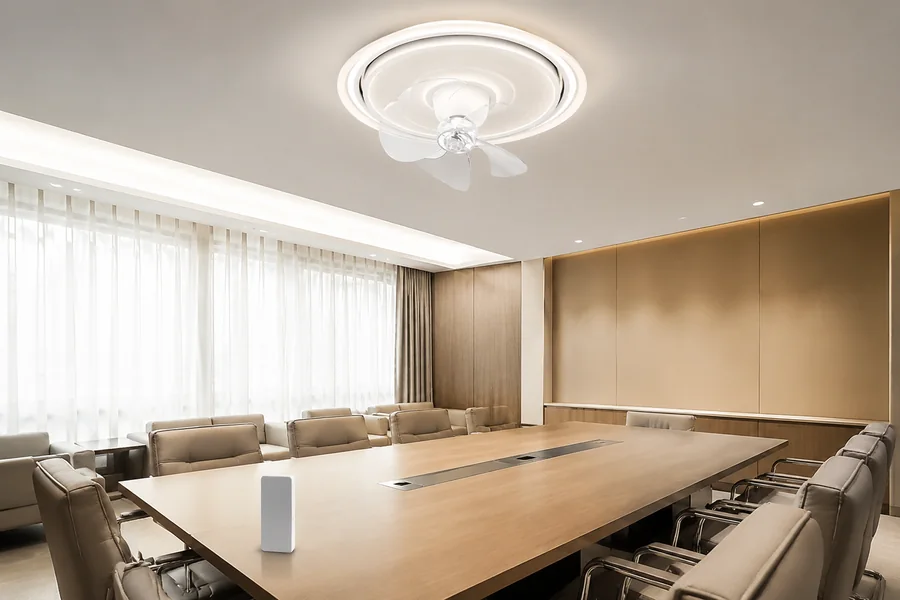
Control style can make a large fan easy or frustrating to use.
Controls should match who uses the space. A private home, hotel suite, restaurant, and warehouse do not need the same control style. The best control is the one people can use correctly every day.
7-1. Simple controls are better for public areas
In hotels, offices, and retail spaces, staff need clear control. Too many modes can create confusion.
In shared spaces, too many buttons can create confusion. Wall controls or preset speeds can be easier for staff, guests, and maintenance teams. Simple controls also reduce the chance that users leave the fan on the wrong setting.
7-2. Remote control works well in smaller project rooms
For villas, meeting rooms, guest rooms, and small halls, remote control may be enough. For a practical semi-commercial room, a black DC ceiling fan light for garage ceiling use can suit stronger daily function.
Remote control is useful in hotel rooms, meeting rooms, villas, and private lounge spaces. It gives users quick access to speed and light settings, but the remote should be durable and easy to replace if used in a project.
7-3. Zoned control is useful in very large areas
If the space is divided into seating, service, storage, or work zones, fan control should follow those zones. This helps avoid running all fans at full speed when only one area needs airflow.
When a space has several fans, zoned control lets staff adjust only the area that needs airflow. This can improve comfort and reduce wasted energy, especially when one part of the room is busy and another part is empty.
8. Decide Whether the Fan Needs a Light
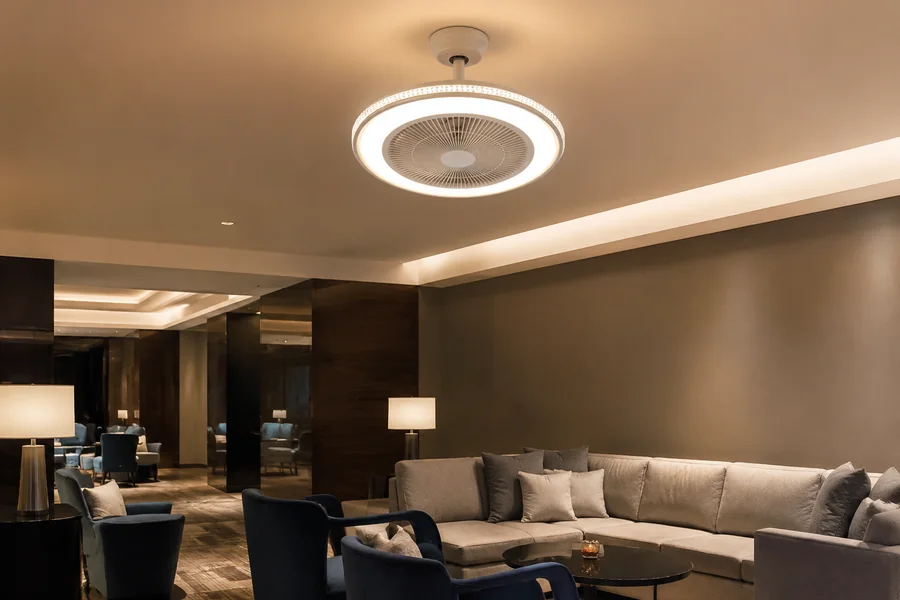
Some large space fans include lights. Some should not.
A fan with light can save ceiling space, but it should not replace a full lighting plan in every large room. The right choice depends on ceiling height, task lighting needs, room style, and maintenance access.
8-1. Integrated lights suit hospitality and public rooms
Hotel halls, guest lounges, meeting rooms, and covered terraces may benefit from a fan with LED lighting.
In guest rooms, lounges, apartments, and reception areas, an integrated light can make the ceiling look cleaner. It is most useful when the light is soft, dimmable, and easy to match with the rest of the room lighting.
For covered project areas, an outdoor ceiling fan with lights for open public rooms can help combine wider airflow, practical lighting, and a softer decorative finish.
8-2. Warehouses often need separate lighting
In warehouses or industrial rooms, lighting must be planned for work safety. A fan light alone may not give enough even coverage.
In warehouses and industrial spaces, light output, beam angle, and safety standards may be more demanding. Separate lighting can make maintenance easier and allow the fan to focus on airflow rather than carrying the full lighting job.
8-3. Avoid glare and shadow problems
Large blades can create shadows if the lighting plan is poor. Test the fan and light together before ordering in quantity.
Large blades can create moving shadows if the light position is wrong. For public spaces, choose a light design that reduces glare and flicker. This is especially important above dining tables, counters, desks, or waiting areas.
9. Compare Commercial Needs With Residential Habits
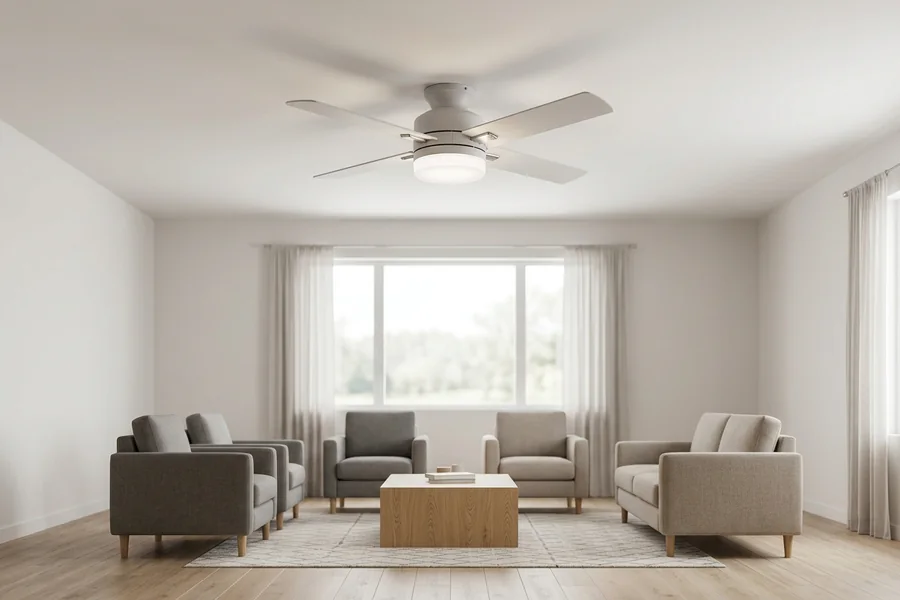
A large home and a commercial space may look similar in photos, but they are used differently.
Large fan selection changes when the user changes. A homeowner may care most about comfort and style, while a commercial buyer may care more about reliability, repeat installation, energy use, and service consistency.
Residential users notice comfort, light, noise, and style. Commercial users also need repeatable installation, spare parts, batch consistency, and longer running hours. For a wider comparison, see this guide to commercial and residential ceiling fan differences.
9-1. Homes need personal comfort
In a home, airflow should feel soft and easy to control. A fan that feels powerful in a showroom may feel too strong over a sofa or bed.
In residential rooms, users notice how the airflow feels when they sit, sleep, or watch television. The fan should feel calm at low speed, match the interior style, and avoid noise that becomes annoying in quiet daily use.
9-2. Commercial spaces need reliable coverage
In a project, the fan needs to serve many people and work across many conditions. That makes planning more important.
Commercial spaces need fans that perform consistently for many users. The choice should consider working hours, cleaning, replacement parts, control access, and how the fan fits with fire safety, lighting, and HVAC planning.
9-3. Hotels sit between both needs
Hotels need quiet guest comfort and project-level supply control. For more detail, read this guide to hotel ceiling fans for size, noise and energy efficiency.
Hotels need the comfort of residential rooms and the durability of commercial projects. A fan may need quiet operation, good appearance, simple guest control, easy housekeeping access, and stable supply for many rooms.
10. A Practical Buying Checklist for Large Spaces
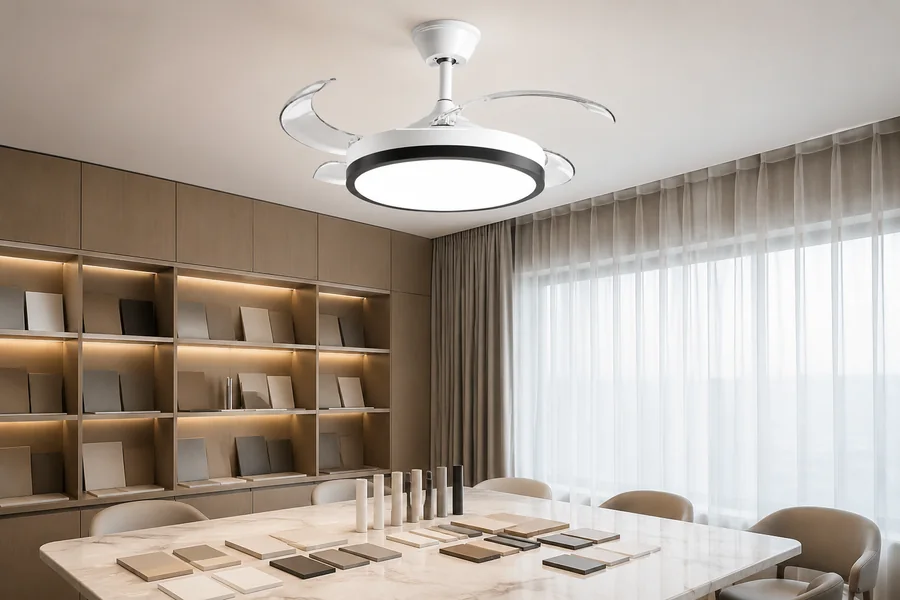
A checklist is useful only when it helps you make a real buying decision. For large spaces, the checklist should connect the room, the fan, and the installation plan instead of treating each item as a separate detail.
10-1. Confirm the real room size and airflow zones
Start with the real room area, but do not stop there. Check whether the space is square, long, open-plan, divided by furniture, or connected to another area. A fan that works in the centre of a square room may not cover a long hall, restaurant, showroom, or open commercial lounge evenly.
Mark the main airflow zones before choosing the fan. These zones may include seating areas, reception desks, dining areas, waiting spaces, work zones, or walkways. If people use only one part of the room, the fan should serve that area first. If the whole room is active, you may need more than one fan or a wider airflow plan.
10-2. Match fan size, CFM, and ceiling height together
Fan diameter, CFM, and ceiling height should be checked together. A large diameter fan with weak airflow may look impressive but feel underpowered. A high CFM fan mounted too high may move air above people rather than through the occupied zone. A strong fan installed too low may feel too direct.
Use fan size to judge coverage, CFM to judge air volume, and mounting height to judge how that air reaches people. For many large spaces, the better choice is not the fan with the biggest number on one specification line. It is the fan where the size, motor, blade design, and mounting height work together.
10-3. Check installation, controls, and maintenance before ordering
Large space fans are harder to correct after installation, so the practical details matter early. Check ceiling support, downrod length, blade clearance, wiring route, control method, lighting needs, and access for cleaning or service. These points are less exciting than style, but they decide whether the fan will be easy to live with.
- Floor area, room shape, and active airflow zones.
- Ceiling height, mounting point, and downrod requirement.
- Fan diameter, CFM range, motor type, and speed control.
- Noise level at low and medium speed.
- Lighting needs, glare risk, and control method.
- Blade clearance from walls, beams, lights, and tall furniture.
- Ceiling support, installation hardware, maintenance access, and spare parts.
If one of these items is unclear, treat it as a project risk rather than a small detail. A large space fan is usually visible, used often, and harder to replace than a small bedroom fan, so the buying decision should be made with installation reality in mind.
11. Final Advice for Large Space Fan Selection

The right fan for a large space should feel calm, capable, and correctly placed. It should not look like a small home fan forced into a big room. It should not feel like an industrial machine forced into a comfortable public space.
11-1. Choose around the room experience
The final decision should come back to how the room is used. A hotel lobby needs calm air and quiet operation. A warehouse needs wide circulation and long running stability. A large living area needs comfort, proportion, and a fan that does not dominate the ceiling. Different large spaces can need different answers.
11-2. Balance performance with project risk
The best large space fan is not always the largest model. It is the fan that moves air across the right area, at the right height, with the right noise level and control method for the people using the room. It should also be practical to install, clean, service, and reorder if the project expands.
For commercial or project use, risk is part of the buying decision. A fan with good airflow but unclear installation support, weak packaging, limited spare parts, or uncertain certification direction can create problems later. A slightly more balanced option is often better than a fan that wins on one specification only.
11-3. Use a sample to confirm the final choice
If the project is important, test one sample in a real or similar space before ordering many units. A sample can reveal airflow reach, low-speed comfort, motor sound, light quality, finish, packaging, and installation details that a product page cannot show.
As a ceiling fan light manufacturer, NEBOLA looks at large fan projects through size, motor, lighting, mounting, certification direction, and order planning. If you are choosing a large space fan for a project, start with the room plan and then compare options through a practical commercial ceiling fan guide.
Need the Right Ceiling Fan for a Home, Project, or Commercial Space?
Tell us your space type, ceiling height, airflow needs, lighting options, certification direction, and order plan. We’ll help match the right solution.
Get a QuoteFAQ
Is a large space fan always better than several smaller fans?
No, a large space fan is not always better than several smaller fans. One large fan can work well in an open square room, but long rooms, L-shaped layouts, and spaces with columns may need several fans. Multiple fans can give better zone control and reduce still air in corners.
Does industrial airflow mean strong wind?
No, industrial airflow does not simply mean strong wind. In large spaces, good airflow should be wide, steady, and controlled. Harsh wind can make guests, workers, or customers uncomfortable. The aim is useful air circulation, not maximum wind speed.
Can a 52 inch fan work in a large space?
Yes, a 52 inch fan can work in some large spaces, but usually only in a smaller zone or lower ceiling area. For wide open spaces, a 52 inch fan may not cover enough area. Larger spaces often need 60 inch, 66 inch, 70 inch, or multiple fans.
Should a large space ceiling fan include a light?
Yes, a large space ceiling fan can include a light, but only when the lighting suits the room. Hospitality rooms and lounges may benefit from integrated LED lighting. Warehouses and work areas often need separate lighting plans for better safety and coverage.
Is ceiling height more important than fan size?
No, ceiling height is not more important than fan size, but it is just as important. A correctly sized fan installed at the wrong height can perform poorly. Ceiling height affects downrod choice, airflow reach, clearance, and safety.
Should I test a sample before ordering fans for a large project?
Yes, you should test a sample before ordering fans for a large project. A sample helps check airflow, noise, motor control, finish quality, installation details, packaging, and light comfort. This is much safer than judging only from photos or size charts.