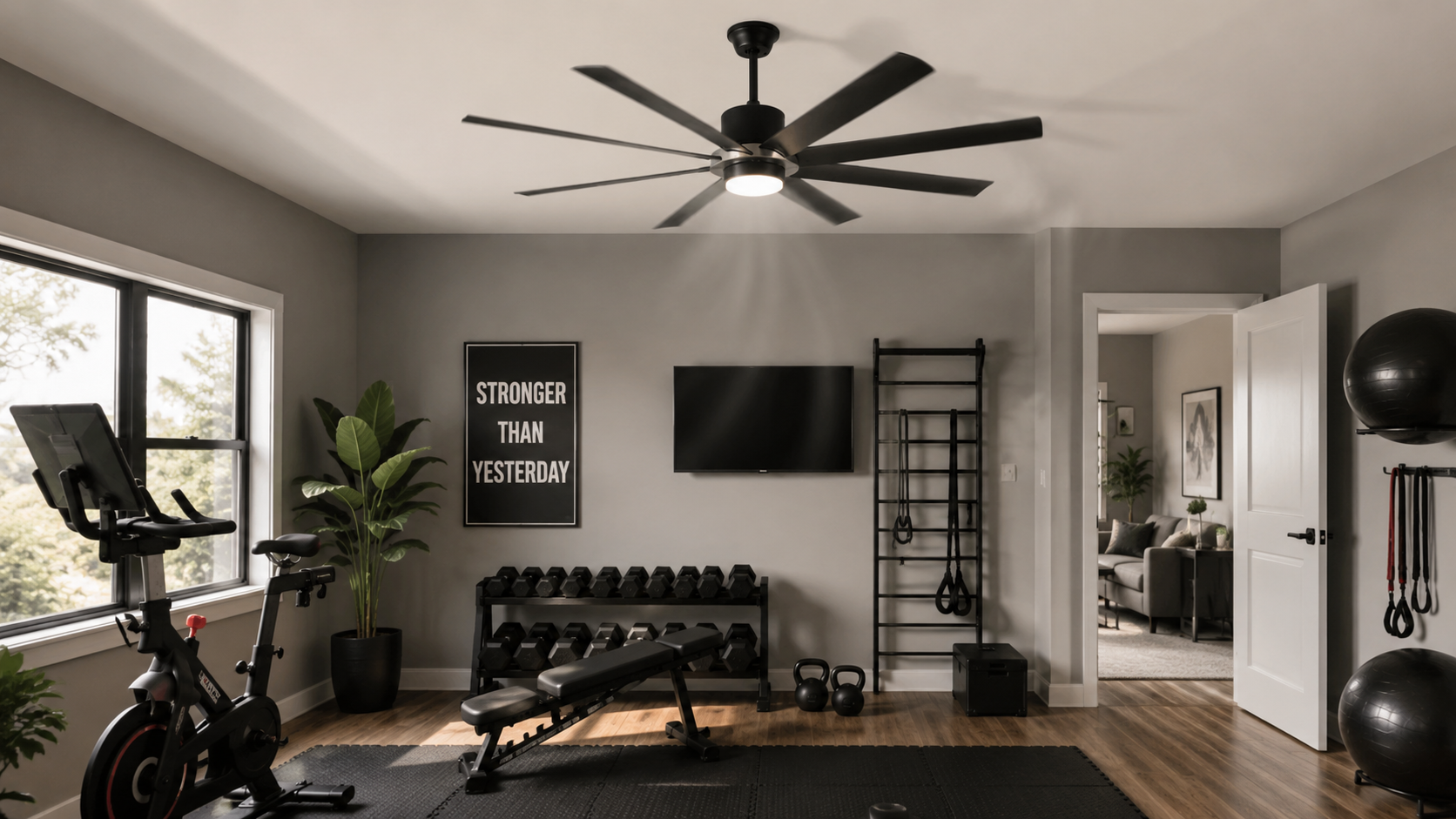


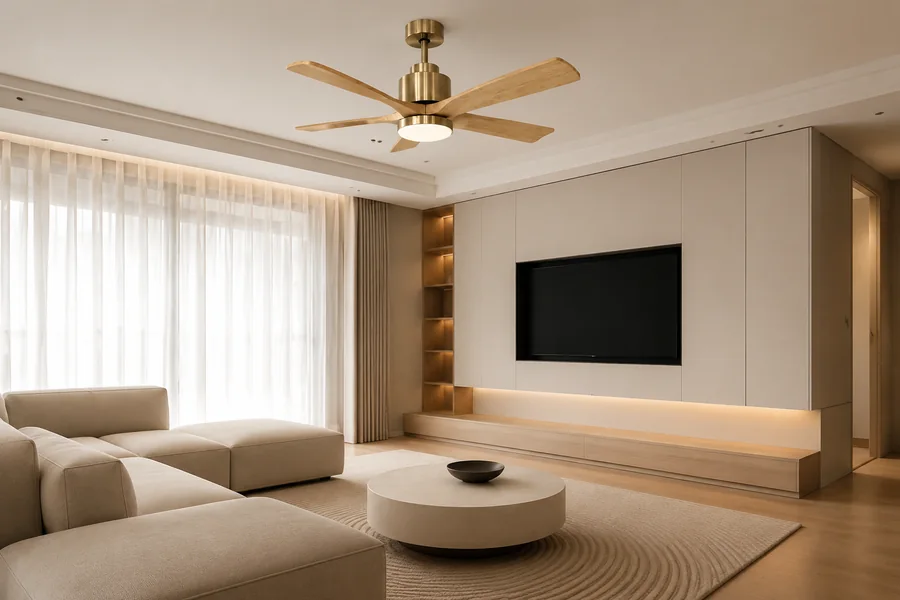
Ceiling fan mount types affect safety, comfort, airflow, and how the fan looks in the room. A fan can have the right size and motor, but still feel wrong if it is mounted too high, too low, or too close to the ceiling. This ceiling fan mount types guide explains the main options so you can choose a safer and more comfortable installation.
Mounting is not a small detail. It decides blade height, airflow reach, head clearance, light position, and whether the fan fits the room visually. The best fan is not only the one you like. It is the one that can be installed properly in your ceiling condition.
1. Why Ceiling Fan Mount Type Matters
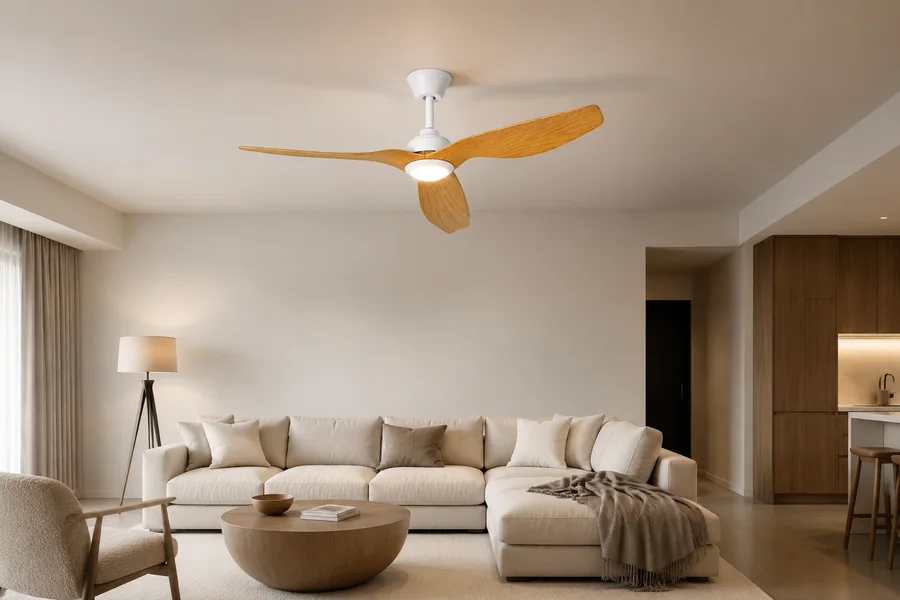
The mount connects the fan to the ceiling and sets the fan at the working height. If the mount is wrong, the fan may wobble, look awkward, or move air poorly.
Mount type is the hidden part of fan comfort. It decides how low the fan hangs, how freely the blades can pull air, and whether the fixture feels balanced in the room. A good fan can still perform poorly with the wrong mount.
1-1. Mount type changes blade height
Blade height affects comfort and safety. A fan that hangs too low can feel unsafe. A fan too close to the ceiling may not move enough air.
Blade height should give people enough head clearance while keeping airflow close enough to be felt. If the fan is too low, it feels unsafe. If it is too high, the room may look neat but the airflow can feel weak.
1-2. Mount type affects airflow
Fans need space above the blades to pull air. If the blades are too close to the ceiling, airflow may be weaker.
A fan needs space above and around the blades. When blades are pressed too close to the ceiling, air intake can be limited. This is why two fans with the same motor and size can feel different after installation.
1-3. Mount type changes the room appearance
A long downrod can look elegant in a high room, but strange in a low room. A flush mount can look clean in a compact room, but too small in a tall room.
Mounting also changes visual proportion. A flush fan can make a low room feel cleaner, while a downrod fan can make a high room feel more complete. The mount should look intentional, not like an afterthought.
2. Flush Mount Ceiling Fan
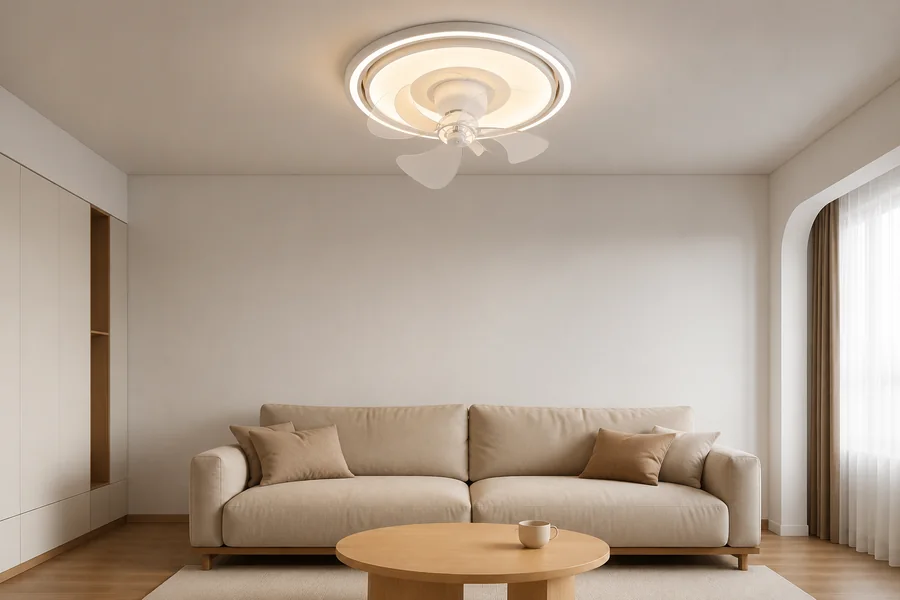
A flush mount ceiling fan sits close to the ceiling. It is also called a hugger fan or low profile fan.
A flush mount fan is designed to keep the motor body close to the ceiling. It is usually chosen when ceiling height is limited and the main priority is safe clearance without giving up airflow and lighting.
This mount type is useful when the ceiling is low and you need more head clearance.
2-1. When flush mount works best
Flush mount fans are often used in bedrooms, apartments, small kitchens, hallways, and rooms with lower ceilings.
Flush mount works best when the ceiling is low, the room is compact, or people move directly under the fan. It is also useful in rental rooms and apartments where a long downrod would make the ceiling feel crowded.
A low profile hugger ceiling fan with light is a practical choice when one ceiling fixture needs to provide both light and gentle airflow.
2-2. The main benefit is clearance
The fan stays closer to the ceiling, so people have more space below it. This can make the room feel safer and less crowded.
Clearance is not only about avoiding contact. It also affects how comfortable the room feels. A compact mount can make the ceiling feel higher and leave more visual breathing space above beds, tables, or walkways.
2-3. The possible weakness is airflow
Because the blades are closer to the ceiling, some flush mount fans move less air than downrod fans. Choose carefully if the room is large.
The trade-off is that some flush mount fans have less air space above the blades. If the room is medium or large, look for a stronger motor, better blade pitch, and a size that matches the room rather than choosing the thinnest model only.
3. Low Profile and Hugger Fans
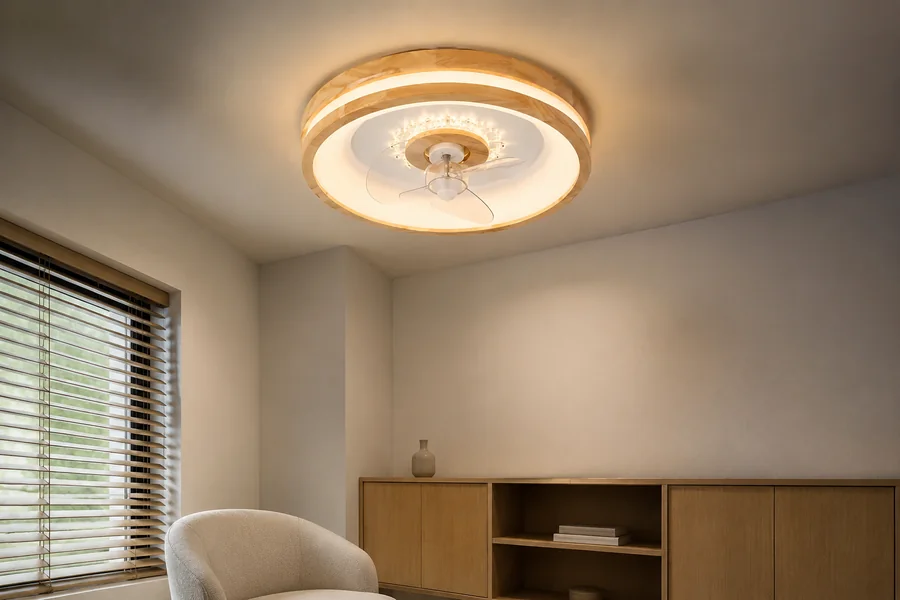
Low profile and hugger fans are closely related to flush mount fans. The terms are often used for fans designed to sit near the ceiling.
Low profile and hugger fans are close relatives of flush mount fans, but the terms are not always used consistently. Always check the actual total drop height instead of relying only on the product name.
3-1. Low profile does not always mean small
Some low profile fans are compact. Others use wider blades but keep a slim body. Always check both fan diameter and total drop height.
Some low profile fans are wide enough for normal bedrooms or living areas. What makes them low profile is the short body height, not necessarily the blade span. This is useful when you need room coverage and low ceiling clearance together.
3-2. Hugger fans suit lower rooms
Hugger fans are often chosen for 8-foot ceilings, small bedrooms, apartments, and narrow rooms.
A hugger fan can be a sensible choice for 8-foot ceilings, compact bedrooms, and apartments. It keeps the fan close to the ceiling, but the room still needs enough open blade area for smooth air movement.
3-3. Light design matters in low rooms
In a low room, a bulky light kit can make the fan feel lower. A modern flush mount ceiling fan light with remote can keep the fixture compact and easier to live with.
In low rooms, the light kit becomes part of the clearance calculation. A deep bowl light or heavy cage can make the fan feel lower. Slim LED modules often work better because they keep the fixture visually light.
4. Downrod Ceiling Fan
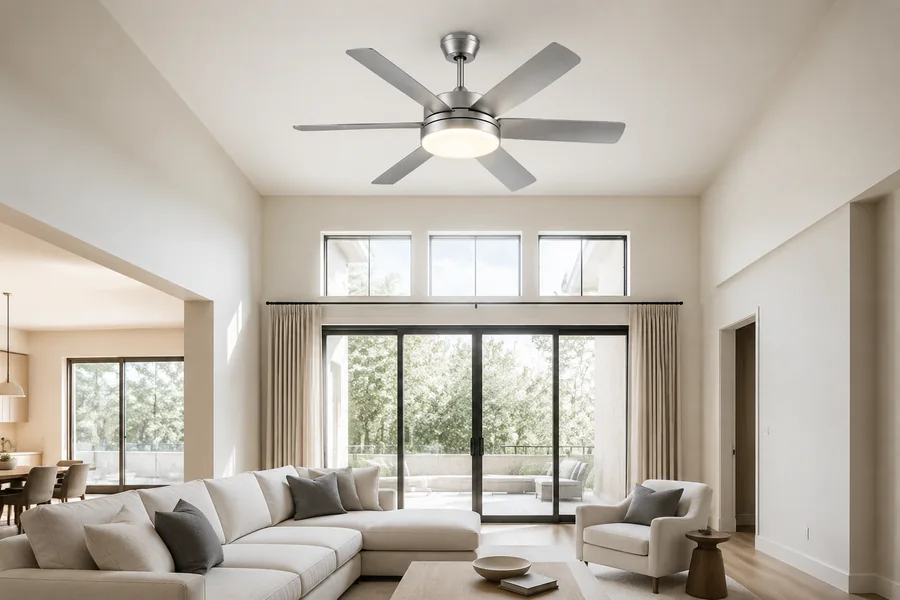
A downrod fan hangs from a rod between the ceiling canopy and the motor housing. This is one of the most common mount types.
A downrod fan is usually the better choice when the ceiling is standard to high. The rod lowers the fan to a useful working height so the blades can move air through the occupied part of the room.
4-1. Downrods help position the blades
In rooms with standard or high ceilings, a downrod can place the fan at a better working height.
The purpose of a downrod is not decoration. It positions the blade plane where airflow can spread across the room. If the blades stay too close to a high ceiling, much of the movement can remain above people.
4-2. Downrod length should match ceiling height
A short downrod may work for standard ceilings. Taller rooms may need longer downrods so the fan can move air where people feel it.
A short downrod may suit a standard ceiling, while a taller room may need a longer rod. The right length should protect safety clearance and keep the fan visually centred in the vertical space.
4-3. Downrod fans often provide better airflow
Because there is more space above the blades, downrod fans can often move air more freely than tight flush mount models.
Because downrod fans normally have more air space above the blades, they can often breathe better than very tight flush mount fans. This can mean smoother airflow, less strain, and better comfort at lower speeds.
5. Angled or Sloped Ceiling Mount
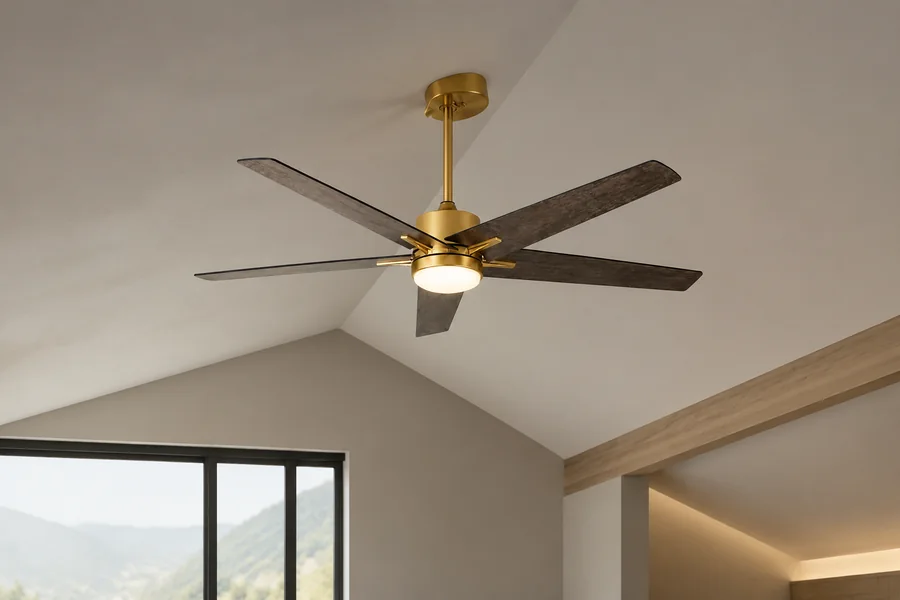
Some ceilings are not flat. Vaulted, sloped, or angled ceilings need special mounting checks.
Sloped ceilings need more checking than flat ceilings. The fan must hang level, the canopy must match the ceiling angle, and the blades must clear both the high and low sides of the ceiling.
5-1. Sloped ceilings need the right canopy
Not every fan canopy can handle a steep ceiling angle. Check the maximum slope angle before ordering.
Many standard canopies only support a limited slope angle. If the ceiling is steeper than the fan allows, the motor may hang incorrectly or the canopy may not sit safely. Always check the maximum slope before buying.
5-2. A downrod may still be needed
On a sloped ceiling, a downrod can help keep the fan level and provide blade clearance.
On a sloped ceiling, the downrod helps bring the motor away from the ceiling surface and keeps the fan level. Without enough drop, the blades may sit too close to the slope on one side.
5-3. Blade clearance must be checked on both sides
The higher side and lower side of the slope may have different clearances. Measure before installation.
Measure from the blade tips to the nearest wall, beam, and ceiling surface. A fan can look centred from below but still have poor clearance on the lower side of a vaulted ceiling.
Need the Right Ceiling Fan for a Home, Project, or Commercial Space?
Tell us your space type, ceiling height, airflow needs, lighting options, certification direction, and order plan. We’ll help match the right solution.
Get a Quote6. Dual Mount or Convertible Mount
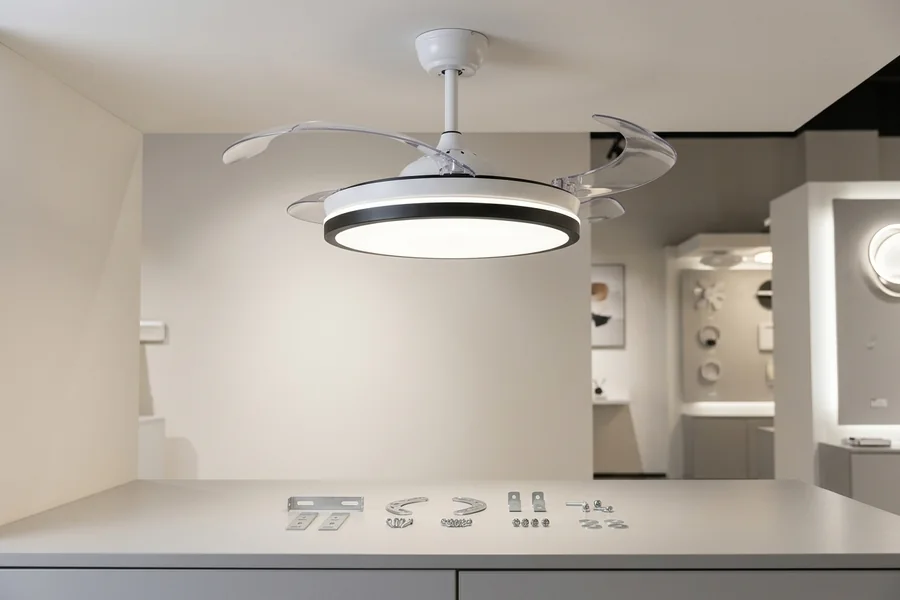
Some fans support more than one installation method. These are often called dual mount or convertible mount fans.
Dual mount fans give more flexibility because one model can be installed in more than one way. This is useful when ceiling conditions differ across rooms or when buyers want fewer SKUs in a product range.
6-1. Convertible fans add flexibility
They can be useful when buyers are unsure whether they need close-to-ceiling mounting or a short downrod.
A convertible fan may allow close-to-ceiling installation in one room and downrod installation in another. This helps projects and distributors handle different ceiling heights without choosing a completely different design.
6-2. Always check what is included
Some fans include a downrod. Some require separate accessories. Do not assume every mount part is in the box.
Do not assume every convertible fan includes every rod, canopy, or bracket. Check the package list and installation manual. Missing mounting parts can delay projects and create extra sourcing work.
6-3. Useful for distributors and projects
For product ranges, convertible mounting can reduce SKU pressure because one model may suit more room types.
For distributors, convertible mounting can reduce inventory risk. For project buyers, it helps keep the same visual style across rooms while still adapting the installation to each ceiling height.
7. Caged and Decorative Mount Styles
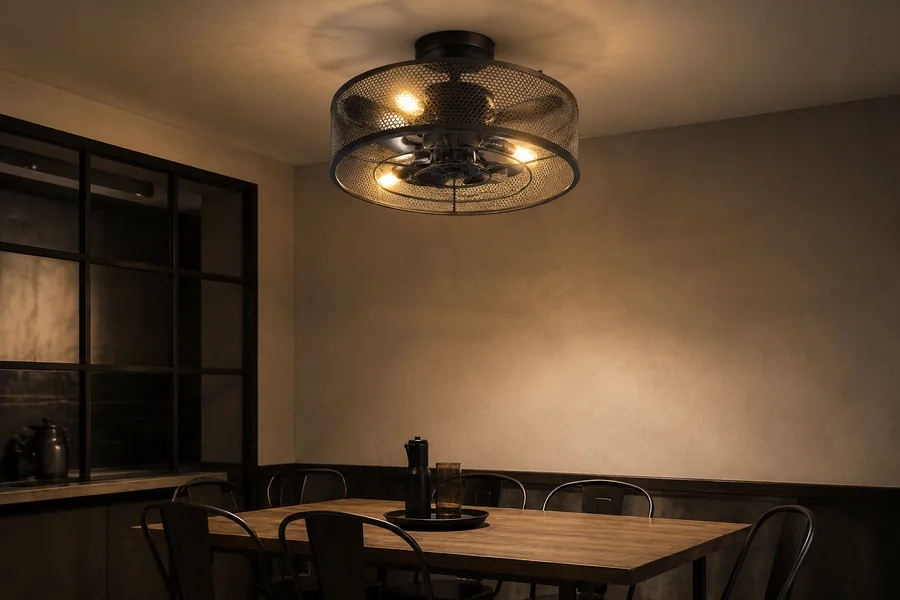
Some ceiling fan lights use caged, rattan, crystal, or chandelier-style bodies. These are not only mount choices, but they affect how the fan sits in the room.
Decorative mount styles can add character, but they should still respect ceiling height and airflow. A fan that looks attractive in a photo can feel bulky if the room is small or the ceiling is low.
7-1. Caged fans are often compact
Caged fans are common in kitchens, hallways, small rooms, and industrial-style interiors.
Caged fans are often used in kitchens, small rooms, and decorative spaces. The cage can protect the blades visually and create a strong style, but it should not block airflow or make cleaning too difficult.
A black caged flush mount ceiling fan with light can work where users want a compact body with a more decorative look.
7-2. Decorative fans need more visual balance
Chandelier-style fan lights may hang lower or look heavier. Check ceiling height before choosing.
A decorative fan should match the room scale. In a simple bedroom, a heavy design may dominate the ceiling. In a rustic or industrial room, the same fan may look more natural and intentional.
7-3. Small decorative fans are not for every room
Some small fan lights look good but cannot cover a wide space. Match the mount and fan size to the room, not just the style.
Small decorative fans can work well in compact rooms, but they may not move enough air in a large room. Choose them for the right use case instead of expecting one decorative size to fit every room.
8. How to Choose Mount Type by Ceiling Height
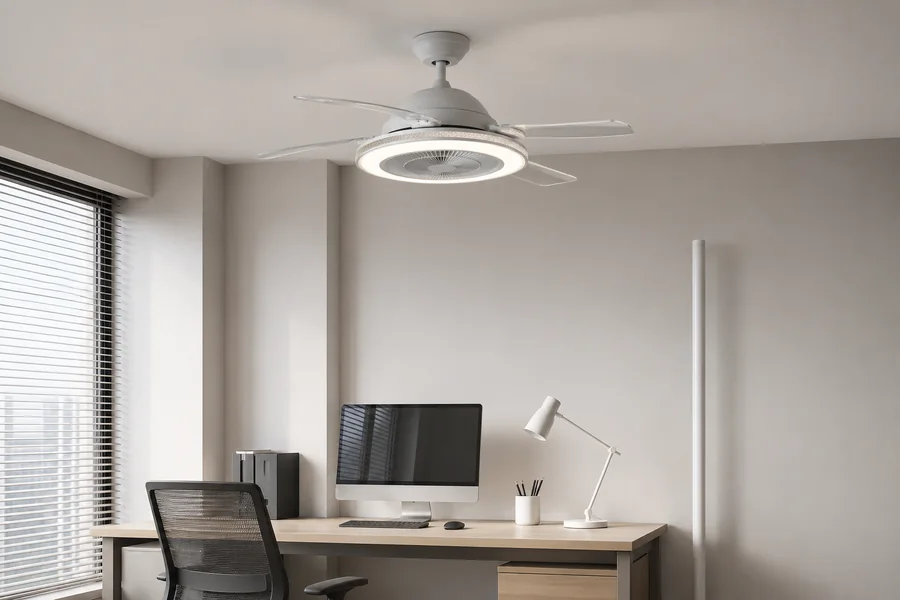
Ceiling height is the easiest way to narrow your choice.
Ceiling height is the first practical filter. Once you know the height, you can decide whether flush mount, low profile, downrod, or angled mounting is likely to be safe and comfortable.
| Ceiling Height | Better Mount Direction | Main Reason |
|---|---|---|
| Low ceiling | Flush mount or hugger | Better head clearance |
| Standard ceiling | Short downrod or low profile | Balanced airflow and comfort |
| High ceiling | Longer downrod | Better airflow reach |
| Sloped ceiling | Angled mount with downrod | Keeps fan level |
8-1. Low ceilings need safe clearance
If the ceiling is low, avoid bulky fan lights and long downrods. A white bedroom flush mount ceiling fan with silent DC motor can suit compact rooms where quiet use matters.
For low ceilings, measure the total distance from ceiling to the lowest part of the fan, including the light. The fan should not make the room feel tight or place blades too close to people moving below.
8-2. Standard ceilings allow more choice
Standard ceilings can often use either a short downrod or a low profile fan. Choose based on airflow need and room style.
Standard ceilings can often accept either a compact mount or a short downrod, depending on fan design. This gives more freedom, but you still need to check total drop, blade span, and room proportion.
8-3. High ceilings need airflow reach
If the fan is too high, the room may still feel still. A downrod helps bring airflow closer to the living zone.
High ceilings usually need a downrod so the fan can move air where people feel it. A fan mounted too high may look clean, but it can waste much of its airflow above the occupied zone.
9. Mount Type and Room Use
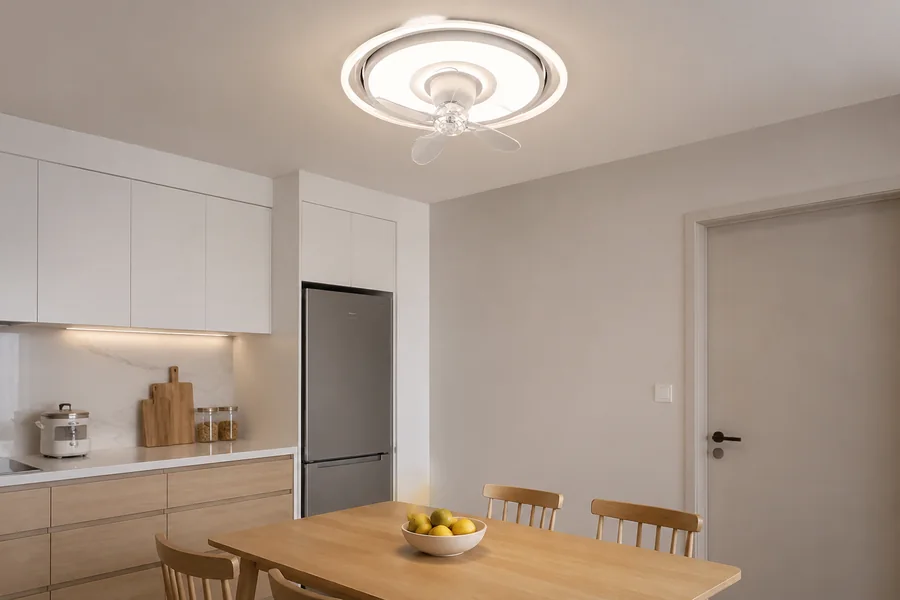
The same mount type can feel different in different rooms.
Room use changes the best mount choice. A bedroom, kitchen, living room, hotel room, and covered patio may all need different priorities, even when the ceiling height looks similar.
9-1. Bedrooms need quiet and safe mounting
Bedrooms usually need quiet operation, enough head clearance, and soft lighting.
In bedrooms, the fan is close to daily comfort. The mount should protect clearance above the bed, keep noise low, and support gentle low-speed airflow for sleeping rather than strong direct wind.
9-2. Kitchens need compact and easy-clean designs
In kitchens, avoid overly deep fixtures if the ceiling is low. Compact caged or flush designs are often easier to fit.
Kitchen fans often need a compact mount because ceiling space may already include lights, cabinets, or vents. Smooth surfaces and easy-clean parts are useful because cooking areas collect dust and grease faster.
9-3. Large rooms need better blade space
Large rooms often benefit from downrod fans or wider blade spans. A close-to-ceiling fan may not always move enough air.
Large rooms normally need more open space around the blades. A downrod fan or larger mount plan can help airflow spread more evenly, especially when seating areas are far from the room centre.
For high or larger rooms, a 52 inch wood ceiling fan no light supplier model may be more suitable when separate lighting already exists.
10. Common Mounting Mistakes
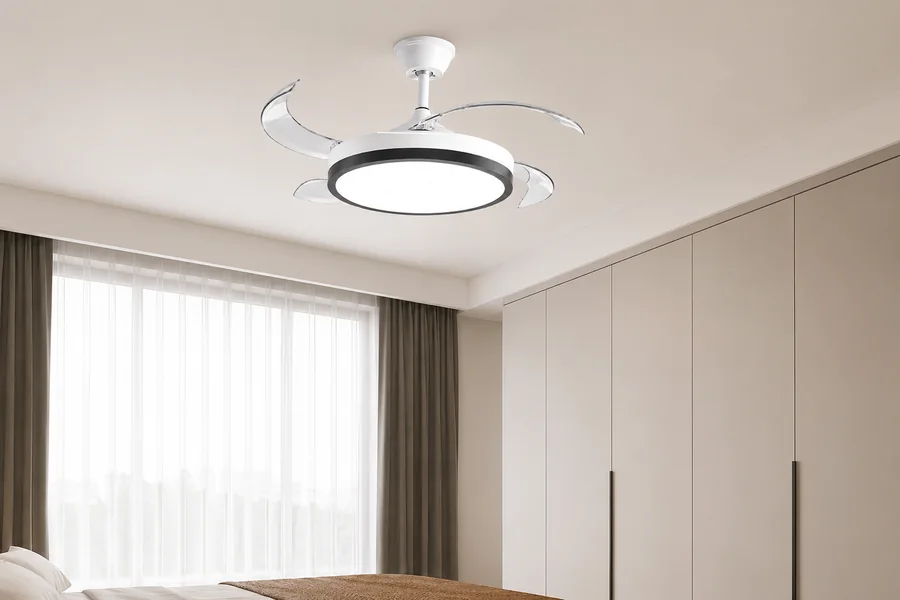
Many fan problems start before the fan is switched on.
Most mounting mistakes happen because buyers focus on the fan style first and the ceiling condition second. A safer process is to check ceiling height, slope, clearance, support, and room use before choosing the final design.
10-1. Choosing by style only
A fan may look perfect online but hang too low in the room.
Style matters, but it should not lead the decision alone. A fan can match the decor and still be wrong if it hangs too low, blocks lights, or cannot move enough air after installation.
10-2. Ignoring total drop height
Always check the full height from ceiling to the lowest part of the fan or light.
Total drop height includes the canopy, motor body, blades, and light kit. Product photos often hide this measurement, so always check the specification sheet before buying.
10-3. Forgetting ceiling slope
Sloped ceilings need angle compatibility. A flat ceiling mount may not work safely.
A sloped ceiling needs angle support and proper blade clearance. If this is ignored, the installer may need extra parts later, or the fan may not be safe to use.
10-4. Using flush mount for every low room
Flush mount helps with clearance, but airflow still matters. Choose a model that can move enough air for the room.
Flush mount is useful, but it is not the answer to every low ceiling. Some rooms still need better airflow, a slimmer light, or a different blade size. The best choice balances clearance with real comfort.
Need the Right Ceiling Fan for a Home, Project, or Commercial Space?
Tell us your space type, ceiling height, airflow needs, lighting options, certification direction, and order plan. We’ll help match the right solution.
Get a QuoteFAQ
Is a flush mount ceiling fan best for low ceilings?
Yes, a flush mount ceiling fan is often best for low ceilings because it keeps the fan closer to the ceiling and gives better head clearance. However, you should still check airflow, light depth, and total fixture height before buying.
Can I use a downrod fan on an 8-foot ceiling?
No, a downrod fan is usually not the best choice for an 8-foot ceiling unless the fan has a very short total drop and still meets safety clearance. A flush mount or hugger fan is usually safer and more comfortable.
Are hugger fans the same as flush mount fans?
Yes, hugger fans and flush mount fans are often used to describe the same type of close-to-ceiling fan. Some brands may use the terms slightly differently, so always check the product height and installation method.
Do flush mount fans move less air?
Yes, some flush mount fans move less air than downrod fans because the blades sit closer to the ceiling. But a well-designed flush mount fan can still work well in small and medium rooms if the motor and blade design are suitable.
Do I need a special mount for a sloped ceiling?
Yes, a sloped ceiling usually needs an angled ceiling adapter or a compatible canopy. You may also need a downrod to keep the fan level and maintain blade clearance.
Should I choose mount type before fan style?
Yes, you should check mount type before fan style. If the fan cannot be installed safely in your ceiling height or slope, the style does not matter. Start with ceiling conditions, then choose the design.