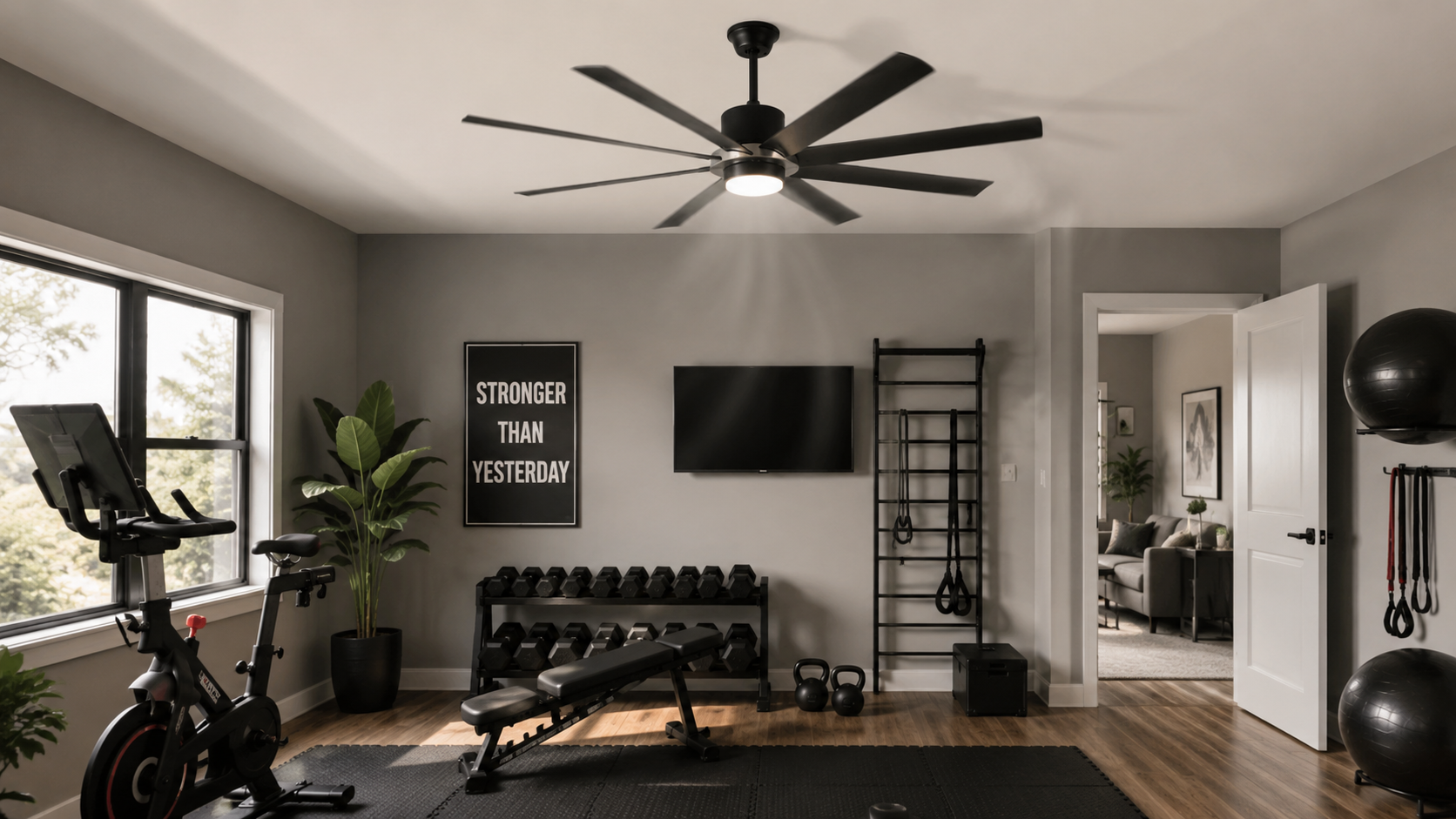


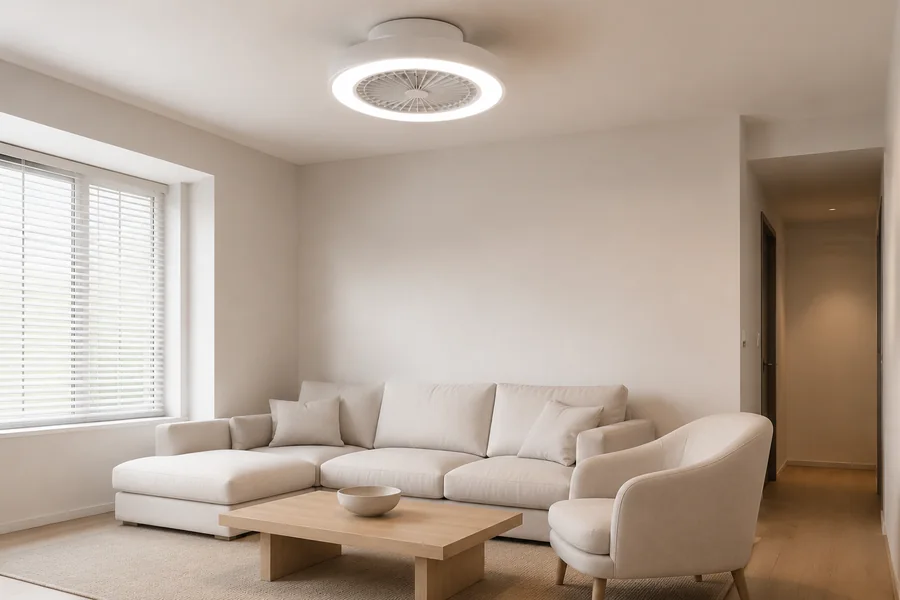
A low ceiling fan must solve two problems at the same time: it needs to keep enough head clearance and still move air well. That is why a flush mount ceiling fan, also called a hugger fan or low profile fan, is often the safest starting point for compact rooms. If you are comparing mounting options, this ceiling fan mount types guide can help you understand where flush mount fits.
Low ceilings are common in apartments, bedrooms, kitchens, hallways, small offices, and older homes. In these rooms, a normal downrod fan may hang too low. But choosing the thinnest fan is not always the answer. You still need comfort, quiet airflow, light quality, and a design that does not make the room feel crowded.
1. What Is a Flush Mount Ceiling Fan?
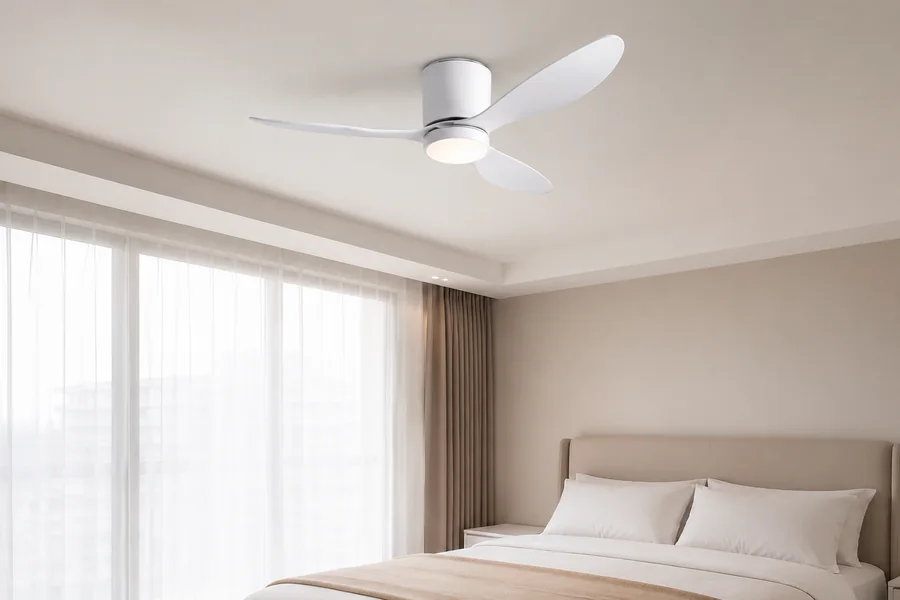
A flush mount ceiling fan is installed close to the ceiling without a long downrod. The motor housing sits near the ceiling, and the blades stay higher than they would on a standard hanging fan.
A flush mount ceiling fan is built for rooms where every inch of height matters. Instead of using a long downrod, the fan body sits close to the ceiling, helping the room feel safer and less crowded.
In practice, the key difference is the total fixture height. A standard fan may look fine in a product photo, but the downrod, motor, blades, and light kit can all add depth. A flush mount design keeps that depth under control. This is why it often works better in apartments, compact bedrooms, small kitchens, and older homes where the ceiling height is limited. Before choosing, look at the full drop height and not only the blade span.
1-1. Why it is also called a hugger fan
The word hugger means the fan hugs the ceiling. It is designed to reduce the total drop from ceiling to the lowest part of the fan.
The name comes from the way the fan appears to hug the ceiling. In practice, this means the fan uses a short mounting structure and a compact body, so the lowest point does not drop too far into the room.
1-2. Why it is useful for low ceilings
Low rooms need safe head clearance. A flush mount fan helps keep the blades and light higher, so the room feels more open.
Low ceilings leave less room between people and the fan. A flush mount design helps protect head clearance above beds, tables, and walkways while still giving the room air movement and, in many cases, lighting.
1-3. Why low profile does not mean weak
Some low profile fans are small and simple. Others have better motors, LED lighting, and remote control. Always judge the full product, not only the height.
A low profile fan can still perform well if the motor, blade shape, and fan size are well matched. The mistake is choosing only by thinness and ignoring airflow, noise, and the room area.
2. When You Should Choose a Flush Mount Fan
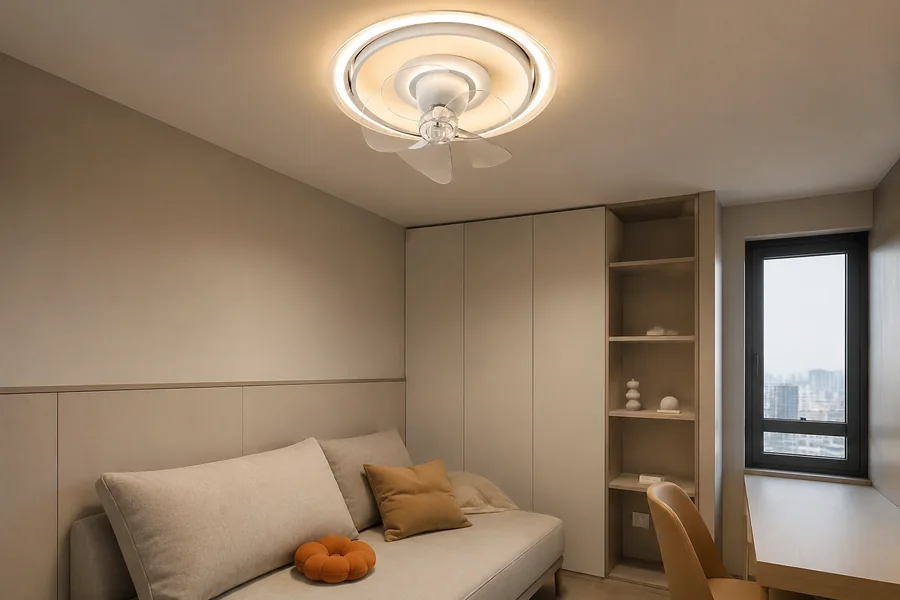
A flush mount fan is usually a good choice when the ceiling is low, the room is compact, or the fan must stay visually quiet.
Choose a flush mount fan when the ceiling height, room layout, or daily use makes a hanging fan feel too low. The aim is to keep the room comfortable without making the ceiling feel heavy.
The best sign is how the room feels when you stand inside it. If a normal hanging fan would sit too close to your head, the furniture, or a cabinet door, a flush mount fan is usually the safer path. It is also useful when the room already feels visually busy. In that case, a compact fan light can add comfort without making the ceiling look crowded. For rental rooms and smaller homes, this can be a very practical choice.
2-1. Bedrooms and apartments
Bedrooms need quiet airflow and safe clearance. A low profile hugger ceiling fan with light can suit small rooms where one fixture must handle both lighting and airflow.
Bedrooms and apartments often have limited ceiling height and smaller layouts. A flush mount fan can give gentle airflow above the bed or sitting area without making the room feel busy or unsafe.
2-2. Kitchens and hallways
Kitchens and hallways often have limited ceiling space. A deep hanging fan may feel awkward. Compact flush mount fans can work better.
Kitchens and hallways often need both light and air in a narrow ceiling area. A compact fan light can reduce the number of ceiling fixtures, but it should still be easy to clean and bright enough for daily use.
2-3. Rooms with bunk beds or tall furniture
If the room has bunk beds, wardrobes, shelves, or tall cabinets, blade clearance matters even more.
Tall furniture changes the clearance calculation. If a bunk bed, wardrobe, or shelf sits near the fan area, the fan should be compact and positioned so blade tips stay safely away from furniture and people.
3. Check Ceiling Height Before Choosing
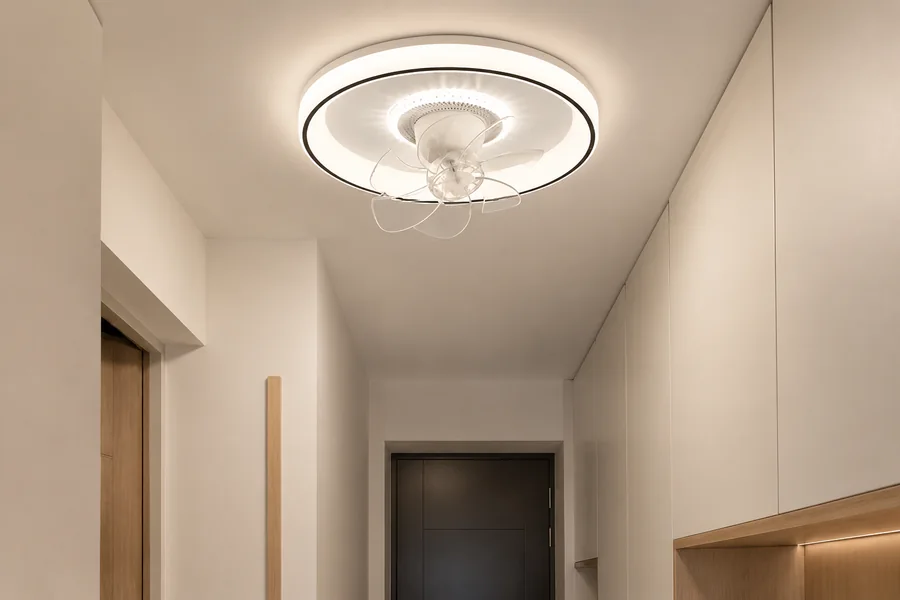
Do not choose the fan before checking ceiling height. The same fan may be safe in one room and too low in another.
Ceiling height should be measured before looking at style. A fan that looks slim online can still hang too low once the motor body, blade angle, and light kit are included.
A simple way to check is to measure the ceiling height first, then subtract the fan’s total drop height. The space left below the fan should still feel comfortable for daily movement. Do not forget rugs, raised flooring, bunk beds, wardrobes, or tall users. These small details can change the real clearance in the room. If the room feels tight even before the fan is installed, choose the slimmer option and keep the design clean.
3-1. Measure floor to ceiling
Measure from the finished floor to the ceiling. Then check the fan’s total drop height from ceiling to the lowest point.
Use the real room measurement, not the building plan if possible. Older homes, apartments, and renovated rooms may have small height differences. Even a few inches can affect whether a fan feels comfortable.
3-2. Include the light kit
If the fan has a light, include the light depth in your measurement. Some fan lights look slim in photos but hang lower than expected.
If the fan has a light, include the lowest part of the light in the total height. Some lights are slim, while others are deeper and can make a low ceiling feel more crowded.
3-3. Keep the room feeling open
Even if the fan is technically safe, it should not feel visually heavy. Low ceilings need clean and compact forms.
A low ceiling room needs visual lightness. A fan with a slim body, simple colour, and clean blade shape can keep the ceiling calm while still adding useful air circulation.
4. Airflow Still Matters in Low Rooms
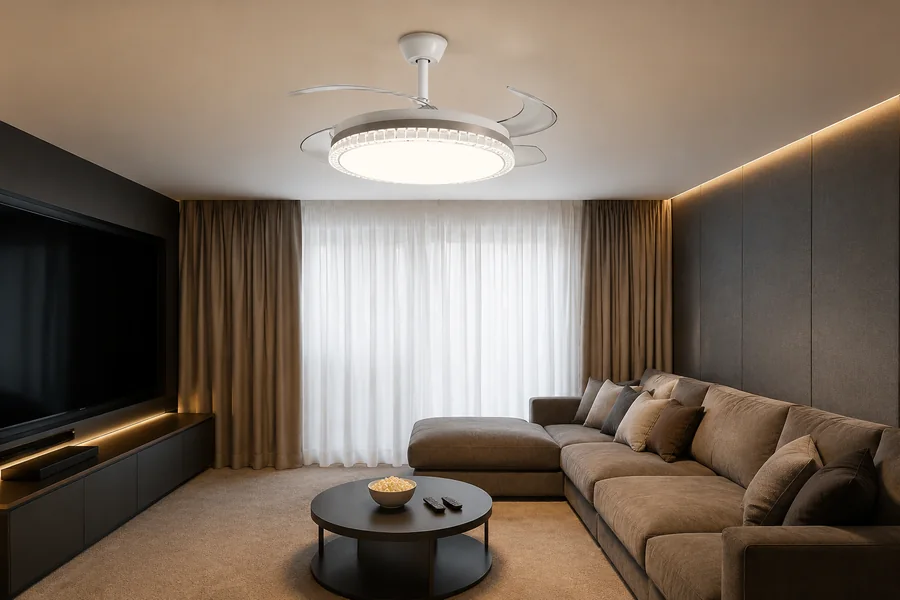
The main weakness of some flush mount fans is airflow. Because the blades sit close to the ceiling, they may have less air above them.
The main risk with flush mount fans is choosing a model that is compact but not useful. The fan should still move enough air for the room size, especially if it is the main airflow source.
Good airflow in a low room should feel calm, not aggressive. Because the fan is closer to people, strong wind can become annoying faster than it would in a high room. This is why low-speed performance matters. A better fan can move enough air quietly at a lower speed, while a weaker fan may need to run fast and become noisy. For bedrooms and apartments, steady comfort is more important than a dramatic breeze.
4-1. Do not choose only by thinness
The thinnest fan is not always the best fan. If airflow is too weak, the room may still feel still.
The thinnest fan is not always the best fan. If the motor is weak or the blade design is poor, the fan may look neat but fail to improve comfort. Balance low height with real airflow.
4-2. Look for good low-speed comfort
Low rooms do not need harsh wind. They need soft, steady airflow at low and medium speed.
Low rooms often need soft airflow because people sit closer to the blades. Good low-speed control helps the fan feel fresh without creating a harsh wind directly over the bed or desk.
4-3. Match fan size to room size
A compact 20 inch fan may work in a small kitchen or hallway. A larger bedroom may need a wider low profile fan.
A small flush mount fan can suit a compact room, while a larger bedroom may need a wider blade span. If the fan is too small, users may run it at high speed and create more noise.
5. Flush Mount Ceiling Fan With Light
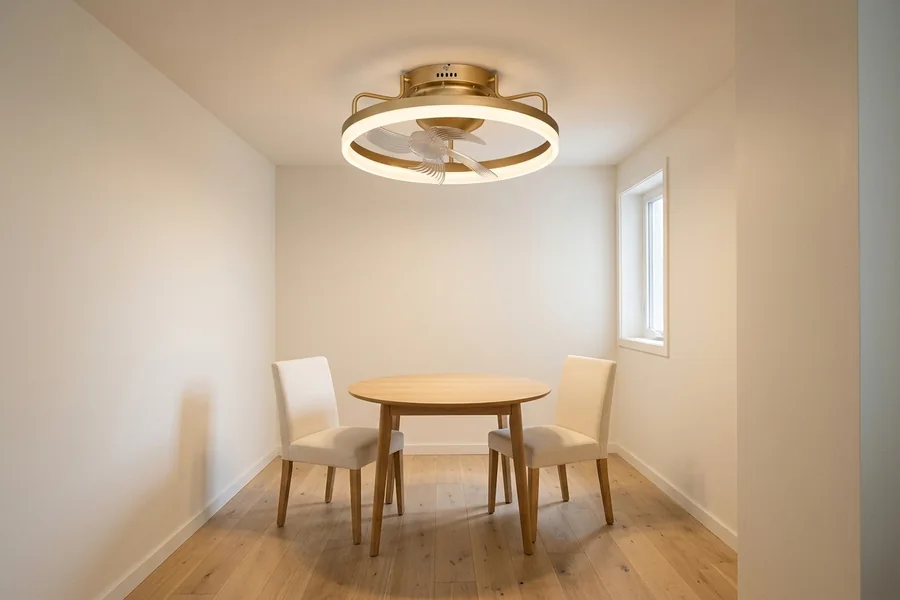
Many low ceiling rooms need one fixture for both air and light. This makes ceiling fan lights very practical.
A flush mount ceiling fan with light is useful when a room has only one ceiling point. It can combine airflow and lighting, but the light quality should be chosen with the same care as the fan performance.
The light should match how the room is used. A bedroom needs a softer mood, while a kitchen or study area may need clearer task lighting. If the light is too cold or too bright, the room can feel less relaxing even if the fan itself works well. Adjustable colour temperature and dimming can help, especially in rooms used at different times of day. The best fan light feels useful without drawing too much attention to the ceiling.
5-1. Integrated lighting saves ceiling space
Instead of installing a separate fan and light, one fixture can handle both. This helps in small rooms with limited ceiling area.
In a low ceiling room, combining fan and light can make the ceiling cleaner. It removes the need for a separate central light, which is helpful in bedrooms, kitchens, small offices, and rental rooms.
5-2. Choose soft and useful light
For bedrooms, warm and dimmable light is more comfortable. For kitchens, brighter neutral light may be useful.
Warm or adjustable colour temperature is usually more comfortable than harsh cold light. Dimming is also useful because low rooms can feel uncomfortable if the light is too bright and too close to the eyes.
5-3. Avoid bulky light kits
A large light bowl or deep shade can reduce head clearance. A modern flush mount ceiling fan light with remote keeps the fan body more compact.
A bulky light kit can undo the benefit of a low profile fan. Look for a shallow LED module or neat light cover that keeps the lowest point compact and does not create heavy shadows.
Need the Right Ceiling Fan for a Home, Project, or Commercial Space?
Tell us your space type, ceiling height, airflow needs, lighting options, certification direction, and order plan. We’ll help match the right solution.
Get a Quote6. Blade Size and Room Size
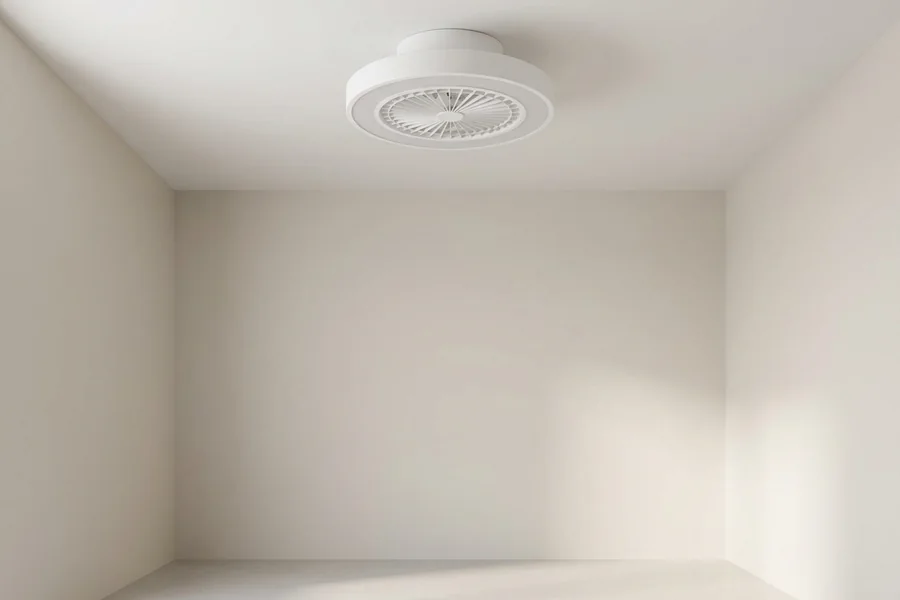
Flush mount fans come in different sizes. The right size depends on room area, room shape, and furniture layout.
Blade size should match the way the room is used. A low ceiling does not automatically mean the smallest fan. The room still needs enough blade span to move air across the main living area.
For low ceilings, size is a balance between coverage and comfort. A fan that is too small may leave corners still, but a fan that is too wide can feel visually heavy or push air too directly. Think about where people actually sit, cook, sleep, or work. The fan should serve that daily activity zone first. In a square room, one centred fan often works well. In a long room, layout may matter more than diameter alone.
| Room Type | Common Direction | Main Goal |
|---|---|---|
| Small bedroom | 36-42 inch or compact fan light | Gentle airflow |
| Kitchen | Compact flush mount | Light and air in one fixture |
| Hallway | Small low profile fan light | Clearance and lighting |
| Medium bedroom | Wider low profile fan | Better coverage |
6-1. Small rooms need gentle airflow
Too much airflow can feel direct and annoying in a small room.
In a small bedroom or study, comfort often comes from steady low-speed air movement. A fan that is too powerful or too close can feel direct, so smooth speed control is more important than maximum wind.
6-2. Medium rooms need wider coverage
If the room is closer to a normal bedroom size, choose a fan that can cover the area, not just fit the ceiling.
For medium rooms, choose a fan that can cover the bed, seating area, or main work area. If the blade span is too small, the corners may stay still and the fan may need to run faster.
6-3. Long rooms may need another plan
A single flush mount fan may not cover a long narrow room evenly. Placement matters.
A long narrow room may not be solved by one central flush mount fan. In some layouts, fan placement, a second fixture, or a different airflow plan can create better comfort than one small fan in the middle.
7. Style Choices for Low Ceilings
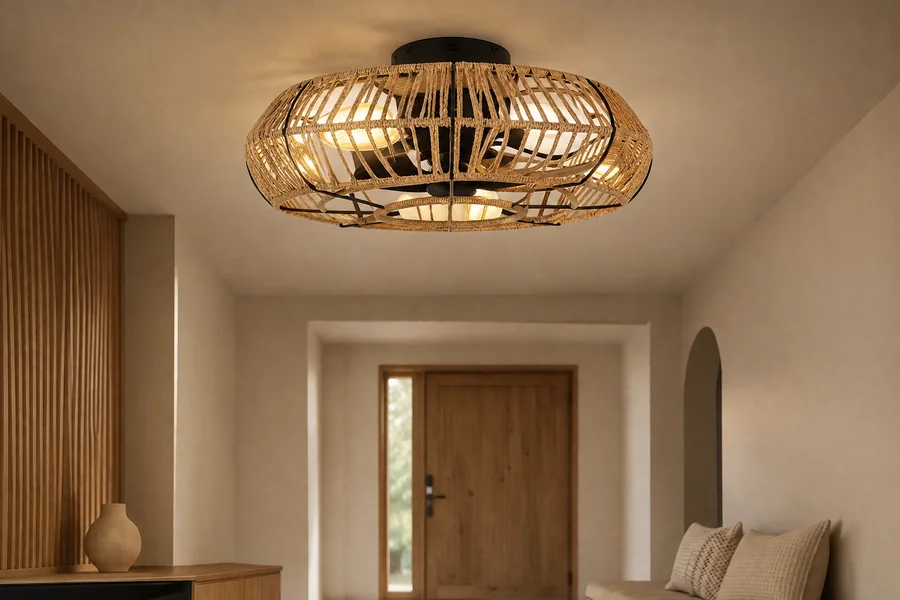
Low ceilings usually look better with cleaner fan shapes. Heavy or deep fixtures can make the ceiling feel lower.
Style matters more in low rooms because the fan sits closer to eye level. The design should feel light, balanced, and suitable for the ceiling height rather than visually pressing down on the room.
Style matters more in low rooms because the fan is always close to the eye. A deep cage, thick light bowl, or heavy body can make the ceiling feel lower than it is. A slim white fan can disappear into the ceiling, while black, wood, or rattan finishes create more presence. Neither choice is wrong. The better choice is the one that fits the room’s scale, colour palette, and purpose without making the ceiling feel crowded.
7-1. White fans can feel lighter
White or light-coloured fans can blend with the ceiling and reduce visual weight.
White and light-coloured fans often blend with the ceiling, which can make a low room feel more open. This is useful in bedrooms and apartments where a heavy dark fan may draw too much attention.
A white bedroom flush mount ceiling fan with silent DC motor can suit rooms where quiet comfort and a clean ceiling look are important.
7-2. Black caged fans add style but need care
Caged fans can look strong and decorative. But in a low room, the cage should not hang too deep.
A black caged fan can look strong and decorative, especially in kitchens or industrial-style rooms. But the cage depth and blade clearance should be checked so the fixture does not feel too low.
7-3. Slim modern fans suit compact interiors
Slim fan lights often work well in apartments and modern small rooms because they keep the ceiling simple.
Slim modern fans are often a good match for apartments and small rooms because they reduce visual clutter. Choose a clean body shape and simple blade finish if the room already has many design details.
8. Controls and Noise
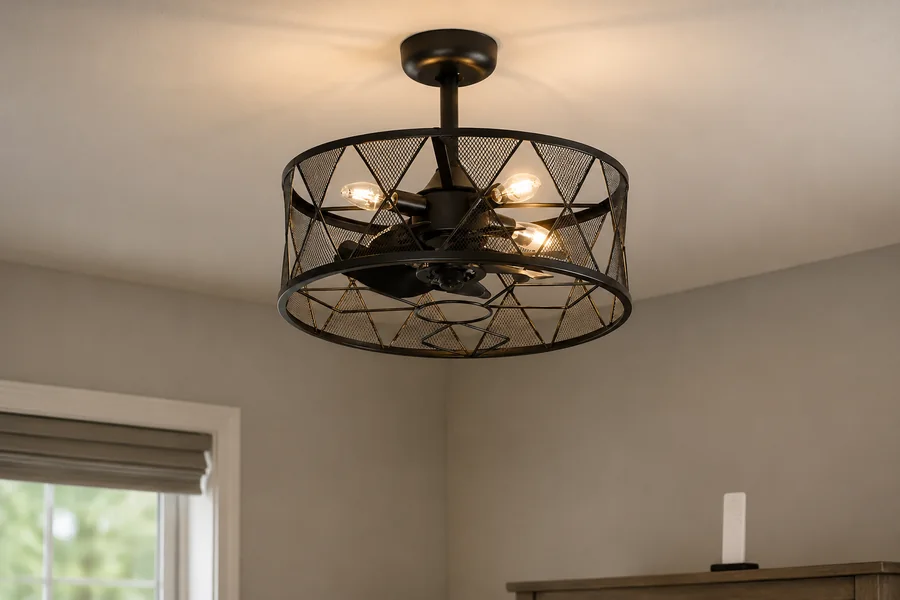
Low ceiling fans are close to people, so noise and controls matter.
Because flush mount fans are closer to people, small sounds and awkward controls become more noticeable. A quiet motor, stable blades, and easy control method can make a big difference in daily use.
In a low ceiling room, small noises feel closer. A slight hum, click, or wobble can become noticeable at night or during work. This is why the motor, blade balance, and installation quality matter as much as the appearance. Remote control, wall control, and memory lighting can also make the fan easier to live with. For many homes, the best fan is the one that can run quietly in the background without needing constant adjustment.
8-1. Remote control is useful in bedrooms
Remote control makes it easier to adjust speed and light without getting up.
A remote lets users adjust speed and light without getting out of bed. For low ceiling bedrooms, this is practical because comfort needs can change through the night and across seasons.
8-2. DC motors can help with quiet control
DC motors often give smoother low-speed control and lower energy use.
DC motors often give smoother low-speed control and lower energy use. In low rooms, this matters because the fan is closer to the user and any hum or vibration is easier to notice.
8-3. Wobble is more noticeable in low rooms
Because the fan is close to eye level, wobble feels more obvious. Good installation and balanced blades are important.
A small wobble can feel worrying when the fan is close overhead. Balanced blades, a firm ceiling bracket, and careful installation are important, even for compact flush mount models.
9. Best Rooms for Flush Mount Fans
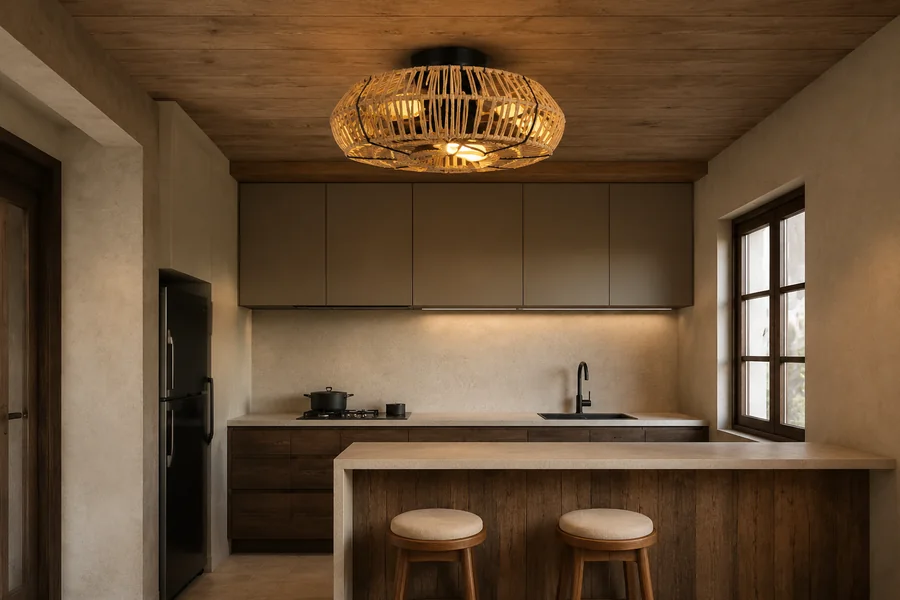
Flush mount fans are not only for bedrooms.
Flush mount fans are best for rooms where clearance, compact design, and simple comfort matter. They are not only for bedrooms; they can also work in kitchens, apartments, small offices, and utility areas.
They are especially useful in rooms where ceiling space has to do more than one job. A small kitchen may need light, airflow, and clear cabinet movement. An apartment bedroom may need quiet comfort without a bulky fixture. A rental room may need a simple fan that looks neutral and works for many users. Flush mount fans suit these spaces because they keep the ceiling practical and open while still improving daily comfort.
9-1. Small kitchens
A black caged flush mount ceiling fan with light can work in compact kitchens where users want air movement and a defined style.
In small kitchens, a flush mount fan light can help move warm air and add central lighting. Choose a design that is easy to wipe clean and does not hang too close to cabinets or tall users.
9-2. Apartments
Apartments often have lower ceilings and limited ceiling space. Low profile fan lights can save space.
Apartments often have limited ceiling height and strict installation conditions. A compact fan light can improve comfort without making the ceiling look crowded, especially in bedrooms and living areas.
9-3. Small offices and rental rooms
These rooms need simple comfort, easy control, and safe clearance.
Small offices and rental rooms need simple, reliable comfort. A flush mount fan with remote control can be easy for different users to operate without changing the room layout.
9-4. Hallways and utility rooms
For narrow areas, a hallway ultra-thin flush mount fan light can provide compact lighting and light air movement.
Hallways and utility rooms need compact fixtures because people pass directly below them. A slim fan light can add light air movement, but it should not block doors, cabinets, or storage areas.
10. Mistakes to Avoid
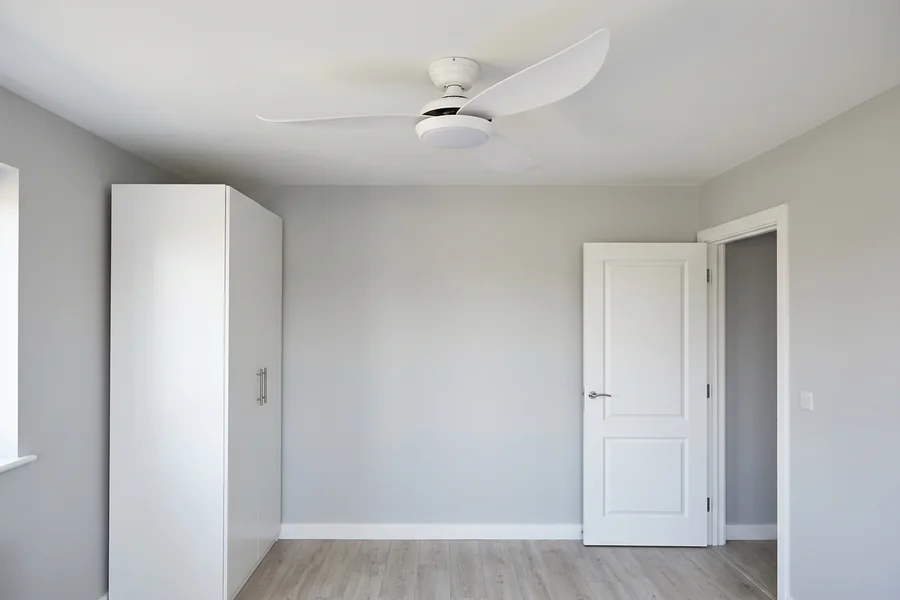
Low ceiling fan mistakes are easy to make because product photos do not show real room height.
Most mistakes come from treating a flush mount fan as a style item only. The better approach is to check height, total drop, blade size, light depth, motor noise, and installation support together.
Another common mistake is buying from appearance alone. A fan can look slim online but still have a deep light kit, weak airflow, or a noisy motor. Check the total height, blade span, motor type, light details, control method, and installation requirements together. If one detail does not fit the room, the whole fixture can feel wrong after installation. A careful check before purchase is much easier than replacing a fan later.
10-1. Ignoring total fixture height
Always check the total drop height, not only the blade span.
Total fixture height includes everything below the ceiling, not only the motor. If the light kit or cage is deep, the fan may no longer feel suitable for a low ceiling.
10-2. Choosing a fan that is too small
A tiny fan may fit the ceiling but fail to cool the room.
A very small fan may look safe but fail to move enough air. If users must run it on high speed all the time, the room may become noisier and less comfortable.
10-3. Choosing a light that is too harsh
Bright cold light can make a bedroom feel uncomfortable.
Low ceilings bring the light closer to the eyes. Harsh brightness or cold colour temperature can make bedrooms and small rooms feel uncomfortable, even if the airflow is good.
10-4. Forgetting installation strength
Even a compact fan needs proper ceiling support.
A compact fan still needs proper fan-rated support. Do not mount it like a simple light fixture. The bracket and ceiling structure must handle rotation, weight, and vibration.
Need the Right Ceiling Fan for a Home, Project, or Commercial Space?
Tell us your space type, ceiling height, airflow needs, lighting options, certification direction, and order plan. We’ll help match the right solution.
Get a QuoteFAQ
Is a flush mount ceiling fan good for an 8-foot ceiling?
Yes, a flush mount ceiling fan is usually a good choice for an 8-foot ceiling because it keeps the blades higher and improves head clearance. You should still check the total drop height, including the light kit.
Are hugger fans weaker than normal fans?
No, hugger fans are not always weaker than normal fans. Some low profile fans have good motors and useful airflow. However, because the blades sit closer to the ceiling, some models may move less air than downrod fans.
Can a flush mount ceiling fan cool a bedroom?
Yes, a flush mount ceiling fan can make a bedroom feel cooler by moving air across your skin. It does not lower the actual room temperature, but it can improve comfort and reduce still air.
Should a low ceiling fan include a light?
Yes, a low ceiling fan can include a light, especially in bedrooms, kitchens, and apartments where ceiling space is limited. Choose a slim light design with warm or adjustable light so the room stays comfortable.
Is a caged fan suitable for low ceilings?
Yes, a caged fan can be suitable for low ceilings if the total height is compact and the cage does not hang too low. Always check the product height and room clearance before buying.
Can I use a downrod fan instead of a flush mount fan?
No, a downrod fan is usually not the best choice for a low ceiling. It may reduce head clearance and make the room feel crowded. A flush mount or hugger fan is usually safer for low rooms.