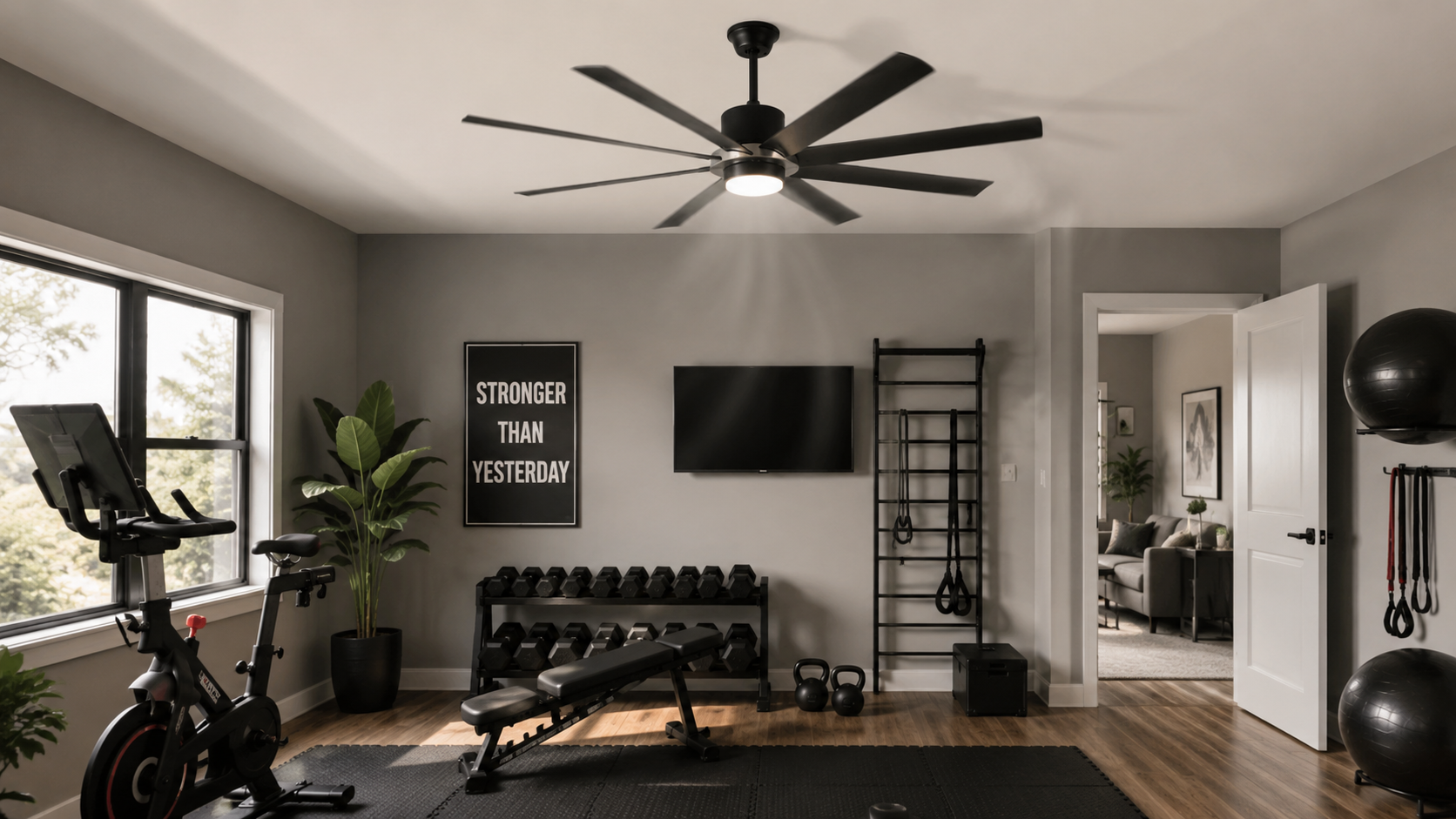


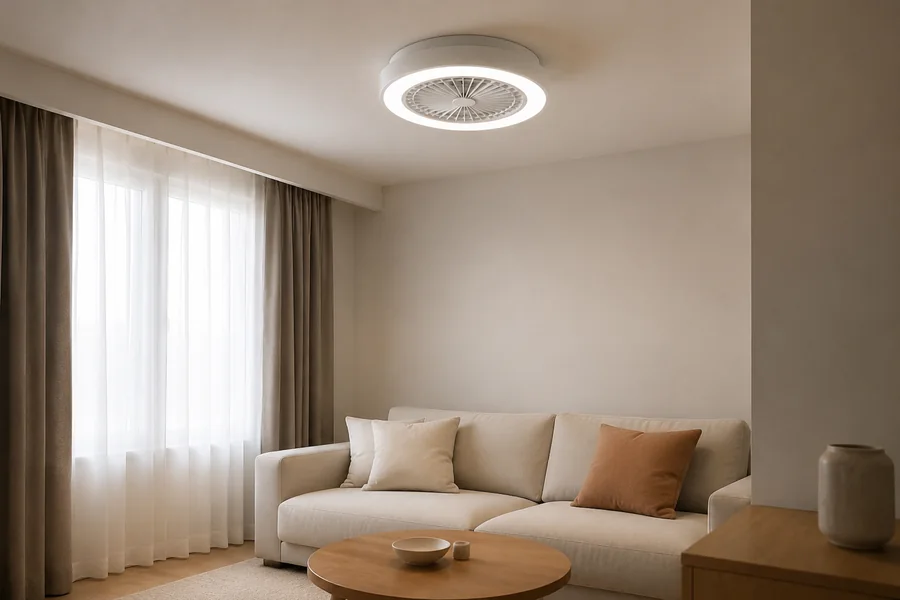
If you are working with a low ceiling, choosing the right flush mount ceiling fan with light is not only about style. It is about clearance, comfort, light quality, airflow, and how the room feels every day. A good low ceiling fan should stay close to the ceiling, move air gently, and give useful light without making the space feel crowded.
Many buyers start with blade size or colour. That is understandable. But in a low room, the full fixture height matters just as much. The motor body, blades, light kit, and housing all add depth. As a ceiling fan light manufacturer, NEBOLA often sees the same problem in small rooms: the fan looks slim online, but feels too bulky after installation.
1. Why a Flush Mount Fan with Light Is Different
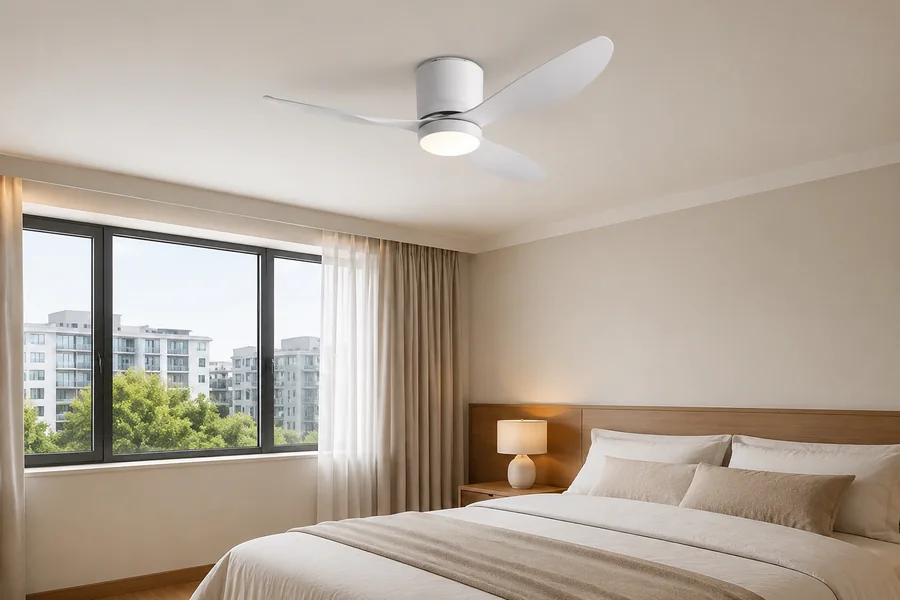
A flush mount ceiling fan with light sits close to the ceiling. It does not use a long downrod, so the fan body and blades stay higher than a standard hanging fan. This makes it useful for bedrooms, apartments, kitchens, hallways, and other spaces where every inch of headroom matters.
1-1. It reduces the total drop from the ceiling
The total drop is the distance from the ceiling to the lowest part of the fan. In a fan with light, this usually means the bottom of the LED diffuser or lamp cover. A low profile design keeps that drop under control, so the room feels safer and more open.
1-2. It combines airflow and lighting in one fixture
Small rooms often have limited ceiling space. A separate fan and light can look busy. One low profile hugger ceiling fan with light can handle both needs while keeping the ceiling clean.
1-3. It still needs proper airflow space
Flush mount does not mean the fan should be pressed flat into the ceiling without room to breathe. The blades still need enough space to pull and push air. If the design is too tight, airflow can feel weak even when the motor runs fast.
2. Check Ceiling Height and Fixture Drop First
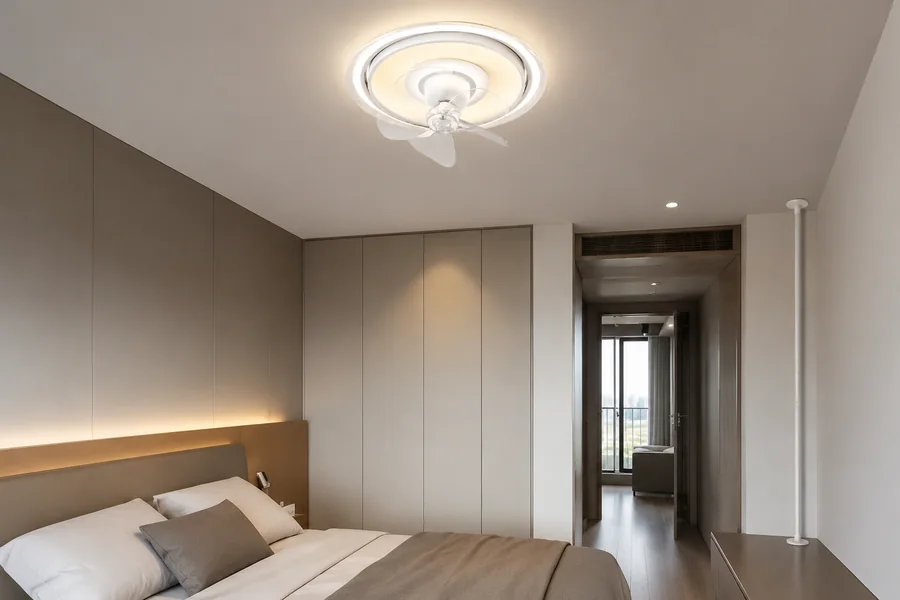
Before comparing designs, measure the room. A fan that works well in one apartment may feel too low in another. The same blade span can feel very different when the light kit is deeper, the ceiling is lower, or the furniture is taller.
2-1. Measure from finished floor to finished ceiling
Measure the real finished height, not the height shown on a floor plan. Flooring, rugs, and ceiling finishes can all change the usable space. Then check the fan’s total drop from the ceiling to the lowest point.
2-2. Include beds, cabinets, and doors
Low ceiling rooms often have wardrobes, bunk beds, kitchen cabinets, or doors near the fan. The fan should not sit where people naturally reach, stand, or open storage. This is why placement matters as much as product height.
2-3. Compare with mount type guidance
If you are not sure whether flush mount is the right installation style, compare it with a full ceiling fan mount type guide. For tighter rooms, this low ceiling flush mount fan guide also helps you judge when a close-to-ceiling design is the safer choice. The right mount should fit both safety and comfort, not just the product photo.
3. Choose Light That Feels Comfortable
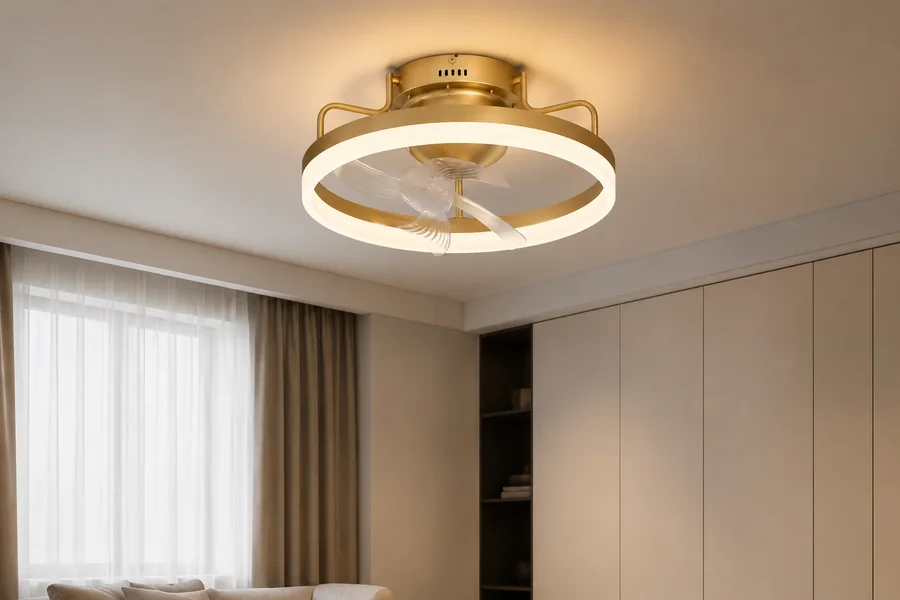
The light part is easy to underestimate. In a low room, the fixture is closer to your eyes, so harsh light can feel tiring. A good fan light should make the room useful without creating glare or a cold, flat mood.
3-1. Bedrooms need softer light
For bedrooms, warm white or dimmable light is usually more comfortable. Bright cold light can make the room feel less restful. A white bedroom flush mount DC fan light is a good example of a style direction that suits quiet, compact rooms.
3-2. Kitchens need clearer light
Kitchens, utility rooms, and hallways may need brighter light. The key is to avoid glare. A smooth diffuser can spread light more evenly than exposed bulbs or a very small light source.
3-3. Dimming and colour temperature help
Adjustable light makes one fixture more flexible. A room may need clear light in the morning and soft light at night. A modern flush mount ceiling fan light with remote can make this easier in small homes where one ceiling fixture does most of the work.
4. Match Fan Size and Airflow to the Room
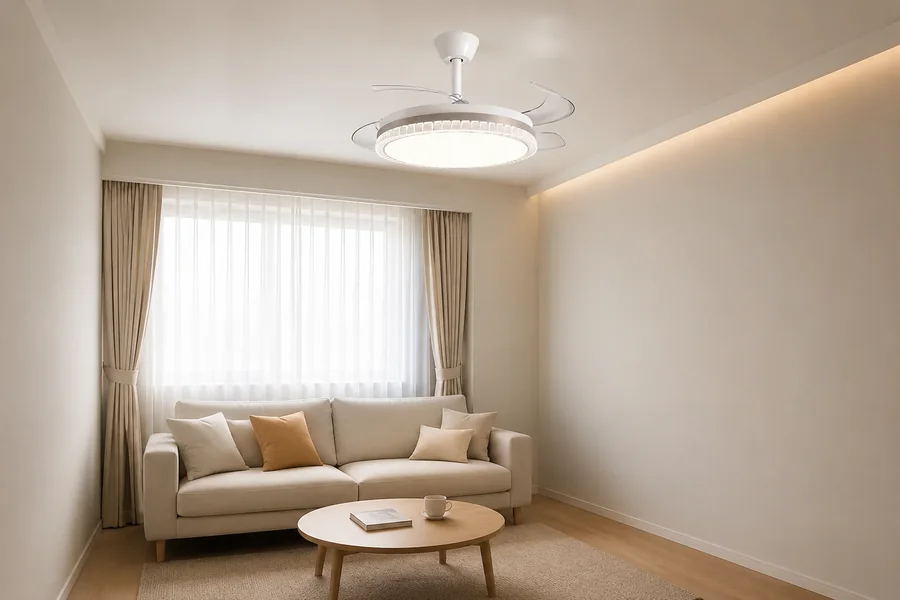
A flush mount fan should be compact, but it should not be too small for the room. If the fan only fits the ceiling but fails to move air across the living area, it will not solve the comfort problem.
4-1. Small rooms need gentle coverage
Small bedrooms, kitchens, and study rooms usually do not need strong wind. They need steady air movement at low or medium speed. This is where motor quality and blade design matter.
4-2. Medium rooms need wider airflow
For a larger bedroom or living area, a tiny fan may leave corners still. A wider low profile fan, or a fan with better blade shape, can spread air more evenly. The aim is comfort across the room, not a strong breeze in one spot.
4-3. Long rooms need careful placement
A long narrow room may not work well with one small fan in the centre. In that case, think about where people spend time. The fan should serve the main daily zone first, such as the bed, dining table, or seating area.
| Room type | Common need | Better fan direction |
|---|---|---|
| Small bedroom | Quiet air and soft light | Low profile DC fan with dimmable LED |
| Kitchen | Clear light and compact body | Flush mount fan light with easy cleaning |
| Hallway | Light air movement | Ultra-thin compact fan light |
| Small living room | Wider comfort | Larger low profile fan with stable motor |
5. Controls, Noise, and Motor Quality
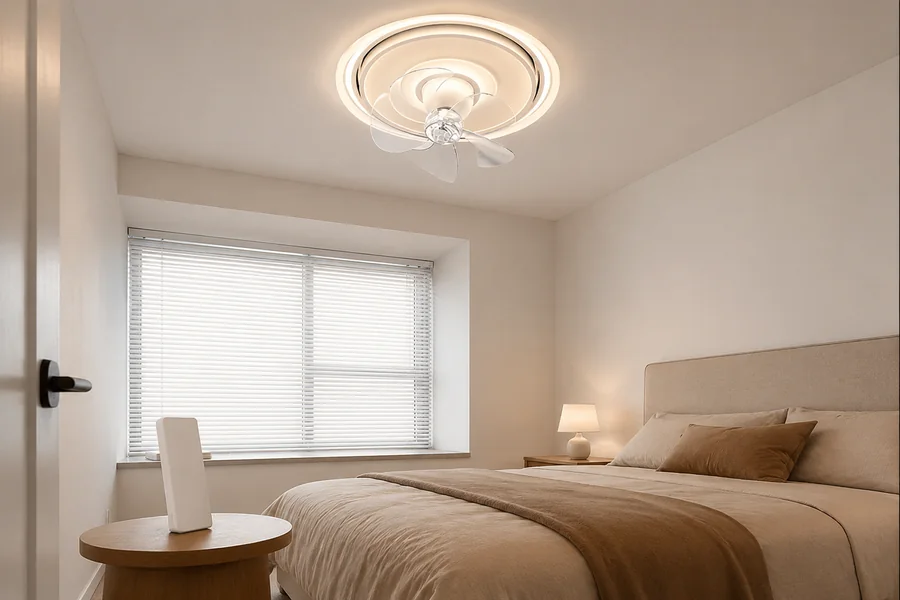
Because a low ceiling fan sits closer to people, small problems feel bigger. A hum, click, or wobble can become annoying quickly. This is why the motor and control system matter.
5-1. Remote control is useful
Remote control is helpful in bedrooms, apartments, and rental rooms. It lets users change fan speed and light without reaching for a wall switch. It also keeps the room cleaner if rewiring is difficult.
5-2. DC motors can feel smoother
DC motors often support smoother low-speed control and lower energy use. This matters in low rooms because users may run the fan for longer periods at a gentle speed. A quiet fan is easier to live with than a powerful fan that is rarely used.
5-3. Stable installation prevents wobble
Even a compact fan needs strong ceiling support. Wobble is more noticeable when the fan is close to eye level. Good balancing, proper screws, and a solid ceiling box are not optional details.
Need the Right Ceiling Fan for a Home, Project, or Commercial Space?
Tell us your space type, ceiling height, airflow needs, lighting options, certification direction, and order plan. We’ll help match the right solution.
Get a Quote6. Best Rooms for a Flush Mount Ceiling Fan with Light
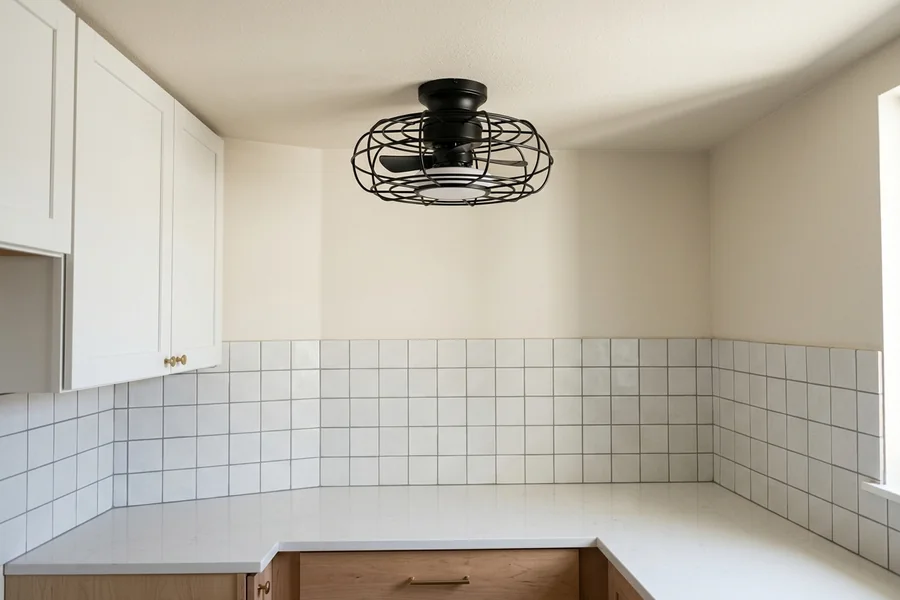
A flush mount fan with light is not only for bedrooms. It works best where the room needs both practical light and soft air movement, but cannot accept a deep hanging fixture.
6-1. Bedrooms and apartments
Bedrooms need quiet comfort. Apartments often have standard or low ceilings. A slim fan with warm light can make the room more useful without taking over the ceiling.
6-2. Kitchens and dining corners
Small kitchens need airflow, but they also need clear light and easy movement around cabinets. A black caged flush mount ceiling fan with light can work when the room needs both style and practical air movement.
6-3. Hallways and compact rooms
Hallways, laundry rooms, and small offices may not need a large fan. They need a neat fixture that adds air movement without hanging low. This is where compact fan lights can be more useful than standard ceiling fans.
7. Mistakes to Avoid Before Buying
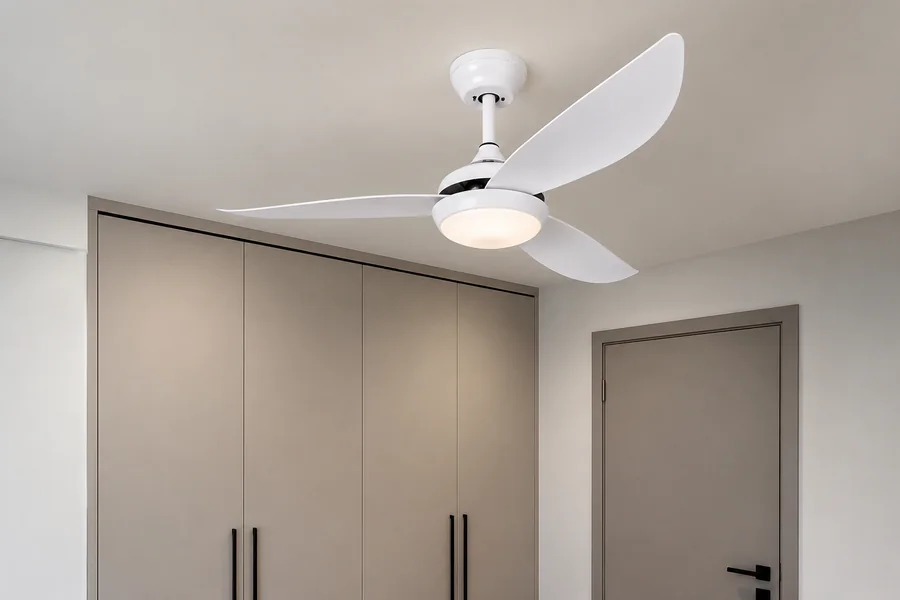
The biggest mistake is choosing from appearance alone. A fan can look good in a photo but still be wrong for the ceiling height, light need, or room layout.
7-1. Ignoring the lowest point of the light
Some fan lights have a deeper light bowl than expected. Always check the lowest point of the whole fixture, not only the motor height.
7-2. Choosing the thinnest fan without checking airflow
Very thin designs can look attractive, but airflow may suffer if the blades have little room to work. If the room is used daily, comfort matters more than an extreme slim profile.
7-3. Forgetting style weight
Dark caged fans, rattan fans, and decorative fixtures can look beautiful, but they carry more visual weight. In low rooms, choose them carefully. A black cage LED low profile ceiling fan may suit a kitchen or industrial room better than a very small bedroom.
At the end, the right fan should feel simple: safe height, enough airflow, useful light, quiet control, and a design that belongs in the room. If you want a broader view of flush, downrod, and other mounting choices, the ceiling fan mount types page can help you compare the options before choosing.
Need the Right Ceiling Fan for a Home, Project, or Commercial Space?
Tell us your space type, ceiling height, airflow needs, lighting options, certification direction, and order plan. We’ll help match the right solution.
Get a QuoteFAQ
Is a flush mount ceiling fan with light good for a low ceiling?
Yes, a flush mount ceiling fan with light is often a good choice for a low ceiling because it keeps the fixture close to the ceiling and saves headroom. You still need to check the total drop height, including the light kit, before buying.
Can a flush mount fan move enough air?
Yes, it can move enough air if the motor, blade shape, and fan size match the room. Do not choose only by thinness. A fan that is slightly deeper but better designed may give more comfortable airflow.
Is a flush mount ceiling fan better than a downrod fan?
No, it is not always better. It is better for low ceilings, compact rooms, and spaces where clearance matters. A downrod fan can be better for high ceilings because it brings the blades down to a more useful height.
Should I choose warm light or cool light?
Yes, you should choose the light colour based on room use. Warm light is usually better for bedrooms and living areas, while neutral light can work better in kitchens, offices, and utility rooms.
Can I use a caged flush mount fan in a small room?
Yes, but check the fixture depth and visual weight. A cage can add style, but in a low room it should not hang too deep or make the ceiling feel crowded.
Do flush mount fan lights need special installation?
Yes, they still need proper ceiling support and safe wiring. Even a compact fan has moving parts, so it should be fixed to a suitable fan-rated box or strong mounting structure.