

Choosing a ceiling fan manufacturer is not only about getting a low price. It is about whether the supplier can make stable products, support your market needs, handle quality control, and help you avoid costly mistakes after the order leaves the factory.
For importers, distributors, project buyers, and private-label brands, the right ceiling fan supplier should feel clear and steady from the first conversation. They should understand product size, motor type, lighting, installation style, packaging, certification direction, and after-sales support. If these basics feel unclear early on, the risk often grows later.
1. What Reliable Really Means
A reliable ceiling fan manufacturer is not just a factory that can make a good-looking sample. Reliability means the supplier can repeat quality, explain technical details clearly, control production, and support you when a problem appears.
For importers, brands, distributors, and project buyers, reliability is practical. It affects product returns, installation complaints, delivery planning, certification risk, and whether your customers trust the range.
1-1. Stable quality matters more than one good sample
A sample can look excellent because it receives extra attention. The real test is whether the manufacturer can repeat the same motor quality, blade balance, finish, lighting colour, packaging, and accessories across a full order.
Ask how the supplier controls batch consistency. If they cannot explain their inspection points, the risk may appear later in noise, wobble, colour differences, or missing parts.
1-2. Product knowledge should be practical
A good supplier should understand fan size, airflow, motor type, blade material, light output, mounting type, and target room use. Their answers should help you avoid buying the wrong product for your market.
If the answer to every question is only yes, be careful. Real product knowledge includes limits, trade-offs, and clear suggestions, such as when a fan size is too small, when a light kit may be too weak, or when a custom change may affect lead time.
1-3. Communication should reduce risk
Reliable communication is not only fast replies. It means the supplier can confirm details, record changes, share clear documents, and answer technical questions before production starts.
2. Check Product Range and Customisation Ability
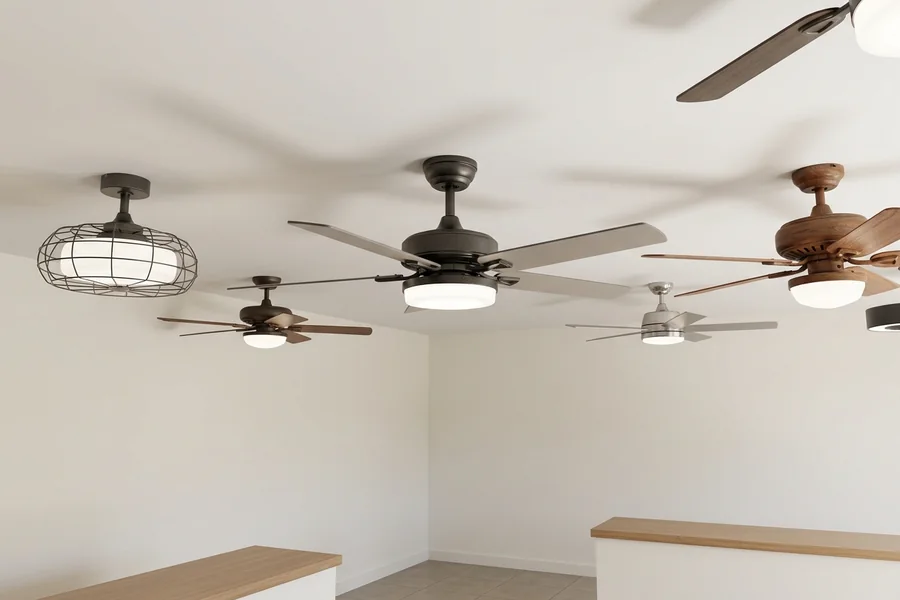
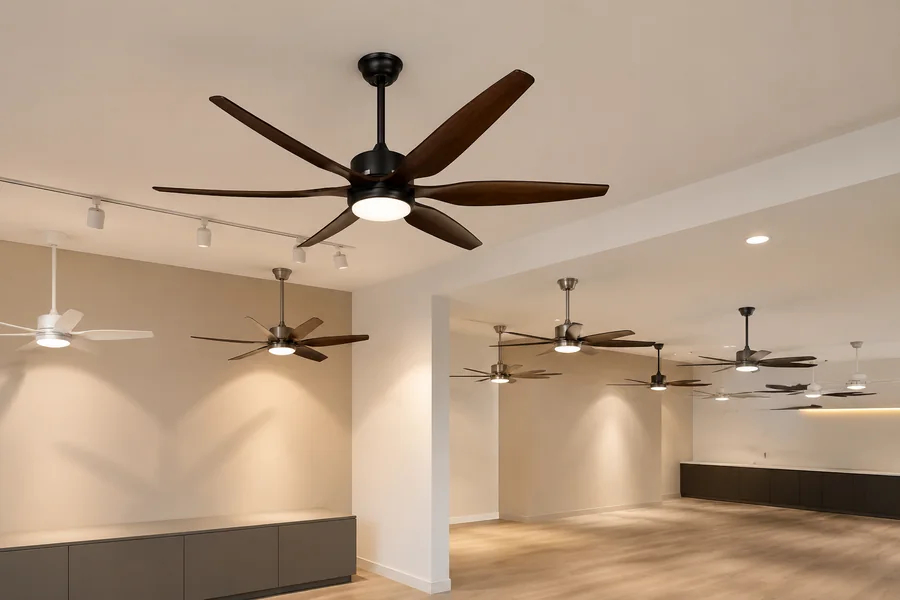
A manufacturer’s product range tells you what markets they understand. A narrow range is not always bad, but the products should match the rooms, sizes, styles, and installation types you plan to sell.
Customisation is useful only when it is controlled. A supplier should be clear about what can be changed safely and what may affect certification, lead time, cost, or performance.
2-1. Look at sizes and installation types
Check whether the manufacturer covers common sizes such as 36 inch, 42 inch, 52 inch, 60 inch, and larger fan options. Also check flush mount, downrod, sloped ceiling, indoor, and selected outdoor directions.
A complete range helps buyers build a more balanced product line. For example, a 60 inch decorative ceiling fan light may serve large rooms, while compact models serve apartments and bedrooms.
2-2. Match products to your market
Do not choose products only because they look popular online. A European apartment market, a US living room market, a hotel project, and a tropical outdoor market may need different sizes, motors, finishes, and certifications.
2-3. Ask what can really be customised
Customisation may include blade finish, body colour, light colour temperature, remote control, smart control, motor direction, packaging, and logo details. But every change should be checked against cost, MOQ, testing needs, and delivery time.
If you need broader OEM or ODM flexibility, compare options through a custom ceiling fans OEM ODM direction rather than treating all suppliers as the same.
3. Test Motor, Lighting, and Material Quality
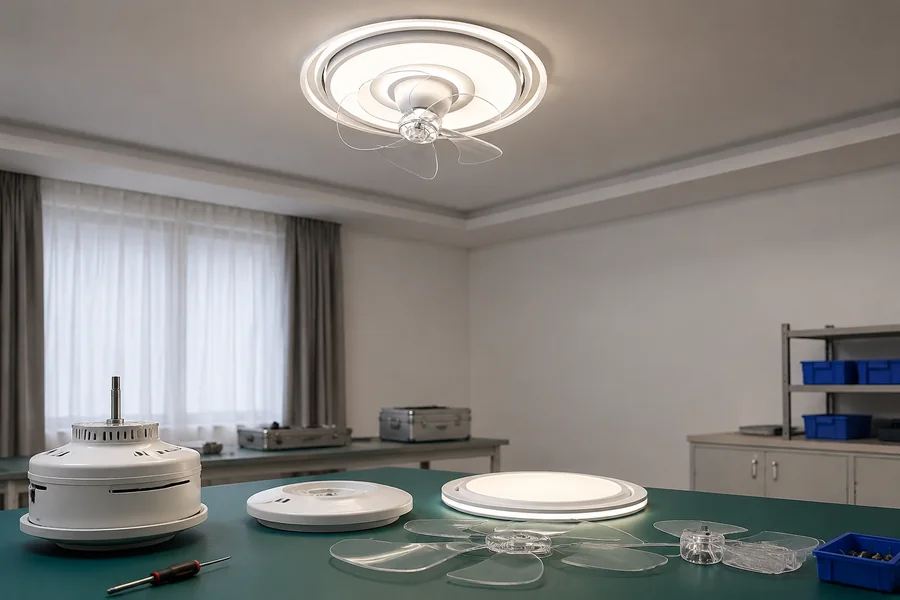
A ceiling fan is a moving electrical product, so quality cannot be judged by appearance only. The motor, blades, lighting module, driver, remote, and housing all affect daily comfort and after-sales risk.
3-1. Motor quality affects comfort
Motor quality affects noise, speed control, energy use, heat, and long-term stability. A quiet motor is especially important for bedrooms, hotels, offices, and living rooms where background hum becomes annoying.
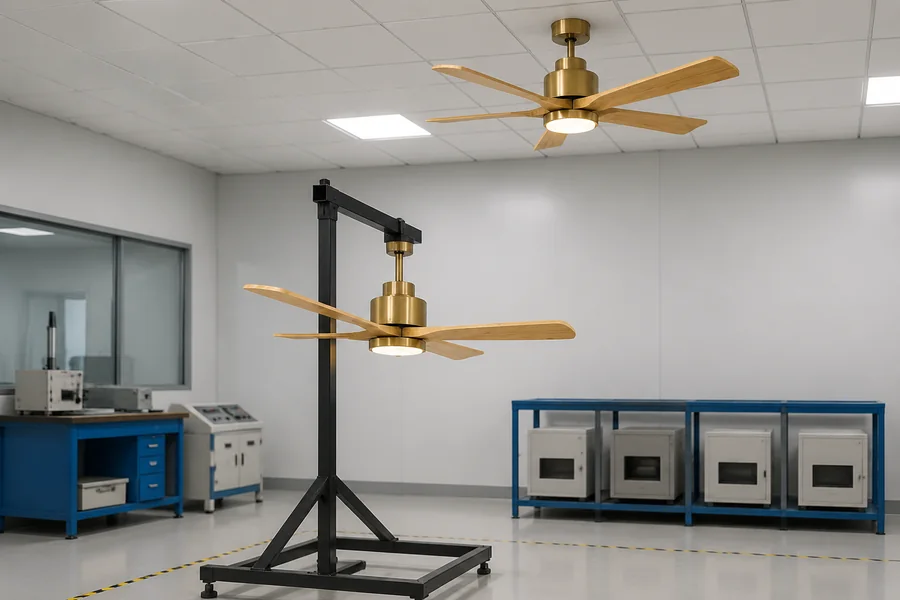
Ask about motor type, speed range, reverse function, testing process, and warranty direction. If possible, run a sample at low, medium, and high speed before confirming an order.
3-2. Lighting quality affects user experience
For fan lights, the LED module is part of the product experience. Check brightness, colour temperature, dimming, flicker control, lens quality, and whether the light feels comfortable in real rooms.
A luxury ceiling fan with LED light should not only look decorative. It should also provide stable, useful, comfortable lighting, with a driver and LED module that can support daily use without flicker, harsh colour, or early failure.
3-3. Blade and body materials should match the use case
Wood, ABS, metal, and rattan-style materials each have different strengths. A 52 inch wood ceiling fan may suit warm residential interiors, while other materials may be better for humid or commercial spaces.
The material should match the market and the room condition, not only the catalogue photo. A warm residential market may prefer wood finishes, while humid or high-use spaces may need materials that are easier to clean and less sensitive to moisture.
4. Verify Certification and Compliance Direction

Certification is not a small detail for ceiling fan buyers. It affects import, sales channels, project acceptance, and customer trust. A reliable supplier should understand the certification direction for your target market.
4-1. Ask for model-specific documents
Do not accept a general certificate as proof for every product. Ask whether the documents apply to the exact model, motor, light kit, driver, and configuration you plan to buy.
If the product is customised, confirm whether the change affects certification. A small change in driver, motor, or LED module can matter.
4-2. Check electrical and material standards
Different markets may require different standards, such as CE, RoHS, FCC, ETL, CB, or other local requirements. The right direction depends on your sales region and product configuration.
4-3. Packaging and manuals also matter
Compliance is not only about the fan body. Manuals, labels, warnings, installation instructions, packaging marks, and spare parts information should also be checked before shipment.
5. Understand MOQ, Samples, and Lead Time
MOQ, sample policy, and lead time affect how safely you can test a product range. A supplier may have attractive designs, but if the order rules do not fit your business, the cooperation can become difficult.
5-1. Start with sample testing
Samples help you check airflow, noise, light quality, finish, packaging, installation parts, and user experience. They also show how carefully the manufacturer handles communication and detail confirmation.
Do not judge only from photos or short videos. A ceiling fan must be touched, installed, and used to reveal its real strengths and weak points.
5-2. Ask about realistic MOQ
MOQ should be realistic for your market plan. Very high MOQ can create inventory pressure, while very low MOQ may mean higher unit cost or limited customisation.
If you are testing a new style such as a rattan ceiling fan, a lower trial quantity may help reduce risk before expanding the range.
5-3. Confirm lead time by order type
Sample lead time, repeat order lead time, and customised order lead time can be different. Confirm each one separately, especially before peak season or project deadlines.
Need the Right Ceiling Fan for a Home, Project, or Commercial Space?
Tell us your space type, ceiling height, airflow needs, lighting options, certification direction, and order plan. We’ll help match the right solution.
Get a Quote6. Check Production Consistency and Quality Control
Production consistency is where many supplier problems appear. The first sample may be good, but a real order includes many units, workers, parts, and inspection steps.
6-1. Ask about incoming material checks
A reliable manufacturer should check motors, LED drivers, blades, screws, remotes, packaging materials, and surface finishes before assembly. Poor incoming parts often become after-sales issues later, so this step protects both the buyer and the end customer before production even begins.
6-2. Look for in-process testing
In-process testing can include motor running checks, balance checks, light testing, wiring checks, and appearance inspection. These steps reduce the chance that a defect reaches final packing, especially for fan lights where motor, LED, remote, and driver must work together as one product.
6-3. Final inspection should match your selling risk
Final inspection should cover function, noise, speed, light, accessories, labelling, packaging, and carton strength. For project or private label orders, ask whether inspection photos or reports can be shared before shipment.
7. Review Communication and After-Sales Support
Good support does not start after a problem. It starts before the order, when the supplier helps you understand specifications, avoid wrong choices, and confirm details clearly.
7-1. Technical answers should be clear
A reliable supplier should answer technical questions in practical language. They should explain size, motor, lighting, control, installation, and certification without hiding behind vague claims.
7-2. Spare parts should be planned
Ask about remotes, receivers, LED modules, drivers, downrods, blades, screws, and other parts that may need replacement. Spare part planning is important for distributors, hotel projects, and long-term product ranges.
7-3. Product pages should match real products
Photos, specifications, packaging, and manuals should match the actual fan. A supplier that changes details without notice can create listing errors, customer complaints, and installation confusion.
For decorative models such as a vintage ceiling fan with remote control, consistency between photo, finish, light, and accessories is especially important.
8. Compare Pricing, Packaging, and Shipping Risk
Price matters, but the lowest price can hide risk. Ceiling fans include motors, blades, lights, electronics, hardware, and packaging. If the price is too low, something may have been reduced.
8-1. Compare what is included in the price
Check whether the quote includes remote control, LED module, downrod, spare screws, packaging, logo work, manual, certification-related parts, and inner protection. Two quotes can look similar but include different things.
8-2. Packaging should protect the fan
Ceiling fans can be damaged by poor packaging because blades, light covers, motor housings, and remotes all need protection. Ask about drop testing direction, carton strength, and how the product is packed inside.
8-3. Shipping and market timing matter
A reliable supplier should help you plan order timing. Fan sales can be seasonal, and shipping delays can affect launch dates. Clear lead time and packing information make inventory planning easier, because you can arrange promotion, warehouse space, and reorder timing with fewer surprises.
9. Final Supplier Checklist
Before choosing a manufacturer, slow down and check the details together. A clear checklist can prevent wrong assumptions and help you compare suppliers more fairly.
9-1. Product and market fit
- Does the supplier offer the fan sizes your market needs?
- Do the styles match your customers and sales channels?
- Can the supplier explain which products suit bedrooms, living rooms, hotels, or commercial spaces?
- Can customisation be controlled without creating certification or lead time problems?
9-2. Quality and compliance
- Are motor, lighting, blade, and finish quality tested?
- Are certificates model-specific and suitable for the target market?
- Are manuals, labels, packaging, and installation parts checked?
- Can the supplier support inspection before shipment?
9-3. Business support
The best supplier is the one that fits your product plan, quality needs, order size, and communication style. NEBOLA can support ceiling fan light projects with flexible product options, sample discussion, and practical order planning, but the final choice should always be based on product fit, verified details, and long-term reliability.
Use this checklist before placing a first order. It is easier to choose carefully at the start than to fix product, packaging, or after-sales problems after the goods arrive.
Need the Right Ceiling Fan for a Home, Project, or Commercial Space?
Tell us your space type, ceiling height, airflow needs, lighting options, certification direction, and order plan. We’ll help match the right solution.
Get a QuoteFAQ
Is a low price enough when choosing a ceiling fan manufacturer?
No, a low price is not enough. You also need to check motor quality, lighting quality, certification direction, packaging, lead time, communication, and after-sales support.
Should I order samples before bulk production?
Yes, samples are important because they let you test airflow, noise, lighting, installation, remote control, packaging, and real product finish before placing a larger order.
Can one ceiling fan supplier support different markets?
Yes, one supplier can support different markets if they have a clear product range, flexible configuration options, and knowledge of regional requirements. You still need to confirm certification and voltage for each market.
Is OEM or ODM useful for small brands?
Yes, OEM or ODM can be useful for small brands if the supplier supports realistic MOQ and clear custom options. It helps a brand test product ideas without building a factory.
Should certificates match the exact model?
Yes, certificates should match the exact model and configuration as closely as possible. A certificate for another motor, driver, voltage, or light kit may not be enough for your market.
Does after-sales support matter for B2B orders?
Yes, after-sales support matters because importers and distributors may need spare parts, technical answers, installation help, and repeat order support after shipment.