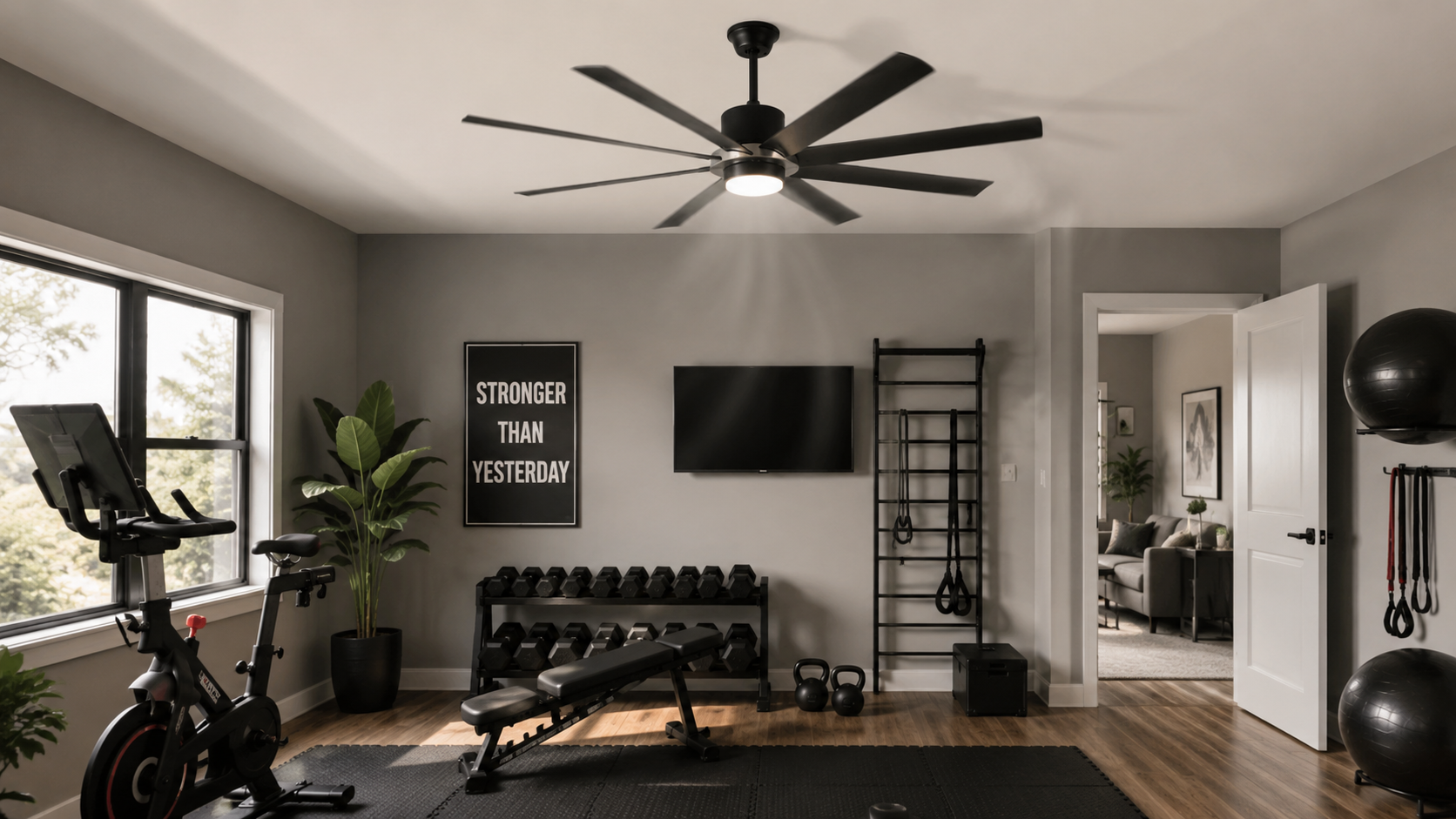



A 60 inch ceiling fan and a 72 inch ceiling fan can both work in large living rooms, but they solve different problems. A 60 inch fan is often better for large residential rooms with normal furniture scale, while a 72 inch fan is better for very wide rooms, high ceilings and open spaces that need broader coverage.
The wrong choice can feel uncomfortable. A 60 inch fan may be too small for a big open lounge, while a 72 inch ceiling fan may feel visually heavy or physically unsuitable if the ceiling height and clearance are not enough.
For room-specific living room options, start with the living room ceiling fan collection before deciding between these two large sizes.
1. What Is the Main Difference Between 60 Inch and 72 Inch Fans?

The main difference is coverage. A 72 inch fan has a wider blade span and can cover a broader zone, while a 60 inch fan is easier to fit into more residential living rooms.
1-1. Is 60 inch already a large living room fan?
Yes, a 60 inch ceiling fan is already a large living room fan. It suits wide sofa groups, larger family rooms and rooms where a 52 inch fan feels slightly underpowered.
It still looks residential and usually feels easier to place than a very large fan.
1-2. Is 72 inch more like a great-room fan?
Yes, a 72 inch ceiling fan is closer to a great-room or large-space choice. It needs enough ceiling width, height and visual breathing room.
It should be selected because the room needs wide coverage, not because bigger looks more premium.
2. Which Room Size Is Better for a 60 Inch Fan?

A 60 inch fan works best in large living rooms where the seating area is broad but still clearly defined. It is often the more balanced choice for upscale homes and larger apartments.
| Large living room condition | 60 inch fit | 72 inch fit | Main check |
|---|---|---|---|
| Larger standard living room | Usually suitable | Sometimes too large | Sofa zone and visual balance |
| High ceiling living room | Often suitable | Often suitable | Downrod and installed height |
| Wide great room | Sometimes limited | Usually better | Broad coverage |
| Long living room | Sometimes limited | Sometimes better or use two fans | Zone layout |
| Modest residential living room | Better fit | Often too big | Ceiling scale and clearance |
2-1. When does 60 inch feel balanced?
It feels balanced when the fan covers the sofa group without reaching too close to walls, beams or lighting. A 60 inch fan should look intentional, not squeezed.
In many residential projects, it is the first real step beyond standard 52 inch sizing.
2-2. What product direction fits 60 inch living rooms?
A 60 inch gold wood fandelier can fit rooms where the fan is also a decorative ceiling feature.
For calmer interiors, choose simpler blade lines and softer finishes.
3. Which Room Size Is Better for a 72 Inch Fan?
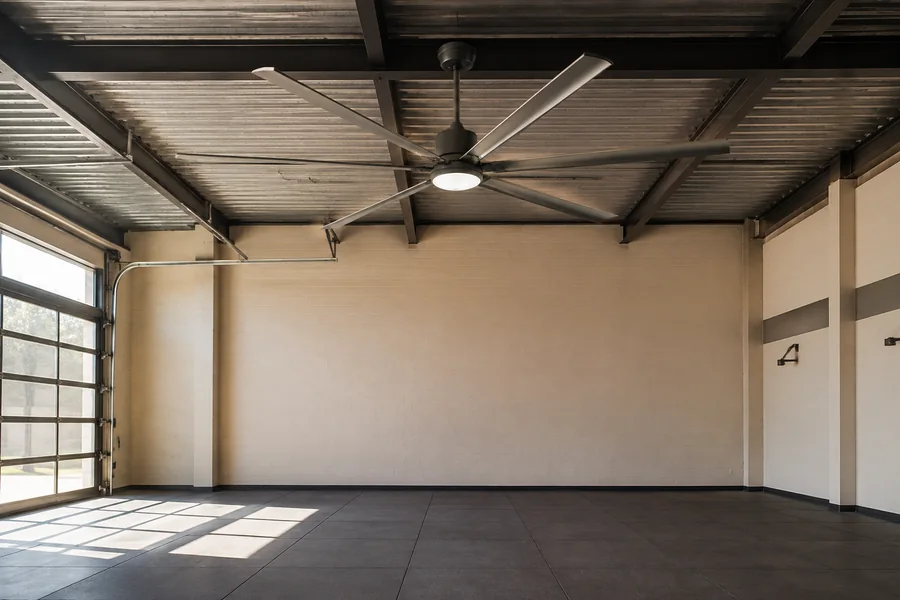
A 72 inch fan is better for very large living rooms, open-plan lounges, high ceilings or spaces where one central fan must cover a wide area.
3-1. When does 72 inch make sense?
It makes sense when a 60 inch fan would need to run too fast or still leave distant seating areas uncomfortable. The room should have enough open ceiling around the fan.
Large blade span works best when the space can visually and physically support it.
3-2. What product direction fits 72 inch spaces?
A 70 inch industrial ceiling fan is a useful nearby reference for wide, high-ceiling rooms where broad airflow is the priority.
For residential living rooms, the finish and blade shape should be softer than a pure warehouse look unless the interior is intentionally industrial.
4. How Should Ceiling Height Affect the Choice?

Ceiling height is one of the strongest decision factors. Bigger fans need more clearance and often work better with higher ceilings.
4-1. Is 60 inch suitable for normal ceilings?
Yes, a 60 inch fan can suit some normal-height living rooms if the room is wide enough and the product profile is not too deep.
Always check blade-to-floor clearance, canopy depth and light kit depth before ordering.
4-2. Does 72 inch need a taller ceiling?
Yes, a 72 inch fan usually needs a taller ceiling and more open space. It may look too dominant or feel too low in an ordinary eight foot living room.
For very large-diameter fans, installation height and safety clearance should be checked carefully before style.
5. How Does Room Shape Change 60 vs 72 Inch Selection?

Room shape changes whether one large fan can cover the useful area. Width, length and furniture placement matter as much as square footage.
5-1. Which size works in square rooms?
In a square large living room, either size may work. Choose 60 inch if the seating zone is defined, and 72 inch if the room is broad, high and open.
The fan should sit over the comfort zone rather than only the room centre.
5-2. Which size works in long rooms?
In long living rooms, one 72 inch fan may still not solve both ends of the room. Two smaller fans or one fan over the main seating zone can be better.
This is where layout thinking matters more than simply choosing the largest fan.
6. How Should Airflow Comfort Be Compared?

Airflow comfort should be compared by air speed, low-speed control, noise and coverage. The goal is not maximum wind.
6-1. Why can a larger fan feel gentler?
A larger fan can move more air at a lower speed when the room is large enough. That can feel smoother than a smaller fan running fast.
But if the fan is too large for the room, the airflow may feel awkward and the fixture may dominate the ceiling.
6-2. What does research say about layout?
The CBE ceiling fan layout guide is useful because it explains that fan size and layout should consider room dimensions, desired air-speed uniformity, obstructions and clearances.
That logic is exactly why 60 vs 72 inch should be decided by the living room layout, not only by fan diameter.
7. How Do 60 and 72 Inch Fans Affect Living Room Style?

Large fans are highly visible. They can either anchor the living room or make it feel crowded.
7-1. When does 60 inch look more natural?
60 inch often looks more natural when the room is large but still residential in scale. It can sit above a sofa group without making the ceiling feel commercial.
It is a safer choice when the furniture is refined, low and not oversized.
7-2. When does 72 inch look intentional?
72 inch looks intentional when the room has a high ceiling, large windows, wide furniture and a strong architectural volume.
It should feel like part of the architecture, not a fan borrowed from a warehouse.
8. Should a Large Living Room Use One Big Fan or Multiple Fans?

Sometimes multiple fans are better than one big fan. This is especially true when the room is long, divided into zones or open to dining and kitchen areas.
8-1. When is one big fan enough?
One big fan is enough when the living room has one main seating zone and the ceiling point is well placed. In that case, 60 or 72 inch can be chosen based on scale.
One fan also keeps the ceiling visually simpler.
8-2. When are two fans better?
Two fans are better when the room has two activity zones or a long floor plan. They can provide more even coverage without one fan becoming oversized.
For large layouts, compare the approach with the 52 inch living room guide before deciding how far to size up.
9. What Buying Mistakes Should Be Avoided?

Large living room fan mistakes usually come from choosing by visual drama before checking installation and comfort.
9-1. Is bigger always better?
No, bigger is not always better. A 72 inch fan can be wrong if the room ceiling is low, the sofa group is compact or the blade span conflicts with lights or beams.
The right size should feel calm and proportionate.
9-2. Should buyers ignore motor quality?
No, buyers should not ignore motor quality. A large fan needs stable operation, low-speed control and good balance. Wobble or noise becomes more obvious at larger blade spans.
Product sampling is important for project buyers.
10. What Final Decision Rule Helps?

Choose 60 inch when the living room is large but still residential. Choose 72 inch when the room is very wide, high, open and needs broader air coverage.
10-1. What should homeowners measure?
Measure room width, ceiling height, sofa zone, blade clearance, light positions and distance to walls. Then compare the fan size against the actual comfort zone.
Do not choose from square footage alone.
10-2. What should project buyers confirm?
Project buyers should confirm motor type, blade material, packaging strength, mounting hardware, installed drop, certification direction and spare parts.
Before final ordering, compare the result again with the living room fan collection so the chosen large fan still fits the product direction.
If you are looking for a better ceiling fan light solution for your project, NEBOLA can provide one-stop support from product selection to customization. We focus on ceiling fan light R&D and manufacturing, helping brands, importers, and distributors find products that better match real space needs.
Need Help Choosing the Right Ceiling Fan Light?
Tell us your room size, ceiling height, lighting needs and project plan. NEBOLA can help match the right fan light style and configuration.
Get a QuoteFAQ About 60 Inch vs 72 Inch Living Room Fans
Is a 60 inch ceiling fan good for a large living room?
Yes, a 60 inch ceiling fan is good for many large living rooms when the seating zone is broad but still clearly defined.
Is a 72 inch ceiling fan too big for a living room?
Yes, a 72 inch ceiling fan can be too big for a living room if the ceiling is low, the room is not wide enough or the furniture scale is modest.
Should a high ceiling living room use a 72 inch fan?
Yes, a high ceiling living room can use a 72 inch fan when the room is wide and the fan can be installed with safe clearances.
Can one 60 inch fan replace two smaller fans?
No, one 60 inch fan cannot always replace two smaller fans. Long or zoned rooms may still need multiple fans for better coverage.
Is a 72 inch fan better than a 60 inch fan for airflow?
Yes, a 72 inch fan can provide broader airflow in the right room, but only when the space has enough width and height to support it.
Should large living room fans include lights?
Yes, large living room fans can include lights if the fixture is part of the lighting plan, but separate lighting may look cleaner in some large rooms.