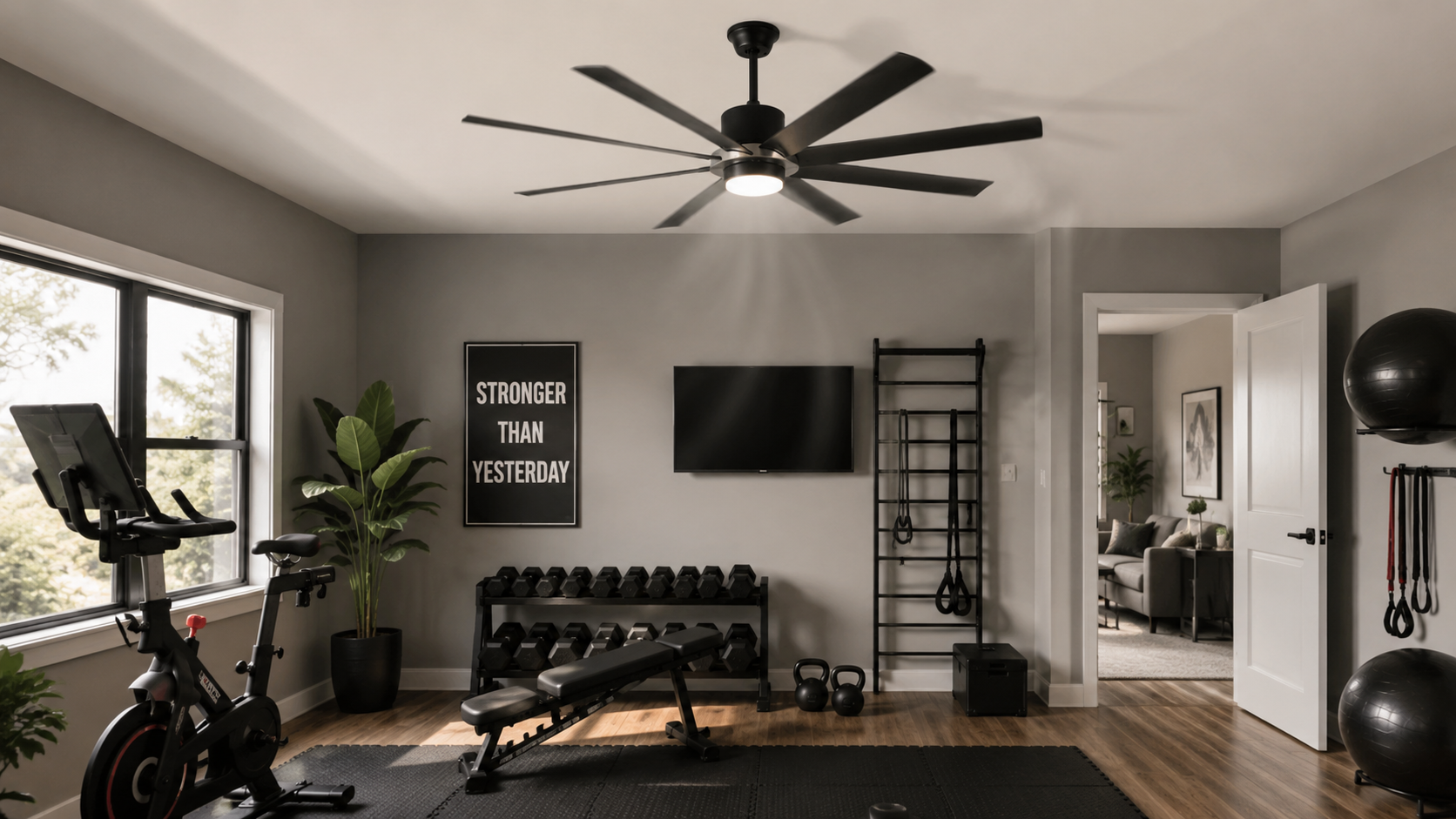



A 52 inch ceiling fan can be big enough for many living rooms, but not every living room. The real answer depends on the seating zone, ceiling height, room shape, blade span, airflow performance and how open the room is to nearby areas.
For a standard enclosed living room or a compact apartment lounge, a 52 inch ceiling fan often feels balanced. For a wide open-plan living room, a long rectangular room or a high-ceiling great room, 52 inch may look small and may not move enough air across the full space.
Before choosing, compare your room with the living room ceiling fan collection so the blade span, style and airflow target match the real space.
1. Is a 52 Inch Ceiling Fan Usually Big Enough for a Living Room?

Yes, a 52 inch fan is usually big enough for many standard living rooms when the fan is placed over the main seating zone and the room is not too wide or open.
1-1. What is the short answer?
For a typical living room with one sofa group, normal ceiling height and a clear central fan position, 52 inch is often a practical size. It gives more coverage than small bedroom fans without becoming visually heavy.
The mistake is treating 52 inch as universal. It is a common blade span, not a guarantee that the whole room will feel comfortable.
1-2. When is 52 inch not enough?
A 52 inch ceiling fan may not be enough when the living room is large, long, open to a dining area, or has a high ceiling that keeps airflow too far above people.
If air must reach several seating zones, a larger fan or multiple fans may work better than forcing one medium fan to run at high speed.
2. What Room Size Works Best for a 52 Inch Ceiling Fan?

A 52 inch ceiling fan works best in medium living rooms and smaller large rooms where the active comfort zone is clear. The room area matters, but usable shape matters more.
| Living room condition | 52 inch fit | What to check |
|---|---|---|
| Compact enclosed living room | Usually suitable | Low-speed comfort and visual balance |
| Standard living room | Often suitable | Seating zone and ceiling height |
| Long narrow living room | Sometimes limited | Fan position and airflow reach |
| Open-plan living room | Often not enough alone | Zone size and layout |
| High-ceiling great room | Usually needs review | Downrod, blade span and airflow |
2-1. Should room area decide everything?
No, room area should not decide everything. A square 200 square foot living room and a long 200 square foot living room can need different airflow plans.
The room size guide helps because it starts with room type and layout rather than only a single number.
2-2. What if the living room is partly open?
If the living room opens into dining, kitchen or hallway space, measure the real seating zone first. A 52 inch fan can serve the living zone, but it should not be expected to cool the whole open floor plan.
In open layouts, the fan should be sized for where people sit most often.
3. How Should Blade Span Be Understood?

Blade span is the diameter of the fan measured from one blade tip to the opposite blade tip. For a 52 inch ceiling fan, that means the fan occupies a 52 inch circle on the ceiling.
3-1. Does blade span equal airflow?
No, blade span does not equal airflow. It only tells you how wide the fan is. Real airflow depends on blade pitch, motor strength, speed range, mounting height and blade shape.
A high-quality 52 inch fan can outperform a weak larger fan, but a larger room still needs enough coverage.
3-2. Why does visual blade span matter?
Visual blade span matters because the fan becomes part of the ceiling composition. A fan that is too small can look lost above a large sofa group, while a fan that is too wide can make a modest room feel crowded.
The best size looks connected to the furniture below it.
4. How Does Living Room Layout Change the Answer?

Living room layout changes the answer because airflow should support where people actually sit, not only the geometric centre of the ceiling.
4-1. Where should the fan be placed?
Place the fan over the main seating area when possible. If the sofa is shifted away from the room centre, the fan may also need to relate to that shifted zone.
This is why the modern living room guide is useful: style decisions work better after the room function is clear.
4-2. What if the TV wall controls the room?
If the TV wall controls the room, avoid placing the fan where it creates distraction, glare or awkward shadows. The fan should support comfort without fighting the media layout.
A clean 52 inch fan without a harsh light can work well when the room already has layered lighting.
5. How Does Ceiling Height Affect a 52 Inch Fan?

Ceiling height affects how useful a 52 inch fan feels. The fan must sit low enough to move air through the living zone but high enough for safe clearance and visual comfort.
5-1. Is 52 inch good for eight foot ceilings?
Yes, it can be good for eight foot ceilings if the product has a low-profile or flush-mount structure and the room is not too large.
An ultra-thin 52 inch LED DC fan is a useful reference when the ceiling height is limited but the room still needs a broad fan.
5-2. What about taller ceilings?
For taller ceilings, the fan may need a downrod so airflow reaches the seating zone. If the fan stays too high, people may feel less air even when the blade span is correct.
The final choice should include both blade span and installed height.
6. Which 52 Inch Fan Styles Fit Living Rooms Best?

The best 52 inch fan style depends on whether the room needs the fan to disappear, add warmth or become a visible design feature.
6-1. When is a fan without light better?
A fan without light is often better when the living room already has recessed lights, lamps or wall lighting. It keeps the ceiling cleaner and lets the fan focus on airflow.
A 52 inch wood fan can soften the room without adding another bright ceiling light.
6-2. When is a vintage style useful?
A vintage or decorative finish can work when the living room uses warm wood, leather, textured walls or traditional furniture. It should still be quiet and balanced.
A vintage ceiling fan is a useful direction when the room needs character, not only airflow.
7. How Does a 52 Inch Fan Compare With Larger Living Room Fans?

A 52 inch fan is a middle answer. It can be right for many rooms, but larger living rooms may benefit from 56, 60 or 72 inch options.
7-1. When is 52 inch better than 42 inch?
52 inch is better than 42 inch when the living room seating zone is wider and a smaller fan would need to run too fast. The 42 vs 52 guide explains this boundary clearly.
The 52 inch size gives more reach while still fitting many residential ceilings.
7-2. When should you move beyond 52 inch?
Move beyond 52 inch when the sofa group is wide, the room opens into other zones or the ceiling is tall. Larger blade spans can move air more gently across a broader area when the room supports them.
If the room feels like a great room rather than a standard lounge, 52 inch may be only the starting point.
For broader room planning, the bedroom design guide and apartment space guide are useful comparisons because they show how ceiling fixtures change with real living habits.
8. What Airflow Details Matter Besides Fan Size?

Airflow details matter because a living room fan should feel smooth at low and medium speed. Strong wind is not the goal; even comfort is the goal.
8-1. What should CFM tell you?
CFM tells you how much air the fan can move per minute under test conditions. It is useful, but it should be read with blade span, motor type and speed range.
The airflow guide explains why bigger diameter and higher airflow do not always mean better comfort.
8-2. Why does air speed research matter?
Air movement affects comfort directly. CBE’s fans guidebook is a useful external reference because it explains fan selection, airflow patterns, performance metrics and fan-integrated comfort planning.
For living rooms, that means size should be chosen for the comfort zone, not only the product photo.
9. What Buying Mistakes Should You Avoid?

The biggest mistake is choosing a 52 inch fan only because it is common. Common does not always mean correct.
9-1. Is copying a product photo risky?
Yes, copying a product photo is risky because the photo may not show ceiling height, furniture scale, airflow reach or light comfort.
Use the buying mistakes guide before ordering if the room is near a size boundary.
9-2. Should importers rely on one size?
No, importers should not rely on one size. A balanced range usually needs several blade spans because apartments, standard homes and large living rooms behave differently.
The market size guide can help when planning a product lineup.
10. What Final Checklist Confirms 52 Inch Is Right?

A 52 inch ceiling fan is right when it matches the room size, seating zone, ceiling height, airflow need and visual style.
10-1. What should homeowners check?
Check room width, sofa placement, ceiling height, mounting type, blade clearance, lighting plan, motor noise and low-speed control before choosing.
If most of those checks support a medium-size fan, 52 inch is likely a practical choice.
If the room also needs better ceiling light planning, compare the living room lighting guide and the ceiling fixture guide before choosing a fan with or without light.
10-2. What should project buyers confirm?
Project buyers should confirm product depth, motor type, packaging, finish consistency, remote control support and replacement parts before ordering in quantity.
For living room projects, return to the living room fan collection before final selection so product size and style stay connected.
If you are looking for a better ceiling fan light solution for your project, NEBOLA can provide one-stop support from product selection to customization. We focus on ceiling fan light R&D and manufacturing, helping brands, importers, and distributors find products that better match real space needs.
Need Help Choosing the Right Ceiling Fan Light?
Tell us your room size, ceiling height, lighting needs and project plan. NEBOLA can help match the right fan light style and configuration.
Get a QuoteFAQ About 52 Inch Ceiling Fans for Living Rooms
Is a 52 inch ceiling fan big enough for a living room?
Yes, a 52 inch ceiling fan is big enough for many standard living rooms when the seating zone is clear and the room is not too wide or open.
Is a 52 inch fan too small for a large living room?
Yes, a 52 inch fan can be too small for a large living room, especially if the room is open-plan, long, or has a high ceiling.
Does blade span decide airflow by itself?
No, blade span does not decide airflow by itself. Motor quality, blade design, speed range and mounting height also change real comfort.
Should a 52 inch living room fan include a light?
Yes, it can include a light if the living room needs general ceiling lighting, but a fan without light may be cleaner when the room already has layered lighting.
Can a 52 inch fan work on an eight foot ceiling?
Yes, a 52 inch fan can work on an eight foot ceiling if the installed depth is controlled and the fan leaves comfortable clearance.
Should project buyers stock 52 inch fans?
Yes, project buyers can stock 52 inch fans as a core living room size, but they should also offer smaller and larger options for different room conditions.