

Living room lighting ideas work best when the ceiling plan supports real life, not just a pretty photo. A good room needs comfortable brightness, softer evening mood, clear zones for seating or reading, and a fixture style that fits the ceiling height.
If you also want airflow, compare lighting and fan-light options in the living room ceiling fan collection before choosing the final centre fixture.
1. Why Should Living Room Ceiling Lighting Start With the Room Layout?
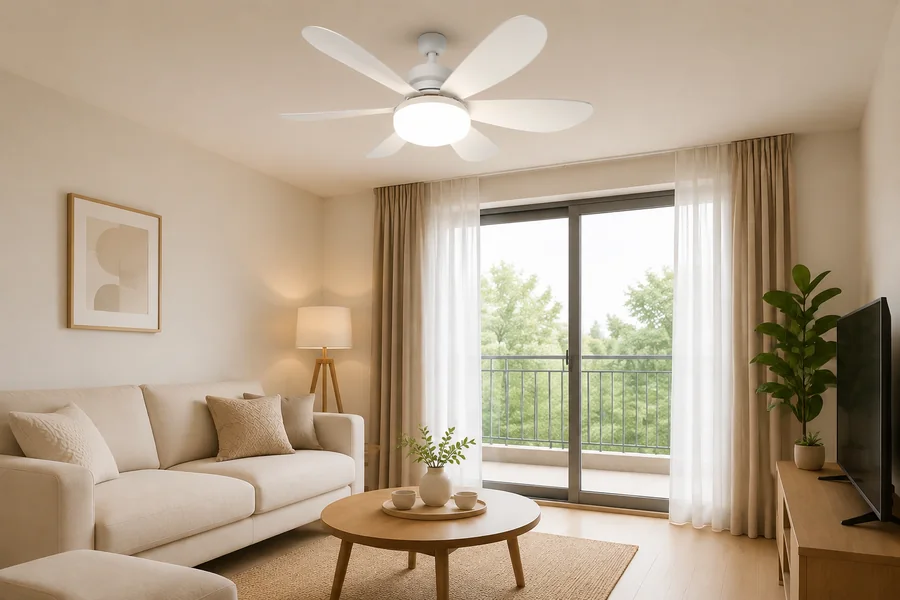
Ceiling lighting ideas can fail when the fixture is chosen before the room is understood. The sofa, TV wall, window direction, ceiling height and walking paths should guide the lighting plan.
1-1. How does the seating zone affect ceiling lights?
The main ceiling fixture should relate to where people actually sit. If the light is centred in the room but the sofa is shifted to one side, the room can feel visually wrong and the light may not help the seating area.
For living rooms with one clear sofa zone, place the main ceiling feature around that zone. For open-plan spaces, separate the living area from dining or kitchen lighting so each area feels intentional.
1-2. Why should the ceiling height be checked early?
Ceiling height controls what type of fixture can work safely. A chandelier may look beautiful, but it can feel heavy or hang too low in a room with limited clearance.
Flush fixtures, recessed light layouts and a ceiling fan light all need different space. Before buying, measure the ceiling height, fixture drop, blade span if a fan is used, and the lowest visible point of the product.
2. How Can Layered Ceiling Lighting Make a Living Room More Comfortable?
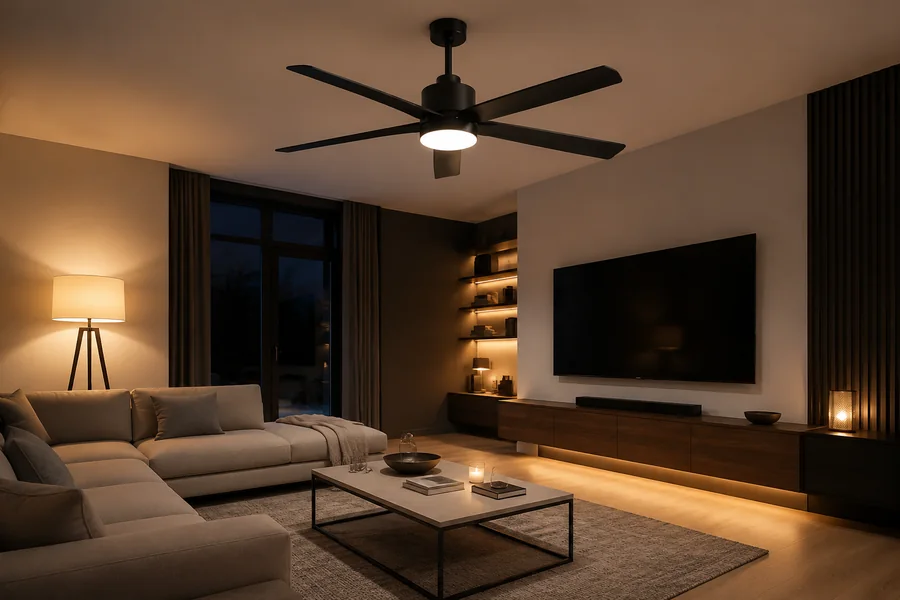
A living room should not rely on one bright light. Layered lighting combines general brightness, softer atmosphere and focused support for daily activities.
2-1. What is the role of ambient ceiling lighting?
Ambient ceiling lighting gives the room its basic usable brightness. It helps people move around safely, clean the room, host guests and use the space during darker hours.
The mistake is making ambient light too harsh. A single cold, bright ceiling light can flatten the room and make the seating area uncomfortable. Diffusers, dimming and warm colour temperature help the room feel more relaxed.
2-2. How do accent and task layers support the ceiling plan?
Accent lighting gives shape to shelves, textured walls, curtains or architectural details. Task lighting supports reading, games, work or small activities near the sofa.
Ceiling lighting should create the base, while floor lamps, table lamps and wall lights add the softer layers. Architectural Digest’s lighting ideas are useful for seeing how different layers work together instead of depending on one fixture.
3. When Is a Chandelier a Good Living Room Choice?
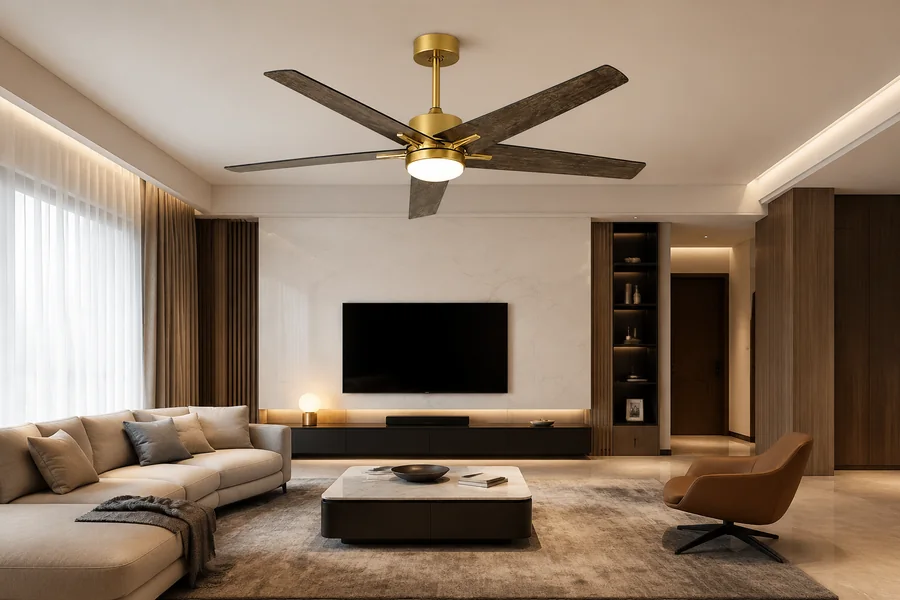
A chandelier can make a living room feel finished, but it should be chosen with scale and ceiling height in mind. It is best when the room has enough visual breathing space.
3-1. Which living rooms can carry a chandelier?
A chandelier works well in a formal living room, a high-ceiling lounge, or a space where the ceiling fixture is meant to be the main design statement. It can also work above a centred seating arrangement when the room has a clear focal point.
In smaller rooms, choose a lighter chandelier shape. Slim arms, softer glass and restrained finishes usually work better than a large ornate fixture that competes with furniture.
3-2. What should be checked before choosing one?
Check the drop height, glare direction, cleaning difficulty and how the fixture looks from both seated and standing positions. A chandelier should not block TV viewing or feel like it is pressing down over the sofa.
Also check whether the room needs airflow. If summer comfort matters, a chandelier alone may need to be paired with another ventilation solution or replaced with a decorative fan light.
4. Are Recessed Lights Better for Modern Living Rooms?
Recessed light layouts are popular because they keep the ceiling clean. They can work very well, but only when the spacing, beam angle and dimming are planned carefully.
4-1. What are the strengths of recessed light?
Recessed lights are visually quiet. They suit modern living rooms, low ceilings, media walls and open-plan interiors where a large central fixture would feel too busy.
They also allow flexible zoning. You can place lights around the seating area, near storage, along a walkway or close to a feature wall. This gives more control than one central lamp.
4-2. What mistakes make recessed lighting feel cold?
Too many recessed lights can make a living room look like an office. If every light is equally bright and evenly spaced, the room loses depth.
Use dimmers, warm colour temperature and fewer well-placed lights. Avoid putting lights directly above people’s heads or in positions that reflect strongly on the TV.
5. When Does a Ceiling Fan Light Make More Sense Than a Plain Ceiling Light?
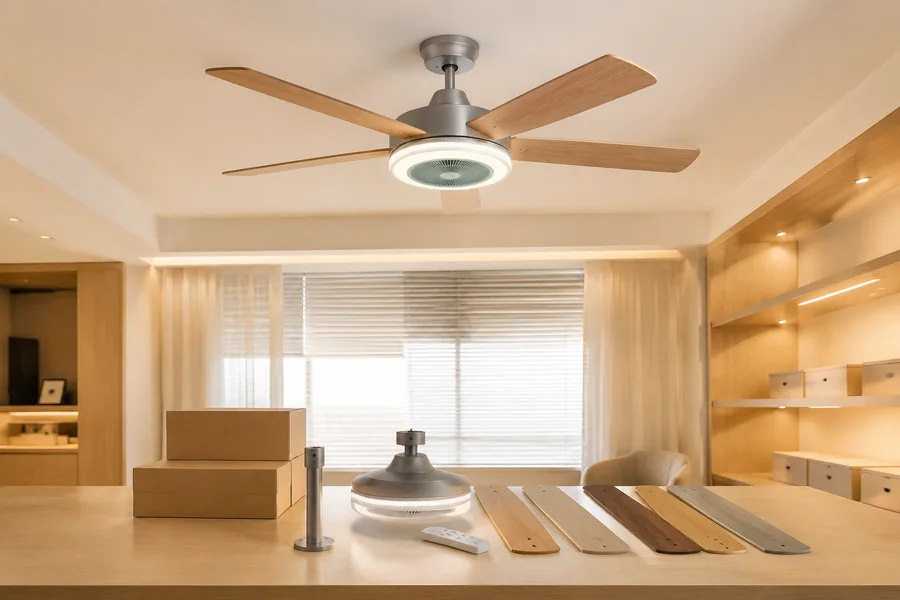
A ceiling fan light makes sense when the living room needs both overhead lighting and air movement. It can reduce ceiling clutter and help the room feel more useful in warm seasons.
5-1. Which living rooms benefit most from fan lights?
Living rooms with warm afternoon sun, poor air circulation or open windows can benefit from a fan light. The fan supports comfort while the LED light handles everyday brightness.
A white fan light can work when the ceiling fixture should feel quiet and clean. It is especially useful in light interiors where a dark fixture would look too strong.
5-2. What makes a fan light comfortable for daily use?
Comfort depends on quiet motor performance, stable mounting, smooth control and soft light diffusion. The light should not glare into people’s eyes while they sit on the sofa.
Separate fan and light controls are also important. A good living room product should allow users to adjust airflow without changing brightness, and dim the light without affecting fan speed.
Need the Right Ceiling Fan for a Home, Project, or Commercial Space?
Tell us your space type, ceiling height, airflow needs, lighting options, certification direction, and order plan. We’ll help match the right solution.
Get a Quote6. How Can Decorative Fan Lights Fit Modern Ceiling Lighting Ideas?
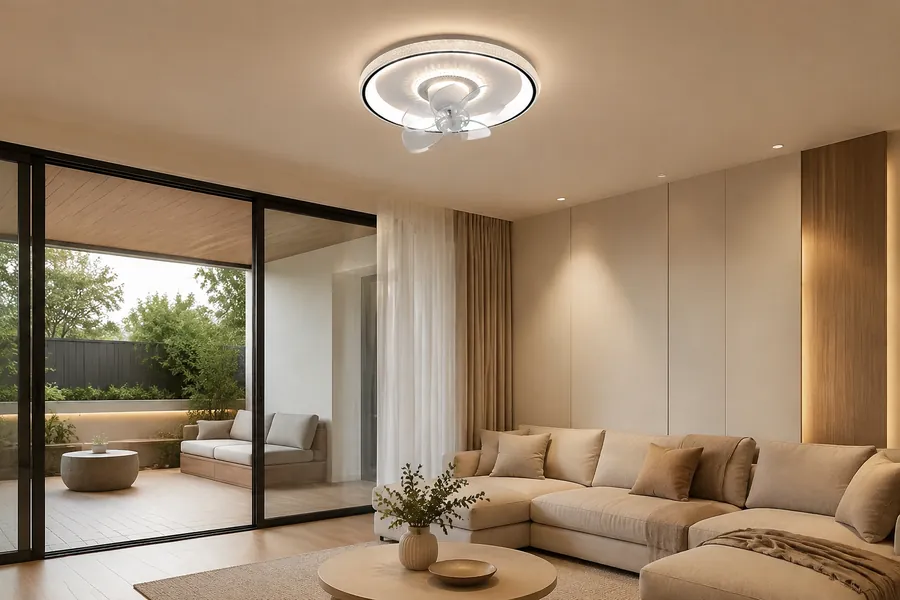
Decorative fan lights are useful when the fixture needs to be both functional and visible. They can replace a plain light in rooms where airflow is also part of comfort.
6-1. When is a decorative fan light better than a simple fixture?
It is better when the living room needs a central feature but the owner does not want a separate chandelier and fan. A decorative fan light can combine style, LED lighting and airflow in one controlled product.
A retractable fan light can suit rooms where the fan should look more like a light when not in use. This can be useful for modern apartments, lounges and hospitality-style living rooms.
6-2. What should buyers avoid with decorative models?
Avoid choosing only by appearance. Some decorative models look attractive but have weak airflow, noisy operation or a light that is too harsh for evening use.
Check blade movement, motor type, light wattage, diffuser quality, remote control and replacement support. For importers or project buyers, the supplier should also confirm packaging, spare parts and consistency across batches.
7. Should Living Rooms Use Separate Fans and Separate Lighting?
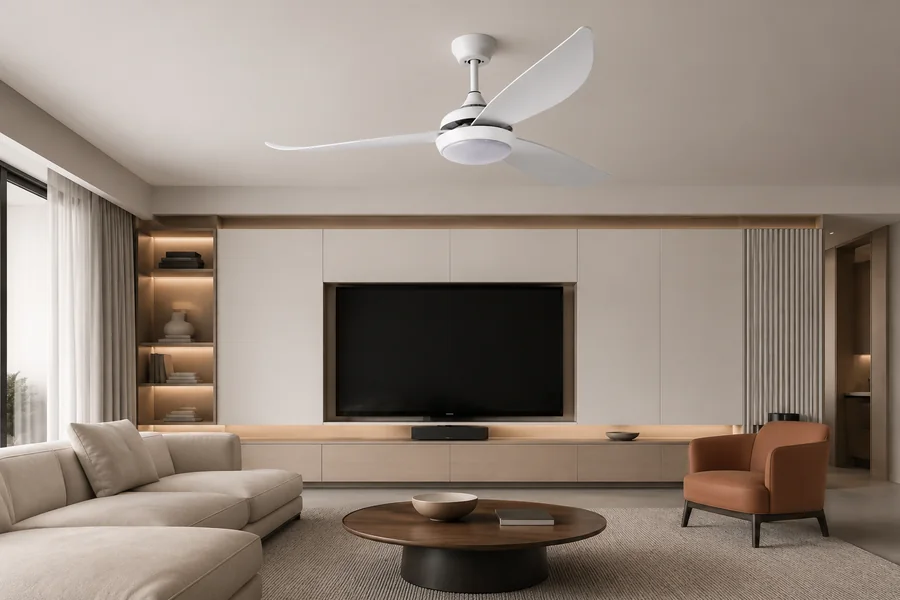
Separate fans and lighting can be the better solution when the room already has a strong lighting plan. This is common in larger living rooms, media rooms and interiors with recessed lights.
7-1. When is a fan without light cleaner?
A fan without light is cleaner when recessed lights, wall lights or a chandelier already provide enough brightness. In that case, the fan can focus on airflow without adding another light source.
A wood ceiling fan can work well in warm modern living rooms where lighting is handled separately. The wood finish can soften the ceiling and connect with floors, cabinets or furniture.
7-2. How do separate systems improve control?
Separate systems let users dim the lights, change scenes and run the fan independently. This is helpful in media rooms where lighting needs to be low but air movement still matters.
It also helps project planning. Designers can place recessed light where brightness is needed, then position the fan where airflow benefits the seating zone.
8. How Should Colour Temperature and Dimming Be Chosen?
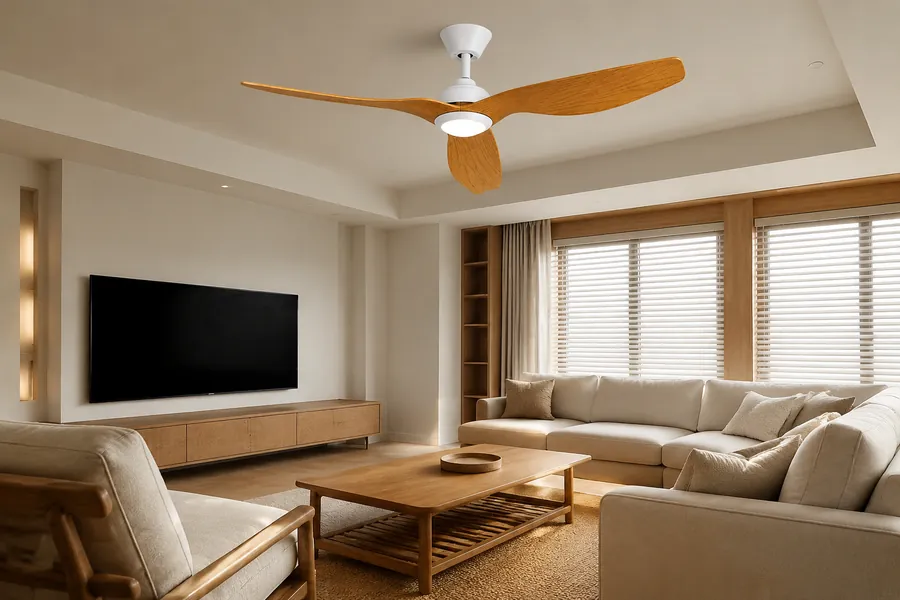
Colour temperature changes the mood of a living room more than many people expect. Brightness matters, but the warmth and control of the light matter just as much.
8-1. What colour temperature feels best in living rooms?
Warm white is usually best for evening comfort. Many living rooms feel better around 2700K to 3000K because the light feels softer and more relaxed.
Neutral white can be useful for cleaning, reading or daytime use. Cool white should be used carefully because it can make a lounge feel too sharp and less comfortable.
8-2. Why is dimming important?
Dimming allows one ceiling plan to serve different moods. The room may need strong light when guests arrive, medium light for family time and very soft light during a movie.
For ceiling fan lights, dimming should be smooth and easy to control. For recessed light systems, make sure the dimmer is compatible with the LED drivers to avoid flicker or noise.
9. How Do Manufacturers Check Living Room Ceiling Lighting Quality?
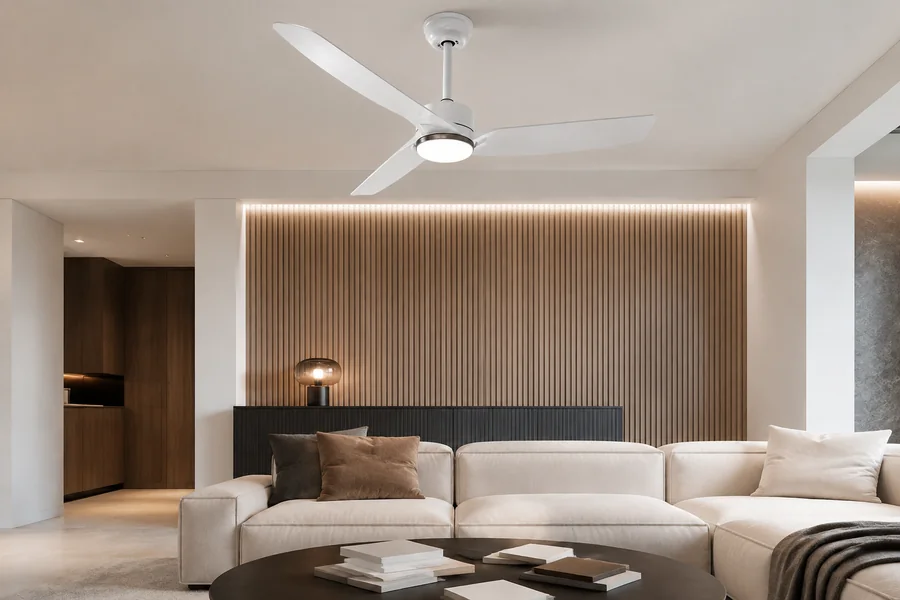
Good ceiling lighting ideas depend on real product quality. A beautiful fixture will disappoint if the LED flickers, the diffuser looks uneven, the motor is noisy or the finish is inconsistent.
9-1. What should be checked during product development?
For a ceiling fan light, manufacturers should check LED brightness, colour temperature, diffuser uniformity, motor noise, blade balance, remote control response and packaging protection.
As a ceiling fan light manufacturer, NEBOLA looks at both appearance and real installation behaviour. A living room fixture should look balanced in photos, but it also needs stable operation after shipping and installation.
9-2. Why can factory and testing images help buyers?
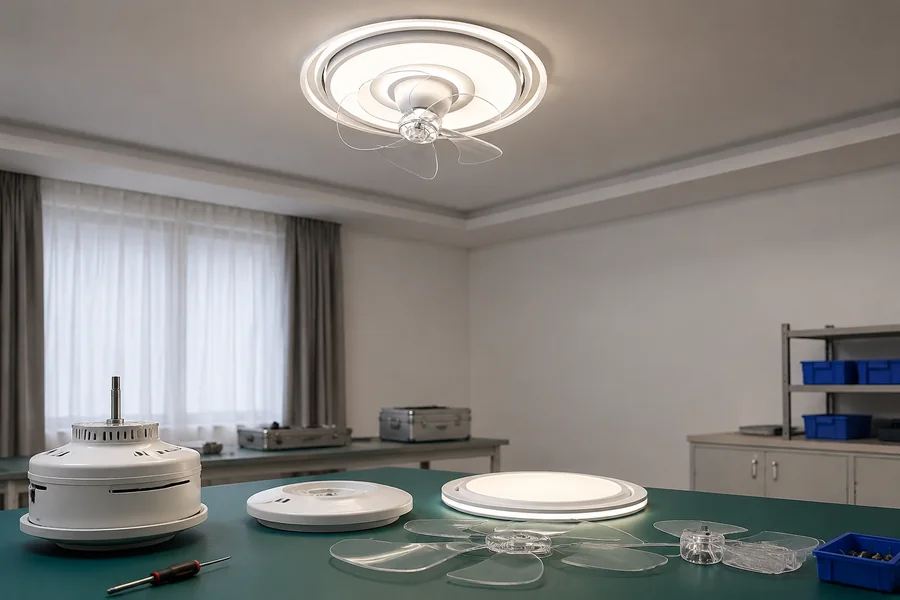
Factory and testing images help buyers understand whether a supplier can repeat the same quality at scale. They show assembly standards, inspection process and the practical details behind the product page.
For importers, wholesalers and project buyers, this is important. A sample can look good once, but batch production needs consistency in motor performance, LED colour, finish, screw alignment and packing.
10. What Final Checklist Helps Before Choosing Living Room Ceiling Lighting?
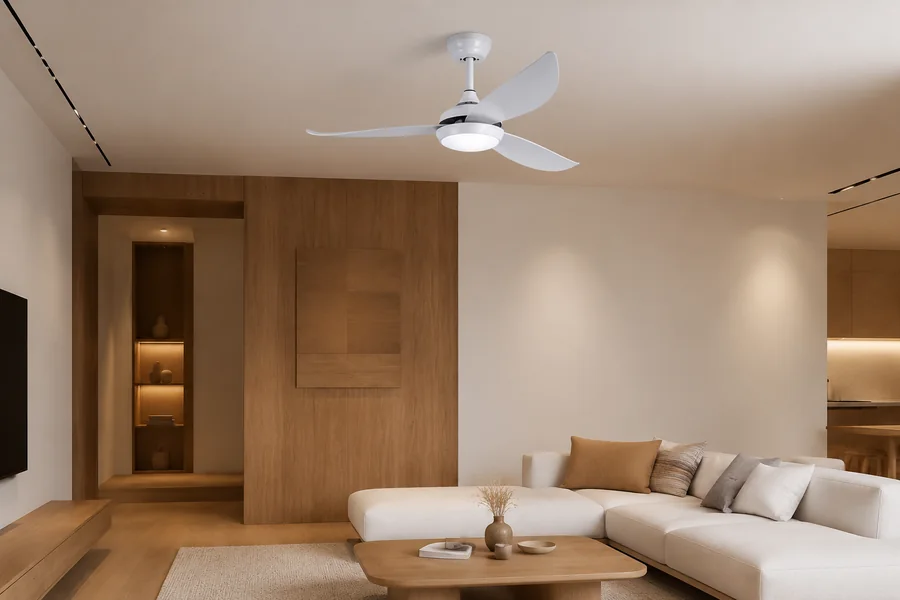
The best ceiling lighting ideas are not the most complicated ones. They are the ideas that fit the room, support daily habits and avoid costly mistakes.
10-1. What should homeowners check first?
Check room size, ceiling height, main seating position, TV glare, natural light, wiring point, dimming needs and whether airflow is required. Then choose between chandelier, recessed light, ceiling fan light or a mixed plan.
If you need airflow as well as light, review the living room fan options before deciding. If the room design itself still feels unclear, this guide to modern living rooms can help you start with layout and comfort first.
10-2. What should buyers confirm with suppliers?
Project buyers should confirm LED specifications, motor type, noise level, fixture size, installation method, certifications, carton protection, spare parts and after-sales support. A beautiful product photo is not enough.
Ask for real product details, installation images and testing information. For repeated living room projects, consistency matters as much as style.
If you are looking for a better ceiling fan light solution for your project, NEBOLA can provide one-stop support from product selection to customization. We focus on ceiling fan light R&D and manufacturing, helping brands, importers, and distributors find products that better match real space needs.
| Lighting Option | Best For | Watch Out For |
|---|---|---|
| Chandelier | Formal rooms and high ceilings | Drop height and glare |
| Recessed light | Modern rooms and low ceilings | Over-spacing or office-like brightness |
| Ceiling fan light | Rooms needing light and airflow | Noise, diffuser quality and control |
| Fan without light | Rooms with separate lighting | Fan position and blade scale |
| Mixed lighting plan | Open-plan living rooms | Too many focal points |
Need the Right Ceiling Fan for a Home, Project, or Commercial Space?
Tell us your space type, ceiling height, airflow needs, lighting options, certification direction, and order plan. We’ll help match the right solution.
Get a QuoteFAQ
Is a ceiling fan light good for a living room?
Yes, a ceiling fan light is good for a living room when the space needs both overhead brightness and airflow. It works best when the light is soft, the fan runs quietly and the fixture size matches the seating zone.
Should recessed lights be used with a chandelier?
Yes, recessed lights can be used with a chandelier if each layer has a clear job. The chandelier can be the visual feature, while recessed lights support general brightness or specific zones.
Is warm white lighting better for living rooms?
Yes, warm white lighting is usually better for living rooms because it feels softer and more relaxed. Neutral white can still be useful for cleaning or daytime tasks, especially if the system has dimming or colour adjustment.
Can a living room use only recessed lights?
Yes, a living room can use only recessed lights, but the result may feel flat if the lights are too evenly spaced or too bright. Add dimming, wall lights or lamps if the room needs more warmth.
Should a chandelier hang over the sofa?
No, a chandelier should not automatically hang over the sofa unless the ceiling height, seating layout and viewing angles support it. It should not block the TV, create glare or feel too low over people’s heads.
Is a fan without light better than a fan light?
Yes, a fan without light can be better when the living room already has recessed lights, wall lights or a chandelier. In that case, the fan can focus on airflow while the lighting system handles mood and brightness.