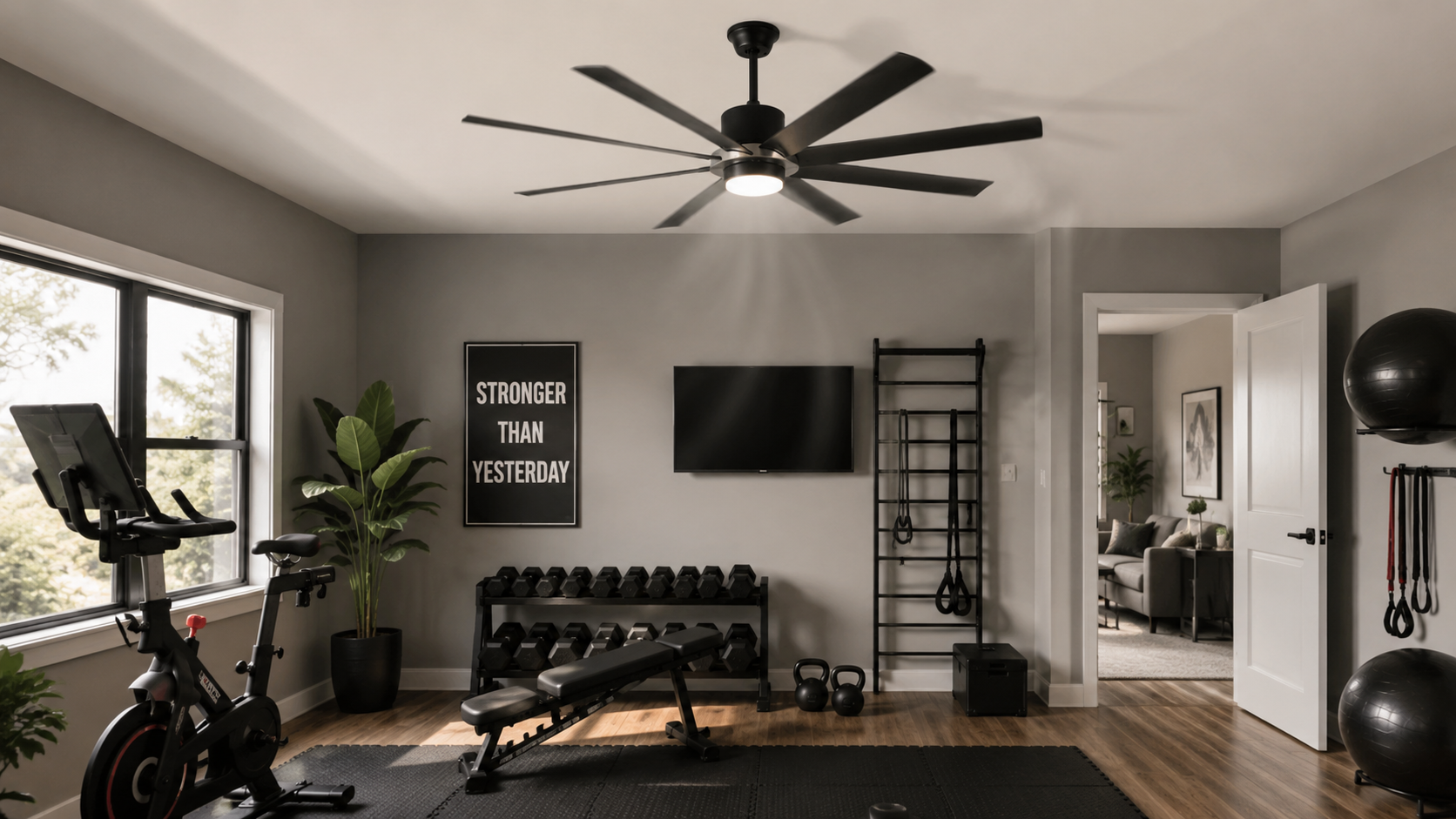


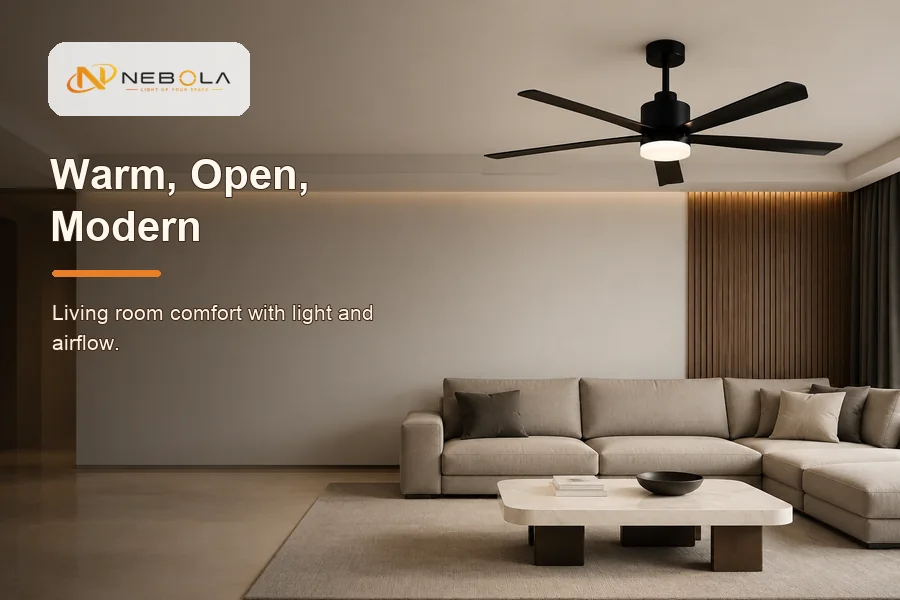
A modern living room in 2026 is not about making the room look expensive for one photo. It is about building a space that feels open, comfortable, easy to maintain and ready for real daily use.
The best living room design ideas now combine layout, lighting, airflow, texture, storage and one strong visual focus. If that focus is overhead, a well-chosen living room ceiling fan can support comfort while still feeling like part of the design.
1. What Should a Modern Living Room Solve First?
A living room has to serve more than one mood. It may be a family room in the morning, a work corner in the afternoon, a hosting space in the evening and a quiet lounge at night.
1-1. Why should comfort come before styling?
Styling gets attention, but comfort decides whether the room is used. A sofa that looks sharp but sits badly, a light that glares at the TV, or a fan that feels too strong will make the room less successful.
Start with the daily routine. Ask where people sit, how they watch TV, whether they read, how often guests visit and whether the room gets warm in the afternoon. The design should make those habits easier.
1-2. What does “modern” mean in 2026?
Modern living room design is becoming warmer and more practical. It still uses clean lines, but it is less cold than old minimalist rooms. Soft wood, matte finishes, calm colour, low visual clutter and better lighting are more useful than a showroom look.
The strongest modern rooms also have a clear ceiling plan. Instead of treating the ceiling as empty space, they use lighting, airflow and fixture scale to make the whole room feel balanced.
2. How Should the Seating Plan Shape the Room?
The seating plan controls the whole living room. Before choosing colour, rugs or a decorative fan light, decide how people will move and gather.
2-1. Should the sofa face the TV, window or conversation area?
It depends on the main use. If the living room is mostly for TV, the sofa needs a comfortable viewing angle and glare control. If it is mostly for conversation, the seating should face inward and leave enough room for people to move around.
For mixed-use rooms, avoid pushing every seat against the wall. A slightly floating sofa can make the room feel more planned and can help the ceiling fixture align with the real sitting zone.
2-2. How much walking space should be kept clear?
Clear circulation is what makes a room feel larger. Leave enough space between the sofa, coffee table, media unit and doorway so the room does not feel like a furniture maze.
As a simple rule, keep the main path obvious. When choosing a fan, use the room-by-room size guide to compare the seating zone with the full room size. A fan should serve where people actually sit, not just the geometric centre of the ceiling.
3. Which Colours Feel Modern in 2026?
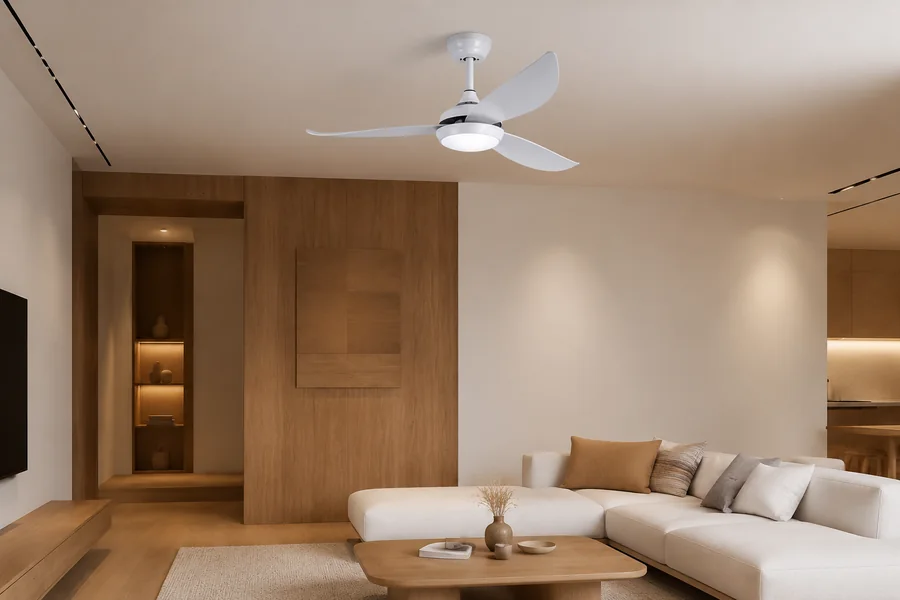
Colour trends are quieter now, but not dull. The best modern living room palettes use a calm base, one clear accent and texture to prevent the room from looking flat.
3-1. Are warm neutrals still useful?
Yes, warm neutrals are still useful because they make the room flexible. Soft white, warm grey, clay, oatmeal, muted green and pale wood can support many furniture styles without becoming too busy.
The key is contrast. If the walls, sofa and rug are all pale, add one stronger anchor such as a dark fan, a walnut table, a black lamp or a deeper textile. This gives the room shape.
3-2. How can inspiration stay practical?
Inspiration is useful, but it should be translated into your room size, ceiling height and lighting. Homes & Gardens’ living room trends show how real rooms use colour, layout and materials together, not as isolated decoration.
When using inspiration, copy the logic rather than the whole room. Notice whether the room is bright or shaded, narrow or open, low-ceiling or tall. Those conditions affect which colours and ceiling fixtures will work.
4. How Should Living Room Lighting Be Layered?
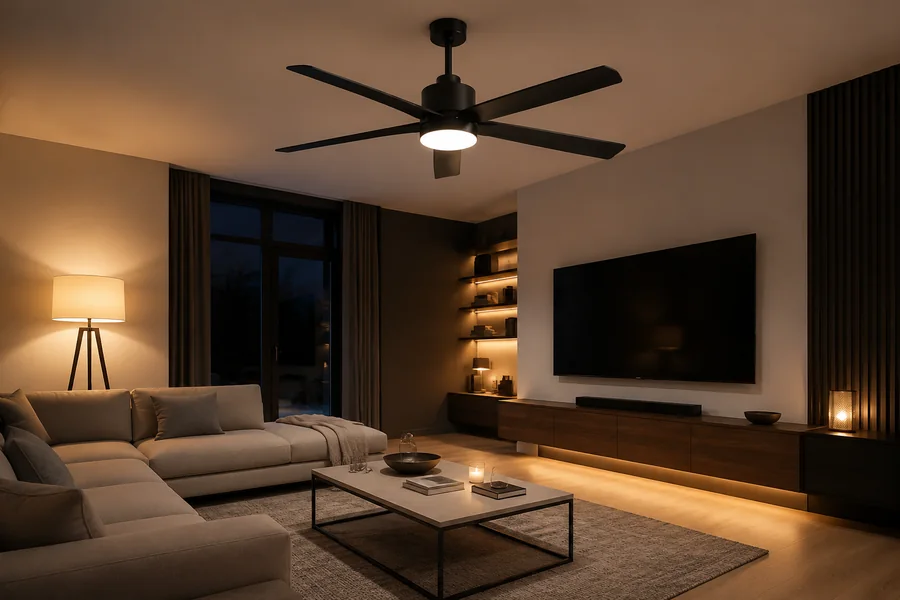
Modern living rooms should not depend on one bright ceiling light. A layered lighting plan makes the room more flexible and helps it change from daytime use to evening comfort.
4-1. What lighting layers does a living room need?
Most living rooms need ambient light, task light and accent light. Ambient light gives overall brightness, task light supports reading or work, and accent light adds depth around shelves, curtains or textured walls.
Ceiling lighting should not do every job. Even if the main fixture includes a fan and light, floor lamps, table lamps or wall lights can make the room feel softer and more complete.
4-2. When does a decorative fan light make sense?
A decorative fan light makes sense when the room needs both general light and airflow from the same central position. It can reduce ceiling clutter compared with separate fixtures.
The light still needs to be comfortable. Look for a diffuser that softens the LED, dimming or colour temperature options, and control that separates the fan speed from the light level.
5. Can a Statement Ceiling Fan Become the Focal Point?
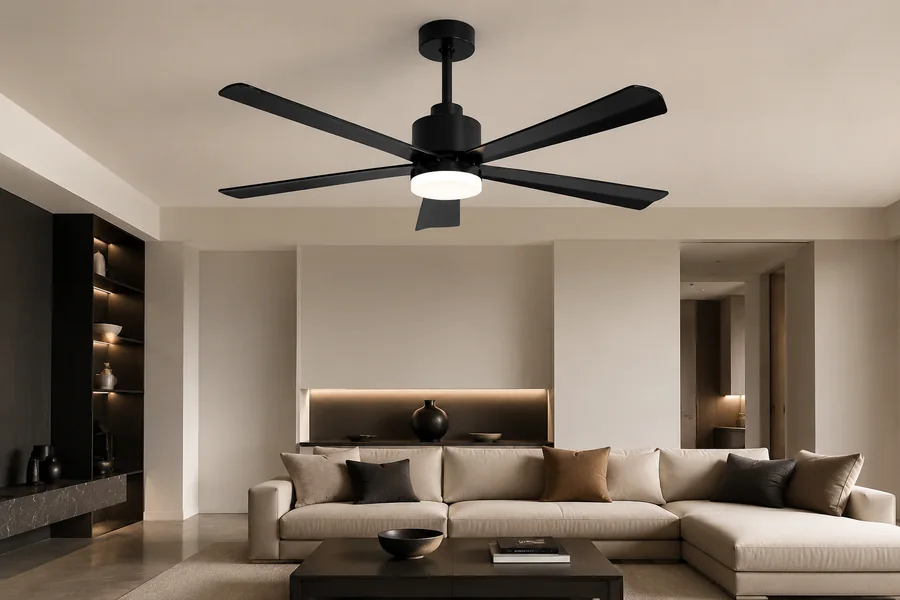
A statement ceiling fan can work beautifully in a modern living room, but it has to be intentional. It should feel like part of the furniture and lighting plan, not like an appliance added later.
5-1. When should the fan be bold?
A bold fan works best when the room has enough visual breathing room. If the sofa, rug, curtains and media wall are already strong, the ceiling fixture should be calmer. If the room is simple, a stronger fan can anchor the design.
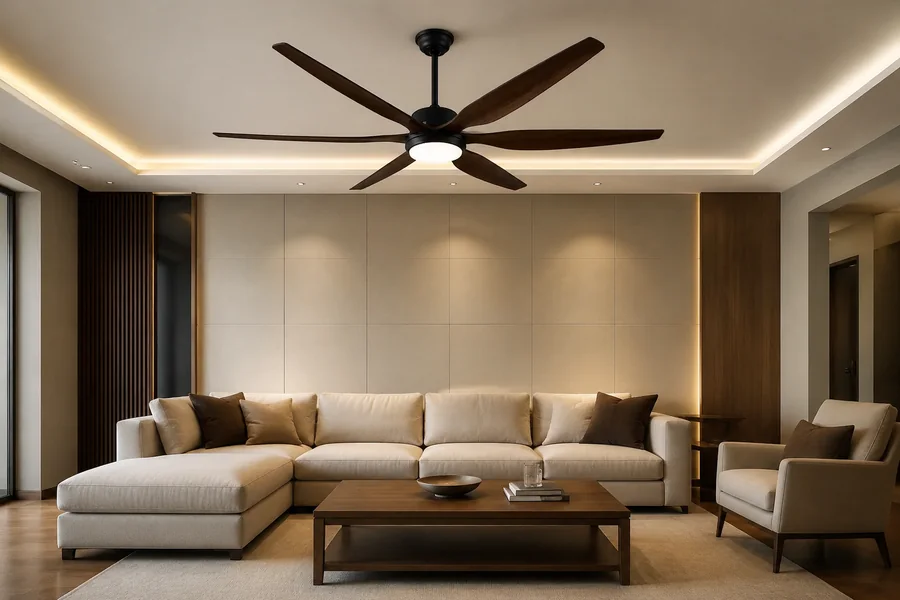
A black or dark-finish statement ceiling fan can suit modern, industrial, urban or high-contrast interiors. It should repeat another finish in the room, such as a lamp, table frame or window hardware.
5-2. How can the fan avoid looking too heavy?
Scale is the first control. A large room can handle a wider fan, but a small living room may need a lighter colour or slimmer blade profile.
Placement also matters. The fan should relate to the main seating zone and ceiling height. If it hangs too low, it can make the room feel compressed. If it is too small, it will look lost and may not move enough air.
Need the Right Ceiling Fan for a Home, Project, or Commercial Space?
Tell us your space type, ceiling height, airflow needs, lighting options, certification direction, and order plan. We’ll help match the right solution.
Get a Quote6. Which Materials Make the Room Feel Grounded?
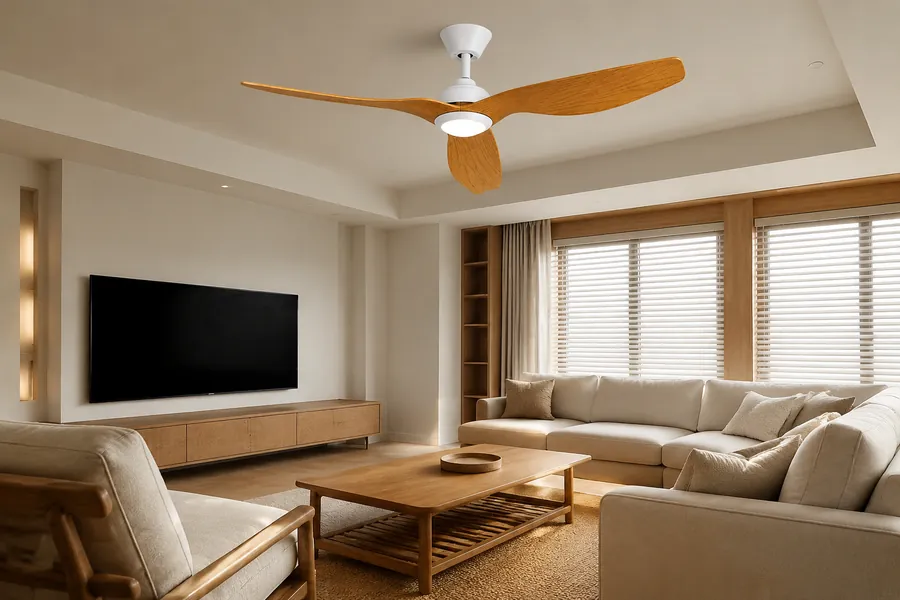
Materials decide whether a modern living room feels warm, cold, soft or heavy. In 2026, the best rooms use fewer materials but choose them better.
6-1. How should wood, metal and fabric work together?
Wood brings warmth, metal gives structure and fabric softens sound and mood. A balanced room might use wood flooring, a matte metal fan, linen curtains and a textured rug.
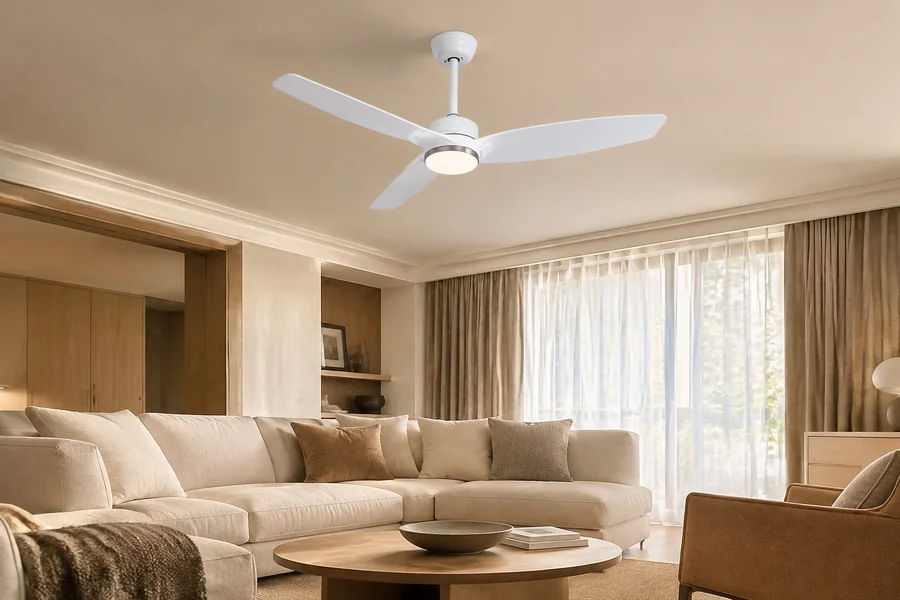
For quieter interiors, white ceiling fans can blend into pale ceilings and reduce overhead visual weight. They work especially well when the room already has wood, stone or darker furniture at eye level.
6-2. Why do blade materials and finishes matter?
Fan blades are part of the room’s material story. ABS, wood and composite finishes all read differently in a living room, even before airflow is considered.
The blade materials guide is useful when choosing between clean modern blades, warmer wood looks and more durable finishes. A material that suits the room style but is hard to maintain may not be the best long-term choice.
7. How Should Media Walls and Storage Be Handled?
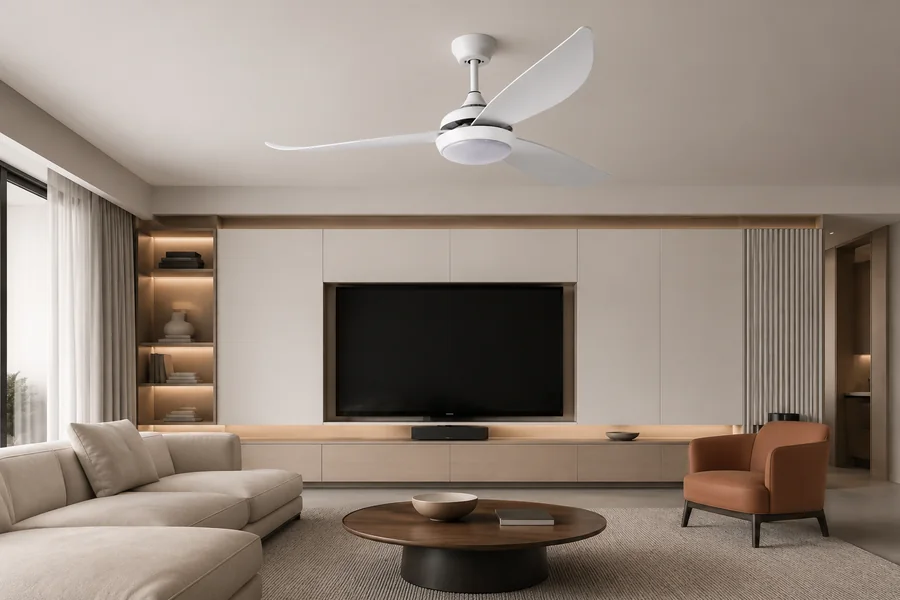
The media wall is often the busiest part of the living room. Modern design works best when this wall feels organised rather than packed with objects.
7-1. Should the TV wall be the main feature?
Not always. A TV can be important without becoming the only visual focus. Use simple cabinetry, low storage, textured wall panels or soft backlighting to make the media wall feel calmer.
If the ceiling fan is the main design statement, keep the TV wall restrained. If the media wall is bold, choose a fan finish and light shape that support it quietly.
7-2. How can storage reduce visual clutter?
Closed storage is usually better for daily living rooms. It hides remotes, chargers, blankets, toys and extra cables. Open shelving can still work, but it needs space between objects.
Storage should also respect airflow. Tall bookcases, beams or dropped ceiling features near the fan can interrupt visual balance and may affect how the fan feels in the room.
8. How Can Open-Plan Living Rooms Stay Connected?
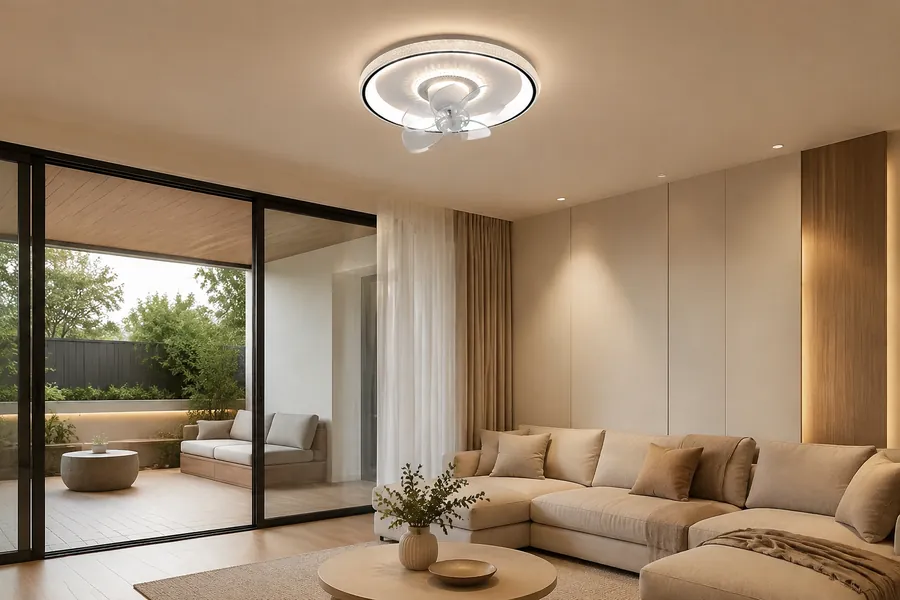
Open-plan rooms need connection without sameness. The living area, dining area and kitchen should feel related, but each zone still needs a purpose.
8-1. Should one fixture control the whole open-plan space?
No, one fixture rarely solves a whole open-plan space. A living zone may need a larger fan, while the dining zone may need more focused lighting and the kitchen may need stronger task light.
Use finish repetition to connect zones. For example, a black fan in the living zone can relate to black dining chairs or cabinet handles without every fixture being identical.
8-2. What if the living room opens to a patio?
Indoor-outdoor living needs a careful transition. The room may look best when the living room fan, patio light and window hardware share a finish or visual weight.
For covered outdoor edges, exterior ceiling lights can support a smoother transition from the living room to a balcony, veranda or sheltered patio. Keep outdoor-rated product requirements separate from indoor styling choices.
9. What Styling Details Make the Room Feel Finished?
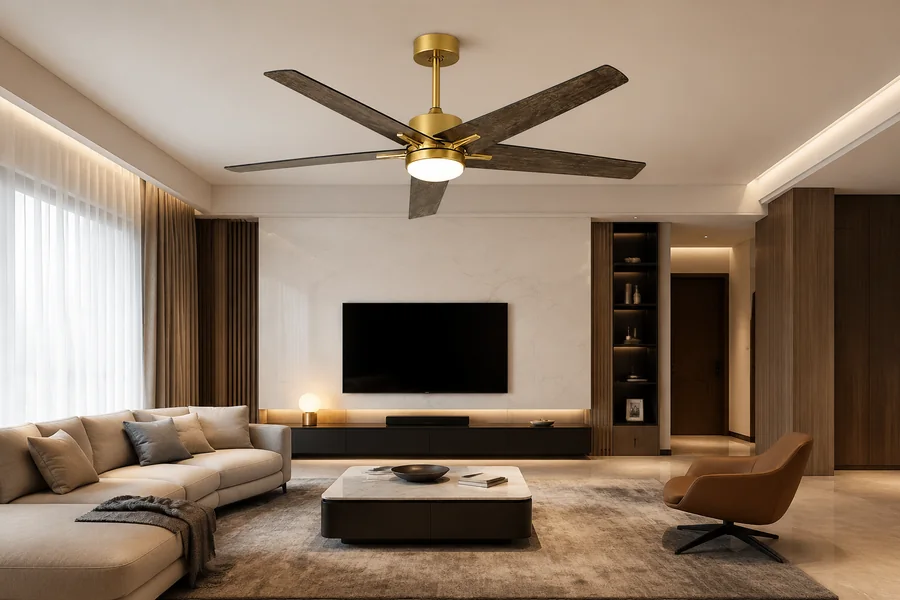
Finishing details should support the main design rather than compete with it. A modern living room feels best when the eye can rest.
9-1. How should rugs, tables and curtains be chosen?
The rug should be large enough to connect the seating. A rug that is too small can make the room feel broken into pieces. Coffee tables should leave movement space and relate to the sofa height.
Curtains can soften the room and improve acoustic comfort. In 2026, layered window treatments, warm white sheers and textured fabrics are often more comfortable than harsh roller shades alone.
9-2. What should be avoided?
Avoid too many small decorative items, too many finishes and too many focal points. A room with a bold fan, busy rug, patterned curtains, heavy shelves and bright artwork can feel restless.
Choose one or two clear statements. If the ceiling fan is the statement, let the surrounding details be calmer. If the sofa colour is the statement, choose a simpler ceiling fixture.
10. What Final Checklist Helps Before Buying Fixtures?
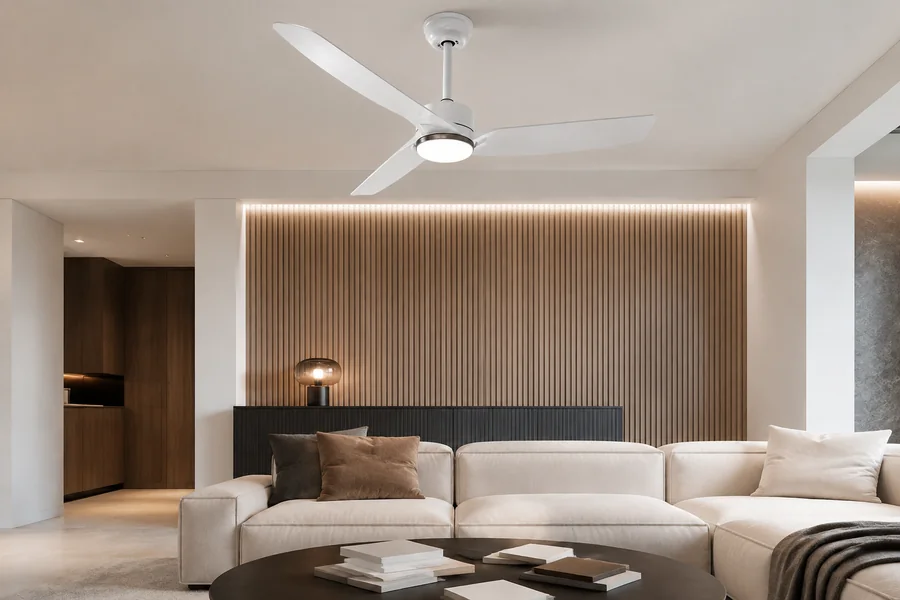
Before buying furniture, lighting or a ceiling fan, pause and check the room as a whole. A modern room fails when each item is chosen separately.
10-1. What should homeowners check first?
Check the room size, ceiling height, sofa position, media wall, natural light, wiring point, fixture depth, fan blade span, light output and control method.
If the fan has a light, check whether the light is soft enough for evening use. If the fan is decorative, check whether it still has the airflow and motor quality needed for daily comfort.
10-2. What should project buyers confirm?
Project buyers should confirm consistency across rooms or units. Finish colour, remote control, motor noise, LED quality, packaging, spare parts and installation instructions matter when the same fixture is repeated many times.
For modern living room projects, NEBOLA can help buyers compare fan size, blade finish, lighting function and OEM/ODM direction before sampling. A room feels better when comfort and design are planned together.
For more living room fan styles, compare finishes, blade spans and lighting options in the living room fan collection before choosing the final fixture.
| Design Check | Why It Matters | Best 2026 Direction |
|---|---|---|
| Seating layout | Defines the real comfort zone | Place the main fixture around how people sit |
| Colour palette | Controls mood and flexibility | Warm neutrals with one clear accent |
| Ceiling fixture | Affects light, airflow and style | Choose a balanced fan light, not an afterthought |
| Storage | Reduces visual noise | Hide daily clutter and keep shelves edited |
| Material mix | Makes the room feel warm or cold | Use fewer finishes with better texture |
Need the Right Ceiling Fan for a Home, Project, or Commercial Space?
Tell us your space type, ceiling height, airflow needs, lighting options, certification direction, and order plan. We’ll help match the right solution.
Get a QuoteFAQ
Is a statement ceiling fan suitable for a modern living room?
Yes, a statement ceiling fan can suit a modern living room when the room has enough scale and the fan finish repeats elsewhere in the space. It should feel intentional, not randomly added.
Should a modern living room use layered lighting?
Yes, a modern living room should use layered lighting because one central fixture cannot support every activity. Ambient light, task light and accent light make the room more flexible.
Can white ceiling fans look modern?
Yes, white ceiling fans can look modern when they match a pale ceiling, clean wall colour or minimalist furniture. They are useful when the design needs airflow without a strong overhead focal point.
Is a decorative fan light better than a plain ceiling fan?
Yes, a decorative fan light can be better when the room needs a ceiling focal point and general lighting from the same position. A plain ceiling fan may be better when the room already has strong lighting layers.
Should open-plan living rooms use the same finish everywhere?
No, open-plan living rooms do not need the exact same finish everywhere. They usually look better when finishes are related, repeated in small ways and balanced across different zones.
Are black ceiling fans too bold for living rooms?
No, black ceiling fans are not too bold when they are used with intention. They work best in rooms with other dark accents, enough ceiling height and a simple surrounding palette.