

Small bedroom ideas should do more than make the room look tidy for a photo. A small bedroom needs space to sleep, move, store clothing, use light comfortably and keep the ceiling from feeling crowded. The best small bedroom design choices make the room feel calmer, taller and easier to live in.
If the room also needs air movement, start with the NEBOLA bedroom ceiling fan guide so lighting, airflow, fixture depth and ceiling height are planned together.
1. What Makes a Small Bedroom Feel Bigger?
A small bedroom feels bigger when the eye can move easily through the space. This depends on layout, colour, furniture scale, storage and ceiling fixtures.
1-1. Why does visual breathing room matter?
Visual breathing room means there are clear areas of wall, floor and ceiling that are not overloaded. When every surface is full, the room feels smaller even if the furniture technically fits.
Start by protecting the walking path around the bed. If a person has to turn sideways to move, the room will feel tight every day.
1-2. What should be removed first?
Remove furniture that has no clear function. Extra chairs, wide nightstands, deep dressers and bulky floor lamps often make small rooms feel crowded. Replace them with wall-mounted or slim alternatives where possible.
Clutter also shrinks a room visually. Before buying new decor, clear surfaces and check what storage is actually needed.
2. How Should You Choose the Bed Size and Position?
The bed is the largest object in most bedrooms, so its size and position decide the whole room. A small bedroom can still feel comfortable if the bed is placed with care.
2-1. Should the bed always be centred?
No, the bed does not always need to be centred. In small rooms, symmetry is less important than usable space. A slightly off-centre bed may allow a wardrobe door to open, create a better walking path or fit a desk.
What matters is that the bed feels intentional. Use bedding, wall colour or lighting to make an off-centre bed look planned rather than squeezed in.
2-2. How much walking space is enough?
Aim for comfortable access on at least one side of the bed, and keep the main route from the door clear. If two people use the room, both sides should be considered, even if one side is narrower.
Avoid placing a deep nightstand where movement is already tight. A floating shelf or wall sconce can keep the bedside useful without taking floor area.
3. Which Colours Help a Small Bedroom Feel Open?
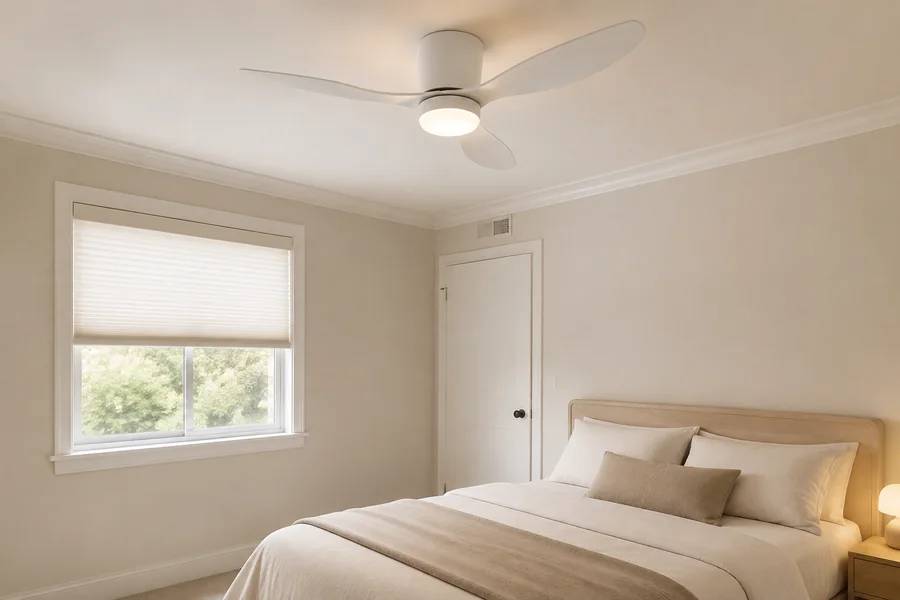
Colour changes how the room’s edges feel. Small rooms usually benefit from calm, connected colour choices rather than sharp contrast everywhere.
3-1. Are white bedrooms always best?
No, white bedrooms are not always best, but light colours often help. Warm white, soft grey, pale green, gentle beige and muted blue can reflect light while still feeling restful.
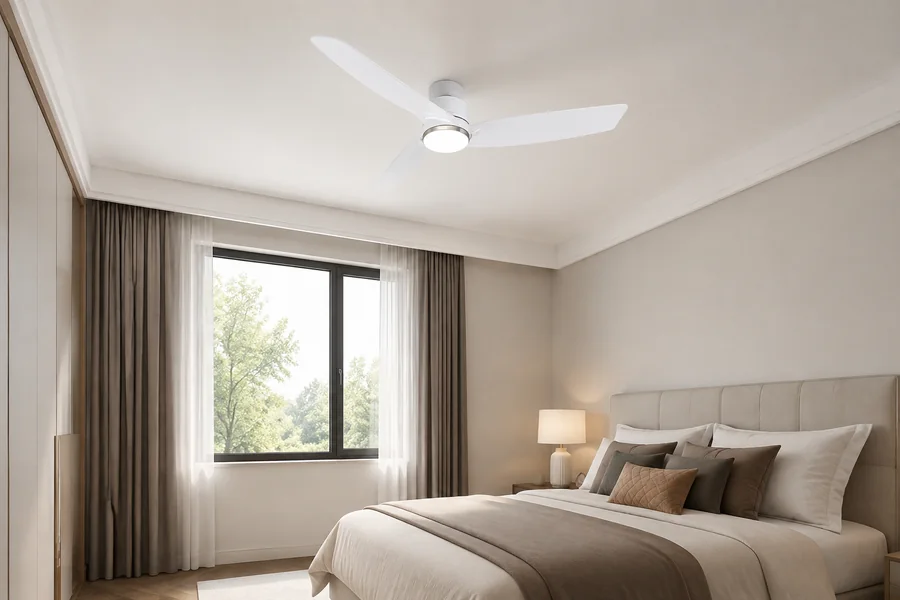
If you choose a white fan or ceiling fixture, it can blend into a pale ceiling. A white ceiling fan is often useful in small rooms because it reduces visual weight overhead.
3-2. Can dark colours work in small bedrooms?
Yes, dark colours can work when used with control. A dark headboard wall can add depth, but the ceiling, bedding and storage should stay balanced so the room does not feel boxed in.
Use dark tones as a feature rather than covering every surface. The goal is depth, not heaviness.
4. How Should Lighting Be Planned in a Small Bedroom?
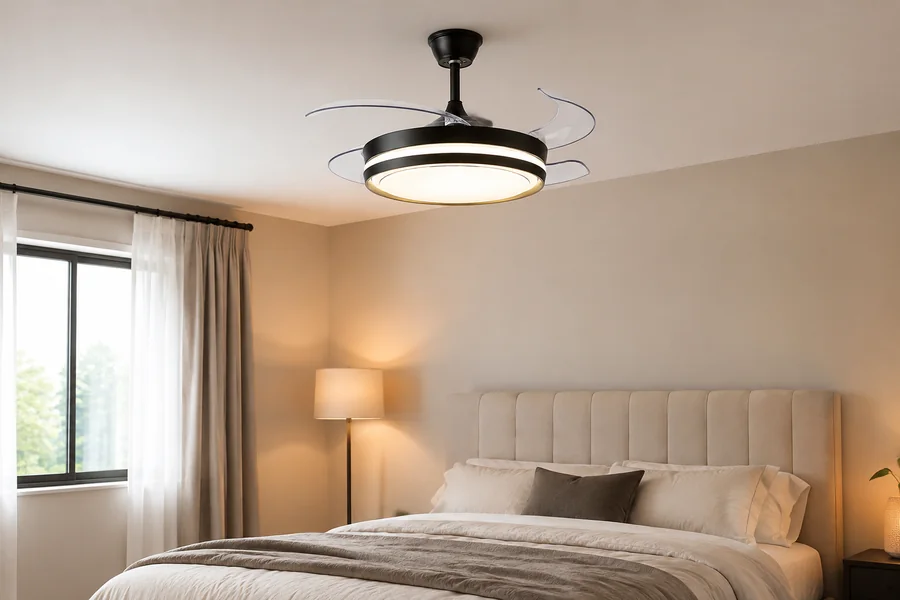
Lighting can make a small bedroom feel larger or smaller. Poor lighting creates dark corners and harsh glare, while layered light gives the room more depth.
4-1. Why is one ceiling light not enough?
One ceiling light can make the room look flat. It may brighten the middle while leaving wardrobes, corners and bedside areas uncomfortable. Layered lighting helps the room feel more flexible.
Use a ceiling light for general brightness, bedside lighting for reading and a softer lamp or low setting for evening. The NEBOLA bedroom lighting guide explains this layering logic in more detail.
4-2. When is a flush mount ceiling fan light useful?
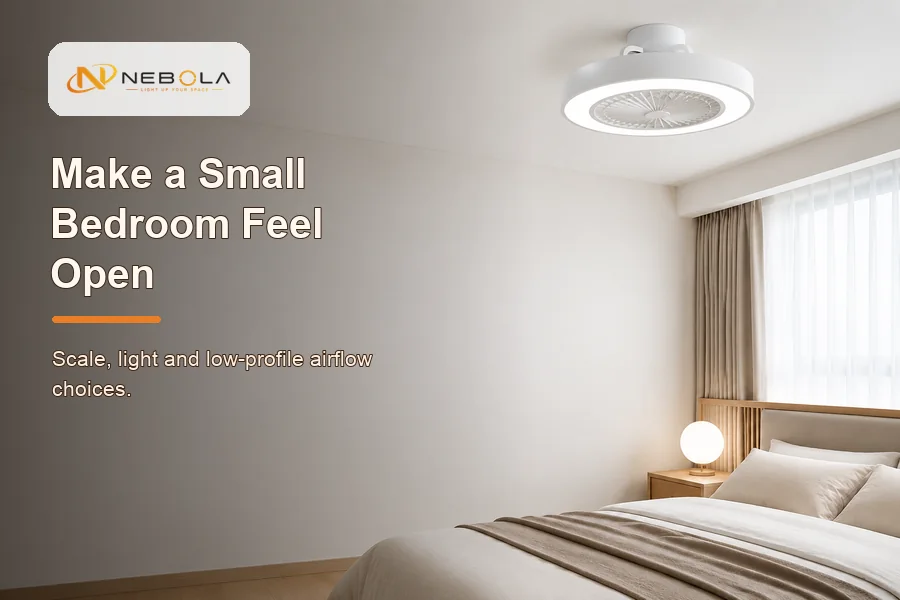
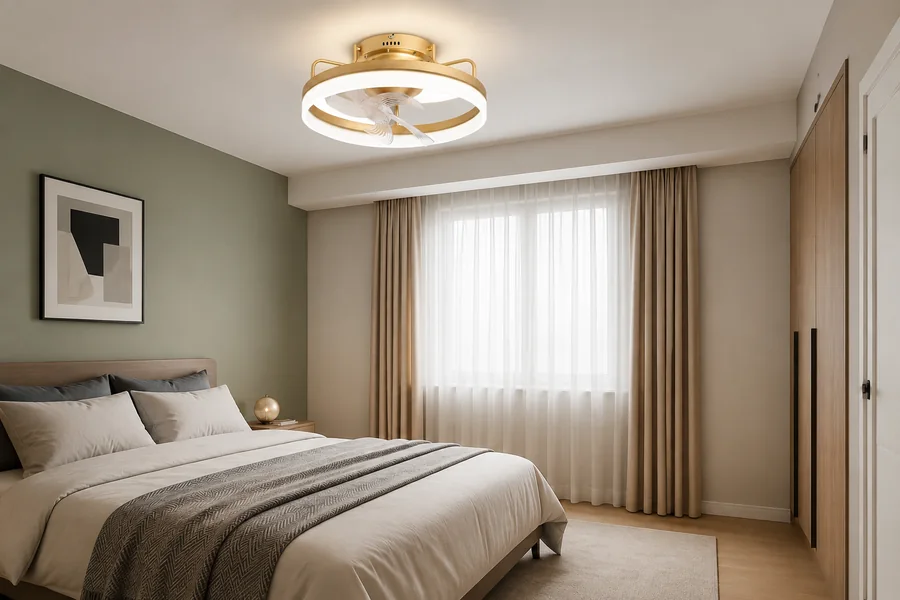
A flush mount ceiling fan light is useful when the bedroom has one central ceiling point and limited headroom. It combines lighting and airflow without adding a floor fan or bulky pendant.
An air multiplier flush fan can suit compact rooms where a shallow body, dimmable light and low visual weight matter.
5. How Can Ceiling Fixtures Make the Room Feel Taller?
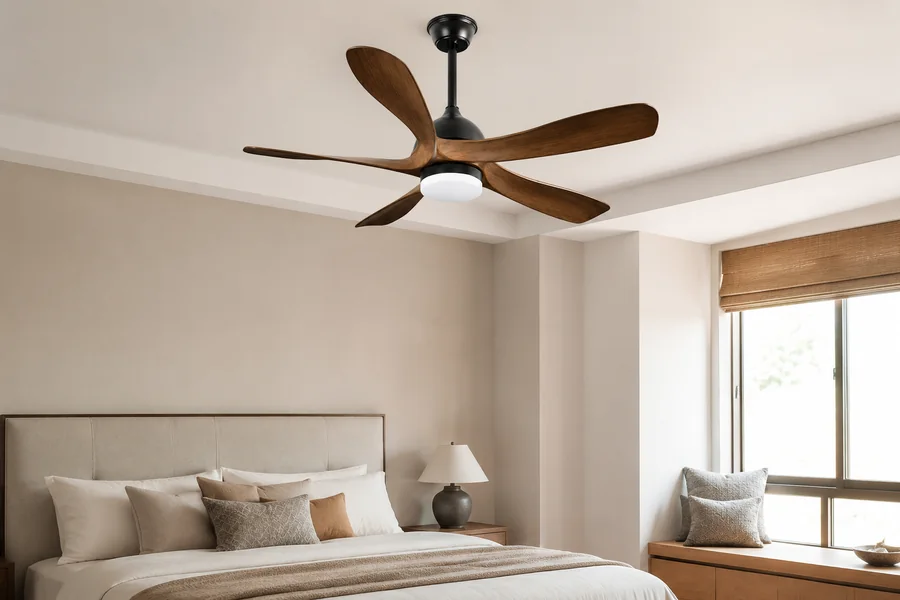
Ceiling fixtures affect perceived height. A fixture that hangs too low can make the room feel compressed, even if there is enough floor space.
5-1. Why does fixture depth matter?
Fixture depth is the distance from ceiling to the lowest visible point. In a small bedroom, even a few extra inches can change the feel of the room. A deep pendant may look stylish but can make the ceiling feel closer.
Check the total installed height before choosing any fan or light. Product photos do not always show how the fixture feels in a real bedroom.
5-2. What is the role of a low profile fan?
A low profile fan keeps the fixture close to the ceiling while still moving air. This makes it useful in small bedrooms where airflow matters but a standard downrod fan would look too low.
A low-profile bedroom fan can keep the room open while giving both light and air movement.
Need the Right Ceiling Fan for a Home, Project, or Commercial Space?
Tell us your space type, ceiling height, airflow needs, lighting options, certification direction, and order plan. We’ll help match the right solution.
Get a Quote6. What Storage Ideas Save the Most Space?
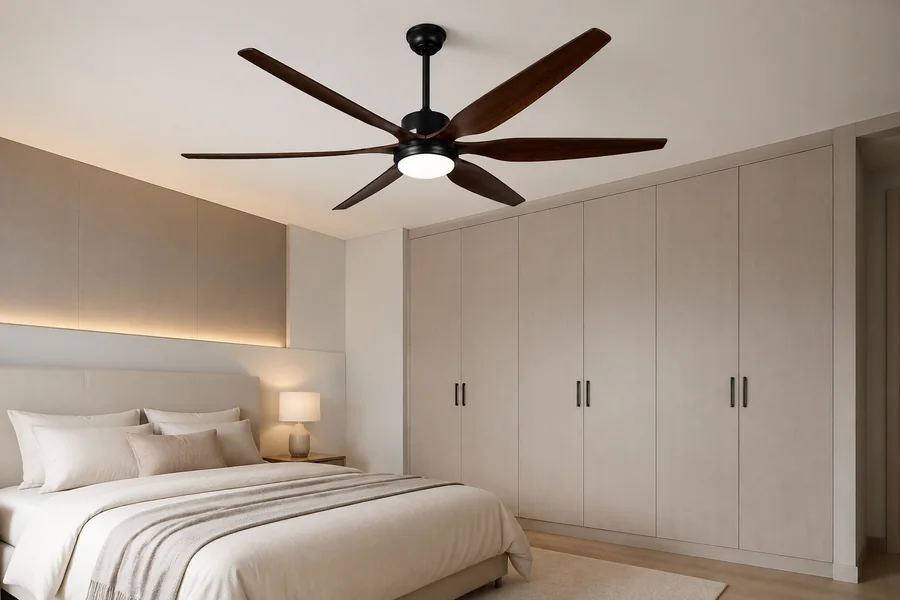
Storage should reduce visual clutter instead of adding more furniture. In a small bedroom, storage has to work hard without looking heavy.
6-1. Should storage go vertical?
Yes, vertical storage is often better because it uses wall height instead of floor area. Tall wardrobes, high shelves and over-door organisers can help, but they should still look clean.
Avoid filling every wall. Use vertical storage where it supports the room, then leave some wall space open so the room can breathe.
6-2. How can the bed provide storage?
Beds with drawers, lift-up storage or shallow under-bed boxes can remove the need for extra dressers. This is useful when the room lacks closet space.
Keep under-bed storage organised. If it becomes a messy hidden area, daily life still feels cluttered even though the clutter is out of sight.
7. How Should Furniture Scale Be Controlled?
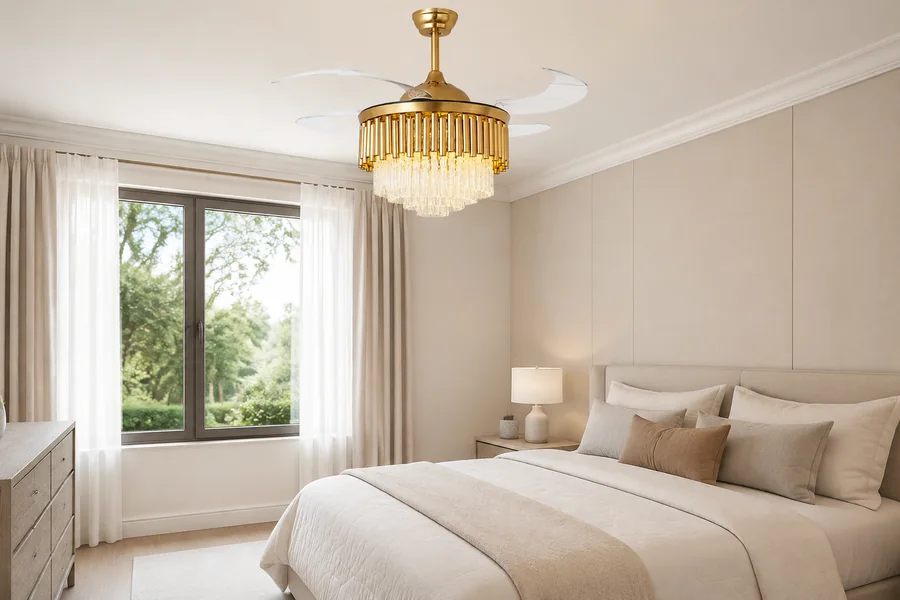
Small bedrooms need furniture that matches the room’s proportions. Oversized furniture makes the room feel crowded, while furniture that is too tiny can look temporary.
7-1. Which furniture pieces should be slim?
Nightstands, dressers, desks and benches should be slim enough to keep movement clear. Choose pieces with legs or wall-mounted shapes when possible because visible floor space helps the room feel lighter.
Do not choose furniture only by storage volume. A deep dresser may hold more, but it can make the room harder to use.
7-2. Can one large feature still work?
Yes, one large feature can work if the rest of the room is quiet. A tall headboard, one strong artwork or a bigger bed can feel intentional. The problem comes when every item tries to be a feature.
For bigger bedrooms or connected suites, a 66 inch wood fan light belongs in larger spaces, not a tight small bedroom. Scale should follow the room, not the product photo.
8. How Can Mirrors and Textiles Help?
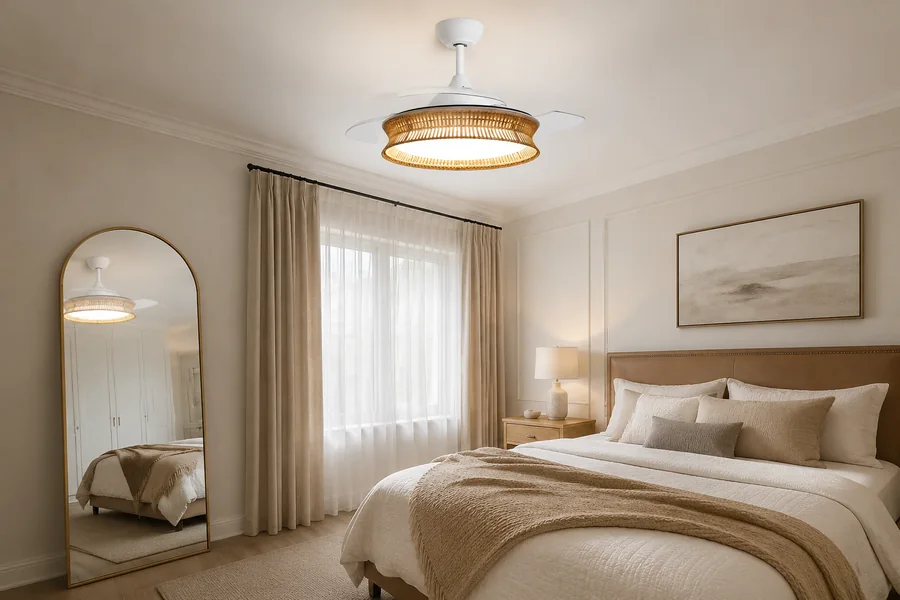
Mirrors and textiles can change how a small bedroom feels, but they need restraint. Too many reflective or soft elements can become busy.
8-1. Where should mirrors go?
Mirrors work best when they reflect light, a clean wall or a calm view. A mirror opposite clutter will double the clutter. A mirror near a window can make the room feel brighter.
Use mirror size carefully. A full-length mirror can be practical, but a very ornate frame may feel too heavy in a compact room.
8-2. Which textiles make the room feel larger?
Use bedding, curtains and rugs in connected tones. Long curtains hung near the ceiling can make the wall feel taller, while a rug that is too small can make the floor feel chopped up.
Good Housekeeping’s bedroom design coverage notes that scale and thoughtful details can change how polished a bedroom feels; its bedroom decor guide is a useful external reference for seeing how small rooms can still feel considered.
9. What Small Bedroom Mistakes Should You Avoid?
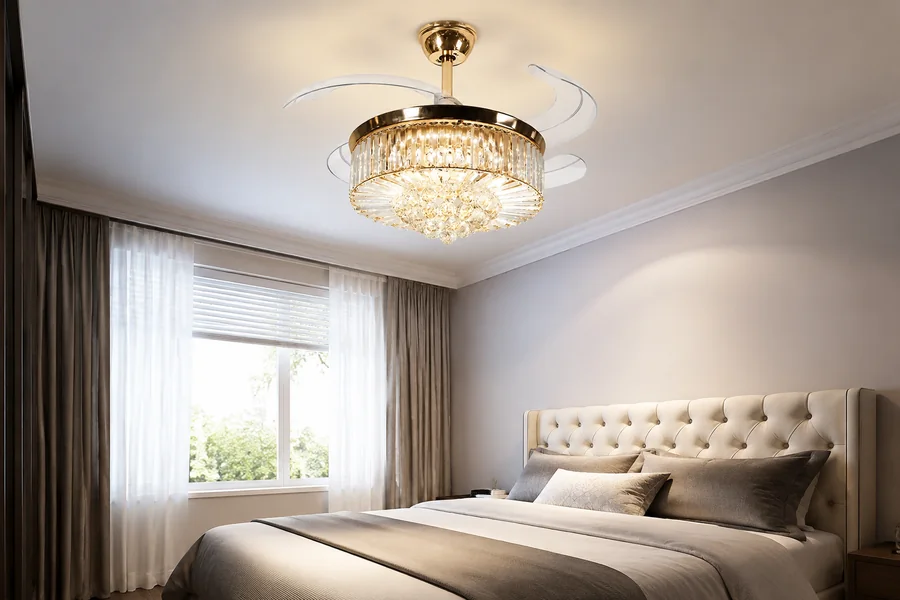
Most small bedroom mistakes come from trying to solve every problem with more furniture or stronger decoration. The better approach is usually subtraction first.
9-1. Is using too many small items a mistake?
Yes, too many small items can make the room feel cluttered. Many tiny baskets, lamps, shelves and decorations create visual noise. Fewer, better-sized pieces usually feel calmer.
Use trays, closed boxes and simple bedside storage to group daily objects. The room should not look like every inch is working too hard.
9-2. Can lighting make a small room feel worse?
Yes, poor lighting can make a small room feel worse. Harsh overhead light creates glare, while dark corners make the room feel smaller. A ceiling fan with LED light can help when it offers soft diffusion and dimming.
Avoid exposed bulbs, overly cool colour temperature and fixtures that hang too low above the bed.
10. What Final Checklist Makes a Small Bedroom Feel Bigger?
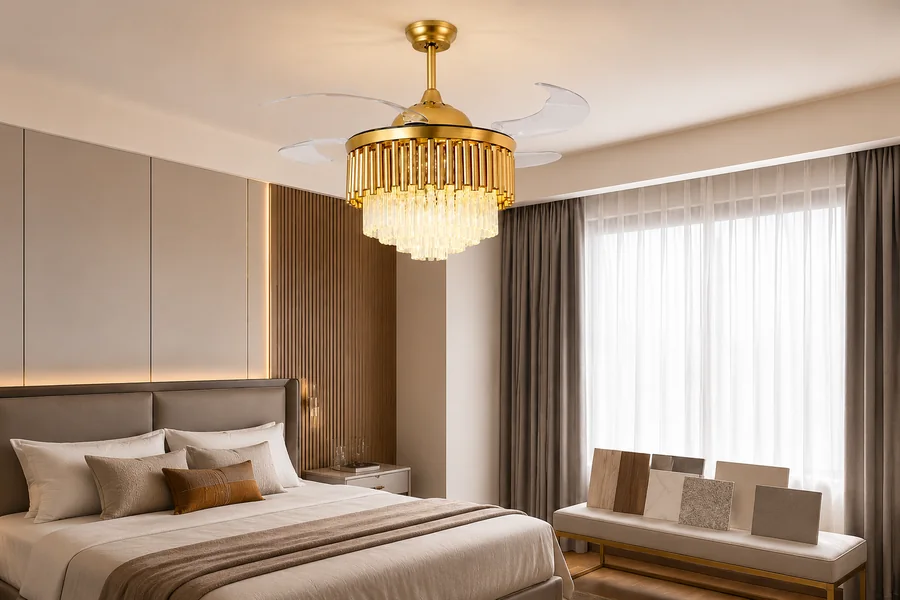
A small bedroom feels bigger when the layout, storage, lighting and ceiling fixture all support the same goal: less visual pressure and better daily use.
10-1. What should homeowners check first?
Check the bed position, walking path, wardrobe access, fixture depth, light glare, storage gaps and airflow needs. Then remove one item from the room before adding another.
If airflow and lighting both matter, compare a flush mount ceiling fan light with a pendant or simple ceiling light. The right low profile fan can make the ceiling feel cleaner than two separate products.
10-2. What should project buyers confirm?
Project buyers should confirm room size ranges, ceiling height, light output, fan depth, finish consistency, packaging and installation instructions. Small bedrooms are sensitive to fixture scale, so dimensions must be clear.
For a broader bedroom design plan, compare NEBOLA’s 2026 bedroom ideas and the previous guide on fan light vs pendant light. Then return to the NEBOLA ceiling fan for bedroom category to choose a fixture that matches the actual room.
Need the Right Ceiling Fan for a Home, Project, or Commercial Space?
Tell us your space type, ceiling height, airflow needs, lighting options, certification direction, and order plan. We’ll help match the right solution.
Get a QuoteFAQ
Can small bedroom ideas make a room feel bigger without renovation?
Yes, small bedroom ideas can make a room feel bigger without renovation by improving layout, reducing clutter, using lighter colours and choosing shallower ceiling fixtures. The room may not gain square footage, but it can feel calmer and easier to use.
Is a flush mount ceiling fan light good for small bedrooms?
Yes, a flush mount ceiling fan light can be good for small bedrooms because it combines light and airflow while staying close to the ceiling. It should still be correctly sized so it does not look too large over the bed.
Should a small bedroom use a low profile fan?
Yes, a small bedroom should consider a low profile fan when ceiling height is limited and airflow is needed. A low profile fan helps avoid the crowded feeling that can come from deeper fixtures or long downrods.
Are white ceiling fans better for small rooms?
Yes, white ceiling fans are often better for small rooms because they blend into pale ceilings and reduce visual weight. Black or wood finishes can still work, but they should be chosen as deliberate accents.
Can a large ceiling fan work in a small bedroom?
No, a large ceiling fan is usually not suitable for a small bedroom. It can overpower the ceiling, create uncomfortable airflow and make the room feel lower, even if the product itself is attractive.
Should small bedrooms avoid pendant lights?
No, small bedrooms do not always need to avoid pendant lights. Compact bedside pendants can save nightstand space, but a large central pendant can make the room feel lower and more crowded.