

Choosing a living room ceiling fixture is not only a style decision. The fixture controls the room’s main brightness, visual balance, ceiling comfort and, in many homes, the way air moves through the seating area.
If your living room also needs air movement, compare options in the living room ceiling fan collection before deciding whether the centre fixture should be a plain light, a ceiling fan light or a fan without light.
1. Why Should the Ceiling Fixture Start With the Room Function?
A living room ceiling fixture should support the way the room is used. A room for TV, guests and reading does not need the same fixture as a quiet lounge or an open-plan family room.
1-1. How does the seating zone guide the fixture?
The main fixture should relate to the seating zone, not only to the geometric centre of the ceiling. If the sofa sits to one side, a perfectly centred fixture may still feel wrong because it does not support the actual activity area.
Start with the largest furniture pieces. Mark the sofa, coffee table, TV wall and walkways, then decide where overhead light or airflow should land. This avoids the common mistake of buying a beautiful fixture that looks disconnected from the room.
1-2. Why should daily habits matter?
Some living rooms need bright light for cleaning and family activity. Others need softer light for evening relaxation. If one room does both, the fixture needs dimming or must work with separate lamps and recessed lights.
A fixture that only looks good in a product photo may feel harsh at night. The better choice is the one that supports daily routines with comfortable brightness, quiet operation and easy control.
2. How Does Ceiling Height Limit Fixture Choices?
Ceiling height decides how much visual and physical space a fixture can take. A low room usually needs a closer profile, while a tall room can carry a larger decorative fixture.
2-1. What works best for lower ceilings?
Low ceilings normally suit flush mount lights, low-profile ceiling fan lights or compact semi-flush fixtures. The goal is to keep the ceiling open and avoid anything that hangs into the room.
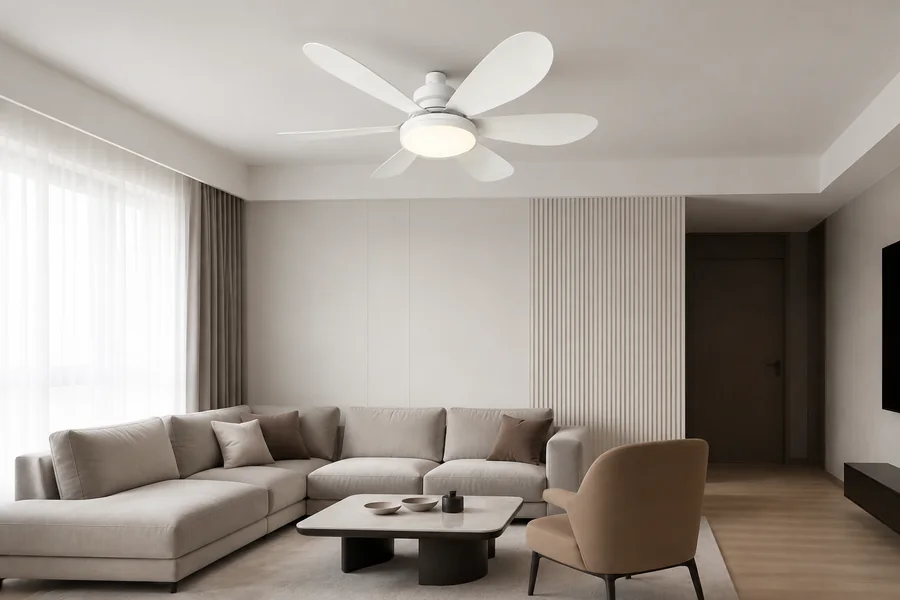
A white fan light can be a practical direction when the fixture should feel quiet and clean. It gives ceiling light and air movement without the visual drop of a pendant or chandelier.
2-2. When can a taller room use a larger fixture?
Rooms with higher ceilings can use chandeliers, longer downrods or larger fan spans. The fixture can act as a focal point because there is enough air around it.
Even then, measure the drop height. A fixture should not block sightlines, interfere with TV viewing or feel too low over the sofa. Scale should feel deliberate, not dramatic for its own sake.
3. Should You Choose a Ceiling Light, Fan Light or Fan Without Light?
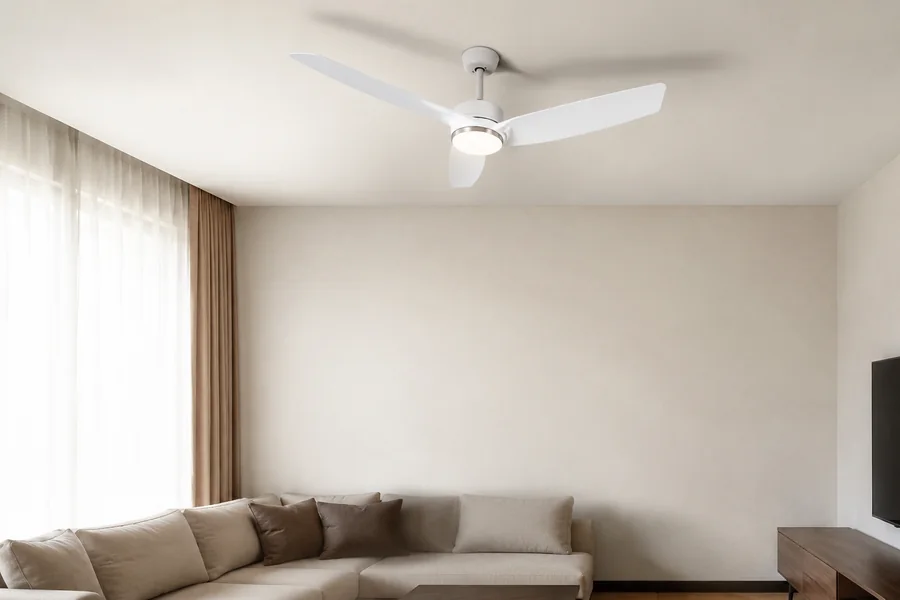
The right ceiling fixture depends on whether the room needs light only, airflow only or both. This choice should come before colour and finish.
3-1. When is a plain ceiling light enough?
A plain living room ceiling light can be enough when the room has good ventilation, a comfortable temperature and separate task lighting. It is also useful when the ceiling should stay visually simple.
However, a single ceiling light often creates flat brightness. If you choose this route, plan wall lights, table lamps or recessed lights so the room has depth. The lighting layout logic in the living room lighting guide is a useful starting point.
3-2. When does a fan light make more sense?
A ceiling fan light makes sense when the room needs both overhead brightness and air circulation. It can replace two separate fixtures and reduce ceiling clutter.
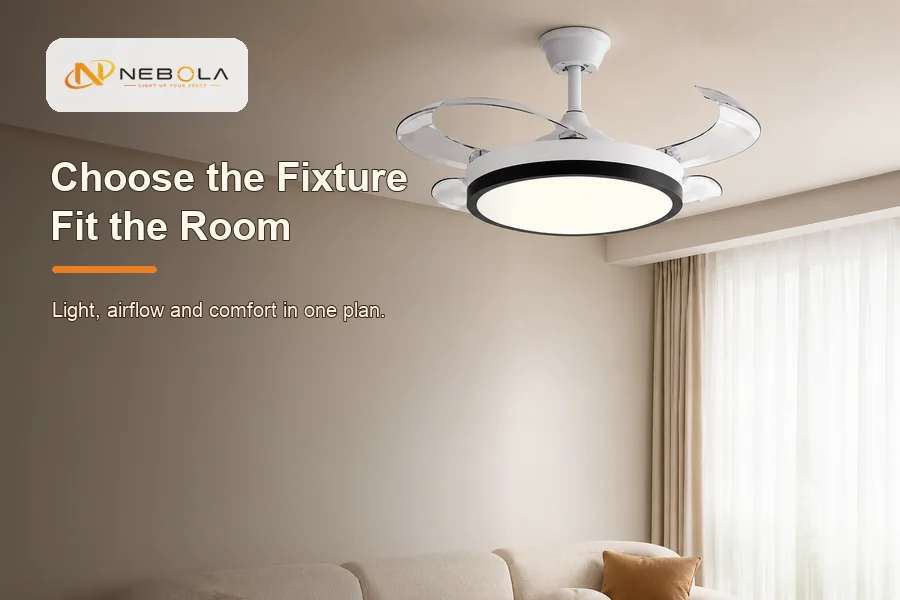
A retractable fan light works well when the room should look more like a lighting space when the fan is off. This can suit apartments, modern lounges and rooms where decorative value matters.
3-3. When is a fan without light better?
A fan without light is better when the room already has a strong lighting plan. Recessed lights, wall lights and floor lamps can handle brightness, while the fan handles air movement.
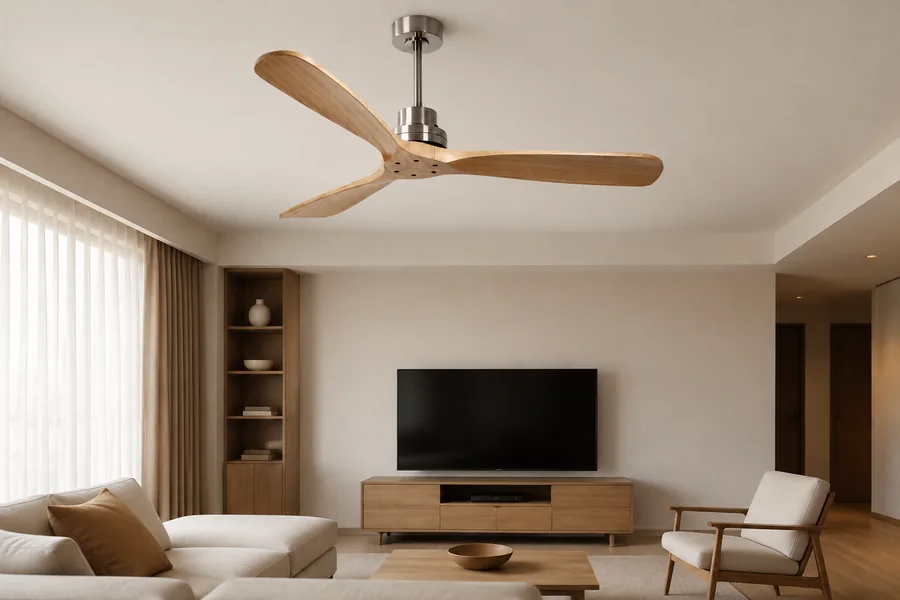
A wood ceiling fan can soften a living room when the ceiling needs warmth rather than another bright light source. This is often cleaner in media rooms and larger open spaces.
4. How Do You Match Fixture Size to Living Room Scale?
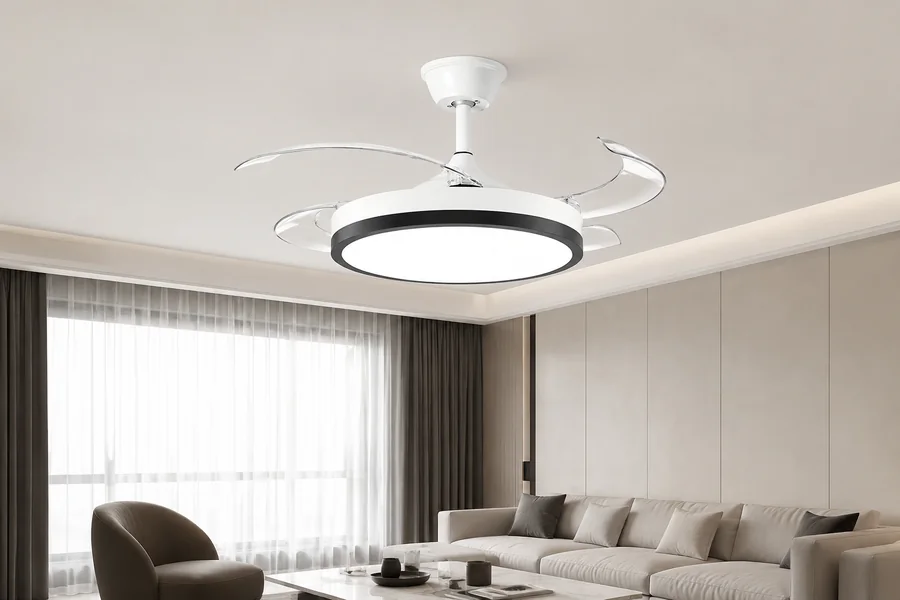
Fixture size should match room area, furniture mass and ceiling height. A fixture can be technically installed but still look too weak or too heavy.
4-1. How wide should the fixture look?
A small ceiling light can disappear in a large living room, while an oversized chandelier can make a normal room feel crowded. For fan lights, blade span also affects airflow coverage.
Use the room’s main furniture as a scale reference. The fixture should feel connected to the seating area, not like a small cap on a large ceiling or a heavy object pressing down on the sofa.
4-2. What if the living room is open-plan?
Open-plan rooms often need zones rather than one central answer. A living area, dining table and kitchen island may each need a different fixture strategy.
Before choosing one large ceiling fixture, study the whole layout. The modern living room design guide explains why layout and comfort should come before decoration.
5. What Lighting Quality Should Matter Most?
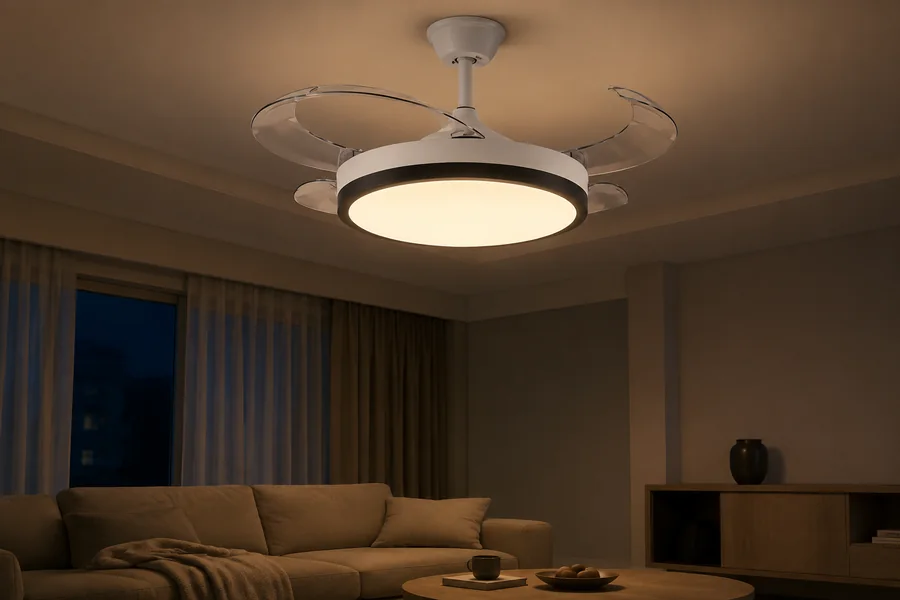
Good lighting is not just brightness. Diffusion, colour temperature and dimming decide whether a living room feels comfortable in real use.
5-1. Why is diffuser quality important?
A poor diffuser can create glare, hard shadows or uneven light. This is especially noticeable when people sit under the fixture and look across the room.
For a living room ceiling light, the light should feel broad and soft. If the fixture includes an LED module, ask about wattage, diffuser material, colour temperature and whether replacement parts are available.
5-2. Should the fixture have dimming?
Yes, dimming is useful in most living rooms because the room changes through the day. Bright light may be needed for cleaning, while lower light feels better for films, guests and evening conversation.
For a more technical explanation, this PubMed article on human-centric lighting explains why lighting quality affects visual performance, visual experience and comfort, not only brightness.
6. How Should Style and Finish Be Chosen?
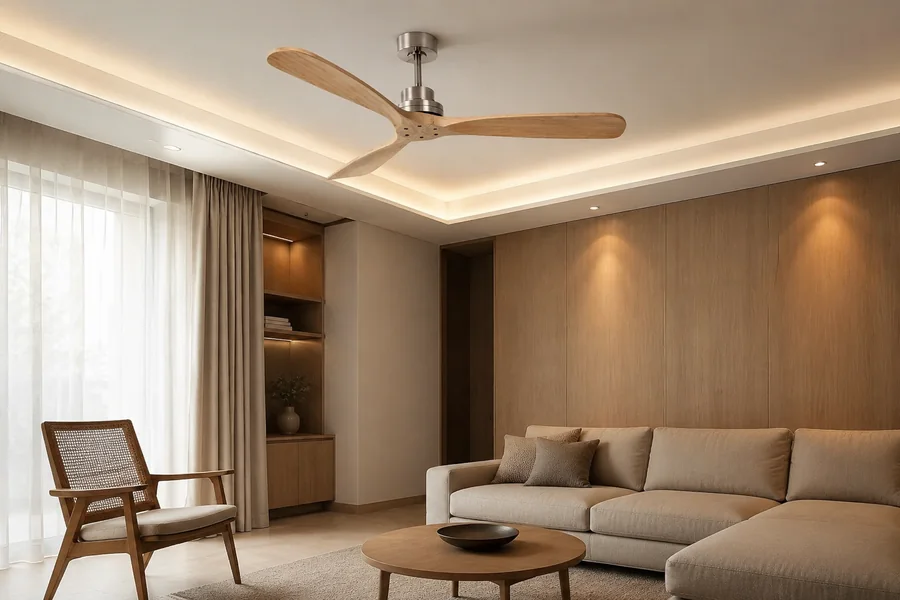
Style should come after function, height and lighting quality. Once the technical fit is clear, finish and shape can support the room’s design direction.
6-1. How much visual weight should the fixture have?
Visual weight is how heavy the fixture feels to the eye. Black metal, dark wood, thick glass and ornate forms look stronger than slim white or pale finishes.
In a minimal room, a strong fixture can become a statement. In a room with busy furniture, a quieter fixture may work better because it keeps the ceiling calm.
6-2. Should the fixture match other finishes?
It does not need to match every finish exactly, but it should connect with the room. Black can link to cabinet handles or media furniture. Wood blades can connect with flooring or shelves. White can disappear into the ceiling.
Avoid choosing a finish only because it is trendy. A living room ceiling fixture is highly visible and often stays for years, so the finish should feel natural with the wider interior.
7. What Controls and Smart Features Are Useful?
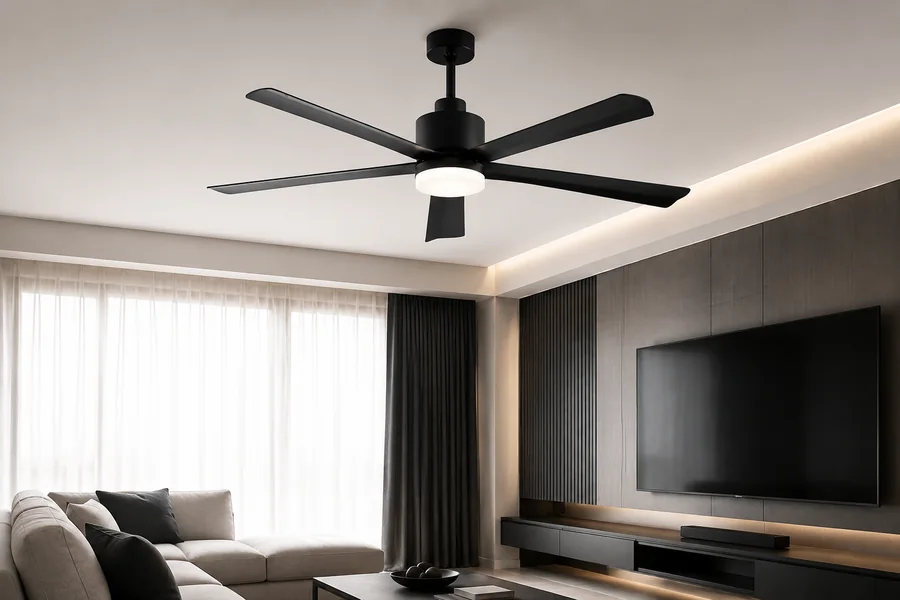
Controls affect daily satisfaction. A fixture can be beautiful but irritating if the light and fan are hard to operate separately.
7-1. Why should fan and light controls be separate?
For ceiling fan lights, separate control is important. You may want airflow without light during the day, or soft light without fan movement in cooler seasons.
A good product should let users adjust fan speed, lighting and colour temperature without confusion. For hospitality or rental interiors, simple remote or wall control can also reduce user complaints.
7-2. Are smart controls always necessary?
No, smart controls are useful only when the user will actually use them. Some homes prefer a simple wall switch and remote. Others benefit from app control, memory function or timer settings.
The key is reliability. A smart feature should make the room easier to use, not add a fragile layer that causes pairing problems or support issues.
8. What Should Buyers Check Before Ordering?
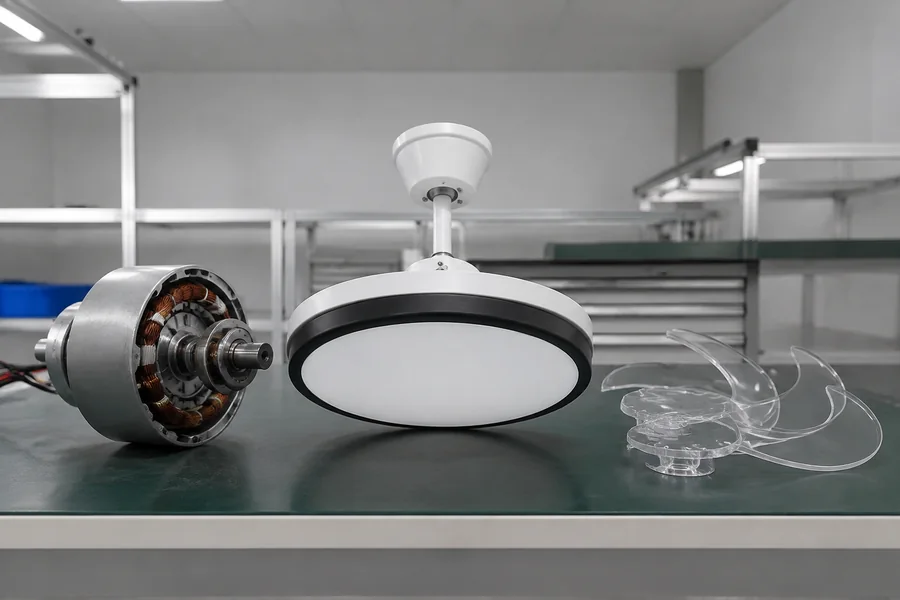
Before buying, check installation, electrical requirements, product quality and support. Ceiling fixtures are not only decorative objects; they are wired, mounted products.
8-1. What installation details matter?
Check ceiling type, mounting bracket, junction box position, voltage, downrod length, fixture weight and clearance. For fan lights, also check blade clearance from walls, cabinets and tall furniture.
If the product is for a project or resale market, ask the supplier for clear installation instructions and packaging details. Small errors in mounting hardware can cause large problems later.
8-2. Why does factory quality matter?
Factory quality affects motor noise, LED stability, remote control reliability, balance and long-term safety. A fixture may look similar online but perform very differently after installation.
As a ceiling fan light manufacturer, NEBOLA looks at the fixture as a complete system: motor, LED, diffuser, control, mounting and packaging. That whole-system view is especially important for living room products.
9. Which Common Ceiling Fixture Mistakes Should You Avoid?
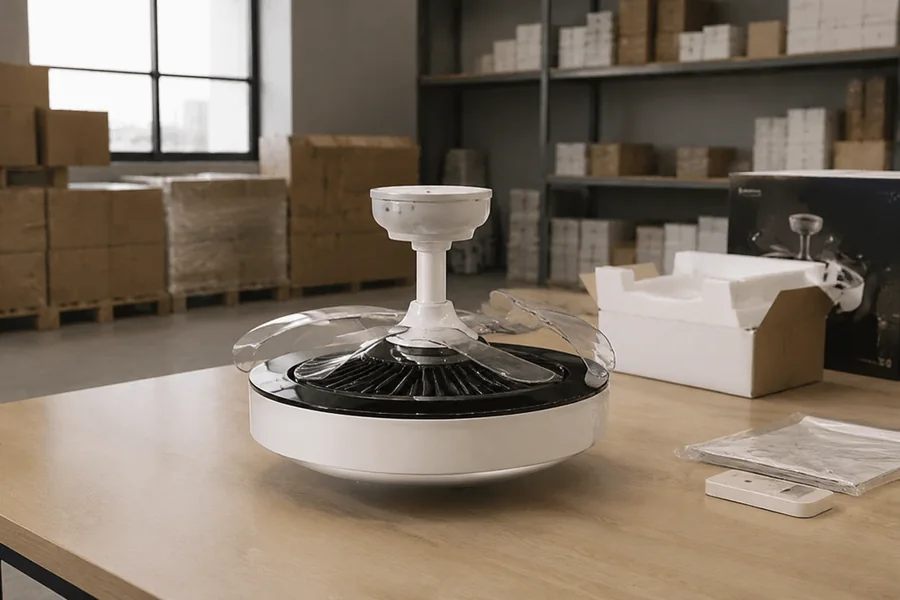
Most mistakes happen when buyers choose by appearance before checking the room. A fixture should look good, but it must also fit the space.
9-1. Is choosing the largest fixture a mistake?
It can be. A large fixture may look premium in photos but feel heavy in a normal living room. It can also create glare or reduce headroom.
Choose the size that suits the room, not the size that looks most impressive online. This is especially important in apartments and lower ceilings.
9-2. Can a stylish fixture still fail?
Yes. A stylish fixture can fail if the light is too cold, the diffuser glares, the fan is noisy or the controls are awkward.
Style should support comfort. If a fixture makes the room harder to use, it is not the right fixture, even if it photographs well.
10. What Final Checklist Helps You Choose?
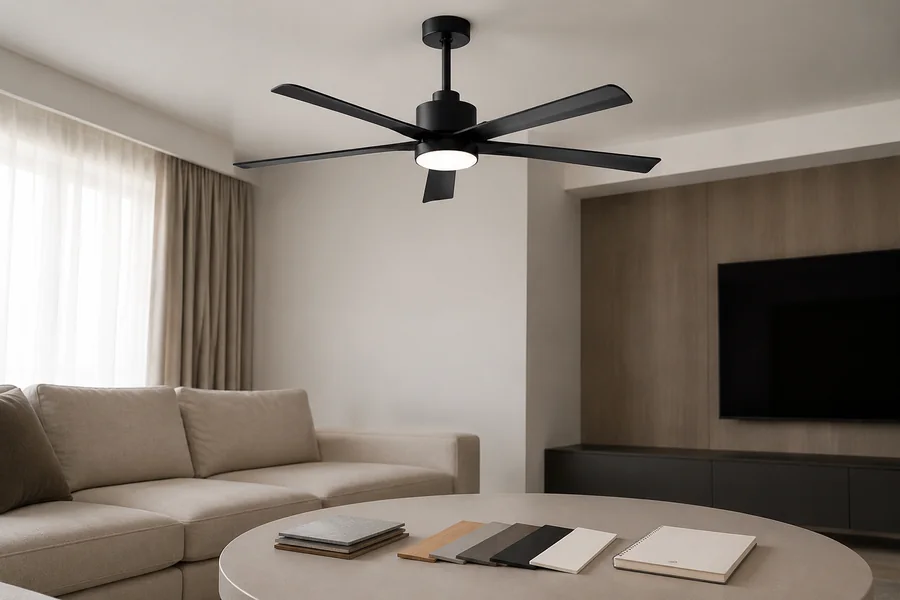
A good final decision should feel calm. By the time you order, you should know what the room needs and why this fixture meets that need.
10-1. What should be checked in order?
Check room function first, then ceiling height, fixture type, size, lighting quality, airflow needs, style, controls, installation and supplier support. This order prevents design from overriding practical use.
If the room needs light and air movement together, review the living room ceiling fan collection again before finalising the centre fixture.
10-2. When should you ask a supplier for help?
Ask for help when the room has low ceilings, open-plan zones, unusual wiring, mixed lighting layers or a project quantity. A supplier can help match product type, size, control and installation details before the wrong fixture is ordered.
For living rooms, the best ceiling fixture is rarely the most decorative one. It is the one that makes the room easier to live in every day.
Need Help Choosing the Right Ceiling Fan Light?
Tell us your room size, ceiling height, lighting needs and project plan. NEBOLA can help match the right fan light style and configuration.
Get a QuoteFAQ About Living Room Ceiling Fixtures
Is a ceiling fan light a good living room fixture?
Yes, a ceiling fan light can be a good living room fixture when the room needs both overhead light and air movement. The size, diffuser comfort, motor noise and control method should still match the room.
Should a low living room ceiling avoid pendant lights?
Yes, many low living room ceilings should avoid long pendant lights because they reduce visual height and can interfere with movement. A flush light or low-profile fan light is usually easier to live with.
Can a living room use a fan without a light?
Yes, a fan without a light can work well when recessed lights, wall lights or lamps already provide enough brightness. This keeps the fan focused on airflow and avoids overloading the ceiling.
Is fixture style more important than light quality?
No, fixture style is not more important than light quality. A beautiful fixture can still fail if it creates glare, harsh colour temperature, weak airflow or awkward controls.
Should living room fan and light controls be separate?
Yes, separate controls are strongly recommended because users often need airflow without light or soft light without fan movement. Separate control makes the fixture more flexible every day.
Can one ceiling fixture light the whole living room?
No, one ceiling fixture should not be expected to do everything in most living rooms. It should provide the base layer, while lamps, wall lights or recessed lights support mood and task lighting.