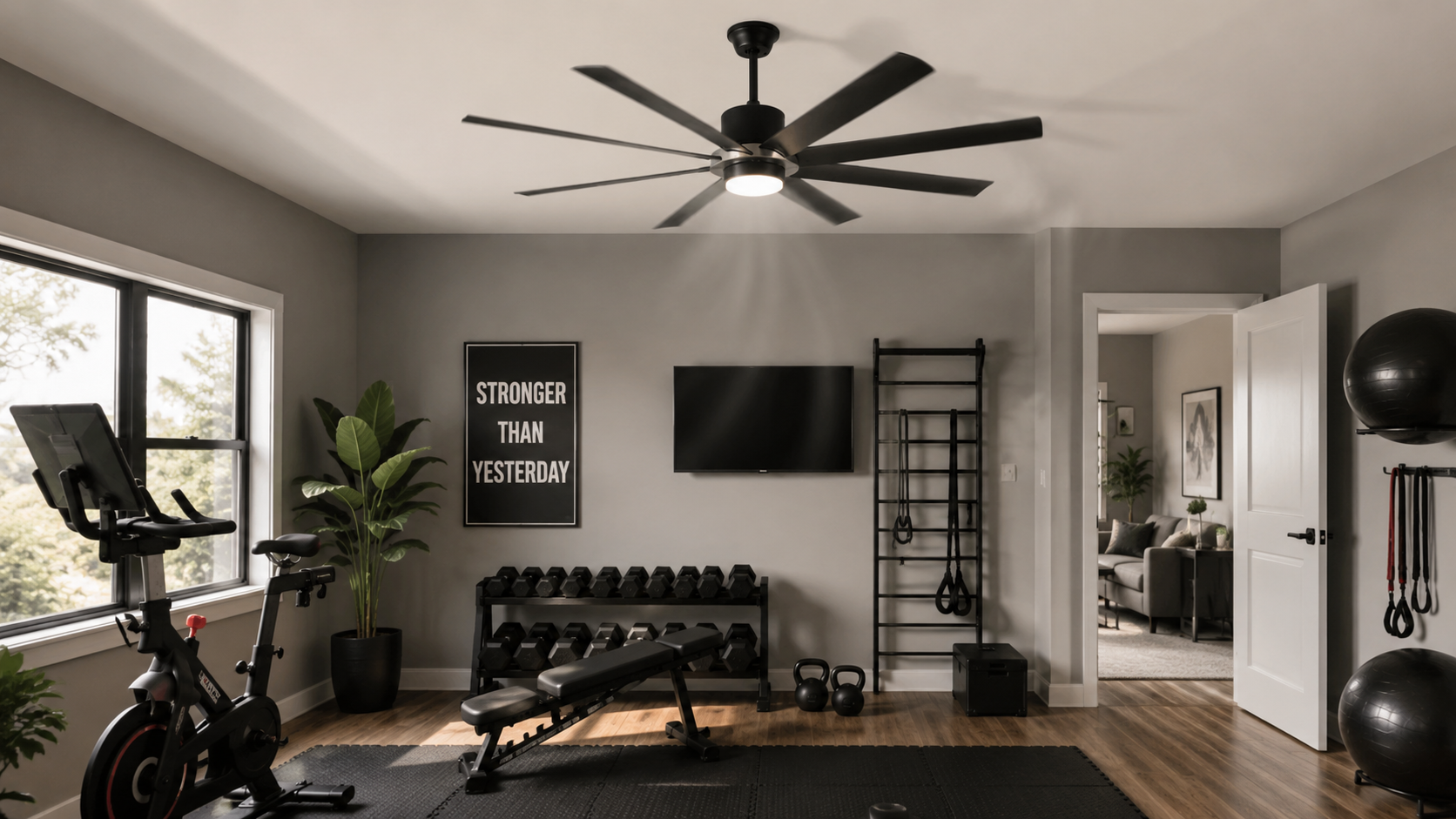



Choosing a ceiling fan for a large living room is not only about buying the biggest fan available. The best large living room ceiling fan should match the seating zone, ceiling height, airflow target, blade span, lighting plan and interior style.
A large ceiling fan can make a room feel more comfortable, but only when it is scaled and installed correctly. If the fan is too small, it may not reach the main sitting area. If it is too large or too low, it can make the room feel heavy.
Start by comparing product directions in the living room ceiling fan collection, then use the checks below to choose the right fan for the real layout.
1. What Size Ceiling Fan Should You Choose?
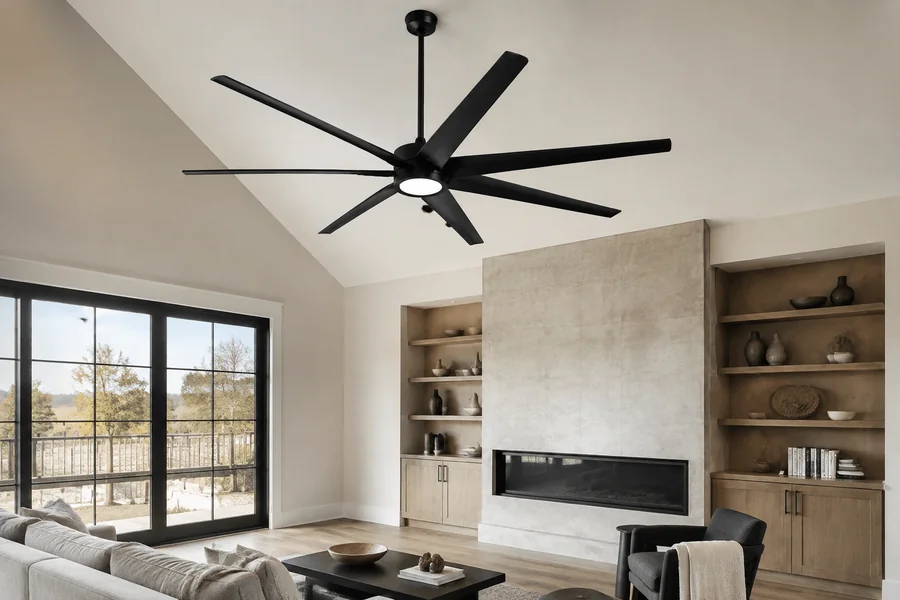
A living room usually needs a bigger fan when the main seating zone is wide, the ceiling is high, or the room connects to dining, kitchen or hallway areas.
1-1. Is square footage enough?
No, square footage is not enough. A large living room can be square, rectangular, open-plan or divided into zones, and each shape needs a different airflow plan.
The 52 inch living room guide is useful when deciding whether the room is only medium-large or truly large.
1-2. What is the real comfort zone?
The real comfort zone is where people sit, read, watch TV or gather. A fan should serve that zone first.
If the living room has two seating groups, one fan in the centre may not solve both.
2. How Do You Measure a Large Living Room?

Measure the usable area, not only the total floor area. The usable area includes where people spend time and where airflow actually matters.
2-1. Which measurements matter?
Measure room length, room width, ceiling height, sofa group width, distance to walls, beam locations, light positions and the intended fan mounting point.
Also check the lowest part of the fan after installation, including light kit or downrod.
2-2. Why should furniture be measured?
Furniture controls how large the fan looks. A wide sectional sofa may need a broader fan than two small chairs in the same room.
The fan should visually relate to the furniture mass below it.
3. Which Fan Size Fits a Large Living Room?

Large living rooms often need 56 inch, 60 inch, 66 inch, 70 inch or 72 inch fan directions depending on ceiling height and room width.
| Large living room condition | Starting fan size | Main check |
|---|---|---|
| Larger standard living room | 56 to 60 inch | Sofa zone and visual balance |
| High ceiling living room | 60 inch or larger | Downrod and useful airflow height |
| Wide great room | 66 to 72 inch | Open ceiling and broad coverage |
| Long living room | Multiple fans may help | Zone layout |
| Mixed indoor-outdoor room | Check rating and finish | Environment and installation |
3-1. When is 52 inch still enough?
52 inch can still be enough when the seating zone is moderate and the room is not truly wide. Do not oversize if the ceiling or furniture scale does not support it.
For larger comparisons, the 60 vs 72 guide helps decide when to move up.
3-2. When does 70 inch plus make sense?
70 inch plus makes sense when the living room feels closer to a great room or open commercial-style lounge. A 70 inch industrial fan is a useful reference for this type of broad coverage.
The ceiling must have enough height and clear open area.
4. How Should Airflow and Coverage Be Planned?
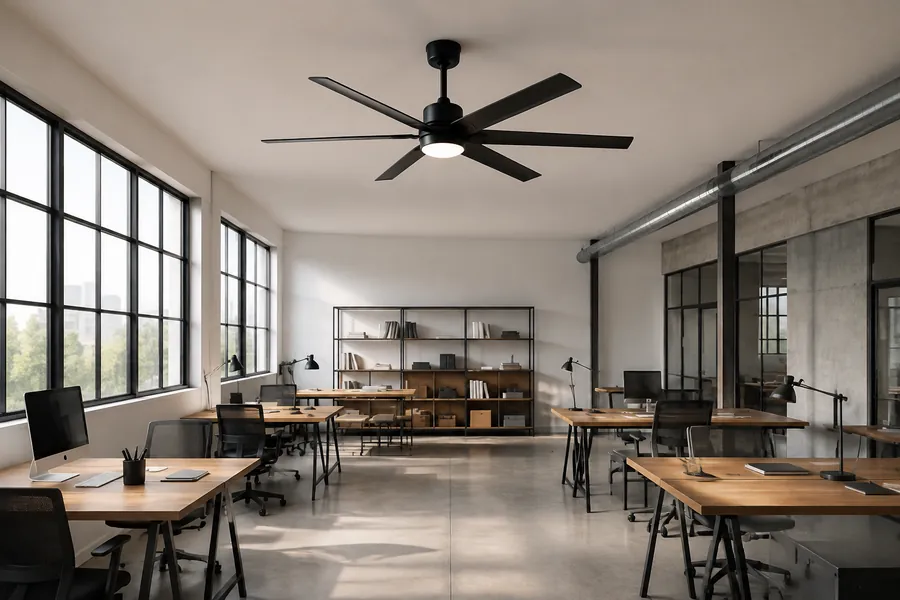
Airflow and coverage should be planned around comfort, not only maximum speed. A high airflow ceiling fan for living room use should feel smooth and quiet.
4-1. Why does low-speed comfort matter?
Low-speed comfort matters because living rooms are used for sitting. People usually want steady air movement, not a strong draft.
A fan that only feels useful at high speed may be poorly sized or poorly placed.
4-2. What does fan research add?
The CBE ceiling fans guide is useful because it explains ceiling fan types, diameter, airflow, rotational speed, controls and why large-diameter fans often suit larger high-ceiling applications.
For a large living room, that means blade span and control range should be checked together.
5. How Does Ceiling Height Change the Choice?
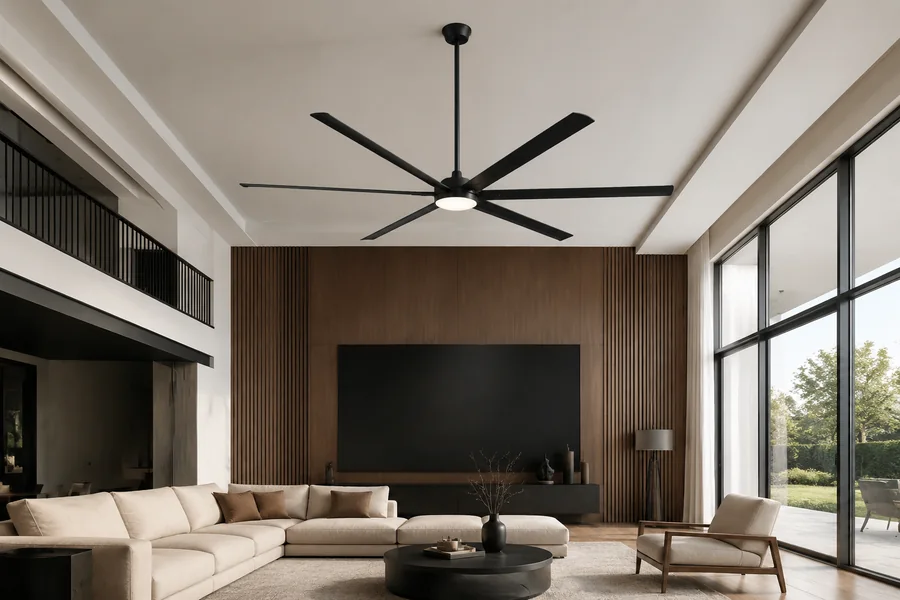
Ceiling height changes the fan type, downrod length and final blade position. A wide fan that is too close to people can feel unsafe or visually heavy.
5-1. When is a downrod needed?
A downrod is often needed when the ceiling is high and the fan would otherwise sit too far above the living zone. The goal is useful airflow at the seating height.
The downrod should be chosen by installed clearance, not only by appearance.
5-2. When is flush mount better?
Flush mount is better for lower ceilings, but large living rooms with low ceilings may need a more careful compromise. A 52 inch ultra-thin fan can be a better fit than an oversized deep fixture.
Low ceiling rooms should not force large blade spans without checking safety.
6. Should a Large Living Room Fan Include a Light?
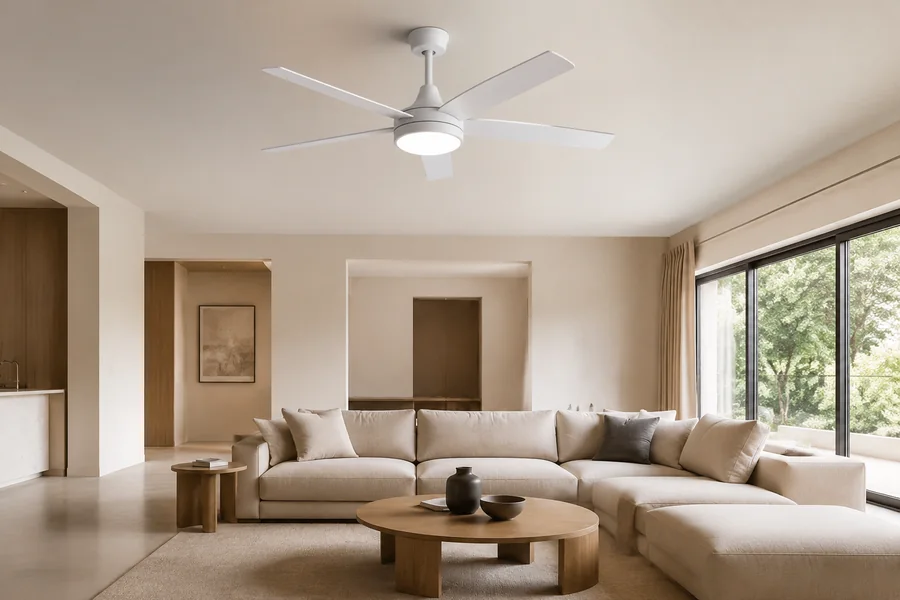
A large living room fan can include a light, but the lighting plan must be comfortable. The fan light should not be the only light source in a large space.
6-1. When is an integrated light useful?
An integrated light is useful when the fan position is also the best general lighting point. It can reduce ceiling clutter and simplify the room.
An oak white fan light can work as a style reference for warm, light-toned rooms when the finish matches the interior.
6-2. When is a fan without light cleaner?
A fan without light is cleaner when the living room already has recessed lights, wall lights, lamps or a chandelier. A wood ceiling fan without light keeps airflow separate from lighting.
This is often better in media rooms and high-end layered interiors.
7. How Should Style Match a Large Living Room?

Large ceiling fans have strong visual presence. Style should be chosen after size and airflow are clear.
7-1. When should the fan look quiet?
The fan should look quiet when the room already has strong furniture, a large TV wall, patterned rug or dramatic lighting.
White, wood and slim blade profiles can keep the ceiling calm.
7-2. When can the fan become decorative?
The fan can become decorative when the room has enough scale and the ceiling fixture is intended to anchor the design.
A 54 inch black fan light can be a smaller reference for rooms that need stronger contrast but are not ready for a 70 inch plus fan.
8. Should One Large Fan or Multiple Fans Be Used?

One large fan works best for one large central comfort zone. Multiple fans work better for long rooms, split zones or open-plan rooms with several activity areas.
8-1. When is one large fan enough?
One large fan is enough when the seating group is central, the ceiling point is well located and the room does not have separate distant zones.
It creates a cleaner ceiling and simpler control.
8-2. When do multiple fans work better?
Multiple fans work better when the room has a living zone and dining zone, or when a long room has seating at both ends.
The goal is even comfort without oversizing one fan.
9. What Installation Details Should Be Checked?
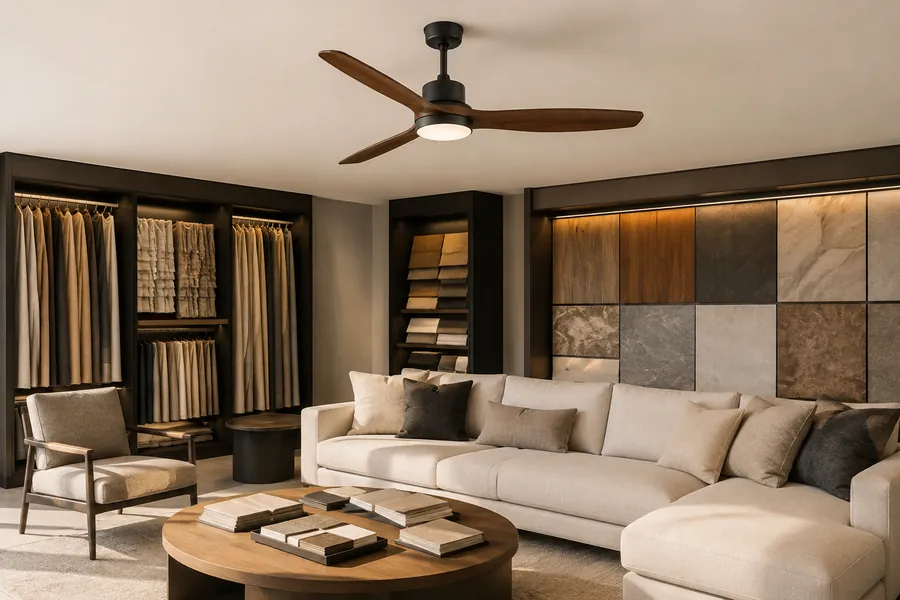
Installation details decide whether the selected fan can actually work. Large fans need reliable mounting and clear blade sweep.
9-1. What clearance should be reviewed?
Review clearance from walls, beams, chandeliers, recessed lights, tall cabinets, curtains and sloped ceiling features. The blade tips need enough open space.
Also check that the mounting point supports the fan weight and vibration.
9-2. What should project buyers ask suppliers?
Project buyers should ask for installed height, motor type, blade material, balancing process, packaging protection, control options and spare part support.
For repeated living room projects, a beautiful product photo is not enough.
10. What Final Checklist Confirms the Choice?

Choose the large living room fan only after confirming room scale, airflow target, mounting height and visual balance.
10-1. What is the homeowner checklist?
Check room size, seating width, ceiling height, fan diameter, downrod or flush mount, lighting layers, low-speed airflow, noise and finish.
Then choose the smallest fan that can comfortably cover the real living zone.
10-2. What is the buyer checklist?
Check product range, sample quality, motor reliability, LED comfort, carton strength, warranty support and whether the selected size fits the target market.
Before ordering, compare the final direction again with the living room fan collection so the product choice stays practical.
If you are looking for a better ceiling fan light solution for your project, NEBOLA can provide one-stop support from product selection to customization. We focus on ceiling fan light R&D and manufacturing, helping brands, importers, and distributors find products that better match real space needs.
Need Help Choosing the Right Ceiling Fan Light?
Tell us your room size, ceiling height, lighting needs and project plan. NEBOLA can help match the right fan light style and configuration.
Get a QuoteFAQ About Choosing Large Living Room Ceiling Fans
What size ceiling fan is best for a large living room?
Yes, a large living room often needs a 56 inch, 60 inch, 66 inch or 72 inch fan depending on room width, ceiling height and seating layout.
Is a high airflow ceiling fan always better?
No, a high airflow ceiling fan is not always better if it feels too strong, noisy or visually oversized for the living room.
Should a large living room use one fan or two?
Yes, one fan can work for one central seating zone, but two fans may be better for long or divided large living rooms.
Can a 52 inch fan work in a large living room?
Yes, a 52 inch fan can work in a borderline large living room if the seating zone is moderate, but truly large spaces usually need a wider fan.
Should a large living room fan have a downrod?
Yes, a large living room fan should use a downrod when the ceiling is high and the fan needs to sit closer to the comfort zone.
Can a large ceiling fan include a light?
Yes, a large ceiling fan can include a light when the light is soft and part of a layered lighting plan.