

If you import socket fan lights, ask for packaging files and certification documents before you approve mass production, not after the goods are ready to ship. The product may look simple, but the document set has to cover socket type, voltage, frequency, model number, label artwork, manual language, carton marks, component changes, and the exact product version you plan to sell.
This article is for the moment when you already like the sample but need to know whether it is ready for a real order. You should be able to match the product, package, label, certificate, and market requirement without guessing. NEBOLA’s socket ceiling fan lights category can help you frame the product family while this checklist helps you control the paperwork behind it.
What Should You Request Before Approving a Socket Fan Light Order?
Which files should come first?
Ask first for the test reports, certificates, rating label, manual, packaging artwork, product photos, component list, and model specification sheet. These files should refer to the same model, same electrical rating, same socket type, and same product construction.
You do not need fancy language at this stage. You need consistency. If the model number changes from the certificate to the package, or the voltage changes between the manual and label, pause the order until the file set is corrected.
Why should files be reviewed before production?
Packaging and certification fixes are much easier before production. After cartons are printed and goods are packed, even a small label error can become expensive. Early review protects your launch schedule and keeps your sales team from explaining avoidable mistakes.
What should you ask if the product is private label?
For private label socket fan light projects, ask which brand name, model code, barcode, address, warning language, and manual version will appear on the final goods. Private label does not mean the technical file can be vague. It means the file trail must be cleaner.
A strong file request should be specific enough that the supplier cannot answer with a generic brochure. Ask for the exact model, exact rating, exact socket base, exact package artwork, and exact certificate or report scope.
You should also ask whether any part of the product changed after the report was issued. If the sample in your hand is not the same as the tested construction, the document review needs to start again.
A document request should also include the final sales channel. A marketplace listing, retail carton, and project tender may ask for different supporting information, so one generic file pack may not answer every question.
If the project has both wholesale and private label versions, keep separate approval folders for each one. Shared parts are fine, but the brand name, barcode, manual cover, label artwork, and carton marks can create different obligations.
The paperwork is easier to manage when the packaging story and the technical story are built together. If you design them separately, the revisions can drift apart before anyone notices.
How Should the Certification Documents Match the Product?
Why does the exact model matter?
A certificate for a similar product is not enough. The exact socket fan light version matters because the driver, motor, LED board, socket base, shell material, remote receiver, or blade assembly may differ. Those differences can change the risk profile and the document scope.
If you use the E27 fan light as a sourcing direction, keep the final model code consistent from quotation to sample label to packaging proof. That simple discipline prevents a lot of back-and-forth later.
What happens when a component changes?
A component change should trigger a document check. If the driver, motor, LED source, socket holder, housing material, plug accessory, or remote system changes, ask whether the existing report still covers the product. Do not assume coverage survives a quiet substitution.
How should you store the evidence?
Keep certificates, reports, label artwork, manuals, packaging proofs, sample photos, and production confirmation in one folder by SKU and date. When a channel asks for proof, you can respond with a controlled file set instead of searching old chat messages.
Model matching is the centre of the audit. The product photo, sample label, manual cover, carton mark, report, and certificate should all point to the same identity. If they do not, your channel may not know which product is actually being sold.
This is why I would keep a simple model control sheet. It does not need to be beautiful; it needs to prevent one SKU from quietly becoming three slightly different products with one shared file name.
When the model file is clean, your whole team can move faster. Sales can quote with confidence, design can update packaging without guessing, and quality control can compare production samples against a stable reference.
If the project has both wholesale and private label versions, keep separate approval folders for each one. Shared parts are fine, but the brand name, barcode, manual cover, label artwork, and carton marks can create different obligations.
A simple folder structure by model and market can save a lot of time later. It is not glamorous, but it keeps certificates, manuals, cartons, and approval photos from being mixed up.
What Should the Rating Label Include?
Which label details are non-negotiable?
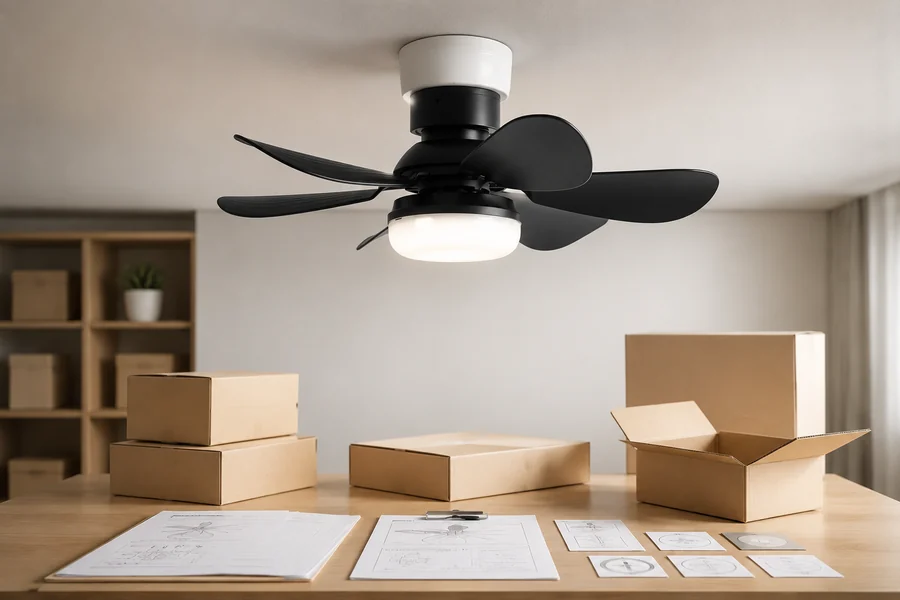
The label should clearly show the model number, socket type, voltage, frequency, power information, required marks, and use limitations. It should be readable after installation where the design allows, and it should not contradict the certificate or manual.
How should label wording handle E26 and E27?
Do not use loose E26/E27 wording if the product is only designed for one base or one electrical environment. If a model is E26, say E26. If it is E27, say E27. If a special version supports more than one market, the evidence and label should support that exact claim.
Why does private label make labels more sensitive?
Private label packaging puts your brand name in front of the customer and the channel. If the label is wrong, the brand absorbs the confusion. That is why private label review should include both design approval and technical approval.
Rating labels are small, but they carry a lot of responsibility. They connect the physical product to the claimed electrical and compliance story. If the label is wrong, the rest of the document package immediately looks weaker.
For private label work, label approval should be separate from graphic approval. A package can look polished while the technical label still contains a wrong socket type, outdated model code, or unclear voltage line.
For labels, check both content and placement. A technically correct label is still weak if it is hidden, unreadable, or placed where normal installation immediately covers the information people need.
If the project has both wholesale and private label versions, keep separate approval folders for each one. Shared parts are fine, but the brand name, barcode, manual cover, label artwork, and carton marks can create different obligations.
Private label work becomes smoother when the file names themselves are clear. A strong file name can prevent someone from printing the wrong brand panel or the wrong warning language.
How Should Packaging Explain Installation and Compatibility?

What should the package answer immediately?
The package should answer the practical questions quickly: what socket does it fit, what voltage does it require, where can it be used, what is included, and how is it controlled? If these answers are hidden, wrong purchases become more likely. A neat front panel is not enough if the customer still needs to search the manual for the basic compatibility story.
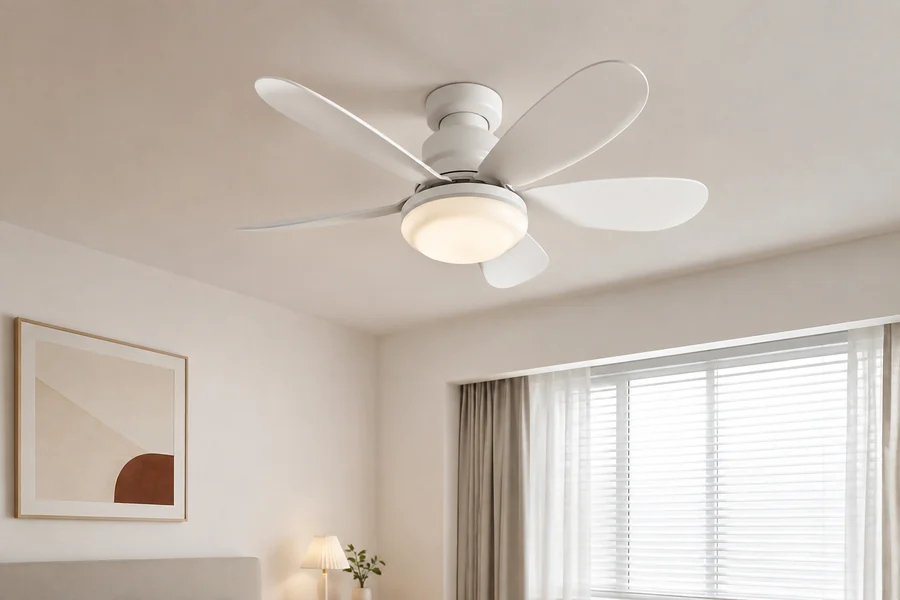
A white socket-style fan light may appeal to a broader home channel, but the package still needs clear compatibility language. A clean product look does not remove the need for technical clarity. If the box is too vague, the first customer question will simply move from the shelf to the support inbox.
How should the manual support the package?
The manual should repeat the important package claims and add safe installation steps, socket requirements, remote pairing, maintenance instructions, cleaning guidance, and warning language. The manual is where you can give detail without overcrowding the front carton.
What should be avoided on packaging?
Avoid universal claims unless they are true for the exact product. Also avoid tiny compatibility notes that people only see after purchase. A socket fan light is bought partly because it looks easy; the package should make the limits easy too.
Installation wording should be tested with someone who has not been part of the project. If that person cannot tell what socket is required, where the fan light should not be used, or how to pair the remote, the manual needs another pass.
The same is true for packaging. Your carton should not promise effortless installation while the manual quietly lists important restrictions. The front-facing message and the safety instructions need to support each other.
The manual should also protect the product from being used in the wrong place. If a socket fan light is not intended for damp, greasy, enclosed, or unstable locations, that should be visible before a complaint appears.
If the project has both wholesale and private label versions, keep separate approval folders for each one. Shared parts are fine, but the brand name, barcode, manual cover, label artwork, and carton marks can create different obligations.
You should also think about warehouse handling. If the carton mark or quantity code is wrong, the best product in the box can still arrive in the wrong condition or the wrong place.
NEBOLA Socket Fan Light Support
Need a cleaner socket fan light file checklist?
Send us your target market and private label needs. We can help you compare product, label, manual, and packaging requirements before production starts.
Which Import and Customs Files Should You Prepare?
What should you check before shipment documents are issued?
Before shipment, align commercial invoice description, packing list, model names, carton marks, HS code discussion, certificate files, and product photos. CBP’s importer tips are a helpful reminder that import preparation is part of the buying process, not a final afterthought.
Why do product descriptions matter?
A vague product description can slow communication with brokers, retailers, or internal teams. Use consistent wording such as socket fan light, E27 ceiling fan light, or ceiling fan with bulbs where appropriate. The wording should match the product and documents.
How should you handle market-specific requests?
If a market needs extra language, registration, recycling marks, battery notes, or special warning labels, add those requirements to the artwork checklist before printing. Do not rely on a generic export carton to satisfy every market.
Import paperwork is less glamorous than product photography, but it protects the shipment. Inconsistent product names, unclear model descriptions, or missing files can slow communication across brokers, warehouses, and sales teams.
If you are not sure which document a market requires, mark that as an open item instead of guessing. A visible open item is easier to solve than a hidden assumption that reaches the port or retailer.
Customs and import files should be consistent with the commercial reality of the product. If the item is a socket fan light with remote control and LED function, vague wording can create unnecessary questions.
If the project has both wholesale and private label versions, keep separate approval folders for each one. Shared parts are fine, but the brand name, barcode, manual cover, label artwork, and carton marks can create different obligations.
The gap between a sample and a mass-production batch is where many small problems grow. Keeping the approved files visible makes it easier to stop that drift early.
How Should You Audit Packaging Artwork Before Printing?

What should you compare line by line?
Compare the package front, side panel, rating label, manual, and certificate line by line for model number, socket type, voltage, frequency, wattage, included accessories, and warning language. The goal is not beautiful artwork only; it is a package that tells the truth consistently.
Who should review the artwork?
At minimum, technical, sales, compliance, and brand review should each look at the artwork from their own angle. Technical review catches wrong ratings, sales review catches unclear selling points, compliance review catches missing warnings, and brand review catches presentation issues.
What is the final approval evidence?
Save the approved artwork PDF, printed carton photo, sample label photo, and manual version. If a later batch changes, create a new approval record instead of overwriting the old one.
Artwork review should happen before printing, but it should also happen after the first printed sample. Colours, text size, barcode quality, and warning visibility can change between a PDF proof and a real carton.
Take photos of the printed package from every side and store them with the approved artwork file. This gives you a useful reference when the next batch, retailer request, or private label revision comes up.
Artwork approval should include a print-size check, not only a screen review. Small warning text, low-contrast icons, and crowded panels can look acceptable on a monitor but fail on a real carton.
If the project has both wholesale and private label versions, keep separate approval folders for each one. Shared parts are fine, but the brand name, barcode, manual cover, label artwork, and carton marks can create different obligations.
If you need to explain the approval process to a new team member, this article should give them a practical sequence: model, label, manual, carton, certificate, then batch sign-off.
How Should You Connect Packaging With Product Selection?

When should documents influence the model choice?
If two models look similar but one has cleaner documents, clearer labels, and a better manual, the better-controlled model may be the safer sourcing choice. Product selection is not only design and price; it is also how confidently you can launch and support the item.
How do previous socket decisions affect this article?
If you are still deciding between socket bases or light structures, review the E26 and E27 comparison and the replaceable bulb comparison. The packaging checklist becomes easier once the product direction is already clear.
Where should you place the category link in the final review?
When the paperwork is almost ready, revisit the socket fan light category and check whether the product family, SKU names, and package story still match the category promise. That final consistency check helps the page, carton, and sales message work together.
Packaging can influence product choice when the product families are close. A model with cleaner instructions, clearer compatibility, and fewer document gaps may be a better first launch than a flashier design with uncertain files.
The goal is not to make the paperwork bigger. The goal is to make the purchase, installation, warehouse handling, and customer support path easier for everyone who touches the product.
If you are choosing among similar products, ask which supplier can provide the cleaner file trail. In many launches, document reliability is just as valuable as a small design advantage.
If the project has both wholesale and private label versions, keep separate approval folders for each one. Shared parts are fine, but the brand name, barcode, manual cover, label artwork, and carton marks can create different obligations.
A more detailed document set also makes reorders easier. Once the first batch has a clean approval record, the next batch can move faster because the starting point is already controlled.
What Should You Confirm Before Mass Production?
Which approval rule should you use?
Use a simple rule: no matching file set, no mass production approval. The sample, label, manual, packaging, certificate, and carton marks should all describe the same product. If not, the order is not ready.
What should be in the pre-production checklist?
Include final sample photo, production BOM confirmation, label proof, package proof, manual proof, certificate list, carton mark proof, barcode check, and market language check. This list may feel slow, but it is faster than correcting cartons at the warehouse.
How should you keep future batches consistent?
Keep a controlled version history. If you update the socket base, driver, LED, remote, manual, or packaging, record the change and review the documents again. Consistency is what keeps a socket fan light wholesale program manageable.
Before mass production, I would ask one final question: could someone who did not attend our meetings understand this product from the box, label, and manual? If the answer is no, the package is not ready.
That final review is especially useful for socket fan light wholesale and private label programs. The same product may move through several teams, so the documents need to speak clearly without you standing beside them.
Mass production approval should close with a dated record. That record should say what was approved, who approved it, and which files belong to the batch, so future reorders do not drift quietly.
If the project has both wholesale and private label versions, keep separate approval folders for each one. Shared parts are fine, but the brand name, barcode, manual cover, label artwork, and carton marks can create different obligations.
The overall goal is simple: make it easy for the next person to understand what was approved and why. That is what turns a paperwork pile into an operational system.
NEBOLA Socket Fan Light Support
Ready to compare socket fan light options?
Send NEBOLA your room use, socket base, voltage market, and packaging needs. We can help you shape a clearer sample and document checklist.
FAQ
Should you request certification documents before mass production?
Yes, you should request them before mass production because certificates, labels, manuals, and packaging are much easier to correct before cartons are printed.
Does a certificate for a similar socket fan light prove this model is covered?
No, the document should match the exact model, rating, construction, and factory version you plan to ship.
Should private label packaging include technical review?
Yes, private label packaging needs technical review because brand artwork must still match socket type, voltage, warnings, and product documents.
Can packaging say E26 and E27 if only one version is tested?
No, packaging should not claim both unless the exact product version is designed, rated, documented, and approved for both uses.
Is the instruction manual part of compliance control?
Yes, the manual is part of practical compliance control because it explains installation, use limits, bulb requirements, remote pairing, and safety warnings.