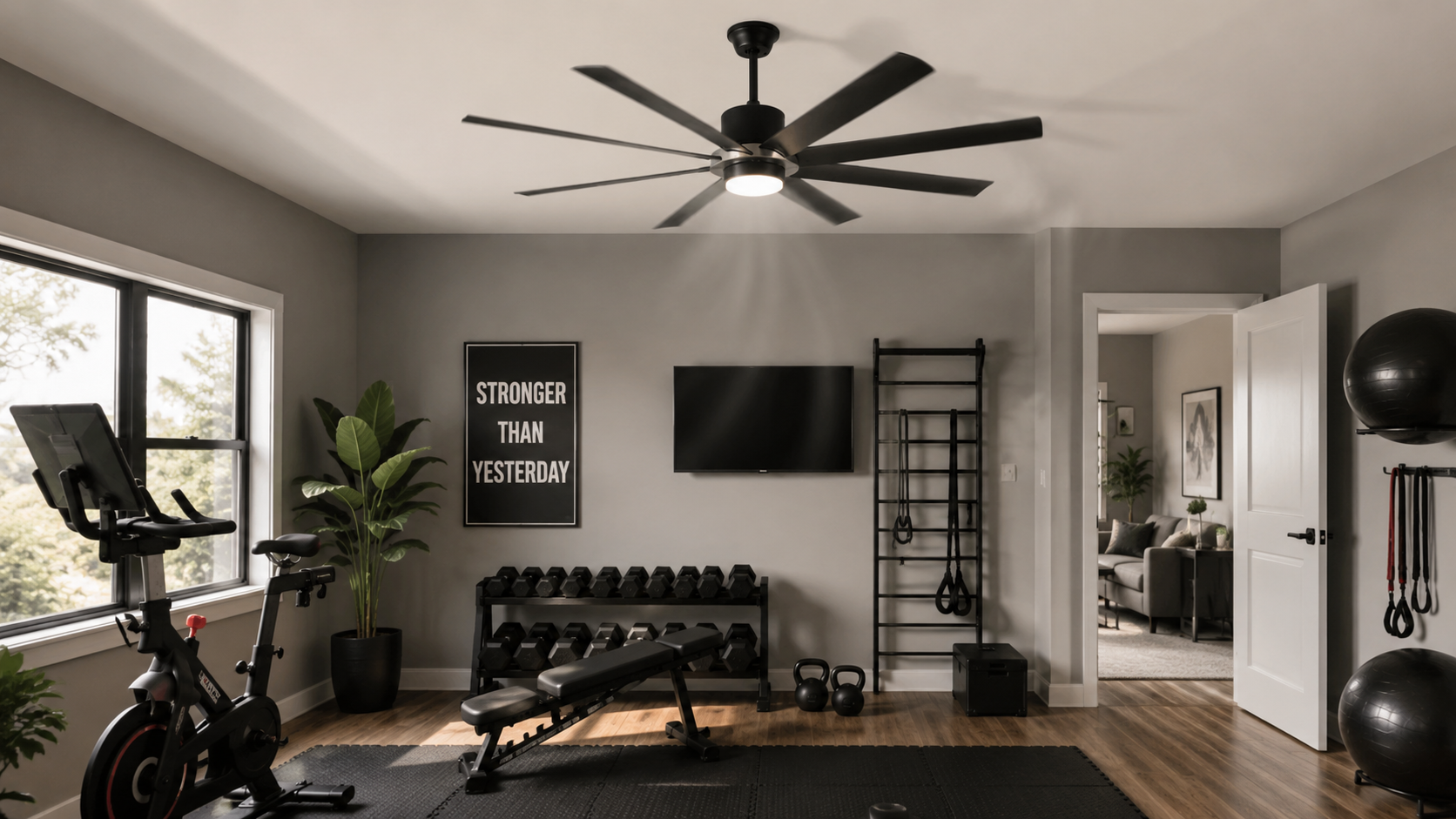



Choosing between ABS ceiling fan blades and wooden ceiling fan blades is not only a style decision. It is also a question of room use, humidity, weight, airflow feel, durability, and long-term care. If you are comparing ceiling fan blade materials for a home, hotel, apartment, or product range, the better choice depends on where the fan will be used and what the room needs every day.
From a product and sourcing point of view, both ABS and wood can work well. ABS is often practical, light, moisture-resistant, and easy to shape. Wood feels warmer, more natural, and often more premium. The mistake is treating one material as always better than the other.
Contents
1. Why Ceiling Fan Blade Material Matters
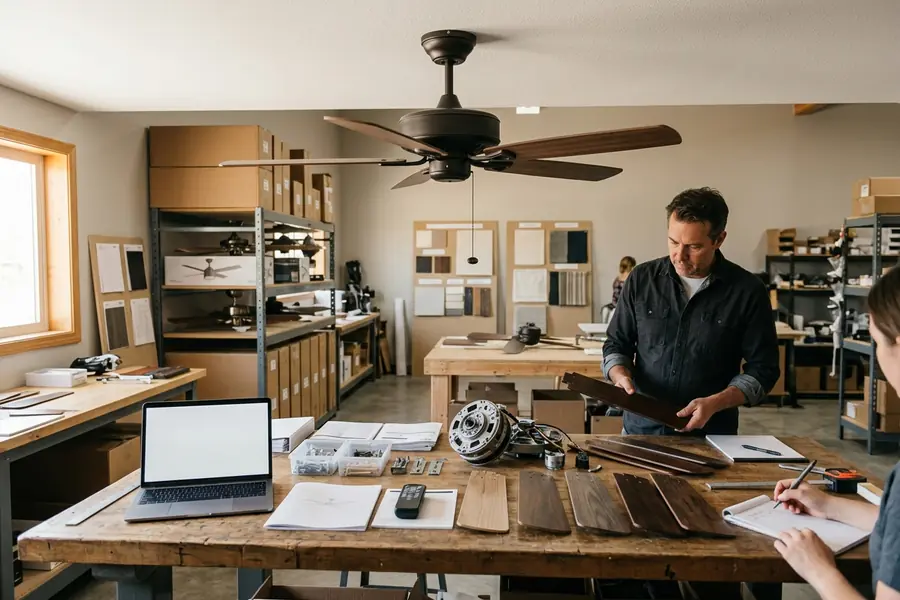
Blade material affects more than appearance. It can change how the fan feels, how much it weighs, where it can be installed, and how it performs over time.
A fan blade is not just a decorative part. It is part of the airflow system.
1-1. Blade material affects durability
Different materials react differently to moisture, heat, cleaning, and daily use. A blade that works well in a dry bedroom may not be suitable for a damp patio or kitchen.
This is why material choice should come before finish choice.
1-2. Blade material affects weight and balance
Weight matters because the motor must move the blades smoothly. A lighter blade can reduce load on the motor, while a heavier blade may need better balancing and stronger build quality.
Good blade balance helps reduce wobble and noise.
1-3. Blade material affects style
ABS can be moulded into clean, slim, modern shapes. Wood can bring texture, warmth, and a more natural look.
The right material should match both the room style and the user’s daily expectations.
2. What Are ABS Ceiling Fan Blades?

ABS is a strong plastic material often used for appliance parts, fan blades, and products that need a light but stable structure.
For ceiling fans, ABS blades are popular because they can be shaped cleanly, produced consistently, and finished in many colours.
2-1. Why ABS is common in modern fans
ABS is useful for modern ceiling fans because it supports slim profiles, curved blade shapes, and clean finishes.
It is also practical for mass production because each blade can be made with consistent size and shape.
2-2. Moisture resistance and easy cleaning
ABS blades usually handle moisture better than many natural wood blades. They are easier to wipe clean and less likely to absorb damp air.
This makes them useful in kitchens, apartments, bathrooms with nearby ventilation, covered outdoor spaces, and humid markets.
2-3. Lightweight structure
ABS blades are often lighter than solid wood blades. This can help reduce motor load and support smoother running when the fan is well designed.
Lightweight blades can also be helpful for low-profile and compact fan designs.
3. What Are Wooden Ceiling Fan Blades?

Wooden ceiling fan blades are used when the design needs warmth, texture, and a more natural feel.
Some blades use solid wood. Others use plywood, veneer, or engineered wood structures. The exact construction matters because not all wooden blades perform the same way.
3-1. Natural style and warmer appearance
Wood gives a room a softer and more organic feeling. It works well with modern rustic, Scandinavian, coastal, farmhouse, and warm minimalist interiors.
A wood blade fan can make the ceiling feel less cold and more finished.
3-2. Solid wood vs engineered wood
Solid wood can look beautiful, but it may react more to humidity and temperature changes. Engineered wood can be more stable, depending on the quality and finish.
For product selection, the surface finish, sealing, and blade construction should be checked carefully.
3-3. Why finish quality matters
Wood needs proper finishing. A poor finish can lead to colour changes, surface damage, or moisture issues over time.
Good finishing helps protect the blade and keeps the fan looking consistent across batches.
4. ABS vs Wood: Main Differences at a Glance
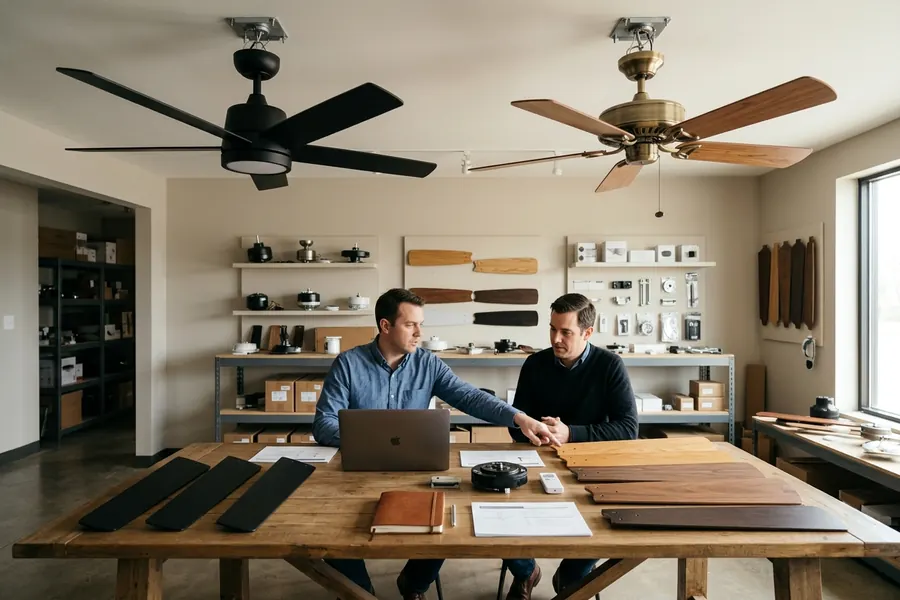
ABS and wood serve different needs. The better material depends on the room, climate, design style, and expected price level.
This table gives a simple comparison before going deeper.
| Factor | ABS Blades | Wooden Blades |
|---|---|---|
| Weight | Usually lighter | Often heavier |
| Moisture resistance | Usually stronger | Depends on finish and construction |
| Style | Clean, modern, flexible | Warm, natural, premium |
| Shape control | Easy to mould consistently | Depends on cutting and finishing |
| Maintenance | Easy to wipe clean | Needs more care |
| Best use | Small rooms, humid spaces, modern fans | Living rooms, bedrooms, villas, premium interiors |
| Risk | Can look less natural if finish is poor | Can warp or change if poorly sealed |
4-1. ABS is practical
ABS is a good choice when the project needs consistency, easy cleaning, moisture resistance, and a modern look.
It is especially useful for compact fans and fan lights.
4-2. Wood is more emotional
Wood is often chosen for the feeling it creates. It can make a fan look warmer and more premium.
This is useful when the fan is part of the room design, not just an appliance.
4-3. Both materials need good design
Poorly designed ABS can look cheap. Poorly finished wood can age badly.
Material alone does not decide quality. Design, motor matching, blade balance, and finishing all matter.
5. Which Blade Material Is Better for Humid Rooms?

For humid rooms, ABS often has the advantage. It does not absorb moisture in the same way natural wood can.
This makes ABS useful where the fan may face damp air, cooking moisture, or seasonal humidity.
5-1. Why moisture can be a problem
Moisture can affect some wooden blades over time. It may cause swelling, warping, surface damage, or finish changes if the blade is not properly sealed.
This does not mean wood is always wrong in humid areas, but it does need stronger protection.
5-2. Where ABS works well
ABS works well in kitchens, apartments, utility spaces, covered outdoor areas, and humid regions.
An ABS ceiling fan can also be useful where easy cleaning is important.
5-3. When wood can still work
Wood can still work in dry indoor spaces or controlled environments. It can also work if the blade is properly treated and the fan is not exposed to damp air.
For semi-outdoor areas, check the product rating and blade construction before choosing wood.
Need Help Choosing the Right Ceiling Fan Blade Material?
Compare ABS, wood, finishes, motors, lighting options, and room conditions before planning your next fan range.
Get a Quote6. Which Blade Material Looks Better?

This depends on the room. ABS and wood create very different visual effects.
ABS often looks cleaner and more modern. Wood often looks warmer and more natural.
6-1. ABS for modern interiors
ABS works well in white, black, grey, and slim modern fan designs. It suits apartments, kitchens, compact bedrooms, and simple interiors.
An ultra-thin white ceiling fan with ABS-style blades can feel clean and light in a modern room.
6-2. Wood for warm interiors
Wood works well in living rooms, master bedrooms, villas, hotels, and rooms with timber furniture or warm neutral colours.
A 52 inch wood ceiling fan can become part of the room’s visual style instead of disappearing into the ceiling.
6-3. Matching blade finish with the room
The blade finish should match the furniture, floor, ceiling colour, and lighting.
A dark wood blade can feel strong and decorative. A light oak blade can feel softer and more relaxed.
7. Which Blade Material Is Quieter?
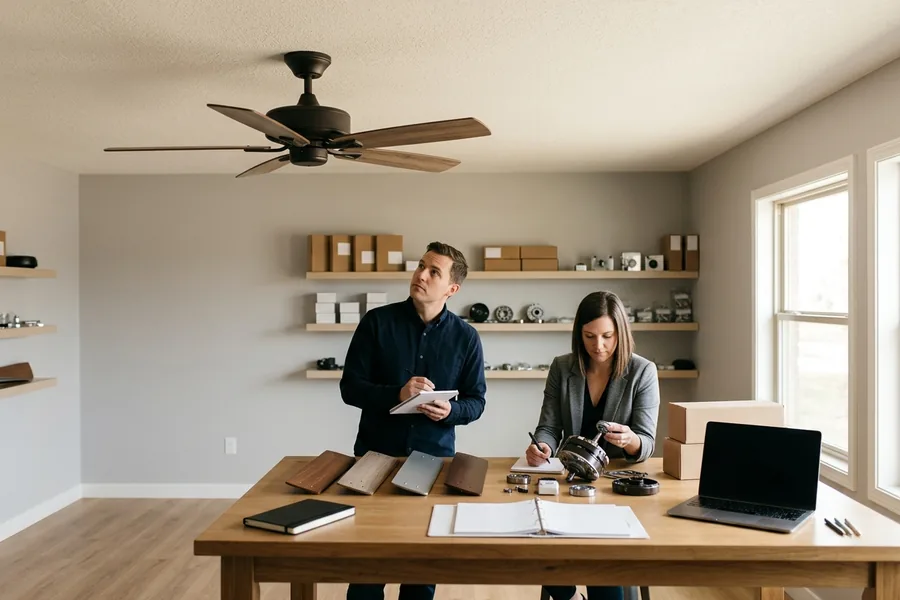
Noise is not decided by blade material alone. The motor, blade balance, installation, speed setting, and blade shape all matter.
Still, material can affect how stable the fan feels.
7-1. Balance matters more than material
A well-balanced ABS blade can run quietly. A well-balanced wooden blade can also run quietly.
If the blades are not consistent in weight or shape, the fan may wobble or create more noise.
7-2. Motor quality is still key
The motor is the heart of quiet performance. DC and BLDC motors are often used in modern ceiling fans because they can support smoother speed control.
Blade material helps, but it cannot fix a weak motor.
7-3. Installation affects noise
Even a good fan can sound bad if it is installed poorly. Loose mounting, uneven blades, wrong downrod length, or poor ceiling support can create noise.
Quiet performance depends on the full system.
8. Which Blade Material Is Better for Outdoor or Semi-Outdoor Use?
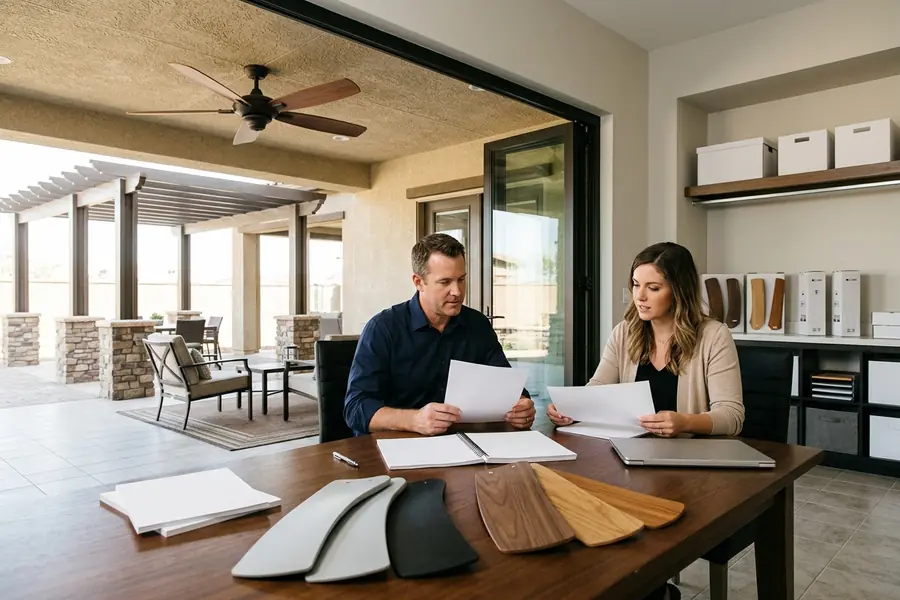
For outdoor and semi-outdoor use, ABS or other moisture-resistant materials often make more sense than untreated wood.
Outdoor conditions can be tough. Heat, moisture, dust, and changing air can affect the fan over time.
8-1. ABS for covered outdoor areas
ABS can be a practical choice for covered patios, balconies, and semi-open areas when the fan is designed for that use.
It is easier to clean and more resistant to damp conditions.
8-2. Wood needs stronger protection
Wood can look beautiful outdoors, but it needs proper sealing and the right product rating.
If the finish is weak, the blade may change shape or colour over time.
8-3. Always check the fan rating
Do not choose blade material alone. Check whether the full fan is designed for indoor, damp, or outdoor use.
The motor, light, screws, housing, and blade material all need to match the environment.
9. Which Blade Material Is Better for Importers and Projects?

For importers and project buyers, blade material affects not only appearance but also stock planning, after-sales risk, and market positioning.
ABS and wood can both belong in the same product range if each material has a clear role.
9-1. ABS for stable high-volume SKUs
ABS can be useful for high-volume models because it is consistent, light, and easy to clean.
It is often suitable for apartments, small rooms, compact fan lights, and modern retail products.
9-2. Wood for premium and design-led SKUs
Wood can support higher design value. It works well for villas, living rooms, hotels, and premium residential projects.
A large wood blade fan can help a product range feel more complete and more design-focused.
9-3. Testing both materials before deep stock
As a ceiling fan light manufacturer, NEBOLA can support buyers who want to test ABS-style blades, wood blade fans, finishes, motors, and lighting options before building heavy stock.
With MOQ starting from around 10 units, buyers can compare material response in smaller batches and expand only after market feedback is clear.
10. How to Choose Between ABS and Wood
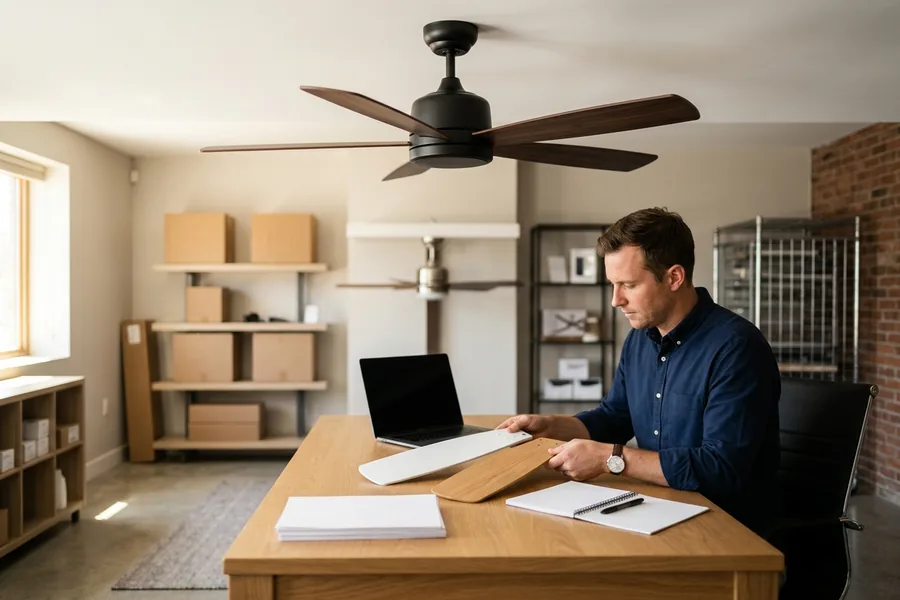
The best choice is the one that fits the room and the buyer’s expectations.
Use the room environment first, then style, then budget, then maintenance needs.
10-1. Choose ABS when practicality matters most
Choose ABS when the fan needs to be light, easy to clean, moisture-resistant, modern, and consistent.
It is a strong choice for compact spaces, humid areas, modern apartments, and many fan light designs.
10-2. Choose wood when warmth and design matter most
Choose wood when the room needs a warmer, more natural, or more premium feeling.
Wood works best in dry indoor spaces where the finish can be protected and appreciated.
10-3. Choose by environment, not only by taste
Taste matters, but the environment matters more. A beautiful wood blade may not be right for a humid patio. A practical ABS blade may not give the warm look needed for a luxury villa.
The right decision balances beauty and use.
Final Buying Checklist
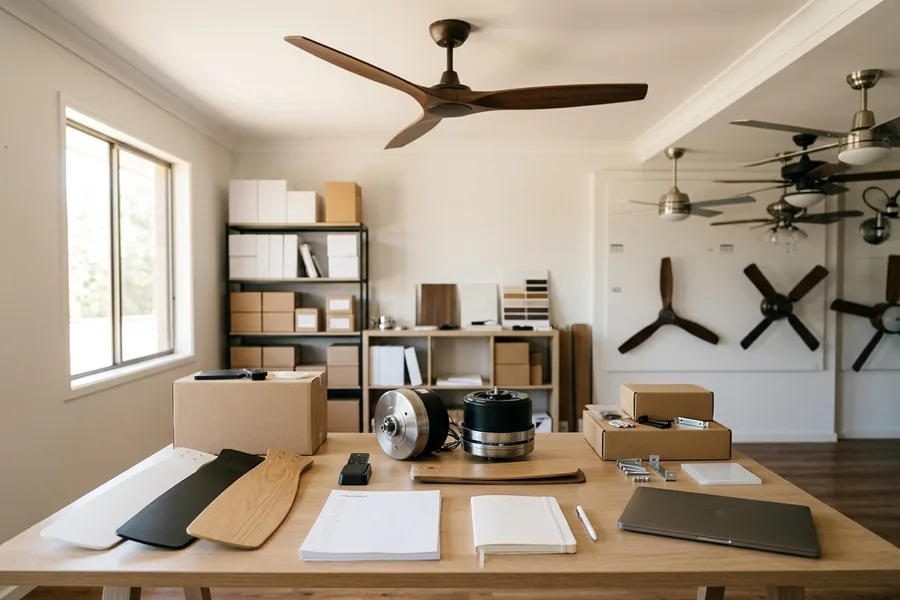
Before choosing ABS or wood, check the key details.
| Check | Why It Matters |
|---|---|
| Room humidity | Helps avoid warping or finish damage |
| Indoor or outdoor use | Decides whether the material is suitable |
| Fan size | Blade span must match the room |
| Motor quality | Supports quiet and stable running |
| Blade balance | Reduces wobble and noise |
| Cleaning needs | ABS is usually easier to wipe clean |
| Style goal | Wood gives warmth, ABS gives modern simplicity |
| Product rating | The whole fan must match the environment |
| Stock role | ABS may suit volume SKUs, wood may suit premium SKUs |
ABS and wood are both useful ceiling fan blade materials. ABS is usually better for moisture resistance, easy cleaning, lightweight structure, and modern fan designs. Wood is usually better for warmth, natural texture, and premium room styling. The best choice is not the material with the better name. It is the material that fits the room, the climate, the fan design, and the way the product will be used.
Need Help Choosing the Right Ceiling Fan Blade Material?
Compare ABS, wood, finishes, motors, lighting options, and room conditions before planning your next fan range.
Get a Quote