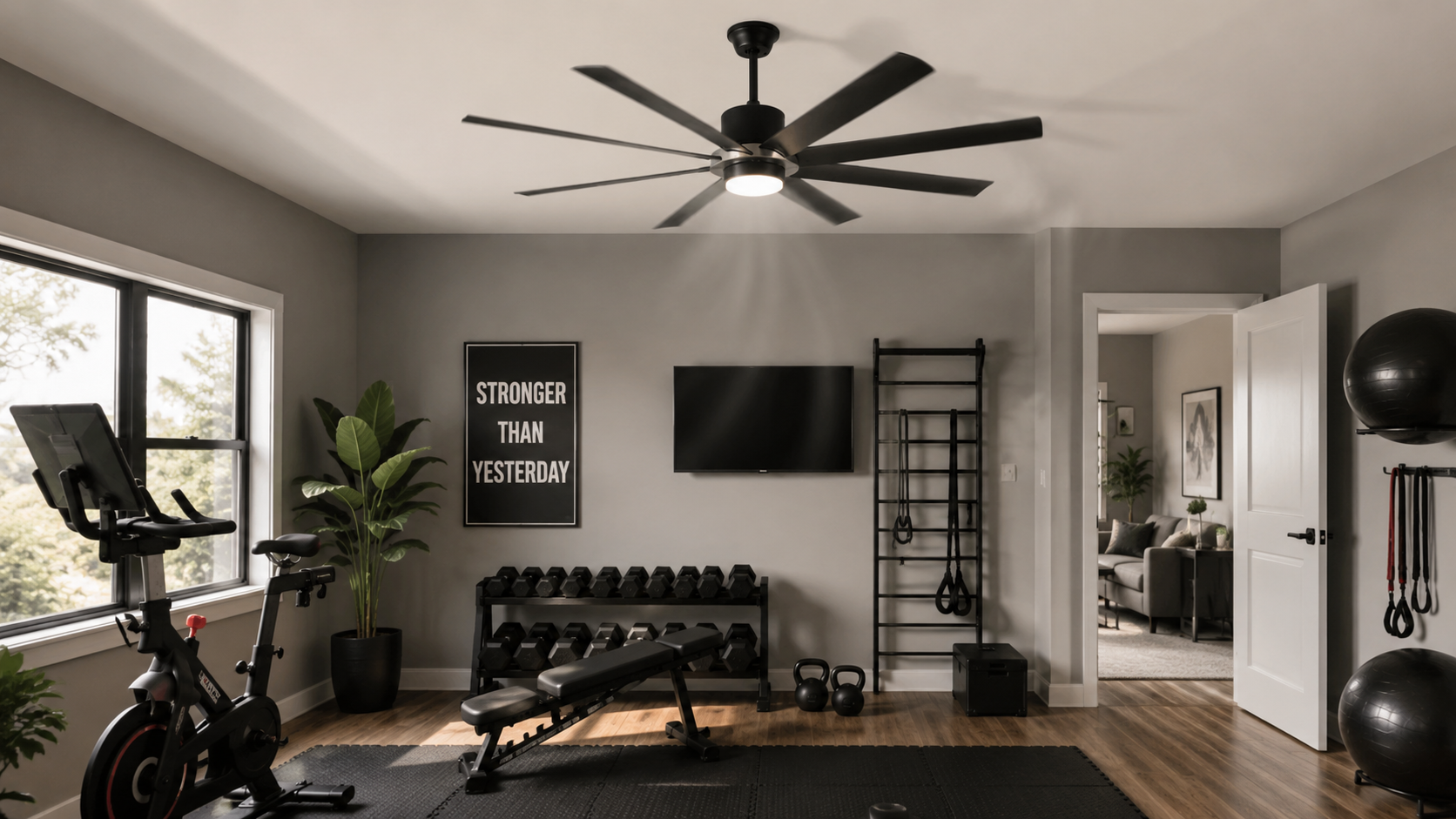


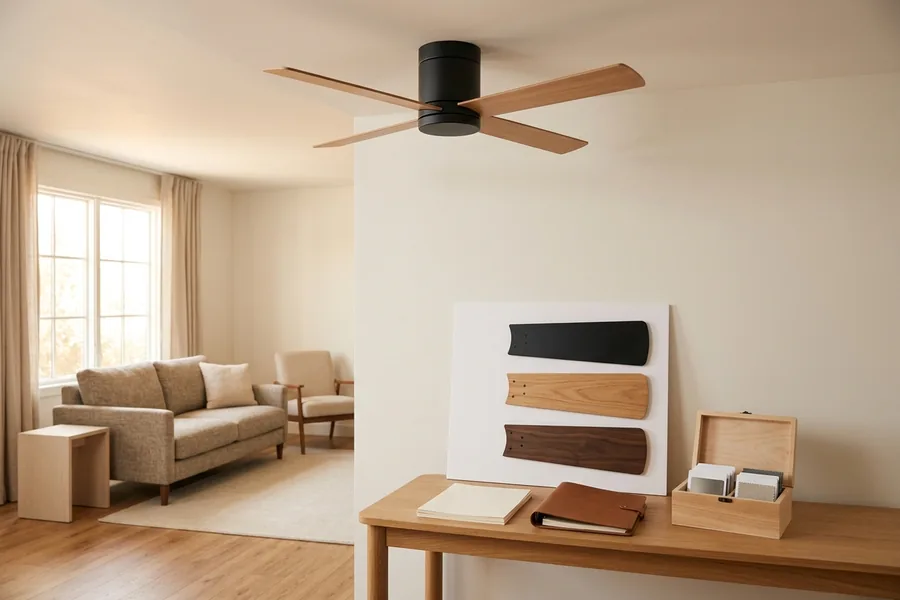
Choosing a ceiling fan is not only about size, motor type, or style. The blade material also matters. It can change how the fan feels in daily use, how steady the airflow is, how much care the fan needs, and how well it fits the room. If you are comparing different ceiling fan blade materials, the best choice is not always the most expensive one. It is the material that matches the room, the motor, the climate, and the way people use the space.
In the ceiling fan market, blade material is often treated like a design detail. A buyer may see a wood finish and think it feels warmer. Another buyer may see ABS and think it is more practical. Both can be true. But performance is more than appearance. A blade must stay balanced, keep its shape, work smoothly with the motor, and move air without creating too much noise or stress.
As a ceiling fan manufacturer, NEBOLA often looks at blade material from a practical angle. A good fan is a full system: blade material, blade shape, motor power, speed control, mounting height, and room size must work together. Change one part, and the whole fan can feel different.
1. Why Blade Material Matters More Than It Looks
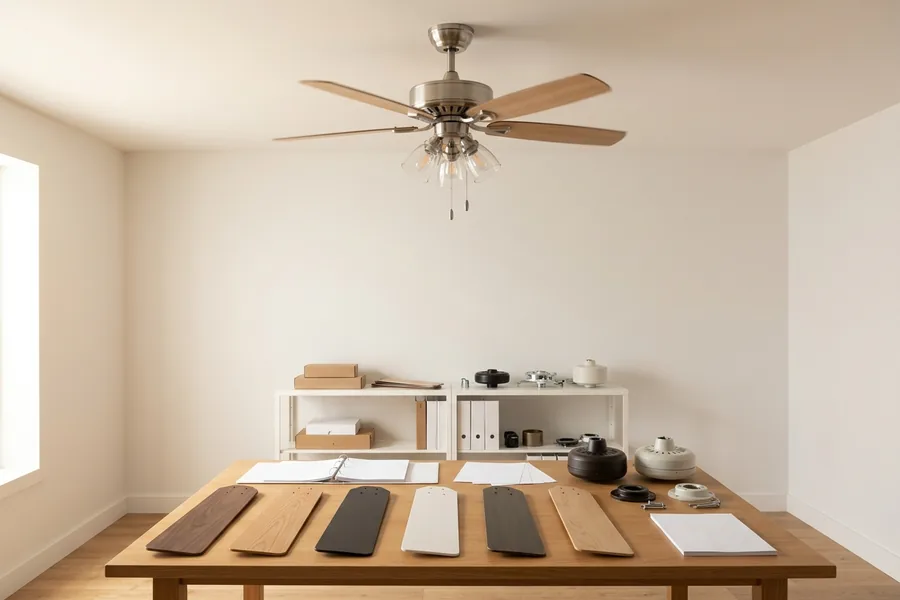
Blade material is easy to overlook because it does not always appear in the main product title. Most people search by fan size, light style, colour, or remote control. But once the fan is installed, the blade material becomes part of the everyday experience.
It affects three things most users notice:
- How the airflow feels
- How quiet and stable the fan is
- How long the fan stays in good condition
A blade that is too heavy for the motor can feel slow. A blade that is too flexible can lose airflow stability. A blade that absorbs moisture can change shape over time. A blade that is well matched to the motor can feel smooth, quiet, and easy.
1-1. Blade material changes airflow feel
Airflow is not only about how much air a fan moves. It is also about how that air reaches people.
A light blade can respond quickly when the speed changes. This can make the fan feel lively and easy to control. A heavier blade may feel slower at first, but it can give a steadier, calmer airflow when the motor is built for it.
This is why two fans with the same size can feel different. They may both be 52 inches, but if one uses lightweight ABS blades and another uses solid wooden blades, the airflow can feel different even at the same speed setting.
1-2. It affects fan efficiency and motor load
Fan efficiency depends on how much useful air the fan moves for the power it uses. Blade material can affect this because weight and stiffness change the load on the motor.
If the blade is heavy, the motor needs enough torque to start and keep it moving. If the blade is light and well shaped, the fan may need less effort to run at normal speed. But light does not always mean efficient. A poorly shaped light blade can waste energy. A well designed heavier blade can still perform well.
So the real question is not, “Which material is always more efficient?” The better question is, “Is this blade material matched to the motor and blade design?”
1-3. It also changes noise, weight, and durability
Noise is often blamed on the motor, but blade material can also play a role. A blade that is not balanced can create vibration. A blade that bends too much can disturb airflow. A blade that changes shape in humidity can cause wobble later.
Durability also matters. In a dry bedroom, many materials can work well. In a humid room, a covered patio, or a high-use hotel room, the blade must handle more stress.
2. What Blade Material Really Means in Ceiling Fans
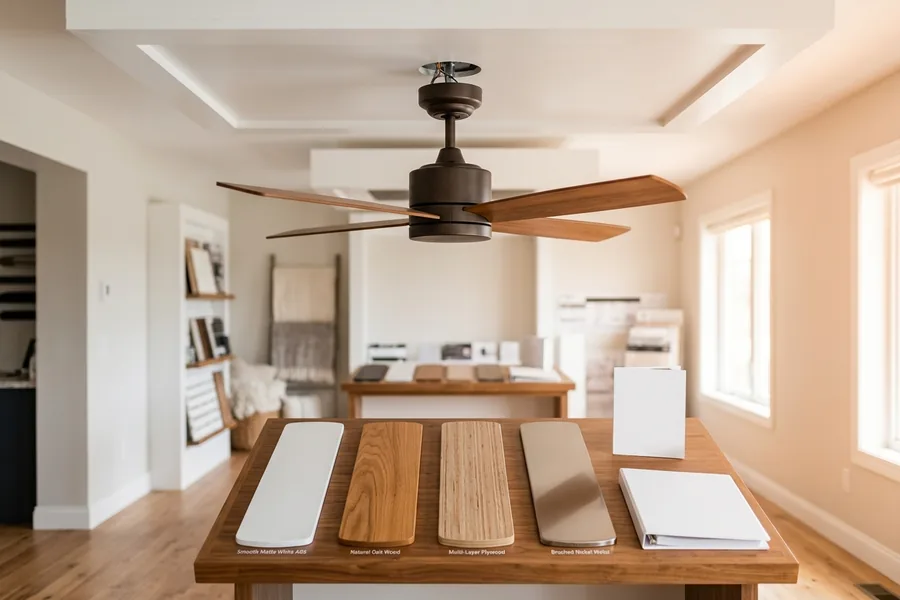
When people talk about ceiling fan blade material, they often mean the visible surface. But the full picture is wider.
A ceiling fan blade can be made from ABS plastic, wood, plywood, MDF, metal, acrylic, or mixed materials. It can also have a veneer, painted finish, printed wood grain, or protective coating. Two blades may look similar but behave differently.
2-1. Common blade materials in the market
The most common blade materials are:
| Blade material | Common use | Main strength | Main concern |
|---|---|---|---|
| ABS plastic | Modern fans, humid rooms, outdoor-rated models | Light, stable, easy to clean | Can look less natural if the finish is poor |
| Solid wood | Premium residential fans | Warm look, natural feel | Higher cost, moisture sensitivity |
| Plywood or MDF | Mid-range decorative fans | Cost control, many finishes | Needs good coating and edge protection |
| Metal | Industrial or high-durability fans | Strong, slim, durable | Can be noisier or harsher in homes |
| Acrylic or PC | Retractable and decorative fans | Light, modern, flexible design | Depends heavily on blade shape and quality |
For home and project buyers, ABS and wood are usually the two materials that create the biggest decision. If you want a direct comparison, the guide on ABS vs wooden ceiling fan blades is useful background reading.
2-2. How material is different from blade shape and pitch
Blade material is important, but it is not the same as blade shape.
Blade shape decides how air is pushed. Blade pitch decides the angle of the blade. Blade material decides how well the blade keeps its form, weight, and balance while doing that job.
A poor blade shape will not become good just because the material is expensive. A good blade shape can also be weakened by poor material or poor balance.
Think of it like a simple tool. The material matters, but the design must still be right.
2-3. Why the same fan size can still perform differently
A 52 inch fan with weak blades can feel worse than a 48 inch fan with better design. A large fan is not automatically stronger. Size gives the fan a wider circle, but blade material, blade pitch, and motor power decide how useful that circle is.
This is especially important for buyers comparing products online. Product photos show the look. They do not always show balance, stiffness, coating quality, or airflow behaviour.
3. ABS Blades: Lightweight and Practical
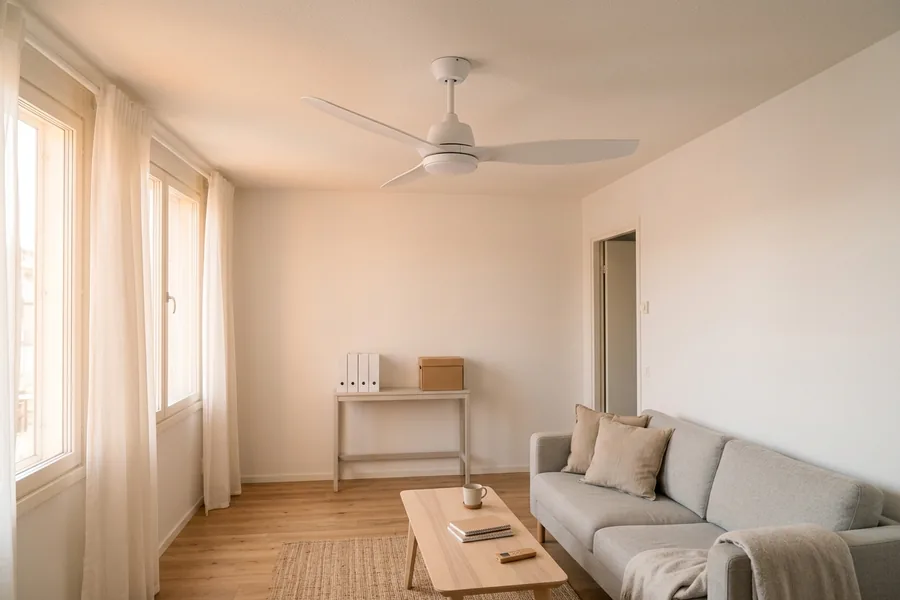
ABS blades are common in modern ceiling fans because they are light, stable, and easy to produce in clean shapes. They are often used in fans that need quiet running, simple maintenance, and consistent production.
For many buyers, ABS is the practical choice. It is not always the most decorative material, but it often works very well in everyday rooms.
3-1. Why ABS is common in modern fans
ABS is popular because it is light and does not absorb moisture like natural wood. It can be moulded into smooth blade shapes, which helps brands design slim, modern fans.
This is useful for apartments, bedrooms, kitchens, and humid regions. In these spaces, users often want a fan that is easy to clean, stable, and not too heavy on the ceiling.
For example, a clean modern product such as an ultra-thin 52 inch DC ceiling fan fits the kind of buyer who wants a light visual style, quiet motor control, and efficient daily airflow.
3-2. How ABS affects airflow and speed response
Because ABS blades are often lighter, they can respond quickly when the motor changes speed. This can make low and medium speeds feel easier to control.
That matters because many people do not use ceiling fans at full speed all day. In bedrooms and living rooms, low-speed comfort is often more important than maximum airflow.
The risk is quality. Cheap ABS blades can feel thin, flexible, or poorly balanced. Good ABS blades should feel firm, smooth, and consistent.
3-3. Where ABS works best in real rooms
ABS blades often work well in:
- Small and medium bedrooms
- Apartments
- Kitchens
- Humid indoor spaces
- Modern low-profile rooms
- Some covered outdoor areas, if the full fan is rated for that use
They are also useful when the buyer wants simple cleaning. Dust and moisture can be easier to manage on a smooth ABS surface than on natural grain.
4. Wooden Blades: Natural Look and Stable Feel
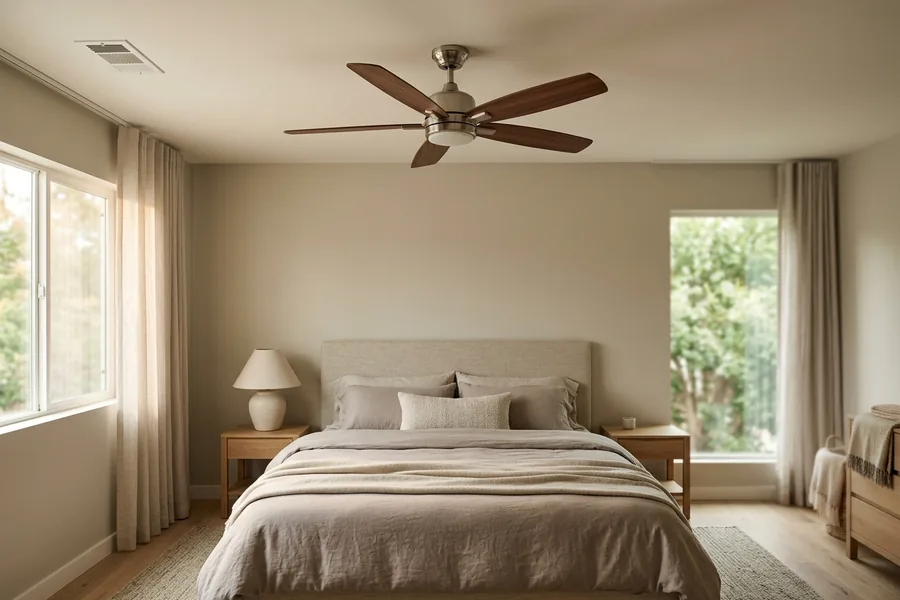
Wooden blades are often chosen for rooms where the fan is part of the interior design. They bring a warmer look than plain plastic, and they can make a ceiling fan feel more like furniture than equipment.
Wood is not only about style, though. A well made wooden blade can feel solid, calm, and stable. But the quality of the wood, coating, balance, and motor match matters a lot.
4-1. Why wooden blades are chosen for design-led spaces
Wooden blades suit rooms where the fan is meant to be seen. Living rooms, master bedrooms, villas, boutique hotels, and warm modern interiors often use wood or wood-look finishes because they soften the ceiling.
A product such as a 52 inch wood ceiling fan without light can work well when the room already has enough lighting and the fan needs to look clean, calm, and natural.
4-2. How wood changes the fan’s balance and comfort
Wooden blades can be heavier than ABS blades. This is not automatically bad. If the motor is strong enough and the blades are balanced well, the fan can feel smooth and steady.
The problem comes when the motor and blade weight do not match. A weak motor with heavy blades may start slowly, run less efficiently, or create more stress over time. A strong motor with well balanced wooden blades can feel quiet and stable.
In simple terms: wood can feel premium, but it asks more from the motor and manufacturing quality.
4-3. Where wooden blades fit best
Wooden blades often fit:
- Master bedrooms
- Living rooms
- Villas
- Hospitality rooms
- Warm modern interiors
- Large spaces that need a stronger design statement
For larger rooms, a product such as a 66 inch wood ceiling fan light can make sense when both airflow coverage and visual proportion matter.
5. Material vs Airflow: What Buyers Often Miss
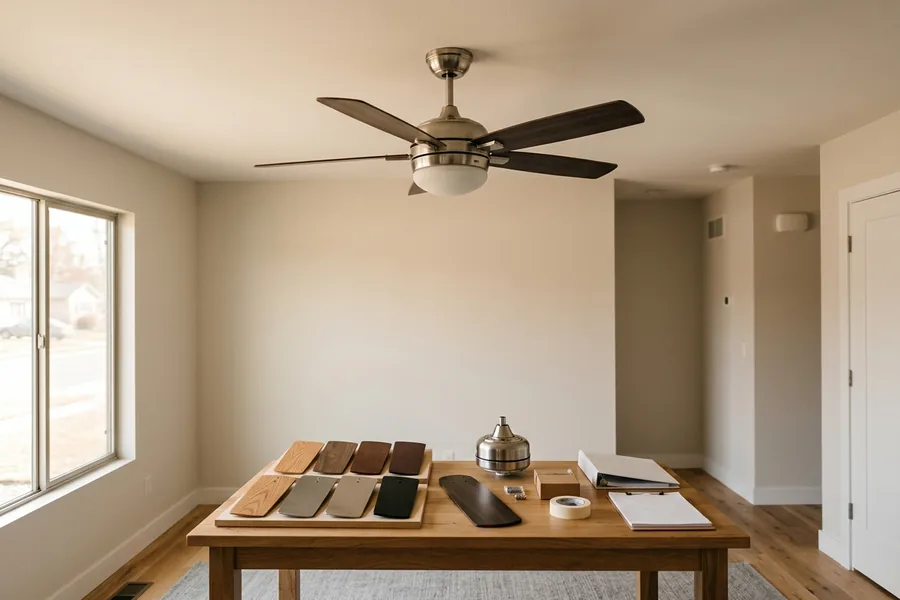
Blade material affects airflow, but it does not work alone. If a fan performs poorly, the material may not be the only reason.
The most common mistake is judging airflow from the blade look. A wide wooden blade may look powerful. A slim ABS blade may look light. But real airflow depends on the full design.
5-1. Why a bigger blade does not always move air better
A bigger blade span gives the fan more coverage. But if the blade pitch is weak or the motor does not have enough power, the fan may still feel soft.
This is why a large decorative fan can look impressive but feel disappointing. The blade material may be beautiful, but performance still needs motor power, blade angle, and stable speed control.
5-2. How blade weight changes airflow efficiency
Blade weight affects how hard the motor works. Lighter blades can reduce the starting load. Heavier blades can add stability but need stronger motor support.
This is important for fan efficiency. A fan should move useful air without wasting energy or creating noise. If the motor is always working too hard, efficiency drops.
5-3. Why motor quality still matters more than material alone
Blade material gets attention because people can see it. Motor quality is less visible, but it is often more important.
A good DC motor can help the fan run quietly at low speed, save energy, and control airflow more gently. This matters whether the fan uses ABS, wood, or another blade material.
For buyers comparing decorative and performance models, a 60 inch wood fandelier ceiling fan light is a good example of why blade material, lighting style, motor control, and room proportion should be judged together.
Need Help Choosing the Right Ceiling Fan Blade Material?
Compare ABS, wood, airflow, motor options, and room use to find a ceiling fan solution that fits your market.
Get a Quote6. Material vs Fan Efficiency
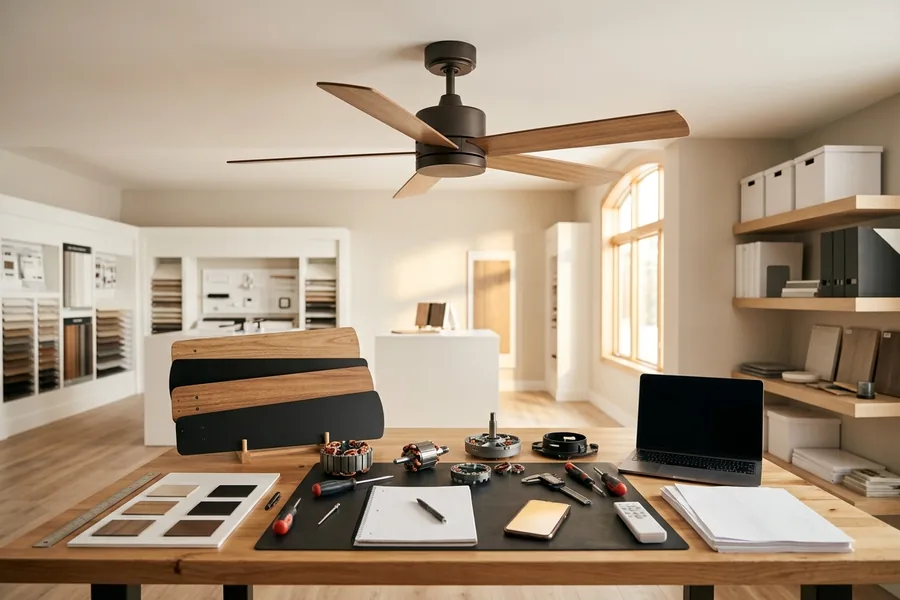
Fan efficiency is not just a technical number. It decides how comfortable and practical the fan feels over time.
An efficient fan should move enough air at low or medium speed, stay quiet, and use power sensibly. Blade material can help, but it cannot fix a poor design.
6-1. How blade material affects power use
Blade material affects power use mainly through weight, stiffness, and balance.
If a blade is too heavy for the motor, the motor may need more effort. If the blade is too flexible, it may waste energy by bending instead of pushing air cleanly. If the blade is unbalanced, vibration can reduce comfort and long-term reliability.
Good material helps the motor do its job cleanly.
6-2. Why lighter blades can help some fans work more smoothly
Lighter blades can be useful in small and medium fans, especially where users want quiet, responsive control. A light blade can start easily, stop smoothly, and change speed without much delay.
This is one reason ABS and acrylic blades are common in compact modern ceiling fan lights and retractable fan lights.
But lighter blades still need good shape. A light blade with poor pitch will not move air well.
6-3. Why efficiency is a full-system question
Blade material is one part of fan efficiency. The full system includes:
- Motor type
- Blade span
- Blade pitch
- Blade material
- Fan speed range
- Mounting height
- Room size
- Ceiling shape
This is why NEBOLA usually treats material selection as part of product planning, not as a single isolated choice. For project buyers, the right blade material should support the whole fan design, not just look good in a catalogue.
7. Noise, Vibration, and Long-Term Comfort
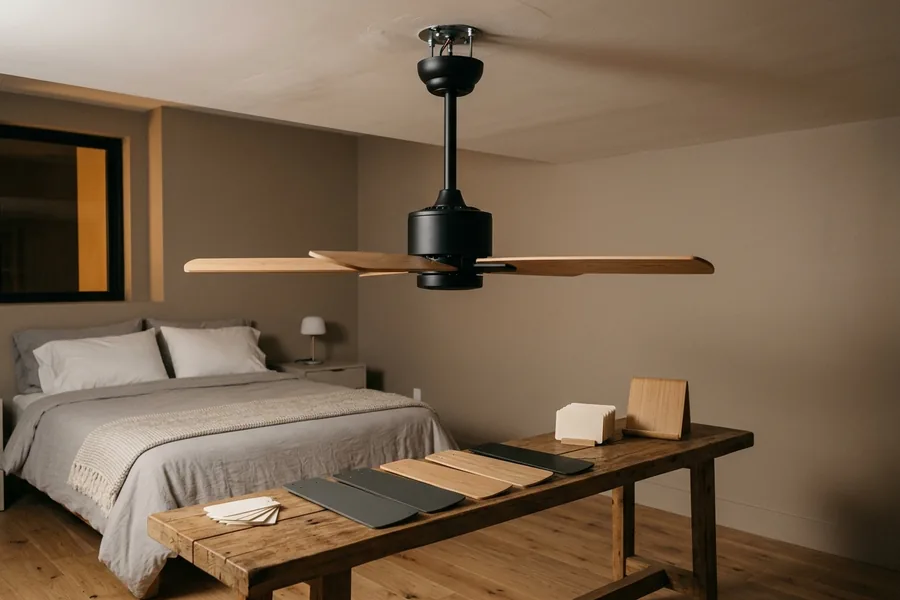
Noise is one of the biggest reasons people regret a ceiling fan purchase. A fan can look good and move air, but if it hums, shakes, or clicks at night, people stop using it.
Blade material can affect this in quiet but important ways.
7-1. How blade material affects quiet operation
A stable blade helps the fan run smoothly. If the blade keeps its shape, has even weight, and is fixed well to the motor, the fan is less likely to wobble.
ABS blades can be quiet because they are light and consistent. Wooden blades can also be quiet when they are balanced and paired with the right motor. The problem is not the material alone. The problem is poor matching.
7-2. Why balance matters as much as material
A beautiful blade that is not balanced will cause trouble. It may wobble at medium or high speed. It may create uneven airflow. Over time, it may put extra stress on the motor and mounting parts.
For any blade material, buyers should check:
- Whether the blades are evenly made
- Whether the blade arms are strong
- Whether the motor is suitable for the blade weight
- Whether the fan has passed balance testing
- Whether installation is simple enough to avoid errors
7-3. What buyers should check before choosing
Before choosing a fan, do not only ask what the blade is made from. Ask these questions:
- Is the fan quiet at low speed?
- Does the blade material suit the room humidity?
- Is the motor strong enough for the blade weight?
- Is the blade finish easy to clean?
- Is the fan designed for indoor, damp, or outdoor use?
- Does the product match the room size?
These questions are more useful than asking whether one material is always better.
8. Which Blade Material Fits Different Use Cases
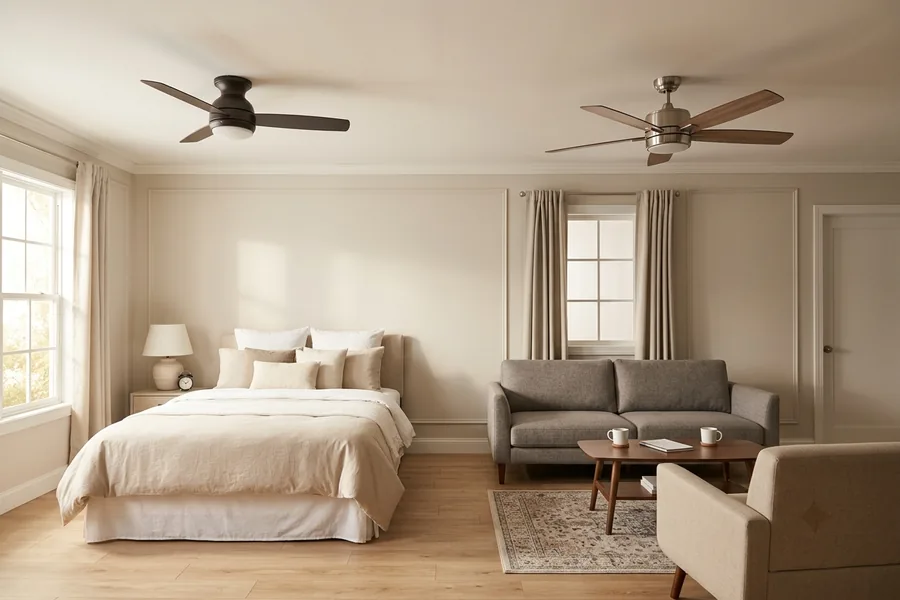
The right blade material depends on the room. A bedroom does not need the same fan as a covered patio. A hotel room does not need the same fan as a warehouse. A decorative living room does not need the same fan as a compact apartment.
8-1. Best choice for bedrooms
For bedrooms, quiet comfort matters most. The best blade material is usually the one that helps the fan run smoothly at low speed.
ABS can be a strong choice for small and medium bedrooms because it is light, stable, and easy to clean. Wood can be a good choice for master bedrooms when the fan is part of the design and the motor is quiet enough.
If the bedroom needs a warmer visual style, wood or wood-look finishes can help the fan feel softer.
8-2. Best choice for living rooms
Living rooms need both airflow and proportion. The fan is more visible, so blade material and finish matter more.
Wooden blades can look better in warm, natural interiors. ABS blades can suit clean modern rooms, especially when the fan has a slim body and simple lighting.
For living rooms, do not choose blade material only by photo. Think about room width, ceiling height, furniture layout, and how often the fan will run.
8-3. Best choice for humid or high-use spaces
Humid rooms need stable materials. ABS is often safer than untreated natural wood because it does not absorb moisture in the same way.
For covered patios or semi-outdoor spaces, the full fan rating matters. A blade material may handle moisture, but the motor, screws, finish, and light parts must also be suitable.
An outdoor ceiling fan with oak white blades can be suitable when the product is designed for that environment, not just because the blade finish looks outdoor-friendly.
8-4. Best choice for decorative projects
Decorative projects often need a stronger visual idea. Wood, wood-look ABS, rattan details, metal accents, or retractable blades can all work, depending on the interior.
For hotels, villas, and private-label projects, the best material is not only the one that looks good in a sample room. It must also be stable across repeated orders, easy to maintain, and suitable for the target market.
9. Common Mistakes When Comparing Blade Materials
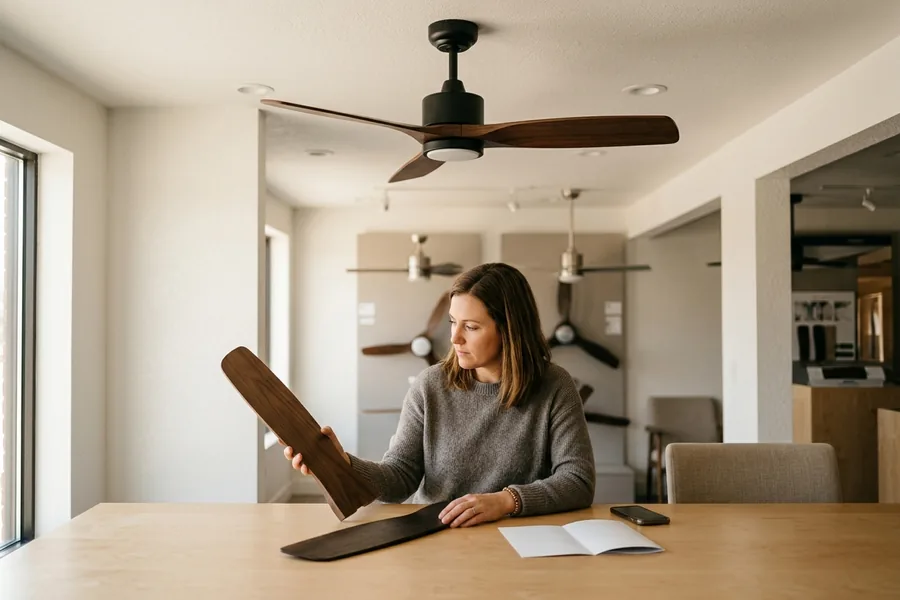
Blade material choices can go wrong when buyers focus on one detail and ignore the rest of the fan.
9-1. Choosing by look only
This is the most common mistake. A wood finish may look warm. A black ABS blade may look modern. A transparent blade may look light. But appearance does not guarantee airflow, quietness, or durability.
Always check the room use, motor type, blade size, and installation height.
9-2. Ignoring airflow and motor match
A blade material must work with the motor. Heavy blades need enough torque. Lightweight blades need good shape and stiffness. Decorative blades need careful balance.
If the motor and blade do not match, the fan may feel weak, noisy, or unstable.
9-3. Assuming all wood or all ABS fans perform the same
Not all wood blades are the same. Not all ABS blades are the same.
Good ABS can be strong, quiet, and practical. Poor ABS can feel cheap and flexible. Good wood can feel premium and stable. Poor wood or poor coating can cause maintenance problems.
Material names are useful, but product quality is still the real test.
10. How to Choose the Right Blade Material
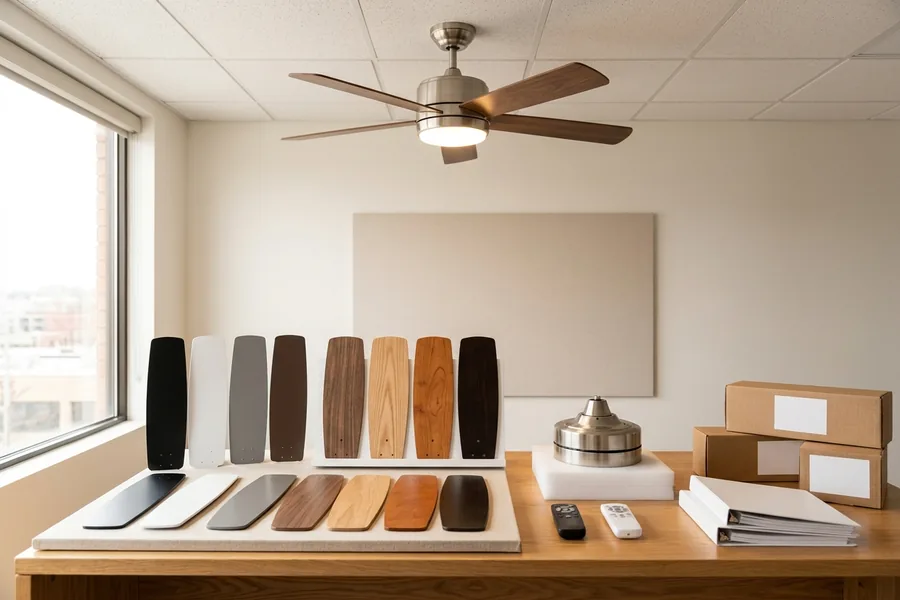
The best way to choose blade material is to start with the room, not the catalogue.
10-1. Start with room use
Ask what the fan needs to do every day.
For a bedroom, quiet airflow matters. For a living room, design and coverage matter. For a humid room, stability matters. For a project order, repeat quality and easy maintenance matter.
The room tells you what the material must handle.
10-2. Check airflow needs
If the room is small, a light blade with quiet speed control may be enough. If the room is large, the blade span, motor power, and blade design become more important.
Do not choose material before checking airflow needs. A beautiful blade that does not move air well will still disappoint.
10-3. Compare weight, finish, and maintenance
Blade material affects care. Smooth ABS is often easy to wipe clean. Wood may need better coating and more careful use in humid areas. Metal can be durable but may feel too industrial for soft home spaces.
For long-term use, maintenance is part of performance.
10-4. Match the material to the project goal
For a single home, the goal may be comfort and style. For an importer or project buyer, the goal may include MOQ, packing, certification, repeat orders, and model consistency.
That changes the decision. A material that is perfect for one luxury room may not be the best choice for a wide product range.
11. Choose the Blade Material That Matches the Room, Not Just the Fan
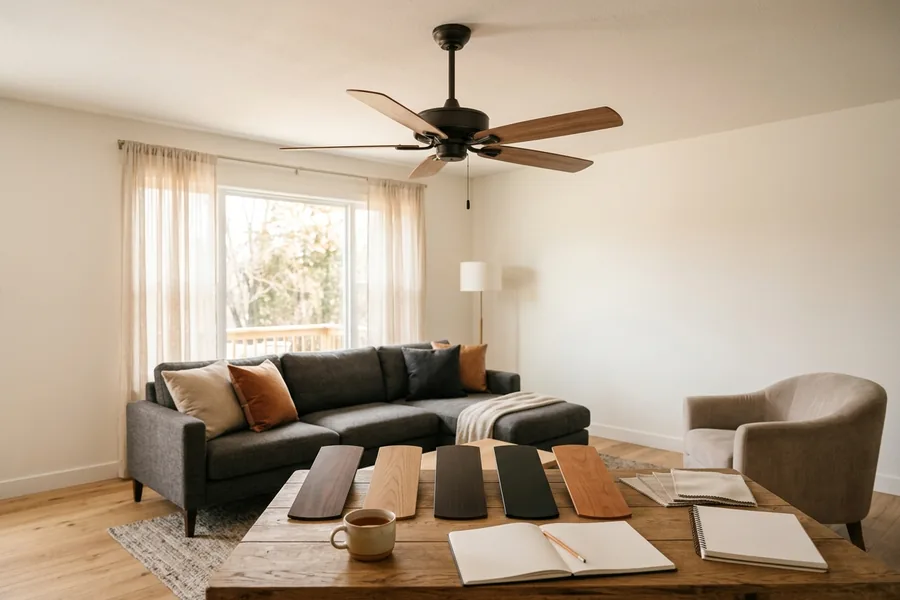
There is no single best blade material for every ceiling fan. ABS is not always better. Wood is not always better. The right answer depends on what the room needs and how the fan is built.
11-1. When a practical, easy-care blade makes more sense
Choose ABS or a similar practical material when the room needs easy cleaning, moisture resistance, stable production, and simple daily use.
This is often the better path for apartments, kitchens, compact bedrooms, modern low-profile fans, and some project applications where maintenance must stay simple.
11-2. When a warmer, more natural finish is worth choosing
Choose wood or a good wood-look finish when the fan is part of the room’s design.
This makes sense in master bedrooms, living rooms, villas, boutique hotel rooms, and warm modern interiors. But make sure the motor, balance, and finish quality support the blade material.
11-3. Why the best blade material is the one that supports daily comfort
The best ceiling fan blade material is the one that helps the fan feel right every day. It should support quiet airflow, steady movement, easy care, and the room’s visual style.
If you are still comparing options, start from the room and work backwards. Check the environment, airflow needs, fan efficiency, motor type, and blade design. Then choose the material. That path is slower than choosing by photo, but it leads to a fan people actually enjoy using.
For a broader material comparison, NEBOLA’s ceiling fan blade materials guide can help you compare ABS, wood, and other common blade choices before selecting a final model.
Need Help Choosing the Right Ceiling Fan Blade Material?
Compare ABS, wood, airflow, motor options, and room use to find a ceiling fan solution that fits your market.
Get a QuoteFAQ About Ceiling Fan Blade Material and Performance
Does blade material affect ceiling fan airflow?
Yes, blade material can affect ceiling fan airflow, but it does not work alone. The material changes blade weight, stiffness, balance, and long-term shape stability. These factors can change how smoothly the fan moves air. However, airflow also depends on blade pitch, blade span, motor power, speed settings, and installation height.
Are ABS ceiling fan blades better than wooden blades?
No, ABS blades are not always better than wooden blades. ABS is often more practical for humid rooms, easy cleaning, and lightweight modern fans. Wooden blades can be better for warm interiors, premium rooms, and design-led spaces. The better choice depends on the room, climate, motor quality, and the buyer’s comfort needs.
Do wooden ceiling fan blades move more air?
No, wooden ceiling fan blades do not automatically move more air. Wood can feel solid and stable, but airflow depends more on blade design, pitch, motor strength, and fan speed. A well designed ABS blade can move air better than a poorly designed wooden blade. Material helps performance, but it does not replace good engineering.
Can blade material affect fan efficiency?
Yes, blade material can affect fan efficiency because it changes the load on the motor. A lighter blade may help the fan start and adjust speed more easily. A heavier blade may need a stronger motor to run efficiently. The most efficient fan is usually the one where blade material, blade shape, and motor power are well matched.
Which blade material is best for humid rooms?
Yes, ABS or other moisture-resistant materials are usually better for humid rooms than untreated natural wood. Humidity can affect some wooden blades over time, especially if the coating and edge protection are weak. For kitchens, coastal areas, bathrooms with good ventilation, or covered outdoor spaces, always check the full fan rating, not only the blade material.
Should I choose blade material before choosing fan size?
No, you should not choose blade material before checking fan size and room needs. Start with the room area, ceiling height, airflow requirement, and daily use. Then choose a blade material that supports those needs. A beautiful blade material will not solve the problem if the fan is too small, too large, too noisy, or poorly matched to the room.