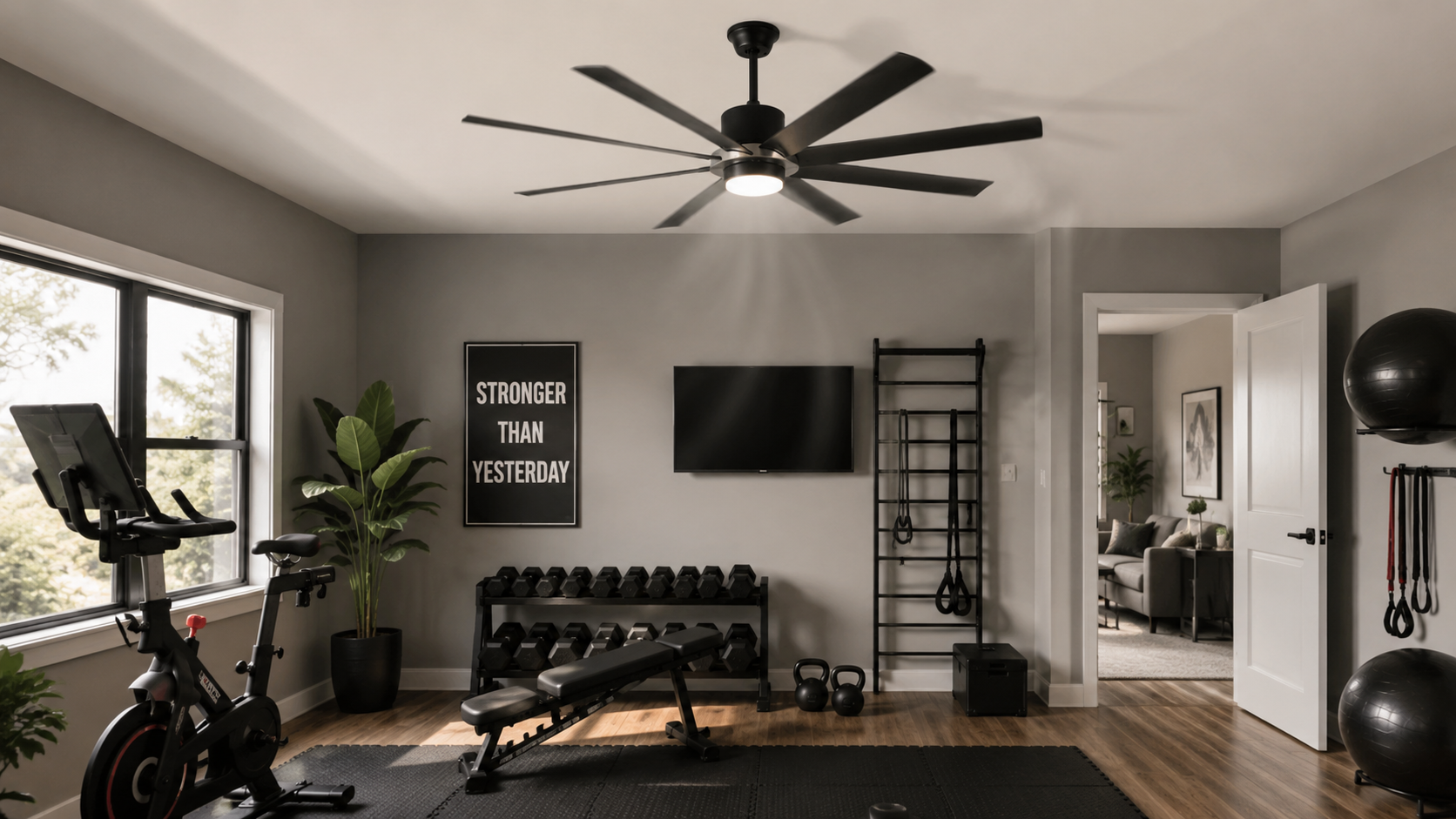


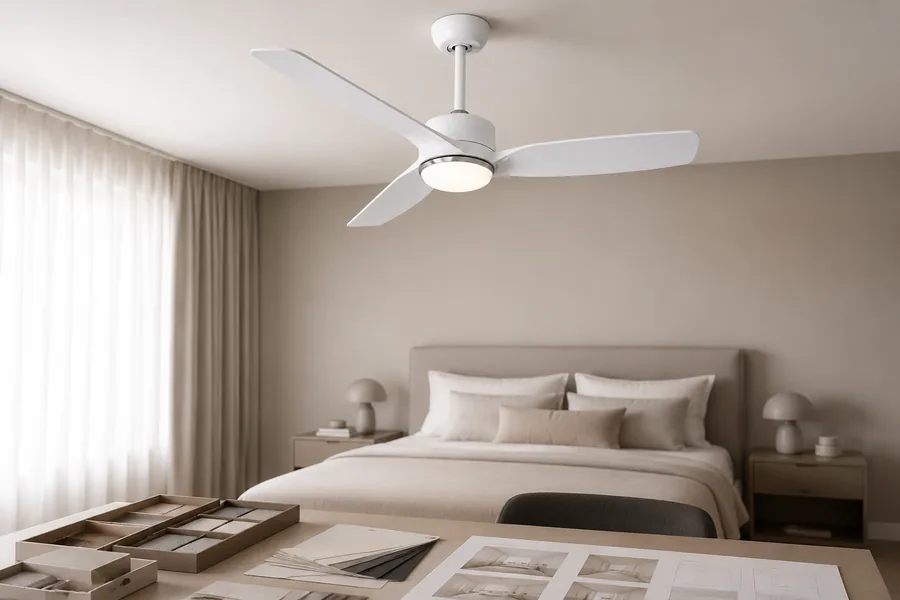
For importers, a bedroom ceiling fan is not only a comfort product. It is a sourcing decision that affects return rate, reviews, warranty cost, packaging loss, and repeat orders. Before placing a bulk order, the answer is clear: choose models that are quiet at low speed, stable after installation, easy to explain in listings, and backed by real factory testing.
If you are building a bedroom fan range, start with three core decisions: bedroom application, product specification, and supplier reliability. The table below gives a practical first-screen answer before the detailed buying guide.
| Importer Question | Direct Buying Answer | What to Ask the Manufacturer |
|---|---|---|
| Which size should I start with? | Build around 42, 48 and 52 inch bedroom models first. | Room-size suggestion, blade span, installed height and SKU mix advice. |
| Which specs decide user comfort? | Low-speed noise, low-speed airflow, wobble control and light softness matter most. | Noise test video, balance test, CFM at each speed and LED driver details. |
| Which specs reduce business risk? | Packaging strength, spare parts ratio, warranty process and clear MOQ terms. | Carton structure, drop-test plan, spare remote/receiver/LED module policy and claim rules. |
| What should samples prove? | A sample should prove real sleep comfort, not just appearance. | Run the fan at low/medium speed, check hum, click, vibration, pairing, dimming and finish consistency. |
This guide explains the key specs importers should check before placing a bulk order, including fan size, CFM, CFM/W, motor type, noise control, mounting options, light kits, MOQ, warranty terms, QC records and manufacturer reliability. NEBOLA believes the best products are not only good-looking; they are tested, consistent and built for real bedrooms.
Contents
- Introduction: Why Importers Should Pay Attention to Bedroom Ceiling Fans
- What Makes a Ceiling Fan Suitable for Bedrooms?
- Fan Size and Blade Span: Match the Fan to Bedroom Size
- Airflow Performance: Why CFM Matters
- Energy Efficiency: Why CFM/W Should Be Checked
- Motor Type: AC Motor vs DC Motor
- Noise Control: A Key Spec for Bedroom Use
- Wobble and Balance: A Small Detail That Affects Return Rates
- Mounting Type and Ceiling Height
- Light Kit Options: Fan Only or Ceiling Fan With Light
- Remote Control and Smart Features
- Materials, Finish, and Bedroom Design Compatibility
- How to Choose a Reliable Bedroom Ceiling Fan Manufacturer
- MOQ: What Importers Should Confirm Before Ordering
- Bulk Order Checklist Before Production
- Warranty: What Importers Should Check
- Common Mistakes Importers Should Avoid
1. Introduction: Why Importers Should Pay Attention to Bedroom Ceiling Fans
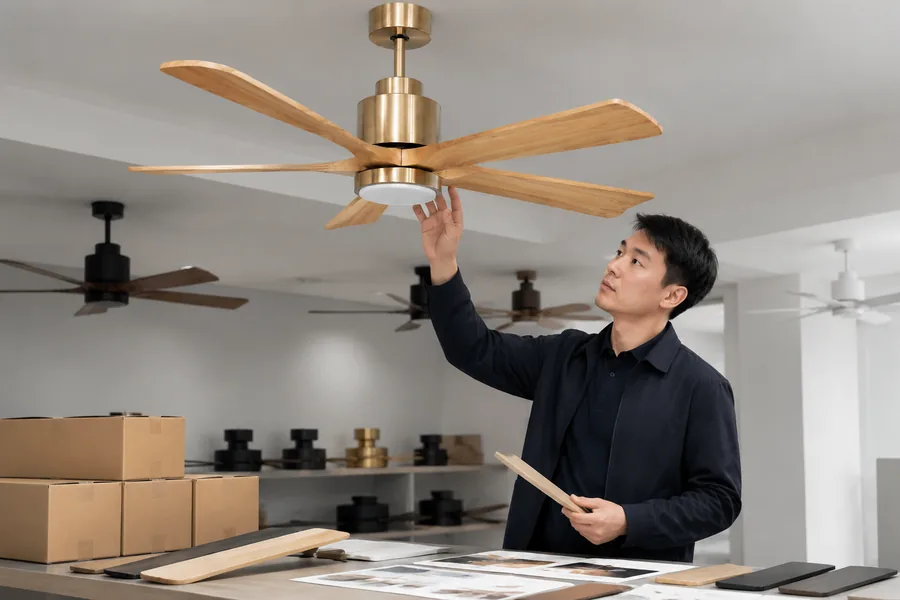
Bedroom ceiling fans are a strong product category. They are practical, easy to understand, and needed in many homes. For importers, this is good news. Very good news.
People want better sleep. They want lower energy bills. They want a bedroom that feels fresh and comfortable. A well-made bedroom ceiling fan can help with all of these.
But this is not just about buying a nice-looking fan. For an importer, the real question is bigger: Will this fan sell well? Will it reduce complaints? Will the supplier support a bulk order? Will the warranty be clear?
At NEBOLA, we believe a good bedroom ceiling fan should do three things well: look good, run quietly, and reduce sourcing risk.
1-1. Bedroom ceiling fans are a stable residential product category
Bedroom ceiling fans are not a short-term fashion item. They are a stable home product because bedrooms exist in every home.
Flats, villas, hotels, rental houses, and student apartments all need better air movement. In warm markets, ceiling fans are used often. In energy-conscious markets, they are also useful because they can reduce the need for air conditioning.
For importers, this means the product has repeat potential. A buyer may start with one model, then expand into more sizes, finishes, and light options.
Stable demand makes bedroom ceiling fans a smart category for long-term sourcing.
1-2. Importers need to consider both user comfort and business risk
The end user cares about comfort. The importer cares about profit, returns, reviews, delivery, and after-sales cost.
Both sides matter.
A fan may look good in a product photo, but if it makes noise at night, customers will complain. A fan may be cheap, but if the carton is weak, shipping damage will rise. A fan may have strong airflow, but if it wobbles, users may feel unsafe.
That is why importers should check the product as both a home appliance and a business item.
A good fan improves comfort. A good sourcing decision protects margin.
1-3. Key buying factors include specs, MOQ, warranty, and manufacturer reliability
Before placing a bulk order, importers should check more than price.
Key buying factors include:
- Fan size
- Blade span
- CFM airflow
- CFM/W efficiency
- Motor type
- Noise level
- Wobble control
- Mounting type
- Light kit quality
- Remote control
- MOQ
- Warranty
- Manufacturer reliability
A reliable bedroom ceiling fan manufacturer should be able to explain these points clearly.
If a supplier cannot answer simple technical questions, be careful. Very careful.
2. What Makes a Ceiling Fan Suitable for Bedrooms?
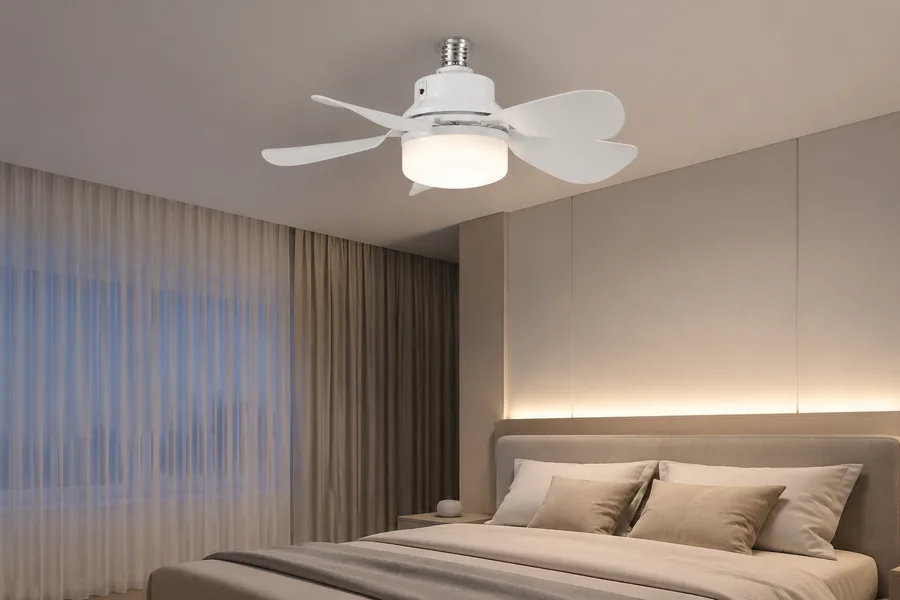
A bedroom is a rest space. It is not a warehouse, patio, or large living room. So the fan must be designed for comfort, not just power.
A suitable bedroom ceiling fan should run quietly, move air gently, be easy to control, and match bedroom interiors.
2-1. Quiet operation for better sleep comfort
Quiet operation is one of the most important features for bedroom use.
People often use bedroom fans at night. At night, even small sounds can feel big. A motor hum, a clicking sound, or a buzzing noise may disturb sleep.
For importers, this means one thing: do not only trust “quiet motor” in the catalogue. Test the sample.
Ask the manufacturer:
- What is the noise level?
- At which speed was it tested?
- Was the test done in a quiet room?
- Is there motor hum at low speed?
For bedroom ceiling fans, quiet performance is not optional. It is essential.
2-2. Gentle airflow instead of strong direct wind
Many buyers think high airflow is always better. That is not always true for bedrooms.
A bedroom fan should create soft air movement. It should not blow hard directly at the bed. Strong wind may feel good for a few minutes, but it can become uncomfortable during sleep.
A good bedroom fan gives steady airflow at low and medium speed. It keeps the room fresh without making the user feel cold or disturbed.
Bedroom comfort is about smooth airflow, not maximum wind.
2-3. Convenient control through remote or smart features
Remote control is very useful in bedrooms. People want to adjust speed, light, or timer from the bed.
A remote control also helps improve product value. It makes the fan feel more modern and easier to use.
Smart features can also help, especially in premium markets. App control, voice control, and timers can make the product more attractive.
But smart control must be stable. If pairing is difficult, customers will complain. If the app is confusing, after-sales pressure will increase.
Remote control is a must-have. Smart control is useful only when it works well.
2-4. Design compatibility with bedroom interiors
A ceiling fan is not hidden. It is placed in the centre of the room. So design matters.
For bedrooms, simple designs often work best. Popular finishes include:
- White
- Black
- Wood grain
- Brushed nickel
Importers should choose designs that fit many interior styles. Neutral colours are safer for bulk order planning because they can serve more buyers.
NEBOLA often recommends clean and simple bedroom fan designs because they are easier to match and easier to sell.
3. Fan Size and Blade Span: Match the Fan to Bedroom Size
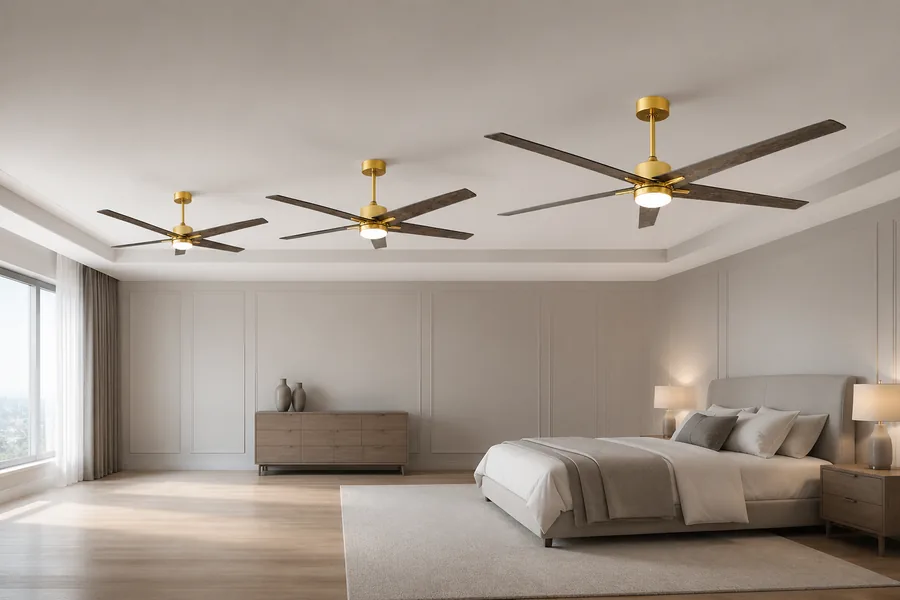
Fan size affects airflow, appearance, safety, and user comfort. It is one of the first specs importers should check.
If the fan is too small, airflow may feel weak. If the fan is too large, it may feel too strong or look awkward in the bedroom.
3-1. Common bedroom ceiling fan sizes: 42 inch, 48 inch, 52 inch, and 60 inch
Common bedroom ceiling fan sizes include 42 inch, 48 inch, 52 inch, and 60 inch.
Here is a simple reference:
| Bedroom Type | Suggested Fan Size | Importer Note |
|---|---|---|
| Small bedroom | 42 inch | Good for flats and compact rooms |
| Medium bedroom | 48–52 inch | Strong mainstream choice |
| Large bedroom | 52–60 inch | Better for premium homes |
| Low-ceiling bedroom | Hugger / flush mount | Better for clearance and safety |
For many importers, 48 inch and 52 inch models are the safest core range. They fit many bedroom sizes and are easy to position in the market.
3-2. How room size affects blade span selection
Blade span controls how widely the fan can move air.
A small bedroom does not need a very large fan. A large bedroom needs wider air coverage. If the blade span does not match the room, the customer may feel the fan is weak, noisy, or uncomfortable.
Importers should check the room-size habits of their target market. A market with small apartments may need more 42 inch and hugger fans. A market with larger homes may need more 52 inch and 60 inch models.
3-3. Why oversized or undersized fans can cause poor user experience
An undersized fan may not move enough air. The customer may say, “It looks nice, but it does not cool the room.”
An oversized fan can also create problems. It may produce too much direct wind. It may look too large. It may not fit well with the ceiling height.
Both situations can lead to bad reviews.
Wrong size can turn a good fan into a bad customer experience.
3-4. How importers can plan a balanced SKU mix for different bedrooms
A smart importer should not buy only one size.
A balanced starter range could include:
- 42 inch for compact bedrooms
- 48 inch for smaller standard bedrooms
- 52 inch as the main selling size
- 60 inch for larger or premium bedrooms
This kind of SKU mix helps importers serve more customer needs without taking too much risk.
4. Airflow Performance: Why CFM Matters

CFM is a key ceiling fan specification, but importers should not treat it as a simple “bigger is better” number. Bedroom buyers usually use low or medium speed at night, so the airflow must feel gentle, quiet and stable.
4-1. What CFM means in ceiling fan specifications
CFM means cubic feet per minute. It shows how many cubic feet of air the fan moves in one minute. In simple words, CFM represents airflow volume.
For importers, CFM should be requested by speed level when possible, not only as one maximum number. A product that looks strong on high speed may still feel weak, noisy or uneven on the speeds people actually use in bedrooms.
4-2. Why higher CFM is not always better for bedrooms
High CFM can help in large spaces, but bedroom comfort is different. Airflow that is too strong may disturb sleep, dry the face or make the fan feel harsh above the bed.
For a bedroom line, importers should compare airflow together with blade span, ceiling height, low-speed noise and control range. The most profitable bedroom fan is usually the one that feels comfortable every night, not the one with the biggest airflow claim.
4-3. What airflow data should importers request?
| Data to Request | Why It Matters | Real Sample Check |
|---|---|---|
| CFM at low, medium and high speed | Shows whether bedroom airflow is useful at night-use speeds. | Run the sample in a quiet room and feel airflow at bed height. |
| RPM by speed | Helps compare motor control and airflow character. | Check if speed steps feel smooth or jumpy. |
| Noise level by speed | Bedroom complaints often come from hum, click or vibration. | Listen at low speed after the motor has run for several minutes. |
| Airflow direction and reverse function | Useful for seasonal comfort and market positioning. | Confirm reverse control works reliably. |
4-4. Why low-speed airflow matters for nighttime use
Most bedroom users do not sleep with the fan at full speed. They use low or medium speed, so a sample must prove quiet low-speed airflow. This is where many cheap fans fail: the maximum CFM looks acceptable, but the low setting feels weak, noisy or unstable.
Ask for airflow data at different speeds before placing a bulk order, then verify it with a real sample.
5. Energy Efficiency: Why CFM/W Should Be Checked
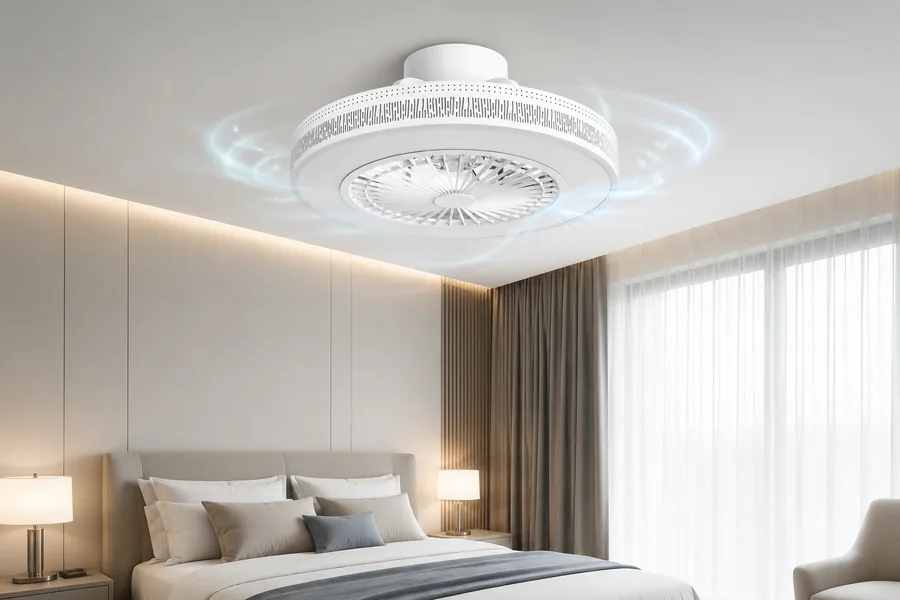
Energy efficiency is a strong selling point. It helps the end user save power and helps the importer market the product better.
5-1. What CFM/W means
CFM/W means airflow per watt. It shows how much air the fan moves for each watt of electricity.
In simple words, it tells you how efficient the fan is.
CFM shows airflow. CFM/W shows airflow efficiency.
5-2. Why higher CFM/W indicates better energy efficiency
A higher CFM/W means the fan can move more air while using less power.
This is good for customers because it can lower energy use. It is good for importers because energy-saving products are easier to explain and sell.
5-3. What efficiency documents should importers request?
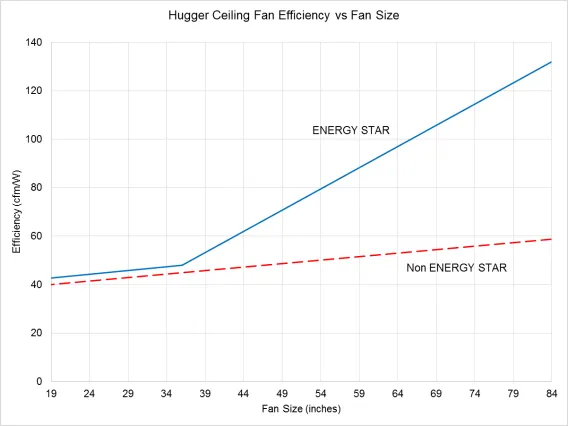
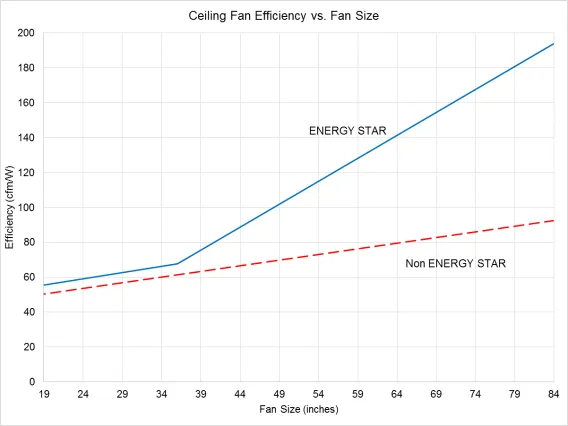
Importers should ask the manufacturer for the test method, rated power, airflow data and CFM/W calculation instead of relying only on sales claims. The U.S. Department of Energy uses CFM/W as an efficacy metric for air-circulating fans, so the concept is useful when comparing fan efficiency.
For sourcing, the practical question is simple: does the fan provide enough comfortable airflow at reasonable power consumption, and can the supplier explain how the data was measured?
5-4. Why energy-efficient bedroom ceiling fans are easier to market
Energy-efficient fans are easier to promote because the benefit is clear.
They offer:
- Lower energy use
- Better long-term value
- Modern product positioning
- Stronger appeal in Europe and North America
For NEBOLA, energy efficiency is not just a technical point. It is a sales point.
Ready to Find the Right Smart Ceiling Fan for Your Home?
Compare styles, sizes, smart features, and lighting options to find the perfect fan for your space.
Get a Quote6. Motor Type: AC Motor vs DC Motor
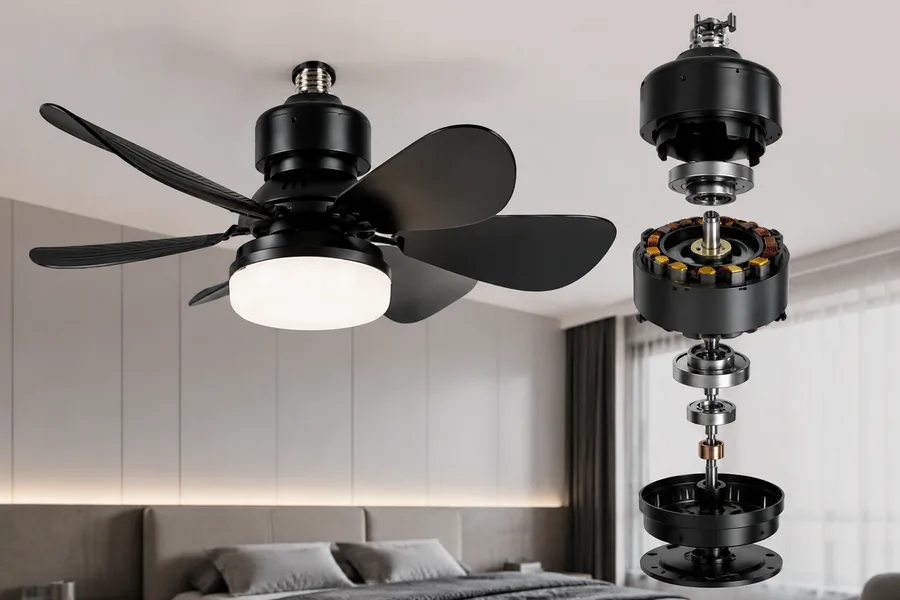
The motor is the heart of the ceiling fan. It affects noise, power use, speed control, and product life.
6-1. Basic differences between AC and DC motors
AC motors are common and usually more affordable. They are simple and widely used.
DC motors are often quieter, lighter, and more energy-efficient. They usually offer more speed settings.
For bedroom ceiling fans, this matters a lot.
6-2. Why DC motors are popular for bedroom ceiling fans
DC motors are popular because they support quiet operation and smooth speed control.
This is very useful for bedrooms. Users can choose a gentle low speed at night without strong motor noise.
A quiet DC motor is one of the strongest selling points for bedroom ceiling fans.
6-3. How motor quality affects speed control, durability, and energy use
Not all DC motors are good. A weak DC motor can still create noise, poor speed control, or early failure.
Motor quality affects:
- Noise
- Speed stability
- Energy use
- Product life
- Customer reviews
So importers should not only ask, “Is it DC?” They should ask, “How good is the DC motor?”
6-4. What importers should confirm with a bedroom ceiling fan manufacturer
Importers should confirm:
- Motor type
- Speed levels
- Motor wattage
- Noise level
- Motor warranty
- Test reports
- Long-term reliability data, if available
A reliable bedroom ceiling fan manufacturer should be able to answer these clearly.
7. Noise Control: A Key Spec for Bedroom Use
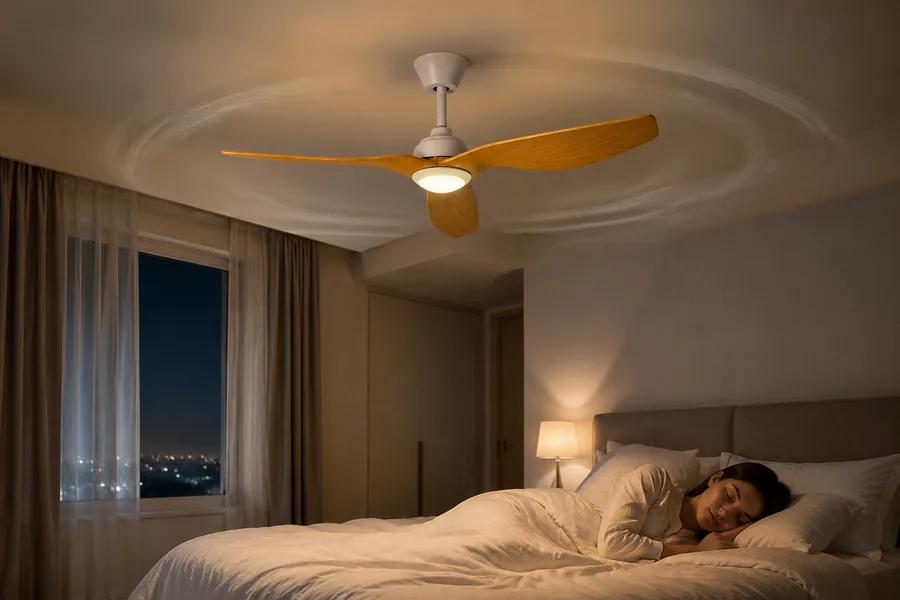
Noise control is one of the biggest factors in bedroom fan satisfaction.
A fan can look beautiful and still fail if it is noisy.
7-1. Why bedroom users care more about quiet performance
In a bedroom, people notice sound more easily. The room is quiet. The user is trying to rest.
A small sound during the day may feel much louder at night.
That is why importers must test noise before placing a bulk order.
7-2. Common noise issues: hum, buzzing, clicking, and vibration
Common noise complaints include:
- Motor hum
- Buzzing
- Clicking
- Ticking
- Vibration
- Wind noise
These sounds can quickly lead to bad reviews.
7-3. Why low-speed and medium-speed noise should be tested
Low and medium speeds are the most common bedroom settings.
A fan may perform well at high speed but make an annoying hum at low speed. That is a problem.
Importers should test samples in a quiet room and listen carefully.
7-4. How poor noise control can increase returns and negative reviews
Here is a simple case.
An importer chooses a low-price fan. The first shipment sells quickly. At first, everything looks great. Then reviews start coming in: “buzzing at night”, “clicking sound”, “too loud for sleep”.
Returns increase. Customer service gets busy. Profit drops.
The lesson is simple.
Cheap noise control can create expensive returns.
8. Wobble and Balance: A Small Detail That Affects Return Rates
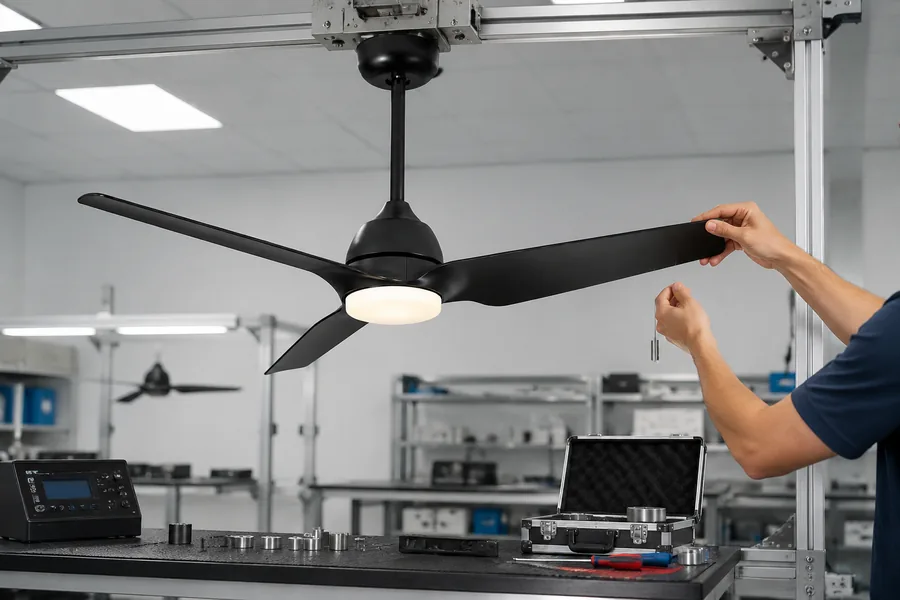
Wobble is a serious issue. It may look like a small movement, but customers see it as a safety problem.
8-1. Why ceiling fan wobble is a common customer complaint
When a ceiling fan wobbles, customers feel nervous. Even if the fan is safe, it looks unstable.
That can lead to returns, complaints, and poor reviews.
8-2. Key causes of wobble: blade balance, mounting parts, and downrod screws
Wobble can come from:
- Unbalanced blades
- Uneven blade weight
- Weak mounting bracket
- Loose downrod screws
- Poor installation parts
- Poor factory balance testing
Many of these issues can be reduced before shipment.
8-3. Why factory balance testing matters before bulk orders
Factory balance testing helps reduce wobble risk.
Importers should ask:
- Is each fan balance-tested?
- Is each batch tested?
- What is the testing method?
- Are balancing kits included?
Balance testing protects reviews, margin, and brand trust.
8-4. Why importers should require balancing kits and clear installation manuals
A balancing kit helps users fix small wobble issues after installation. A clear manual helps reduce installation mistakes.
This is especially important for online sales, where many users install the fan themselves.
A small part in the box can prevent a big return.
9. Mounting Type and Ceiling Height
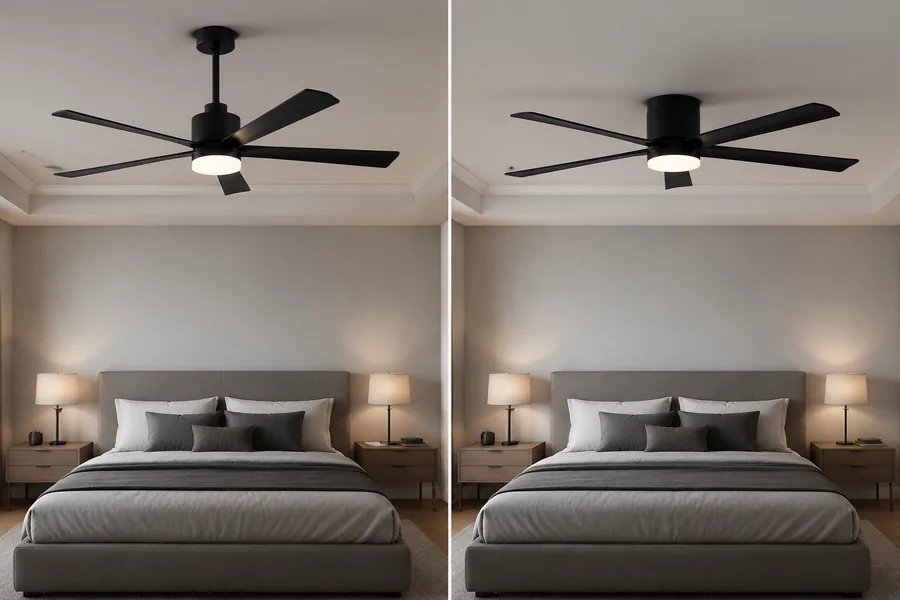
Mounting type affects airflow, safety, and appearance. Importers should match it to the target market.
9-1. Standard downrod mount for regular ceilings
A standard downrod mount works well for normal ceiling heights.
It places the fan at a useful height and allows good airflow. This is a common choice for many homes.
9-2. Hugger or flush mount for low ceilings
For low ceilings, a hugger or flush mount fan is often better.
It keeps the fan closer to the ceiling and gives better clearance. This is useful for flats, apartments, and smaller bedrooms.
9-3. How ceiling height affects airflow, clearance, and safety
Ceiling height affects three things:
- Airflow
- Clearance
- Safety
If the fan hangs too low, users may feel unsafe. If it sits too close to the ceiling, airflow may be weaker.
So mounting type should not be ignored.
9-4. How importers should choose mounting types for target markets
Importers should understand local housing conditions.
If the target market has many apartments, hugger models may be important. If the target market has larger homes, downrod models may be more suitable.
The right mounting type helps reduce complaints and improve comfort.
10. Light Kit Options: Fan Only or Ceiling Fan With Light
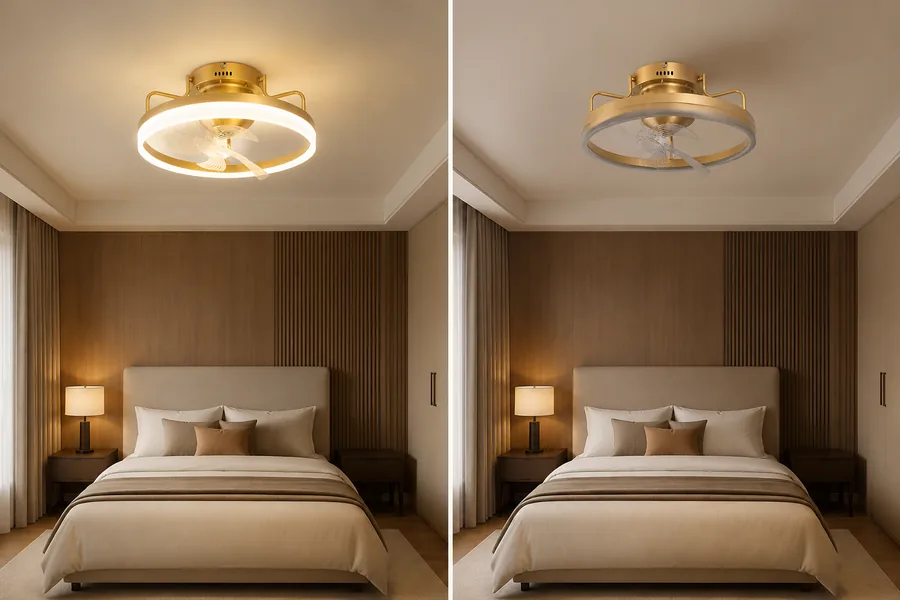
Bedroom ceiling fans with lights are popular because they combine two functions in one product.
But the light kit must be good. A poor light can create after-sales problems.
10-1. When bedroom ceiling fans with lights are more suitable
Ceiling fans with lights are suitable when the bedroom needs both airflow and main lighting.
They are useful for smaller rooms, rental homes, and modern homes where buyers want fewer ceiling fixtures.
10-2. Key light specs: brightness, dimming, and color temperature
Important light specs include:
- Brightness
- Dimming
- Colour temperature
- LED wattage
- Replaceable LED module
For bedrooms, warm light or adjustable colour temperature is often better.
Soft, adjustable lighting is more bedroom-friendly than harsh cold light.
10-3. Common LED issues: flickering and poor driver quality
Common LED problems include:
- Flickering
- Poor dimming
- Harsh light
- Weak driver
- LED module failure
These problems may seem small, but they affect daily use.
10-4. What importers should check before ordering ceiling fans with lights
Importers should check:
- LED driver quality
- Dimming stability
- Remote-light compatibility
- LED warranty
- Replacement module availability
A good light kit raises product value. A poor light kit raises after-sales cost.
11. Remote Control and Smart Features
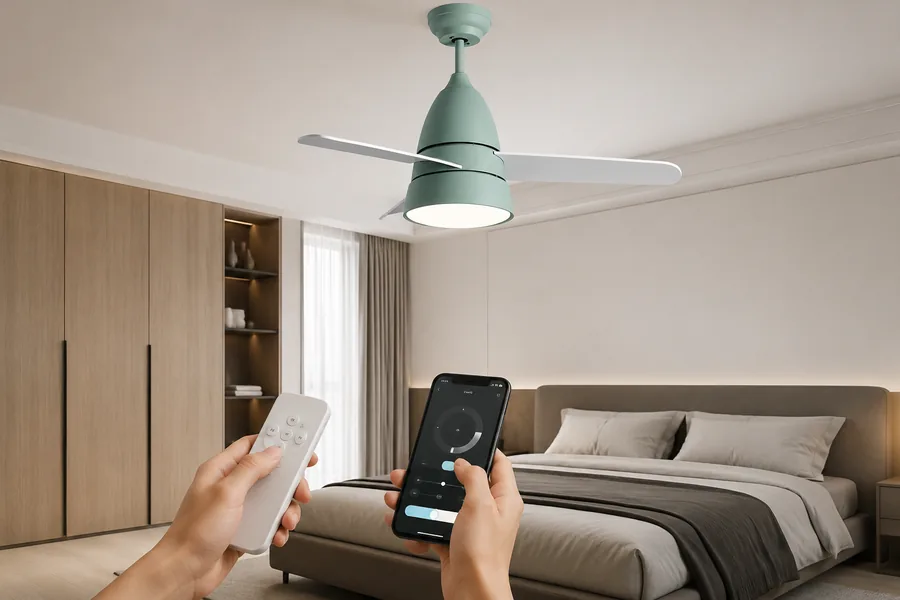
Control experience matters. A fan that is easy to control feels better and more modern.
11-1. Why remote control is important for bedroom use
Remote control is important because users want convenience from bed.
They want to change speed, switch the light, or set a timer without standing up.
That makes remote control a strong selling point for bedroom fans.
11-2. What to check: pairing stability, wall holder, and battery type
Importers should check:
- Pairing stability
- Signal range
- Battery type
- Wall holder
- Timer function
- Backup wall switch support
A remote that fails often will create complaints.
11-3. When smart control can increase product value
Smart control can increase value in premium markets.
App control, voice control, and scheduling can make a fan feel more modern. This may help importers target higher-end buyers.
11-4. Why smart functions may increase after-sales complexity
Smart features can also create support problems.
If app pairing is difficult, customers may need help. If the instructions are unclear, complaints may rise.
Smart is good. Stable is better.
12. Materials, Finish, and Bedroom Design Compatibility
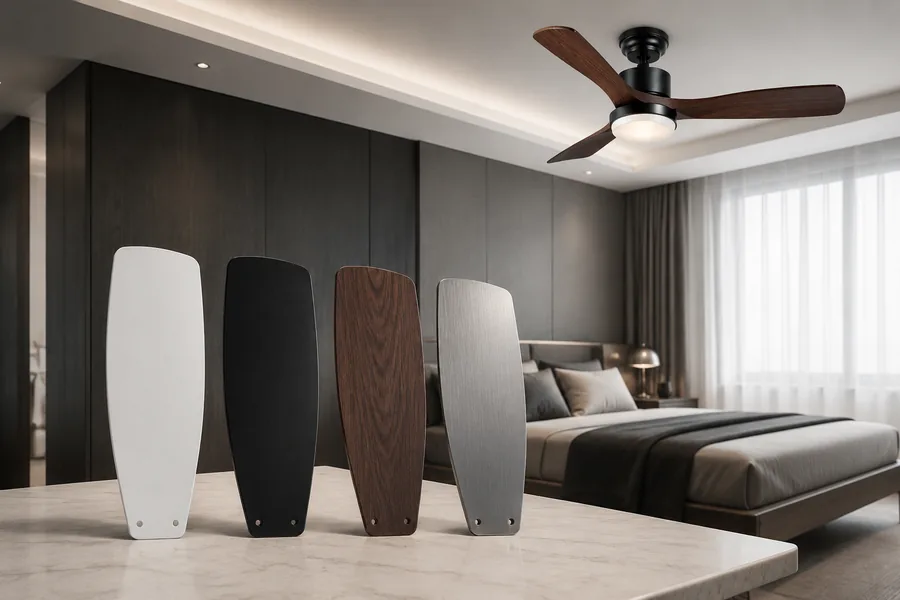
Materials and finishes affect price, durability, weight, and appearance.
For bedrooms, the fan should look clean and fit the room.
12-1. Common blade materials: ABS, plywood, solid wood, and metal
Common blade materials include:
- ABS
- Plywood
- Solid wood
- Metal
ABS is light and cost-friendly. Plywood gives a warm look. Solid wood feels premium. Metal is strong but may not suit every bedroom style.
12-2. How material affects durability, cost, and appearance
Material choice affects:
- Product cost
- Weight
- Durability
- Noise
- Appearance
- Shipping cost
Importers should match the material to the target market. Budget lines may use ABS. Premium lines may use wood or higher-end finishes.
12-3. Popular bedroom finishes: white, black, wood grain, and brushed nickel
Popular bedroom finishes include:
- White
- Black
- Wood grain
- Brushed nickel
These finishes are easy to match with many home styles.
12-4. Why finish consistency matters in bulk orders
In a bulk order, finish consistency matters a lot.
If one batch has colour differences, retailers may complain. Product photos may not match the delivered product. Customers may lose trust.
In bulk orders, small colour differences can become big business problems.
Ready to Find the Right Smart Ceiling Fan for Your Home?
Compare styles, sizes, smart features, and lighting options to find the perfect fan for your space.
Get a Quote13. How to Choose a Reliable Bedroom Ceiling Fan Manufacturer

Choosing the right bedroom ceiling fan manufacturer is one of the most important steps.
A good manufacturer does more than make fans. It helps reduce business risk.
| Manufacturer Check | What Looks Real | Red Flag |
|---|---|---|
| Ceiling fan specialization | Can explain motor, blade balance, LED driver, remote receiver and mounting. | Only sends catalog photos and avoids technical answers. |
| Sample testing | Provides running video, packing photos and inspection points. | Says every model is quiet without proof. |
| OEM/ODM support | Can discuss finish, logo, packaging, manual and configuration limits. | Promises any customisation without checking structure or MOQ. |
| After-sales support | Has spare parts plan and claim process. | Warranty is vague or only discussed after payment. |
13-1. Check factory experience and product specialization
Importers should check whether the factory has real ceiling fan experience.
A specialist manufacturer understands motor quality, airflow, noise, balance, packaging, and after-sales support.
13-2. Confirm OEM and ODM capability
OEM and ODM capability matters if importers want private-label products.
Ask whether the factory can support:
- Logo customisation
- Colour customisation
- Packaging design
- Blade material options
- New model development
13-3. Review export markets and certifications
Export experience is important.
A manufacturer that already sells to Europe, North America, or other regulated markets may better understand certifications, packaging, and documentation.
Ask for certificates and test reports when needed.
13-4. Ask about QC process and sample testing
Quality control should be clear.
Ask how the factory tests:
- Motor performance
- Noise
- Wobble
- LED function
- Remote control
- Packaging strength
Sample testing should happen before mass production.
13-5. Evaluate communication speed and after-sales support
Good communication saves time.
If a supplier replies slowly before the order, they may be even slower after shipment. Importers should choose a partner that gives clear answers.
NEBOLA focuses on practical support: clear specs, stable production, and long-term order value.
A reliable manufacturer helps protect your brand before and after the sale.
14. MOQ: What Importers Should Confirm Before Ordering

MOQ is an important sourcing point. It affects stock risk, cash flow, and product testing.
14-1. What MOQ means in ceiling fan sourcing
MOQ means minimum order quantity. It is the smallest order a supplier will accept.
For importers, MOQ decides how easily they can test a product before scaling.
14-2. Why MOQ varies by model, motor, color, and customization
MOQ can vary by:
- Model
- Motor type
- Blade material
- Colour
- Packaging
- Custom logo
- Smart function
A standard model may have a lower MOQ. A customised model often needs a higher MOQ.
14-3. Difference between sample order, trial order, and bulk order
These three order types are different.
| Order Type | Purpose | Importer Benefit |
|---|---|---|
| Sample order | Test product quality | Lowest risk |
| Trial order | Test market demand | Controlled stock |
| Bulk order | Scale sales | Better unit cost |
Importers should not rush into a large bulk order without sample approval.
14-4. How to negotiate mixed-model MOQ for first orders
For first orders, importers can ask for mixed-model MOQ.
This means combining several sizes, colours, or finishes in one order. It helps test the market without buying too much of one model.
A flexible MOQ helps importers test before they scale.
15. Bulk Order Checklist Before Production
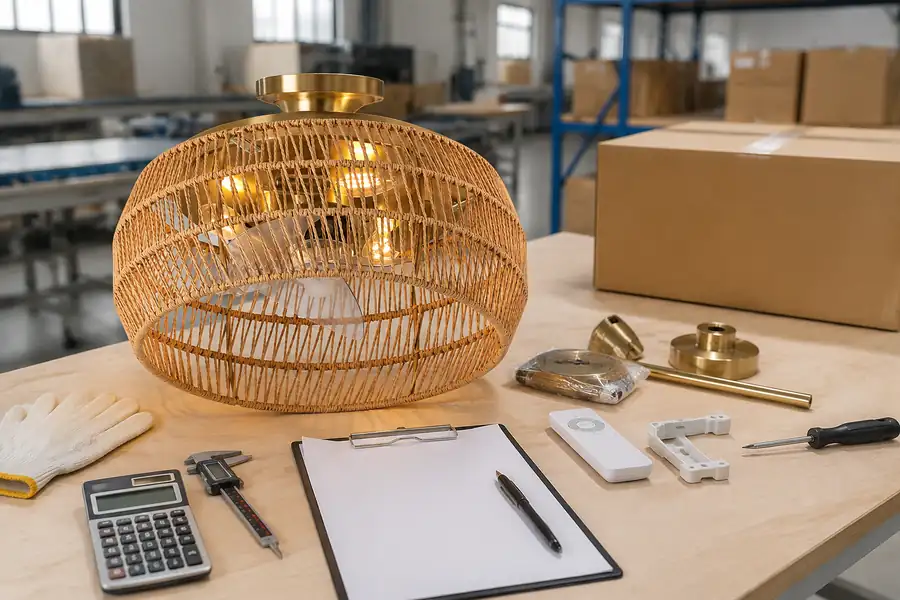
A bulk order should never start with unclear details. Before production, importers should confirm every key point in writing and make the approved sample the production standard.
15-1. Confirm final product specifications
Confirm blade span, motor type, total fixture height, mounting type, CFM, CFM/W, RPM range, noise level, light wattage, colour temperature, dimming, remote control, receiver type, finish, packaging and accessories.
Written confirmation helps avoid disputes later. A small difference in LED driver, remote receiver or mounting bracket can create after-sales problems even when the product photo looks the same.
15-2. Approve samples before mass production
The approved sample should be the production standard. Importers should test the sample as a real user would: install it, run it at low speed, check the light, pair the remote, listen for hum and review the packaging.
Approve the sample first. Then produce.
15-3. Confirm packaging design and carton strength
Good packaging protects the product during shipping. Importers should check outer carton strength, inner protection, accessory placement, blade protection, light cover protection and whether drop-test requirements are needed for the target sales channel.
A weak carton can damage a good fan. Ask for packaging photos or a packing video before shipment, especially for mixed-model orders.
15-4. Confirm spare parts ratio and replacement policy
Spare parts help after-sales service. For bedroom ceiling fans, useful spare parts may include remote controls, receivers, LED modules, drivers, screws, brackets, blades, balancing kits and installation hardware.
The ratio depends on order size and market risk, but the policy must be clear. Importers should know which parts are free, which are charged, who pays shipping and how claims are documented.
15-5. Confirm lead time, inspection standard, and shipping terms
| Item to Confirm | What It Should Include | Why It Matters |
|---|---|---|
| Final specs | Size, motor, light, control, finish, mounting, packaging. | Prevents wrong production. |
| Approved sample | Function, noise, light, balance, finish, accessories. | Sets the quality standard. |
| Packaging | Carton, inner protection, blade/light cover layout. | Reduces shipping damage. |
| Spare parts | Remote, receiver, LED module, driver, screws, blades. | Supports warranty service. |
| Inspection | AQL level, function test, appearance standard, carton check. | Reduces defect risk. |
| Shipping terms | Lead time, payment terms, incoterms, document responsibility. | Controls cost and responsibility. |
16. Warranty: What Importers Should Check
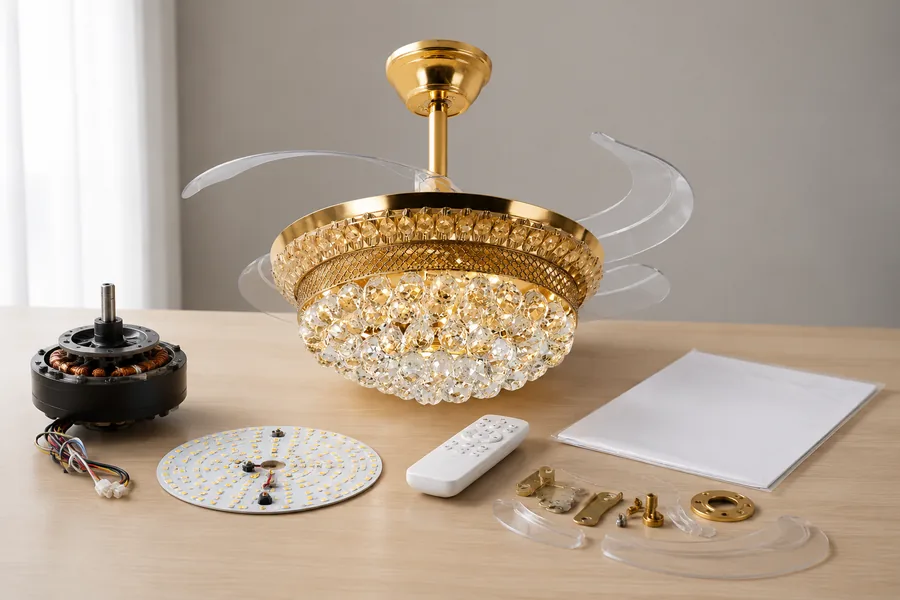
Warranty is not just a promise. It is a real support system.
A clear warranty helps protect both importer and buyer.
16-1. Motor warranty
The motor is the heart of the fan.
Importers should check how long the motor is covered and what the warranty includes.
16-2. Parts warranty
Parts warranty may cover blades, brackets, screws, light parts, and control parts.
Do not assume every part has the same warranty period.
16-3. LED light and remote control warranty
LED modules and remotes are common after-sales parts.
A long motor warranty is good, but it is not enough if the LED or remote fails often.
16-4. Claim process and required documents
A clear claim process should explain:
- What is covered
- What is not covered
- What proof is needed
- How long claims take
- Who approves replacement
16-5. Spare parts availability and shipping responsibility
Importers should confirm whether spare parts are available and who pays for shipping.
This matters because replacement parts can become a hidden cost.
A good warranty is clear, practical, and easy to use.
17. Common Mistakes Importers Should Avoid
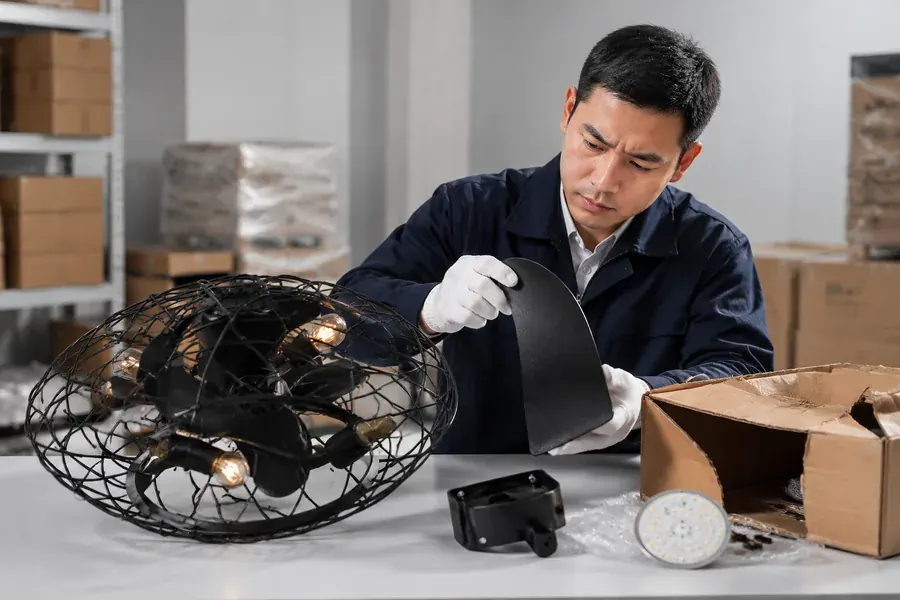
Many importers make the same mistakes. The good news is they are easy to avoid.
17-1. Choosing by price only
Low price can look attractive. But poor quality can destroy profit through returns, bad reviews, and support costs.
The cheapest fan is not always the most profitable fan.
17-2. Ignoring low-speed noise
Bedroom buyers care about sleep. Low-speed noise should always be tested.
A fan that hums at night is not a good bedroom fan.
17-3. Ignoring wobble and balance testing
A wobbling fan feels unsafe. Importers should check balance testing before bulk orders.
This is a small step that can prevent many complaints.
17-4. Buying one size for all bedroom markets
Different bedrooms need different sizes. A balanced SKU mix is safer than one single model.
Importers should match fan size to target rooms and local housing habits.
17-5. Accepting unclear MOQ or warranty terms
Unclear terms create problems later.
MOQ, warranty, spare parts, claim rules, and shipping responsibility should be confirmed before payment.
Clear terms before the order mean fewer problems after delivery.
If you are looking for a better ceiling fan light solution for your project, NEBOLA can provide one-stop support from product selection to customization. We focus on ceiling fan light R&D and manufacturing, helping brands, importers, and distributors find products that better match real space needs.
Ready to Find the Right Smart Ceiling Fan for Your Home?
Compare styles, sizes, smart features, and lighting options to find the perfect fan for your space.
Get a Quote