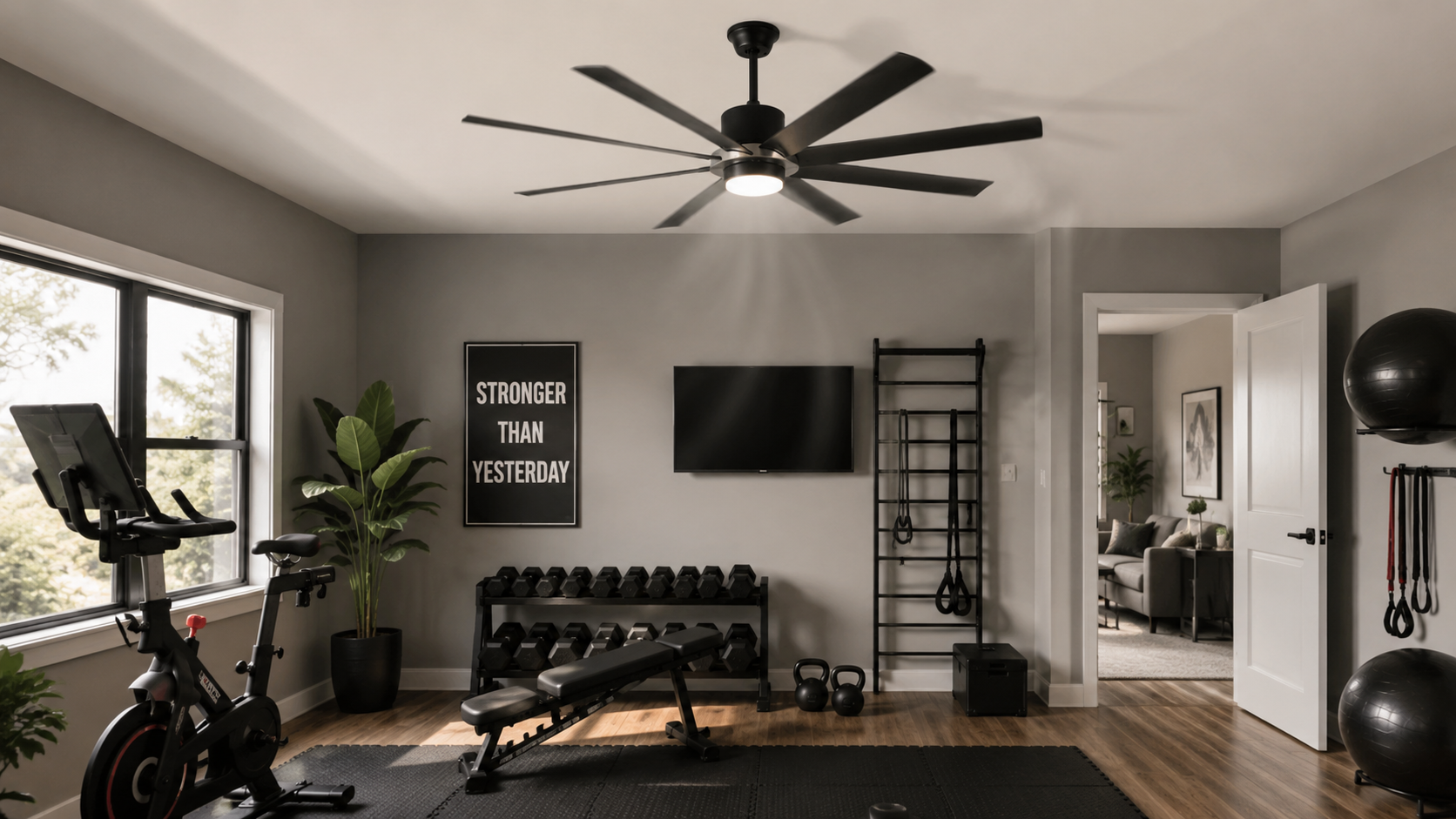


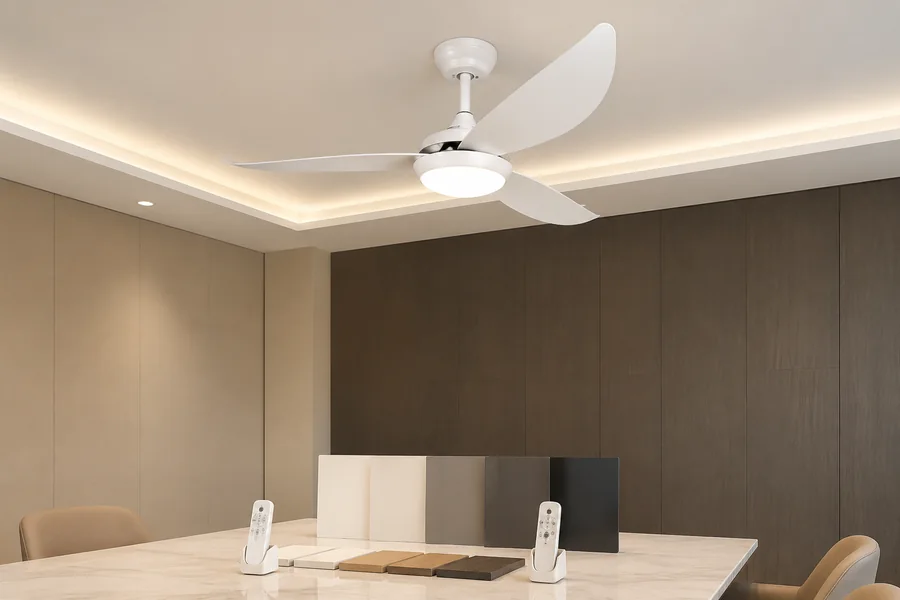
A custom ceiling fan is not one single product. It is a set of choices: size, blade style, motor type, light design, control system, finish, packaging, and market compliance. The better you understand these options, the easier it is to build a fan range that fits your brand and your buyers.
Many buyers ask for OEM ceiling fan customization as if it only means adding a logo. In reality, the best custom work starts earlier. You need to decide what the fan should solve, which room it serves, what price level it targets, and how much difference your market actually needs.
1. What Ceiling Fan Customization Really Means
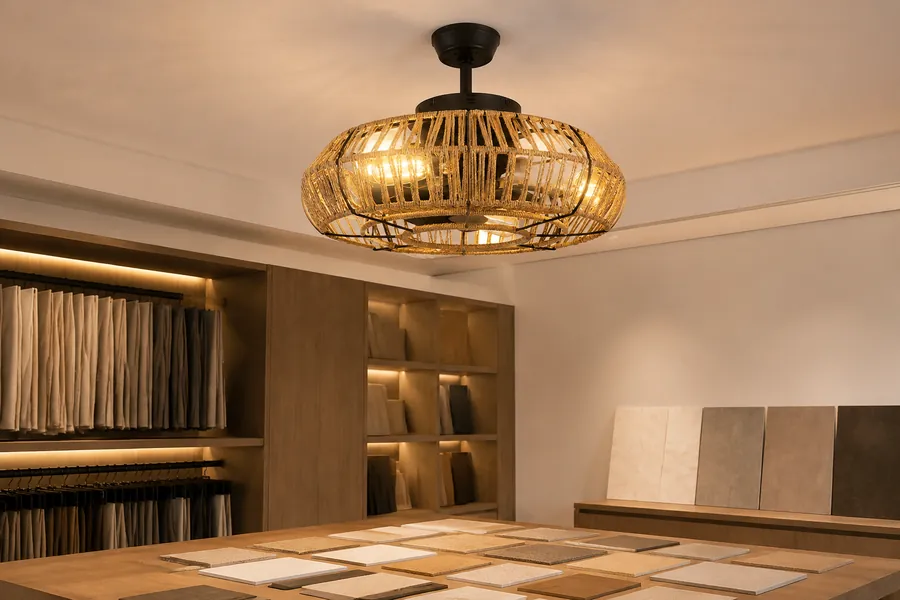
Ceiling fan customization can be light, medium, or deep. Light customization may include logo, finish, packaging, and remote control. Deeper customization can include blade shape, motor housing, LED structure, size, control logic, and product platform development.
The right level depends on your business. A new importer may need a fast, low-risk model with minor changes. A mature brand may need a more unique fan with stronger design control. Both can be valid if the project goal is clear.
1-1. Custom does not always mean starting from zero
Many projects start from an existing product platform. This saves time and lowers risk because the motor, blade connection, light structure, and installation parts have already been developed. The buyer can then adjust visible and functional details, such as finish, size, controls, and packaging, without rebuilding every part from the beginning.
1-2. Customisation should support market demand
Every change should have a reason. If a finish, size, or function does not help the product sell, install more easily, reduce complaints, or match a real room need, it may not be worth the extra cost. A good custom plan is selective: it changes the details customers notice and keeps stable parts where reliability matters more than novelty.
1-3. Supplier capability matters
The more custom the project becomes, the more important the supplier becomes. A reliable ceiling fan manufacturer should explain what can be changed safely and what needs more testing.
2. Fan Size and Blade Span Customization
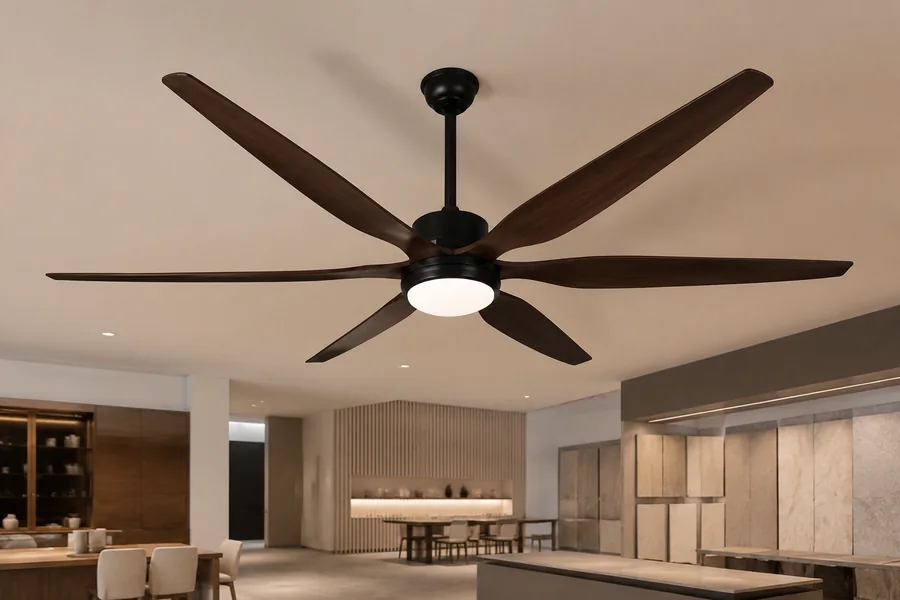
Fan size is one of the most practical customization choices. Different markets need different room coverage. A small bedroom fan, a standard living room fan, and a large open-space fan should not use the same size strategy.
Common custom sizes include 36 inch, 42 inch, 48 inch, 52 inch, 56 inch, 60 inch, and larger. The choice should match room size, ceiling height, product style, and airflow expectations.
2-1. Small sizes suit compact rooms
Small fans are useful for bedrooms, apartments, kitchens, and low-ceiling rooms where the fixture must feel light rather than dominant. They should focus on quiet airflow, compact design, and comfortable light because users are often close to the fan. For small rooms, a cleaner housing and low-profile visual proportion can matter as much as airflow strength.
2-2. Mid-size fans cover the broadest market
Many buyers choose 48 to 56 inch fans because they fit common bedrooms and living rooms. A modern ultra-thin 52 inch DC ceiling fan light is a good example of a size direction that can suit many modern homes.
2-3. Large fans need stronger planning
Large fans can support bigger rooms, but they need suitable motors, blade balance, packaging, and installation support. A large blade span without stable engineering can create wobble, noise, carton damage, or difficult assembly. If a market needs 60 inch or larger models, the custom plan should include stronger balance checks and clearer installation guidance.
3. Blade Material, Shape, and Finish Options
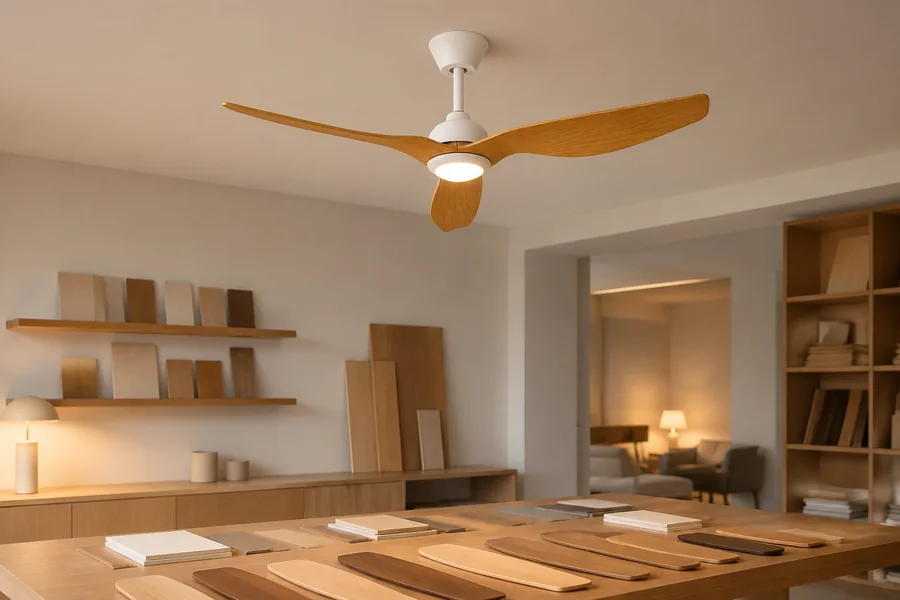
Blade customisation affects both appearance and performance. Material, shape, thickness, pitch, and finish all influence how the fan looks and how it moves air. This is why blade decisions should not be treated as decoration only.
Common blade directions include ABS, plywood, solid wood, metal, and composite materials. Each has different cost, weight, appearance, and use environment.
3-1. ABS works well for many modern designs
ABS blades are light, stable, and suitable for many indoor and selected damp-location designs. They are useful when the buyer needs clean lines, consistent moulding, and easier colour control across repeat orders. For modern fan lights, ABS also allows more sculpted blade shapes than simple flat plywood blades.
3-2. Wood finishes add warmth
Wood or wood-look blades can make a fan feel more natural and premium. A big wood ceiling fan light with DC motor may fit large rooms, villas, and warm interior styles.
3-3. Decorative blades need balance testing
Unusual blade shapes can help the product stand out, but they should be tested for balance, airflow, and noise before being treated as a final design. A beautiful blade that wobbles will damage the customer experience and increase after-sales pressure. For custom projects, visual differentiation should always be checked against real running performance.
4. Motor Customization: AC, DC, and BLDC
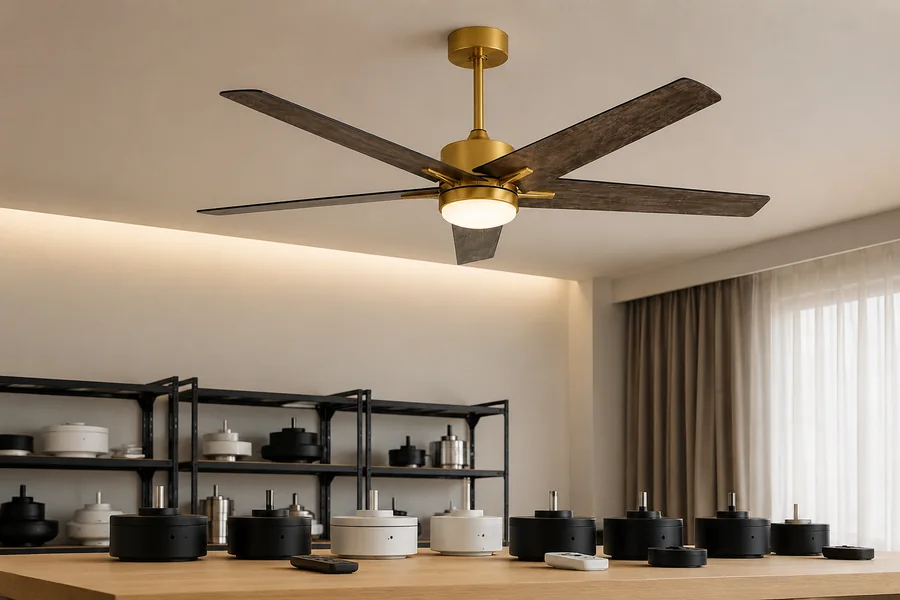
Motor choice is one of the most important parts of OEM ceiling fan customization. It affects noise, speed control, energy use, product cost, and user comfort.
AC motors are common and cost-effective. DC and BLDC motors often support better speed control, lower energy use, and quieter operation. The best choice depends on the product level and target buyer.
4-1. AC motors suit value ranges
AC motors can still work well for simple, cost-focused products. They are easier to position in markets where price is a major factor and where users do not require advanced speed control. The tradeoff is that AC models may feel less premium in markets that now expect low noise, remote functions, and energy-saving claims.
4-2. DC motors support quieter comfort
DC motors are often used for modern fan lights because they can run smoothly at low speed and support more precise speed settings. This is useful for bedrooms and living rooms where comfort matters more than strong wind alone. A DC motor direction can also help the product feel more modern when paired with remote control or smart control.
4-3. BLDC can support premium positioning
BLDC options can help brands build a more energy-efficient and refined product line. They are useful when the market values quiet operation, modern control, and a stronger long-term value story. The supplier should still confirm driver quality, speed stability, and compatibility with the chosen remote or app system.
5. LED Lighting Customization
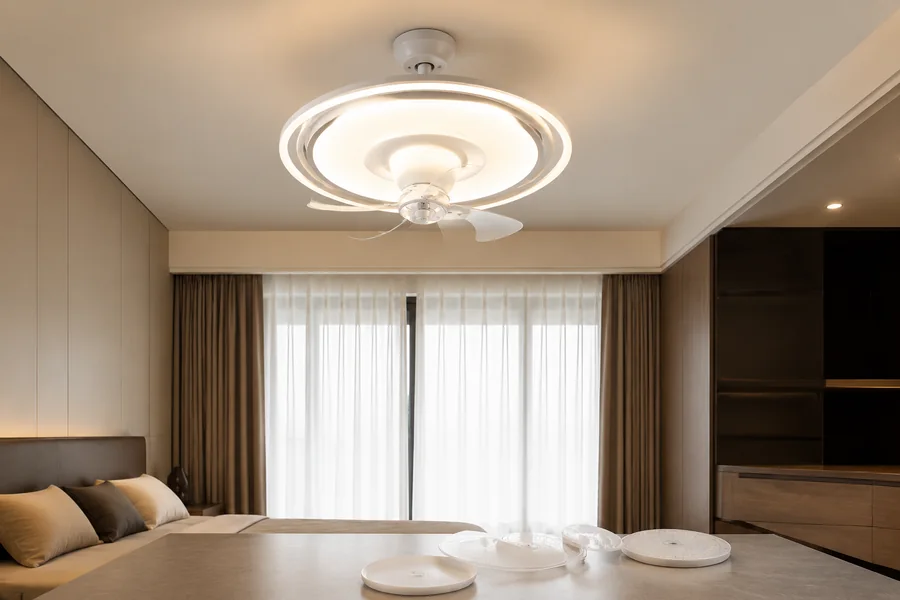
For ceiling fan lights, the light part is not a small add-on. It affects daily use, room mood, complaints, and product reviews. Lighting customization should be planned with the same care as airflow.
Common options include LED wattage, diffuser shape, colour temperature, dimming, memory function, and replaceable light modules. The right choice depends on room use and market preference.
5-1. Bedrooms need soft and quiet light
Bedroom fan lights should avoid harsh glare because the user may look toward the fixture while resting. Warm light, dimming, and smooth diffusers can make the fan more comfortable at night. Memory function can also improve the experience because users do not want to reset brightness every time they turn the fan on.
5-2. Living rooms need flexible brightness
Living rooms often need both clear task light and softer evening light. Adjustable colour temperature and dimming can make one product serve family time, cleaning, dining, and relaxed evening use. For this room type, lighting comfort should be tested with the diffuser installed, not judged only by LED wattage.
5-3. Decorative fan lights need visual harmony
A luxury gold wood fandelier ceiling fan light needs the LED diffuser, motor body, and blade finish to feel like one design, not separate parts. For decorative models, the lighting component should support the style direction instead of looking like a technical add-on.
Need the Right Ceiling Fan for a Home, Project, or Commercial Space?
Tell us your space type, ceiling height, airflow needs, lighting options, certification direction, and order plan. We’ll help match the right solution.
Get a Quote6. Control Options: Remote, Wall, App, and Smart Features
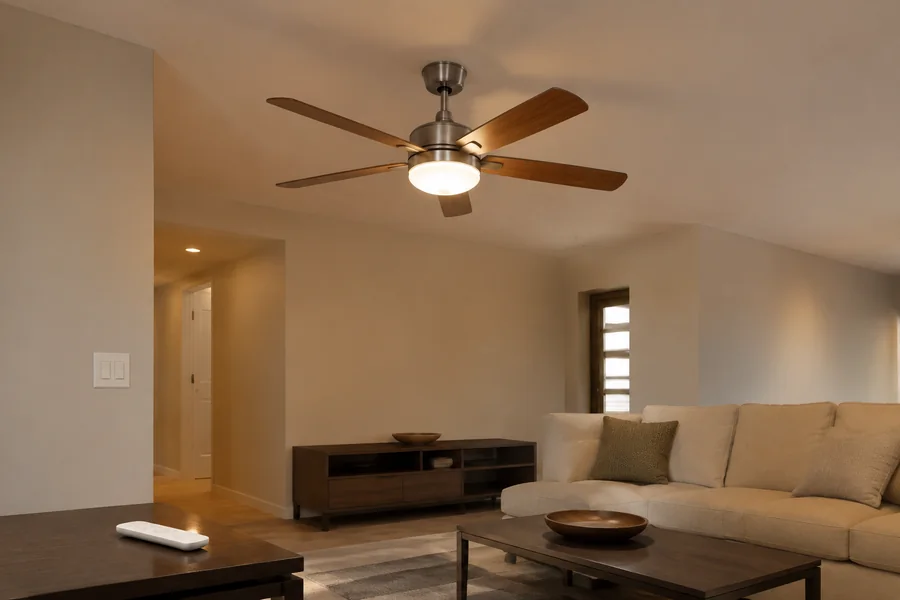
Control choice affects how users feel about the fan every day. A product can have good airflow but still feel outdated if the control system does not match the market.
Common options include pull chain, wall switch, remote control, app control, voice control, timer, reversible mode, and memory settings. Not every product needs every function.
6-1. Remote control is the common baseline
Remote control is expected in many modern ceiling fan light markets. It is especially useful in bedrooms, living rooms, and rental spaces.
6-2. App control supports smart homes
Smart control can improve premium positioning, but it adds complexity to setup and after-sales service. Buyers should check app stability, pairing process, user instructions, receiver reliability, and support language before making it the default option. A smart fan that is difficult to pair can create worse feedback than a simple remote model that works every time.
6-3. Simple control can still be better
For value or project ranges, simple reliable control can be better than advanced features that create support issues. The control choice should match the user, not just the product brochure. Hotels, rentals, and budget retail lines often prefer controls that guests and installers can understand immediately.
7. Colour, Body Finish, and Style Direction
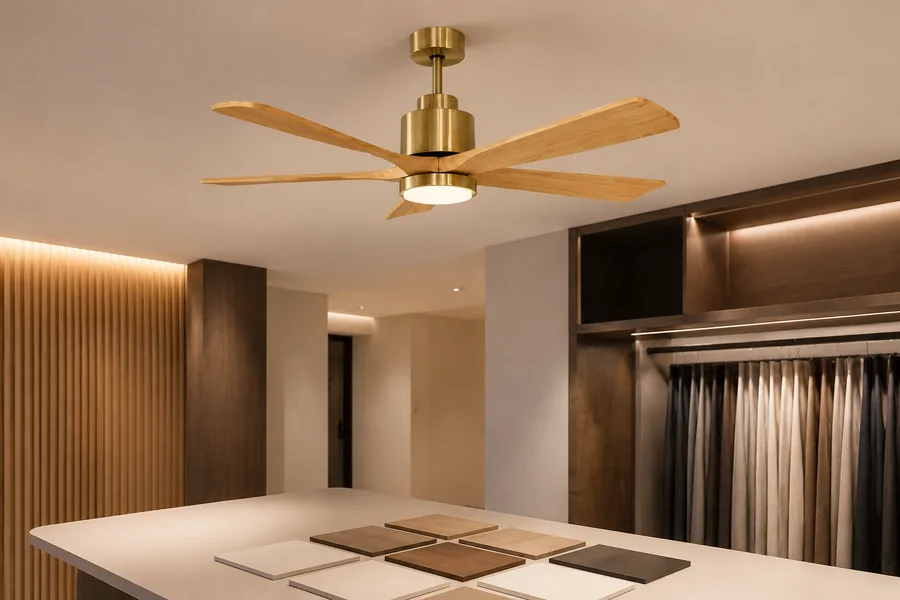
Finish customization is one of the fastest ways to make a ceiling fan feel aligned with a brand. White, black, brushed nickel, gold, wood tone, rattan, and mixed finishes each speak to different interiors.
Style direction should be decided before ordering samples. If the range tries to cover every taste at once, the brand can feel unclear.
7-1. White and black are flexible basics
White fans suit clean modern interiors, while black fans can work in industrial, modern, and outdoor-inspired spaces. These finishes are often useful for core product ranges because they are easy to match with different rooms. If the market is still uncertain, neutral colours can reduce inventory risk before adding more decorative finishes.
7-2. Natural finishes add character
Rattan, wood, and warm metal finishes can make a custom fan feel more decorative. A rattan ceiling fan manufacturer direction may suit coastal, farmhouse, or relaxed interior markets.
7-3. Premium finishes need consistent quality
Gold, champagne, and brushed finishes can look expensive, but uneven colour or weak coating can harm the product. Finish samples should be checked in real light, not only under factory lighting or in catalogue renders. Buyers should also confirm whether the motor body, canopy, downrod, blade arms, and screws match the same finish direction.
8. Packaging, Logo, and Private Label Details
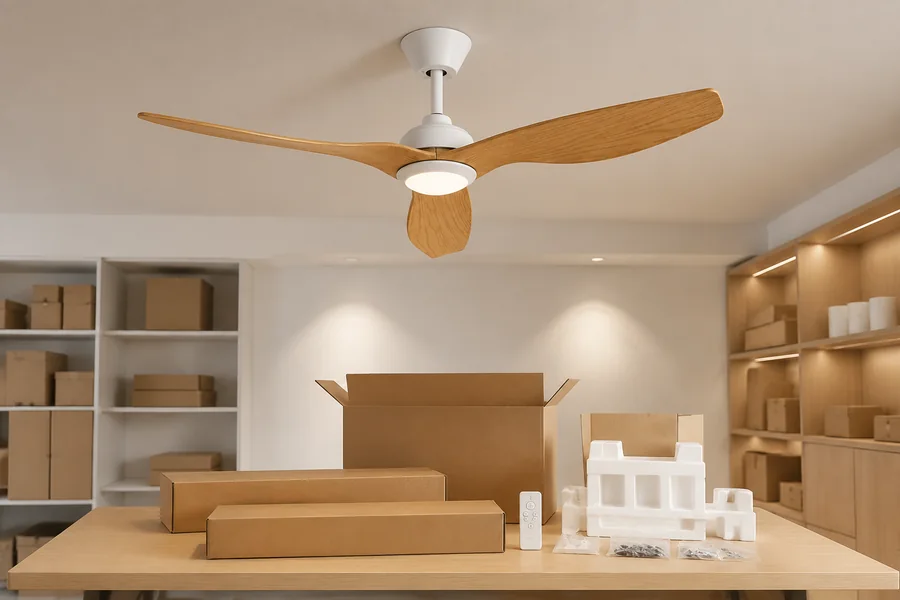
Branding is still important, but it should sit on top of a good product. Logo placement, carton design, manuals, labels, warranty cards, and spare part bags all shape the buyer’s impression.
Good packaging also protects the product. Ceiling fans include blades, motor parts, light covers, rods, receivers, remotes, and screws. Each part should arrive safely and be easy to identify.
8-1. Logo placement should be subtle and clear
The logo can appear on the motor body, remote, manual, carton, or rating label depending on the project. It should support the brand without making the product look crowded or overly promotional. For decorative fan lights, subtle logo placement often feels more premium than a large visible mark on the fixture.
8-2. Manuals should match the exact model
Generic manuals create confusion because ceiling fans may differ in receiver position, downrod assembly, blade attachment, light kit wiring, and control pairing. The manual should show the correct parts, wiring direction, control method, and installation steps for the actual product. Clear diagrams reduce installer mistakes and lower customer service pressure.
8-3. Packaging affects return risk
Weak packaging can damage blades, LED covers, remotes, receivers, and decorative finishes. Better inner protection can reduce after-sales cost, especially for long-distance shipping or online retail channels. Packaging should be tested as part of the product, not treated as a final decoration step after everything else is finished.
9. MOQ, Samples, and Development Timeline
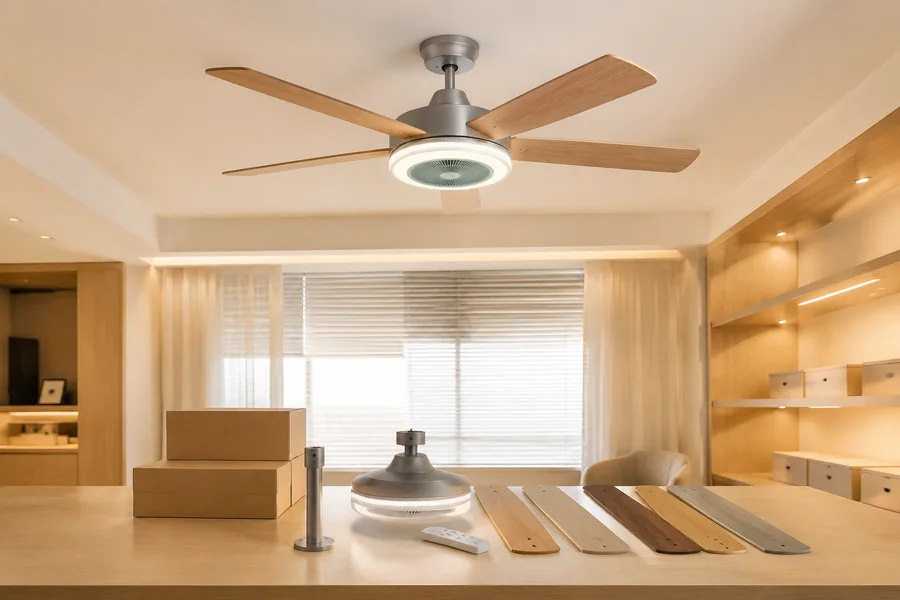
Customisation must be matched with realistic order planning. Small changes may allow faster sampling and lower MOQ. Deep structural changes may require more time, more testing, and stronger order commitment.
NEBOLA supports flexible ceiling fan customization projects, with MOQ starting from around 10 units depending on model and configuration. This can help buyers test a product direction before moving into larger repeat orders.
9-1. Start with the right sample level
If you only need colour and packaging changes, a basic sample may be enough to confirm appearance and presentation. If you change structure, motor, light, or control logic, the sample review should be deeper and include real running tests. The sample stage should answer technical questions before the first order becomes a larger business risk.
9-2. Build time for testing
Testing should include motor stability, blade balance, light behaviour, control response, packaging, and installation parts. Rushing this stage can create larger problems later.
9-3. Use feedback before scaling
The first order should teach you which model has real demand and which details need adjustment. Use customer and installer feedback before expanding the range, especially for noise, light brightness, remote control, packaging, and installation comments. This makes the second order more accurate than the first instead of simply larger.
10. How to Choose the Right Customization Plan
The right custom ceiling fan plan should fit your market, not impress on paper only. A simple product with the right size, motor, light, finish, and packaging can outperform a complicated fan with too many weak features.
Start by deciding what must be unique and what can stay standard. Then choose a supplier that can explain technical limits clearly. If you want to compare size, motor, light, control, finish, and packaging options, the custom ceiling fan page can help you start with a clearer brief.
10-1. Decide what must be customised
Start by separating necessary changes from nice-to-have changes. Size, motor, lighting, control method, finish, packaging, and certification direction should each have a clear reason. If a change does not improve market fit, user comfort, installation, or brand positioning, it may add cost without adding real value.
10-2. Keep stable parts standard when possible
Not every part of a custom fan needs to be redesigned. Keeping proven structures, tested motor systems, standard installation parts, or existing light modules can reduce risk and shorten development time. This approach is often better for buyers who need a reliable first range before moving into deeper custom work.
10-3. Confirm samples before scaling the order
Samples should be checked for airflow, noise, lighting comfort, control response, finish consistency, packaging protection, and installation clarity. A good sample review should also include installer feedback, because small assembly problems can become repeated after-sales issues when the order scales.
Need the Right Ceiling Fan for a Home, Project, or Commercial Space?
Tell us your space type, ceiling height, airflow needs, lighting options, certification direction, and order plan. We’ll help match the right solution.
Get a QuoteFAQ
Can ceiling fans be customised for different brands?
Yes, ceiling fans can be customised for different brands through logo, packaging, finish, blade style, motor option, lighting, controls, and selected product details. The best scope depends on the target market, budget, certification direction, and how different the product needs to be from a standard model.
Is OEM ceiling fan customization expensive?
No, it is not always expensive. Light customisation can be practical, while deep structural changes cost more because they may need new tooling, testing, and longer development time.
Can I customise the motor in a ceiling fan?
Yes, motor options can often be customised, including AC, DC, or BLDC directions. The best choice depends on price level, noise expectations, energy use, and market positioning.
Can LED lighting be customised in a fan light?
Yes, LED lighting can often be customised by brightness, colour temperature, dimming, diffuser design, and memory function. The final options depend on the model platform.
Does custom packaging matter for ceiling fans?
Yes, custom packaging matters because it protects the product, supports the brand, and helps users identify parts during installation. For ceiling fans, packaging should also protect blades, LED covers, remotes, receivers, and small accessories during long-distance shipping.
Should I start with many custom fan models?
No, it is usually better to start with a focused range. Test a few strong models first, then expand after you understand sales feedback and after-sales issues.