

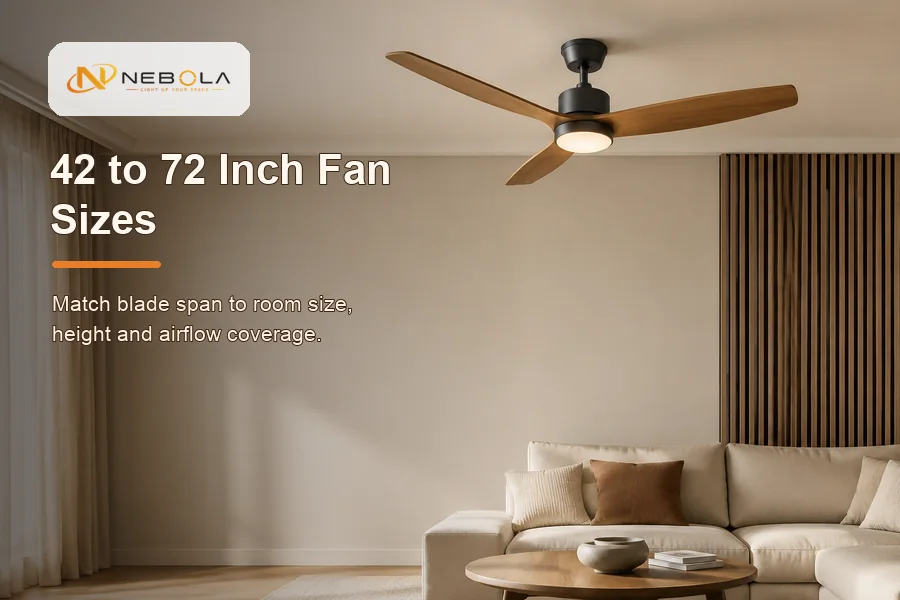
For most homes, 42 inches suits small rooms, 48 inches suits compact-to-medium rooms, 52 inches is the common medium-room baseline, 56 and 60 inches suit larger rooms, and 72 inches belongs in very large or commercial-style spaces.
This guide compares each common size and connects the choice back to real room use, airflow comfort, and the living room ceiling fan selection path.
What Size Ceiling Fan Should You Choose?

Use smaller fans for compact zones
A 42 Inch Ceiling Fan is usually for small rooms, compact bedrooms, studies, kitchens, and tight apartments. A 48 Inch Ceiling Fan fits many medium rooms where 52 inches may look a little wide.
Start from the actual room use, then check the living room fan category if the room is a lounge or shared family space.
Use larger fans for wider and taller rooms
A 52 Inch Ceiling Fan is a common medium-room baseline. A 56 Inch Ceiling Fan works for larger rooms. A 60 Inch Ceiling Fan and 72 Inch Ceiling Fan belong in broad living rooms, open spaces, or commercial-style applications.
The right choice is not only blade span. It also depends on airflow, ceiling height, mounting depth, blade design, and how people use the room.
How Should You Read Fan Size?
Blade span is the full diameter
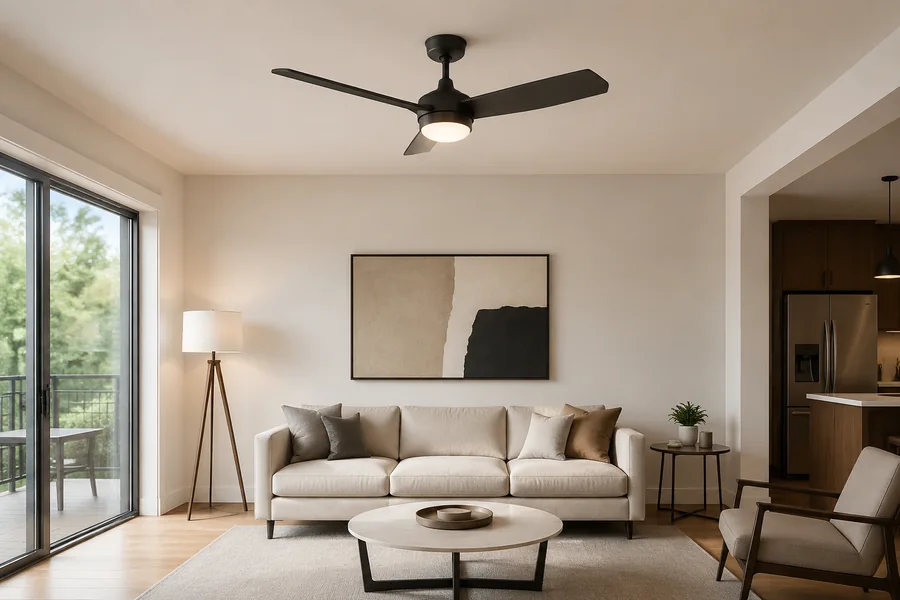
Fan size means the blade span from one blade tip to the opposite blade tip. It is not the motor width, light size, or blade length.
This matters because a 52 inch fan and a 60 inch fan may look close in photos but feel very different on the ceiling.
Size does not equal airflow by itself
A larger span can cover more area, but real airflow also depends on motor performance, blade pitch, blade surface, RPM, and installation height.
Engineering ToolBox notes that ventilation design has to consider airflow, distribution, and room conditions together. Ceiling fan sizing follows the same practical idea.
When Should You Choose a 42 Inch Ceiling Fan?

Use it for small enclosed rooms
A 42 inch ceiling fan works best in small bedrooms, children’s rooms, compact offices, breakfast corners, and smaller kitchens.
It is also useful when a room needs airflow but the ceiling cannot visually handle a wide fan.
Avoid it in broad living rooms
A 42 inch fan may feel weak in a broad living room because the airflow centre is too small for the seating area.
If the room is medium rather than small, compare 42 inches with 48 inches before choosing.
When Should You Choose a 48 Inch Ceiling Fan?

Use it for medium rooms that need balance
A 48 inch ceiling fan is useful when a 42 inch model feels small but a 52 inch model looks too dominant.
It often fits guest bedrooms, apartments, dining rooms, and compact living rooms with modest furniture.
Match it with slim or retractable designs
A 48 inch fan can be a strong choice when the product has a compact body or retractable blades.
For a flexible decorative option, a modern retractable fan light can reduce visual span when the fan is not running.
When Should You Choose a 52 Inch Ceiling Fan?
Use it as the medium-room baseline
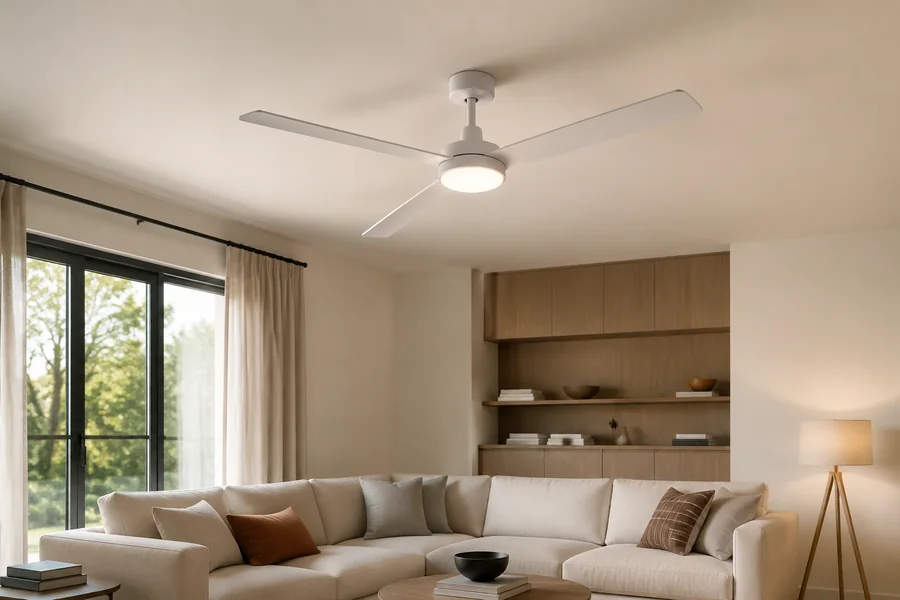
A 52 Inch Ceiling Fan is one of the most common choices for bedrooms, living rooms, and general home spaces. It gives useful coverage without feeling oversized in many rooms.
For a deeper living room answer, read the 52 inch guide.
Check room width before using it as default
A 52 inch fan is not a magic default. It may be too much for a small bedroom and too little for a wide open-plan room.
A slim option such as an ultra-thin 52 inch fan can help when the ceiling height or visual profile needs control.
When Should You Choose a 56 or 60 Inch Ceiling Fan?

Use 56 inches for the upper middle range
A 56 Inch Ceiling Fan suits larger bedrooms, bigger living rooms, and spaces where 52 inches feels slightly underpowered.
It is often a useful bridge size for importers because it covers rooms that are not quite large enough for a 60 inch statement fan.
Use 60 inches for large rooms with stronger visual scale
A 60 Inch Ceiling Fan fits large living rooms, master suites, open family rooms, and high ceilings when the space can support the scale.
For decorative projects, a 60 inch fandelier can combine fan coverage with a stronger lighting presence.
When Should You Choose a 72 Inch Ceiling Fan?
Use it for very large or commercial-style spaces
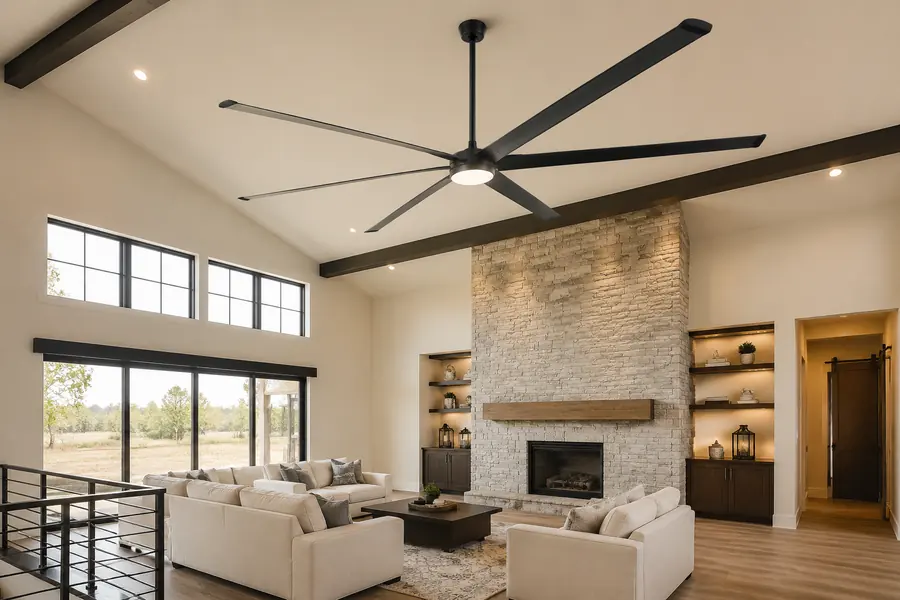
A 72 Inch Ceiling Fan is for large living rooms, open-plan spaces, covered commercial areas, warehouses, showrooms, and high ceilings.
It should not be used just because it looks impressive. The ceiling needs enough width, height, and structure.
Compare 60 and 72 inches before ordering
A 72 inch fan gives broader coverage, but it can overpower rooms that would be better served by a 60 inch fan or two smaller fans.
The 60 vs 72 inch guide explains where the size jump makes sense.
How Do Ceiling Height and Layout Change the Size?
Low ceilings need controlled depth
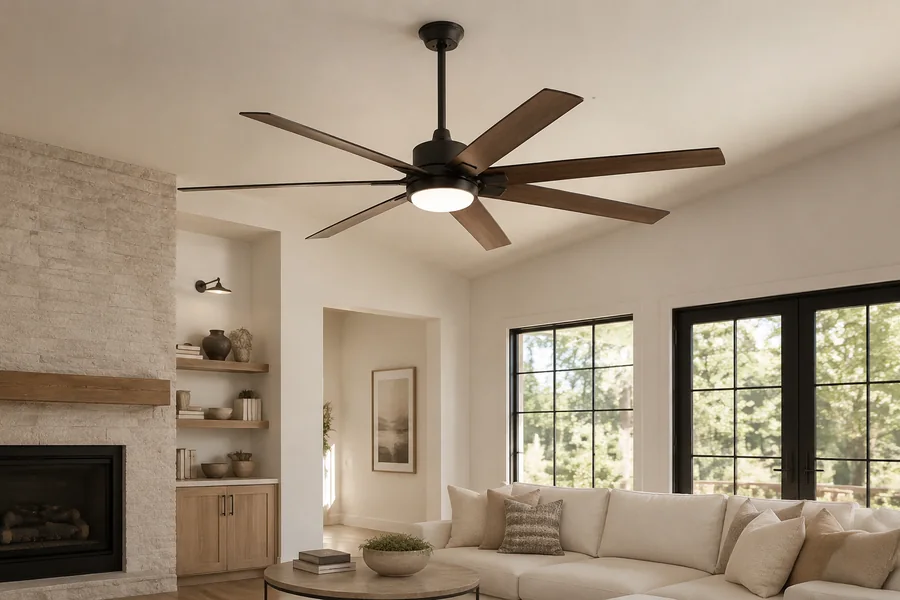
A large fan on a low ceiling can feel heavy and uncomfortable. The installed depth, blade clearance, and light kit height matter as much as diameter.
For lower ceilings, a slimmer fan with stable low-speed airflow is usually better than a wide fan that hangs too far down.
Large rooms may need one fan or two
A broad square room may use one larger fan. A long room may need two fans instead of one oversized centrepiece.
Use the one large fan vs two fans guide when layout is the main concern.
What Should Importers and Project Buyers Stock?

Build the range around room stories
A useful range could include 42 inches for compact rooms, 48 inches for apartments, 52 inches as the core size, 56 inches for larger residential rooms, 60 inches for statement rooms, and 72 inches for large-space projects.
This is easier to sell than a catalogue where every fan looks similar and the size logic is unclear.
Use product links to clarify each role
Show one compact decorative style, one slim 52 inch model, one 60 inch decorative model, and one extra-large option such as a 70 inch industrial fan.
For high airflow choices, connect product pages with application guides so buyers understand where each size belongs.
Final Size Decision

Choose by room, not by the biggest number
A bigger fan can improve coverage only when the room can physically and visually support it. If the fan is too large, it can feel awkward, noisy, or too direct.
For large living rooms, combine the size chart with the large room fan guide instead of relying on blade span alone.
Use comfort logic across spaces
The best ceiling fan size is the one that gives useful airflow at comfortable speeds, leaves safe clearance, and looks proportional in the room.
Product selection across categories follows the same rule. Whether comparing fan sizes or a comfort cushion, the product must match the real use case.
If you are looking for a better ceiling fan light solution for your project, NEBOLA can provide one-stop support from product selection to customization. We focus on ceiling fan light R&D and manufacturing, helping brands, importers, and distributors find products that better match real space needs.
Need Help Choosing the Right Ceiling Fan Light?
Tell us your room size, ceiling height, lighting needs and project plan. NEBOLA can help match the right fan light style and configuration.
Get a QuoteFAQ About 42 to 72 Inch Ceiling Fan Sizes
Is a 42 inch ceiling fan good for a bedroom?
Yes, a 42 inch ceiling fan can be good for a small bedroom, study, or compact room when the airflow is gentle and the ceiling height is suitable.
Is a 52 inch ceiling fan the safest default size?
Yes, a 52 inch ceiling fan is often a safe default for many medium rooms, but it can be too small for very large living rooms.
Should a large living room use a 60 inch or 72 inch fan?
Yes, a large living room may use a 60 inch or 72 inch fan when the room width, ceiling height, and furniture scale support the larger span.
Can a ceiling fan be too large for a room?
Yes, a ceiling fan can be too large if it overwhelms the ceiling, creates harsh airflow, or cannot keep safe wall and blade clearances.
Should importers stock every ceiling fan size?
No, importers should not stock every size without a plan. They should build a range around clear room applications and market demand.