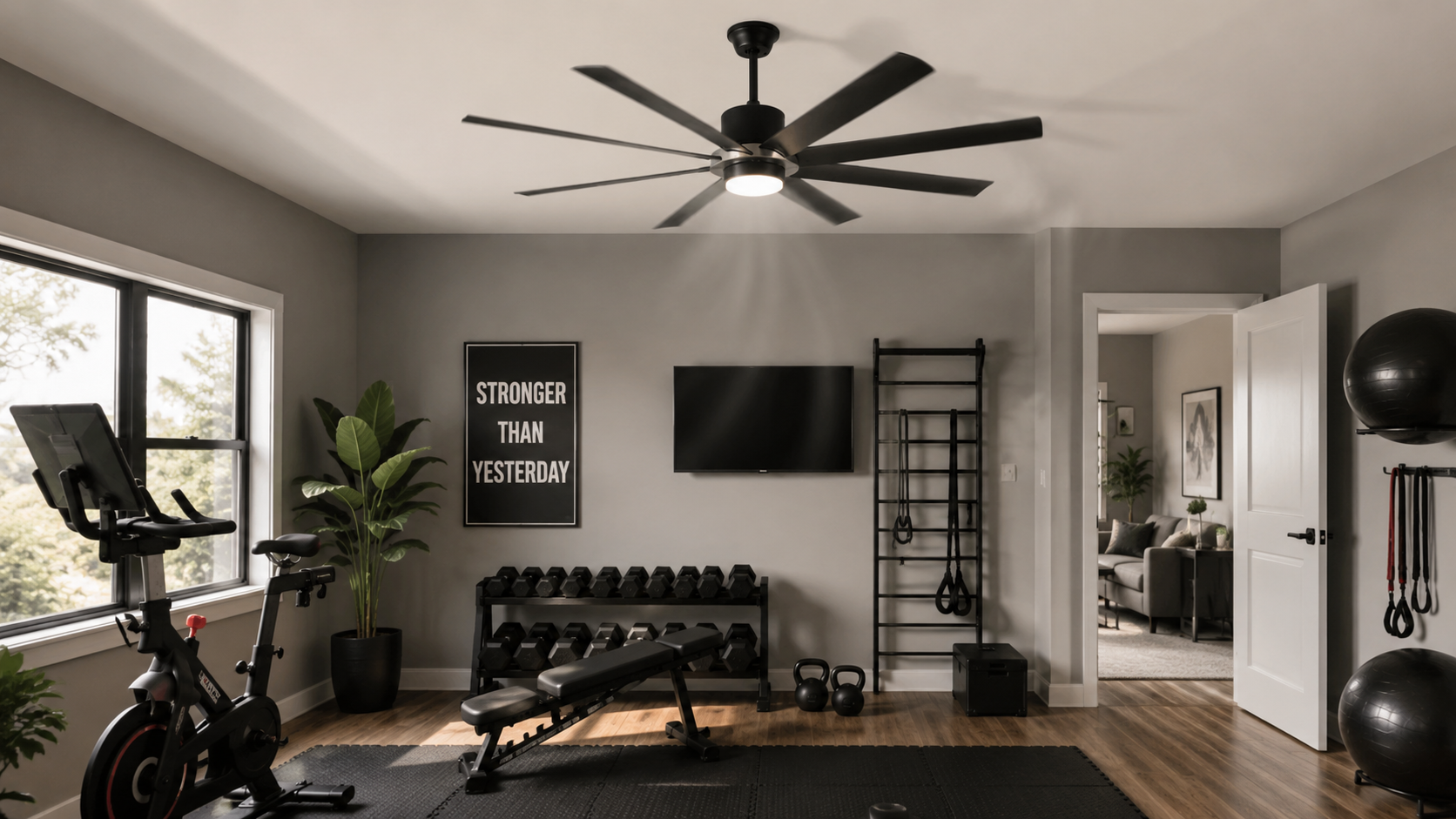


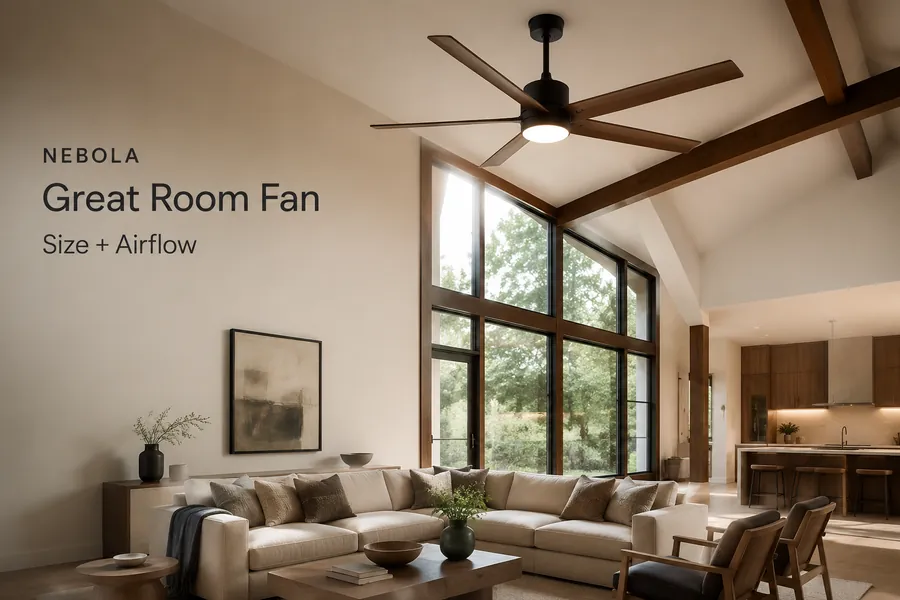
Choosing the right great room ceiling fan is not the same as choosing a fan for a normal bedroom or small lounge. A great room usually has more height, more open volume, wider furniture spacing and a stronger need for balanced airflow rather than sharp wind. For a room-specific starting point, compare the available options in the living room ceiling fan category before deciding on diameter, mounting height or lighting.
The best ceiling fan for great room comfort should answer four questions at the same time: how wide the room is, how high the fan will hang, how much airflow the occupied zone needs and whether the fan visually fits the ceiling. If any one of those checks is ignored, the fan may look impressive but still feel weak, noisy or awkward in daily use.
1. What Size Ceiling Fan Does a Great Room Usually Need?

A great room usually needs a larger fan than a normal bedroom or compact living room because the ceiling is higher, the seating area is wider and the room often connects to dining or entry spaces. For many projects, the practical range starts around 60 inches and can move toward 72 inches or larger when the room is broad and open.
1-1. Why is the answer not one fixed size?
A great room ceiling fan should be chosen by the usable comfort zone, not by the phrase “great room” alone. A tall square room with one sofa group may need one large fan, while a long open room may need two controlled airflow zones.
If the room feels closer to a standard living room, the 52 inch living room guide is a useful lower-bound check before moving up to larger spans.
1-2. What is the practical starting range?
For many great rooms, a 60 inch fan is the first size worth considering. It gives noticeably more ceiling presence and airflow reach than a mid-size fan without always looking oversized.
A 72 inch ceiling fan becomes more convincing when the room is very wide, has a high ceiling or needs one central fan to serve a broad seating zone.
2. How Should You Measure the Great Room Before Choosing a Fan?

Measure the part of the room where people actually sit first. A great room may include a fireplace, dining area, walkway, staircase opening or open kitchen, but the fan should mainly serve the occupied zone where comfort matters most.
| Measurement | Why it matters | Selection impact |
|---|---|---|
| Room length and width | Shows the airflow coverage needed | Helps decide 60 inch, 72 inch or multiple fans |
| Ceiling height | Controls mounting method and air reach | May require a downrod instead of flush mounting |
| Seating zone width | Shows where people feel airflow | Prevents choosing by total square footage only |
| Distance to walls and beams | Protects safe blade clearance | Avoids oversized fans in crowded ceilings |
2-1. Should you measure the whole open space?
Yes, measure the whole space, but do not let that number make the decision alone. A large living room ceiling fan should match the active seating area before it tries to cover every walkway.
The broader large living room fan guide explains why coverage should follow furniture zones, not only wall dimensions.
2-2. What if the room is open to another area?
If the great room opens into a dining room or kitchen, decide whether the fan is meant for the sofa area or for the whole open plan. One fan can feel comfortable near the seating zone but weak at the far end.
In long open layouts, it may be better to repeat smaller fan zones than to force one fan to work too hard from the centre.
3. What Fan Size Works for Common Great Room Layouts?

A great room fan should feel proportional from the floor and useful at the seat. The table below gives a practical direction, but final sizing should still check ceiling height, room shape and airflow quality.
| Great room condition | Common fan direction | Important check |
|---|---|---|
| Moderate great room with one sofa zone | 60 inch | Balance with furniture and ceiling height |
| Wide great room with high ceiling | 66 to 72 inch | Downrod length and airflow reach |
| Very large open room | 72 inch+ or two fans | Coverage across multiple activity zones |
| Long rectangular great room | Two planned zones | Avoid dead spots at both ends |
3-1. When is 60 inch enough?
A 60 inch ceiling fan is often enough when the great room has one clear conversation area and the ceiling is high but not massive. It can move enough air at lower speeds while keeping the ceiling visually calm.
If you are deciding between 60 and 72 inches, the 60 inch vs 72 inch guide gives a more focused comparison.
3-2. When should you consider 72 inch or larger?
Choose 72 inch or larger when the room is wide, the ceiling is tall and the furniture scale is large. In that setting, a smaller fan can look lost and may leave the edges of the seating area still.
For higher ceilings, a strong indoor ceiling fan with a suitable downrod can be more useful than a shallow fan that stays too close to the ceiling.
4. How Does Ceiling Height Change the Fan Size Decision?

Ceiling height changes both the apparent size and the actual comfort. A fan mounted too high may look elegant from below but fail to move air where people sit, while a fan mounted too low can feel unsafe and visually heavy.
4-1. Why do high ceilings need more than blade span?
A high ceiling ceiling fan often needs a downrod so the blade plane sits closer to the occupied zone. Without that, even a large fan may circulate air above the room rather than around people.
Use a downrod length that keeps the fan visually connected to the room while maintaining safe clearance from the floor, furniture and nearby beams.
4-2. What clearance should you respect?
Clearance should be checked before finalising a large fan. The fan should have enough space from walls, sloped surfaces, beams and tall furniture so the blades can run safely and quietly.
For a short external reference, Cornell’s published federal text on fan clearance is useful because it shows why installed height and fixture support should not be treated casually.
4-3. Is flush mount suitable for a great room?
Flush mount is rarely the first choice for a true high-ceiling great room because the fan can stay too far above the comfort zone. It is more useful when the room is large in floor area but still has a lower ceiling.
A 42 inch flush mount fan is a better reference for lower rooms than for tall great rooms.
5. How Much Airflow Does a Great Room Ceiling Fan Need?
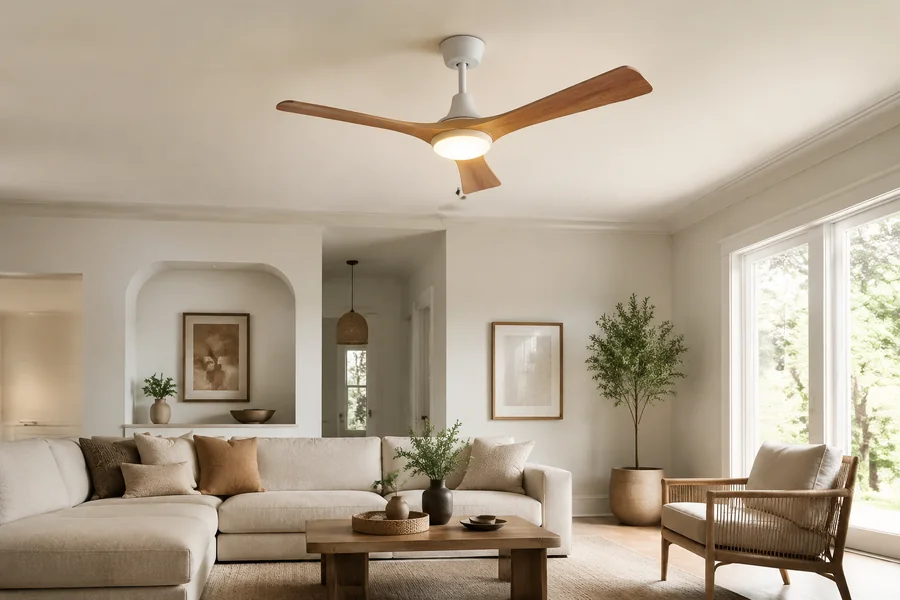
Great room airflow should feel broad and steady, not sharp. The goal is not to create a strong blast from one point, but to keep the sofa zone, conversation area and surrounding space comfortable at low or medium speed.
5-1. Why is CFM not the only answer?
CFM helps compare fan performance, but it does not tell the whole story. Blade pitch, motor quality, speed settings, installation height and the width of the room all affect real comfort.
A high CFM number can still disappoint if the fan is mounted too high, placed away from the seating area or built with poor blade balance.
5-2. Why should low-speed airflow matter?
Most great rooms are used for relaxing, talking, watching TV or hosting guests. A fan that only feels useful at high speed may be too noisy or too direct for daily comfort.
Look for stable low-speed control, smooth acceleration and quiet motor behaviour rather than only chasing the highest airflow number.
6. Should a Great Room Use One Large Fan or Two Fans?
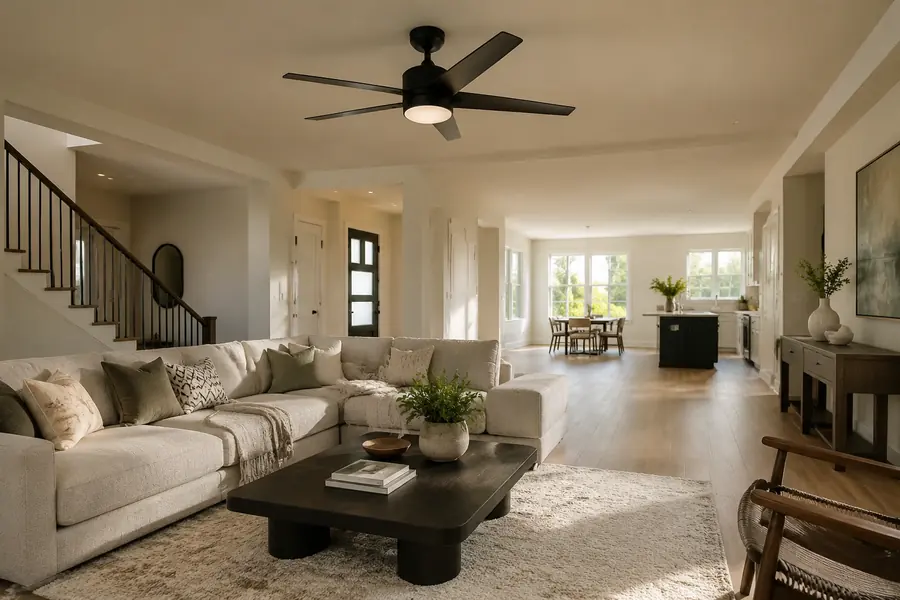
One large fan works best when the great room has one central seating zone. Two fans work better when the room is long, divided into activity areas or difficult to serve from one ceiling point.
6-1. When does one large fan make sense?
Use one large fan when the sofa group, rug and ceiling point all line up. This makes the fan feel intentional and keeps the ceiling less busy.
A single broad fan can also become a clean design feature in a vaulted great room, especially when the finish matches beams, flooring or window frames.
6-2. When are two fans more practical?
Two fans are more practical when the room is long or when the seating area and dining area both need comfort. Each fan can run slower, which often feels smoother than one very powerful fan.
This is especially useful in open homes where air movement needs to follow daily life rather than a perfect floor-plan rectangle.
7. What Fan Style Fits a Great Room Best?
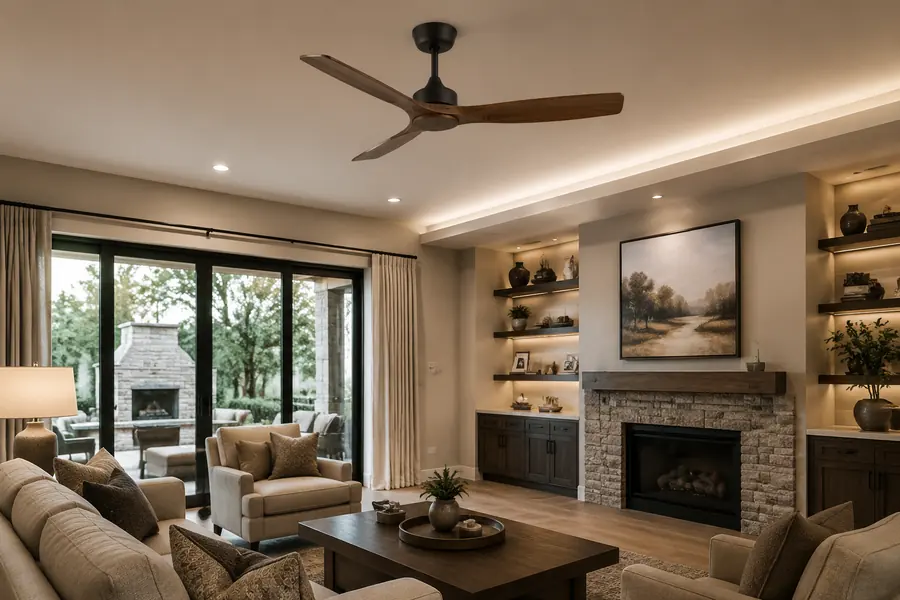
A great room fan is visible from many angles, so style matters more than in a small bedroom. The fan should match the ceiling height, furniture scale and lighting plan while still being easy to maintain.
7-1. When is a fan without light better?
A fan without light is often better when the room already has recessed lights, wall lights, lamps or a chandelier. It keeps the fan focused on airflow and avoids adding a second visual centre.
For clean ceilings and independent lighting plans, a fan-only option can make the room feel calmer and more architectural.
7-2. When should the fan include an LED light?
A fan with an integrated LED light can work when the great room needs a central lighting layer. The diffuser should be soft, wide and comfortable, because glare is more obvious in a tall open room.
A ceiling fan LED light is a practical direction when the fixture needs to combine daily light, remote control and airflow in one product.
7-3. What finish looks balanced?
Large rooms usually handle stronger finishes better than small rooms. Wood blades, matte black, warm brass or soft white can all work if they connect with furniture, flooring or door hardware.
Avoid choosing a finish only from a close-up product photo. A great room fan should be judged from across the room.
8. What Installation Details Should Be Checked Before Buying?
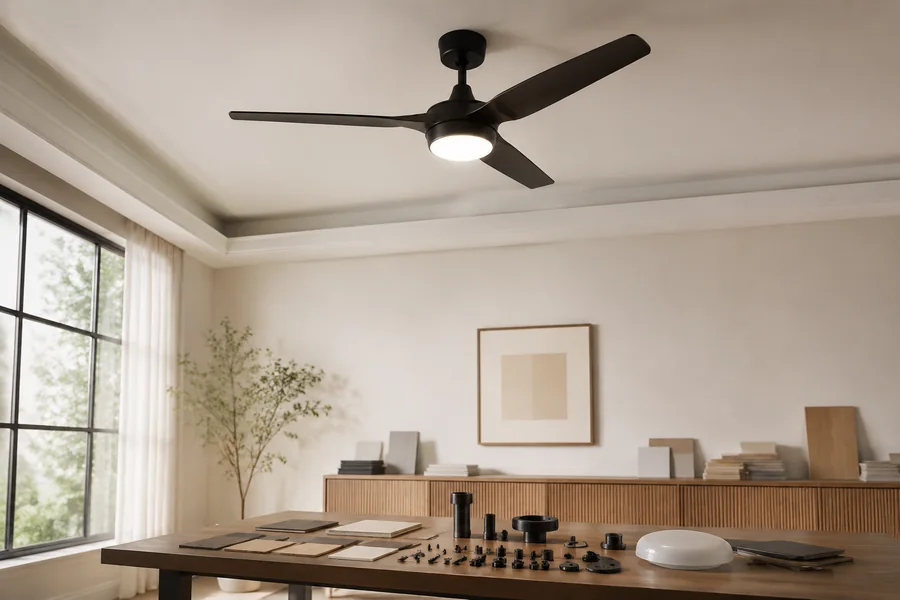
Large fans need more installation planning than small fans. A great room often has a high ceiling, sloped ceiling, beams, tall windows or a fireplace feature, so the mounting point and electrical support should be confirmed early.
8-1. Why does the ceiling box matter?
The fan needs a proper fan-rated electrical box and secure structural support. A large fan creates movement and load, so it cannot be treated like a light fixture.
If the ceiling is vaulted or framed with exposed beams, confirm the mounting position before ordering the fan or downrod.
8-2. What if the ceiling is sloped?
A sloped ceiling may need an angled adapter and a longer downrod so the fan hangs level. The steeper the slope, the more important it is to confirm the adapter limit.
For drop ceilings or commercial-style ceiling systems, a 56-inch drop-ceiling fan shows why the fan should connect to structural support, not only to ceiling panels.
9. What Buying Mistakes Should Great Room Owners Avoid?
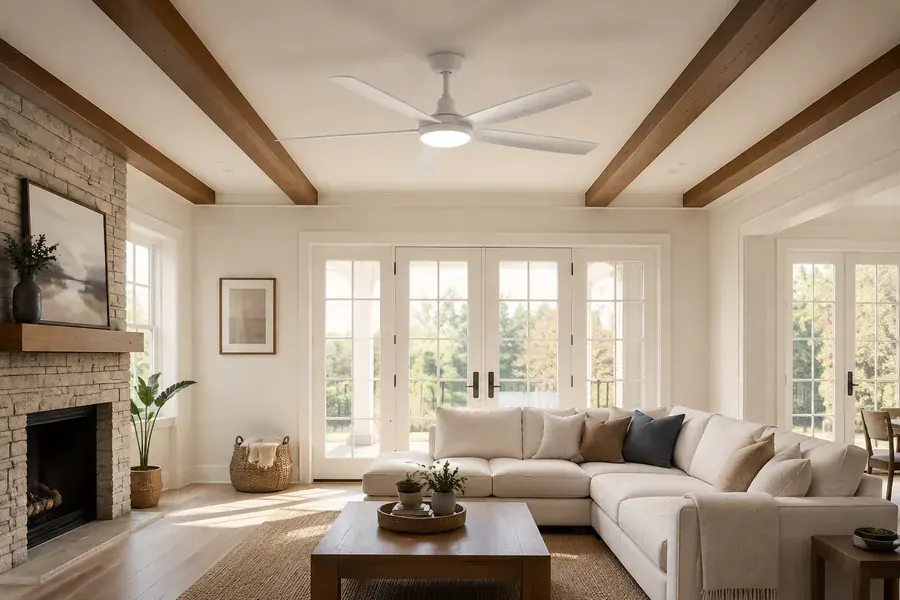
The most common mistake is choosing by room size alone. Great rooms need a combined decision across blade span, height, airflow, visual scale, lighting and installation structure.
9-1. Why is choosing too small a problem?
A small fan can look neat in a showroom but disappear in a tall room. It may also need to run faster, which can add noise without solving airflow at the edges of the seating area.
If the room is already being described as a great room, a normal bedroom-size fan is usually the wrong starting point.
9-2. Why is choosing too large also risky?
An oversized fan can dominate the ceiling, sit too close to beams or feel too strong over the sofa. Bigger should only be chosen when the room width, height and furniture scale support it.
For NEBOLA project selection, I would normally check the drawing, ceiling height and target fan role before recommending a final size.
9-3. Why should controls be checked?
Great rooms often need flexible control because the room is used in different ways throughout the day. Remote control, timer, reverse function and light control can make the fan easier to live with.
For buyers comparing product ranges, control quality matters because large-room users notice noise, delay and weak remotes quickly.
10. What Final Checklist Helps Choose the Right Great Room Fan?

The right great room ceiling fan is the one that fits the room from both a technical and visual point of view. It should move air where people sit, hang at the right height and look natural in the architecture.
10-1. What should homeowners confirm?
Confirm room width, seating-zone width, ceiling height, mounting type, blade clearance, airflow expectation, lighting needs and daily control habits. A great room fan is difficult to judge after installation, so the planning stage matters.
Before final selection, return to the living room ceiling fan collection and compare size, style and installation depth together.
10-2. What should project buyers confirm?
Project buyers should confirm motor type, noise target, blade finish, carton size, replacement parts, remote control options and whether the same product can serve several room types. A great room model should not create inventory confusion with medium-room models.
A reliable supplier should be able to discuss room drawings, size range, downrod options, light settings and packaging before bulk production.
If you are looking for a better ceiling fan light solution for your project, NEBOLA can provide one-stop support from product selection to customization. We focus on ceiling fan light R&D and manufacturing, helping brands, importers, and distributors find products that better match real space needs.
Need the Right Ceiling Fan for a Home, Project, or Commercial Space?
Tell us your space type, ceiling height, airflow needs, lighting options, certification direction, and order plan. We’ll help match the right solution.
Get a QuoteFAQ About Great Room Ceiling Fans
Does a great room always need a 72 inch ceiling fan?
No, a great room does not always need a 72 inch ceiling fan. A 60 inch fan may work when the seating zone is compact, while 72 inch or larger makes more sense for wide rooms, high ceilings and open layouts.
Is a 52 inch fan too small for a great room?
Yes, a 52 inch fan can be too small for many great rooms because the airflow zone may not cover the whole seating area. It can still work in a smaller defined area or when paired with another fan.
Should a high ceiling ceiling fan use a downrod?
Yes, a high ceiling ceiling fan usually needs a downrod so the blades sit closer to the occupied zone. If the fan stays too high, the room may look correct but feel weak at sofa level.
Can one ceiling fan cover a large living room?
Yes, one ceiling fan can cover a large living room when the room is square, the seating area is central and the blade span is wide enough. Long or divided rooms may need two fan zones instead.
Is airflow more important than blade diameter?
No, airflow is not more important than blade diameter by itself. Great room comfort depends on diameter, motor power, blade design, speed control, mounting height and where people sit.
Can NEBOLA support great room fan projects?
Yes, NEBOLA can support great room fan projects with size selection, motor options, LED lighting, finishes, packaging and order planning. Project buyers should share room height, layout and target market before choosing the final model.