


Choosing between a 3 blade ceiling fan and a 5 blade ceiling fan can look like a simple style choice. In real use, it is a little deeper than that. Blade count can change the look, airflow feel, motor load, and noise character of a fan. But it should never be judged alone. If you are comparing different ceiling fan blade materials, blade number should be considered together with blade shape, pitch, size, motor type, and the room where the fan will be used.
Many buyers ask the same question: is a 3 blade ceiling fan better, or is a 5 blade ceiling fan better? The honest answer is that both can be good. A poor 5 blade fan can feel weak. A well designed 3 blade fan can move air strongly and quietly. A 5 blade fan with a smooth motor can feel calm in a bedroom. A 3 blade fan can look clean and modern in a living room.
As a ceiling fan manufacturer, NEBOLA looks at blade count as part of the full fan system. A good fan is not only the number of blades. It is the way the blades, motor, light, mounting height, and room size work together. This guide explains how to compare 3 blade and 5 blade ceiling fans in a practical way.
1. Why Blade Count Is Not a Simple “More Is Better” Question

It is easy to think that more blades must mean more air. Five blades look fuller than three. A fan with more blades can also look more balanced on the ceiling. But ceiling fan performance is not that direct.
Blade count can change the feel of a fan, but it does not decide everything. Airflow depends on CFM, blade pitch, blade span, motor power, blade material, and installation height. If those parts are weak, adding more blades will not solve the problem.
1-1. Why many buyers compare 3 blade and 5 blade fans first
Most people notice blade number before they notice the motor or CFM rating. That makes sense. Blade count changes the first impression.
A 3 blade ceiling fan often looks modern, light, and clean. It suits simple spaces, open layouts, and rooms where the fan should not look too busy.
A 5 blade ceiling fan often looks fuller, softer, and more traditional. It suits classic rooms, bedrooms, and spaces where the fan is part of the decoration.
This is why the choice often starts with appearance. But it should not stop there.
1-2. What blade count can change in daily use
Blade count may affect:
- How the fan looks in the room
- How much drag the motor has to handle
- How smooth the airflow feels at low speed
- How quiet or lively the fan feels
- How heavy or light the fan appears on the ceiling
These effects are real, but they depend on product quality. A good 3 blade fan can be quiet. A good 5 blade fan can be efficient. A weak design can disappoint in either style.
1-3. Why motor, pitch, and CFM still matter more
If you want to judge performance, start with CFM, motor type, blade pitch, and blade span. These tell you more than blade count.
CFM shows how much air the fan can move. Blade pitch shows how the blade pushes air. Motor quality decides how smoothly the fan runs. Blade span decides how much area the fan can cover.
Blade count is part of the story. It is not the whole story.
2. What a 3 Blade Ceiling Fan Usually Does Well
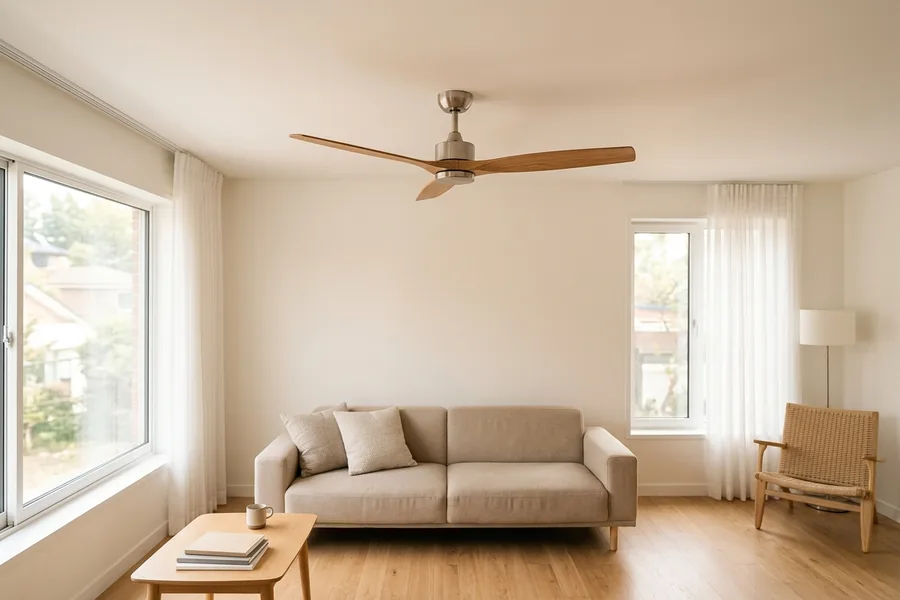
A 3 blade ceiling fan is often chosen for modern homes and project spaces. It has a cleaner shape and usually looks more open on the ceiling.
This style can work very well when the fan has a strong motor, good blade pitch, and balanced blades. It can feel efficient, direct, and visually light.
2-1. Cleaner modern appearance
The biggest strength of a 3 blade fan is its look. It has less visual weight than a 5 blade fan. This makes it a strong choice for modern rooms, apartments, offices, and simple living spaces.
In a room with clean lines, a 5 blade fan may look too full. A 3 blade fan can look sharper and more intentional. It gives the ceiling more breathing space.
This is why many slim DC motor fans use three blades. A product such as an ultra-thin 52 inch DC ceiling fan fits this kind of clean modern use, where the fan should look light but still support daily airflow.
2-2. Lower drag and responsive airflow
Fewer blades can create less drag. This means the motor may have less resistance to overcome, especially when the blade shape is efficient.
That does not mean every 3 blade fan is more powerful. It means a good 3 blade design can feel responsive. The fan can start smoothly, change speed quickly, and move air with less visual bulk.
This matters in rooms where users adjust fan speed often. A responsive fan can feel easier to live with.
2-3. Better fit for contemporary rooms and open layouts
Open-plan rooms often need a fan that covers space without making the ceiling feel heavy. A 3 blade ceiling fan can do this well.
It can suit:
- Modern living rooms
- Open kitchen-living areas
- Apartments
- Offices
- Minimalist bedrooms
- Retail or hospitality spaces with clean design
In these rooms, the fan should support comfort without becoming the visual centre of everything.
2-4. When a 3 blade fan may feel too sharp or too plain
A 3 blade fan is not always the right choice. In a warm classic room, it may look too spare. In a large room with heavy furniture, it may look too thin. In a bedroom where the user wants a softer look, it may feel too sharp.
Some 3 blade fans also rely too much on style and not enough on performance. If the motor is weak or the blade pitch is poor, the fan may look good but feel light in use.
Choose a 3 blade fan when the design and the engineering both make sense.
3. What a 5 Blade Ceiling Fan Usually Does Well

A 5 blade ceiling fan is the more familiar choice in many homes. It gives the ceiling a fuller look and can feel softer in traditional or cosy rooms.
Many people choose 5 blades because it feels safe. The fan looks balanced, familiar, and complete. That can be useful in bedrooms, living rooms, and classic interiors.
3-1. Fuller and more traditional ceiling presence
Five blades make the fan look fuller. This can help the fan feel more natural in rooms with warm furniture, wood tones, fabric textures, and classic lighting.
In some rooms, a 3 blade fan may look too empty. A 5 blade fan fills the ceiling more evenly. It can make the fan look like part of the room rather than a technical object.
For example, a vintage ceiling fan with remote control can fit rooms where buyers want a more classic ceiling presence with practical daily control.
3-2. Smoother airflow feel at lower speed
Many users feel that 5 blade fans create a softer airflow at low speed. This is not always because of the blade count alone. It can also come from blade shape, wider surface area, and motor tuning.
In bedrooms, this softer feeling can be useful. People often want gentle airflow rather than strong wind. A good 5 blade fan can create comfort without feeling harsh.
But do not assume five blades always mean smoother. Balance and motor quality still matter.
3-3. Better visual balance in classic interiors
Five blades often suit:
- Traditional bedrooms
- Master bedrooms
- Warm living rooms
- Farmhouse interiors
- Classic hotel rooms
- Rooms with heavier furniture
The fan looks more settled in these spaces. It can also pair well with wood, bronze, black, or brushed metal finishes.
3-4. When a 5 blade fan may feel heavy or less efficient
The downside is visual and mechanical weight. A 5 blade fan can look crowded in a small room. It can also create more drag than a fan with fewer blades.
This does not mean it will always use more power. A good DC motor can still make a 5 blade fan efficient. But if the fan uses a weak motor, poor blade pitch, or heavy blades, performance may suffer.
A 5 blade fan should feel calm, not slow.
4. Airflow Comparison: 3 Blade vs 5 Blade Ceiling Fan
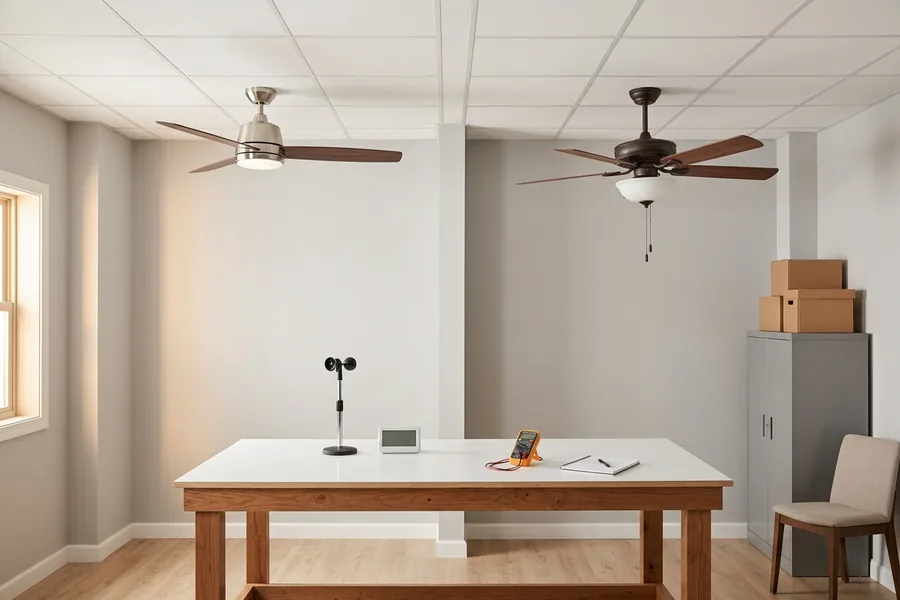
Airflow is where many buyers get confused. A fan with more blades may look stronger, but the actual airflow may not be higher.
The better question is not, “Which blade count moves more air?” The better question is, “Which complete fan design moves the right amount of air for this room?”
4-1. Why CFM is more useful than blade count
CFM stands for cubic feet per minute. It measures how much air the fan moves. If you want to compare airflow, CFM is more useful than blade number.
A 3 blade fan with high CFM can move more air than a weak 5 blade fan. A 5 blade fan with strong pitch and a good motor can outperform a cheap 3 blade fan.
This is why buyers should not judge from photos alone. Product images show style. CFM and motor details show performance.
4-2. How blade pitch changes air movement
Blade pitch is the angle of the blade. A blade with proper pitch can push air more effectively. A blade with weak pitch may spin without moving much useful air.
This matters for both 3 blade and 5 blade fans. If the pitch is poor, the blade count will not save the design.
The fan should move air cleanly, without shaking, humming, or needing full speed all the time.
4-3. Why fewer blades can reduce motor drag
With fewer blades, the motor may face less air resistance. This can help some 3 blade fans run efficiently and respond quickly.
This is one reason 3 blade fans are common in modern DC motor designs. They can look simple and run smoothly when the blade profile is well designed.
However, fewer blades do not automatically mean better airflow. A bad 3 blade fan can still feel weak.
4-4. Why more blades do not always mean stronger airflow
More blades can increase surface area, but they can also increase drag. If the motor is not strong enough, the fan may move slowly or use more effort.
This is why a 5 blade fan can feel comfortable at low speed but may not always be the best high-airflow choice.
For larger rooms, a bigger blade span and strong motor may matter more than adding blades. A large industrial 70 inch ceiling fan light is a better example of solving airflow coverage through size and motor planning, rather than blade count alone.
5. Noise and Comfort: Which One Feels Quieter?

Noise is one of the most important parts of fan comfort. A fan can look perfect and move air well, but if it clicks, hums, or wobbles, people will stop using it.
Blade count can affect noise character, but it is not the only factor.
5-1. Why 5 blade fans can feel smoother in quiet rooms
A 5 blade fan can feel smooth because the airflow may feel more spread out at low speed. This can be pleasant in bedrooms and quiet living rooms.
For sleeping, people usually want soft airflow. They do not want a strong stream of air over the bed. A well balanced 5 blade fan can support that kind of comfort.
But smooth does not always mean silent. Motor noise, blade balance, and installation quality still decide the final result.
5-2. Why 3 blade fans can still run quietly with a good motor
A 3 blade fan can also be very quiet. Modern DC motors, accurate blade balance, and good mounting parts can make a 3 blade fan smooth at low speed.
If the fan is well made, fewer blades do not make it noisy. The fan may even feel cleaner and more stable because the motor has less drag to manage.
This is why it is risky to judge noise by blade count alone.
5-3. How blade balance affects vibration
Vibration often comes from poor balance. If one blade is slightly heavier, bent, or misaligned, the fan can wobble. This can happen with any blade count.
A 5 blade fan has more blades to balance. A 3 blade fan has fewer blades, but each blade has more visual and mechanical importance. In both cases, manufacturing quality matters.
This is where blade material also becomes important. If you want to understand this further, the guide on how blade material affects ceiling fan performance explains why weight, stiffness, and finish can change comfort.
5-4. What to check for bedrooms, offices, and hotel rooms
For quiet rooms, check:
- DC motor or quiet motor design
- Low-speed control
- Blade balance
- Mounting type
- Downrod or flush mount fit
- CFM at low and medium speed
- Product reviews or test data if available
For hotels and offices, quiet repeat performance matters more than a dramatic airflow claim.
Need the Right Ceiling Fan for a Home, Project, or Commercial Space?
Tell us your space type, ceiling height, airflow needs, lighting options, certification direction, and order plan. We’ll help match the right solution.
Get a Quote6. Energy Efficiency and Motor Load

Energy efficiency is not only about saving power. It also affects comfort. An efficient fan can move enough air at low or medium speed without needing to run hard all day.
Blade count can change motor load, but it should be judged with motor type and blade design.
6-1. How blade count affects drag and power use
More blades can create more drag. This may require more motor effort, especially at higher speeds.
Fewer blades can reduce drag, which may help the motor run with less resistance. This can support efficiency in some 3 blade fans.
But the full design matters. Blade shape, pitch, size, material, and motor quality can change the result.
6-2. Why DC motors change the comparison
DC motors have changed ceiling fan design. They can offer better speed control, lower energy use, and quieter running than many older AC motor designs.
With a good DC motor, both 3 blade and 5 blade fans can perform well. The motor can help manage blade load more smoothly and give users better low-speed comfort.
For buyers comparing modern models, motor type is often more useful than blade count alone.
6-3. Why low-speed efficiency matters more than high-speed claims
Most people do not run a fan at full speed all day. In bedrooms and living rooms, low and medium speeds matter more.
A fan that only feels good at high speed may not be comfortable in daily use. It may be too windy, too noisy, or too harsh.
The better fan is the one that gives enough airflow at a comfortable speed.
6-4. How to compare CFM per watt before buying
CFM per watt shows how much air the fan moves for each watt of power. It is a useful efficiency number.
When comparing two fans, look at:
| Item to compare | Why it matters |
|---|---|
| CFM | Shows total airflow |
| Watts | Shows power use |
| CFM per watt | Shows airflow efficiency |
| Motor type | Affects speed control and noise |
| Blade pitch | Affects how air is pushed |
| Blade material | Affects weight, balance, and stability |
This gives a fairer comparison than simply counting blades.
7. Style Differences Between 3 Blade and 5 Blade Fans

Style is still important. A fan is installed in the centre of the ceiling. It is visible every day. If the fan looks wrong, the room can feel wrong.
The best fan should match both performance needs and room style.
7-1. 3 blade fans for modern and minimalist spaces
A 3 blade ceiling fan often suits modern rooms because it feels simple. It leaves more blank space around the fan and makes the ceiling look less busy.
This can work well with:
- White ceilings
- Clean furniture
- Simple lighting
- Open layouts
- Low-profile designs
- Smart home interiors
The look is light and direct.
7-2. 5 blade fans for classic and decorative rooms
A 5 blade ceiling fan often suits rooms where the fan should look fuller. It can feel warmer and more familiar.
This can work well with:
- Wood furniture
- Classic bedrooms
- Warm living rooms
- Farmhouse spaces
- Hotel guest rooms
- Decorative lighting styles
The look is softer and more settled.
7-3. Matching blade count with blade material
Blade count and blade material should work together. A 3 blade wood fan can look bold and sculptural. A 5 blade wood fan can look warm and traditional. A 3 blade ABS fan can look very modern. A 5 blade ABS fan can feel practical and balanced.
If you are comparing ABS and wood, the guide on ABS vs wooden ceiling fan blades can help you understand how material changes durability, cleaning, humidity use, and visual feel.
7-4. Avoiding a fan that looks too empty or too crowded
A 3 blade fan can look too empty in a large traditional room. A 5 blade fan can look crowded in a compact modern room.
Before choosing, imagine the fan from the doorway. Does it match the furniture? Does it feel too thin? Too heavy? Too decorative? Too plain?
Good design is not loud. It simply feels right.
8. Room-by-Room Choice Guide

The best blade count depends on the room. A small bedroom, a large living room, and a covered patio do not need the same fan.
Use the room first. Then choose blade count.
8-1. Small bedrooms and apartments
Small rooms need comfort without visual crowding. A 3 blade fan can work well if the design is compact and quiet. A 5 blade fan can also work if the room has a warmer style and the fan is not too large.
For small spaces, fan size and mounting type may matter more than blade count. A flush mount or low-profile design may be more useful than a certain number of blades.
8-2. Master bedrooms and quiet sleeping spaces
For master bedrooms, many buyers prefer soft airflow and low noise. A 5 blade fan can be a comfortable choice when the design is balanced and the motor is quiet.
But a modern 3 blade DC fan can also work well, especially in a clean bedroom with simple furniture.
The main rule is this: do not choose by blade number only. Choose by low-speed comfort.
8-3. Living rooms and open-plan areas
Living rooms often need wider coverage. If the room is large, blade span, CFM, and motor strength matter more than whether the fan has 3 or 5 blades.
A 3 blade fan may look better in a modern open-plan room. A 5 blade fan may look better in a classic living room.
For warm interiors where the fan should feel like part of the furniture, a 52 inch solid wood ceiling fan can be a useful reference point for how material and style affect the final look.
8-4. Covered patios and humid spaces
For covered patios, damp rooms, or humid climates, rating and material matter more than blade count.
The full fan should be suitable for the environment. That includes the motor housing, screws, blade material, finish, and light parts.
An outdoor ceiling fan with oak white blades can be suitable when the whole product is designed for that use, not simply because the blade count looks right.
8-5. Commercial and hospitality projects
For commercial and hospitality projects, consistency matters. The fan should look good across many rooms, run quietly, and be easy to maintain.
Blade count should support the project style. Three blades may suit modern hotels and apartments. Five blades may suit classic guest rooms and villas.
For importers, distributors, and project buyers, the better question is not only “3 or 5?” It is “Which blade count can we repeat across sizes, finishes, motors, and lighting options without causing after-sales issues?”
9. Common Buying Mistakes When Comparing 3 and 5 Blades

Most mistakes happen when buyers focus on one visible detail and ignore the full fan.
Blade count is visible, so it gets attention. But the quiet parts of the design often decide comfort.
9-1. Choosing only by appearance
Appearance matters, but it is not enough. A beautiful fan that does not move enough air is still a bad fit.
Check room size, fan diameter, CFM, motor type, and installation height before choosing.
9-2. Ignoring CFM and motor quality
If two fans look similar, the motor and CFM may still be very different. A stronger motor with better speed control can make a fan feel smoother and more useful.
Do not assume a 5 blade fan is stronger. Do not assume a 3 blade fan is more efficient. Check the data.
9-3. Forgetting blade material and balance
Blade material affects weight, stiffness, cleaning, moisture resistance, and long-term balance. A fan with poor blade material can wobble or lose shape over time.
This is why material, blade count, and motor quality should be judged together.
9-4. Using the wrong fan size for the room
A fan with the right blade count can still be the wrong size. A small fan in a wide room may need high speed all the time. A large fan in a small room may feel too strong or look too heavy.
Choose fan size before judging blade number too strongly.
9-5. Assuming all 3 blade or 5 blade fans perform the same
Not all 3 blade fans are alike. Not all 5 blade fans are alike.
One 3 blade fan may be slim and efficient. Another may be weak. One 5 blade fan may be quiet and balanced. Another may be heavy and noisy.
Judge the product, not only the category.
10. How to Choose Between a 3 Blade and 5 Blade Ceiling Fan
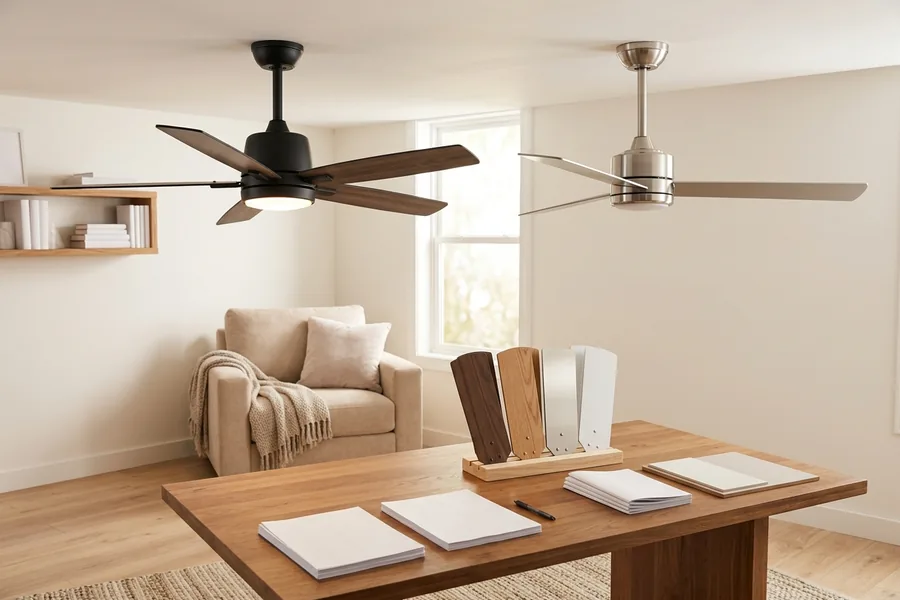
The best choice is the one that fits the room, not the one that wins an online argument.
Start with the space. Then look at airflow, noise, motor, material, and style.
10-1. Start with room size and airflow needs
Measure the room first. A small bedroom, a medium living room, and a large open-plan space need different airflow coverage.
If the room needs strong air movement, check CFM and blade span. If the room needs soft comfort, check low-speed control and noise.
10-2. Check ceiling height and installation type
Ceiling height changes fan comfort. Low ceilings may need flush mount fans. High ceilings may need downrods. Sloped ceilings may need angled mounting.
Blade count cannot fix poor installation height. The fan must sit in the right position to move air properly.
10-3. Compare motor, CFM, blade pitch, and noise
Before choosing, compare:
- Motor type
- CFM
- CFM per watt
- Blade pitch
- Blade material
- Speed range
- Noise level
- Warranty and support
This gives a stronger decision than simply asking whether 3 or 5 blades are better.
10-4. Match the look to the room style
Choose a 3 blade fan when the room needs a clean, modern, lighter look.
Choose a 5 blade fan when the room needs a fuller, softer, more familiar look.
If both look good, let performance decide.
10-5. Choose the fan that feels right in daily use
A ceiling fan is not a decoration you use once. It runs in the background of daily life. The best fan should feel quiet, steady, easy to control, and right for the room.
For buyers planning a product range or project order, NEBOLA can support different blade counts, sizes, finishes, motor options, and lighting styles based on the target market. Before making the final choice, compare the full system: blade number, blade material, airflow, motor, lighting, and room use. If you are still comparing options, the broader ceiling fan blade materials guide can help you connect blade count with material choice and long-term comfort.
Need the Right Ceiling Fan for a Home, Project, or Commercial Space?
Tell us your space type, ceiling height, airflow needs, lighting options, certification direction, and order plan. We’ll help match the right solution.
Get a QuoteFAQ About 3 Blade and 5 Blade Ceiling Fans
Is a 3 blade ceiling fan better than a 5 blade ceiling fan?
No, a 3 blade ceiling fan is not always better than a 5 blade ceiling fan. It can look cleaner and may create less motor drag, but performance depends on CFM, blade pitch, motor quality, blade material, and room size. A well designed 3 blade fan can be strong and quiet, while a poor one can feel weak.
Does a 5 blade ceiling fan move more air?
No, a 5 blade ceiling fan does not automatically move more air. More blades can create a fuller look and smoother airflow feel, but airflow is mainly decided by CFM, blade pitch, blade span, and motor power. A strong 3 blade fan can move more air than a weak 5 blade fan.
Are 5 blade ceiling fans quieter?
Yes, some 5 blade ceiling fans can feel quieter, especially at low speed in bedrooms. The airflow may feel softer and more spread out. However, quiet operation still depends on motor quality, blade balance, installation, and speed control. A good 3 blade DC fan can also be very quiet.
Are 3 blade ceiling fans more energy efficient?
Yes, a 3 blade ceiling fan can be more energy efficient in some designs because fewer blades may create less drag. But this is not guaranteed. The most efficient fan is the one with a good motor, proper blade pitch, suitable blade span, and strong CFM per watt performance.
Which blade count is better for a bedroom?
Yes, a 5 blade fan can be a good bedroom choice if you want a softer and more traditional look. But a 3 blade fan can also work well in a modern bedroom with a quiet DC motor. For bedrooms, low-speed comfort and low noise matter more than blade count.
Should importers stock both 3 blade and 5 blade ceiling fans?
Yes, importers can stock both if each style has a clear role. Three blade fans can serve modern, minimalist, and smart home markets. Five blade fans can serve classic, bedroom, and decorative markets. The best range should avoid overlap and match fan size, material, motor, lighting, and target room use.