

Choosing between an integrated LED ceiling fan and a replaceable LED fan light is a practical decision, not just a technical detail. The choice affects brightness, heat control, maintenance, spare parts, warranty, and long-term project cost. If you are comparing fan light solutions for commercial rooms, this commercial ceiling fans page can help you connect lighting choices with the wider room and project plan.
Integrated LED fan lights are common in modern ceiling fan products because they support slim design, stable light output, and better appearance control. Replaceable LED fan lights are still valuable when buyers care more about easy service, local spare parts, or long operating years in rental and commercial environments.
1. What Integrated LED and Replaceable LED Mean
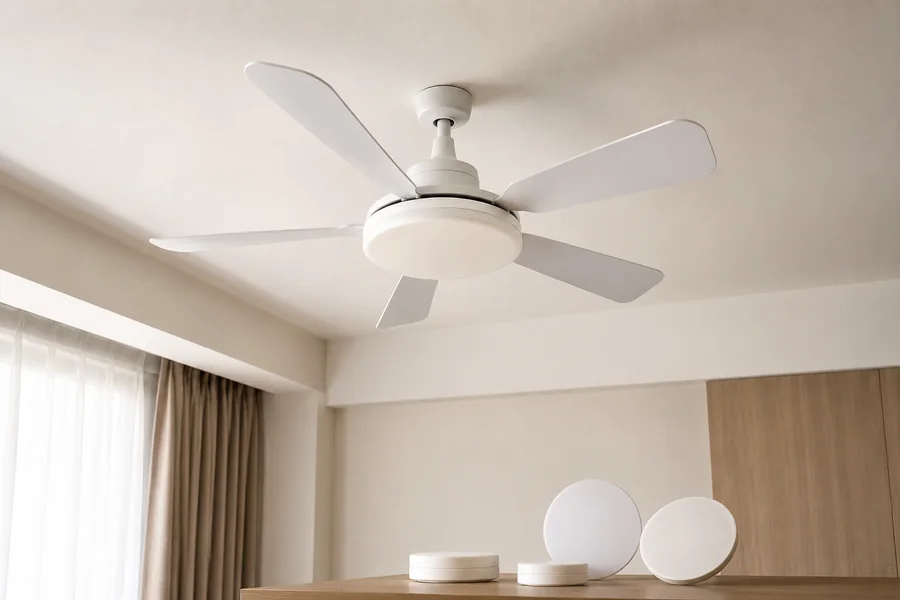
The difference starts with how the light source is built into the fan. Integrated LED systems use a built-in LED board or module designed as part of the fan. Replaceable LED fan lights use a bulb, replaceable module, or serviceable light source that can be changed more easily.
Neither design is automatically better. The right choice depends on project type, user expectations, service plan, and whether the supplier can provide replacement parts later.
1-1. Integrated LED is designed into the fixture
An integrated LED ceiling fan usually has the LED board, driver, diffuser, and housing designed together. This allows the fan light to look thinner and cleaner.
Because the light source is part of the product design, buyers should check the LED wattage, lumen output, colour temperature, dimming function, and driver quality before ordering.
1-2. Replaceable LED is designed for service
A replaceable LED fan light is easier to service because the light source can be changed without replacing the whole fan. This can be useful in rental housing, hotels, offices, and commercial projects.
The trade-off is appearance and fit. Replaceable light systems may need more internal space, and the final look may be less slim than an integrated LED design.
1-3. The decision is about lifecycle
The best comparison is not only about first purchase price. It is about the full lifecycle: installation, daily use, failure risk, spare parts, user complaints, and replacement work.
For buyers who are comparing full fixture types, the article on ceiling fan light vs ceiling light gives a useful first step before narrowing the decision to LED structure.
2. Why Integrated LED Ceiling Fans Are Popular
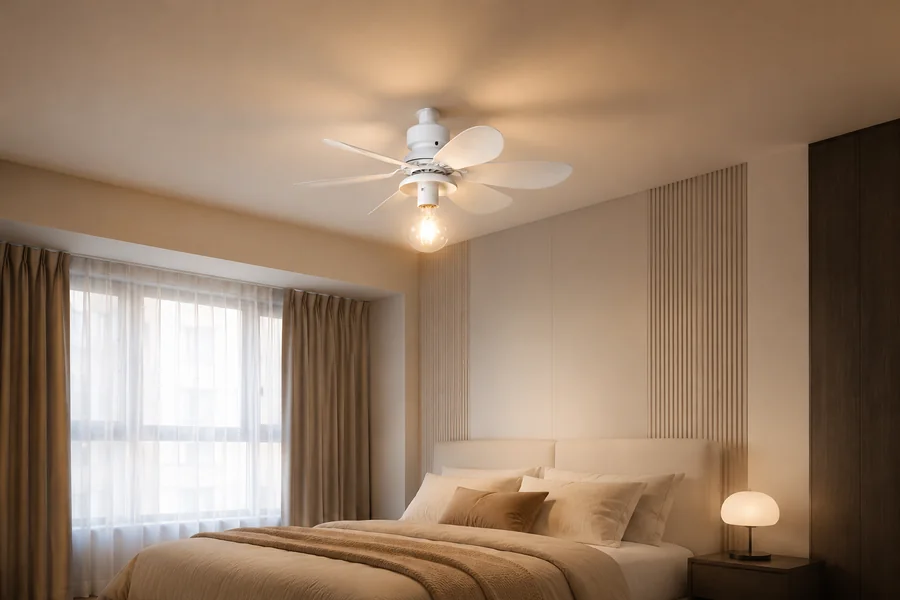
Integrated LED ceiling fan designs are popular because they make the product look modern and controlled. The light diffuser can be shaped to match the fan body, and the LED board can be arranged for a smoother lighting effect.
This is especially helpful for modern apartments, hotels, offices, and showrooms where ceiling fixtures need to look clean.
2-1. Slimmer design and cleaner appearance
Integrated LEDs allow the fan light to be thinner because the light source does not need a traditional bulb socket. This helps create low-profile, minimalist, and modern fan light designs.
A product such as an Ultra Thin Ceiling Fan White Modern 52 Inch LED DC Motor shows why integrated LED structures are attractive for clean residential and light commercial interiors.
2-2. Better control over diffuser and light spread
When the LED board and diffuser are designed together, the manufacturer can control the light spread more precisely. This can reduce harsh spots and make the light feel softer.
For bedrooms, hotel rooms, and lounges, diffused light is usually more comfortable than exposed bulbs. It also helps the fan light look more premium when turned on.
2-3. More suitable for smart and dimmable systems
Integrated LED systems often pair well with remote control, dimming, 3CCT switching, and smart functions. The driver and controller can be designed as one system.
For project buyers, this can reduce compatibility problems. It also makes it easier to offer one consistent user experience across many rooms.
3. Why Replaceable LED Fan Lights Still Matter
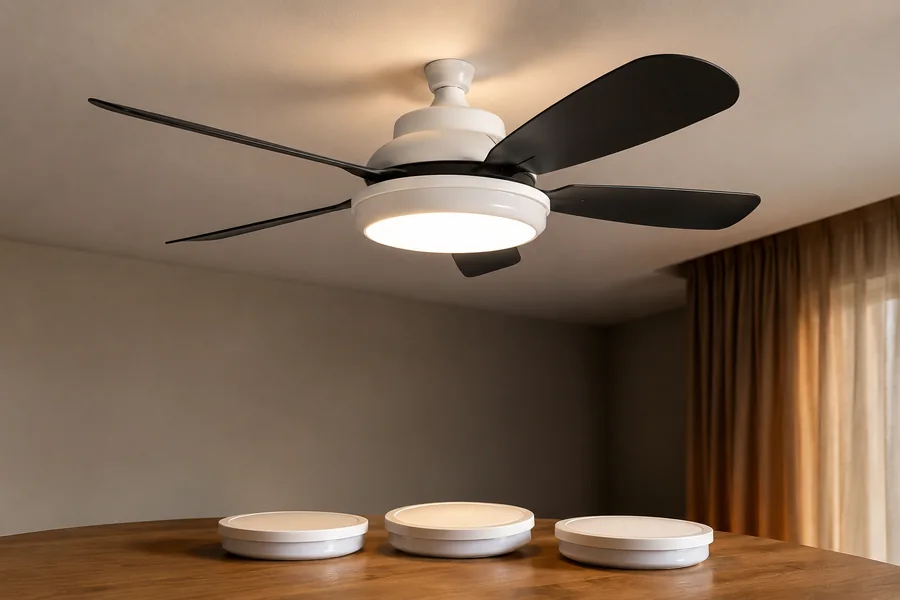
Replaceable LED fan lights remain useful because they reduce service anxiety. If the light fails, users or maintenance teams may be able to replace the light source instead of replacing the entire fan.
This matters most where the fixture is used for many years and where maintenance teams need simple spare parts.
3-1. Service can be simpler
Replaceable lighting is easier for many users to understand. If a bulb or module stops working, the next step is clear: replace the light source.
In hotels, rental apartments, schools, and offices, this can reduce downtime. Maintenance teams may prefer replaceable parts because they do not need to wait for a full fixture replacement.
3-2. Local replacement parts may be easier
Some markets have strong local supply for common LED bulbs or modules. In those regions, replaceable LED fan lights can make long-term service easier.
However, this only works if the replacement format is truly common. A special proprietary module may still require supplier support, even if it is technically replaceable.
3-3. Appearance may be less seamless
Replaceable LED systems may need more space for sockets, covers, or access points. This can make the fan light look thicker or less integrated.
For premium interiors, the design trade-off matters. Buyers should compare the service benefit with the visual style needed for the room.
4. LED Lifetime, Heat, and Driver Quality
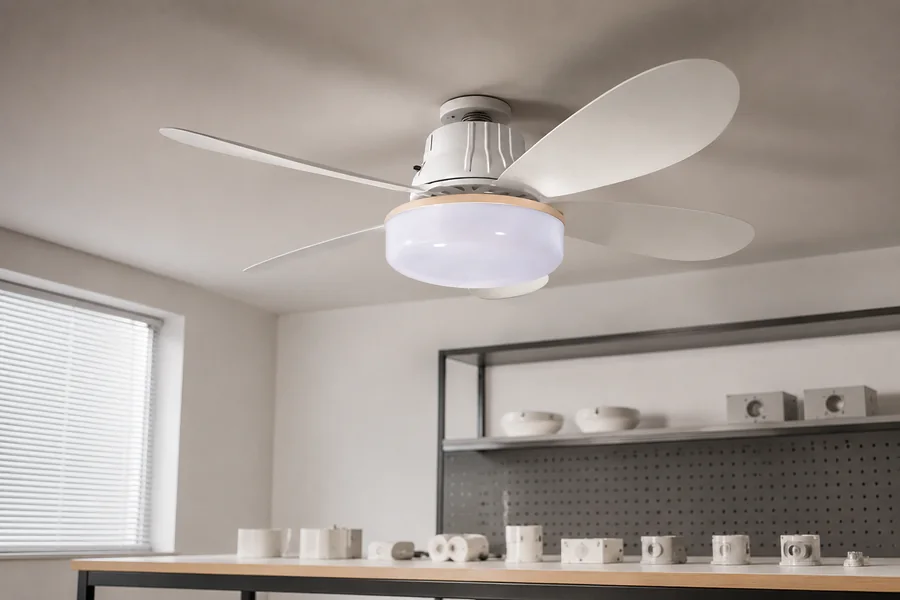
LED lifetime depends heavily on heat management and driver quality. This is true for both integrated and replaceable designs, but integrated LEDs make the manufacturer responsible for more of the thermal design.
The IEC page for LED modules for general lighting is a useful external reference because it covers safety specifications for LED modules, including integrated and replaceable module concepts.
4-1. Heat is the hidden issue
LEDs do not only need power. They also need proper heat dissipation. If heat builds up inside the fan light housing, brightness can decline faster and components can fail earlier.
Integrated LED fan lights should have enough space, heat sink design, and ventilation around the LED board. Replaceable systems still need heat control, especially when users may install mismatched light sources.
4-2. Driver quality affects reliability
The driver converts power for the LED. A weak driver can cause flicker, early failure, poor dimming, or unstable colour performance.
For commercial projects, driver quality should be discussed with the supplier. A low price is not helpful if the light creates service calls after installation.
4-3. Long lifetime still needs a service plan
Even a good LED system needs a service plan. Buyers should ask whether LED boards, drivers, diffusers, remotes, and control receivers can be supplied later.
NEBOLA usually recommends checking spare part policy before confirming bulk orders, especially for hotels, apartments, and commercial rooms where one model may be installed many times.
5. Lighting Quality and User Experience
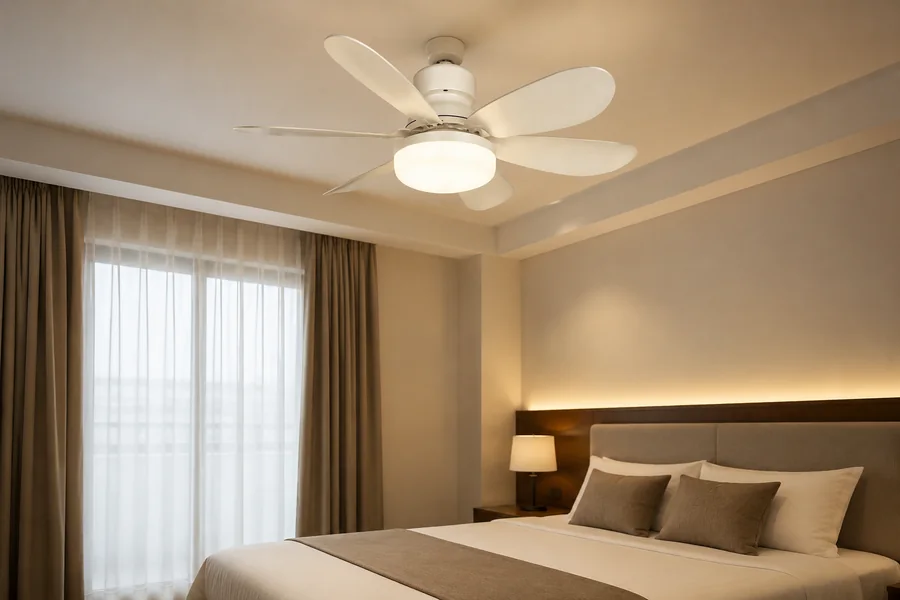
Lighting quality affects how people feel in the room. A fan light may move air well but still disappoint users if the light is too dim, too cold, too yellow, or uneven.
The integrated LED vs replaceable LED choice should therefore include brightness, CCT, dimming, glare control, and diffuser design.
5-1. Integrated LED can support smoother light
Integrated LED fan lights often use a larger diffuser and planned LED board layout. This can create softer, more even light.
For bedrooms and hotel rooms, this is useful because the light should feel relaxed. For offices and restaurants, it helps avoid harsh glare or distracting spots.
5-2. Replaceable LED depends on the chosen light source
Replaceable systems can perform well, but the result depends on the bulb or module selected. If users install a poor-quality replacement, the fan light may flicker, look uneven, or produce the wrong colour temperature.
This is a real project risk. The product may leave the factory in good condition, but later replacements can change the user experience.
5-3. Dimming and colour control should be tested
Dimming and colour temperature control should be tested before bulk purchase. Some LED systems look good at full brightness but flicker or shift colour when dimmed.
A Modern Retractable Ceiling Fan with Light can be a useful reference for buyers who want integrated light control, retractable blades, and modern room flexibility in one fixture.
Need the Right Ceiling Fan for a Home, Project, or Commercial Space?
Tell us your space type, ceiling height, airflow needs, lighting options, certification direction, and order plan. We’ll help match the right solution.
Get a Quote6. Maintenance and Replacement Cost
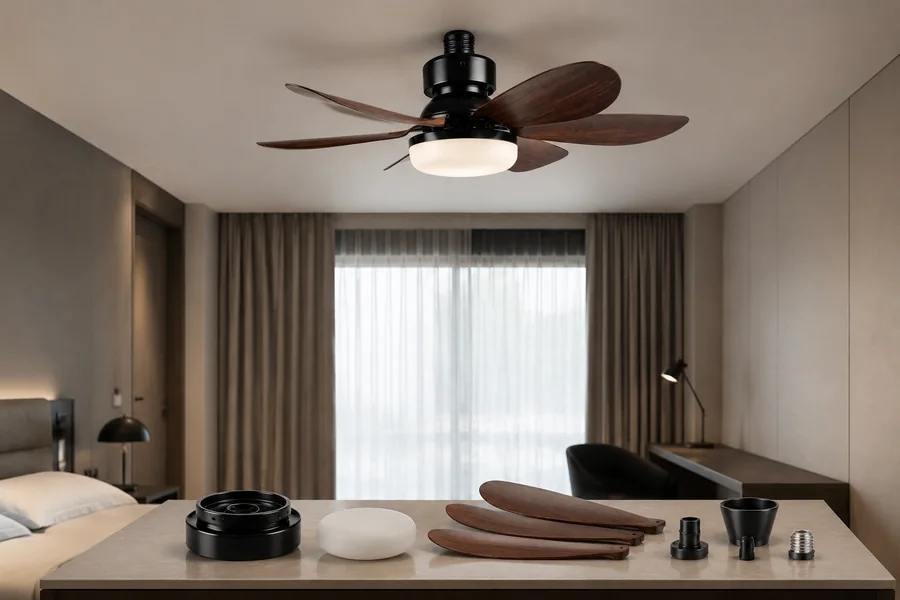
Maintenance is where the two systems feel most different. Integrated LED fan lights can look better and perform more consistently, but they depend more on supplier spare parts. Replaceable LED fan lights can be easier to service if the replacement source is standard.
For businesses, the cheapest fixture is not always the cheapest project choice. Labour, access height, room downtime, guest complaints, and replacement parts all matter.
6-1. Integrated LED needs supplier continuity
If you choose integrated LED, ask whether the supplier can provide replacement LED boards and drivers. Also ask whether the same model will remain available for repeat orders.
This is especially important for hotels and commercial projects. A discontinued light module can make maintenance harder later.
6-2. Replaceable LED needs compatibility control
If you choose replaceable LED, define the replacement format clearly. The wrong bulb size, wattage, colour temperature, or dimming type can create problems.
Project buyers should document approved replacement parts in the project file. This helps maintenance teams avoid mixing incompatible products across rooms, and it also keeps lighting colour, dimming behaviour, and service cost more predictable over time.
6-3. Labour cost can matter more than part cost
In commercial spaces, the cost of replacing a light source is not only the part. It includes staff time, ladder or lift access, room closure, and after-hours maintenance.
For high ceilings, a more reliable integrated LED system may be worth more than a replaceable system that fails often. For low ceilings, replaceable parts may be easier to manage.
7. Best Choice by Application
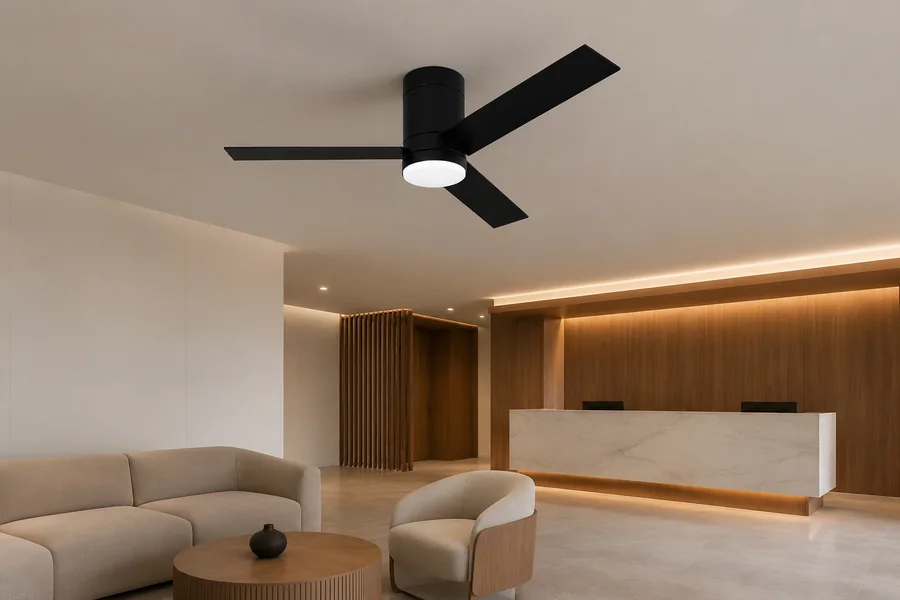
The best LED structure changes by room type. A bedroom, hotel room, office, restaurant, warehouse, and outdoor covered area all have different service and lighting priorities.
This is why product selection should be application-led. Do not choose integrated LED or replaceable LED only because it is currently popular.
7-1. Bedrooms and apartments
Bedrooms and apartments often benefit from integrated LED because users want a clean look, soft lighting, and simple remote control. A slim integrated design can reduce ceiling clutter.
For low-maintenance rental apartments, replaceable LED may still be attractive if the landlord wants easy local service. The final choice depends on the service model.
7-2. Hotels and hospitality rooms
Hotel rooms need consistency. Guests expect every room to feel the same, so lighting colour, brightness, remote control, and noise should be stable across the project.
The article on best ceiling fans for hotels explains why quiet operation, energy efficiency, and easy maintenance should be considered together.
7-3. Commercial and large spaces
Commercial rooms may need stronger airflow and more durable components. In larger spaces, the LED design should also be checked against mounting height and visibility.
For bigger applications, a Large Ceiling Fan Industrial Warehouse 70 Inch LED can be considered when the room needs both broader airflow and integrated lighting.
8. Buying Questions to Ask Before Ordering
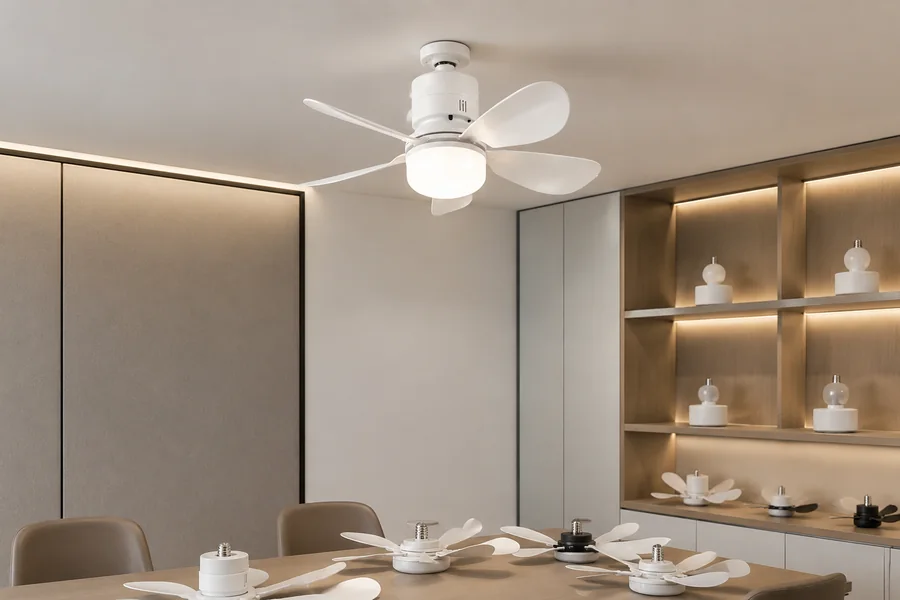
Before choosing integrated LED or replaceable LED fan lights, ask practical questions. The right questions can prevent wrong models, unclear maintenance plans, and mismatched lighting after installation.
For B2B buyers, these questions should be part of supplier comparison rather than an afterthought. A supplier who can explain LED structure, spare parts, driver options, and service terms clearly is usually easier to work with after the first shipment.
8-1. Ask about LED specifications
Ask for wattage, lumen output, CCT options, CRI, dimming range, driver type, and diffuser material. These details affect both performance and comfort.
If the supplier cannot provide clear information, the lighting system may be difficult to compare. Specifications should be clear enough for procurement and installation teams.
8-2. Ask about spare parts
Ask whether LED boards, drivers, diffusers, remotes, receivers, and control panels are available as spare parts. Also ask how long the supplier plans to support the model.
A 52 Inch Wood Ceiling Fan No Light Supplier option can be useful when buyers prefer separate room lighting and want to avoid LED service questions inside the fan.
8-3. Ask about project consistency
For hotels, offices, and rental projects, the same fan light may be installed in many rooms. Ask whether the supplier can keep colour, LED temperature, driver behaviour, and packaging consistent across batches.
The article on commercial vs residential ceiling fans helps explain why project consistency matters more in commercial buying than in one-room residential purchases.
9. Which LED Fan Light Type Should You Choose?
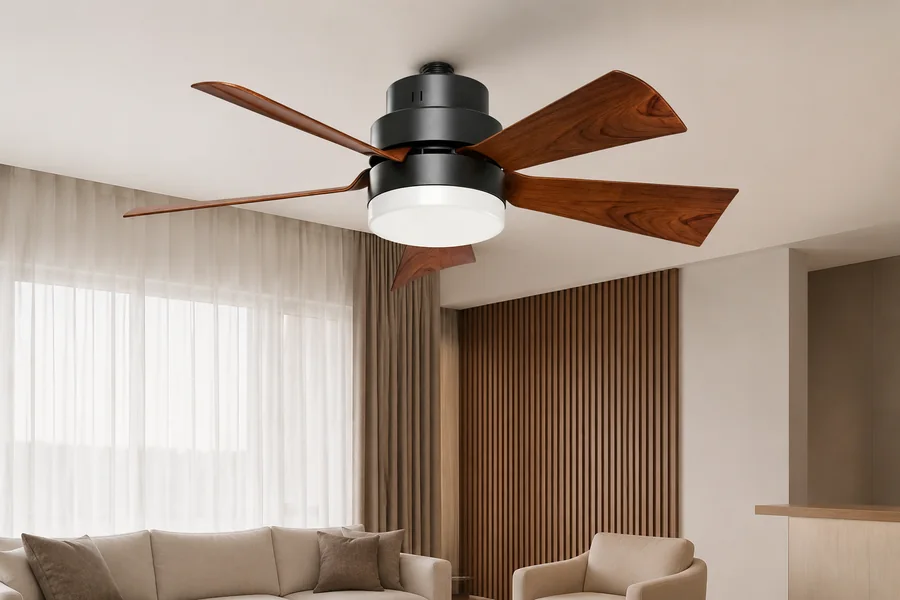
Choose an integrated LED ceiling fan if you want a slimmer appearance, controlled light diffusion, modern dimming, and a cleaner product design. Choose a replaceable LED fan light if long-term service, local replacement, and simple maintenance are more important.
There is no single best answer for every project. The best choice is the one that matches the room, service plan, buyer expectations, and supplier capability.
9-1. Choose integrated LED for modern comfort
Integrated LED is often the better choice for modern homes, hotel rooms, apartments, and offices where design quality and lighting consistency matter.
It also works well when the supplier can provide stable LED modules, drivers, and after-sales support. NEBOLA can help buyers compare integrated LED structures, dimming options, and private label requirements.
9-2. Choose replaceable LED for service access
Replaceable LED is often better for buyers who want simple maintenance and widely available replacement parts. This can suit rental housing, some commercial rooms, and markets where local service is a priority.
The buyer should still control specifications. A replaceable system only stays reliable when the replacement format is clear.
9-3. Match LED choice with airflow and installation
LED structure should not be chosen separately from fan performance. A good fan light still needs quiet motor operation, suitable blade span, stable controls, and safe installation.
For larger rooms, the article on how to choose ceiling fans for large spaces can help connect LED choice with airflow and room scale. For broader commercial selection, return to the commercial ceiling fans page before finalising the model.
Need the Right Ceiling Fan for a Home, Project, or Commercial Space?
Tell us your space type, ceiling height, airflow needs, lighting options, certification direction, and order plan. We’ll help match the right solution.
Get a QuoteFAQ
Is an integrated LED ceiling fan better than a replaceable LED fan light?
Yes, an integrated LED ceiling fan can be better when you want a slimmer appearance, smoother light diffusion, and more consistent control. It is not always better for maintenance, so spare parts and warranty support still matter.
Can integrated LED fan lights be repaired?
Yes, many integrated LED fan lights can be repaired if the LED board, driver, or control parts are available. Buyers should confirm spare part support before placing bulk orders.
Is a replaceable LED fan light easier to maintain?
Yes, it is usually easier to maintain when it uses a common replacement format. If the module is proprietary, it may still depend on supplier spare parts.
Do integrated LEDs last longer?
No, not automatically. Integrated LEDs can last a long time when heat management and driver quality are good, but poor thermal design can shorten LED life.
Are integrated LED ceiling fans good for hotels?
Yes, integrated LED ceiling fans can be good for hotels because they offer a clean appearance and consistent lighting. Hotels should still confirm replacement parts, dimming behaviour, and room-by-room control needs.
Can NEBOLA customise integrated LED fan lights?
Yes, NEBOLA can customise integrated LED fan lights for OEM/ODM projects, including CCT options, dimming, diffuser design, remote control, packaging, branding, and market-specific requirements.