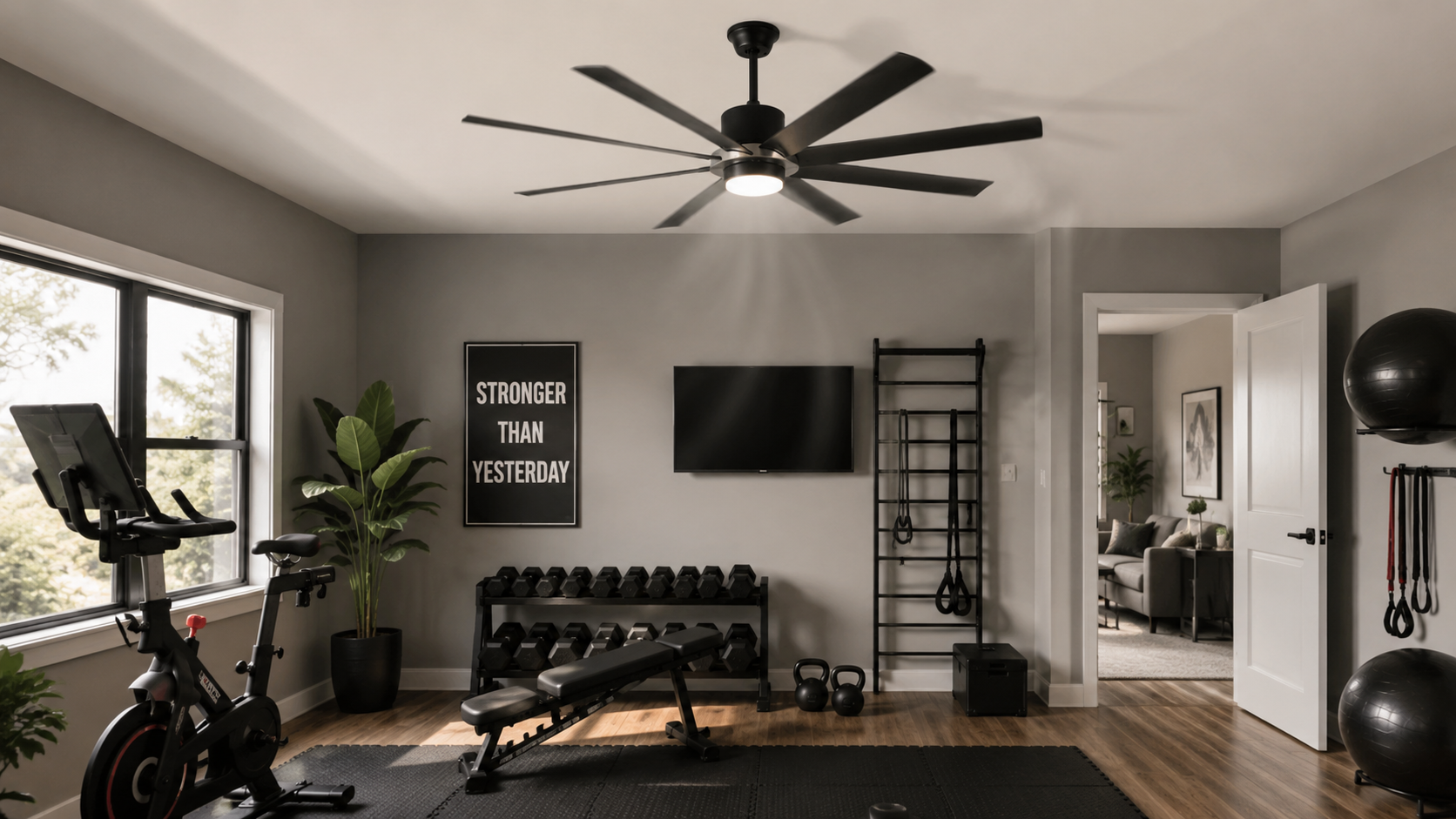


Buying a commercial ceiling fan is different from buying a fan for one home room. A business needs stable airflow, safe installation, low noise, long operating life, serviceable parts, and a product range that can fit different spaces. If you are building a wider project plan, this commercial ceiling fans page is a useful starting point for comparing application scenarios.
The right business ceiling fan should support comfort without creating new problems for staff, guests, tenants, or maintenance teams. It should match the room size, ceiling height, daily operating hours, lighting needs, control method, and supplier support plan.
1. Start With the Business Space, Not the Fan
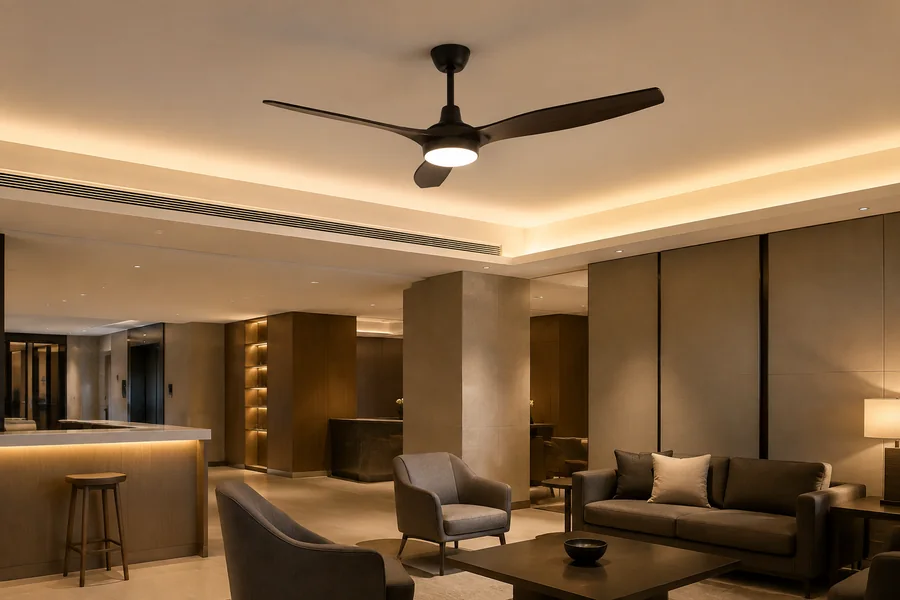
Commercial ceiling fan buying guide decisions should begin with the business environment. A hotel room, restaurant dining area, office, retail store, classroom, warehouse, and covered patio all need different comfort logic.
If you start with a product photo, you may choose a fan that looks attractive but fails in the real room. Start with the space, then choose the fan.
1-1. Identify who uses the room
Think about who will feel the airflow: hotel guests, office staff, restaurant customers, students, shoppers, or warehouse workers. Their comfort expectations are different.
Guests may want quiet, soft airflow. Workers may need steady circulation for long shifts. Restaurant customers need comfort without wind on food or table settings.
1-2. Define the operating hours
Commercial fans often run longer than residential fans. A business ceiling fan may operate through the working day, service hours, cleaning time, or overnight ventilation support.
Longer operating hours make motor quality, blade balance, and energy efficiency more important. A cheap fan can become expensive if it creates noise, failures, or frequent maintenance.
1-3. Separate comfort zones
Many business spaces have multiple zones. A restaurant has tables, bar areas, private rooms, and patios. An office has desks, meeting rooms, reception, and break areas.
Do not choose one fan size for the whole building. Choose by zone so airflow reaches the people who actually need it.
2. Match Fan Size to Room Scale
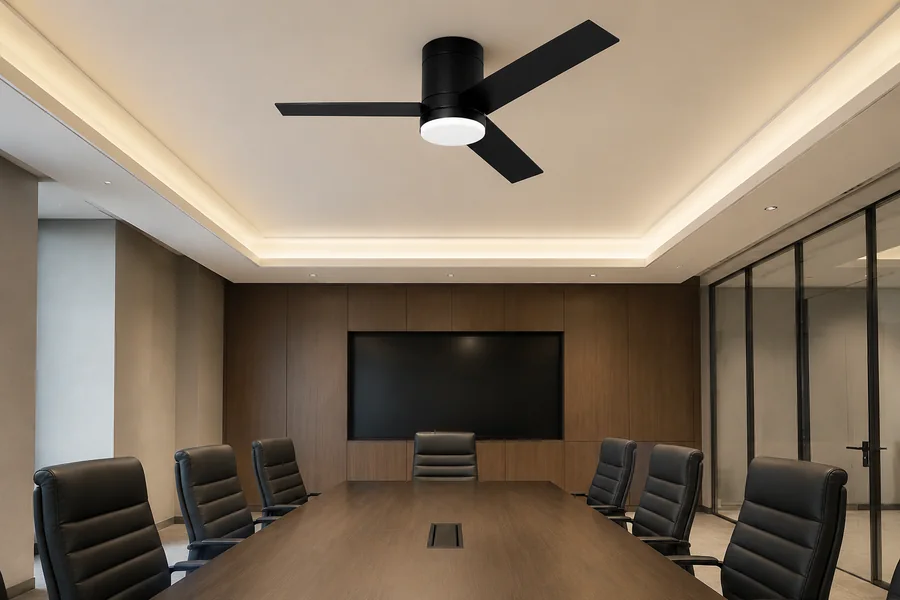
Fan size affects coverage, visual balance, and comfort. A fan that is too small may not move enough air. A fan that is too large may feel visually heavy or too direct at higher speeds.
The article on how to choose ceiling fans for large spaces is useful when the room is wide, open, or divided into several active zones.
2-1. Small commercial rooms need controlled airflow
Small offices, compact hotel rooms, private dining rooms, and small retail rooms usually need moderate fan sizes. A 36 to 52 inch fan may be enough depending on the room.
For these spaces, quiet low-speed performance matters more than maximum airflow. The fan should feel like background comfort.
2-2. Medium spaces often need 52 inch to 60 inch fans
Many meeting rooms, restaurant zones, lounge areas, and standard retail spaces work well with 52 inch to 60 inch fans. This range gives useful coverage without feeling oversized.
A Ultra Thin Ceiling Fan White Modern 52 Inch LED DC Motor can suit commercial rooms that need a clean look, integrated light, and practical airflow.
2-3. Large spaces need airflow planning
Warehouses, halls, open restaurants, gyms, and large showrooms may need larger fans or multiple fan zones. One oversized fan is not always better if the room is long or divided.
For large-area applications, a Large Ceiling Fan Industrial Warehouse 70 Inch LED can be considered when the ceiling height and installation structure support a wider fan.
3. Airflow Is More Than Diameter
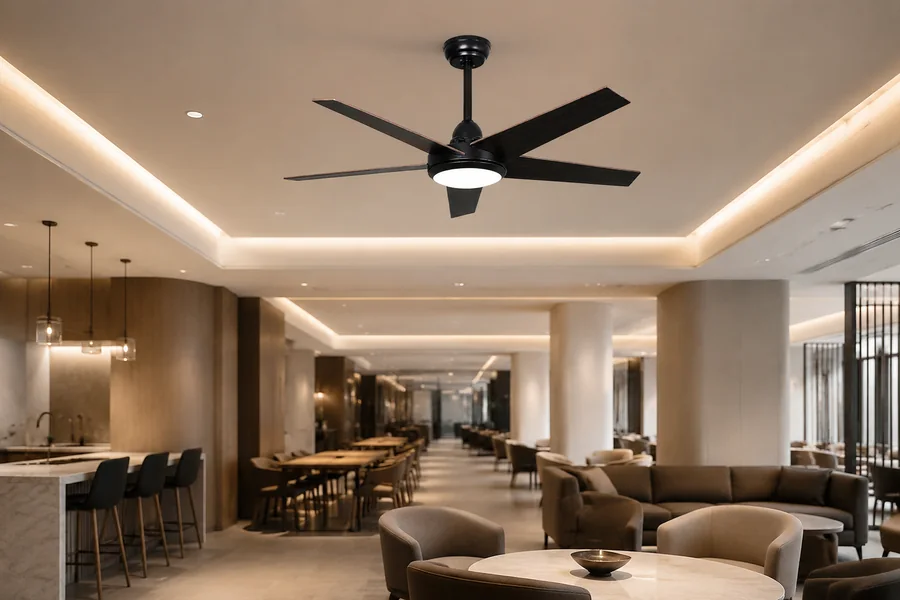
Diameter tells you how wide the fan is, but it does not tell you everything about fan performance. Airflow depends on motor power, blade pitch, blade shape, speed control, and mounting height.
This is why businesses should compare specifications, not only product photos. A smaller fan with better engineering may outperform a larger fan with weak motor control.
3-1. Check CFM and usable speeds
CFM helps estimate how much air the fan can move. But the most useful question is how the fan performs at low and medium speeds, because many commercial spaces cannot tolerate high-speed wind all day.
For restaurants, offices, and hotels, smooth moderate airflow is usually better than aggressive wind. Strong airflow should be available, but it should not be the only usable setting.
3-2. Blade design affects real comfort
Blade shape, pitch, width, and material affect how the air feels. Some blades move air broadly and softly, while others feel more direct.
In commercial spaces, broad and stable airflow is usually preferred. It helps avoid complaints from people sitting directly under the fan.
3-3. Mounting height changes performance
A fan installed too high may move air near the ceiling without reaching people. A fan installed too low can feel unsafe or uncomfortable.
Before ordering, confirm ceiling height, downrod length, blade clearance, beams, sprinklers, and any lighting obstacles. Installation details can change performance as much as fan diameter.
4. Motor, Energy Use, and Daily Operating Cost
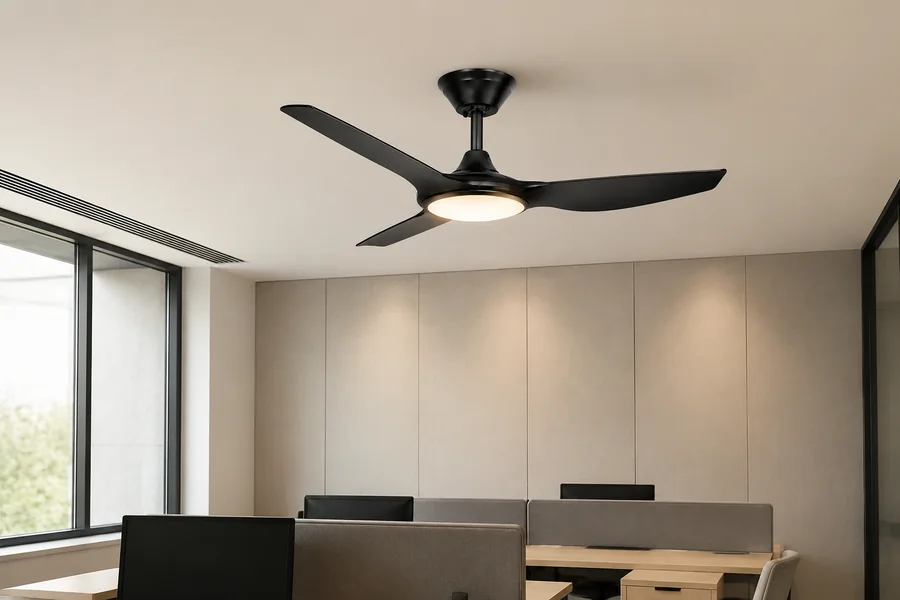
Commercial buyers should pay close attention to motor type because the fan may run for many hours. Motor quality affects energy use, noise, control smoothness, and long-term reliability.
A low purchase price may not be a low-cost decision if the motor wastes energy, creates vibration, or fails under long daily operation.
4-1. DC motors are often better for commercial comfort
DC motors are popular because they usually offer lower energy use, quieter operation, and more speed settings. This is useful in businesses where the fan runs for long periods.
They also allow better low-speed control. For hotels and offices, that low-speed comfort can matter more than peak airflow.
4-2. AC motors may still suit simple projects
AC motors can still work for cost-sensitive projects or simple commercial areas where advanced control is not required. They are widely understood and often less expensive.
The trade-off is usually fewer speed options and more operating noise compared with many DC motor designs. Buyers should compare the exact product, not only the motor label.
4-3. Energy use should be viewed across the project
One fan may not consume much power, but a business may install dozens or hundreds of fans. Small efficiency differences become meaningful across a project.
For hotels, restaurants, offices, and retail chains, energy efficiency should be part of the buying calculation, not a decorative feature on the specification sheet.
5. Noise, Vibration, and Guest Experience
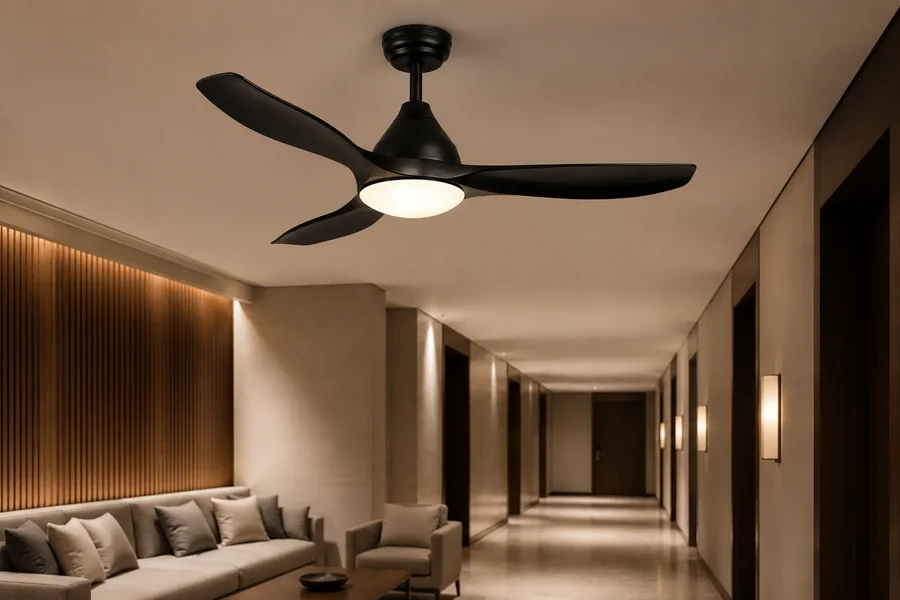
Commercial fans must be comfortable for the people in the room. Noise and vibration can damage the user experience even when the airflow is strong.
For hospitality projects, the article on best ceiling fans for hotels explains why quiet operation is often more important than maximum fan power.
5-1. Noise standards change by space
A warehouse can tolerate more fan sound than a hotel room. An office needs quiet enough airflow for calls and focus. A restaurant needs airflow that does not disturb dining mood.
This means a business ceiling fan should be selected by acoustic expectation, not only by size. Ask for noise information at typical working speeds.
5-2. Vibration increases maintenance risk
A wobbling fan is more than an appearance problem. It can loosen parts, create user complaints, and reduce trust in the installation quality.
Large fans need especially careful balance and installation. Businesses should confirm mounting hardware, quality control, and installation instructions before placing bulk orders.
5-3. Low-speed comfort is the daily test
Most commercial spaces use fans at low or medium speed for long periods. A fan that only performs well at high speed may not be suitable.
Test the fan at the speeds people will actually use. This gives a more realistic picture of comfort, noise, and airflow quality.
Need the Right Ceiling Fan for a Home, Project, or Commercial Space?
Tell us your space type, ceiling height, airflow needs, lighting options, certification direction, and order plan. We’ll help match the right solution.
Get a Quote6. Lighting and Control Options
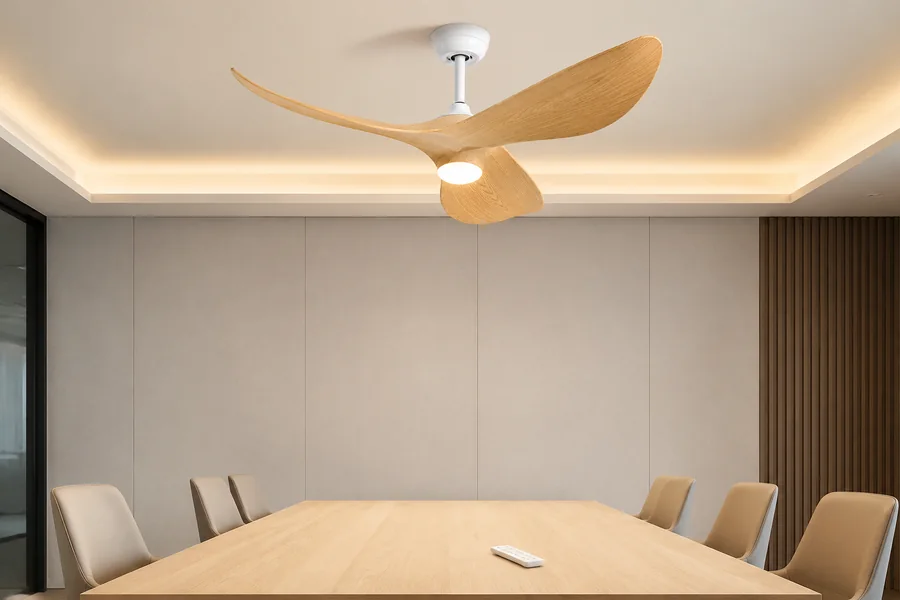
Many commercial ceiling fans include lights, but not every business space needs a fan light. The lighting decision should follow the room plan, ceiling layout, and maintenance strategy.
The article on ceiling fan light vs ceiling light explains when a combined fixture makes sense and when a separate ceiling light may be better.
6-1. Decide whether the fan should include light
A fan light can reduce ceiling clutter in hotel rooms, small offices, apartments, and lounges. It can also make installation cleaner when one fixture needs to provide both comfort and general lighting.
For commercial rooms with dedicated lighting systems, a fan without light may be cleaner. A 52 Inch Wood Ceiling Fan No Light Supplier can suit projects where airflow is needed but lighting is already planned separately.
6-2. Choose integrated or replaceable LED carefully
Integrated LED gives a cleaner appearance and controlled light diffusion. Replaceable LED can make maintenance easier in some markets.
The article on integrated LED vs replaceable LED ceiling fan lights explains how to compare LED lifetime, spare parts, and service cost before choosing.
6-3. Keep controls simple for daily users
Controls should match the space. Hotel guests need intuitive control. Office staff need quiet adjustment. Restaurant teams may need zone control by service time.
Remote, wall control, app control, and smart systems can all work. The wrong control method, however, can create confusion and reduce actual use.
7. Safety, IAQ, and Building Coordination
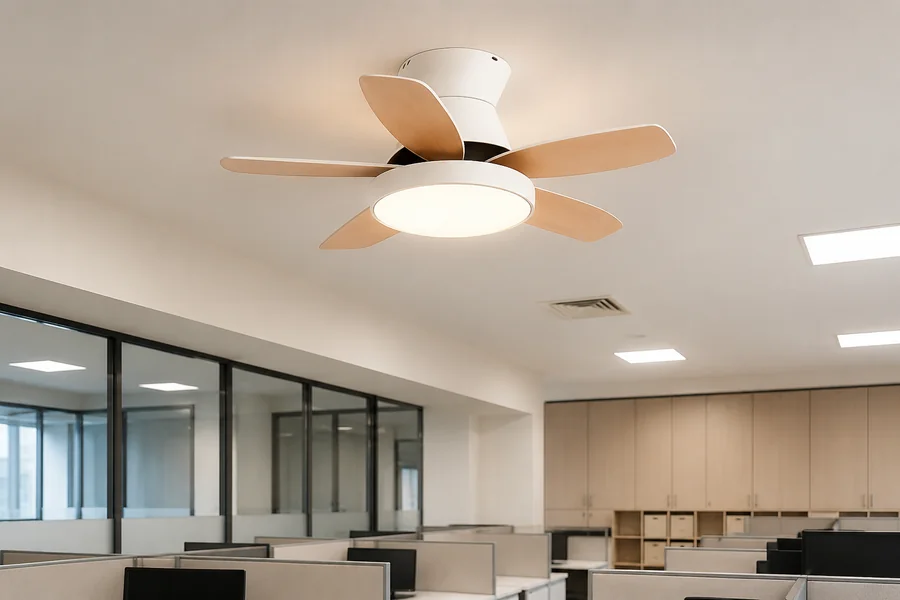
A commercial ceiling fan should be selected with building conditions in mind. Fans can improve air movement, but they do not replace proper ventilation, electrical safety, or installation requirements.
The EPA Building Air Quality Guide is a useful external reference for facility managers because it discusses indoor air quality, HVAC systems, and building management in commercial buildings.
7-1. Fans support circulation, not ventilation code
Ceiling fans move air inside the room. They do not automatically bring in fresh outdoor air or remove pollutants.
Businesses should coordinate fans with HVAC, ventilation, and local building requirements. This is especially important in offices, restaurants, hotels, schools, and public areas.
7-2. Installation must follow site conditions
Check ceiling structure, electrical boxes, beam positions, sprinkler clearance, ductwork, and ceiling height before ordering. A fan that cannot be installed safely is the wrong fan, even if the specifications look good.
For large orders, ask installers or project managers to review the ceiling plan before final model selection. This prevents expensive changes after products arrive.
7-3. Outdoor or damp areas need suitable ratings
Covered patios, semi-open restaurants, resorts, and outdoor lounges need fans suitable for the exposure level. Indoor-only products should not be used where moisture, wind, or humidity may affect safety.
An Outdoor Ceiling Fans With Lights Oak White product can be considered when the rating, installation location, and project environment are suitable.
8. Supplier, Warranty, and Project Support
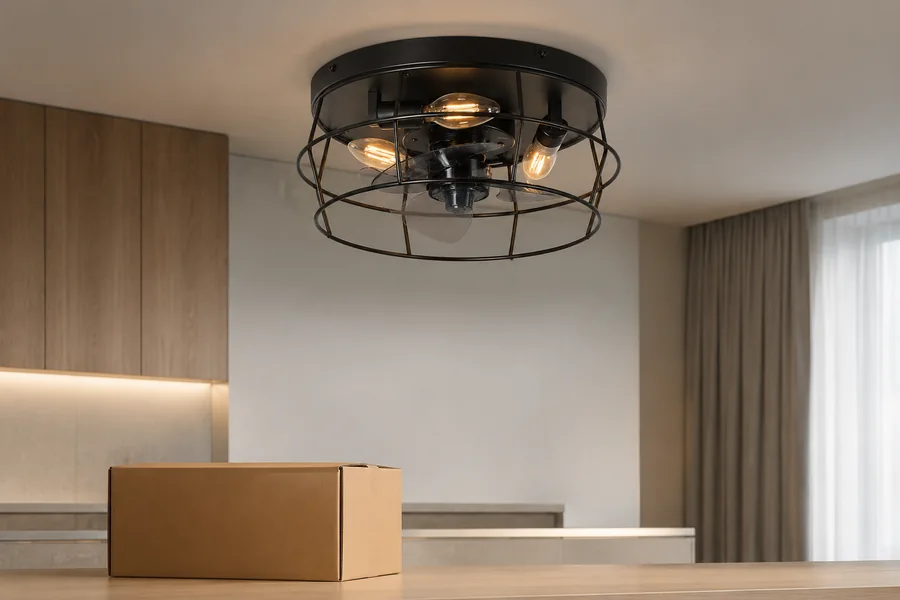
Supplier choice matters more in commercial projects than in single-room purchases. Businesses need consistent production, replacement parts, technical documents, packaging support, and reliable communication.
The article on commercial vs residential ceiling fans explains why commercial fan buying needs a stronger focus on durability and after-sales support.
8-1. Ask about production consistency
If you are buying for multiple rooms or branches, the fan finish, motor behaviour, LED colour, remote control, and packaging should stay consistent across batches.
Ask the supplier whether the model is stable for repeat orders. A one-time low price may not help if the product changes before your next project.
8-2. Ask about spare parts and warranty
Commercial buyers should ask about motors, drivers, LED modules, remotes, receivers, blades, diffusers, and mounting parts. A warranty is more useful when spare parts are available.
For decorative commercial interiors, a Luxury Gold Wood Fandelier Ceiling Fan Light 60 Inch may need matching finish and component support if used across several rooms.
8-3. Ask about OEM and private label support
Businesses that import, distribute, or sell under their own brand may need packaging, logo, manual, voltage, remote control, and certification support.
NEBOLA can support commercial ceiling fan projects with OEM/ODM customisation, low MOQ options, fan size planning, lighting choices, and product range development for different markets.
9. Final Commercial Ceiling Fan Buying Checklist
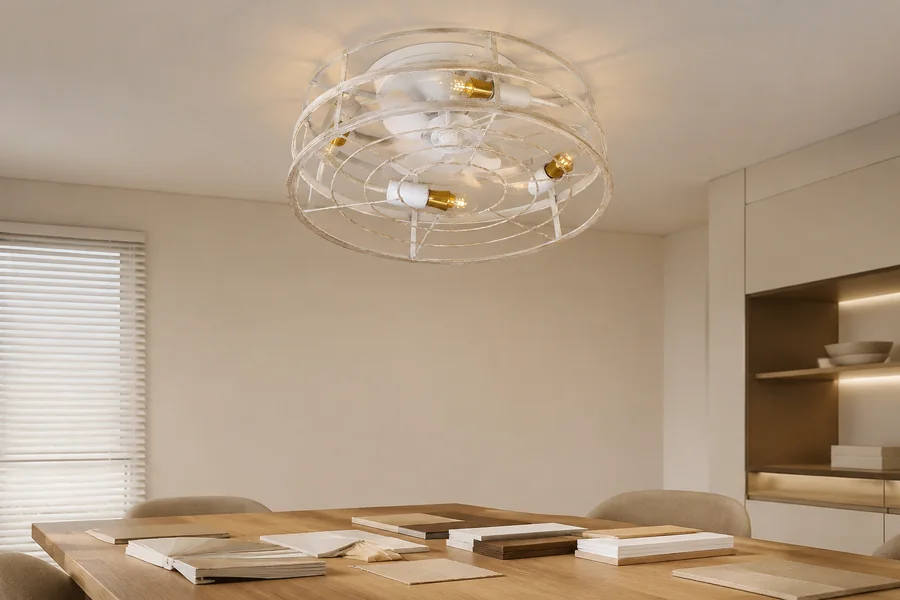
Before buying, confirm the room type, ceiling height, required airflow, motor type, noise expectation, lighting plan, control method, installation conditions, warranty terms, and supplier support. A good commercial ceiling fan should fit the business operation, not only the ceiling.
If you are buying for more than one room, create a small approved range instead of choosing random models. This makes installation, maintenance, spare parts, and future repeat orders easier to manage.
9-1. Confirm the space and user
Write down the room type, ceiling height, operating hours, and user expectation. A guest room, dining area, office, and warehouse should not use the same buying checklist.
This step prevents the most common buying mistake: selecting a fan by appearance before understanding how the room will be used.
9-2. Confirm specifications before price
Compare blade span, CFM, motor type, wattage, light output, noise, control method, and installation hardware before comparing price.
Price only makes sense after the product specification fits the project. Otherwise, the cheapest fan may become the most expensive problem.
9-3. Confirm the supplier can support the project
Ask about lead time, MOQ, sample testing, spare parts, warranty, certification direction, packaging, and repeat production. These details matter when the order is for a business rather than one room.
For a wider project reference, return to the commercial ceiling fans page before finalising your buying plan. It is easier to choose the right business ceiling fan when the product is compared against real room types, operating hours, airflow needs, and installation limits.
Need the Right Ceiling Fan for a Home, Project, or Commercial Space?
Tell us your space type, ceiling height, airflow needs, lighting options, certification direction, and order plan. We’ll help match the right solution.
Get a QuoteFAQ
Is a commercial ceiling fan different from a residential fan?
Yes, a commercial ceiling fan is usually selected for longer operating hours, larger spaces, stronger installation requirements, and easier maintenance planning. Some residential fans can work in light commercial rooms, but the project conditions must be checked.
What size commercial ceiling fan should a business choose?
Yes, fan size should be chosen by room area, ceiling height, and airflow zone. Small rooms may use 36 to 52 inch fans, while large commercial spaces may need 60 inch plus fans or multiple fan zones.
Are DC motor fans better for businesses?
Yes, DC motor fans are often better for businesses that need quiet operation, energy efficiency, and smoother speed control. AC motor fans may still suit simpler or more cost-sensitive projects.
Can commercial ceiling fans replace HVAC?
No, commercial ceiling fans cannot replace HVAC or ventilation systems. They move air within the room and support comfort, but fresh air, filtration, heating, and cooling still depend on the building system.
Should business ceiling fans include lights?
Yes, they should include lights when the room needs both airflow and general illumination from one fixture. If the room already has a complete lighting system, a fan without light may be cleaner.
Can NEBOLA support bulk commercial fan orders?
Yes, NEBOLA can support bulk commercial fan orders with size selection, DC motor options, integrated LED lighting, OEM/ODM customisation, low MOQ support, packaging, and project-focused product recommendations.