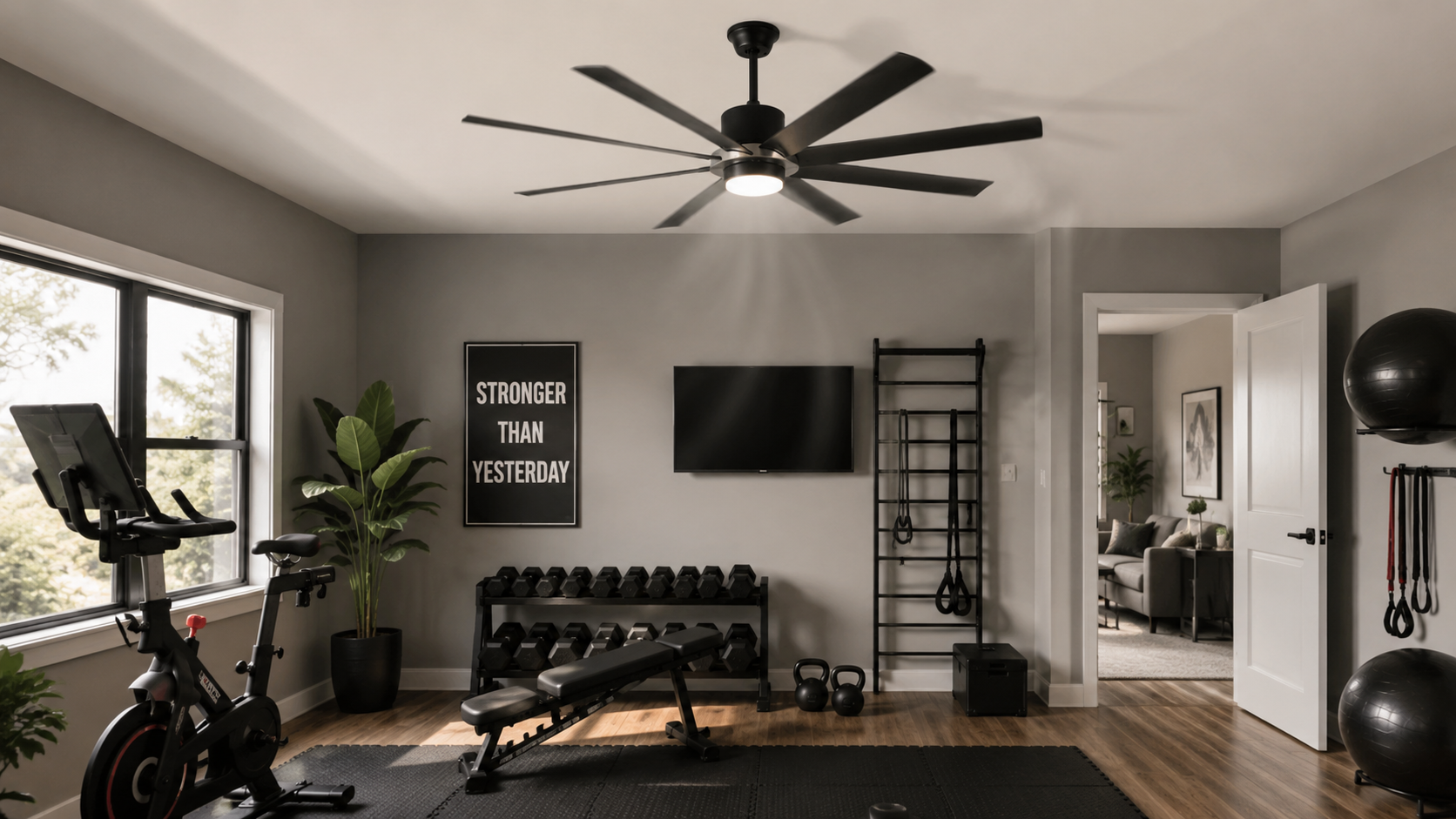


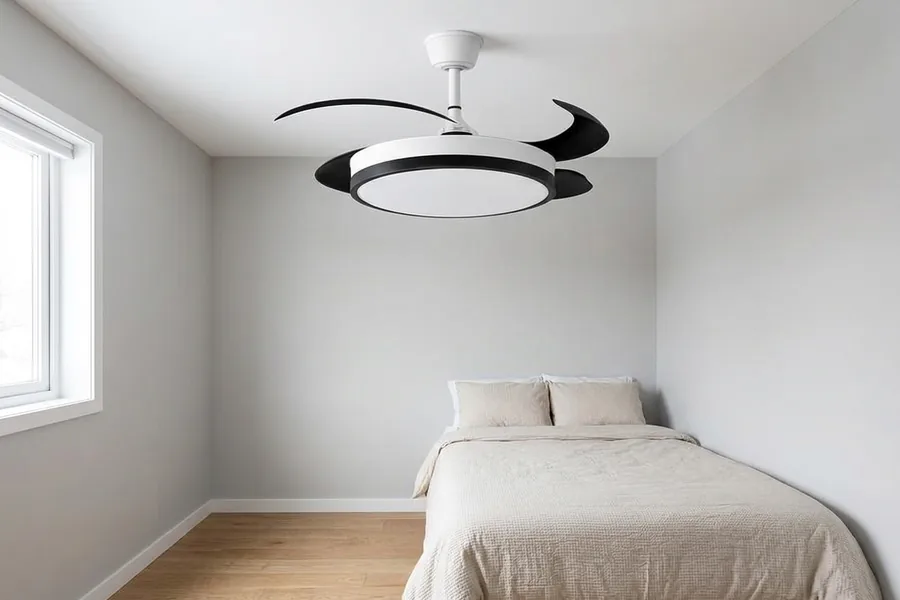
Choosing the best ceiling fan size for small rooms sounds easy. But many people get it wrong. They see a fan online, like the look, and buy it. Then it arrives. It is too big, too strong, too noisy, or just looks wrong.
Not good.
A small room ceiling fan must do two things well. It must look right in the room. And it must give comfortable airflow. That is the whole game.
For very small rooms, a 36 inch ceiling fan is often the better choice. For small bedrooms, apartment bedrooms, and rooms close to 10 x 10 ft or 10 x 12 ft, a 42 inch fan often works better.
The best fan is not always the biggest fan. The best fan is the one that fits your room.
Contents
1. Start With the Real Size of the Room: A Small Room Ceiling Fan Is Not Chosen by Guesswork
1-1. Why the Core Issue With a Small Room Ceiling Fan Is “Proportion + Airflow Comfort”
A small room ceiling fan is not just about moving air. It is also about proportion.
If the fan is too large, the room can feel crowded. If the fan is too small, the room can still feel warm and still. The right fan sits in the middle. It looks balanced and gives a soft, useful breeze.
That is why proportion and airflow comfort matter more than just blade size.
1-2. Common Small Room Types: Small Bedrooms, Home Offices, Kids’ Rooms, Kitchens, and Apartments
Small rooms come in many forms. A small bedroom, a home office, a child’s room, a compact kitchen, and an apartment bedroom can all need a different fan choice.
A small bedroom needs quiet airflow. A home office needs air that does not blow papers around. A child’s room needs safe height and gentle wind. A kitchen needs a compact fan that is easy to clean.
So do not choose by room name alone. Choose by size, shape, ceiling height, and daily use.
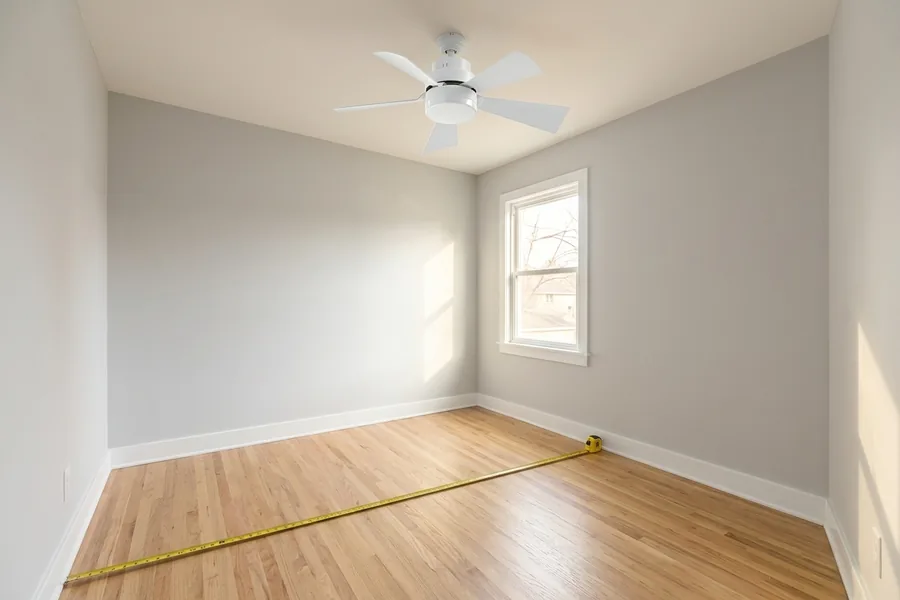
1-3. Measure Room Length, Width, and Ceiling Height Before Choosing a 36 Inch Ceiling Fan or 42 Inch Fan
Before choosing a 36 inch ceiling fan or 42 inch fan, measure the room.
Measure the length. Measure the width. Then multiply them together.
| Room Size | Room Area | Better Fan Size |
|---|---|---|
| 6 x 8 ft | 48 sq ft | 29-36 inch fan |
| 8 x 10 ft | 80 sq ft | 36 inch ceiling fan |
| 10 x 10 ft | 100 sq ft | 36 inch or 42 inch fan |
| 10 x 12 ft | 120 sq ft | 42 inch fan |
| 12 x 12 ft | 144 sq ft | 42 inch fan |
Ceiling height matters too. A low ceiling may need a flush mount or low profile fan. A higher ceiling may need a short downrod.
1-4. Why You Should Not Automatically Use the Standard 52 Inch Fan Rule for a Small Room
A 52 inch ceiling fan can be excellent in a larger room. But in a true small room, it is usually too much.
It can look heavy. It can make the ceiling feel lower. It can blow too strongly when you are trying to sleep or work.
Bigger sounds better. But in a small room, bigger is often just bigger. Not smarter.
2. The Real Difference Between a 36 Inch Ceiling Fan and a 42 Inch Fan
2-1. Which Small Spaces Are Best Suited for a 36 Inch Ceiling Fan
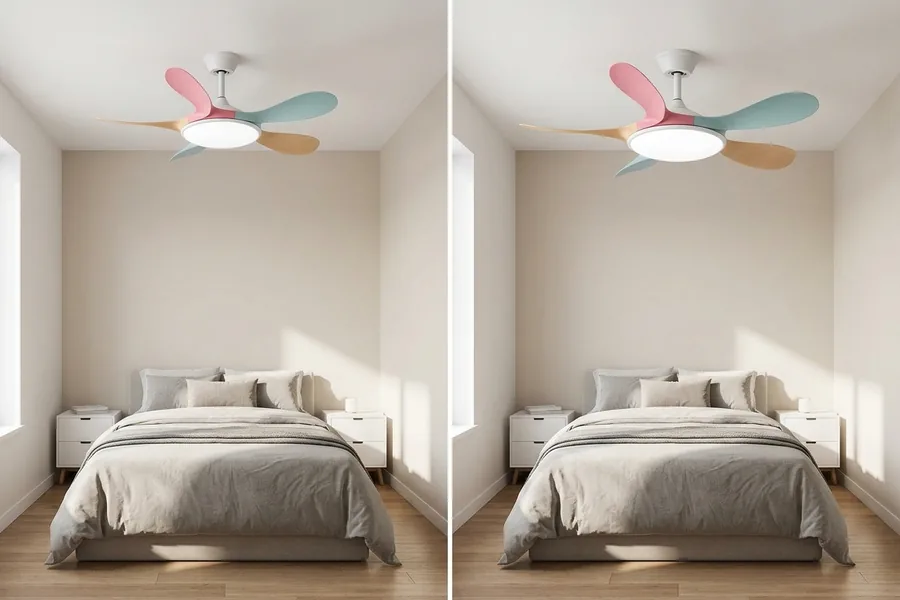
A 36 inch ceiling fan works best in very small rooms, narrow rooms, and rooms with lots of furniture.
Good examples include tiny bedrooms, small studies, compact kitchens, dressing rooms, and children’s rooms under about 100 sq ft.
It gives enough airflow without taking over the ceiling. That is the win.
2-2. Which Small Bedrooms and Apartments Are Better Suited for a 42 Inch Fan
A 42 inch fan is better when the room is still small but not tiny.
If the room is around 10 x 10 ft or 10 x 12 ft, a 42 inch fan often gives better air coverage. This is common in apartment bedrooms and small guest rooms.
A 42 inch fan can move air across the space without needing to run at high speed all the time.
2-3. Why 100 Square Feet Is a Key Cutoff Point for Small Room Ceiling Fan Size
The 100 sq ft mark is useful.
Below 100 sq ft, a 36 inch ceiling fan often feels more natural. Above or around 100 sq ft, a 42 inch fan often starts to make sense.
This is not a strict law. Room shape matters. Ceiling height matters. Furniture matters. But 100 sq ft is a very helpful starting point.
2-4. Why Narrow Rooms, Crowded Furniture, or a Bed Directly Under the Fan Often Favor 36 Inches
If the room is narrow, crowded, or has a bed directly under the fan, choose carefully.
A 42 inch fan may push too much air down onto one spot. A 36 inch ceiling fan feels more controlled and less aggressive.
This is especially important in bedrooms. Nobody wants wind hitting their face all night.
2-5. Why a Room Close to 10×10 or 10×12 Often Works Better With a 42 Inch Fan
A room close to 10 x 10 ft or 10 x 12 ft needs more coverage.
A 36 inch fan may work, but it may not reach the whole room well. A 42 inch fan gives wider airflow and can feel more balanced.
For many small bedrooms and apartment rooms, this is the sweet spot.
3. Choose Fan Size by Room Area, Not Just by the Product Title
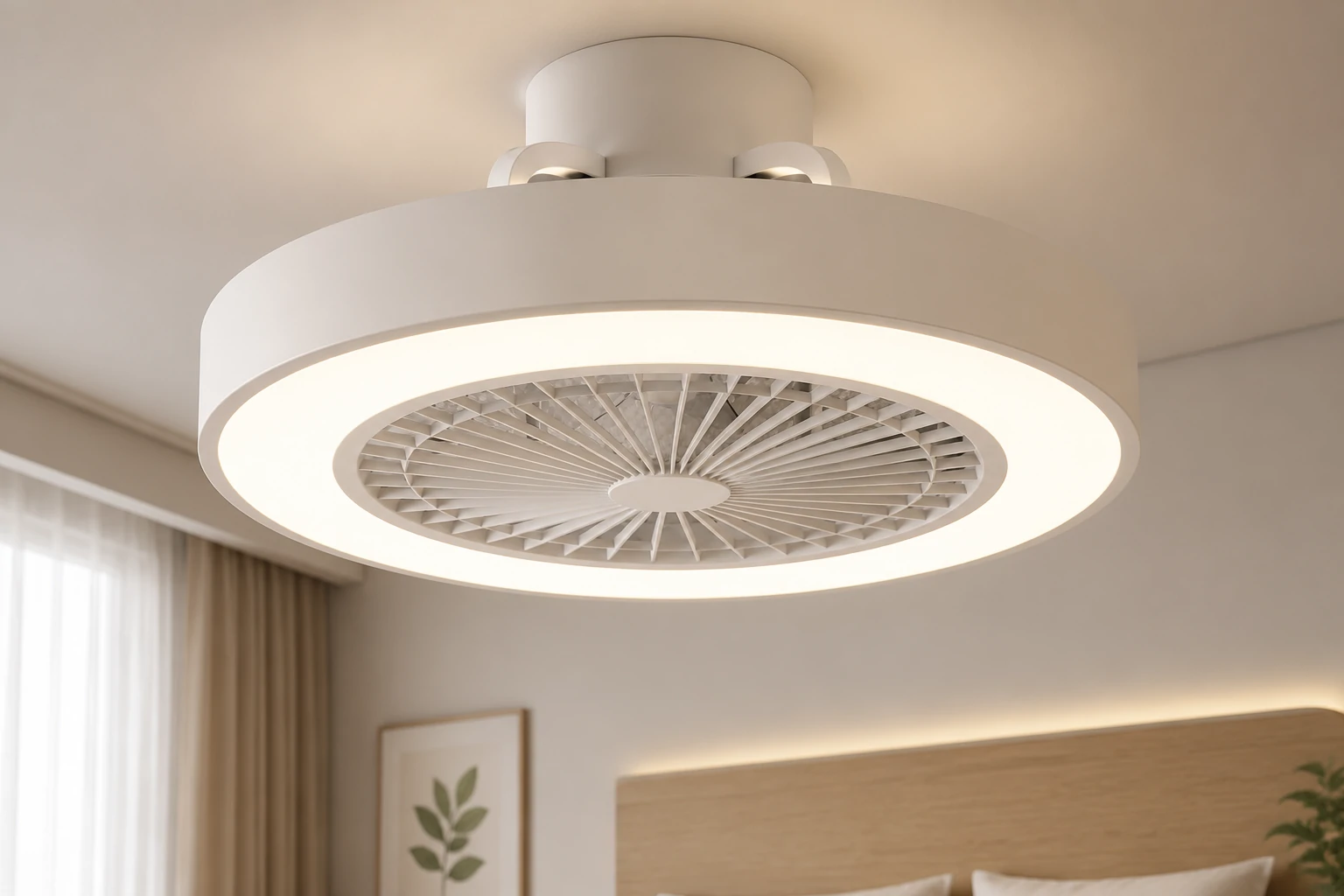
3-1. Under 75 Sq Ft: Compact Offices, Closets, and Small Kitchens Usually Fit 29–36 Inch Fans
Rooms under 75 sq ft are truly small.
A compact office, closet, utility room, or small kitchen usually does not need a big fan. A 29-36 inch fan is normally enough.
A larger fan may look strange and feel too strong.
3-2. 75–100 Sq Ft: Why a 36 Inch Ceiling Fan Usually Feels More Natural
For rooms between 75 and 100 sq ft, a 36 inch ceiling fan is often the safest choice.
It gives useful airflow but still looks light. It is strong enough for comfort and small enough for proportion.
This is a strong choice for small bedrooms, studies, and child’s rooms.
3-3. 100–144 Sq Ft: Why a 42 Inch Fan Often Fits Most Small Bedrooms and Apartment Bedrooms
For rooms between 100 and 144 sq ft, a 42 inch fan often works better.
It gives wider coverage and can run at a lower speed while still moving enough air.
This is why many apartment ceiling fan choices fall into the 42 inch range. It is practical, balanced, and useful.
3-4. Over 144 Sq Ft: When the Room May No Longer Count as a True Small Room
Once a room is over 144 sq ft, it may not be a true small room anymore.
At that point, a 42 inch fan may still work in some cases, but you should look at the full layout. A larger bedroom or small living room may need a bigger fan or better airflow planning.
Do not force a small-room rule onto a room that is not really small.
3-5. Why a 52 Inch Ceiling Fan Is Usually Too Large for a Real Small Room
A 52 inch fan is common, but common does not mean correct.
In a real small room, a 52 inch fan can dominate the ceiling. It can feel too windy and too visually heavy.
For small spaces, comfort beats power. Every time.
4. What Happens When You Choose the Wrong Ceiling Fan Size for a Small Room
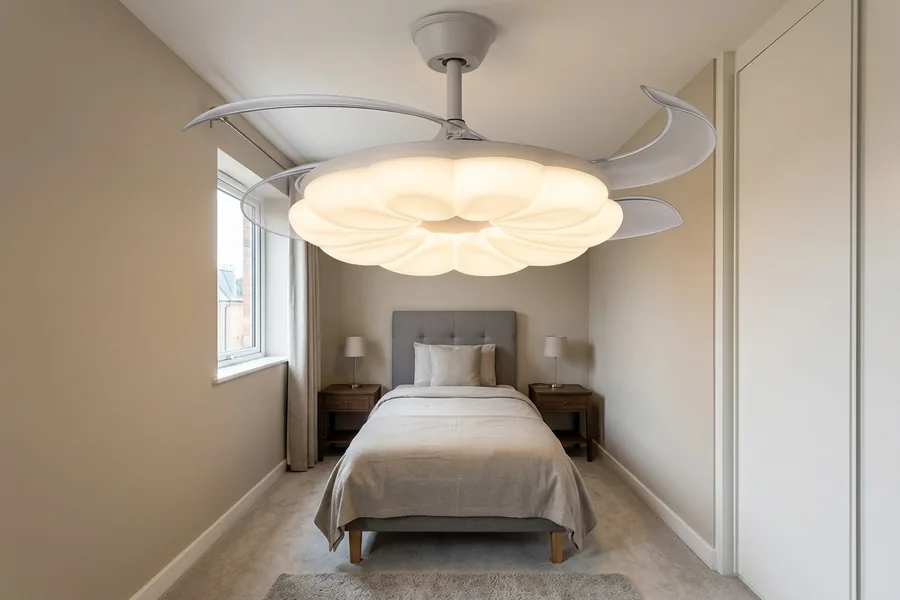
4-1. If the Fan Is Too Small: Poor Air Movement and a Room That Still Feels Stuffy
If the fan is too small, the room may still feel warm and still.
You may turn the speed up, but the air still does not reach the whole room. This can happen when a tiny fan is used in a room closer to 120 or 140 sq ft.
The result is simple: the fan is working, but the room is not comfortable.
4-2. If the Fan Is Too Large: Harsh Airflow That Can Blow Directly on Your Head or Eyes
If the fan is too large, the airflow can feel harsh.
This is a big problem in bedrooms. Strong air on your face, head, or eyes can make sleep uncomfortable.
A small room needs gentle air movement. Not a wind tunnel.
4-3. Visual Overload: How an Oversized Fan Makes a Small Room Feel Lower and More Crowded
A fan is not only functional. It is also visual.
In a small room, the ceiling is already a big part of what you see. If the fan is too large, it can make the room feel lower and tighter.
Even if the room is clean, the fan can make it feel crowded.
4-4. Noise and Wobble Become More Noticeable in a Small Room
Small rooms make noise easier to notice.
A little clicking sound. A small wobble. A quiet hum. In a large room, maybe you ignore it. In a small bedroom, it can become annoying very quickly.
That is why a quiet motor, good installation, and balanced blades matter.
4-5. Why “Bigger Means Cooler” Is Often Wrong for Small Room Ceiling Fans
Bigger does not always mean cooler.
In a small room, a bigger fan may just create stronger wind. Stronger wind is not always comfort.
A good small room ceiling fan should feel calm, steady, and easy to live with.
5. For Apartments and Low Ceilings, Installation Height Comes First
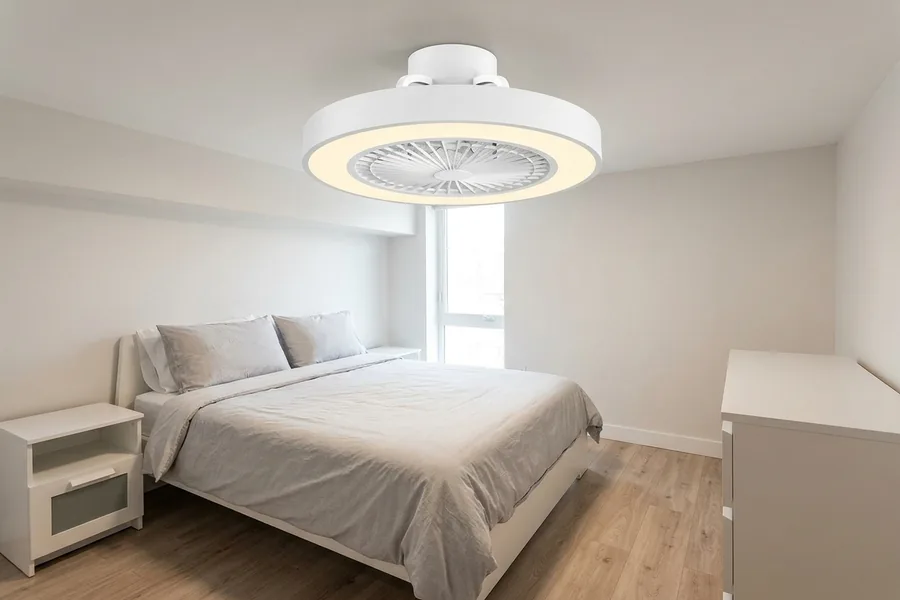
5-1. Why an Apartment Ceiling Fan Often Needs a Low Profile or Flush Mount Design
An apartment ceiling fan often has to work with a low ceiling.
Many apartments have ceilings around 8 ft high. In that case, a low profile or flush mount fan is often better.
It keeps the fan close to the ceiling and gives more safe space below.
5-2. 8 Ft Ceiling: How to Keep Fan Blades Around 7 Ft Above the Floor
A common guide is to keep fan blades around 7 ft above the floor.
If the ceiling is 8 ft high, there is not much extra space. That is why low profile fans are useful.
You want airflow, but you also want safety and comfort.
5-3. When a Short Downrod Works and When It Should Be Avoided
A short downrod can work if the ceiling is around 9 ft or higher.
But if the ceiling is only 8 ft, a downrod may bring the fan too low. That can feel unsafe and uncomfortable.
For low ceilings, keep it simple: low profile is usually better.
5-4. How Much Clearance to Leave From Walls, Cabinet Doors, Bed Frames, and Light Fixtures
Do not only check floor height. Check side clearance too.
The blades should not be too close to walls, wardrobes, cabinet doors, bunk beds, curtains, or lights.
Before buying, imagine the fan spinning. Then open doors and check the space around it.
5-5. What Renters Should Confirm Before Installing an Apartment Ceiling Fan
Renters should check the rules first.
Some landlords do not allow ceiling fans. Some buildings require a licensed electrician. Some apartments may not have a fan-rated ceiling box.
Ask before buying. It saves time, money, and stress.
Ready to Find the Right Smart Ceiling Fan for Your Home?
Compare styles, sizes, smart features, and lighting options to find the perfect fan for your space.
Get a Quote6. CFM, Air Speed, and Low-Speed Comfort Matter More Than Blade Count
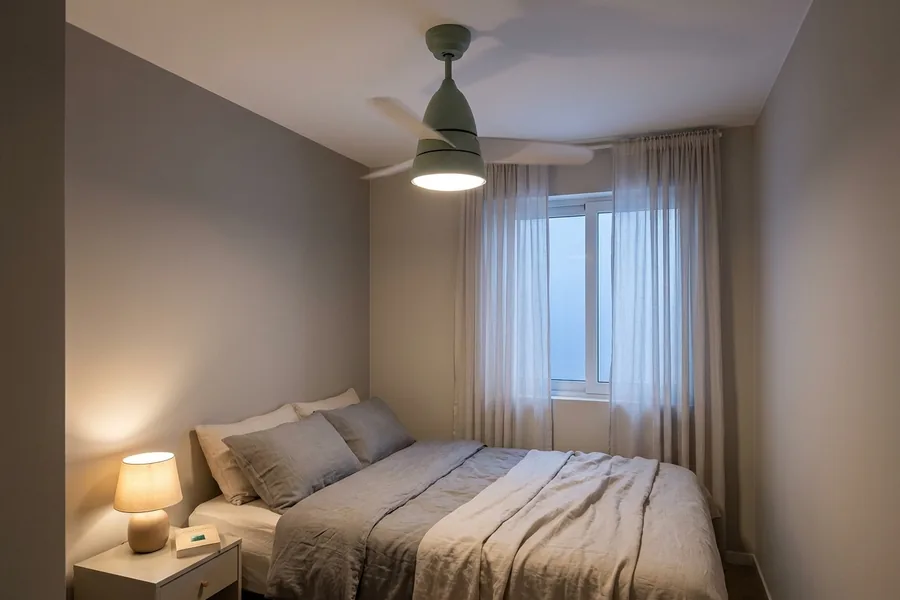
6-1. What CFM Means and Why It Matters More Than the Number of Blades
CFM means cubic feet per minute. It tells you how much air a fan can move.
Many people focus on blade count. Three blades, five blades, more blades. Fine. But CFM and comfort matter more.
A fan with more blades is not always better. A well-designed fan is better.
6-2. Why Small Rooms Need Gentle, Even Airflow Instead of Strong Direct Wind
Small rooms need gentle air.
Strong direct wind can feel bad in a bedroom or office. It can dry your eyes, move papers, or make sleep harder.
The goal is not drama. The goal is steady comfort.
6-3. What to Check in a 36 Inch Ceiling Fan: Stable Low Speed and Close-Range Comfort
For a 36 inch ceiling fan, check low-speed comfort.
In a small room, you may sit or sleep close to the fan. So the lowest speed must feel smooth and stable.
If low speed is still too strong, the fan is not right for the room.
6-4. What to Check in a 42 Inch Fan: Wider Air Coverage and Quiet Medium-Low Speed
For a 42 inch fan, check coverage and noise.
It should move air across the room without needing high speed. It should also stay quiet at medium-low speed.
That is what makes it good for small bedrooms and apartment rooms.
6-5. Why a DC Motor Is Better for Bedrooms, Apartments, and Night-Time Use
A DC motor can be a smart choice.
DC motor fans are often quieter and more energy-saving. They also tend to offer more speed settings, which helps you find the right gentle airflow.
For bedrooms and apartments, that is a big advantage.
7. Lighting, Remote Control, and Noise Affect Everyday Satisfaction
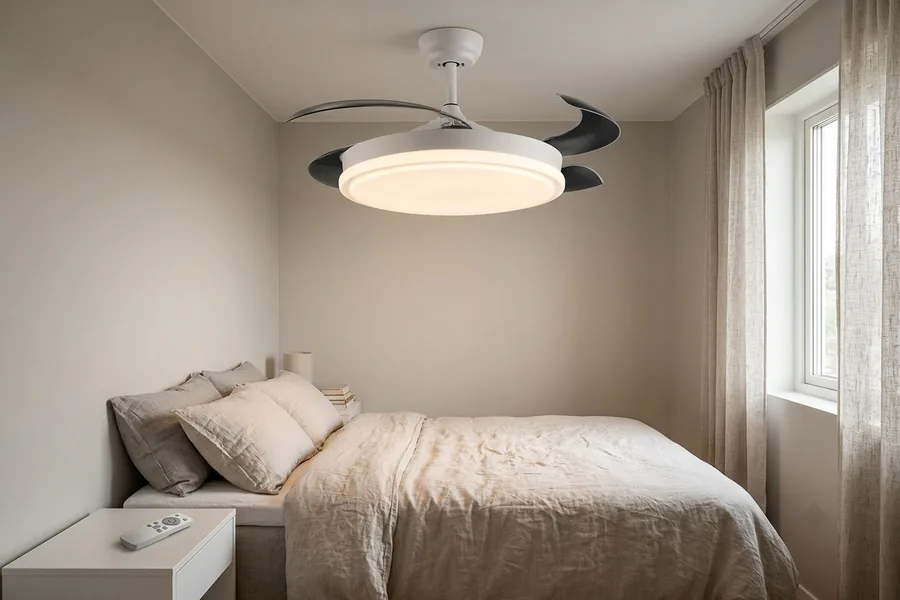
7-1. Why a Small Room Ceiling Fan With Light Should Avoid Harsh Brightness
A small room ceiling fan with light should not feel harsh.
Very bright, cold light can make a bedroom feel uncomfortable. It can also make a small room feel less cosy.
Soft, warm, adjustable light is usually better.
7-2. Why Bedrooms Benefit From Dimmable, Warm White, or Adjustable Colour Temperature Lighting
Bedrooms need flexible lighting.
You may want brighter light when cleaning. But at night, you want soft light. Dimmable lighting helps with both.
Warm white or adjustable colour temperature is a strong choice.
7-3. Remote Control vs Wall Control vs App Control: Which One Fits Your Room Best
Remote control is useful for bedrooms. You can change speed or light from bed.
Wall control is good for kitchens, offices, and rooms where people enter and leave often.
App control can be nice, but it should not be the only option. Simple controls still matter.
7-4. Why Timer, Memory, and Reverse Functions Are More Useful in Small Rooms
Small rooms benefit from practical features.
A timer helps at night. Memory keeps your last setting. Reverse mode can help move warm air in cooler months.
These are not fancy extras. They can make daily use easier.
7-5. Why Low Noise Depends on the Motor, Installation, and Blade Balance, Not Just Marketing Claims
Low noise is not just a product claim.
It depends on the motor, blade balance, ceiling box, and installation quality. A good fan can still become noisy if installed badly.
So buy a quiet fan, but also install it correctly.
8. How to Choose Between a 36 Inch Ceiling Fan and a 42 Inch Fan for Different Small Rooms
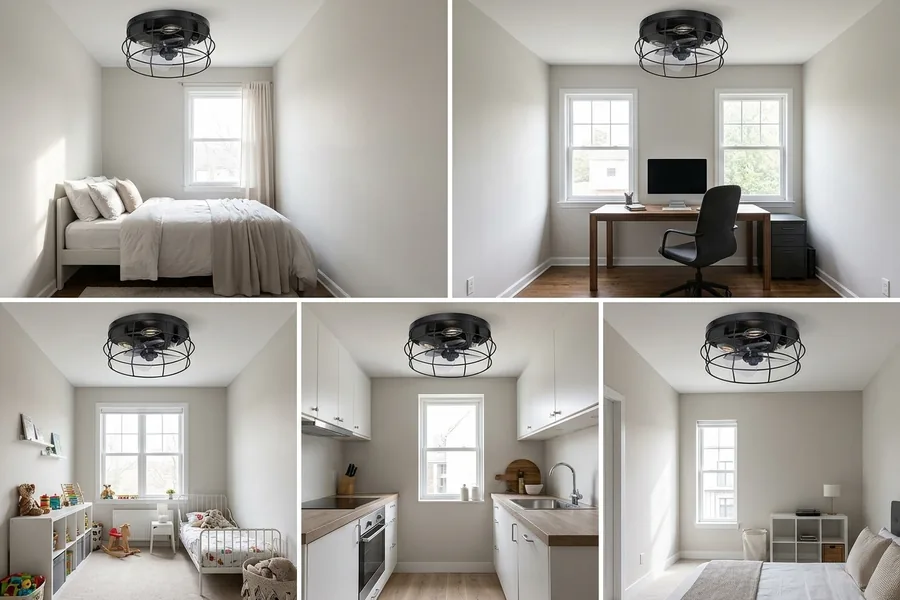
8-1. Small Bedroom: Prioritise Quiet Operation, Comfortable Low Speed, and Soft Lighting
For a small bedroom, choose comfort first.
If the room is under 100 sq ft, a 36 inch ceiling fan is often best. If it is closer to 10 x 10 ft or 10 x 12 ft, a 42 inch fan may be better.
Look for quiet operation, soft lighting, and smooth low speed.
8-2. Kids’ Room: Prioritise Safe Height, Stable Installation, and Gentle Airflow
For a child’s room, safety comes first.
Choose a fan with safe clearance, stable installation, and gentle airflow. Avoid strong wind directly over the bed or play area.
A 36 inch ceiling fan often works well in smaller children’s rooms.
8-3. Home Office: Avoid Strong Wind That Blows Papers or Interrupts Video Calls
A home office needs calm airflow.
You do not want papers moving around. You do not want fan noise on video calls. You do not want air blowing into your eyes while working.
For many small offices, a 36 inch ceiling fan is a smart choice.
8-4. Small Kitchen: Choose Compact Size, Easy-to-Clean Blades, and Enough Lighting
A small kitchen needs practical choices.
Choose a compact fan with easy-to-clean blades. Good lighting also matters because kitchens need clear task light.
A 36 inch fan or smaller model is often enough.
8-5. Apartment Living Room or Studio: Consider Openness and Choose a 42 Inch Fan When More Coverage Is Needed
In a studio or apartment living area, look at the open space.
If the space is around 120-144 sq ft, a 42 inch fan may work better than a 36 inch fan. It gives wider airflow and can cover more of the room.
Case example: Tom lived in a studio flat. His bed area and sofa area shared about 130 sq ft. A 36 inch fan looked neat, but the air did not reach the sofa well. A 42 inch fan gave better coverage without feeling too large.
That was the right choice.
9. Final Buying Checklist: Do Not Look at Size Alone
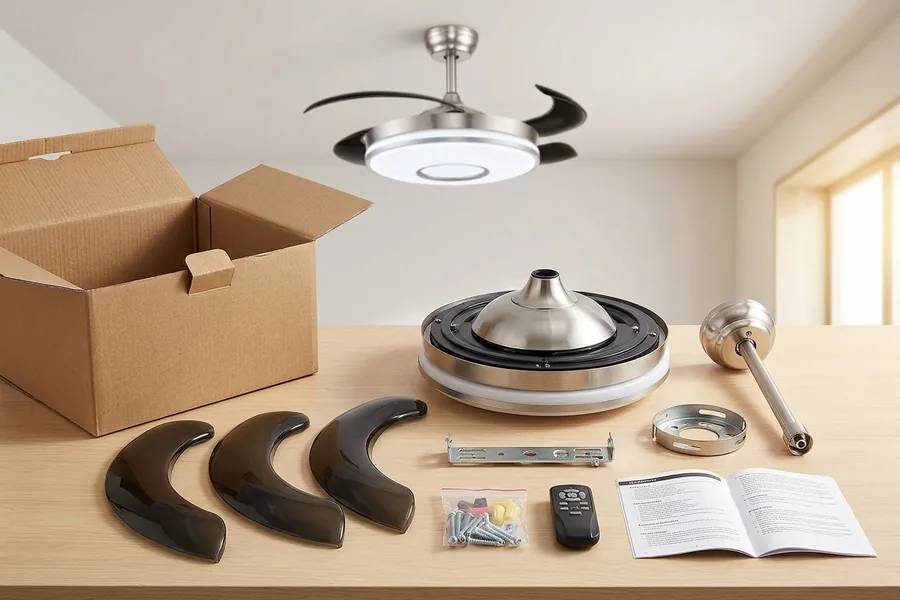
9-1. Confirm a Ceiling Fan-Rated Electrical Box, Not a Standard Light Fixture Box
A ceiling fan needs a fan-rated electrical box.
A normal light box may not be strong enough. A fan has weight, motion, and vibration.
This is important. Do not skip it.
9-2. Check Whether You Need a Damp-Rated or Indoor-Only Ceiling Fan
Check the room condition.
Most bedrooms and offices only need indoor-rated fans. But humid rooms, covered outdoor spaces, or some kitchens may need damp-rated models.
Buy the rating that matches the space.
9-3. Make Sure Doors, Cabinets, Curtains, and Windows Will Not Hit the Blades
Before buying, check what is around the fan.
Open wardrobe doors. Open cabinet doors. Look at curtains and windows. Think about bunk beds and tall furniture.
The fan needs clear space to spin safely.
9-4. Review CFM, Noise Level, Warranty, and Return Policy Before Buying
Do not only check the size.
Review CFM, speed settings, noise level, warranty, and return policy. A fan can look perfect online but feel wrong in real life.
A good return policy is useful, especially for small rooms where comfort is very personal.
9-5. Decide Whether You Need a Professional Electrician, Especially for Older Homes and Rentals
If wiring is old, unclear, or rental-controlled, consider a professional electrician.
This is not the place to guess. Safe installation matters more than saving a little money.
For renters, always check permission first.
10. Conclusion: How to Choose Between 36 Inch and 42 Inch Ceiling Fan Sizes
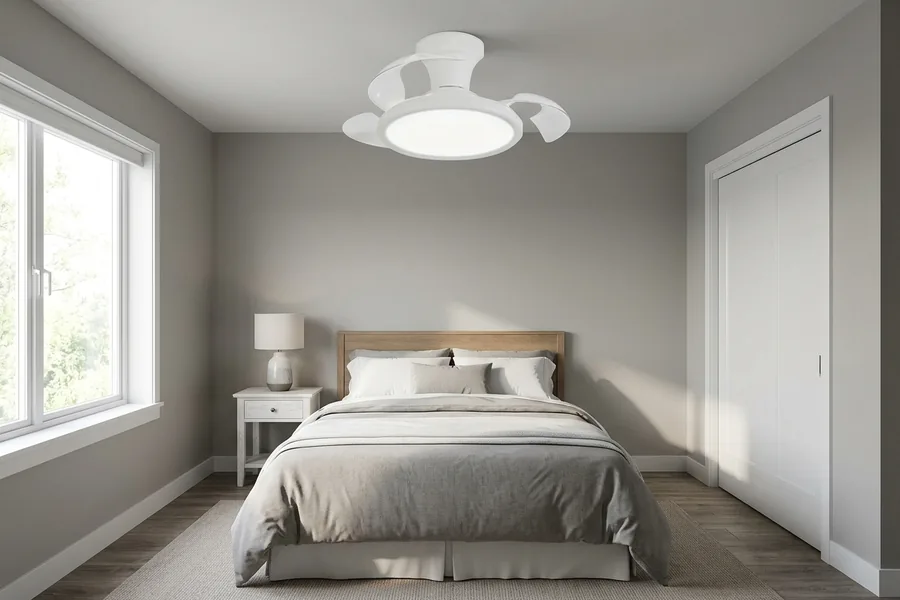
10-1. Choose a 36 Inch Ceiling Fan for Rooms That Are Small, Narrow, Low, Bed-Centred, or Visually Tight
Choose a 36 inch ceiling fan if the room is very small, narrow, low, or full of furniture.
It is also a good choice if the bed or desk sits directly under the fan. It gives comfort without making the room feel crowded.
10-2. Choose a 42 Inch Fan for Rooms Around 10×10 or Larger That Need Better Air Coverage
Choose a 42 inch fan if the room is around 10 x 10 ft, 10 x 12 ft, or up to about 144 sq ft.
It gives better coverage and often works well in small bedrooms and apartment rooms.
10-3. Do Not Choose a Larger Fan Just Because You Think It Will Feel Cooler
Do not buy bigger just because it sounds stronger.
In a small room, too much airflow can feel uncomfortable. It can also make the fan look too heavy.
The right fan is better than the biggest fan.
10-4. The Safest Rule: True Small Rooms Need Proportion; Slightly Larger Small Rooms Need Coverage
Here is the safest rule.
True small rooms need proportion. Slightly larger small rooms need coverage.
That means 36 inches for very small rooms, and 42 inches for larger small rooms.
10-5. Final Recommendation: Choose 36 Inches for Truly Small Rooms and 42 Inches for Most Small Bedrooms and Apartment Rooms
Final answer: choose 36 inches for truly small rooms. Choose 42 inches for most small bedrooms and apartment rooms.
A good small room ceiling fan should look right, feel right, and work well every day.
That is the smart choice.
Ready to Find the Right Smart Ceiling Fan for Your Home?
Compare styles, sizes, smart features, and lighting options to find the perfect fan for your space.
Get a QuoteFAQ About Small Room Ceiling Fan Sizes