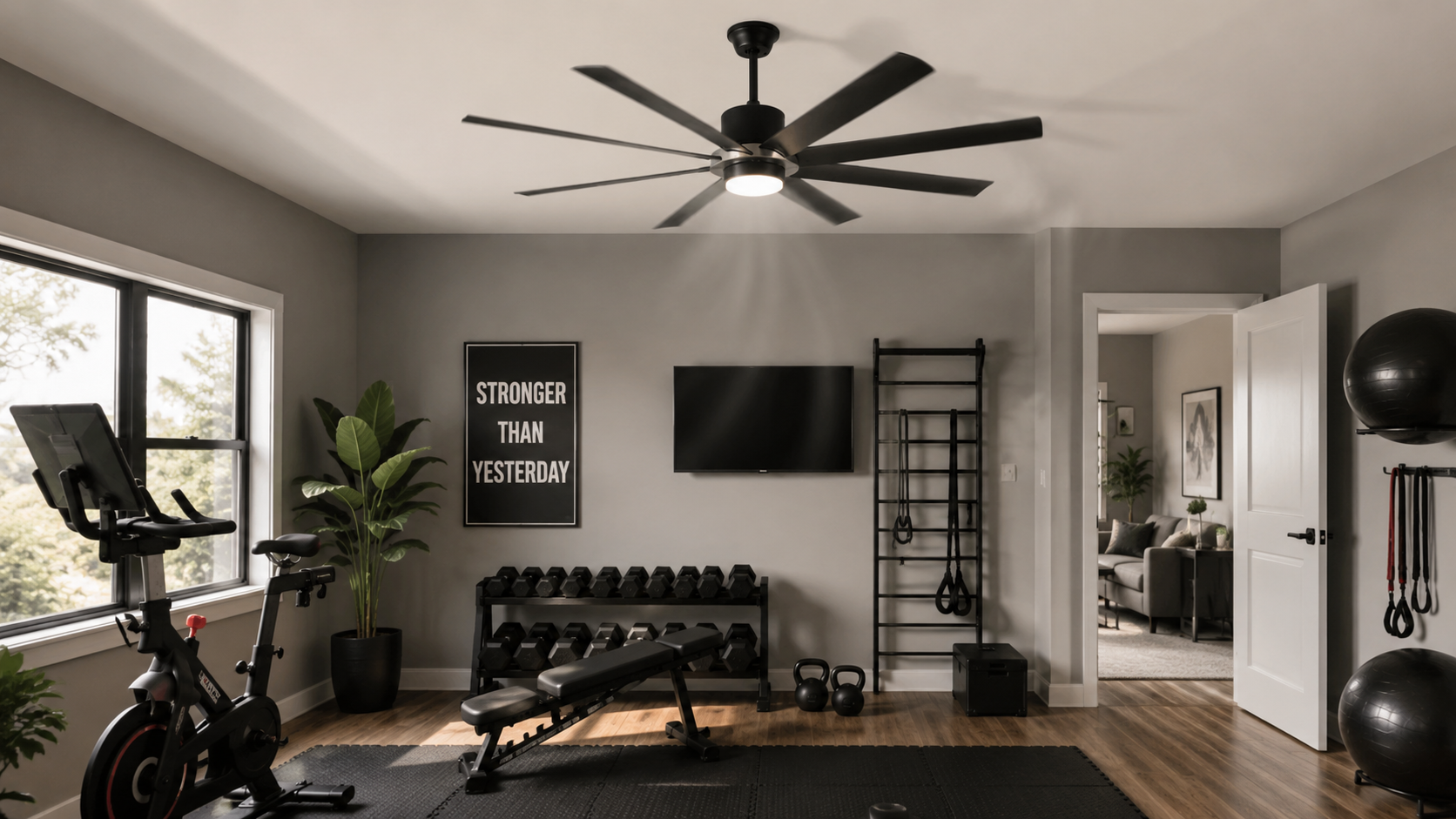


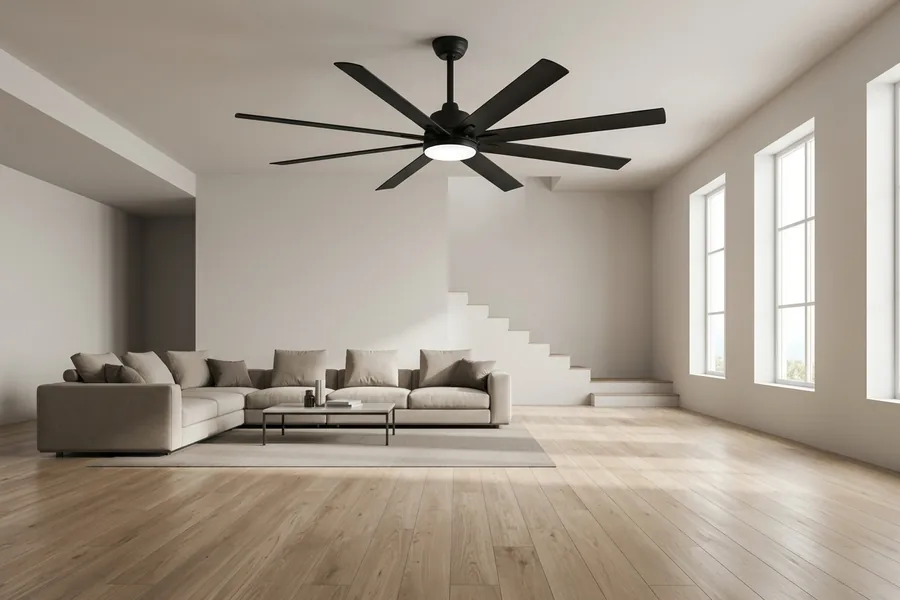
A large room asks more from a ceiling fan. It has more air to move, more floor area to cover, and often more than one place where people sit, eat, work, or relax. If you are comparing sizes from the start, a clear ceiling fan size guide can help you avoid choosing a fan that looks right but feels weak in daily use.
For many homes, a 52 inch fan works well in a bedroom or a medium living room. But once the space becomes wider, taller, or more open, the question changes. You are no longer asking, “Can this fan spin?” You are asking, “Can this fan move air across the whole space without feeling loud or harsh?”
That is where a large ceiling fan, especially a 60 inch ceiling fan or bigger, begins to make sense.
Contents
1. Why Large Rooms Need More Than a Standard Ceiling Fan
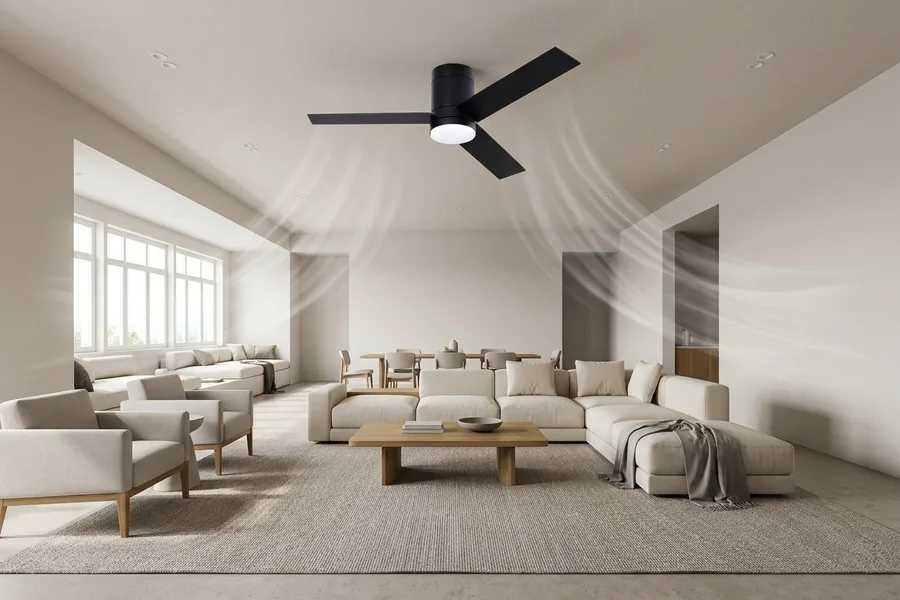
Large rooms do not fail because there is no fan. They fail because the fan is often too small for the job.
A small fan can move air directly below itself, but the effect fades as you move towards the corners of the room. In a bigger space, that means one chair may feel breezy while another part of the room still feels still and warm.
1-1. Air has to travel across a wider space
Think of airflow like light from a lamp. A small lamp can brighten a bedside table, but it cannot light a whole hall. A ceiling fan works in a similar way. The wider the room, the more important the fan’s reach becomes.
Blade span is the main measure of that reach. A larger blade span covers a wider circle of air. This helps the fan move air across more of the room instead of only pushing air down in one small area.
In a compact room, a smaller fan may be enough. A small room ceiling fan size guide can help with that type of space. In a great room, large living room, basement, or open-plan space, a wider fan is often the more natural choice.
1-2. Wide seating areas need softer and broader airflow
Large rooms are often used by more than one person at the same time. One person may be on the sofa. Another may be at a dining table. Someone else may be working near a window.
If the fan is too small, people near the centre may feel air movement, while people at the edge feel nothing. If you turn the fan to high speed, the centre may become too windy before the outer area becomes comfortable.
A bigger fan solves this in a calmer way. It spreads air over a wider area, so the room can feel balanced without needing the fan to run at full speed all the time.
1-3. Why small fans work harder in large rooms
A small fan in a big room has to work harder. It often needs to run on high speed to make a real difference. That can mean more noise, stronger wind directly under the fan, and less comfort in the wider room.
A larger fan can often do the same job at a lower speed. This matters because comfort is not only about moving more air. It is about moving the right amount of air in the right way.
2. What Counts as a Large Room for Ceiling Fan Sizing?
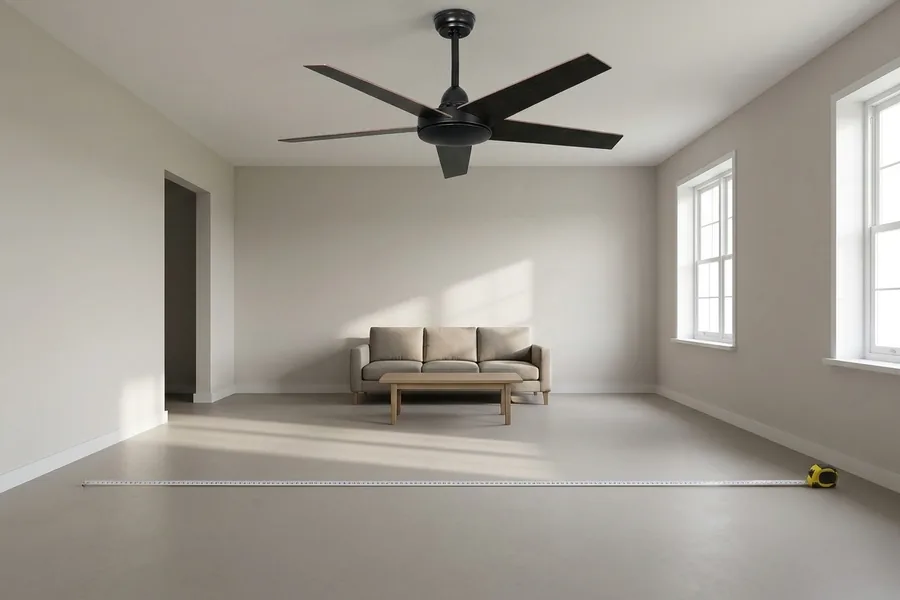
Before choosing a 60 inch ceiling fan, measure the room. Guessing by eye is where many ceiling fan size buying mistakes begin.
The first step is simple:
Room length x room width = room square footage
For example:
20 ft x 20 ft = 400 sq ft
That is already a large room. If the space is open to a kitchen, dining room, hallway, or second seating area, the real airflow challenge may be even bigger.
2-1. How to measure room square footage
For a simple square or rectangular room, measure the length and width, then multiply them.
| Room Size | Example Measurement | General Fan Direction |
|---|---|---|
| 225-300 sq ft | 15 x 18 ft | Large fan, 52-56 inch |
| 300-400 sq ft | 18 x 22 ft | Large fan, 56-60 inch |
| 400+ sq ft | 20 x 20 ft or larger | 60 inch+ fan or more than one fan |
| Long open space | 14 x 35 ft | Two fans may work better |
This table is a starting point, not a final rule. Room shape, ceiling height, furniture layout, and fan performance also matter.
2-2. When a room moves from large to extra-large
A room starts to feel extra-large when a single fan has to cover more than one living zone.
For example:
- A living room plus dining area.
- A great room with a high ceiling.
- A basement family room.
- A large covered patio.
- A wide open-plan kitchen and lounge.
In these spaces, a normal fan may not give steady airflow across the full area. This is where a 60 inch ceiling fan, a 72 inch fan, or two smaller fans may be the better answer.
2-3. Why open-plan rooms need a different sizing approach
An open-plan room is not always one room in real life. It may be one room on the floor plan, but people use it as two or three zones.
That changes the way you choose an open space fan.
Instead of asking only, “How many square feet is the full space?” ask:
- Where do people sit most often?
- Is the room long and narrow?
- Is the dining area far from the sofa?
- Is there a kitchen island or beam that breaks the space?
- Would one fan cover the main zone, or would two fans feel better?
For open spaces, fan placement can matter as much as fan size.
3. Large Ceiling Fan Size Guide: 52 Inch, 60 Inch, 72 Inch and Beyond
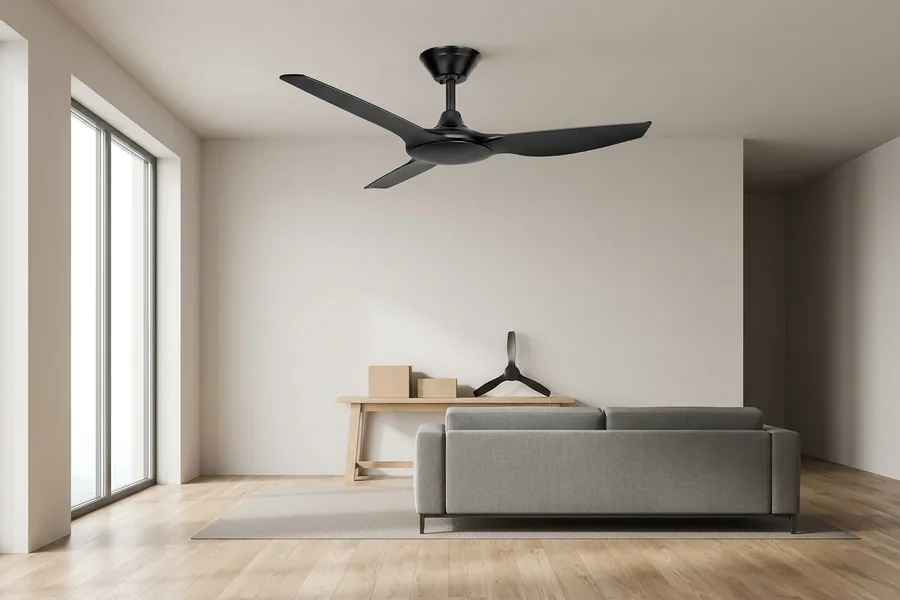
There is no single perfect fan size for every large room. But there is a clear pattern: as the room gets wider, the fan needs more reach.
| Fan Size | Best For | Watch Out For |
|---|---|---|
| 52 inch | Medium to large rooms | May feel weak in wide open spaces |
| 56 inch | Larger bedrooms, family rooms, small open areas | Check CFM and ceiling height |
| 60 inch | Large living rooms, great rooms, open spaces | Needs enough clearance and proper support |
| 72 inch+ | Extra-large rooms, open-plan areas, patios, commercial-style spaces | May need higher ceiling and stronger installation planning |
3-1. When 52 inch is still enough
A 52 inch wood ceiling fan is still useful. It can work well in a medium living room, a master bedroom, or a room that is not too wide.
It may be enough when:
- The room is under about 300 sq ft.
- The ceiling height is standard.
- The seating area is close to the centre.
- The room is not open to other zones.
- The fan has good CFM and quiet speed control.
But if the room feels wide, open, or hard to cool evenly, 52 inches may be the point where comfort starts to fall short. For a closer size comparison, a 42 inch vs 52 inch ceiling fan guide can help explain why smaller room logic does not always work in a larger space.
3-2. When a 60 inch ceiling fan becomes the safer choice
A 60 inch ceiling fan with light becomes a strong choice when the room is large enough that airflow needs to spread, not just push down.
It is often suitable for:
- large living rooms.
- Open-plan family rooms.
- Great rooms.
- large bedrooms with sitting areas.
- Covered patios.
- Large basements.
The benefit is not only power. The real benefit is coverage. A 60 inch fan can move air across a broader area, which lets the fan run at a lower, smoother speed for daily comfort.
3-3. When 72 inch or larger makes sense
A 72 inch fan or larger can make sense when the room is very wide, very high, or used as one large social space. In some layouts, a 66 inch wood ceiling fan with light can also be a strong step between a standard living-room fan and a full oversized model.
This can include:
- Great rooms over 400 sq ft.
- Open living and dining areas.
- Large covered outdoor spaces.
- Long family rooms.
- Loft-style interiors.
For very broad rooms, a 70 inch large ceiling fan may make sense when the ceiling height, support, and room scale can carry it.
But bigger is not always better. A very large fan needs enough ceiling height, proper support, and enough visual space. If it sits too low or too close to walls, beams, or furniture, it can feel heavy instead of comfortable.
3-4. Why fan diameter should match the airflow zone
The fan should match the area where people need to feel air movement.
In a large open room, the full floor area may be 600 sq ft, but the main seating zone may be closer to 250 sq ft. In that case, one large fan centred over the seating area may work well.
But if people use the whole space at once, such as a sofa area and dining area, one fan may not be enough. Two fans can sometimes create better comfort than one oversized fan in the middle.
4. Why a 60 Inch Ceiling Fan Works Better in Big Spaces
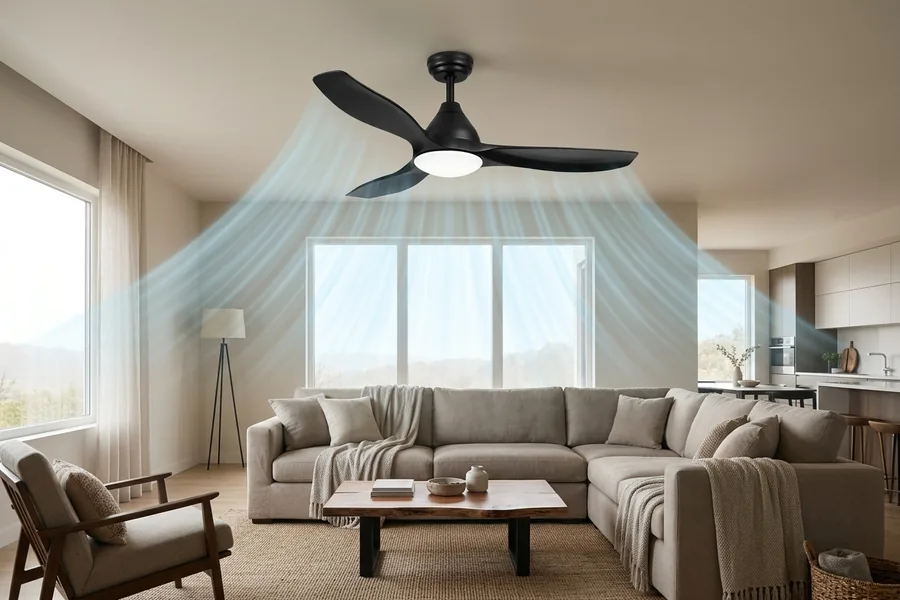
A 60 inch ceiling fan is not magic. It simply has a wider working area. That gives it a clear advantage in big rooms.
4-1. Wider blade span spreads air more evenly
The wider blade span helps the fan cover more of the room. Instead of creating a strong column of air in one spot, it can move air across a wider circle.
This matters in living rooms and open spaces because comfort should feel even. You do not want one person under the fan to feel cold while someone on the sofa edge feels nothing.
4-2. Larger fans can feel calmer at lower speeds
In many large rooms, a bigger fan on low or medium speed feels better than a smaller fan on high speed.
High speed can be useful for quick cooling, but it is not always pleasant for daily living. People read, talk, eat, watch TV, and relax in large rooms. The airflow should help the room breathe, not fight for attention.
A larger fan gives you more room to use lower speeds. That is often where real comfort lives.
4-3. How a big fan reduces hot and still corners
Large rooms often have corners where air feels still. This can happen near windows, behind sofas, beside stair openings, or in dining corners.
A bigger fan can help reduce these still areas by keeping air moving across a wider part of the room. It will not replace air conditioning, but it can make the space feel fresher and more even.
5. Open Space Fan Planning: One Large Fan or Two Smaller Fans?
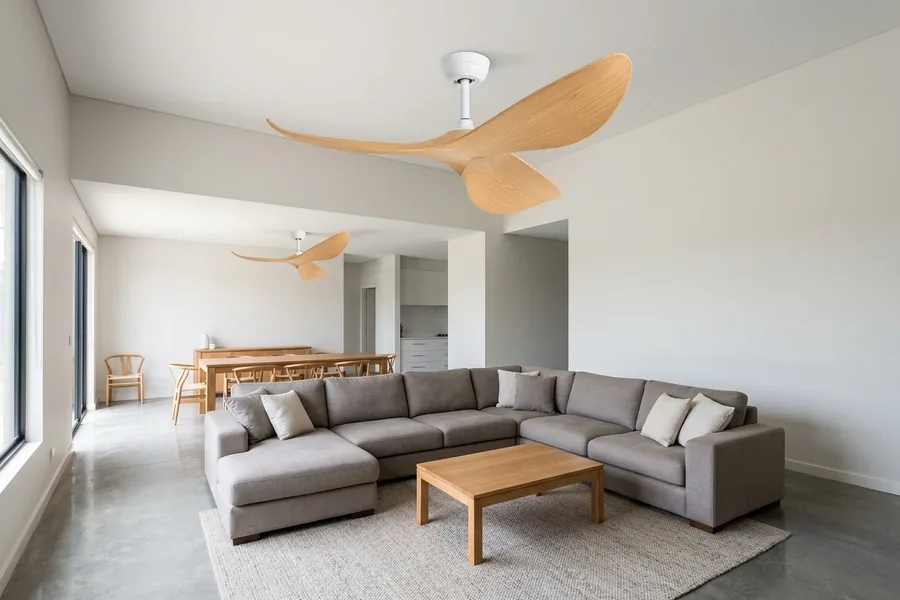
Open spaces need a little more thought. One large fan may be right. Two smaller fans may be better. The answer depends on the shape of the room.
5-1. When one large ceiling fan is enough
One large ceiling fan can work well when:
- The room is close to square.
- The main seating area is in the centre.
- The ceiling is high enough.
- There are no beams or walls blocking airflow.
- People mainly use one central zone.
For example, a square great room with a central sofa area may work well with a 60 inch or 72 inch fan placed carefully in the centre of the living zone.
5-2. When two fans give better coverage
Two fans may work better when the room is long, wide, or split into zones.
This is common in:
- Long living rooms.
- Open kitchen and dining spaces.
- Living rooms with a separate reading area.
- Large patios.
- L-shaped rooms.
Two fans can move air more evenly across the space. They can also run at lower speeds, which often feels quieter and more comfortable.
5-3. How to divide an open-plan living and dining area
For an open living and dining area, do not place one fan only because it looks symmetrical on the ceiling. Think about where people sit.
A good method is to divide the room into zones:
1. Living zone.
2. Dining zone.
3. Kitchen or transition zone.
Then choose the fan plan for each active zone. The kitchen may not need a fan. The living and dining areas may each need one.
5-4. Fan placement for long, wide, or L-shaped rooms
Long rooms are difficult for one fan. A single large fan in the centre may leave both ends weak.
For a long room, two medium or large fans placed along the length of the space can work better. A room-by-room ceiling fan size guide can also help when one open space includes several use zones. For an L-shaped room, place fans where people actually spend time, not simply at the geometric centre of the full floor plan.
The best fan is not always the biggest fan. It is the fan, or fan layout, that gives the most even comfort.
Ready to Find the Right Smart Ceiling Fan for Your Home?
Compare styles, sizes, smart features, and lighting options to find the perfect fan for your space.
Get a Quote6. Ceiling Height, Downrods and Large Fan Performance
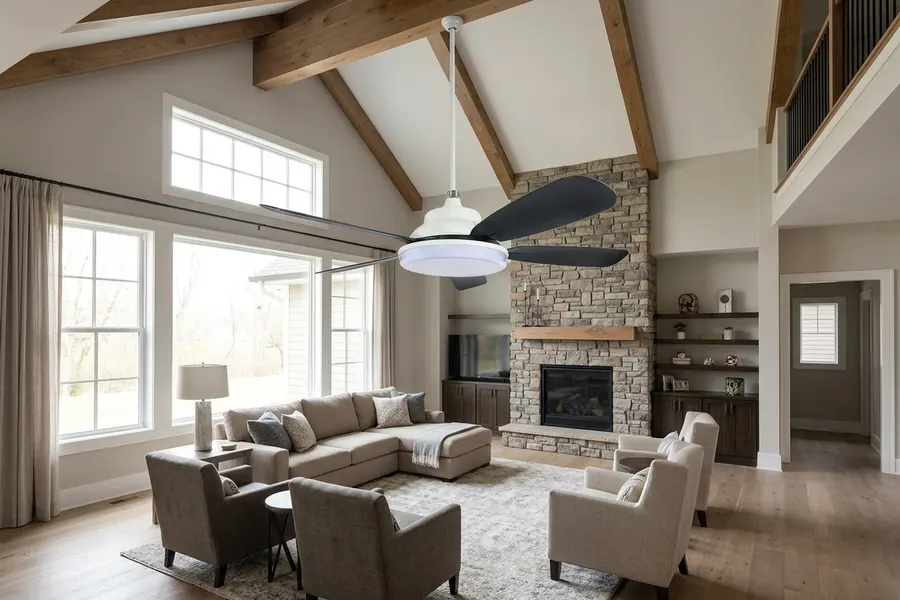
Ceiling height changes everything. A large fan mounted too high may look impressive but feel weak. A large fan mounted too low may feel unsafe or visually heavy.
6-1. Why high ceilings need the fan closer to the living zone
In rooms with high ceilings, air movement can stay too far above people. The fan may be working, but the airflow may not reach the living area properly.
This is why high ceilings often need a downrod. The downrod lowers the fan to a better height, so the airflow reaches the people in the room.
For great rooms and vaulted ceilings, the downrod is not only a hardware detail. It is part of the performance plan.
6-2. How low ceilings limit large fan choices
Low ceilings need more care. A large fan needs safe clearance from the floor and enough space from nearby walls and furniture.
If the ceiling is low, a flush mount or low-profile fan may be needed. But very large low-profile fans are not always the best choice, because some slim designs may move less air than expected.
For low ceilings, check:
- Installed height.
- Blade clearance.
- Fan diameter.
- CFM rating.
- Wobble control.
6-3. Vaulted ceilings and sloped mounting
Vaulted ceilings can be beautiful, but they need the right mounting parts. A large fan may need a sloped ceiling adapter and a longer downrod.
The goal is to keep the fan level. If the fan is not level, it may wobble, make noise, or move air unevenly.
Before buying, check whether the fan supports angled ceilings. Do not assume every large ceiling fan can be installed on a slope.
6-4. Safe blade height and clearance checks
Large fans need room around them. Before buying, check:
- Blade height above the floor.
- Distance from walls.
- Distance from beams.
- Distance from tall cabinets or shelves.
- Strength of the ceiling electrical box.
A large fan should feel calm and secure. If it looks crowded, sits too low, or seems too close to obstacles, choose a different size or layout.
7. Airflow and Comfort: CFM Is Important, But Not Everything
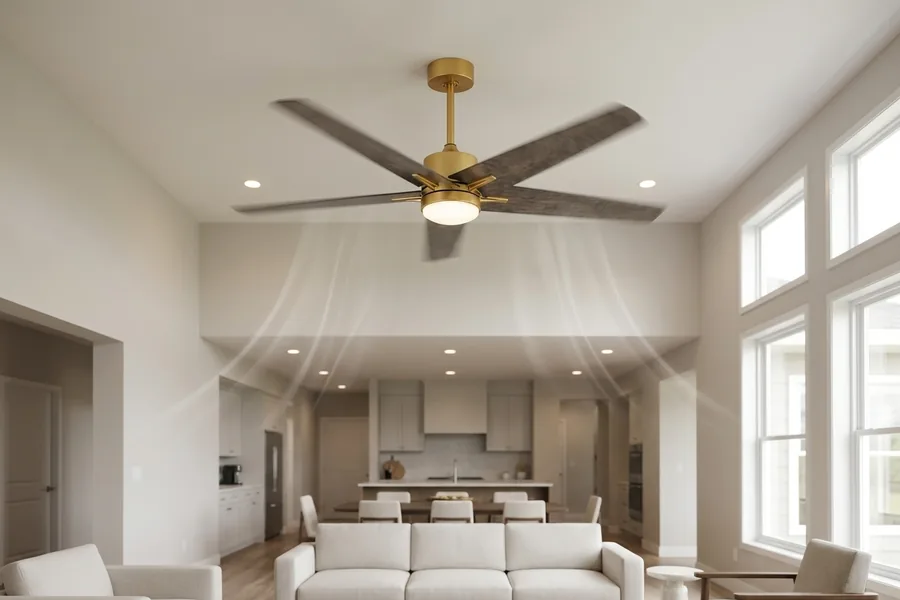
CFM means cubic feet per minute. It shows how much air a fan can move. For a large room, CFM is important because the fan must move enough air to make the space feel fresh.
But CFM is not the whole story.
7-1. What CFM means in a large room
A higher CFM can help a large room, but only when the airflow is controlled well. A fan with high CFM but poor balance may feel noisy, harsh, or unstable.
For large rooms, look for:
- Enough CFM for the room size.
- Multiple speed settings.
- Quiet low-speed performance.
- Stable motor quality.
- Good blade design.
The best large fan is not the one that only looks powerful on paper. It is the one that moves air smoothly in real use.
7-2. Why low-speed airflow matters for comfort
Most people do not run a ceiling fan at full speed all day. In a living room or open space, low and medium speeds matter more.
Low speed should still move enough air to make the room feel comfortable. If low speed feels useless, people will use high speed more often. That can increase noise and make the airflow feel too strong in the centre.
A good 60 inch ceiling fan should give useful airflow before it reaches high speed.
7-3. Motor quality, balance and noise control
Large fans need good motor balance. The wider the blade span, the more important stability becomes.
A poor-quality large fan may wobble, hum, or click. This is annoying in any room, but especially in a quiet living area where people talk, watch films, or rest.
For a large ceiling fan, check:
- DC motor or quality AC motor.
- Stable speed control.
- Good blade balance.
- Strong mounting system.
- Clear installation instructions.
7-4. Why bigger should still feel gentle
A bigger fan should not make the room feel like a wind tunnel. It should create slow, steady air movement.
This is the quiet promise of a good large fan: more coverage, less effort. The room should feel fresher, but the fan should not dominate the space.
8. Common Mistakes When Choosing a Large Ceiling Fan
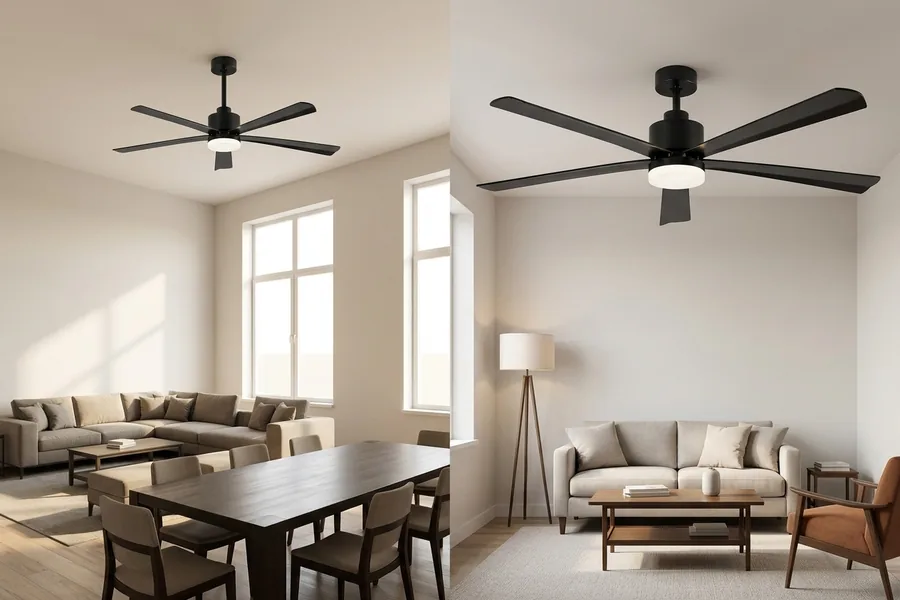
Large fan mistakes can be expensive because the product is bigger, harder to install, and more visible. It is worth slowing down before buying.
8-1. Choosing a 52 inch fan for every room
The 52 inch fan is common, but common does not mean universal. It may be too small for a wide living room, open-plan space, or great room.
If the room is over 350-400 sq ft, start looking at 60 inch+ options instead of assuming 52 inch will be enough.
8-2. Buying the biggest fan without checking ceiling height
A very large fan needs space. If the ceiling is too low, the fan may feel heavy or unsafe. If the ceiling is too high and the fan is not lowered with the right downrod, the airflow may not reach people well.
Size and height must be checked together.
8-3. Ignoring open-plan airflow zones
Open rooms are not always best served by one huge fan. If the room is long or divided by furniture, two fans may give better coverage.
Think in zones, not only total square footage.
8-4. Looking only at style instead of performance
Style matters because a large fan is easy to see. But style should not replace performance.
Before choosing by colour or blade shape, check:
- Fan diameter.
- CFM.
- Speed range.
- Motor type.
- Mounting type.
- Noise expectations.
The best fan should look right and work right.
8-5. Forgetting installation strength and wobble control
A large ceiling fan must be installed securely. The electrical box should be fan-rated, and the mount should be correct for the fan weight and ceiling type.
If the fan is large, heavy, or mounted on a high ceiling, professional installation is often the safer choice.
9. Large Ceiling Fan Buying Checklist Before You Choose
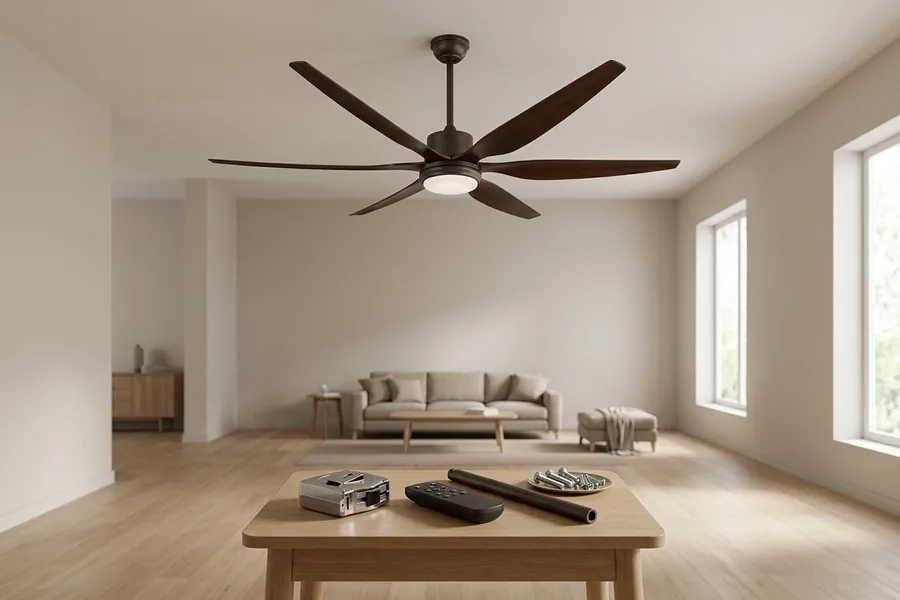
Use this checklist before choosing a large ceiling fan:
9-1. Room size and airflow zone
Measure the room, then identify where people actually need airflow. In open spaces, mark the living zone, dining zone, or main seating zone.
9-2. Fan diameter and blade span
Use fan diameter as your starting point:
- 52 inch for many medium to large rooms.
- 56 inch ceiling fan with light for wider rooms that need more reach.
- 60 inch for large living rooms and open spaces.
- 72 inch+ for extra-large rooms, great rooms, and broad open areas.
9-3. Ceiling height and mounting type
Check whether the room needs:
- Flush mount.
- Standard downrod.
- Longer downrod.
- Sloped ceiling adapter.
The fan should sit at a useful and safe height, not simply as close to the ceiling as possible.
9-4. CFM, speed range and motor quality
Look beyond diameter. A large fan should have enough airflow, a useful speed range, and stable motor performance.
For daily comfort, low-speed airflow is especially important.
9-5. Clearance, installation and long-term comfort
Before buying, check clearance from the floor, walls, beams, lights, and tall furniture. Then think about how the fan will feel in daily life.
The right large ceiling fan should not shout for attention. In rooms that sit between standard and oversized, a 54 inch black ceiling fan with light can sometimes give a useful middle ground. The aim is simple: choose the fan that makes the room easier to live in.
Final Thoughts
Large rooms need bigger ceiling fans because comfort has to reach further. A 60 inch ceiling fan can give a wide room more even airflow, calmer low-speed comfort, and better coverage than a smaller fan working too hard.
But size alone is not the answer. The best choice comes from room area, ceiling height, layout, CFM, motor quality, and placement. For open spaces, one large fan may be right. In long or divided rooms, two fans may be better.
Measure first. Think in airflow zones. Then use a trusted ceiling fan size guide to choose the fan that makes the whole room feel comfortable, not just the space directly under the blades.
Ready to Find the Right Smart Ceiling Fan for Your Home?
Compare styles, sizes, smart features, and lighting options to find the perfect fan for your space.
Get a Quote