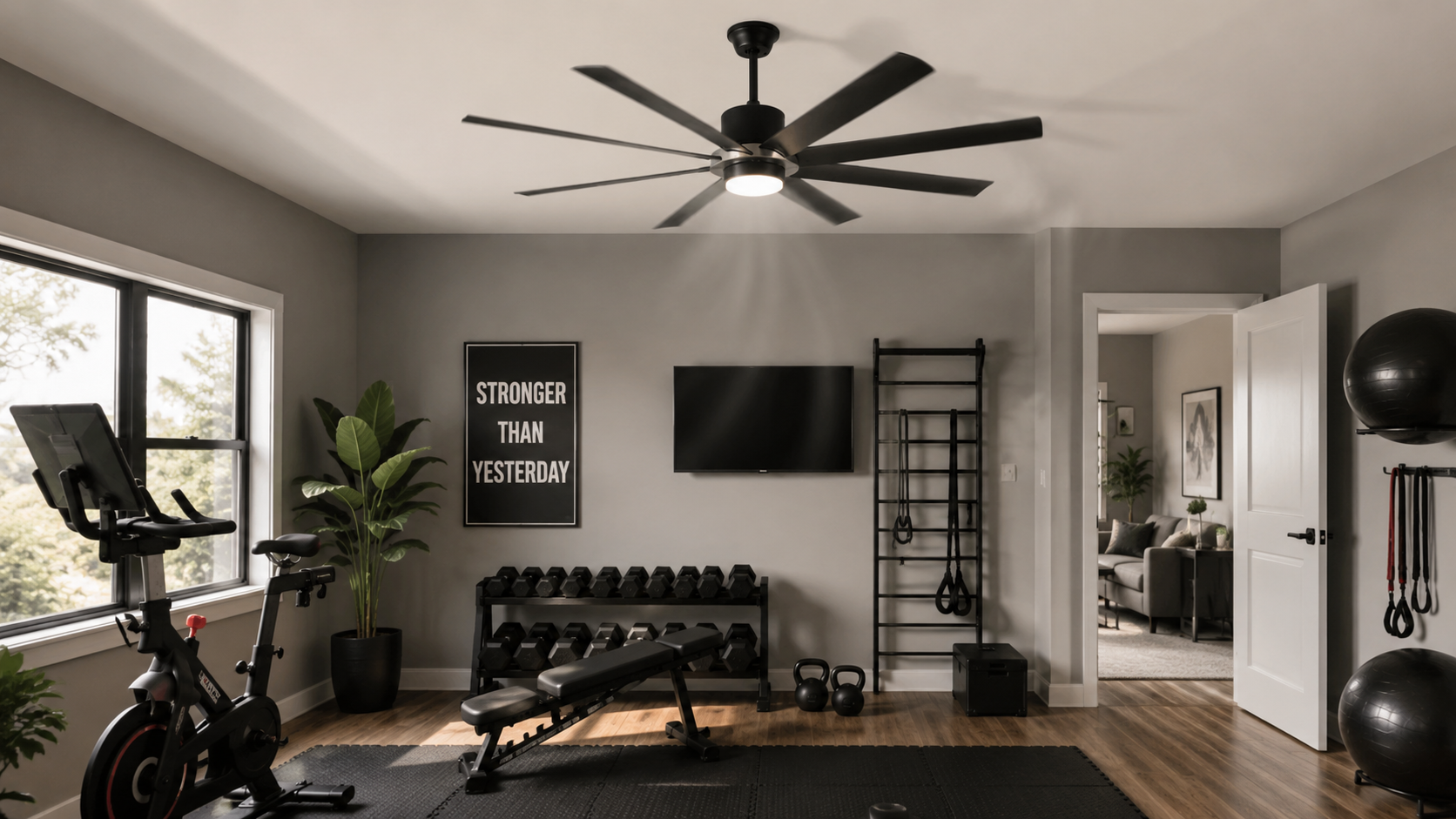


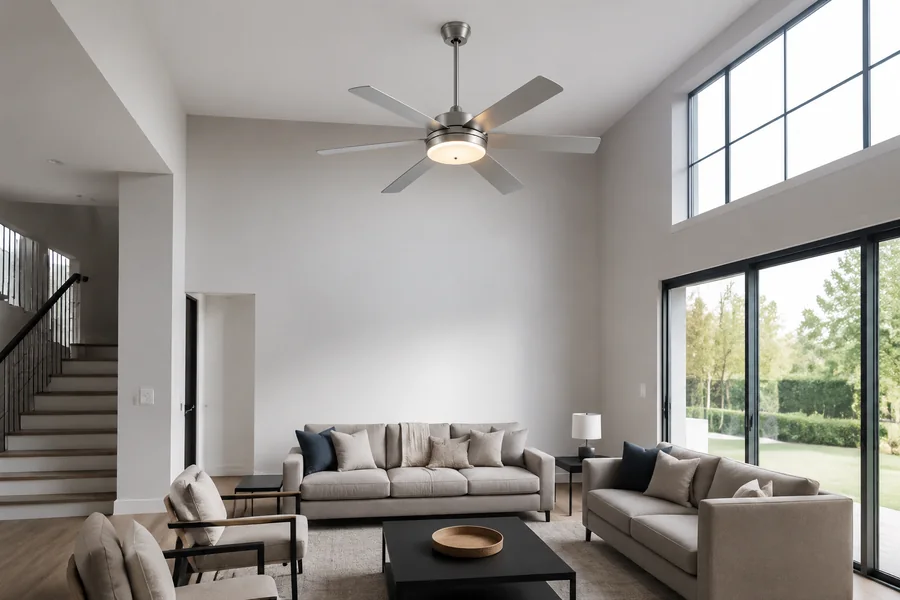
A downrod ceiling fan is not only a style choice. The rod decides where the fan blades sit in the room, and that changes airflow, comfort, safety, and how balanced the fan looks. If the ceiling is high, sloped, or part of a large open space, a longer rod may be the detail that makes the fan work properly.
The mistake is thinking that higher is always better. A fan mounted too close to a tall ceiling may spin beautifully but move very little air where people sit. A longer rod brings the fan down to a more useful height, so the airflow reaches the living zone instead of staying near the ceiling.
1. What a Downrod Does
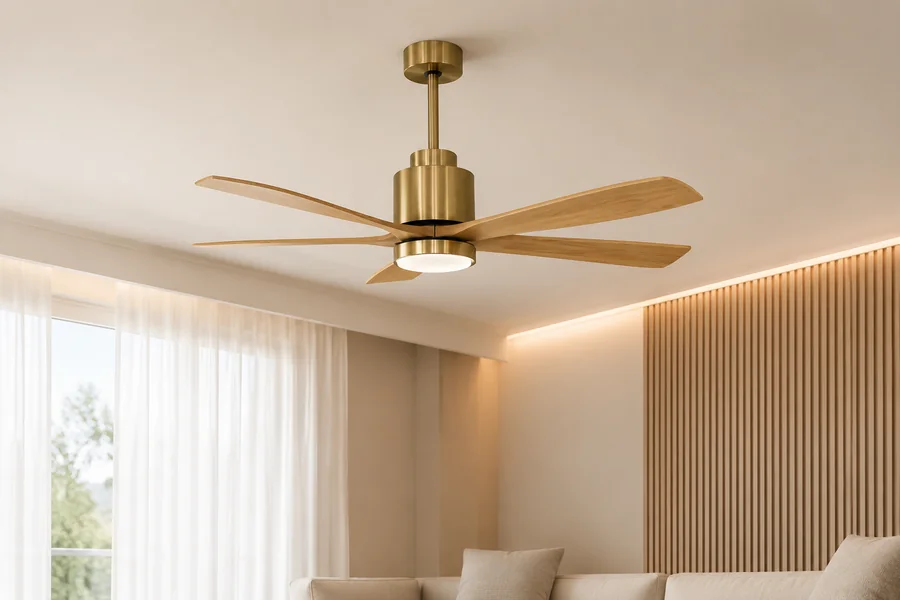
A downrod is the metal rod between the ceiling canopy and the fan motor. It looks simple, but it decides where the fan sits in the room and whether the blades can move air where people actually feel it.
A downrod ceiling fan is most useful when the ceiling is higher than a normal low room. The rod lowers the fan to a better working height, so the fan does not simply move air near the ceiling.
1-1. It positions the fan for useful airflow
Ceiling fans do their best work when the blade height matches the occupied zone of the room. If the fan is mounted too high, the air movement can stay above people. If it is mounted too low, the fan may feel unsafe or visually heavy.
The downrod helps set that balance. It brings the blades down far enough to circulate air across the room, but still keeps safe clearance below the fan.
1-2. It helps with visual proportion
In a tall room, a fan mounted directly against the ceiling can look small and disconnected. A downrod gives the fan visual presence and helps it sit naturally within the vertical space.
This matters in great rooms, dining rooms, hotel lounges, and open living areas. The fan should look like it belongs to the room, not like it was placed too high as an afterthought.
1-3. It is part of mount type planning
Downrod choice should be considered together with flush mount, sloped ceiling mount, and dual mount options. If you are still comparing installation styles, the broader ceiling fan mount type guide can help you judge the whole mounting plan.
2. Ceiling Height and Blade Height
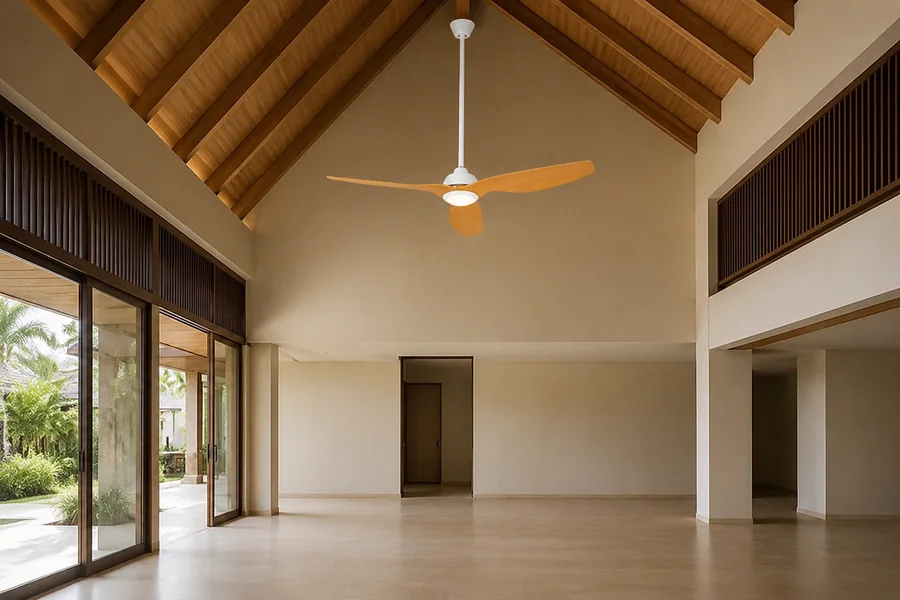
The first question is not the fan style. It is the ceiling height. A downrod that works in a 10-foot room may be too short for a vaulted ceiling and too long for an 8-foot bedroom.
Blade height affects comfort, safety, and airflow reach. The goal is to keep the fan high enough for clearance while still low enough to move air through the living zone.
2-1. Standard ceilings usually need short rods
For many standard ceilings, the short rod included with the fan is enough. It gives a small drop from the ceiling and keeps the fan close to a normal working height.
However, always check the total drop height of the full fixture. A fan with a deep motor housing or light kit may hang lower than expected, even with a short rod.
2-2. High ceilings need more drop
High ceilings often need a longer downrod because air movement weakens as the fan sits farther above people. Lowering the fan helps the airflow reach seating areas, beds, counters, or work zones.
This is especially important in open living rooms, hotel halls, restaurants, and large project rooms where people expect steady comfort across a wide area.
2-3. Low ceilings should not use long rods
A long rod in a low room can create safety and comfort problems. The fan may hang too close to people, block sightlines, or make the ceiling feel crowded. If the ceiling is low, a flush mount fan is usually a better direction.
For low ceiling rooms, compare this article with the flush mount ceiling fan guide before choosing a downrod model. If the room already feels tight, the safer decision is usually to reduce total drop height rather than force a longer rod into the space.
3. When a Longer Rod Is Needed
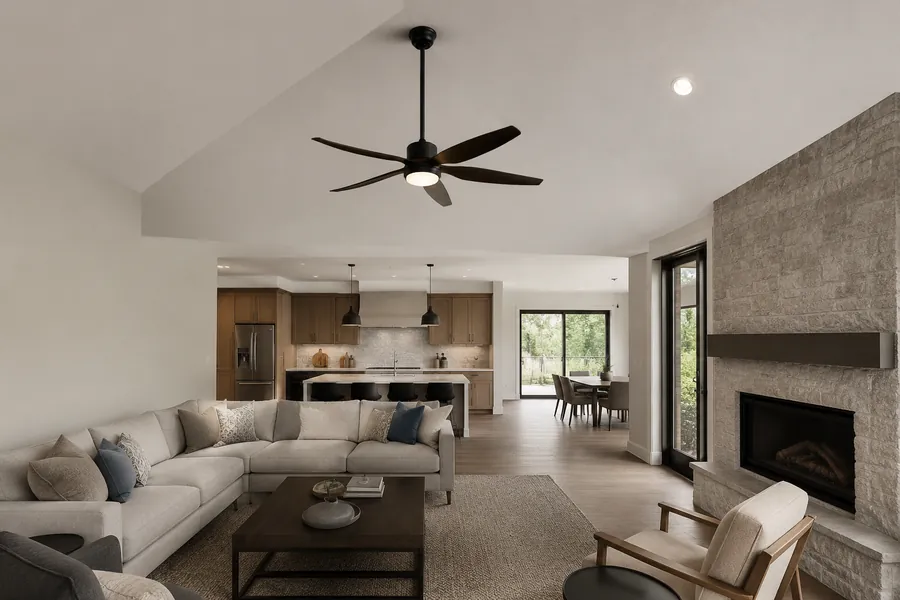
A longer rod is needed when the ceiling height prevents the fan from moving useful air at people level. The extra rod length is not decoration. It is a way to place the fan where it can work.
The sign is simple: the room feels still even when the fan is running, or the fan looks too close to the ceiling in a tall space.
3-1. Tall living rooms
Tall living rooms and great rooms often need a longer rod because the ceiling volume is large. Without enough drop, a fan may circulate air above the seating area instead of through it.
In a large living space, a bigger fan and a longer downrod often work together. A 66 inch wood ceiling fan light with DC motor can suit this kind of room when the mounting height and blade clearance are planned correctly.
3-2. Vaulted or sloped ceilings
Vaulted ceilings usually need both a compatible angled canopy and a downrod. The rod helps the fan hang level, while the canopy handles the ceiling angle.
A longer rod may also be needed so the blade tips stay away from the sloped surface. Measure both the high side and the low side before ordering.
3-3. Covered outdoor and open spaces
Covered patios, terraces, and open halls may need a longer rod when the roof is high or the seating area sits below a wide ceiling. The fan should move air across people, not only under the roof structure.
For these spaces, choose a fan suitable for the environment. An outdoor ceiling fan with lights for covered areas can work when the rating, mounting, and clearance match the space.
4. How to Choose the Right Downrod Length
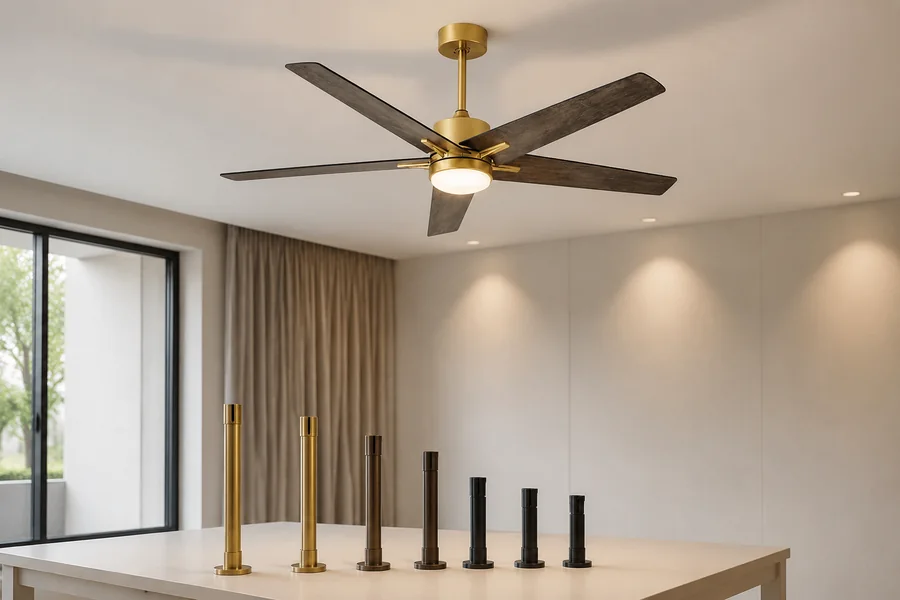
Choosing the right downrod length is a measurement task, not a guess. You need the ceiling height, fan body height, light kit depth, blade span, and the clearance needed below the fan.
The practical goal is to place the blades at a comfortable working height while keeping the whole fixture safe and visually balanced.
| Ceiling Situation | Downrod Direction | Main Check |
|---|---|---|
| Low ceiling | Avoid long rod | Use flush mount or short total drop |
| Standard ceiling | Short rod may work | Check total fixture height |
| High ceiling | Longer rod often needed | Bring airflow into living zone |
| Sloped ceiling | Angled mount plus rod | Check slope limit and blade clearance |
4-1. Start with ceiling height
Measure from the finished floor to the ceiling, not from memory or a floor plan. Renovated rooms, older buildings, and commercial spaces can have small differences that affect installation.
Then compare the ceiling height with the fan’s total hanging height. This includes canopy, rod, motor housing, blades, and light kit.
4-2. Keep safe clearance
The fan should leave enough clearance below the blades and around the blade tips. Check nearby walls, beams, lights, wardrobes, curtains, shelves, and tall furniture.
Clearance is both a safety issue and an airflow issue. Blades too close to obstacles can create uneven airflow and extra noise.
4-3. Match the fan size
A larger fan may need more careful rod planning because the blade span is wider and the fan has stronger visual presence. A 52 inch solid wood ceiling fan may suit standard rooms, while larger spaces may need wider models and more drop.
5. Sloped Ceilings and Mounting Support
Sloped ceilings need special care because the fan must hang level even when the ceiling does not. The downrod is only one part of the solution. The canopy, bracket, slope angle, wiring, and support structure also matter.
5-1. Check the maximum slope angle
Not every fan can be installed on a steep ceiling. Some canopies only support a limited angle. If the ceiling slope is beyond that range, the fan may not hang correctly or safely.
Before buying, confirm the maximum angle the mount can handle. If the ceiling is steep, ask whether an angled ceiling adapter is needed.
5-2. Keep the fan level
A fan on a sloped ceiling should still hang level. If the motor tilts, the blades may wobble, the fan may wear unevenly, and the room may feel unsafe.
A longer downrod can create enough space for the fan to clear the slope and sit level below the ceiling line. This is especially useful when the lower side of the ceiling sits close to the blade path and a short rod would leave too little clearance.
5-3. Confirm ceiling support
A ceiling fan should not be mounted like a simple light. The support must handle weight, rotation, and vibration. This matters even more with longer rods because movement can feel more visible.
For large or commercial spaces, ask the installer to confirm the mounting point before ordering in quantity. This check should happen before production or bulk purchase, because changing the rod, canopy, or support plan later can delay the whole project.
Need the Right Ceiling Fan for a Home, Project, or Commercial Space?
Tell us your space type, ceiling height, airflow needs, lighting options, certification direction, and order plan. We’ll help match the right solution.
Get a Quote6. Airflow, Stability, and Noise
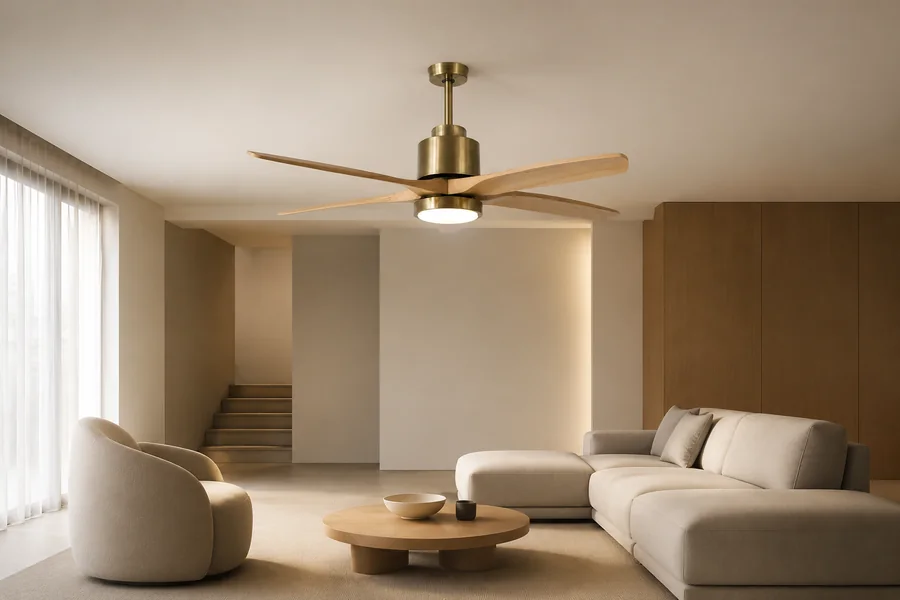
Rod length affects more than appearance. It can change airflow reach, fan stability, and how noise feels in the room. A well chosen rod can make a fan feel calmer and more useful.
6-1. Airflow should reach the living zone
If the fan is too close to a high ceiling, air may move above the people using the room. A longer rod can help the airflow reach sofas, dining tables, beds, counters, or work areas.
This is why downrod planning is often part of large room fan selection. A large industrial ceiling fan with LED light needs the right mounting height as much as the right blade span.
6-2. Stability matters with longer rods
A longer rod can make movement more noticeable if the fan is poorly balanced. Choose a fan with stable blades, a strong motor housing, and proper mounting hardware.
Good installation also matters. Loose screws, weak brackets, or poor blade balance can turn a correct downrod length into a wobble problem.
6-3. Motor quality becomes more important
When a fan is mounted lower in a tall room, people may notice motor hum or vibration more clearly. A quiet motor and smooth speed control are especially important for bedrooms, dining rooms, hotels, and lounges.
7. Downrod Ceiling Fans With Lights
A downrod ceiling fan with light needs one extra check: the light adds depth. Even if the rod length is correct, a deep light kit can make the full fixture hang lower than expected. If the room is too low for a rod, compare the installation with this flush mount ceiling fan with light guide before choosing the final fixture style.
7-1. Include the light kit in total drop height
Measure from the ceiling to the lowest point of the light, not only to the blades. This matters in dining rooms, bedrooms, and hotel rooms where people may stand or walk under the fan.
A slim light module can keep the fixture cleaner, while a bulky glass shade can make the fan feel lower and heavier.
7-2. Avoid shadows and glare
Fan blades and lights share the same ceiling area, so poor light design can create moving shadows or glare. This is more noticeable when the fan is lowered by a downrod.
Choose soft, practical lighting for living spaces and hospitality rooms. For decorative interiors, a vintage ceiling fan with remote control can work when the light depth and rod length are checked together.
7-3. Match controls to daily use
If the fan includes both airflow and lighting, users need simple control. Remote control, wall control, or smart control should make it easy to adjust light and fan speed separately.
8. Best Rooms for Downrod Ceiling Fans
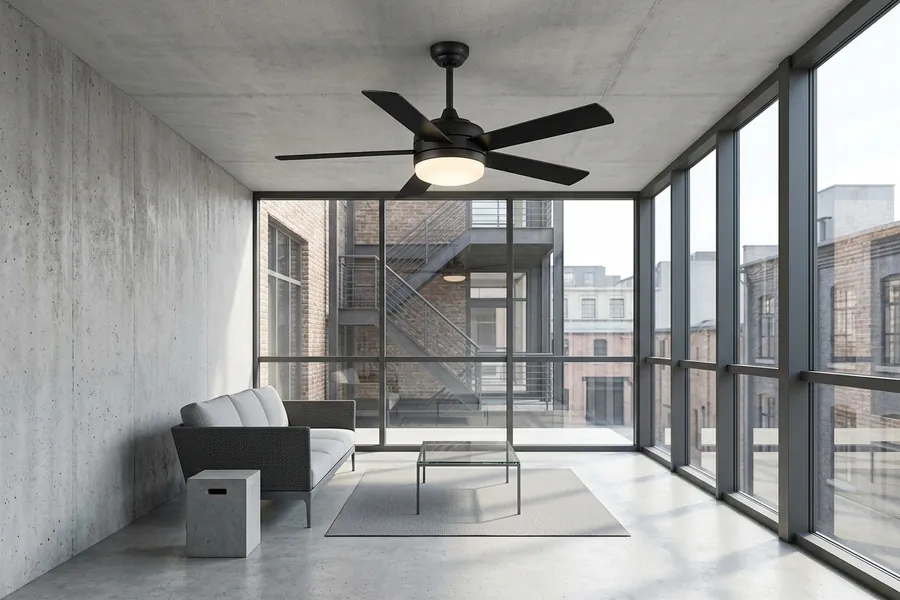
Downrod ceiling fans work best in spaces where ceiling height allows the fan to hang lower without reducing safety or comfort. They are common in larger rooms, high ceilings, and covered open areas.
8-1. Living rooms and great rooms
Living rooms and great rooms often need a fan that feels visually balanced and moves air across a wide seating area. A downrod can help the fan sit in the right part of the room instead of disappearing near the ceiling.
8-2. Dining rooms and hospitality spaces
Dining rooms, hotel lounges, and public spaces need comfort without harsh wind. A downrod fan can provide slower, wider airflow when the fan size and mounting height are chosen well.
8-3. Warehouses and open commercial spaces
Commercial spaces may need longer rods when ceilings are high and air needs to reach working zones. In these rooms, installation support, motor stability, and maintenance access should be checked before ordering.
9. Final Downrod Checklist Before Buying
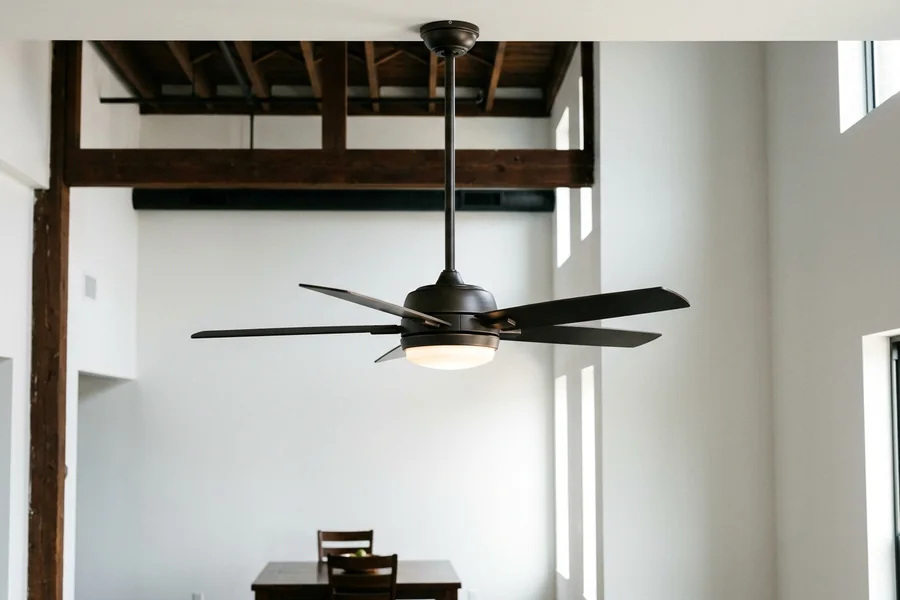
A downrod fan is a good choice when it solves a real height problem. It should improve airflow reach, visual proportion, and room comfort without creating safety or installation issues.
9-1. Mistakes to avoid
Avoid using a long rod in a low room, forgetting the depth of the light kit, ignoring ceiling slope, or choosing a rod only because it looks dramatic. These mistakes can make a good fan feel wrong after installation.
9-2. Check these points before ordering
- Finished ceiling height and total fixture drop.
- Fan blade span, motor body height, and light kit depth.
- Blade clearance from walls, beams, lights, and furniture.
- Ceiling slope, angled mount needs, and support strength.
- Control method, noise level, and future maintenance access.
9-3. Final buying advice
If you are unsure, start with the room height and installation condition first, then choose the fan style. For a wider comparison between downrod, flush mount, and other mounting options, use the ceiling fan mount types guide before making the final decision.
A longer rod is useful only when it helps the fan work better. The best result is a fan that feels stable, quiet, correctly placed, and natural in the room.
Need the Right Ceiling Fan for a Home, Project, or Commercial Space?
Tell us your space type, ceiling height, airflow needs, lighting options, certification direction, and order plan. We’ll help match the right solution.
Get a QuoteFAQ
Do I need a longer downrod for a high ceiling?
Yes, you often need a longer downrod for a high ceiling because the fan blades should sit closer to the occupied area. If the fan stays too high, airflow may not reach people well.
Is a downrod ceiling fan safe?
Yes, a downrod ceiling fan is safe when it is installed with the right rod, canopy, ceiling support, and clearance. The fan must be fixed to a suitable fan-rated structure.
Can I use a downrod fan on a sloped ceiling?
Yes, many sloped ceilings can use a downrod fan, but you need the correct angled mounting kit. The fan motor should hang level after installation.
Is a longer downrod better for airflow?
Yes, it can be better for airflow in high rooms because it brings the blades closer to the living zone. But it is not better in low rooms, where it may create clearance problems.
Should a bedroom ceiling fan use a downrod?
No, not always. A bedroom with a standard or low ceiling may need a short rod or flush mount fan. A downrod is more useful when the bedroom ceiling is high.
Can I change the downrod after buying the fan?
Yes, many ceiling fans allow different downrod lengths, but you must use a compatible rod. Always check the fan brand, wiring length, canopy, and installation instructions before changing it.