

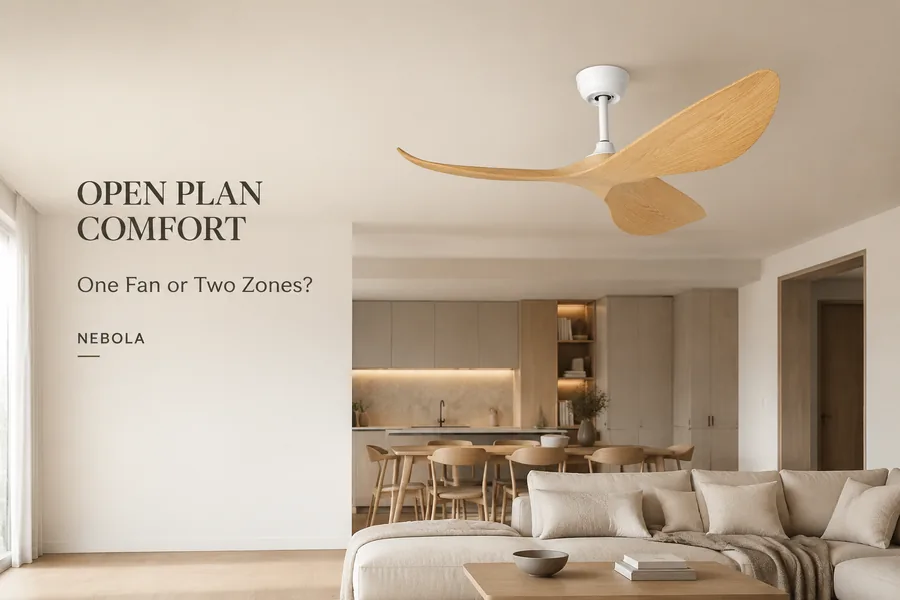
An open concept living room rarely behaves like one simple room. A sofa area, dining corner, kitchen island and walkway can all sit under the same ceiling, but they do not always need the same airflow. That is why choosing a living room ceiling fan for an open plan space starts with zones, not just square footage.
In many homes, one well-placed fan is enough. In long, wide or split-use rooms, two ceiling fans in living room layouts can feel more comfortable than one oversized fan trying to do everything. The goal is not to fill the ceiling with products; it is to move air where people actually sit, eat and relax.
1. Should an Open Concept Living Room Use One Fan or Two?
1-1. Start with the occupied zones
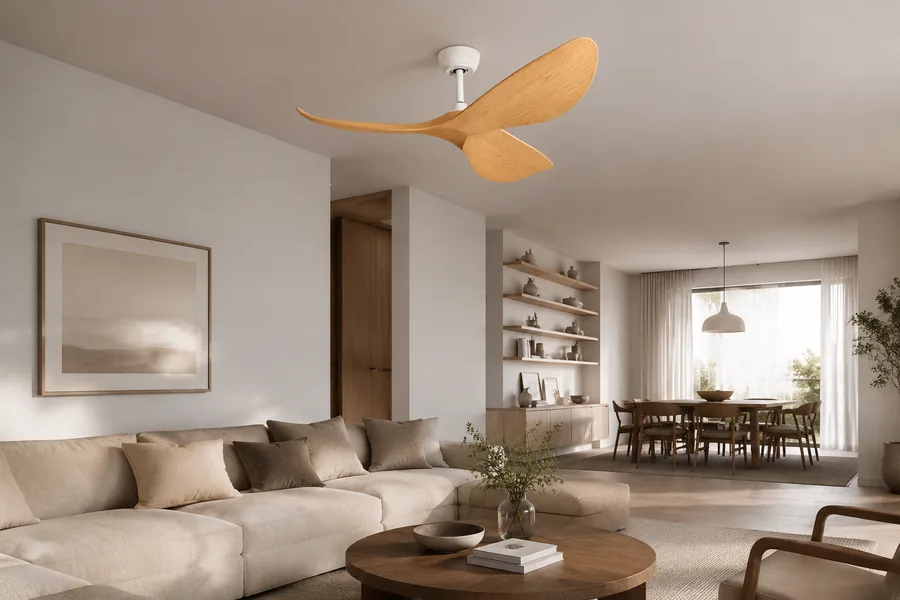
A ceiling fan for open concept living room layouts should serve the places where people spend time. If the sofa zone is the only regular seating area, one central fan above that zone can be enough.
If the dining area, kitchen island or second sitting area is used daily, the room may need a second fan or a different airflow strategy. A single fan at the centre of the ceiling can look balanced but still miss the actual comfort zones.
1-2. One fan works when the room has one clear centre
One fan is usually suitable when the open plan living room is medium sized and furniture forms one main group. A 52 inch wood ceiling fan without light can suit a clean living zone where the room already has separate lighting.
This approach keeps the ceiling calm and avoids the visual weight of multiple fixtures. It also makes remote control, wiring and maintenance easier for homeowners and project buyers.
1-3. Two fans work when the room has two real activity areas
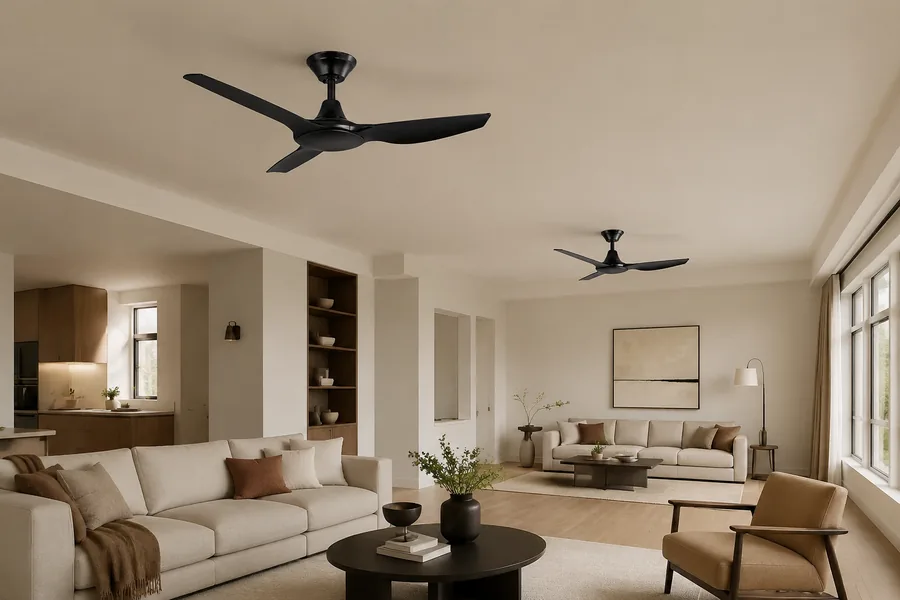
Two fans can make sense when the room is long, rectangular or split into living and dining zones. In that case, asking how many ceiling fans for large room comfort is really asking how many occupied zones need air movement.
The two fans should be spaced by layout, not by guesswork. They need enough distance from walls, beams, pendant lights and each other so the ceiling still feels planned.
2. How Should Room Size Affect the Fan Count?
2-1. Square footage is only the first filter
Large square footage can suggest a larger fan or two fans, but it does not answer the full question. A square 260 sq ft room may work with one fan, while a narrow 260 sq ft open plan may feel better with two smaller fans.
Use square footage to narrow the size range, then use room shape and furniture placement to decide the fan count. This keeps the decision practical instead of formula-based.
2-2. Compare fan span with the comfort zone
A fan cools best when its airflow reaches the people below it. If the seating zone is compact, a medium fan can feel better than a huge fan centred far away from the sofa.
For size comparisons, the guide to 42 vs 48 vs 52 vs 56 vs 60 vs 72 inch ceiling fans is useful because blade span should follow both room width and comfort coverage.
3. Does an Open Plan Layout Need Even Airflow Everywhere?
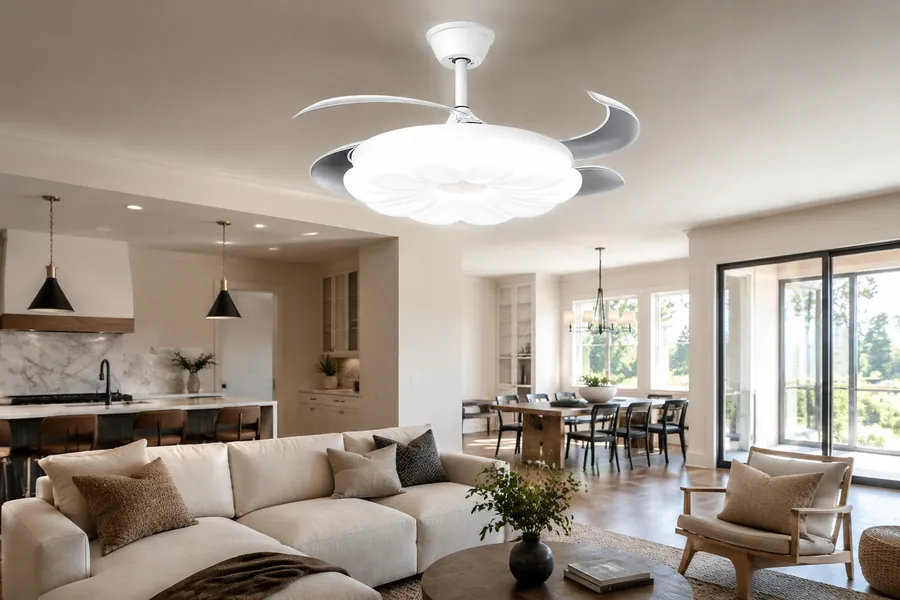
3-1. Comfort does not need to be identical in every corner
Open plan rooms often include spaces that are not occupied for long periods, such as walkways or cabinet areas. These parts do not need the same direct airflow as the sofa or dining table.
This is why one fan can be enough even when the total room looks large. The fan should support daily comfort rather than chase perfect air movement across unused corners.
3-2. Thermal comfort depends on more than fan count
Air speed, clothing, temperature, humidity and activity level all affect comfort. The HSE overview of thermal comfort is a useful reminder that airflow is one part of the comfort picture, not the only variable.
For a ceiling fan for open plan living room projects, this means buyers should also consider window exposure, AC use, ceiling height and how often each zone is occupied.
4. When Is One Large Ceiling Fan Better?
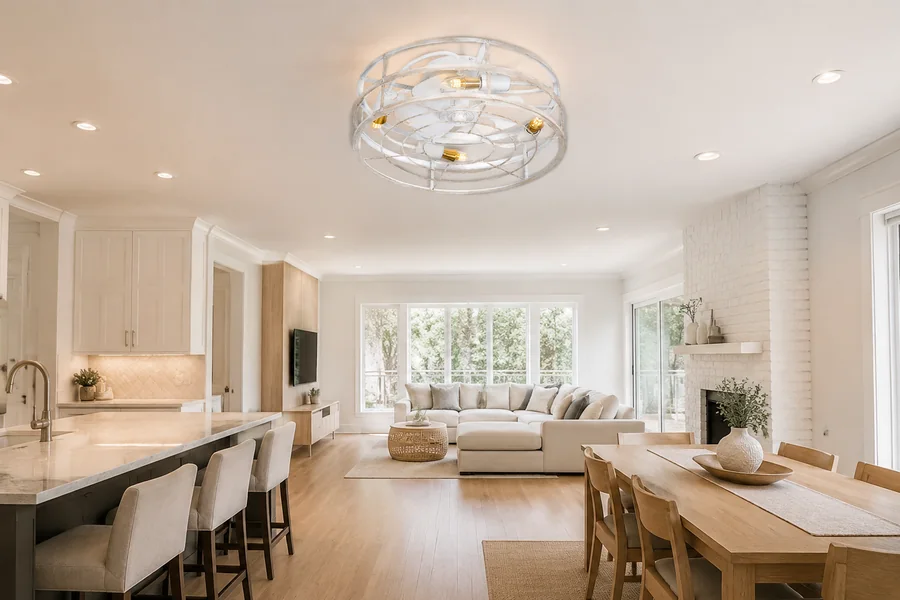
4-1. Use one large fan for one wide central zone
One large fan is often better when the main living area is broad, open and visually centred. It can give the ceiling one strong focal point without making the space feel busy.
If you are deciding between one large ceiling fan and two smaller fans, the article on one large ceiling fan or two smaller fans gives a more detailed comparison for large rooms.
4-2. Do not use one large fan to fix a long room
A very large fan can still leave weak airflow at the ends of a long open room. It may also look too dominant if the ceiling height is only standard.
For a decorative central living area, a champagne gold crystal chandelier fan can work when the fan is meant to be a design feature, but the room still needs enough height and width to support it.
5. When Are Two Ceiling Fans in a Living Room Better?
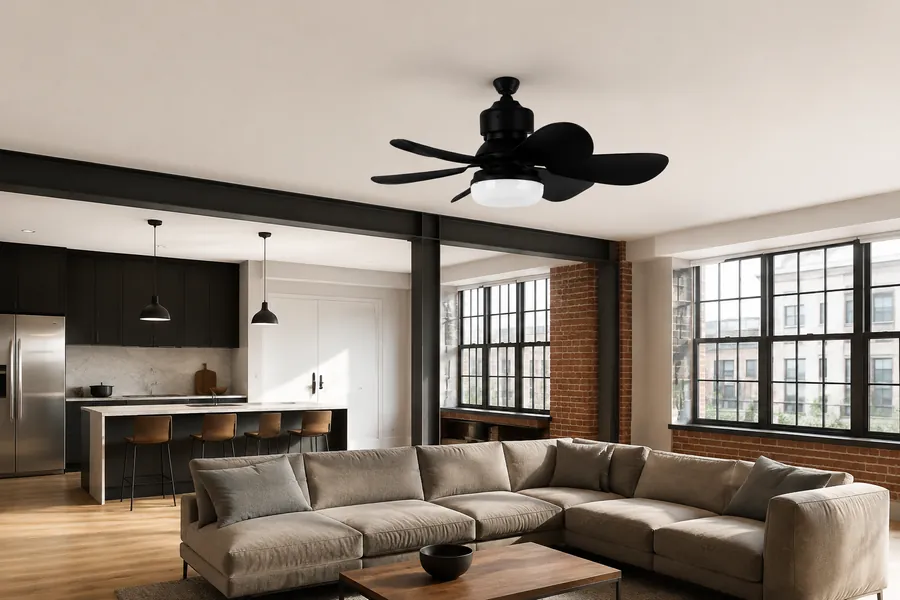
5-1. Use two fans for long or split rooms
Two ceiling fans in living room layouts are useful when the sofa and dining area are both used regularly. Each fan can run at a lower speed, which often feels calmer than forcing one large fan to run harder.
This setup is also helpful when the room has beams, partial walls or a long kitchen-living layout. Each fixture can be aligned with a real zone instead of fighting the architecture.
5-2. Keep the two fans visually related
Two fans do not need to be identical in every detail, but they should belong to the same design language. Matching finish, blade colour or motor shape keeps the ceiling from looking like a showroom sample wall.
For long open spaces, slim products such as an ultra-thin 52 inch LED DC ceiling fan can reduce visual weight while still giving each zone airflow.
6. How Does Ceiling Height Change the Answer?
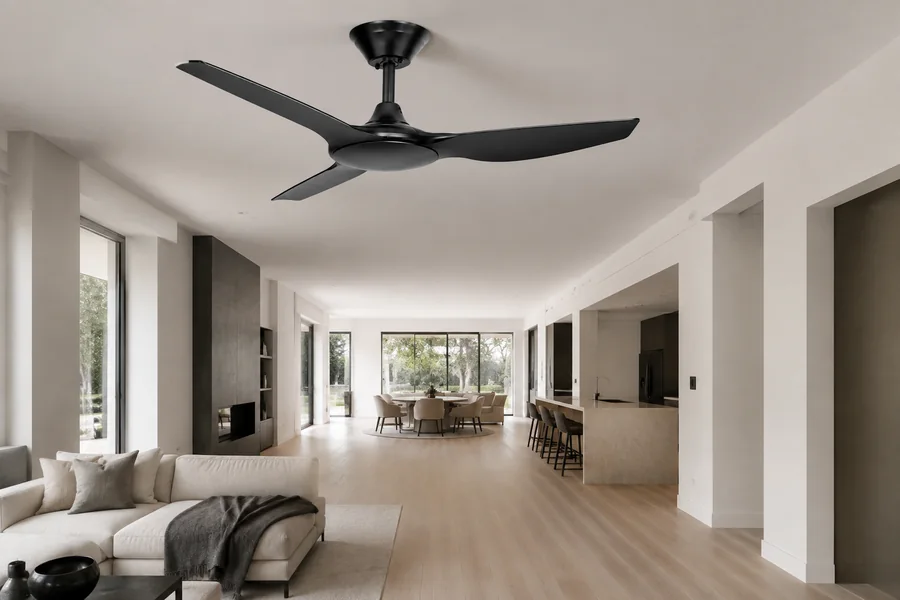
6-1. Standard ceilings need restraint
On standard ceilings, adding two large fans can quickly make the room feel crowded. The blades need safe clearance from the floor, furniture, cabinet doors and nearby lights.
If the ceiling is low or the open plan includes a transition corridor, an ultra-thin flush mount fan light may be better than a hanging fan in that secondary zone.
6-2. High ceilings can support larger spans
High ceilings give more freedom, but the fan still has to sit low enough to move air through the occupied zone. A fan mounted too close to a tall ceiling may look impressive but feel weak below.
For high ceiling rooms, the guide on great room ceiling fan size explains why height and airflow should be planned together.
7. How Should Furniture Layout Guide Fan Placement?
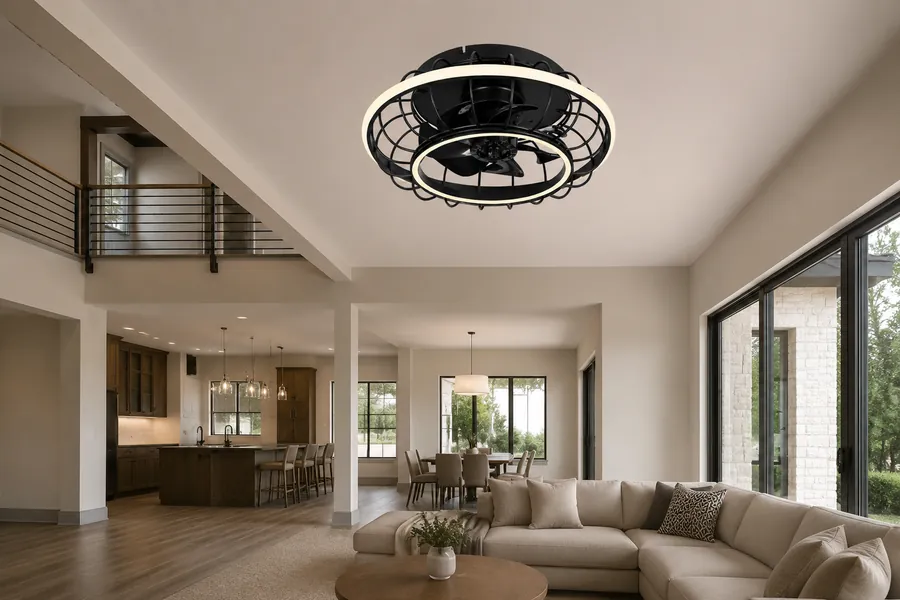
7-1. Place the fan over people, not empty floor
The best fan position is usually above the main seating group, dining table or activity zone. A fan placed in the geometric centre of the open space can miss the real use area.
Before choosing the count, sketch the sofa, dining table, island, walkway and TV wall. If two occupied zones sit far apart, two smaller fans may be more comfortable than one central fan.
7-2. Avoid conflicts with lights and beams
Open concept rooms often use pendants over islands, recessed lights, beams and sloped ceiling details. Fan blades need enough distance from these elements so the installation looks intentional and operates safely.
A good layout leaves breathing room around the fan. It should not fight the main chandelier, block cabinet doors or sit too close to a pendant row.
8. How Do Noise and Controls Affect Multiple Fans?
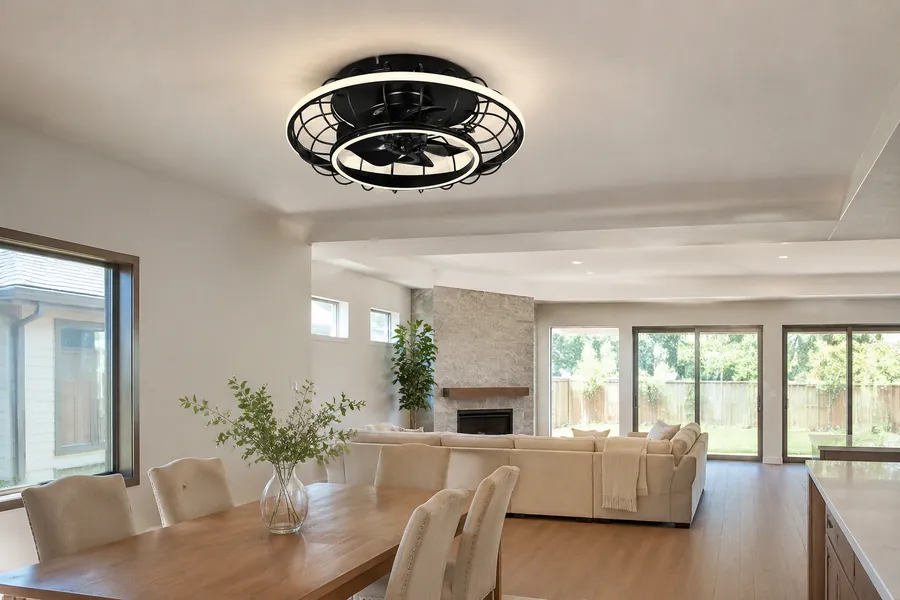
8-1. Lower speed often feels better
Two fans running gently can be more pleasant than one fan running at high speed. Lower speed usually reduces wind noise and makes the room feel calmer during meals, calls or evening use.
This is especially important in open plan homes because noise travels easily between the kitchen, sofa and dining area. DC motors and balanced blades are worth checking before purchase.
8-2. Separate control by zone
If two fans are installed, each zone should be easy to control separately. A dining area may need the fan off while the sofa area needs gentle airflow.
For retail or project planning, explain the control logic clearly. Buyers should understand whether the fans use separate remotes, wall switches or smart grouping.
9. What Mistakes Should Open Plan Buyers Avoid?
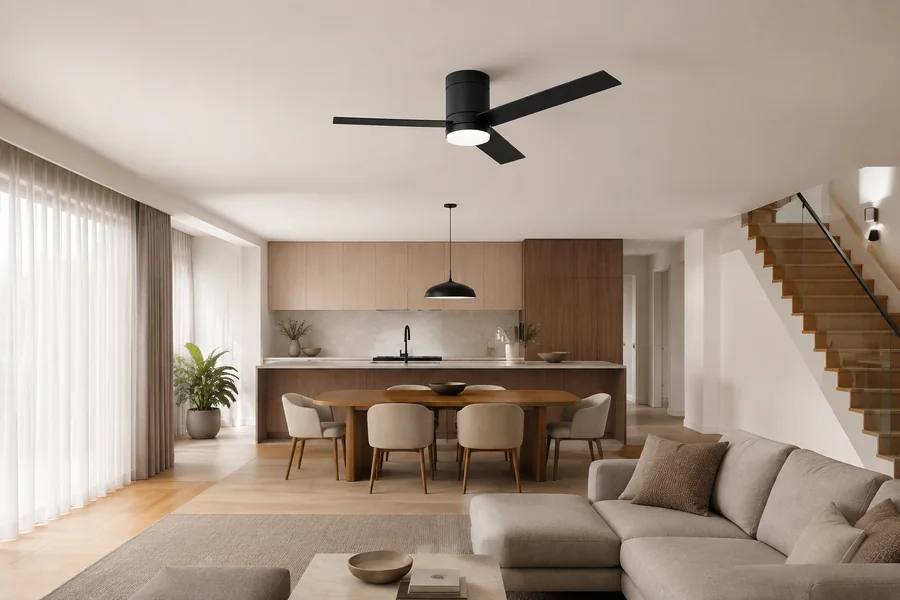
9-1. Avoid choosing by total room size only
The most common mistake is treating the whole open plan as one rectangle. This often leads to a fan that is too large, poorly placed or visually heavy.
A better method is to mark comfort zones first, then choose fan count and blade span. The guide on choosing a fan for a large living room is helpful when the living area is wider than normal.
9-2. Avoid mixing too many styles
Open rooms are visually connected. If one fan is rustic, one is crystal, and one is ultra-modern, the ceiling can feel disjointed even if each product looks good alone.
Choose one design direction and use size or mounting differences only when the room truly needs them. This keeps the open plan calm and easier to furnish.
10. What Is the Practical Decision Rule?
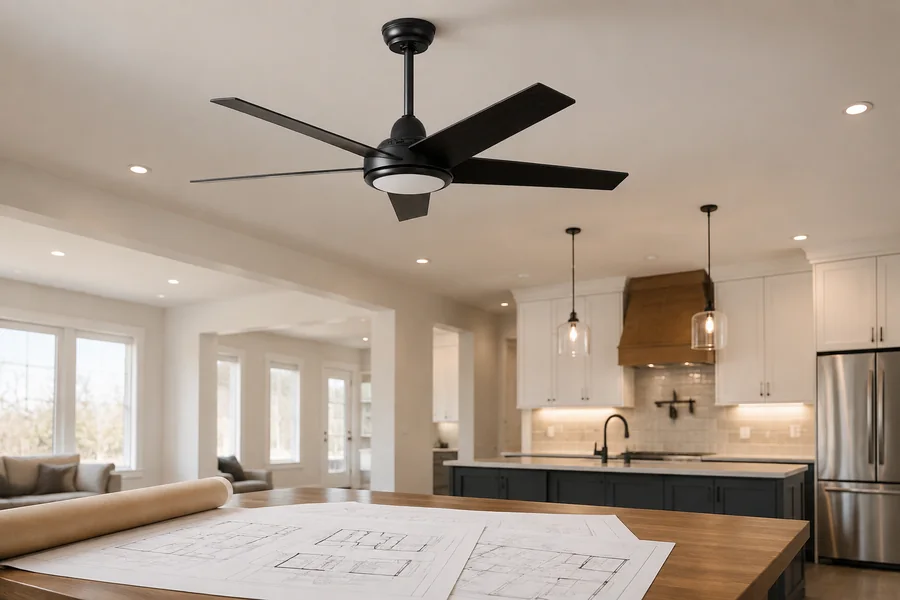
10-1. Choose one fan when the living zone is clear
Choose one fan when the sofa group is the main comfort target, the room is not too long, and the ceiling can support the fan size visually. In this case, one good fan is cleaner than two unnecessary fixtures.
If the room is around the standard living room range, the article asking is a 52 inch ceiling fan big enough can help narrow the first decision.
10-2. Choose two fans when comfort zones are separate
Choose two fans when the open concept living room has two daily-use zones that are far enough apart. The fan count should follow real behaviour: where people sit, eat, talk and work.
For larger comparisons, review 60 inch vs 72 inch ceiling fans before deciding whether one larger product or two smaller products makes more sense.
10-3. Keep the final range easy to explain
For retailers and project buyers, the answer should be simple enough for sales teams to explain. One fan for one central zone; two fans for two real zones; larger fans only when ceiling height, room width and style support them.
For more living room ceiling fan options, start from the living room ceiling fan category and compare the fan by room role instead of only by appearance.
If you are looking for a better ceiling fan light solution for your project, NEBOLA can provide one-stop support from product selection to customization. We focus on ceiling fan light R&D and manufacturing, helping brands, importers, and distributors find products that better match real space needs.
Need Help Choosing the Right Ceiling Fan Light?
Tell us your room size, ceiling height, lighting needs and project plan. NEBOLA can help match the right fan light style and configuration.
Get a QuoteFAQ About Open Concept Living Room Ceiling Fans
Can one ceiling fan work in an open concept living room?
Yes, one ceiling fan can work when the sofa area is the main occupied zone and the room is not too long or split into separate daily-use areas.
Should a large open plan living room use two ceiling fans?
Yes, two ceiling fans can be better when the living and dining zones are both used often and sit far enough apart that one fan cannot cover both comfortably.
Is one oversized ceiling fan always better than two smaller fans?
No, one oversized fan is not always better because long rooms and separated zones may still have weak airflow at the edges.
Can two ceiling fans look too busy in one living room?
Yes, two fans can look too busy if the room is small, the ceiling is low, or the two products have unrelated styles and finishes.
Should fan placement follow the centre of the whole room?
No, fan placement should follow the real seating or dining zone rather than the geometric centre of the open plan layout.
Can NEBOLA support open plan fan selection for projects?
Yes, NEBOLA can help compare fan span, mounting depth, motor options and lighting configurations for open plan living room projects.