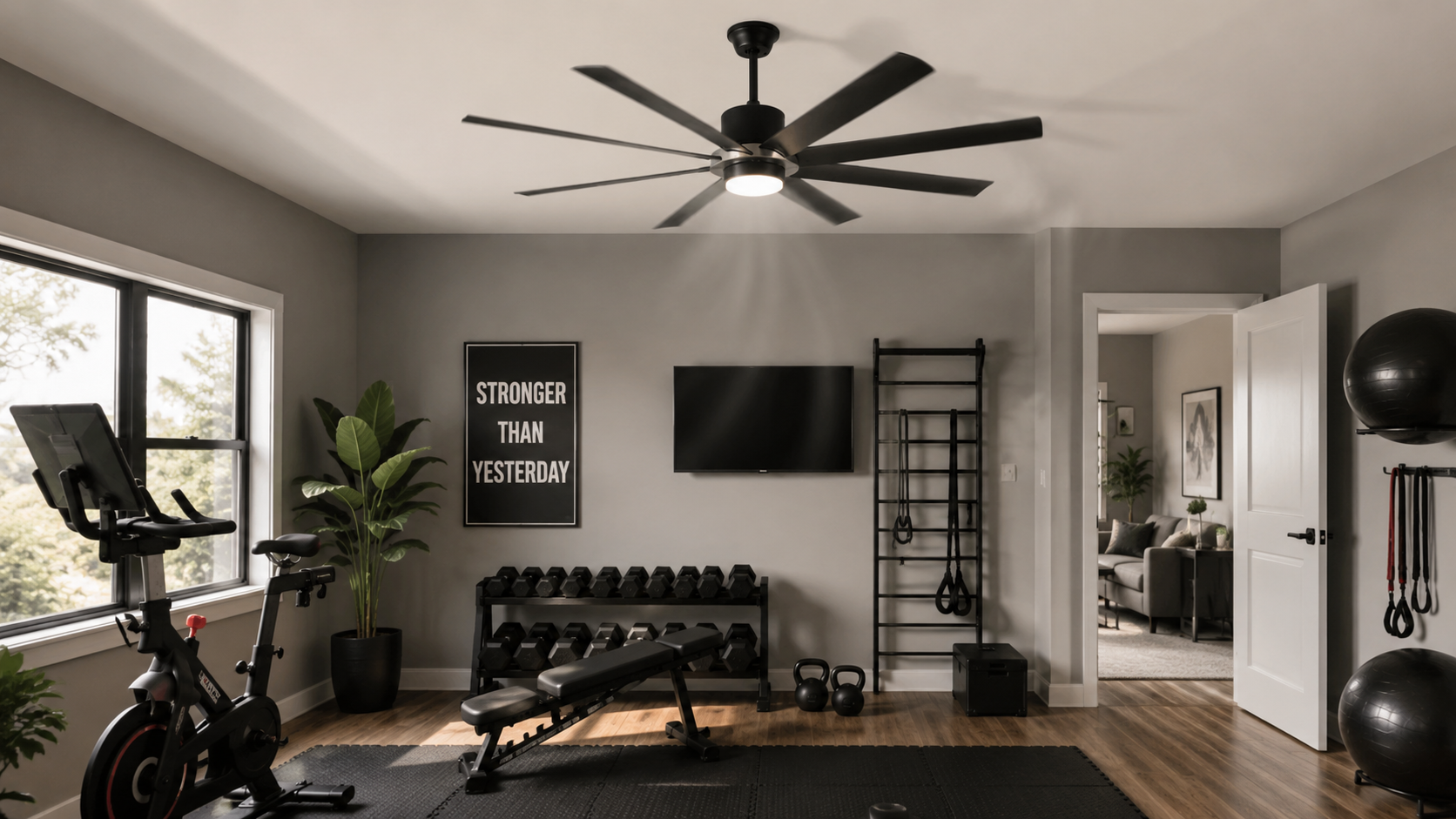


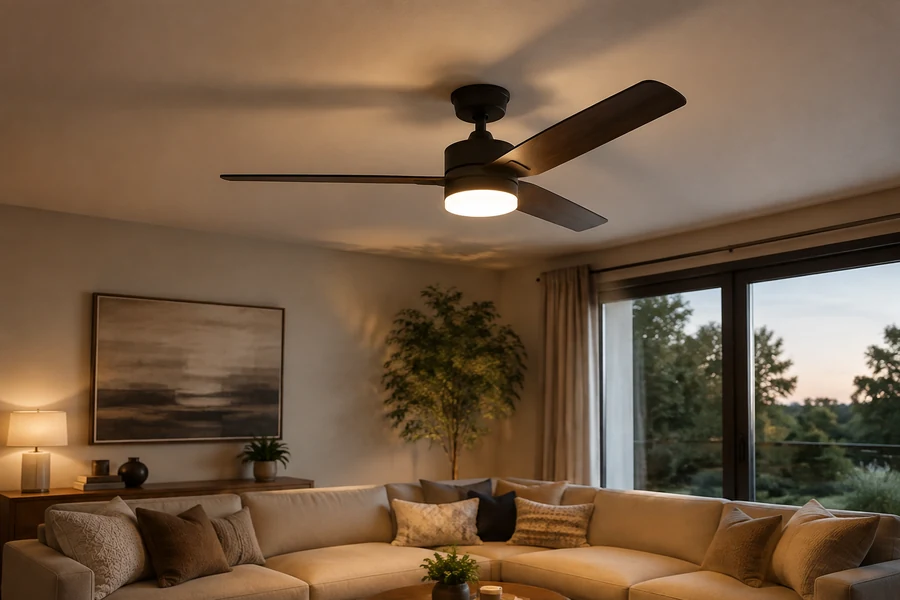
A quiet living room ceiling fan should disappear into the room, not compete with the TV, conversation, reading time, or an open kitchen nearby. If you are comparing ceiling fan noise level claims, the useful question is not just whether a listing says silent ceiling fan. You need to know what the dB number means, where it was measured, and whether the motor, blades, mounting, and installation can stay quiet after the fan is actually installed.
For most living rooms, a quiet DC ceiling fan is often the better direction because a DC motor can run smoothly at low speed, use less power, and offer more speed steps. But even a good motor can become annoying if the blades are unbalanced, the canopy vibrates, or the fan is too small and has to run at high speed all evening. If you are still comparing sizes and room layouts, start with our living room fans collection before choosing a final model.
What Does Ceiling Fan dB Mean in a Living Room?
How should you read a ceiling fan dB number?
A ceiling fan dB rating is a sound level measurement, but it is only useful when you know the test condition behind it. A fan measured at low speed in an open test room will sound different from the same fan at high speed in a living room with a hollow ceiling, a loose electrical box, or echoing hard floors.
A dB number is useful, but it is not the whole listening experience. Two fans can test close on paper while one produces a smooth low hum and the other produces a sharper motor tone. In a living room, that difference matters because you are usually sitting, talking, or watching TV rather than standing under the fan for a few seconds.
The room also changes how noise feels. Soft curtains, fabric sofas, and rugs can absorb some sound, while hard floors, glass doors, and empty walls can make the same fan feel louder. That is why we look at both the fan’s published noise level and the surfaces around the seating area.
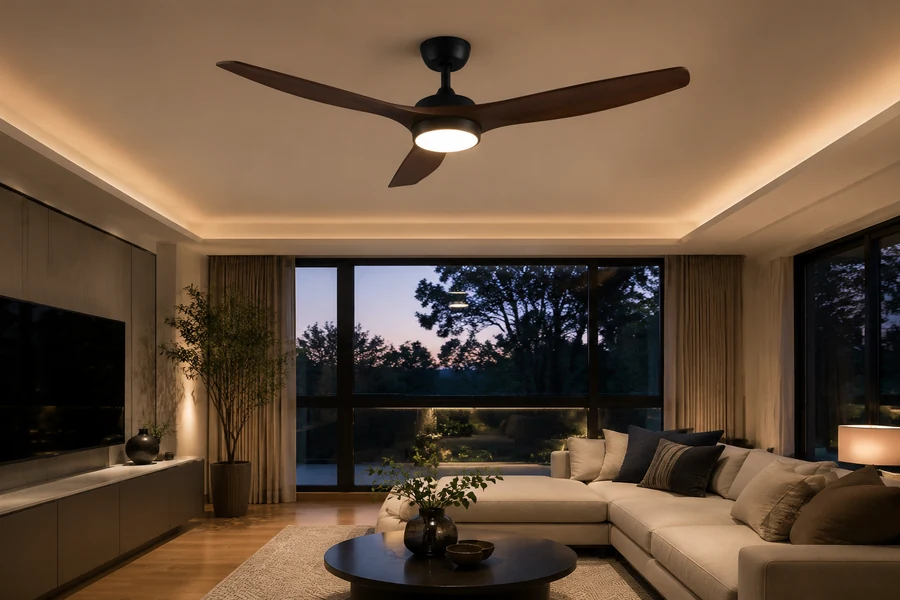
When you see a low ceiling fan dB claim, treat it as a starting point rather than a guarantee. Ask which speed was measured, how far the microphone was from the fan, whether the light kit was attached, and whether the value includes motor hum, blade movement, and receiver noise.
Why does a small dB difference feel bigger than it looks?
Sound is not experienced like a ruler. A few dB can feel more noticeable when the room is quiet, especially at night or when you are watching dialogue on TV. That is why a living room fan that seems acceptable in a showroom can feel distracting at home if it has a tonal hum or clicking sound.
| Sound reference | What it means | Use case |
|---|---|---|
| Below 30 dB | Very quiet | Good for low-speed use |
| 30-40 dB | Usually OK | Listen for hum or buzz |
| 40-50 dB | May interrupt reading or TV | Avoid for quiet rooms |
| 85 dBA and above | NIOSH treats this as occupational noise risk over time | Use only as a dBA reference |
When you compare dB claims, ask whether the number was measured at low, medium, or high speed. A quiet low-speed figure is useful for evening comfort, but it does not tell you how the fan behaves when the room is warm and the speed increases.
You should also notice the character of the sound. A smooth air sound can fade into the background, while a narrow hum or clicking pattern remains noticeable even when the measured dB number looks acceptable.
For a product page, it is better to describe noise with context instead of one isolated number. Mention speed level, motor type, room use, and installation stability so the buyer understands what quiet living room use really means.
Why Does a Quiet DC Ceiling Fan Usually Feel Better?
How does a DC motor reduce living room noise?
A quiet DC ceiling fan usually has smoother speed control and more low-speed options than a basic AC motor fan. In a living room, that matters because you may want gentle air movement for several hours rather than strong airflow for a short burst.
A DC motor ceiling fan often feels calmer because it can run with finer speed control. Instead of jumping from too weak to too strong, it can stay in the comfortable middle. That makes it easier to keep airflow moving without pushing the fan into a speed range where blade noise becomes obvious.
The benefit is strongest when the fan is sized correctly. If the fan is too small, even a quiet DC motor may have to work harder. If the fan is too large for a compact room, the lowest speed may still feel too forceful. Quiet comfort comes from the motor, the blade span, and the room working together.
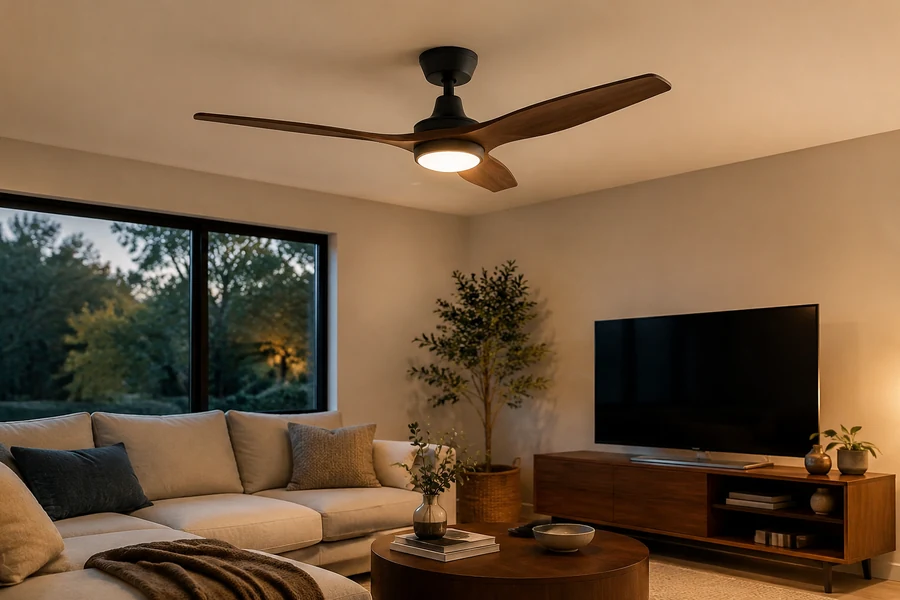
You should still check the full product build, not only the motor type. A DC motor helps, but blade balance, driver quality, receiver placement, canopy fit, and ceiling box support decide whether the final installation feels calm.
When does motor noise become more noticeable?
Motor noise becomes easier to notice when the fan runs above a seating area, near a TV wall, or in an open plan living room where the fan sound travels into the dining or kitchen area. If your living room is used for calls, reading, or late-night TV, low-speed smoothness matters more than maximum airflow.
The main advantage of a DC motor is control at the low end. In a living room, that means you can run the fan gently while reading, eating, or watching TV instead of jumping between only a few strong speed levels.
A DC motor also gives brands more room to design a comfort curve. The lowest speeds should feel useful, not symbolic, because living room users often want continuous background airflow rather than a short blast of air.
Still, a DC label is not a magic guarantee. If the blades are poorly balanced or the canopy fit is loose, the final fan can still vibrate, so the motor should be checked together with the whole assembly.
Which Living Room Details Make a Fan Sound Louder?
How do ceiling materials affect fan noise?
Hard ceilings, large windows, tile floors, and minimal soft furniture can make fan noise feel sharper. The fan may not be louder in a technical sense, but the room reflects more sound back to you.
Placement matters more than many people expect. A fan above a sofa or reading chair is closer to your ear than a fan centered over open floor. If the room is quiet at night, even a small vibration can become distracting when it sits directly above the main seating position.
Ceiling structure also matters. A fan-rated box, a firm bracket, and balanced blades can keep the sound controlled. If the ceiling box flexes or the canopy touches unevenly, the fan may create a small rattle that is not really a motor problem at all.
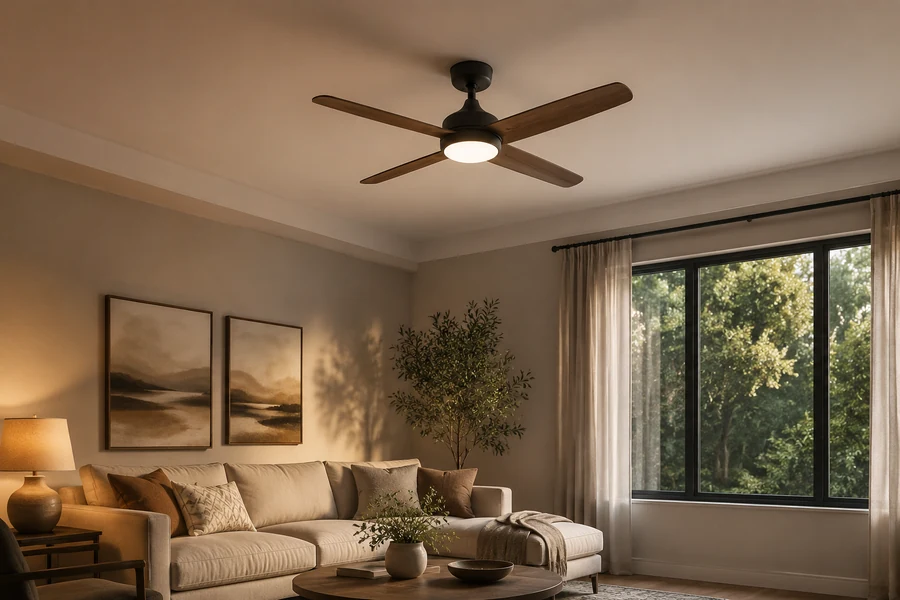
If your room already echoes, choose a quiet ceiling fan for living room use with a stable body, balanced blades, and enough size to avoid constant high-speed operation. A larger, slower fan often feels quieter than a smaller fan forced to spin quickly.
Why does installation quality matter so much?
Many fan noise complaints are installation problems rather than product problems. A loose mounting bracket, non-fan-rated ceiling box, uneven blade set, or receiver squeezed into the canopy can create tapping, buzzing, or vibration.
A room with tile floors, large glass doors, and little fabric can make small sounds feel sharper. In that kind of living room, choose a fan that can run at lower speed and avoid models that depend on fast RPM for comfort.
Furniture placement matters too. If the main sofa is directly below the motor, even a small hum can feel closer to the ear. If the fan is centerd over open floor, the same sound may be less intrusive.
That is why one sample-room test is not enough. Try to imagine the fan in the quietest customer room, because that is where noise complaints are most likely to appear.
How Should You Compare Quiet Fan Specifications Before Buying?
Which noise details should you ask the supplier for?
Ask for the ceiling fan noise level by speed if possible, not only one marketing number. Low speed, medium speed, and high speed tell different stories. Low speed tells you whether the fan can run quietly for daily use; high speed tells you whether the fan becomes harsh when the room is warm.
When you compare specifications, check the test condition behind the number. A dB value at low speed is not the same as a dB value at high speed. Distance matters too. A fan measured from farther away will look quieter than one measured near the fixture, so the test setup should be clear.
We would also compare airflow at the same time. A fan that is quiet because it barely moves air is not a good living room solution. The better fan is quiet while still creating enough movement across the seating zone at a speed you can actually use every day.
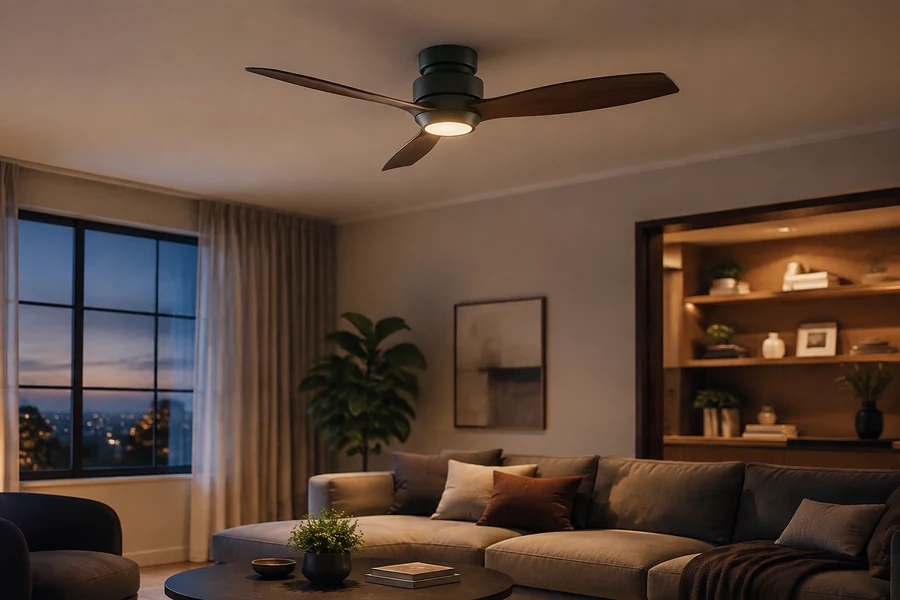
You can use NIOSH noise guidance as general context for dBA scale and exposure, but a living room fan should sit far below hazardous noise concerns. The goal is comfort, not only safety.
Which non-noise specs still affect quietness?
Blade span, blade pitch, RPM, motor type, control system, and installation height all affect how often the fan must run at higher speeds. If the fan is sized correctly, you can use lower speeds more often, which usually keeps the room quieter.
Ask the supplier for practical noise information by speed level, not only a best-case claim. If the supplier cannot explain how the value was tested, treat the number as marketing language rather than a dependable buying standard.
You should also compare airflow and noise together. A fan that is quiet because it barely moves air is not solving the living room comfort problem, while a strong fan that is always loud may not suit daily use.
A useful sample test is simple: run each fan for ten minutes at the likely daily speed, then switch speeds while standing in the seating zone. Listen for hum, clicking, receiver buzz, blade noise, and canopy vibration separately.
A useful comparison also separates mechanical noise from air noise. Mechanical noise is the hum, buzz, or vibration that can make a fan feel low quality. Air noise is the sound of blades moving air. In a living room, mild air movement can be acceptable, but mechanical sound is harder to ignore because it does not feel connected to comfort.
Ask whether the specification supports real low-speed living. If a fan only feels useful at high speed, the dB number at low speed will not help much. A good quiet fan should create enough comfort at a speed where conversation, TV, and evening use still feel natural.
How Can You Match Quiet Fan Features to a Living Room?
Which product type suits quiet daily airflow?
For a living room where you want steady background airflow, a quiet indoor DC fan is a practical starting point. It suits projects where the fan is used every day and the buyer cares about simple control, stable operation, and comfortable air movement.
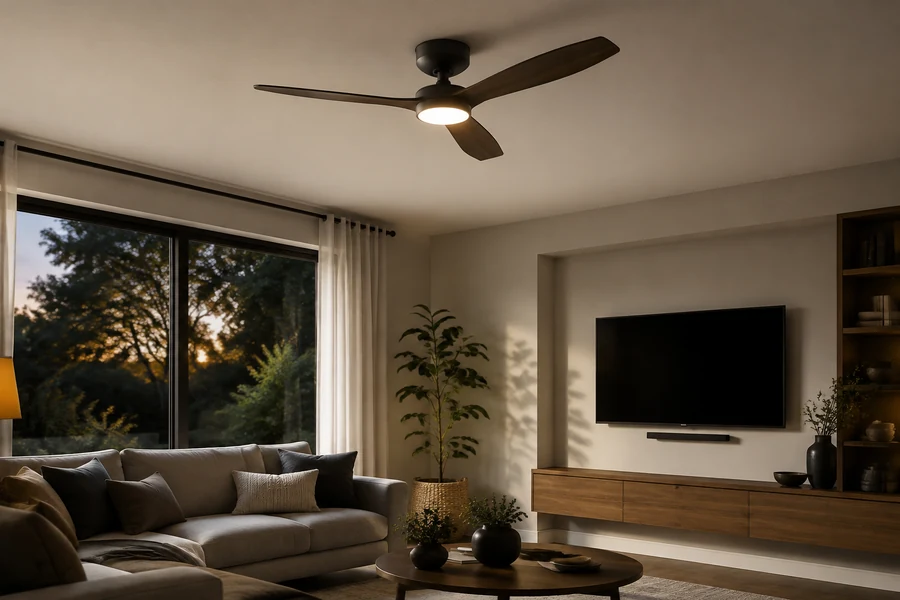
If the ceiling is clean and modern, a low-noise 52 inch DC fan can work well in standard living rooms that need a balanced look. For spaces that already have strong lighting, a wood no-light fan can reduce visual clutter and avoid light-kit vibration concerns.
How should importers compare quiet fan samples?
If you are sourcing for a brand or project, test samples at the speeds customers actually use. Do not only test maximum speed. Sit under the fan, stand near the room edge, switch speeds several times, and listen for hum, clicking, canopy vibration, and receiver noise.
For NEBOLA sample checks, quietness is treated as a combined result of motor platform, blade balance, body structure, receiver placement, and installation method. That makes the conversation more practical than only asking whether the motor is DC.
If your customers care about quiet living rooms, choose models that can deliver comfort at low and medium speeds. The product should not depend on maximum speed to feel useful in a standard room.
For OEM/ODM projects, quietness should also be written into the product brief. That helps the factory, sales team, and buyer discuss the same target instead of using vague phrases such as silent or premium without a test method.
How Do Size and Blade Pitch Change Perceived Noise?
Why can an undersized fan sound louder?
An undersized fan often needs to run faster to make the room feel comfortable. That higher speed can increase blade sound and make the motor more noticeable. In many living rooms, choosing the right blade span is one of the easiest ways to keep sound down.
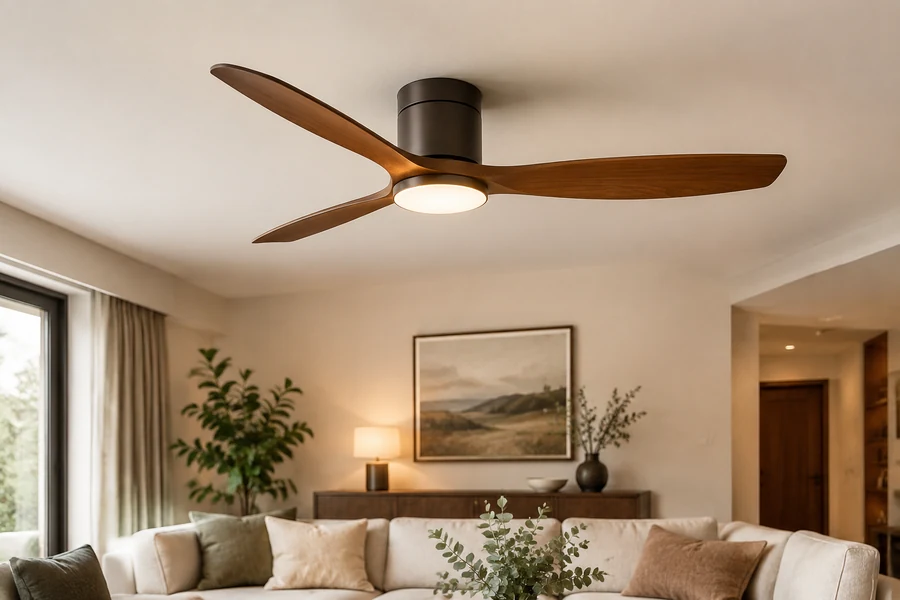
Use the fan size comparison and large room fan sizing guides if you are not sure whether your living room needs 52, 56, 60, or a larger span.
How does blade pitch affect sound?
Blade pitch changes how the blade moves air. A well-designed blade can move useful air at a moderate speed, while a poor blade may need more RPM and create more sound. For a deeper airflow explanation, compare the blade pitch guide.
A larger fan is not automatically quieter, but correct sizing often lets the fan work less aggressively. When the blade span matches the seating area, you can usually stay in lower speed ranges for longer periods.
Blade pitch adds another layer. A blade that moves air efficiently at moderate speed can feel calmer than a blade that needs high RPM to create the same comfort effect.
This is why size, pitch, and motor control should be compared together. If one of the three is weak, the fan may need to work harder, and harder work often becomes easier to hear.
What Installation Checks Keep a Living Room Fan Quiet?
What should you check before the fan is powered on?
Before the fan runs, check that the ceiling box is fan-rated, the bracket is tight, the canopy is not rubbing, the downrod pin is secure, and each blade is fixed evenly. Small installation errors can turn a quiet fan into a noisy fan.
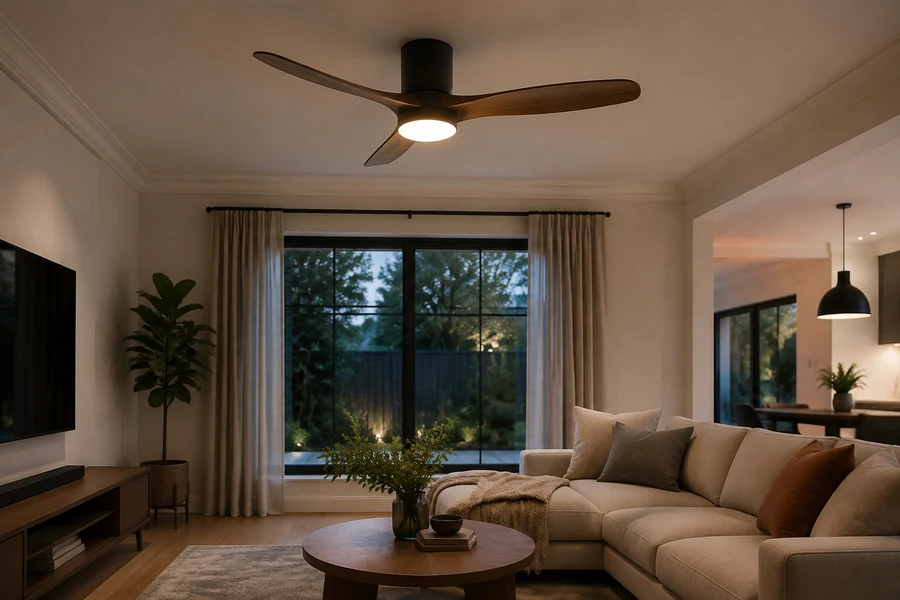
Height and mount type also matter. If you are working with low, 9-foot, high, vaulted, or cathedral ceilings, review the 8 foot ceiling fan guide, 9 foot ceiling fan mount, high ceiling fan guide, and sloped ceiling fan guide before final installation.
What should you listen for after installation?
Run the fan at each speed for several minutes. Listen for electrical hum, repeated clicking, wobble-related tapping, and canopy vibration. A smooth air sound is usually acceptable; a sharp repeated sound usually needs adjustment.
A living room is less forgiving than a utility room because people sit still and notice repeated sounds. After installation, test the fan during quiet evening conditions as well as during daytime use.
Check the ceiling box, bracket, downrod pin, canopy gap, receiver position, blade screws, and blade balance before judging the product itself. Many noise problems come from these ordinary installation details.
If a fan sounds different after a few days, inspect for loosening or slight blade movement. A quiet living room fan should remain stable after normal use, not only during the first five minutes after installation.
After installation, test the fan in the same way you use the room. Sit on the sofa, turn the TV volume low, and cycle through the speeds. If the sound appears only at one speed, the issue may be balance or resonance rather than the motor itself.
How Should You Choose a Quiet Living Room Fan With Confidence?
A quiet living room fan should not be chosen by the lowest advertised dB number alone. Start with the room itself: where you sit, how open the space is, how high the ceiling is, and how much air movement you need at low or medium speed. If the fan has to run near its highest speed to feel useful, the room will usually hear more motor tone, blade rush, and vibration.
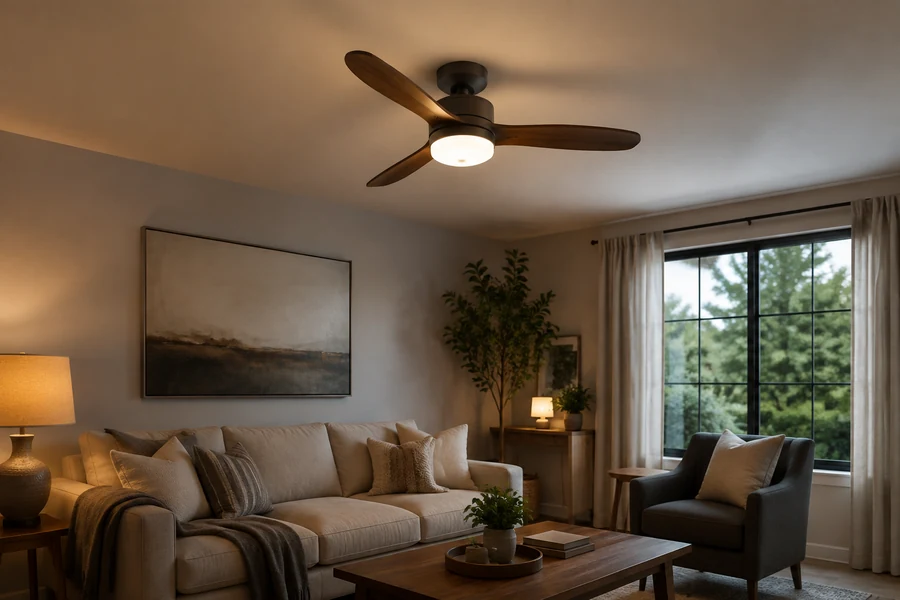
How should you judge quiet performance at home?
We would look for three things together: a stable DC motor, balanced blades, and enough blade span for the room. That combination lets you use a lower speed more often, which is where a quiet DC ceiling fan usually feels most comfortable. Also check whether the fan has a real low-speed mode, because a living room often needs soft air movement while you watch TV, talk, or relax.
Noise can also come from installation. A loose canopy, a ceiling box that is not fan-rated, or a downrod that is not tightened well can make even a good fan sound cheap. Before you blame the fan, check the mount, blade screws, and balance kit. A quiet fan is partly a product choice and partly an installation result.
What should you check before you decide?
Choose the quietest fan that can still move enough air for your actual seating zone. If you are still comparing size, ceiling height, or coverage, the living room fans page can help you keep noise, airflow, and room fit in the same decision instead of treating dB as a separate spec.
If you are looking for a better ceiling fan light solution for your room or project, NEBOLA can support you from product selection to customization. We focus on ceiling fan light R&D and manufacturing, helping you find products that match real space needs.
NEBOLA Ceiling Fan Light Support
Need a quieter living room fan direction?
Share your living room size, ceiling height, and noise concerns, and NEBOLA can help match a quieter DC fan light solution for your project.
FAQ
Is a DC ceiling fan usually quieter for a living room?
Yes, a DC ceiling fan is often quieter at low and medium speeds because it can offer smoother control and more speed steps, but installation quality still matters.
Should you trust a silent ceiling fan claim without a dB value?
No, a silent claim is too vague unless the supplier explains the tested speed, distance, motor type, and installation condition.
Can a larger living room fan be quieter than a smaller fan?
Yes, a correctly sized larger fan can often run at a lower speed, which may feel quieter than a small fan running fast.
Should a quiet ceiling fan be tested at more than one speed?
Yes, a quiet ceiling fan should be tested at low, medium, and high speed because each speed reveals a different noise pattern. Low speed shows daily comfort, medium speed shows normal warm-weather use, and high speed helps you hear whether the motor, blades, or canopy become distracting.
Can installation make a quiet ceiling fan sound louder?
Yes, installation can make a quiet ceiling fan sound louder if the ceiling box is not fan-rated, the bracket is loose, the blades are unbalanced, or the canopy touches the ceiling unevenly. If the fan sounds louder after installation than it did during sample testing, check the mount before blaming the motor.