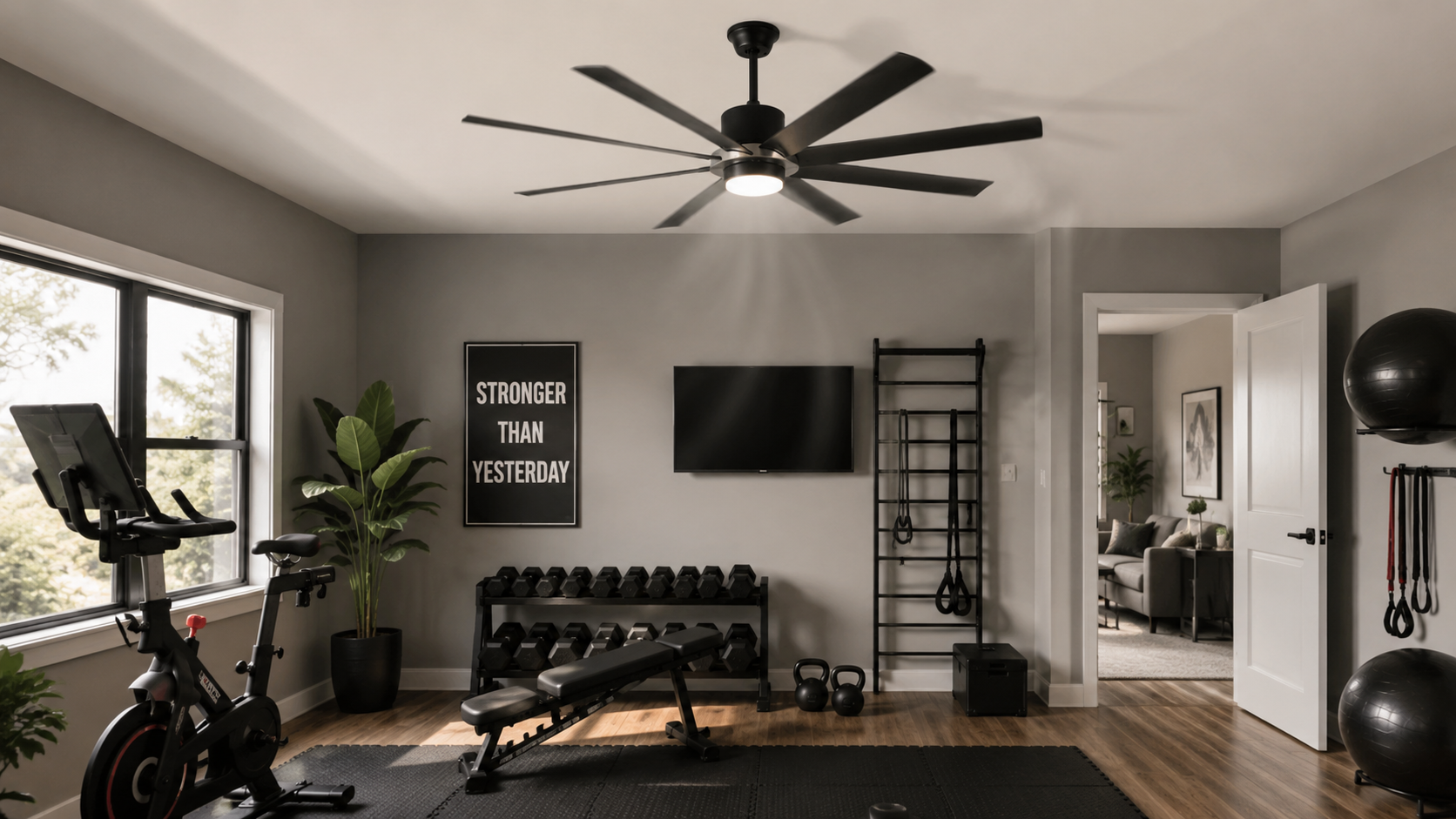


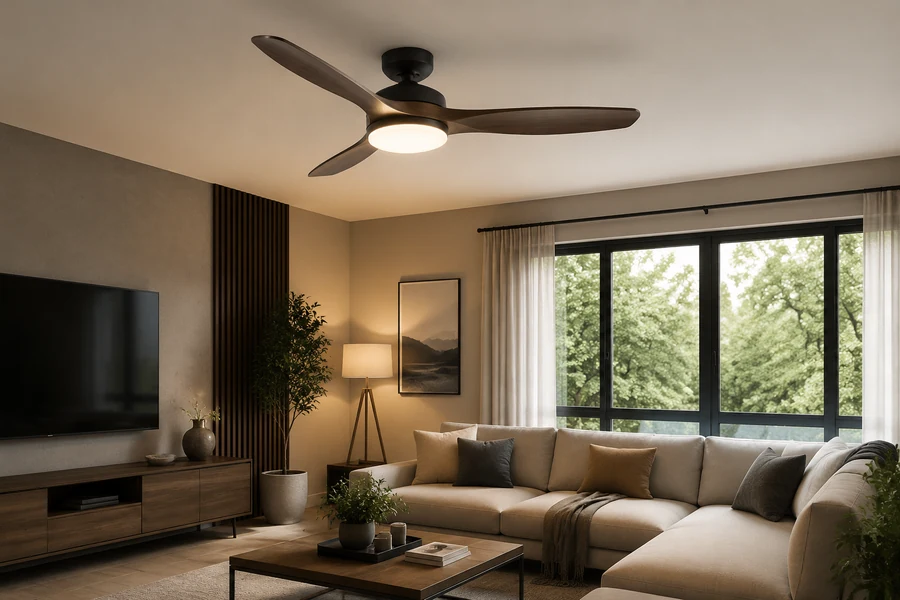
When you are buying a ceiling fan with LED light for living room use, wattage is not the best way to judge the light. Wattage tells you how much power the LED uses, not whether the room will feel bright, warm, comfortable, glare-free, or easy to control.
The six specs that usually matter more are lumens, CCT, CRI, dimming quality, diffuser design, and control logic. If those specs are weak, a fan can look bright on paper and still feel harsh in the evening. If you are comparing living room fan lights as part of a wider room plan, start with our living room fans page first.
Why Is Wattage a Weak Way to Judge LED Fan Lights?
What does wattage actually tell you?
Wattage tells you energy input. It does not tell you light output, color comfort, glare control, dimming smoothness, or whether the LED module suits your living room. Two LED fan lights with the same wattage can feel very different.
Wattage tells you how much energy the LED system uses, but it does not tell you whether the room will look good. A low-watt LED can be efficient and still feel harsh if the diffuser is poor. A higher-watt module can also be wasteful if it produces glare instead of useful room light.
For living rooms, we need to judge the whole lighting system. Lumens, CCT, CRI, dimming, beam spread, and driver quality all shape the experience. Wattage belongs in the comparison, but it should not lead the decision.
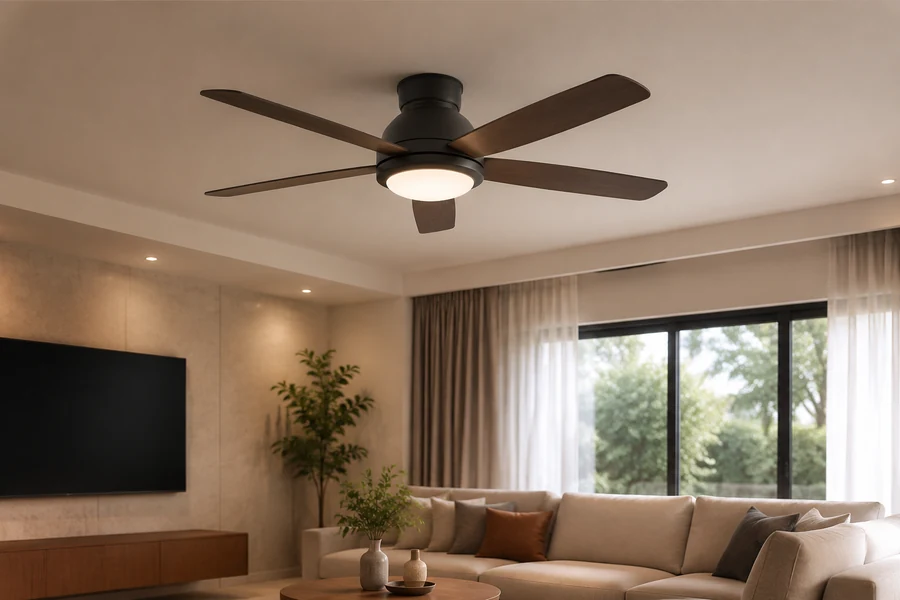
Modern LEDs can produce more light with less power than older sources, so you should move from wattage thinking to performance thinking. That is especially important in a living room where the light must support TV time, conversation, cleaning, and evening relaxation.
Why do LED fan lights need a different checklist?
A ceiling fan light combines movement, light, controls, and installation in one product. You are not only buying a lamp. You are buying a ceiling fixture that must move air quietly while producing comfortable light from the centre of the room.
Wattage was easier to understand when many buyers compared older bulbs, but LED performance is different. A lower-watt LED can outperform a higher-watt product if the module, driver, and diffuser are better designed.
For living rooms, the buyer is not trying to maximise power use. The buyer wants enough light, comfortable color, smooth dimming, and a fixture that does not glare from the centre of the ceiling.
This is why product pages should avoid treating wattage as the headline proof of quality. It can be listed, but it should not replace the lighting experience that the customer will actually notice.
Spec 1: How Many Lumens Should a Living Room Fan Light Have?
How should you read lumen output?
Lumens measure visible light output. For a living room, the right lumen level depends on room size, ceiling height, wall color, diffuser design, and whether other lights are present.
A living room fan light usually needs enough lumens to support general use without becoming the only mood layer. Smaller rooms can often use moderate output, while larger rooms may need stronger brightness or help from lamps. The important point is whether the light reaches the seating area evenly.
Dimming gives you more room to choose safely. If you choose too little output, the room may always feel dim. If you choose enough output with a smooth dimmer, you can use brighter light when cleaning or hosting and softer light when relaxing.
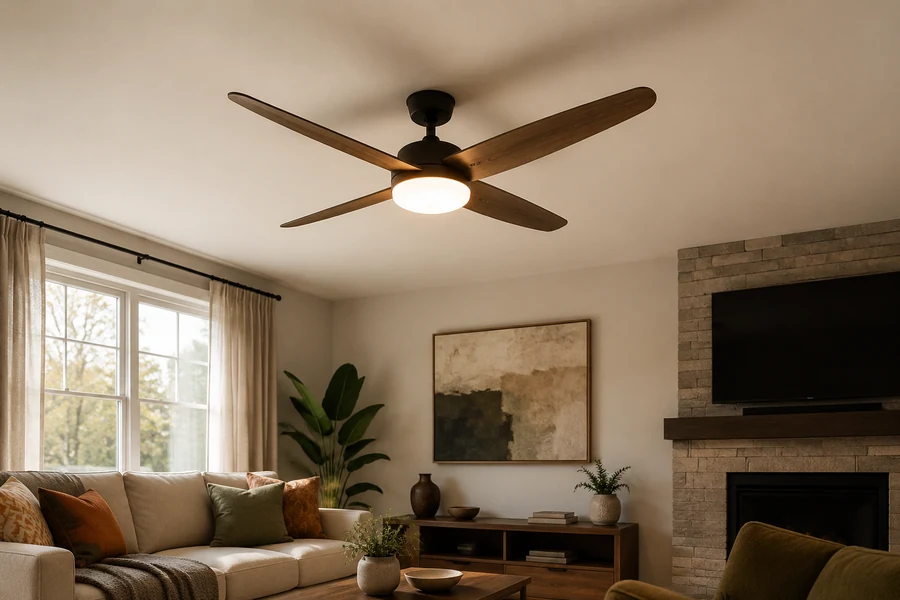
If the fan light is the main room light, you need more output and better diffusion. If it is only a support light, lower output with smooth dimming may feel better.
Why do high ceilings need extra attention?
A fan light mounted high above the floor may lose useful brightness by the time light reaches the seating area. If your living room is tall, compare the high ceiling fan guide, downrod length guide, and cathedral ceiling setup before relying on the fan light as the main source.
Lumens should be judged together with room size and other light sources. A compact room with lamps may need only support light, while a large room with one ceiling point needs stronger general illumination.
Ceiling height changes the result. A fan light mounted higher above the floor can feel dimmer at the seating area, so the same lumen number may not work equally well in an 8-foot room and a vaulted room.
For sample testing, measure the light in the room where people sit, not only directly under the fixture. This helps you understand whether the fan light fills the living area or only creates a bright spot in the centre.
For a living room, lumen planning should also consider furniture layout. A fan light above the center of the room may not fully support a sofa placed along the wall or a reading chair in the corner. If the fan light is expected to be the main source, check whether its spread reaches the areas where people actually sit and move.
Spec 2: Which CCT Feels Right in a Living Room?
What does CCT change in the room?
CCT, or correlated color temperature, changes whether the room feels warm, neutral, or cool. Warm white is usually more relaxing, while neutral white can feel cleaner and more practical.
CCT changes the emotional temperature of the room. 3000K usually feels warmer and easier for evening use, while 4000K can feel cleaner and more practical. Neither number is automatically better; the right choice depends on wall color, furniture, daylight, and how the room is used.
If the fan light has adjustable CCT, check whether the control is easy to understand. A feature is only useful if you can use it without frustration. Clear buttons, memory settings, and stable color output matter more than a long list of modes.
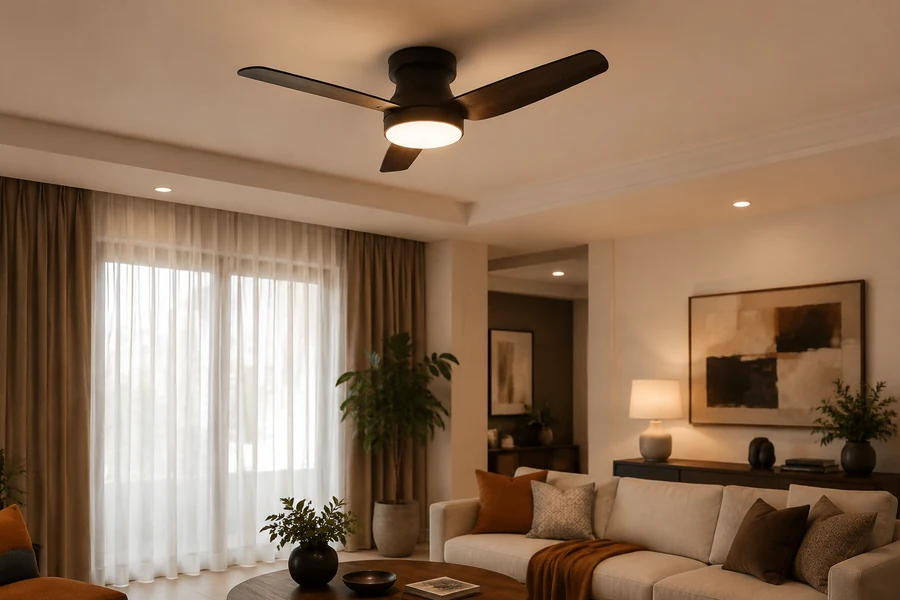
The DOE explains in its LED basics that LED light quality involves color appearance and color fidelity, not only energy efficiency. For fan lights, that means CCT should match the mood you want in the living room.
When is 3CCT useful?
A 3CCT ceiling fan light lets you choose among several color temperatures, often warm, neutral, and cool. This is useful when one product needs to serve more interiors, but the switch or remote control should be easy for homeowners to understand.
| Lighting spec | What it means | Living room buying advice |
|---|---|---|
| Lumens | Total visible light output | Match room size and other light sources |
| CCT | Warm or cool light appearance | Choose warm for relaxing, neutral for flexible use |
| CRI | Color rendering quality | Prefer good color for furniture, skin tones, and decor |
| Dimming | Brightness control | Check for flicker and smooth low levels |
| Diffuser | Glare and softness | Choose even light over harsh brightness |
| Control logic | How users adjust light and fan | Remote should separate fan speed and light settings |
CCT affects mood more than many buyers expect. Warm light usually feels relaxed and domestic, while cooler light can feel cleaner but may become harsh in a living room at night.
If a product offers 3CCT, check how easy it is to switch modes. A useful feature becomes frustrating if the user has to cycle through settings every time the wall switch is touched.
For importers, CCT preference can vary by market. Confirm the target color temperature before production, especially when the same product body will be sold under different brand labels.
CCT should also match the time of day when the room matters most. If the living room is mainly used after dinner, a warmer setting often feels easier. If it is used during the day for work, homework, or cleaning, a neutral setting may feel more useful. This is why adjustable CCT can be practical when the room has mixed uses.
Spec 3: Why Does CRI Matter More Than It First Seems?
How does CRI affect the living room?
CRI affects how natural colors look under the light. Low-quality light can make wood, fabric, wall paint, and skin tones look dull or strange. In a living room, that matters because the space is built around comfort and appearance.
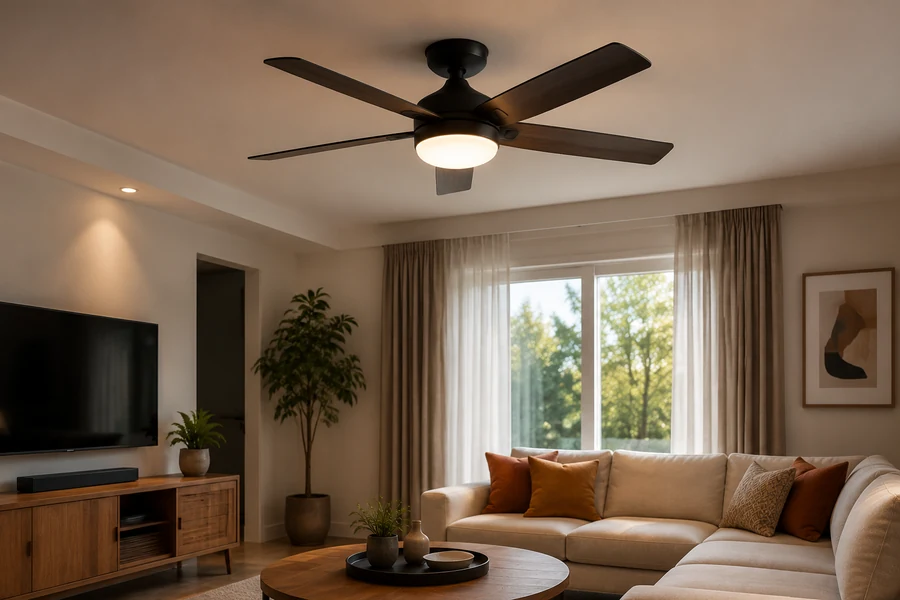
For retail buyers, CRI is also an after-sales issue. Customers may not say the CRI is poor, but they may complain that the light feels cheap, grey, or uncomfortable.
When should you ask for color rendering details?
Ask for CRI when the fan light will be used in living rooms, bedrooms, hospitality spaces, showrooms, or any interior where finish colors matter. If the product offers high CRI or better LED modules, the product page should explain it clearly.
CRI matters because living rooms contain people, wood, fabric, paint, plants, rugs, and decor. If the color rendering is weak, the room can look dull even when the light is technically bright.
Customers may not use the word CRI in a review, but they will notice when a light feels cheap or makes the room look grey. That kind of complaint is hard to fix after the product is sold.
For higher-end fan lights, ask whether the LED module supports better color rendering. It is a small specification line, but it can strongly affect perceived product quality.
CRI is easy to overlook because it does not sound as simple as wattage. But in a living room, color rendering affects almost everything you notice: the sofa fabric, wood grain, wall paint, plants, and faces. If the light renders color poorly, the room can look tired even when it is bright enough.
A better CRI does not mean the room must feel intense. It simply means colors look more believable under the LED. That is valuable when the ceiling fan light is used every night and becomes part of how the whole interior is perceived.
Spec 4: How Should Dimming Work on an LED Ceiling Fan?
Why is smooth dimming important?
Living rooms change throughout the day. You may want brighter light for cleaning, medium light for guests, and low warm light for evening TV. If the dimming jumps too much or flickers, the fan light feels less premium.
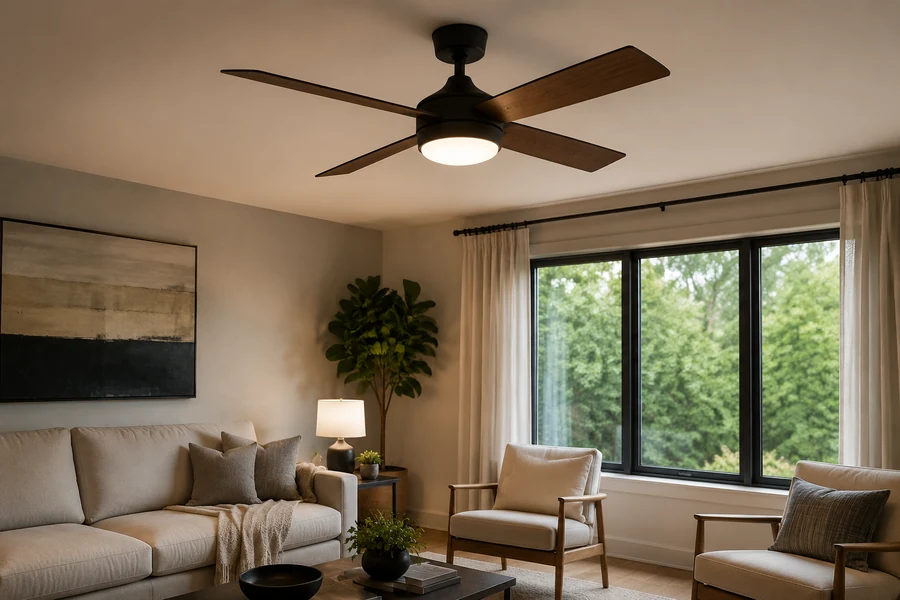
Dimming is also where cheap driver design becomes visible. A fan light should dim smoothly without buzzing, visible flicker, or resetting every time the wall switch is used.
What should you test in samples?
Test the LED ceiling fan at full brightness, medium brightness, and the lowest dim level. Watch the diffuser directly and indirectly. If you can see pulsing, color shift, or sudden jumps, the lighting experience may not satisfy living room users.
Good dimming should feel smooth across the range. If the light jumps from bright to too dim, or flickers at low levels, the fan light will not support relaxed evening use.
You should test dimming with the fan running because the driver and motor electronics share the fixture environment. Some weaknesses only appear when both systems operate together.
For a product line, dimming behaviour should be written clearly in the manual and product page. Buyers need to know whether the light is stepless, stepped, memory-enabled, or controlled only by remote.
Good dimming should feel gradual. If the light drops from bright to dark in two rough steps, the feature is technically present but not very useful. A living room needs small changes because the room shifts from active use to relaxed use throughout the evening.
Also check whether dimming creates flicker, buzzing, or color shift. A light that looks fine at full output can become distracting when dimmed poorly. That is why dimming should be tested, not just listed.
A dimmer should make the room easier to control, not harder. If the lowest setting is still too bright, the living room will not feel relaxed at night. If the dimming range is unstable or flickers, people may stop using the feature altogether. Smooth low-end dimming is often where a better LED fan light proves itself.
Spec 5: How Do Diffusers and Beam Spread Affect Comfort?
Why can a bright fan light still feel harsh?
Brightness without diffusion can create glare. This is common when the LED module is strong but the diffuser is too thin, too small, or too clear. In a living room, glare is especially annoying near TV screens and seating areas.
The diffuser decides whether the light feels soft or exposed. A living room usually needs a broad, comfortable spread because people look across the space from many angles. If the diffuser is too small or too transparent, the light can feel sharp even when the lumen number is moderate.
Beam spread matters in open rooms too. A narrow light may brighten the center while leaving corners flat. A wider spread can make the room feel more complete, especially when the fan light is the main overhead fixture.
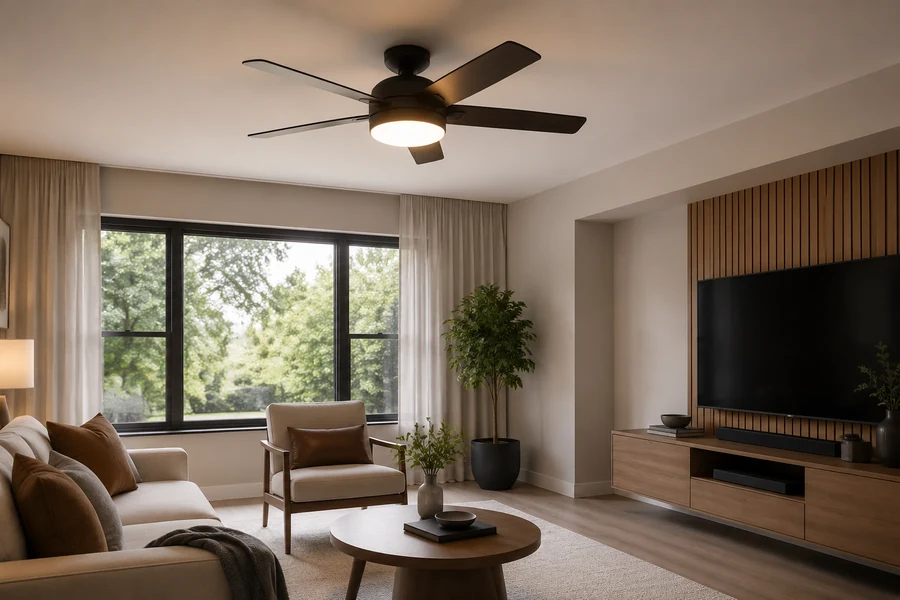
A good diffuser spreads light more evenly and hides LED hot spots. It may not look dramatic in a product photo, but it changes how the room feels at night.
How does room layout change diffuser needs?
If the fan is centred above the sofa, soft diffusion is important. If the fan is above a walkway or open space, stronger downlight may be acceptable. Check the fan light choice guide if you are still deciding whether integrated lighting is the right ceiling strategy.
Diffuser design decides whether brightness feels soft or harsh. A strong LED behind a poor diffuser can create visible hot spots, glare, and uncomfortable contrast above the seating area.
Beam spread also matters. A narrow light may make the centre bright while leaving corners dark; a wider soft light can support general living room use more naturally.
If the room has a TV, glossy table, or reflective floor, check glare from seated eye level. A fan light that looks fine from below may reflect unpleasantly during normal use.
Spec 6: Which Control Features Make LED Fan Lights Easier to Use?
Why should fan and light controls be separate?
A good remote or smart control should let you adjust fan speed and light output separately. You may want low-speed airflow with bright light, or no airflow with warm dim light. If the control logic is confusing, the product feels less useful.
Controls should make the fan light easier, not more confusing. A remote with clear icons, separate fan and light buttons, and memory for favorite settings can make a big difference. If every use requires trial and error, the lighting feature will feel less premium.
Smart control can help when the room has multiple modes, but it should not replace basic usability. You should still be able to turn the light on, dim it, and adjust the fan without opening an app every time. That is especially important in a shared living room.
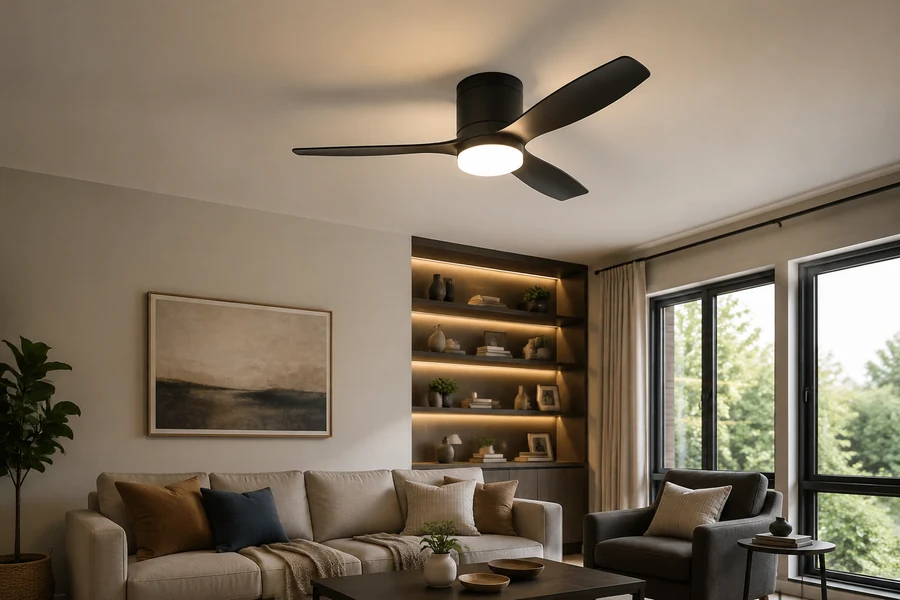
For living rooms, memory function can also matter. If the light returns to a harsh default every time it turns on, you may stop using the feature. A good fan light should remember practical settings or make adjustment simple.
How should noise and light control work together?
Lighting specs do not stand alone. If the fan is noisy at the speed you need for comfort, the light quality will not save the product. Review the quiet fan dB guide when comparing LED fan light samples.
The best control setup separates fan speed from light brightness and color. People may want airflow without light during the day, or warm dim light without much airflow at night.
Memory function can reduce daily frustration. If the fixture always resets to a bright cool setting, you may feel the product is less thoughtful even if the LED module is technically good.
For real projects, remote layout and icon clarity should be tested before you commit. If a customer cannot understand the controls quickly, the after-sales team will hear about it.
The best control setup is the one you can understand in seconds. In a living room, people should be able to change brightness, speed, and color setting without guessing. If the remote or app makes simple actions feel complicated, the LED feature will not feel as premium as the specification suggests.
Controls also affect after-sales experience. If the remote is confusing, people may think the product is faulty when it is only poorly explained. Clear icons, reliable memory, and simple pairing can reduce frustration after installation. That is part of product quality, not just a convenience feature.
How Can You Match LED Fan Light Features to a Living Room?
Which products fit different LED needs?
A retractable LED fan light can suit living rooms where the fan should feel more decorative and compact when not in use. A 56 inch dimmable LED fan is better for larger rooms that need more airflow coverage plus integrated lighting.
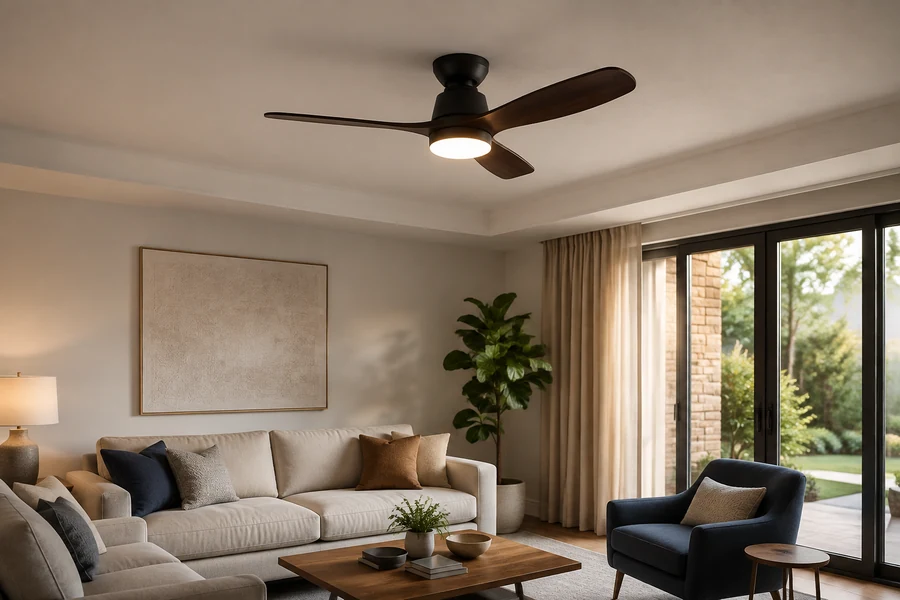
For darker interiors or industrial-style spaces, a black integrated LED fan can match the decor while still combining light, airflow, and remote control in one fixture.
How should importers compare LED fan light samples?
Ask for lumen output, CCT options, CRI, dimming method, LED module type, diffuser material, driver quality, remote functions, and warranty terms. Then test the product in a real room, not only on a bench. The best ceiling fan with LED light for living room projects should feel comfortable at night, not just bright in a spec sheet.
For NEBOLA OEM/ODM projects, LED details can be adjusted by market requirement, product tier, and customer preference. That makes early confirmation important before sampling or bulk production.
A decorative LED fan light should not only look attractive in photos. It should also provide comfortable output, stable control, and a diffuser that suits the room type where the product will be sold.
When comparing NEBOLA product directions, decide whether the product should be compact, decorative, large-room focused, or specification-led. That decision helps align LED choices with fan size and customer expectation.
How Should You Match LED Specs With Room Size and Ceiling Type?
LED specs only make sense after the room is understood. A small living room may need lower glare and better dimming more than maximum brightness. A large or open living room may need higher lumens, wider diffusion, and support from other lighting layers. Ceiling height also changes the result because light has to travel farther before it reaches the seating area.
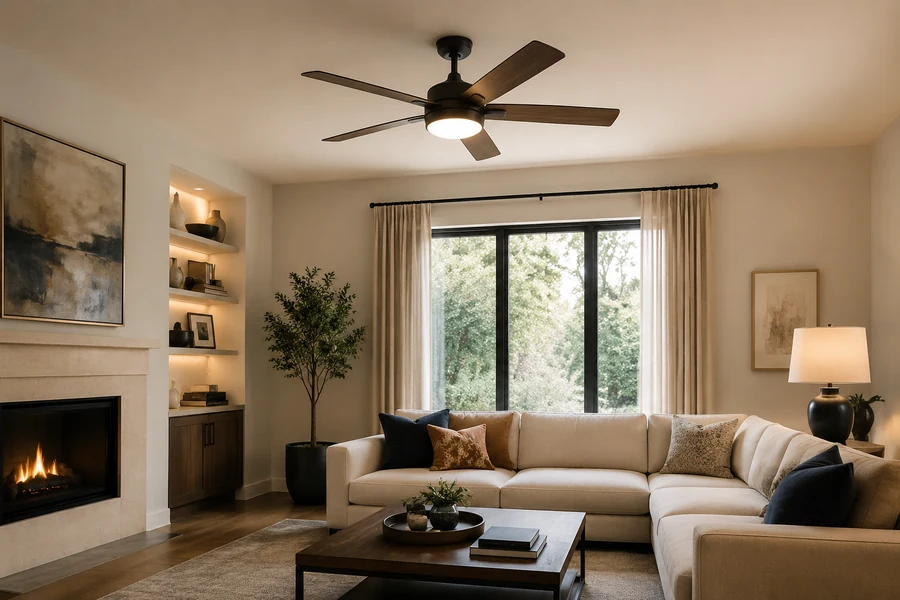
How should room size change your LED choice?
For a compact room, we would prioritize soft diffusion, warm or neutral color temperature, and smooth dimming. For a larger room, lumen output becomes more important, but it still should not be judged alone. A bright LED ceiling fan can feel uncomfortable if the diffuser is narrow or the color temperature makes the room look flat.
Think about where the light is used. Reading on the sofa, watching TV, hosting guests, and walking through an open-plan room do not need the same brightness. A good LED fan gives you enough light for daily use while still letting you dim down in the evening. That balance matters more than wattage.
How should ceiling type change your LED choice?
For low ceilings, a thinner body and softer diffuser can reduce glare. For higher, sloped, or vaulted ceilings, the LED may need more output or help from wall and floor lamps. If you are still comparing room size and ceiling setup, the living room fans page can help you connect lighting specs with fan coverage before choosing a model.
If you are looking for a better ceiling fan light solution for your room or project, NEBOLA can support you from product selection to customization. We focus on ceiling fan light R&D and manufacturing, helping you find products that match real space needs.
The safest approach is to match the LED role to the room before you compare product styles. If the fan light is the main overhead source, output and diffusion matter most. If it is only a support layer, smoother dimming and warmer comfort may matter more.
A final review should compare the LED fan light at the brightness level people will actually use most often. Full output matters, but daily comfort usually happens at medium or low brightness, where dimming quality, glare control, and color consistency become much easier to notice.
NEBOLA Ceiling Fan Light Support
Need help checking LED fan light specs?
Share your living room size, ceiling height, and lighting goal, and we can help you compare LED ceiling fan specs more clearly.
FAQ
Is wattage enough to judge an LED ceiling fan light?
No, wattage only tells you energy input, so you still need lumens, CCT, CRI, dimming, diffuser design, and control quality.
Should a living room fan light have dimming?
Yes, dimming is strongly recommended because living rooms need both practical brightness and softer evening light.
Is 3000K better than 4000K for every living room?
No, 3000K feels warmer, but 4000K can work better in modern rooms that need a cleaner and brighter look.
Can CRI affect how a living room looks?
Yes, CRI affects how furniture, artwork, wood, and skin tones appear under the fan light.
Should you compare LED specs with room size?
Yes, room size and ceiling height decide how much usable light and diffusion the fan light needs.