

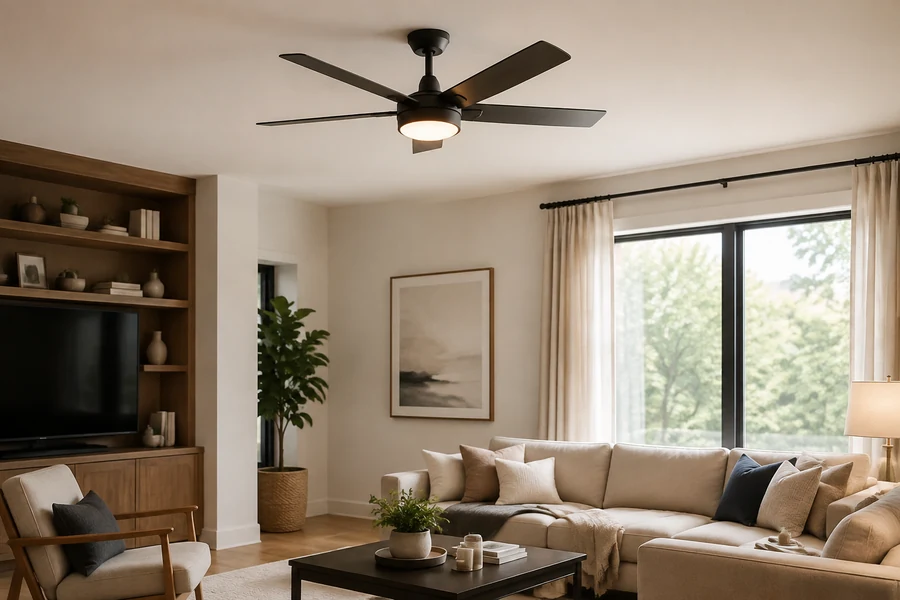
If you are asking how many lumens a living room ceiling fan light really needs, here is the practical answer: enough to make the room usable without forcing the fan to act like a spotlight. For many living rooms, that means somewhere around 1,500 to 3,000 lumens for everyday comfort, with more output needed when the fan light is the main source of overhead light. The right number depends on room size, ceiling height, wall color, and whether you already have lamps or recessed lighting.
The useful way to compare a ceiling fan light lumens claim is to think about the whole room, not just the bulb figure. If you are still comparing span and layout, the living room fan collection is the right place to start before you lock in brightness.
How Many Lumens Does a Living Room Ceiling Fan Light Really Need?
A good starting point is to separate general ambient light from decorative glow. If the fan light is the primary ceiling light, aim higher. If the room already has lamps, wall lights, or recessed lighting, the fan light can work as a supporting layer instead of trying to light everything alone.
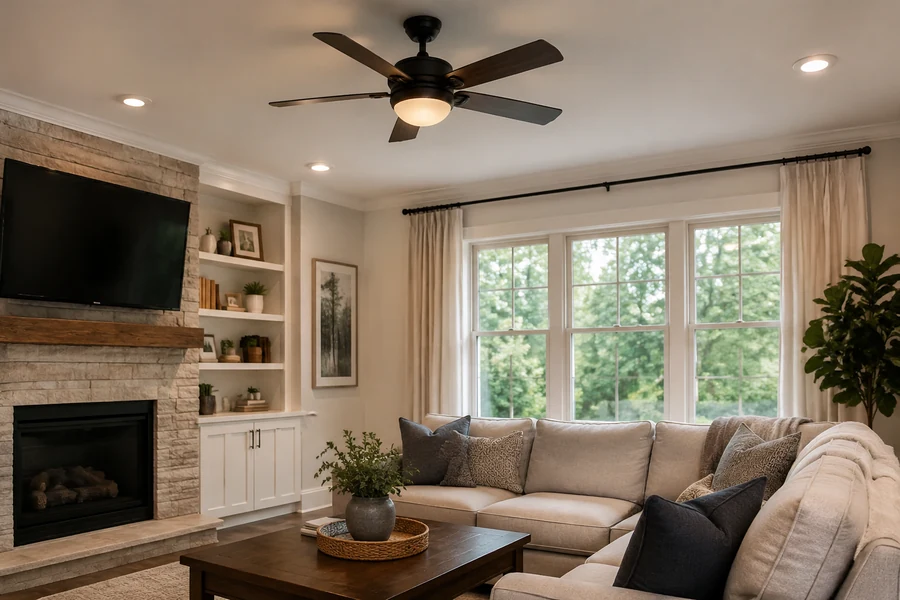
A living room also changes through the day, so the lumen target should not be treated as one fixed number. In the afternoon, natural light may do most of the work. At night, the fan light may become the room’s main overhead layer. That is why a dimmable fan light is usually easier to live with than a fixed-output light, even when both products list similar lumens.
We also need to think about what the light is landing on. Pale walls, light curtains, and a white ceiling bounce light back into the room. Dark wood, deep paint, and large sofas absorb more of it. If two rooms have the same square footage, the darker room often needs more usable light or better diffusion to feel equally comfortable.
| Living room type | Practical lumen range | What that feels like |
|---|---|---|
| Small closed living room | 1,200-1,800 lm | Comfortable for normal evenings and light tasks |
| Medium living room | 1,800-2,800 lm | Good for general use and family time |
| Large living room | 2,800-4,000 lm | Better when the fan light is a main overhead source |
| Open-plan or dark room | 4,000+ lm with dimming | Better when the room needs stronger general light |
What does that range mean in real life?
A bright ceiling fan light does not need to feel harsh. With the right diffuser and color temperature, a moderate lumen level can feel more useful than a much brighter light that throws glare across the sofa or TV wall. That is why comfort matters as much as raw brightness.
Why should you not judge by watts alone?
Watts tell you how much power the light uses, not how much visible light it gives you. DOE’s lumens guide makes the same point clearly: lumens are the brightness number that actually helps you compare light output.
What Does Lumens Tell You That Wattage Does Not?
When we talk about wattage, it is easy to mix up energy use and brightness. That used to matter more with older bulbs, but LED fan lights are different. A lower-watt LED can still give you strong output when the module, optics, and driver are designed well.

Lumens help you compare brightness across different LED modules, but they still need context. A fan light with a small bright center can list a decent lumen number and still feel uneven. A wider diffuser with similar output may feel more comfortable because it spreads light across the ceiling and seating area instead of creating one hot spot.
Wattage becomes useful only after you know the brightness and comfort level are acceptable. Then you can compare energy use, heat, and driver efficiency. If one fan light gives similar brightness with lower wattage and a better diffuser, it is usually the stronger living room choice.
How should you compare lighting claims?
Look for the output number, the dimming range, and the diffuser style together. A product that says bright but hides the actual lumen output is harder to evaluate than one that gives a real figure and explains how it behaves at low, medium, and high settings.
When does wattage still matter?
Wattage still matters for energy planning, heat management, and product comparisons across the same family. But if you are choosing between two ceiling fan lights for a living room, lumens give you the better first answer.
How Do Room Size and Ceiling Height Change the Target?
A living room with a low ceiling usually needs a fan light that spreads light evenly rather than pushing it straight down. A high or vaulted ceiling may need more output because the fixture sits farther from the seating area and light has more space to fall off before it reaches the room.

Ceiling height changes perceived brightness because distance softens the light before it reaches your eyes. On an 8-foot ceiling, a strong LED module can feel very direct. On a higher ceiling, the same module may feel calmer but less useful. This is why brightness, mounting height, and diffuser design should be checked together.
Room shape matters too. A long rectangular living room may not feel evenly lit from one center point, even if the lumen number looks right. In that case, the fan light can provide the main ceiling layer, while lamps or wall lights fill corners and reading areas. That gives the room a more natural balance.
How does room size shape brightness?
The bigger the room, the more likely you are to need either higher lumens or multiple light layers. If you are still deciding on fan size, the 52-inch room guide, 60 vs 72-inch comparison, and size comparison article help you match the fan body to the room first.
When do ceiling details change the answer?
For 8-foot rooms, too much brightness can feel flat and exposed. For 9-foot, tall, or open spaces, the fan light may need stronger output and better diffusion. If the ceiling gets more complicated, review the 8-foot ceiling guide, 9-foot ceiling guide, and high-ceiling guide before deciding on brightness alone.
When Does Your Living Room Need a Brighter Fan Light?
If your ceiling fan light is the main overhead source in the living room, it has to do more than add a little glow. That is common in apartments, compact family rooms, and simple renovations where one ceiling point has to handle both airflow and general light.
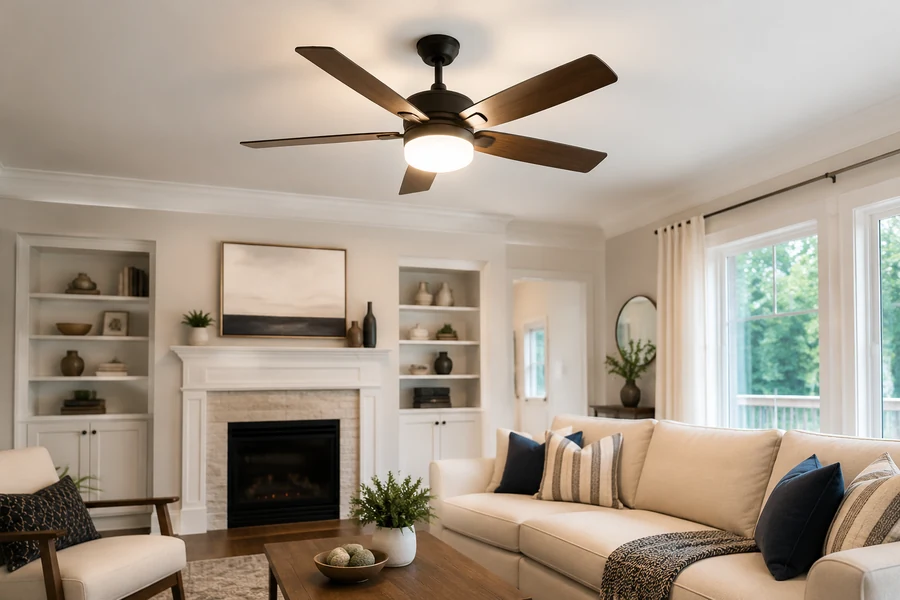
You usually need more output when the ceiling fan light has to support daily tasks, not just mood. Examples include family rooms where children play on the floor, rooms without recessed lighting, and apartments where the fan light is the only overhead fixture. In those cases, choosing too soft a light can make the room feel unfinished.
A brighter fan light should still be controllable. The goal is not to keep the living room bright all the time; the goal is to have enough headroom when you need it. Smooth dimming gives you that flexibility without forcing the room to feel like a showroom at night.
When does an open layout need extra brightness?
Open layouts often make a single fixture feel smaller. In those rooms, you may need either more lumens or a better plan for layered light. The one fan or two fans guide and open concept fan layout article are useful if the room spills into other zones.
Why does blade pitch still matter?
If the fan is too weak for your room, you may end up running it at a higher speed while also expecting the light to make the room feel better. That is rarely a good trade. The blade pitch guide helps explain why airflow and lighting should be chosen together.
A brighter output is also useful when the fan light is mounted higher than usual. More distance reduces perceived brightness, so the same fixture can feel weaker in a room with a taller ceiling. In that case, output, diffuser width, and other light layers should be planned together.
Which Lighting Features Matter More Than Raw Lumens?
Lumens matter, but they do not tell the whole story. A bright fan light can still feel uncomfortable if the CCT is wrong, the CRI is weak, the diffuser is harsh, or the dimming curve jumps instead of easing down.
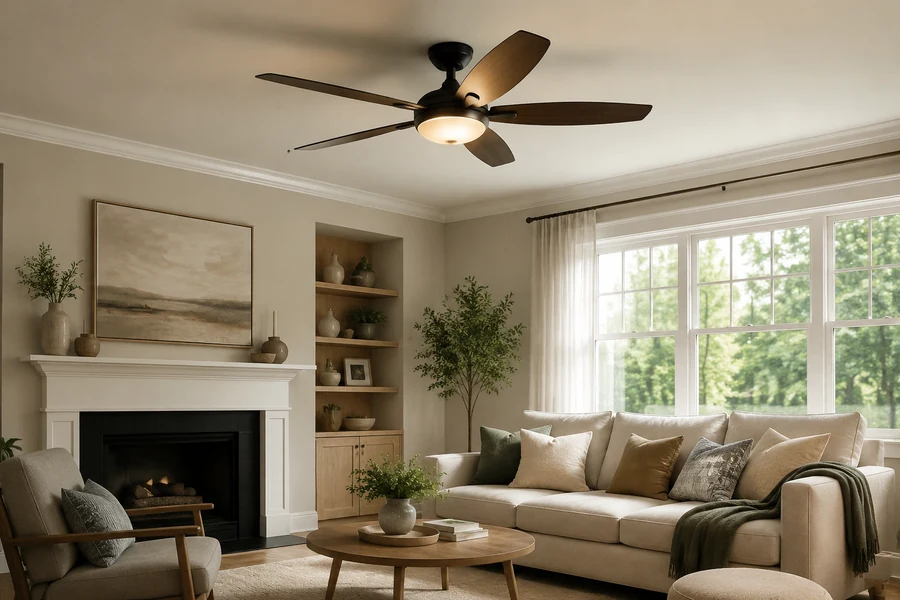
CRI becomes more important when the living room has wood, textiles, artwork, or warm finishes. A low-CRI light can make colors look dull even when the room is bright enough. If you care about how the room feels, not just whether you can see, CRI belongs in the same conversation as lumens.
Dimming quality is just as practical. Some LED fan lights step down too sharply, so the room jumps from bright to gloomy. A smoother dimming range lets one fixture serve morning, afternoon, and evening without forcing you to add extra lights just to soften the mood.
Which specs should you check first?
| Spec | Why it matters | Living room note |
|---|---|---|
| CCT | Changes warmth or coolness | Warm light feels softer; neutral light feels clearer |
| CRI | Affects how colors look | Higher CRI usually helps skin tone and furniture look better |
| Dimming | Controls mood | Smooth dimming is better than abrupt steps |
| Diffuser | Softens glare | A good diffuser matters in TV-heavy rooms |
What does DOE say about spec comparison?
DOE notes that lighting quality is not only about output. When you compare fan lights, you should pay attention to how the light appears, how it renders objects, and whether the fixture really fits the room’s use pattern.
Glare control is another part of useful brightness. A fan light can have enough lumens and still feel uncomfortable if the LED source is too exposed. In a living room, the diffuser should help the light feel broad, calm, and easy to keep on for long periods.
How Can You Match Fan Light Style to Your Living Room?
If you want a clean everyday ceiling, you can start with a white LED fan light for a bright, modern living room. If you want the fan to feel visually lighter, a retractable LED fan can keep the ceiling line neat while still giving you useful light.
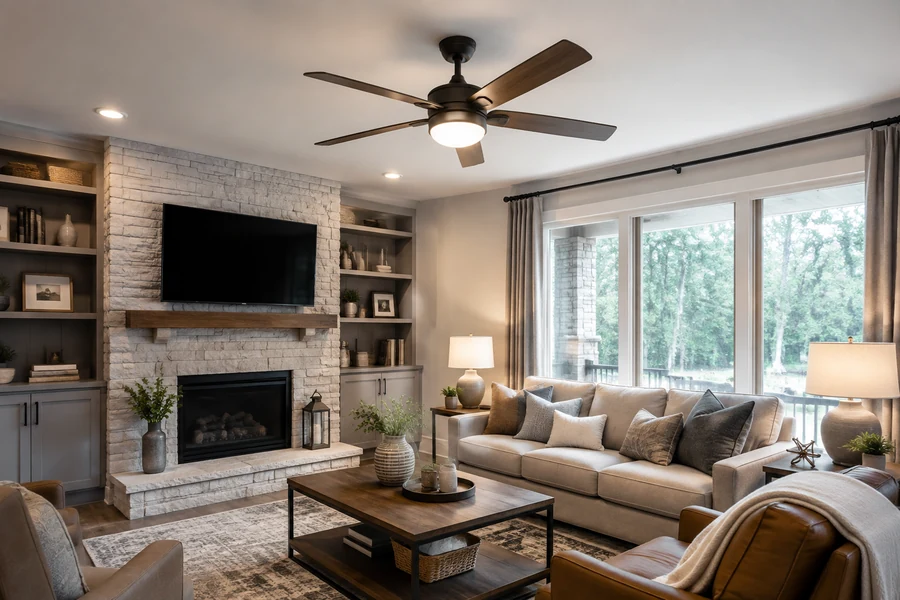
The visual style should support the lighting role. A slim modern fan light can look clean in a low ceiling room, while a larger decorative fan light may feel more natural in a room with heavier furniture. If the fixture looks too small, the room may feel under-planned even when the brightness is enough.
Try to imagine the fan light turned off as well as turned on. During the day, the fixture is still part of the ceiling. At night, the diffuser and color temperature shape the room. The best choice works in both situations.
For a lower ceiling or a simpler room, a flush-mount fan light can reduce visual drop and keep the light close to the ceiling. That often helps your room feel less crowded and makes the brightness feel more even.
How can you match the fixture to daily use?
Choose the fixture around how you actually use the room, not around the biggest lumen number on the page. A living room used for TV, a room used for family meals, and a quiet lounge each need a different balance of brightness, style, and easy maintenance.
What Mistakes Make a Fan Light Feel Too Dim?
The most common mistake is choosing a fan light that looks nice but sits too far above the area you actually use. Another mistake is relying on one small light source in a room with dark finishes, tall ceilings, and a lot of floor space.
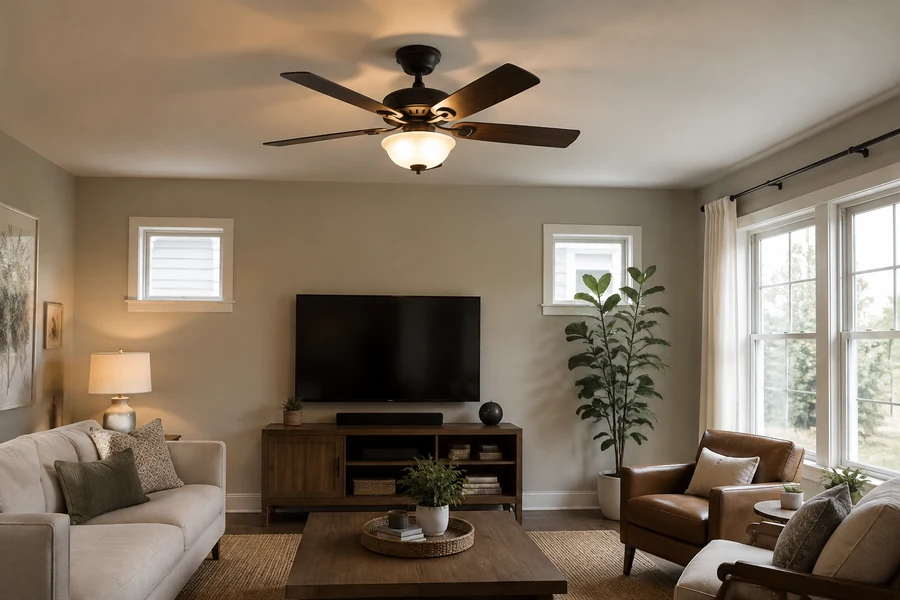
One hidden mistake is choosing a light that only looks bright directly under the fixture. A living room needs useful spread, not just a bright center. If the sofa, side chairs, and walkway still feel dark, the fan light may need a wider diffuser or support from other layers.
Another mistake is ignoring the ceiling color. A white ceiling can help bounce light back into the room, while a darker ceiling absorbs more output. This can make the same fan light feel different from one home to another.
Another mistake is forgetting the shade or diffuser. A milky diffuser can soften glare, but a poorly designed one can also trap too much light. A clear or shallow diffuser may look brighter but feel sharper. The right balance depends on whether your room needs broad comfort, task visibility, or a softer evening atmosphere.
Do not ignore control settings either. If the fan light only has a few rough steps, you may end up switching between too bright and too dim. A better dimming curve makes the same lumen output feel more useful because you can tune the room instead of accepting one fixed mood.
What else lowers the perceived brightness?
A narrow diffuser, poor beam spread, and a very warm or muddy color temperature can all make a fan light feel weaker than the lumen number suggests. If you want a brighter result, the whole lighting package matters, not just the headline output.
Why does the room itself matter?
Dark walls, matte ceilings, large furniture, and open pathways can all change how brightness feels. The same fan light can feel generous in one room and underpowered in another.
How Should You Choose the Right Brightness With Confidence?
Start by deciding whether the fan light is a main light or a supporting light. Then choose the lumen range, color temperature, and dimming style that match that role. If the room still feels undecided, compare the fan with your existing lamps and ceiling lights instead of judging it in isolation.
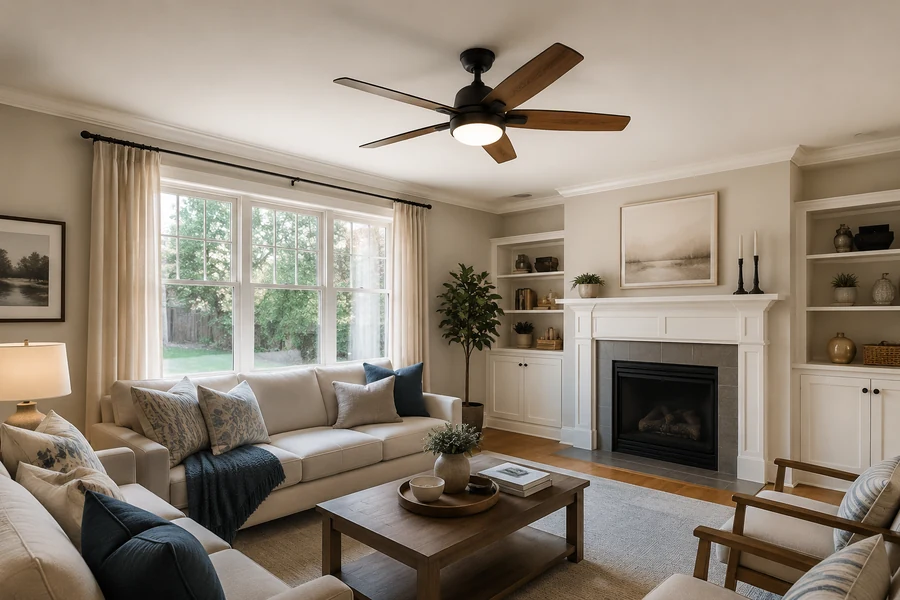
Before you choose, list the other light sources in the room. If you already have table lamps, floor lamps, or wall lights, the fan light can stay more moderate. If you have no other layers, choose more output and better dimming. This gives you a ceiling fan light that can handle practical use without making the room harsh.
What rule makes the brightness easier to choose?
Choose enough light for the room at a comfortable level, then rely on dimming to make it softer in the evening. That gives you a practical ceiling fan light for both daytime use and relaxed night use. If you are still comparing room size and coverage, the living room fan guide can help you match the fixture to your space before you decide.
A final practical check is whether the room still feels balanced when the fan light is dimmed. If dimming makes the room too dark, the starting output may be too low. If full output feels harsh, the diffuser or color temperature may need more attention than the lumen number.
That extra check is useful because brightness problems are often discovered only after people live with the room for a few evenings. A fixture that looks acceptable during installation can feel too sharp during TV time or too weak when the room is cleaned at night.
If you are looking for a better ceiling fan light solution for your room or project, NEBOLA can support you from product selection to customization. We focus on ceiling fan light R&D and manufacturing, helping you find products that match real space needs.
A simple checklist helps: first decide whether the fan light is primary or secondary, then check the room size, then compare wall color and existing lamps. After that, look at dimming and diffuser design. This order keeps you from choosing a fan light only because the lumen number looks impressive.
If possible, compare the fan light to how the room is used at night. A living room used mostly for TV needs softer control than a room used for reading or family activity. The same lumen output can be right or wrong depending on that daily routine.
Do not forget maintenance and replacement. If the LED module is integrated, ask how long it is designed to last and what support is available if it fails. Brightness is important, but a living room fixture also needs to remain reliable after installation.
If you are choosing for a project rather than one room, build a small comparison around real room types. Test one compact room, one medium room, and one darker room if possible. That will tell you more than comparing lumen claims alone, because the same fan light can behave differently depending on surfaces and layout.
A living room ceiling fan light also needs to age well visually. The fixture should not feel too harsh after the first week, and it should not force you to add lamps just to make the room comfortable. A balanced lumen range with good dimming is usually easier to live with than the brightest option available.
When in doubt, choose flexibility. More usable output with smooth dimming gives you options, while weak output gives you very few ways to improve the room later. This is why brightness should be chosen as part of a lighting system, not as one isolated number.
For a living room, the best brightness decision usually leaves room for change. Seasons, curtains, wall colors, and furniture can all change how bright the space feels. A fan light with enough output, a soft diffuser, and stable dimming gives you more ways to adapt the room without replacing the fixture.
If the choice is for multiple rooms, do not force one lumen target everywhere. Use one practical range for compact rooms, another for medium rooms, and a higher range for darker or open layouts. That keeps the specification realistic and easier to explain.
NEBOLA Ceiling Fan Light Support
Need a brighter living room fan light direction?
Tell us your room size, ceiling height, and lighting goal, and we can help you match the right ceiling fan light output and style.
FAQ
Can a living room ceiling fan light be the main room light?
Yes, it can be the main room light when the lumen output, diffuser, and placement are strong enough for the room size.
Should you choose lumens before watts?
Yes, lumens are the better first number because they describe visible brightness more directly than watts.
Is 1,500 lumens enough for a small living room?
Yes, it can be enough for a small closed living room if the room is light in color and already has other layers of light.
Can a large living room need more than 3,000 lumens?
Yes, many larger or open living rooms need more than 3,000 lumens if the fan light is carrying most of the overhead light.
Should a bright ceiling fan light always use cool white light?
No, brightness and color temperature are separate choices, and a warm or neutral tone may still be the better living room fit.