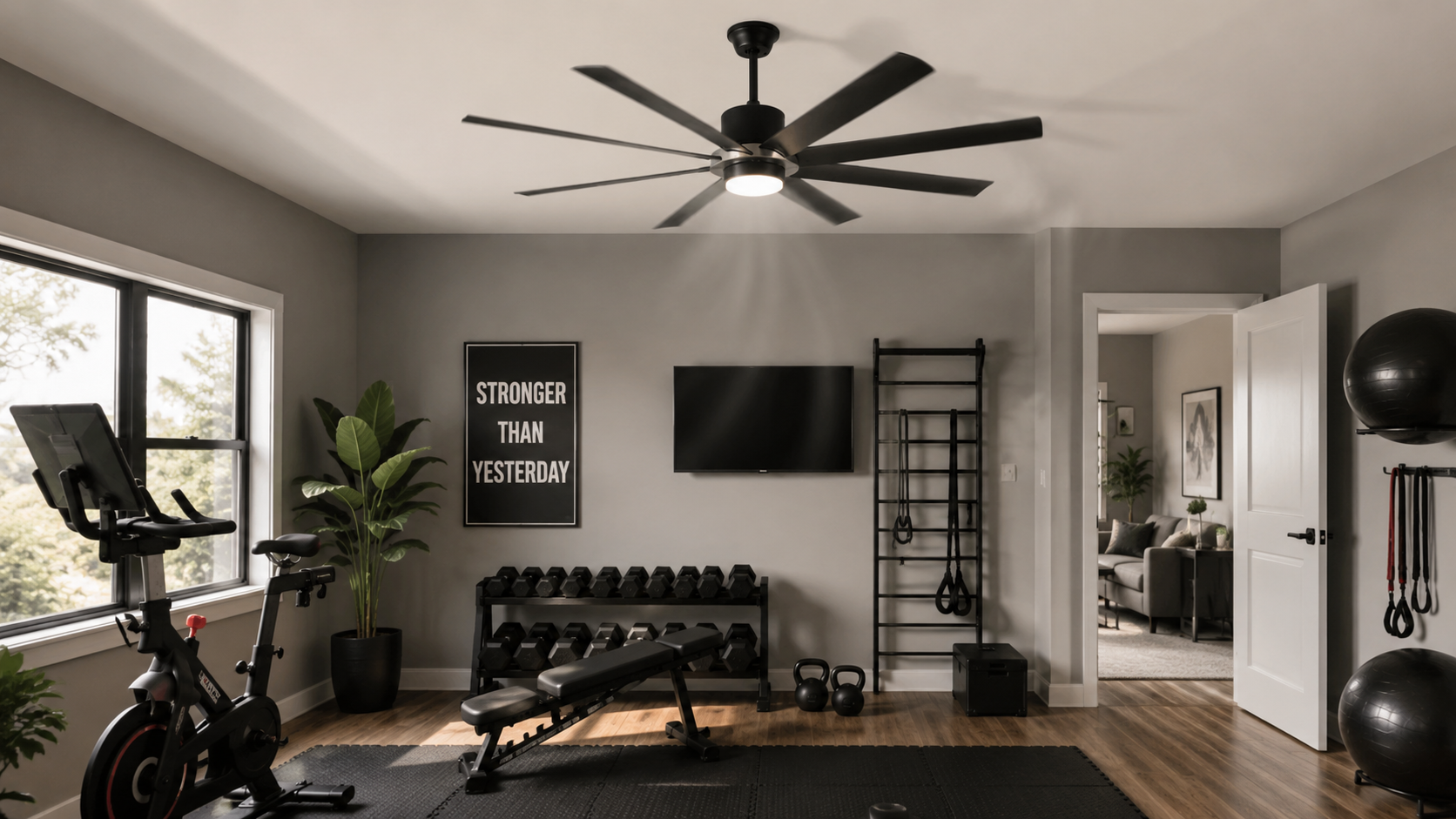


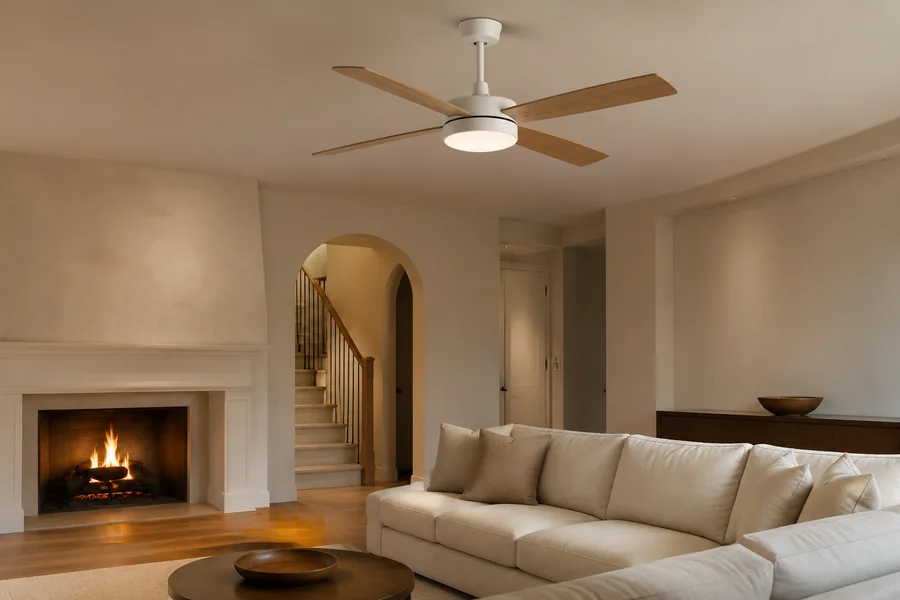
Choosing the right ceiling fan mount is not only a ceiling detail. It affects clearance, airflow, safety, lighting comfort, and how balanced the fan looks in the room. This guide explains how to match common ceiling fan mounting options with bedrooms, living rooms, kitchens, large spaces, sloped ceilings, and covered outdoor areas.
The best mounting choice starts with the room, not the fan style. A low bedroom may need a flush mount fan. A tall living room may need a downrod fan. A vaulted ceiling may need an angled adapter. As a ceiling fan light manufacturer, NEBOLA usually looks at ceiling height, room layout, blade clearance, lighting needs, and installation support before recommending a mounting direction.
1. Why Ceiling Fan Mounting Types Change by Room
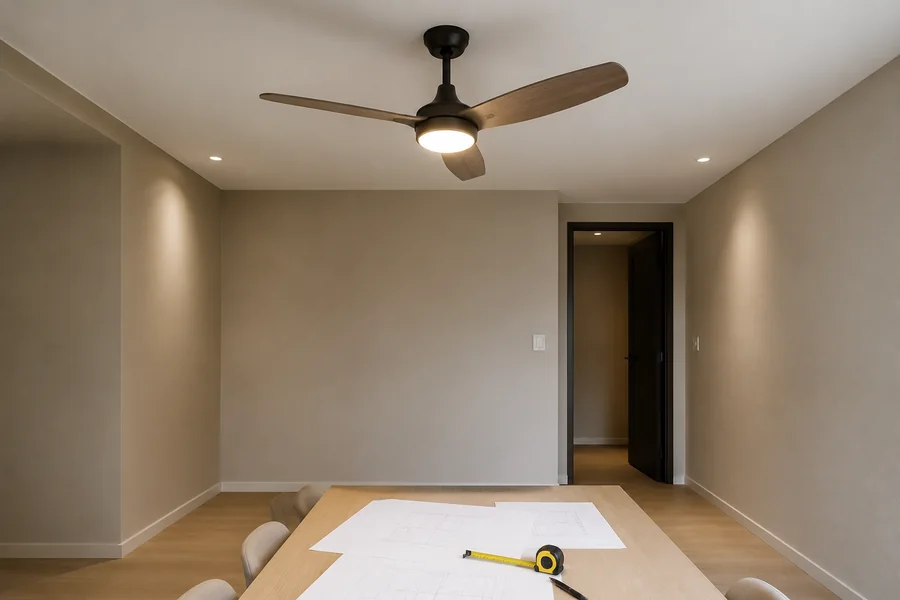
The same ceiling fan can feel right in one room and wrong in another. A fan that looks clean in a bedroom may sit too high in a vaulted living room. A downrod that improves airflow in a tall room may feel crowded in a compact kitchen.
Mounting type decides where the blades sit, how close the fan is to people, and whether the fixture can move air through the space. Before choosing colour or blade style, compare the room condition with a full ceiling fan mount type guide. This helps prevent a beautiful fan from becoming an installation problem.
1-1. Ceiling height controls safe clearance
Ceiling height is the first filter because it decides how much vertical space the fan can use. A low room usually needs a flush mount or hugger design, while a high room often needs a downrod to bring airflow down. If this step is skipped, the fan may either sit too close to people or too far above the occupied area.
1-2. Room activity changes comfort needs
A bedroom, kitchen, office, and patio do not use airflow in the same way. Bedrooms need quiet low-speed comfort, kitchens need practical clearance, and patios may need stronger circulation. The mounting type should support the daily activity in the room instead of only matching a design preference.
1-3. Lighting depth matters with fan lights
Ceiling fan lights add depth below the motor, so the total fixture height is more important than the blade span alone. A slim light kit can work in lower rooms, while a deeper decorative light may need more ceiling height. For this reason, installation planning should include both the fan body and the light structure.
2. Main Ceiling Fan Installation Types
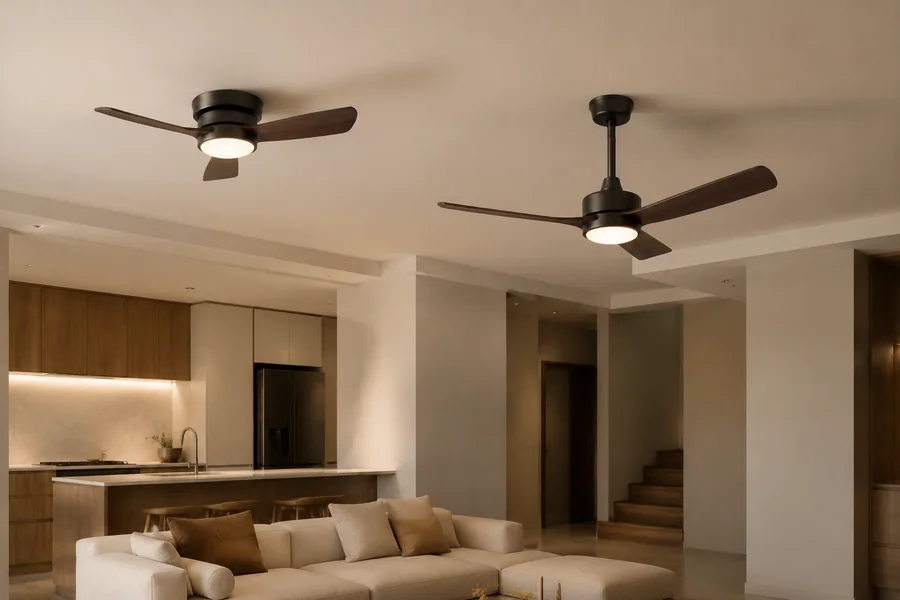
Most room decisions start with a few basic ceiling fan installation types. Flush mount fans sit close to the ceiling. Standard mount fans use a short downrod. Longer downrod fans lower the blades for tall rooms. Sloped ceiling installations use special hardware so the fan can hang level.
The right option is not always the most expensive one. It is the option that gives safe clearance, useful airflow, stable operation, and a natural visual proportion in the room.
2-1. Flush mount fans stay close to the ceiling
Flush mount fans are designed for rooms where ceiling height is limited. They reduce total drop and help keep the blades higher above the floor. This makes them useful in bedrooms, apartments, kitchens, hallways, and small rooms where a downrod would feel too low.
2-2. Standard mount fans suit common rooms
Standard mount fans usually use a short downrod and work well in many rooms with normal ceiling height. They give the fan more breathing space than a flush mount design without making the fixture hang too low. This is why many living rooms and bedrooms use standard mounting when the ceiling height allows it.
2-3. Downrod and angled mounts solve special ceilings
Downrod fans are useful when the ceiling is high, sloped, or part of a large open space. The rod helps place the blades closer to the area where people sit or walk. For sloped ceilings, the mount may also need an angled adapter so the motor hangs level instead of following the roof line.
3. Bedrooms Need Quiet and Low-Profile Mounting
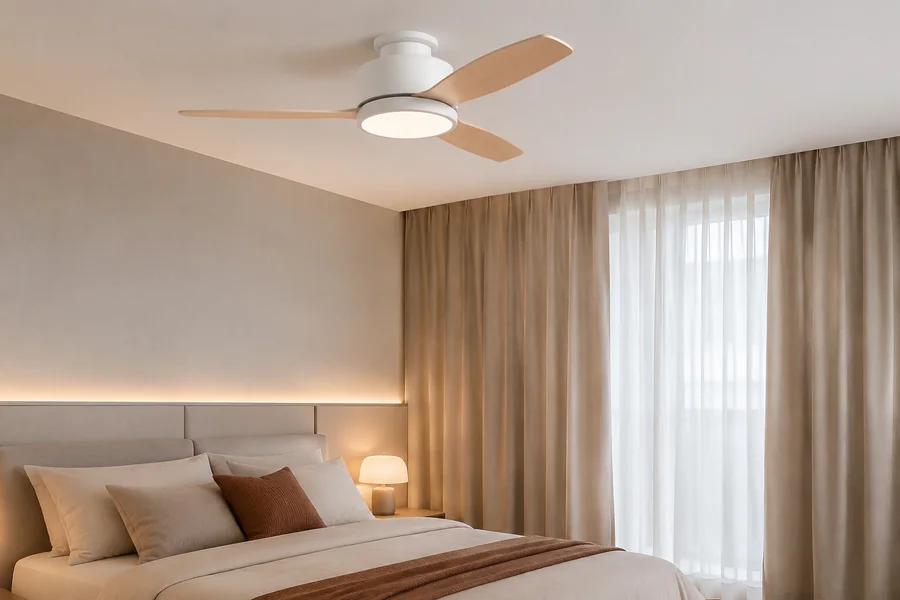
Bedrooms usually need gentle airflow more than strong wind. The fan should feel quiet, safe, and visually calm because people spend long periods under it. Mounting type is especially important here because the fan may sit close to the bed.
For low bedrooms, a low-profile hugger ceiling fan with light can keep the fixture compact while still adding airflow and lighting. For standard-height bedrooms, a short downrod or compact fan light may also work if the total drop height is comfortable.
If the room is low enough that head clearance feels tight, compare the decision with a focused flush mount ceiling fan guide. Low-profile mounting can solve many bedroom problems, but only when the fixture height, blade position, and light depth all fit the room.
3-1. Low bedrooms usually need flush mount fans
If the ceiling feels low, choose a fan that keeps the motor and blades close to the ceiling. A flush mount ceiling fan reduces head clearance problems and makes the room feel less crowded. This is especially important in apartments, guest rooms, and smaller bedrooms.
3-2. Standard bedrooms can use short downrods
When ceiling height is more comfortable, a short downrod may improve airflow because the blades are not pressed too close to the ceiling. The fan can move air more freely and may look better proportioned. The final choice should still check the bed location, wardrobe doors, and light depth.
3-3. Bedroom fan lights should avoid harsh glare
In bedrooms, lighting comfort matters as much as airflow. A fan light should use a soft diffuser, practical brightness, and easy control. If the light kit hangs too low or feels too bright, the fan may become uncomfortable even when the mounting height is safe.
4. Living Rooms Need Balanced Airflow and Visual Scale
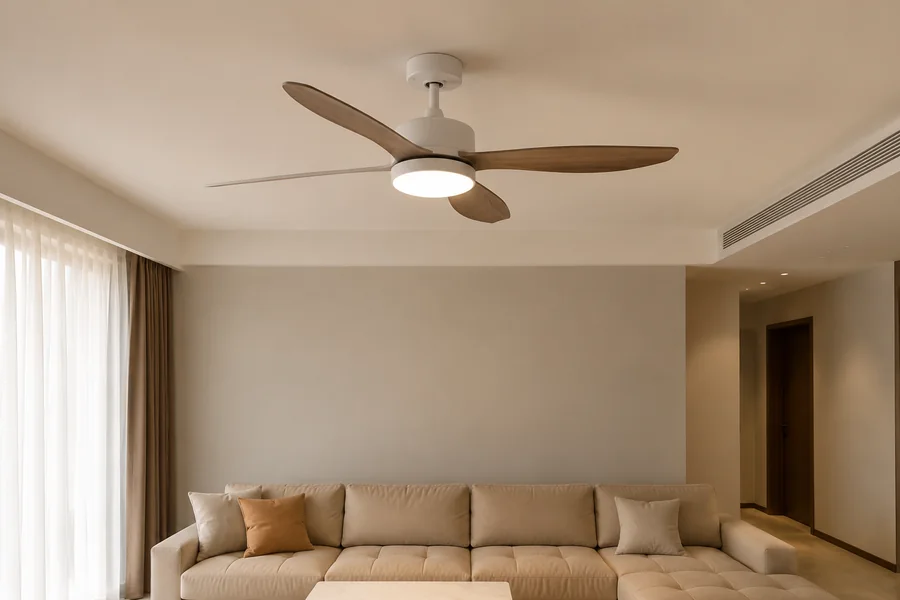
Living rooms usually need more airflow coverage than bedrooms. People may sit in different zones, and the fan is often visible from several angles. The mount should place the fan in a position that feels balanced with sofas, tables, ceiling height, and the room centre.
For a standard living room, a 52 inch fan with a short downrod is often practical. A 52 inch wood ceiling fan without light can work well when the room already has enough lighting and the main need is quiet air movement.
4-1. Standard ceilings work well with standard mount fans
In many living rooms, a standard mount gives a good balance between clearance and airflow. The fan hangs slightly below the ceiling, which helps the blades move air more effectively than many close-to-ceiling designs. This option also tends to look natural in rooms with common ceiling heights.
4-2. Seating layout affects the best fan position
The fan should support the main seating area, not only the geometric centre of the ceiling. If the sofa group sits to one side, the fan may need to be positioned around that comfort zone. In open-plan homes, the airflow target matters more than the exact room outline.
4-3. Large living rooms may need longer drop
A taller or larger living room may need a longer rod so airflow does not stay near the ceiling. The goal is not to hang the fan as low as possible. The goal is to place the blades where they can move air through the occupied zone without making the room feel crowded.
5. Kitchens, Hallways, and Compact Rooms Need Clear Space
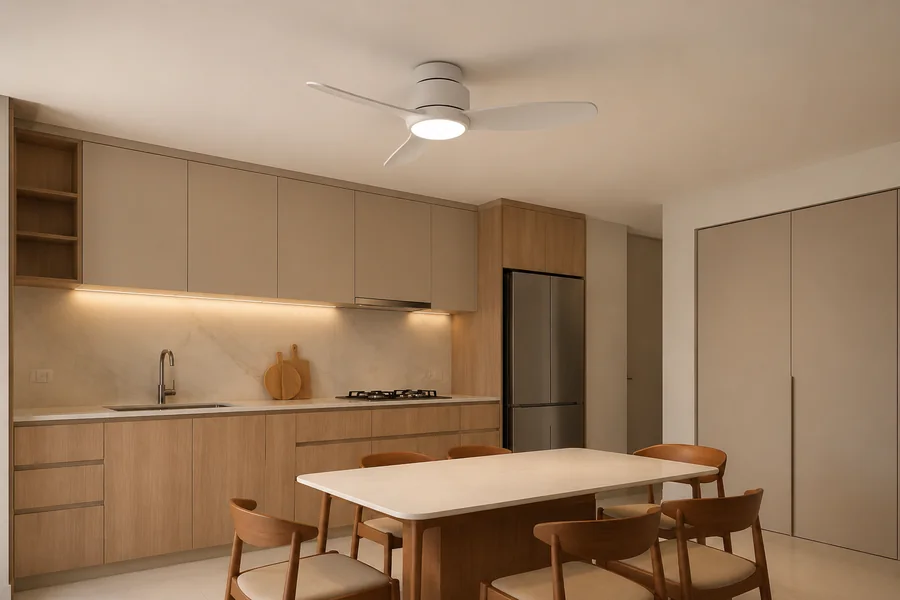
Small utility spaces need careful mounting because the ceiling often has cabinets, doors, lights, or narrow walkways nearby. A fan that hangs too low can interfere with movement, while a fan that is too large can visually dominate the space.
For these rooms, compact flush mount fan lights are often more useful than decorative downrod models. A modern flush mount ceiling fan light with remote can combine lighting and gentle air movement without taking much ceiling height.
When the fan also needs to replace a ceiling light, a flush mount ceiling fan with light guide can help you check total height, brightness, diffuser shape, and control style together. This is important because a compact fan can still feel wrong if the light kit is too deep or too harsh.
5-1. Kitchens need practical clearance
Kitchen fans should stay clear of cabinet doors, range hoods, and task areas. The fan should not sit where steam, grease, or heat can affect the fixture unless the product is designed for that use. A compact mount keeps the ceiling clean and reduces interference with daily work.
5-2. Hallways need compact airflow, not strong wind
Hallways and corridors rarely need powerful airflow. They need small, controlled air movement and simple lighting. A low-profile mount can help keep the fixture neat while avoiding a bulky look in a narrow space.
5-3. Small rooms should avoid oversized mounts
An oversized downrod or deep light kit can make a small room feel visually heavy. In compact spaces, check total fixture height, fan diameter, and light depth together. A smaller fan with a cleaner mount often feels better than a large fan forced into the room.
Need the Right Ceiling Fan for a Home, Project, or Commercial Space?
Tell us your space type, ceiling height, airflow needs, lighting options, certification direction, and order plan. We’ll help match the right solution.
Get a Quote6. Dining Rooms and Home Offices Need Stable, Comfortable Mounting
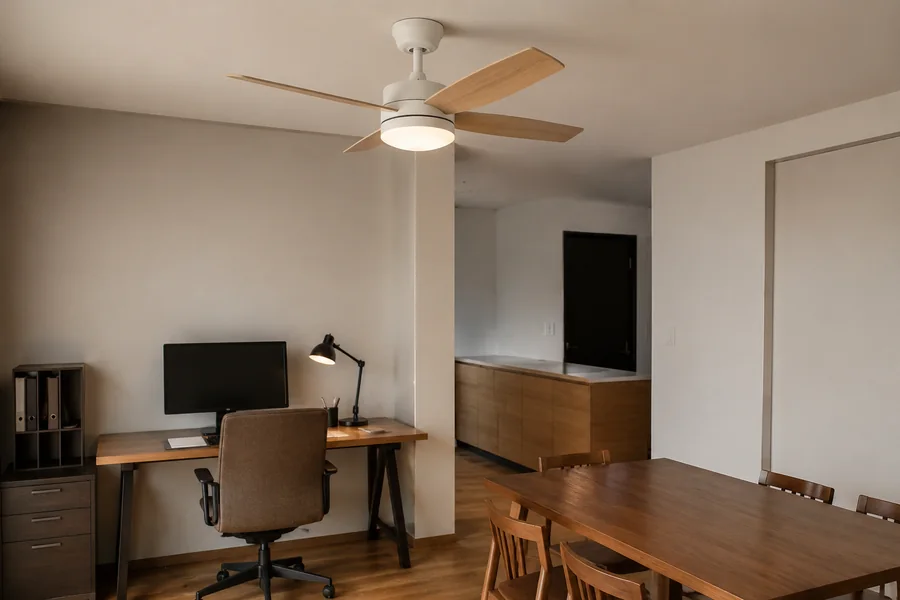
Dining rooms and home offices often need airflow that does not disturb work, meals, or conversation. The mount should keep the fan stable and visually centred while avoiding direct wind that feels distracting.
These rooms often sit between bedroom and living room needs. They may not require the lowest profile mount, but they also do not always need a long downrod. A stable standard mount or compact fan light is usually the safest starting point.
6-1. Dining rooms need centred but gentle airflow
In dining rooms, the fan is often placed over a table. It should sit high enough to avoid visual pressure and low enough to move air around the dining zone. Choose a mounting type that keeps the fan balanced above the table without making the light feel too close.
6-2. Home offices need quiet low-speed control
Home offices usually need quiet operation because the fan may run during calls or focused work. A mount that keeps the fan stable helps reduce vibration and noise. If the room is small, a low-profile fan can be better than a downrod model.
6-3. Lighting and screen glare should be checked
Fan lights in offices and dining rooms should not create harsh glare. The mount height affects how the light spreads and whether the fixture enters the line of sight. Before choosing, consider desk placement, table height, and how the LED diffuser looks from a seated position.
7. Large Rooms and Open Spaces Need Better Blade Height
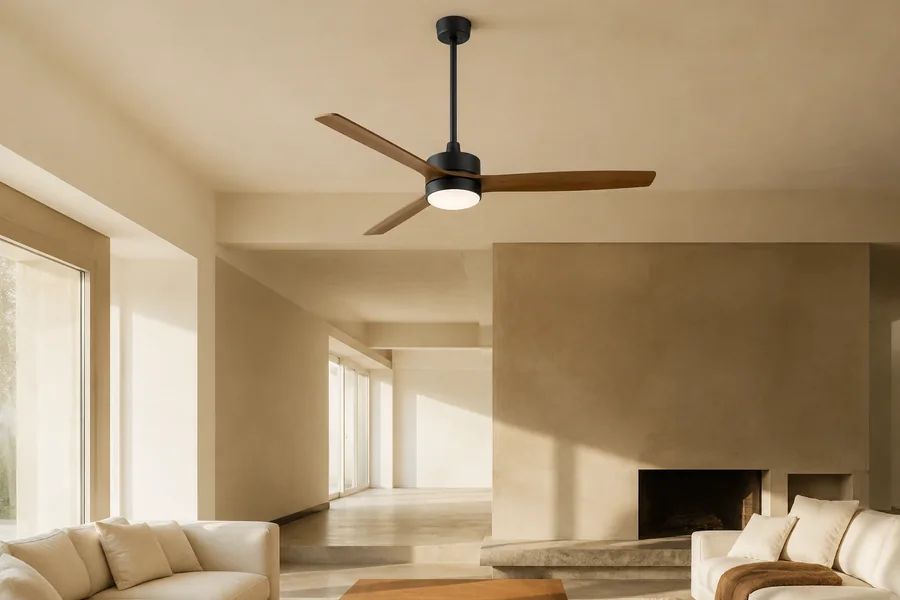
Large rooms need mounting decisions based on airflow reach. A big fan placed too close to a high ceiling may look impressive but still fail to move air where people feel it. This is why downrod length becomes important in open living spaces, lofts, and high-ceiling rooms.
For open spaces, a big 66 inch wood ceiling fan light with DC motor can work well when the rod length, blade clearance, and room layout are planned together. The larger blade span should be treated as part of the whole mounting plan, not as a shortcut that automatically solves airflow.
7-1. High ceilings usually need downrods
High ceilings often leave too much distance between the fan and the living area. A downrod lowers the fan into a more useful airflow zone. If you are unsure how long the rod should be, a downrod ceiling fan guide can help you compare ceiling height and room use.
7-2. Open-plan rooms may need zoning
Open-plan spaces may have a kitchen, dining area, and living area under one ceiling. One fan may not cover the whole space evenly. In some layouts, two smaller fans positioned over real activity zones work better than one oversized fan in the middle.
7-3. Bigger fans still need stable mounting
Large fans create stronger visual presence and may place more demand on the mounting system. The ceiling box, downrod, canopy, and support structure should all be suitable for a fan, not only for a light fixture. This is especially important for long blades and higher ceilings.
8. Sloped and Vaulted Ceilings Need Angled Mounting
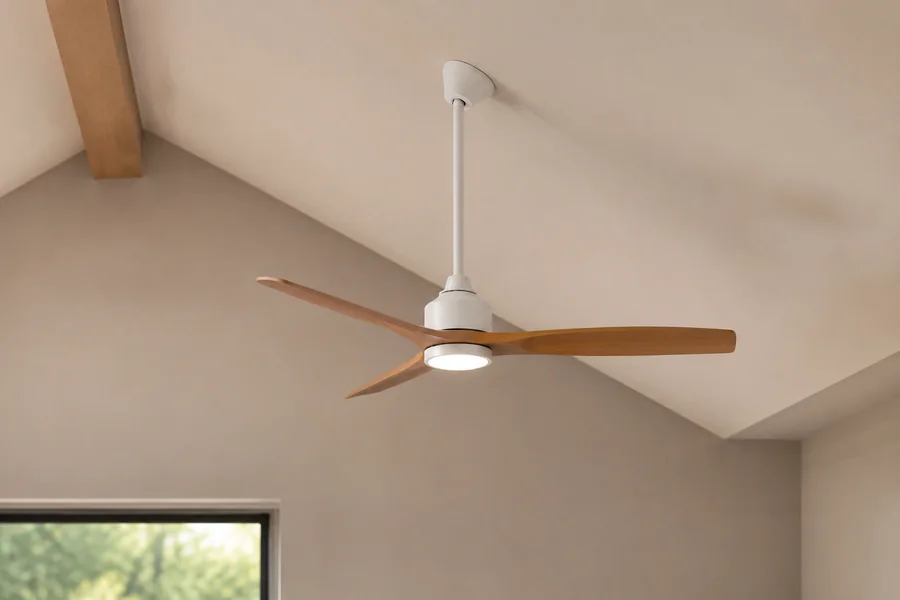
Sloped ceilings are different from simply high ceilings. The fan has to hang level even though the ceiling surface is angled. If the mount is wrong, the motor may tilt, the blades may sit too close to the ceiling, or the fan may wobble.
For vaulted rooms, start with a sloped ceiling fan installation guide before choosing the model. The correct installation type may include both a downrod and an angled ceiling adapter.
8-1. Standard canopies have angle limits
Some standard fan canopies can handle a mild slope, but not every product supports the same angle. Check the maximum slope rating before buying. If the room has a steep vaulted ceiling, assume the fan may need an angled ceiling adapter unless the product guide clearly says otherwise.
8-2. The fan must hang level below the slope
The motor should hang vertically, not at the same angle as the ceiling. A level motor helps the blades rotate evenly and makes the light kit look correct. This also reduces wobble risk and makes the installation look cleaner.
8-3. Blade clearance is harder on vaulted ceilings
On a sloped ceiling, one side of the blade path may be closer to the ceiling than the other. This is why the full blade sweep matters, not only the motor position. A wider fan may need a longer rod or different location to avoid beams, rafters, or trim.
9. Covered Patios, Garages, and Project Rooms Need Environment Checks
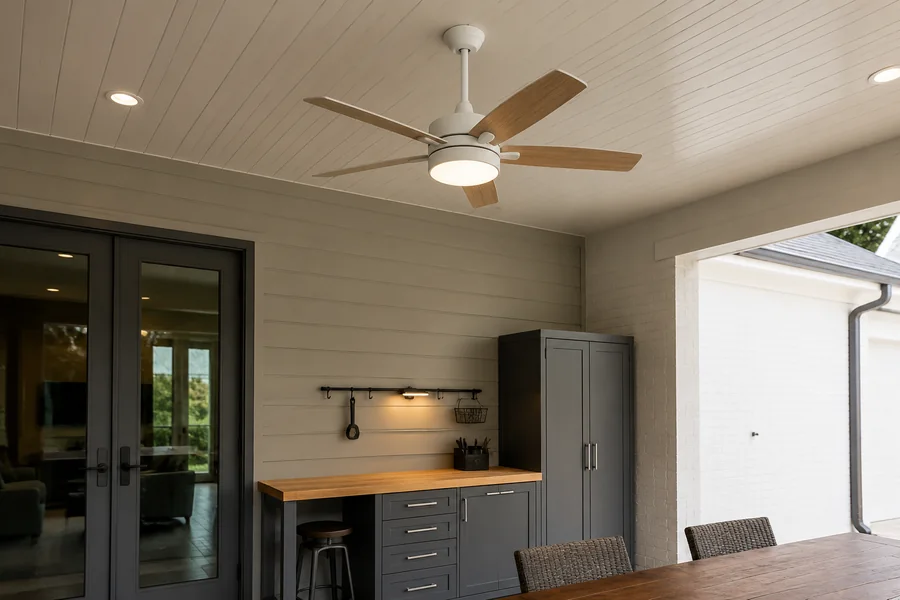
Some rooms need more than a standard indoor mounting decision. Covered patios may face humidity. Garages may need stronger airflow and practical lighting. Project rooms may require repeatable installation details across many units.
For semi-outdoor or covered areas, an outdoor ceiling fan with lights and oak blades can be suitable when the rating, ceiling support, mount type, and exposure level match the space. The installation should also consider moisture direction, mounting hardware, and whether the fan will be exposed to wind or only covered shade.
9-1. Covered patios need suitable ratings
Outdoor or semi-outdoor rooms should not use just any indoor fan. The product should match the moisture exposure and installation condition. Mounting hardware, blade material, motor protection, and light structure all matter when the space is not fully dry.
9-2. Garages need clearance and useful lighting
Garages often have doors, tracks, storage racks, and workbenches near the ceiling. A fan should not interfere with moving parts or low structural elements. In many garages, strong lighting and practical clearance are more important than decorative appearance.
9-3. Hospitality and project rooms need consistency
Hotels, apartments, and development projects need mounting choices that can be repeated safely. The same fan may be installed in many rooms, so rod length, ceiling box requirements, control type, and light depth should be documented clearly. This reduces installer confusion and keeps the finished rooms consistent.
10. Room-by-Room Mounting Checklist Before Buying
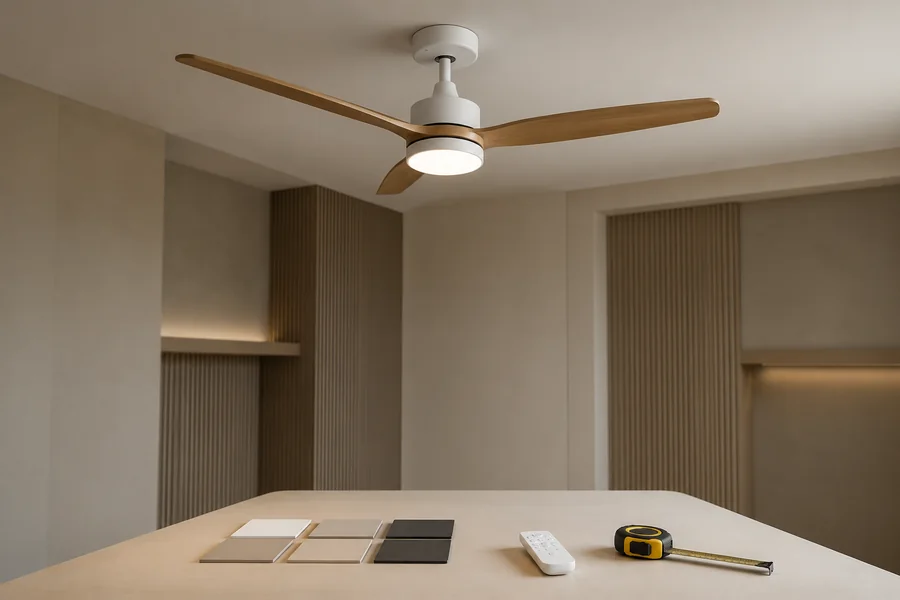
Before choosing a ceiling fan, list the room type, ceiling height, ceiling angle, airflow target, light needs, and installation limits. A clear checklist can prevent the most common mistake: choosing a fan by appearance before checking whether the mount actually fits the room.
Use the same logic for both homes and projects. The right mounting type should make the fan safer, quieter, more useful, and easier to live with. For a wider reference before final selection, return to the ceiling fan mounting options page and compare the room condition with the available installation styles.
10-1. Check height, angle, and support first
Measure the ceiling height and check whether the ceiling is flat or sloped. Then confirm that the ceiling box or support point is fan-rated. This step should happen before choosing colour, blade finish, or light style because the structure decides what can be installed safely.
10-2. Match the mount to the room use
A bedroom may need quiet low-profile comfort, while a high living room may need a downrod and stronger airflow. A compact kitchen may need a flush mount fan light, while a vaulted room may need an angled adapter. Matching the mounting type to the real room use gives better results than applying one rule everywhere.
10-3. Confirm the complete fixture height
Always check total drop height, including canopy, rod, motor, blade position, and light kit. This is especially important for fan lights because the LED diffuser can add depth below the motor. A fan that looks suitable in photos may feel wrong if the final installed height is not checked.
Need the Right Ceiling Fan for a Home, Project, or Commercial Space?
Tell us your space type, ceiling height, airflow needs, lighting options, certification direction, and order plan. We’ll help match the right solution.
Get a QuoteFAQ
Can one ceiling fan mounting type work for every room?
No, one mounting type does not work well for every room. Low bedrooms, high living rooms, compact kitchens, sloped ceilings, and covered patios all have different clearance, airflow, and safety needs. The mounting type should match the room structure and daily use.
Is flush mount always better for bedrooms?
No, flush mount is not always better for bedrooms. It is useful for low ceilings, but a standard mount can work better if the ceiling is high enough because the blades have more space to move air. The best choice depends on ceiling height, bed position, and total fixture depth.
Do high ceilings need a downrod ceiling fan?
Yes, high ceilings usually need a downrod ceiling fan. The rod lowers the blades into a more useful airflow zone, which helps the fan move air where people actually sit or walk. The rod length should still be chosen carefully so the fan does not hang too low.
Can a ceiling fan with light be used in small rooms?
Yes, a ceiling fan with light can be used in small rooms if the total fixture height, blade span, and light depth are suitable. A slim flush mount fan light is often better than a deep decorative model in compact spaces.
Do sloped ceilings need special ceiling fan installation types?
Yes, sloped ceilings often need special mounting hardware such as an angled ceiling adapter. The fan must hang level even when the ceiling surface is angled. You also need to check blade clearance and downrod length.
Should installation type be chosen before fan style?
Yes, installation type should be checked before fan style. Once the room height, ceiling angle, support point, and clearance are clear, style choices become safer and easier. This prevents buying a fan that looks good but cannot be installed properly.