

One large ceiling fan or two smaller fans is not only a question of diameter. The right answer depends on room layout, ceiling height, comfort zones, and where people actually sit. If you are still starting from the room plan, the living room fans page is the cleanest place to begin.
In a square room with one central seating zone, one large fan often feels enough. In a long or split room, two smaller fans often feel more even because they create two airflow centres instead of one. That is why this decision should be made from the room outward, not from the fan outward.
Start With the Room Layout, Not the Fan Size
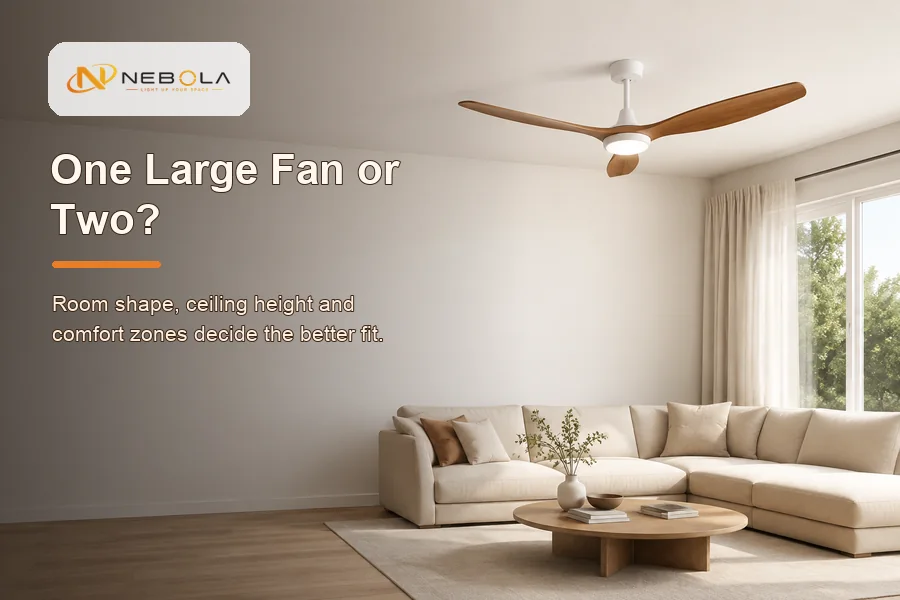
One large ceiling fan or two smaller fans is not only a question of diameter. The real answer starts with the room layout, because the same square footage can feel very different when the sofa, table, windows, and walking path move around the ceiling point.
If you are still looking at the larger living room collection first, the living room fans page is the right starting point before you decide whether the room needs one centred fan or two airflow zones.
A quick comparison
| Room shape | Usually better setup | Why |
|---|---|---|
| Square room | One large fan | A single centre point can cover the main seating area |
| Long room | Two smaller fans | Two airflow zones feel more even |
| Open concept | Depends on zones | The layout matters more than the square footage |
One zone or two zones
A one-zone room usually prefers one large fan because the airflow target is simple and the ceiling stays visually calm.
A two-zone room usually prefers two smaller fans because each fan can serve a different part of the room without needing a high-speed blast.
When you trace the room with your eyes, the ceiling fan decision becomes much easier. A sofa pushed to one side, a long media wall, or a dining corner attached to the living room often changes the answer more than the square footage itself.
That is why this article keeps the room layout first. If the product is chosen before the layout is understood, the final setup may be technically correct but still feel awkward in daily use.
A practical buyer should also look at how often the room is used at night. If the room becomes a quiet family area after dark, the best setup is often the one that feels calm at low speed rather than the one that looks the most dramatic on paper.
The same idea applies to rentals and renovation projects. A room that may change furniture later needs a simpler decision path, because the fan has to stay useful even if the room styling changes again in a year or two.
When One Large Fan Is the Better Answer
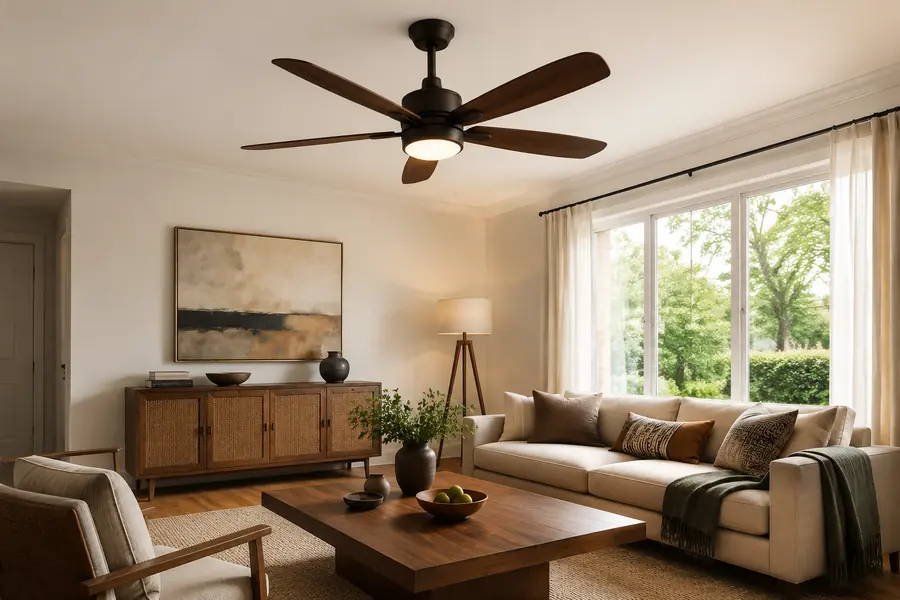
A single large fan can be the cleaner answer when the room is centred, the seating is grouped around one core area, and the ceiling is high enough to let the fan breathe. In that case, one fan may deliver enough movement without making the ceiling feel crowded.
One large fan can also reduce installation complexity. You only need one reinforced point, one receiver or control setup, and one visual centre, which is often easier for both homeowners and project teams.
A practical rule
For a stronger large-room direction, a 70 inch large-room option can be a good reference when the goal is a single fan that covers more floor area.
Large fan = single centre
One large fan works best when the sofa group, coffee table, and main sitting path are all under one central area.
It is also easier to install when the ceiling already has a clear fan-rated point and the room does not need two separate comfort zones.
One large fan works best when the seating is visually and physically centred. If the main chair group sits below the fan, the comfort zone becomes obvious, and one air source can usually cover it without forcing a second unit into the ceiling.
This setup is also easier to maintain. Fewer motors, fewer receivers, and fewer mounting points mean fewer things to inspect later, which is often one reason designers prefer the simpler answer when the room allows it.
It is also a good choice when the ceiling already has other features such as beams, pendant lights, or a statement fixture. In those rooms, one larger fan can keep the ceiling visually tidy while still doing the cooling job well.
A single larger unit also keeps the visual rhythm simpler when the room already has patterned flooring, heavy curtains, or a strong furniture finish. In that kind of space, a second fan can sometimes feel like one element too many.
When Two Smaller Fans Work Better
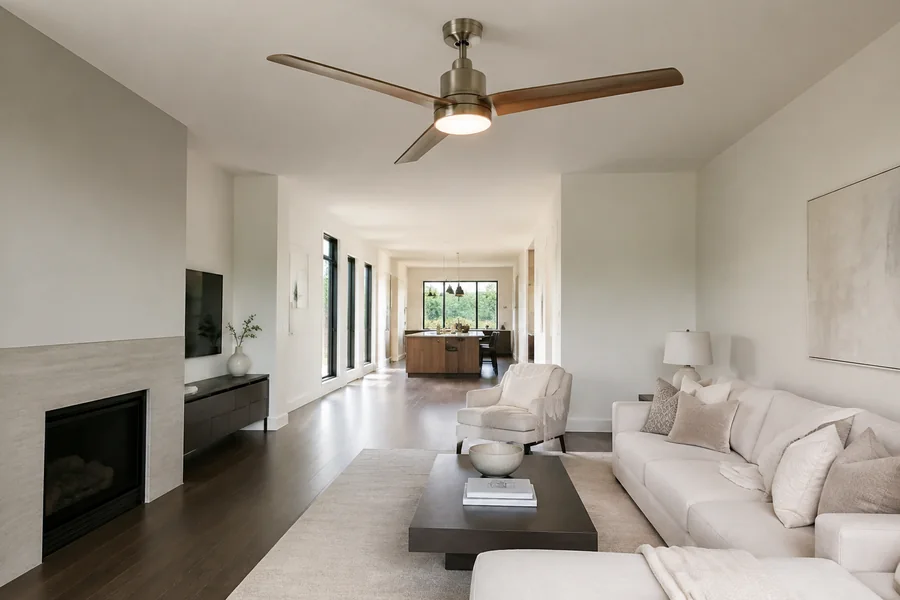
Two smaller fans make more sense when the room is long or divided into multiple seating zones. In those layouts, a single fan can leave one end too warm or force the centre fan to run too hard for the far corners.
Two fans can also feel calmer at night or during quiet use because each unit can run at a lower speed. That is useful when the room is large but the comfort need is soft, steady, and evenly spread.
A practical rule
A black 54 inch project fan is a useful reference point when you want a mid-large unit that still feels lighter than a huge centrepiece.
Two fans = split coverage
Two smaller fans are better when one side of the room is used differently from the other or when the room is long enough that a single centre point feels weak at the ends.
That setup usually gives a softer, more even sense of air because each fan can run slower while still reaching the people below.
Two smaller fans become more useful when the living room is stretched like a corridor or split by columns, partitions, or furniture clusters. In that kind of space, a single large fan can feel concentrated in the middle and weak at the edges.
A pair of smaller fans also gives the room more adjustment options. One family can run both units slowly for everyday comfort, or only one unit can run when the room is lightly used, which makes the setup feel more adaptable.
This flexibility is especially useful in open-plan homes, where a room might need cooling near the sofa one moment and near the dining area the next. Two fans let the space adapt without forcing the whole room to depend on one speed setting.
It also gives installers more freedom when the ceiling has beams, lights, or structural breaks that make one perfect centre point hard to use. In that situation, two fans can be a cleaner engineering answer as well as a better comfort answer.
How to Compare Airflow Coverage
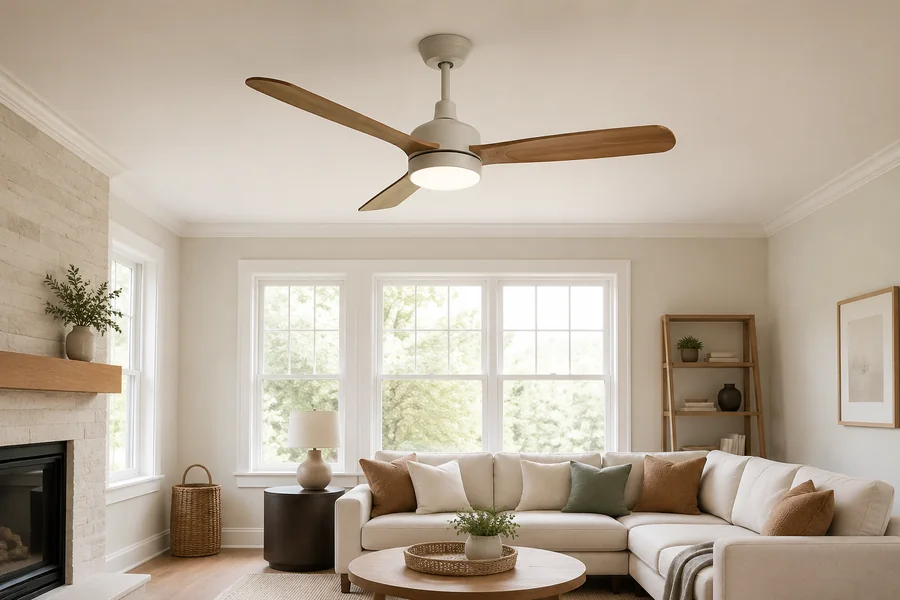
Airflow coverage is not the same as maximum fan size. What matters is where the air lands, how evenly it spreads, and whether the breeze feels useful where people actually sit.
This is why a lower-speed setting, a stable motor, and a sensible placement pattern matter as much as the blade span itself. A room can feel comfortable with less power if the airflow is better distributed.
A quick comparison
| Setup | Best feeling | When it wins |
|---|---|---|
| One strong fan | Direct and simple | Centred seating area and clean ceiling |
| Two softer fans | Even and calm | Long room or split room |
| Low-speed pair | Gentle comfort | Quiet use and multiple zones |
Airflow coverage is about placement
A fan is only useful where the air actually lands. If the seating zone is off-centre, the fan choice should change with it.
That is also why a lower-speed fan that spreads air evenly can sometimes feel better than a stronger fan that only works in the middle.
Airflow coverage should be judged where bodies are, not where the fan is. If a breeze never reaches the sofa, the fan may still look strong on paper while feeling weak in real life.
For that reason, low-speed comfort is often the better metric. A room that feels evenly cool on a lower setting is usually easier to live with than a room that needs constant high-speed movement to feel acceptable.
When buyers compare one large fan and two smaller fans, they should ask how the room feels during a normal evening, not just how it feels during a short test. The better choice is usually the one that keeps the room steady for longer without drawing attention to itself.
The speed curve matters too. Some fans feel fine on high but too aggressive on low, while others feel balanced across several steps. For a shared living room, that lower-end balance often matters more than the headline airflow figure.
What Ceiling Height Changes
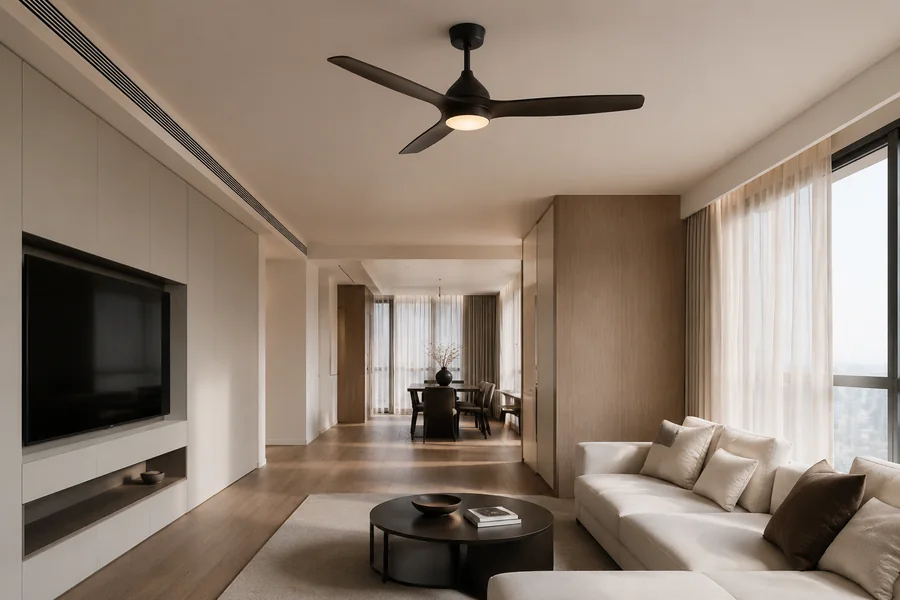
Ceiling height changes how the fan behaves because the fan has to reach the occupied zone without hanging too low. A fan that works in an 8-foot room may feel weak or awkward in a vaulted space if the drop and placement are wrong.
That is why the same room may need a different mount type, a different rod length, or even a different size family depending on the ceiling shape. High ceilings often reward a larger fan, while lower ceilings reward a more controlled profile.
A quick comparison
| Ceiling height | Better setup | What changes |
|---|---|---|
| 8 feet | Controlled profile | Drop height and clearance matter more |
| 9-10 feet | Either option | Fan size and layout become more flexible |
| High ceiling | Bigger or multiple fans | Coverage must reach the occupied zone |
Height changes drop and reach
Higher ceilings usually allow more room for a larger fan or a longer downrod, while lower ceilings demand a more careful total drop calculation.
If the fan is too close to the ceiling, the room may stay warm at sofa level even if the fan looks powerful on paper.
Ceiling height changes the choice because it changes the fan’s working distance. A low ceiling can make a large fan feel heavy and close, while a high ceiling can hide a fan that is mounted too high to matter.
If the room is tall, the question becomes whether the airflow reaches the occupied zone with enough softness. That is where a longer drop or a larger blade span can be more important than decorative appearance.
A ceiling that is only slightly higher than standard may still work with one large fan if the drop is controlled. Very tall rooms, however, often need a larger blade family or two fans because the air has to travel farther before it becomes useful to the people below.
That is also why a room can be technically large but still feel uncomfortable if the fan is mounted without considering height. The ceiling can look impressive while the people below still feel little benefit, which is exactly the kind of mismatch this article is meant to avoid.
Which Fan Styles Fit Each Setup

Style matters because a fan that looks right can still feel wrong if the room is too crowded or the control style is awkward. In a clean living room, the fan should support the space rather than dominate it.
When the room already has strong lighting, a no-light fan can be the cleaner option. When the room depends on the ceiling fixture for both air and light, a lighted fan keeps the plan simpler.
A practical rule
A fan without light choice is useful when the room already has enough light layers and you want the ceiling to stay visually lighter.
Style should follow the use case
If the room already has layered lighting, a no-light fan often keeps the ceiling cleaner and simpler.
If the fan must handle both lighting and airflow, a lighted model is usually easier to justify and easier to sell.
Product Options Mentioned
Style is not just a decoration issue. A fan with a clean finish can make a large room feel calmer, while a more industrial or decorative fan can create a focal point when the ceiling needs character.
The product should fit the room’s visual language. A fan without light often feels cleaner in a room that already has layered lighting, while a lighted fan can be a smarter choice when the ceiling fixture has to do more work in one place.
This is also where the buyer should think about maintenance. A simpler fan style is often easier to clean and easier to explain after installation, while a feature-heavy fan may suit premium rooms that can support a more expressive ceiling piece.
The Buying Mistakes That Cause Complaints
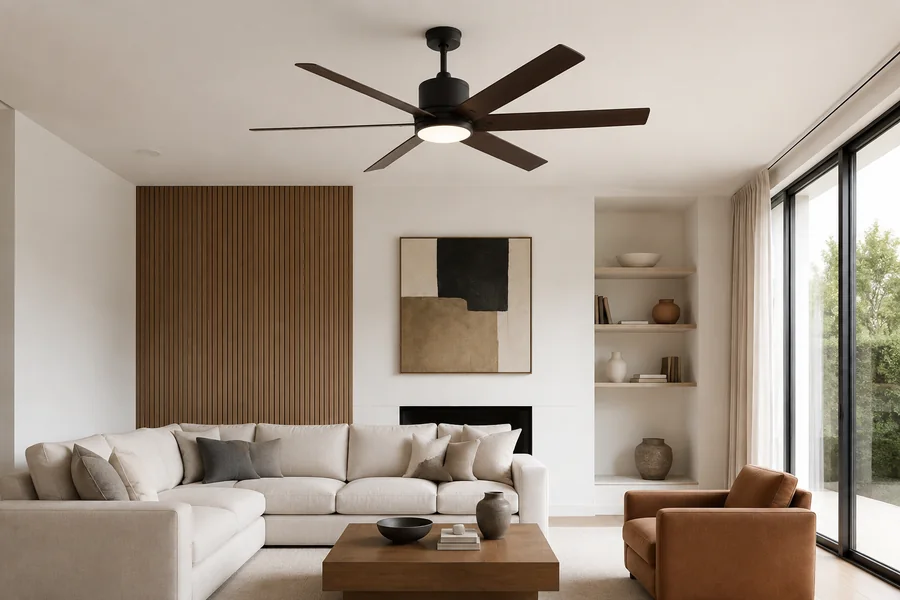
The most common mistake is choosing by square footage alone. Two rooms can share the same area and still need different solutions because one room is long, one is square, and one is split by furniture or openings.
The second mistake is ignoring noise and wobble. Large fans and small fans can both be wrong if they are not stable at the speed you will actually use in daily life.
A quick comparison
| Mistake | Why it causes complaints |
|---|---|
| Choosing only by area | Room shape and seating are ignored |
| Ignoring noise | A loud fan feels wrong in a living room |
| Ignoring wobble | Stability affects comfort and trust |
Buy the role, not just the size
A product should be chosen because it solves a room role clearly, not because it happens to be available in the right factory box.
That is where a good range avoids complaints: one model is the clean single-zone choice, another is the two-zone solution, and another is the simpler no-light or style-led option.
Many complaints start after installation because the fan was selected too casually. If the room needed two comfort zones and only one fan was installed, the buyer may feel the product is underperforming even if the model is technically good.
Wobble, noise, and the wrong control method are the other common surprises. These are not secondary details in a large room; they are often the difference between a fan people notice all the time and a fan people barely think about.
That is why the best purchase decision usually includes a pre-install check list: room layout, drop height, wall clearance, control method, and whether the fan will be expected to run softly or strongly for most of the day.
How Importers Should Build the Range
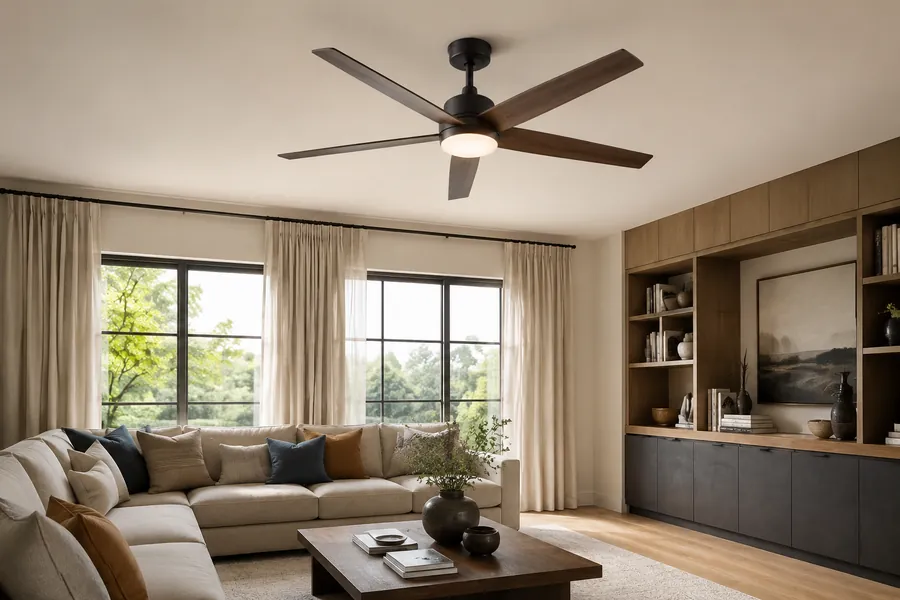
For importers and distributors, the key is not to stock only one answer for every large room. A better range usually includes one large fan option, one medium-large fan option, and one no-light or low-profile option for different room types.
That kind of range gives sales teams a clear way to explain why one room gets one fan while another room gets two smaller units. It also reduces the chance of buying the same product role twice under different model names.
A practical rule
If you want the range to feel organized, map products to the room type first. Then decide which size family, motor type, and light configuration fit each segment instead of asking the product to solve every room at once.
Build the SKU ladder
For importers and distributors, a clear ladder is easier to explain than a loose group of similar sizes.
The ladder can move from one fan for centred rooms to two fans for long rooms, then down to no-light or low-profile options for simpler layouts.
A good SKU ladder makes sales easier because it gives the team a direct story: one large fan for the centre, two smaller fans for longer rooms, and a no-light or low-profile version for simpler ceilings. That story is easy to remember and easy to explain.
For importers, this also reduces overlap. Instead of stocking several fans that all compete for the same room, the range can be split by room shape and comfort style, which makes inventory logic more disciplined.
The same ladder also helps product pages stay cleaner. When each SKU has a clear role, the title, hero image, technical parameters, and room recommendation can all support the same message instead of drifting into generic catalogue language.
The Final Decision Rule
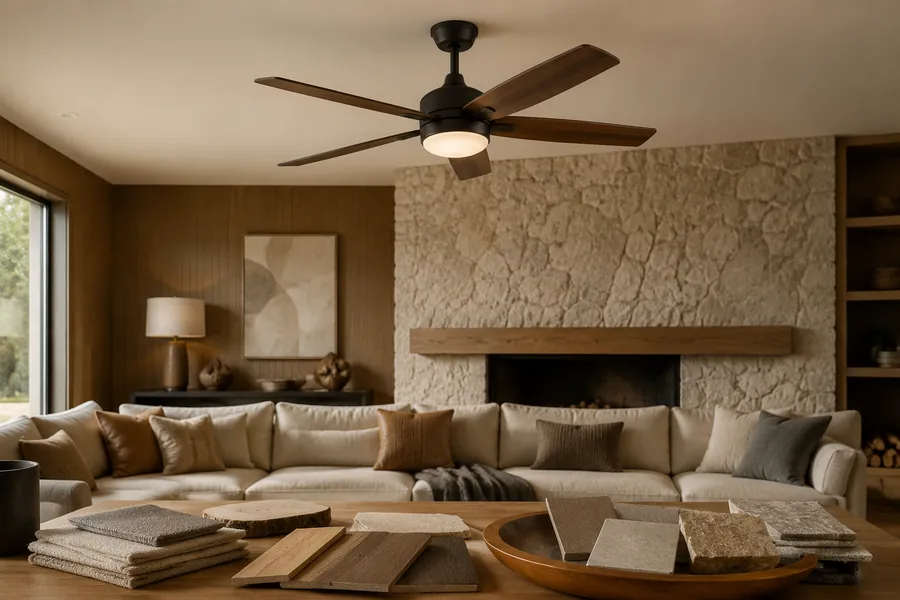
Why this section matters
If the room has one central comfort zone, one large ceiling fan is usually the simpler and cleaner answer. If the room has more than one zone, two smaller fans usually give better coverage and a softer feel.
If you are still unsure, compare the room shape, seating plan, ceiling height, and how often the fan will run on low speed. Those four factors explain most of the real-world difference between the two strategies.
A practical rule
For a broader product direction before you choose the final model, the living room fans page can help you compare the main size families one more time before buying.
If the room has one centre, choose one fan
That is usually the cleaner answer for square rooms, central seating zones, and visually simple ceilings.
If the room has two zones, choose two fans
That is usually the better answer for long rooms, split plans, or rooms where one fan cannot reach both ends comfortably.
If the room has one centre zone, choose one fan. If the room has two zones, choose two fans. That simple rule is often enough to separate the right solution from the wrong one once size and height are already checked.
The rest is about confidence. When the fan choice matches the actual room behaviour, the ceiling looks calmer, the airflow feels more natural, and the buyer has a clearer reason to trust the recommendation.
If you are making the decision for a client or a project, the final test is whether you can explain the choice in one sentence without sounding forced. If the answer sounds natural, the setup is probably the right one.
If you are looking for a better ceiling fan light solution for your project, NEBOLA can provide one-stop support from product selection to customization. We focus on ceiling fan light R&D and manufacturing, helping brands, importers, and distributors find products that better match real space needs.
NEBOLA Ceiling Fan Light Support
Need help choosing the right large-room fan setup?
Tell us the room shape, ceiling height, and seating layout, and NEBOLA can help you narrow the one-fan or two-fan answer.
FAQ
Is one large fan always better for a large room?
No, a single fan works best when the room has one central comfort zone, but long or divided rooms often need two fans.
Can two smaller fans be better than one large fan?
Yes, two smaller fans can feel more even when the room is long, open, or split into multiple activity areas.
Should importers stock both one-fan and two-fan options?
Yes, a clear mix of both gives sales teams a more practical way to match products to real room layouts.