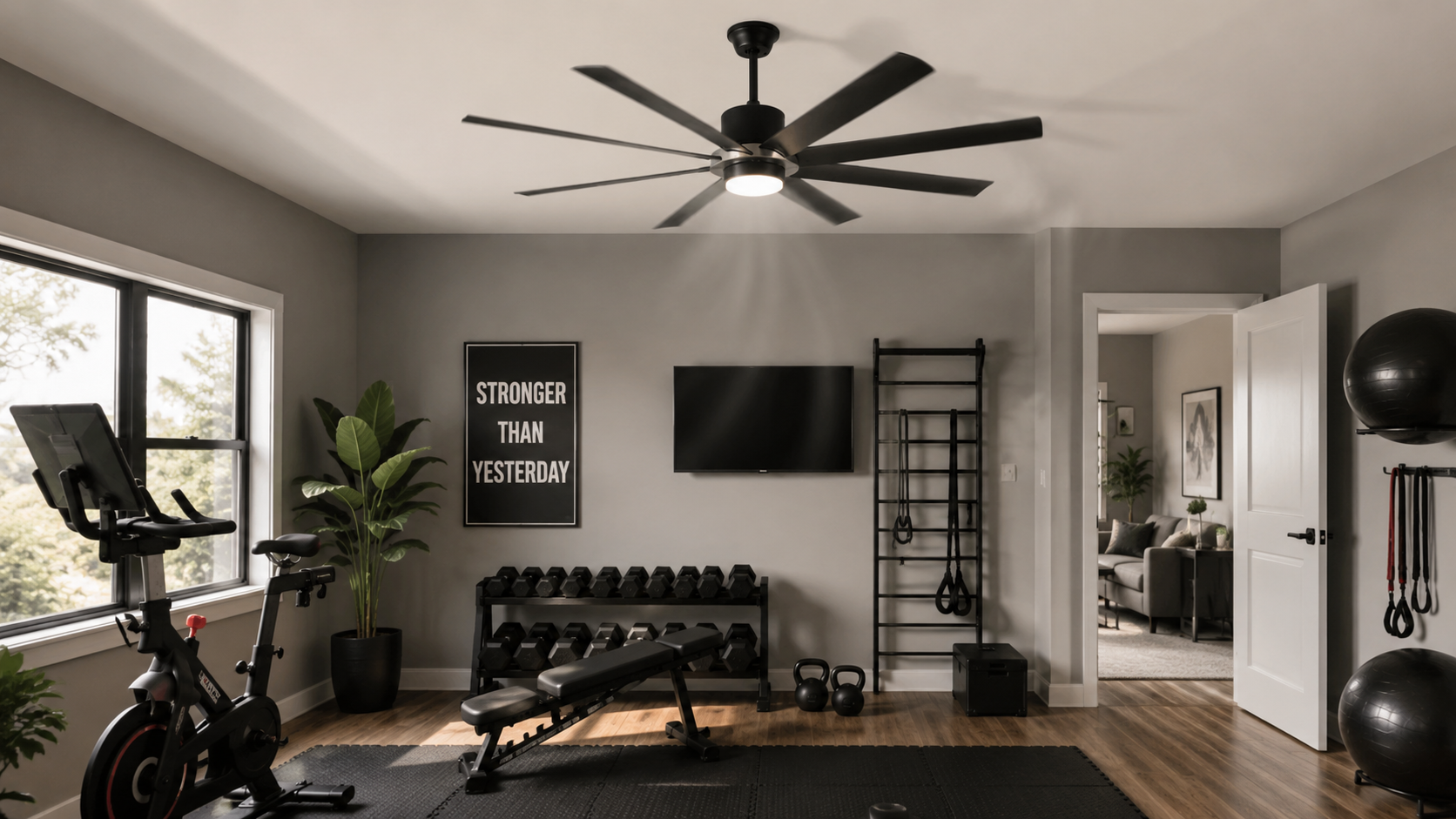



Yes, you can install a ceiling fan on an 8-foot ceiling, but the fan choice has to be much more careful. A normal living room may have enough width for a fan, but not enough vertical clearance for a deep motor housing or long downrod. Start with a living room ceiling fan that is designed around real ceiling height, not only blade span.
For an 8-foot ceiling, the safest direction is usually a flush mount ceiling fan or low profile living room ceiling fan. The fan should feel integrated with the ceiling, leave practical blade clearance, and avoid making the room feel pressed down.
1. Can an 8-Foot Ceiling Take a Ceiling Fan?
1-1. Yes, but installed depth matters
An 8-foot ceiling can accept a ceiling fan if the total drop from ceiling to blade is controlled. The fan should not hang like a pendant or sit low enough to make people feel uncomfortable below it.
This is why a ceiling fan for 8 foot ceiling spaces is usually different from a fan for tall living rooms. The mounting system, motor depth and light diffuser all matter.
1-2. Flush mount is usually the first choice
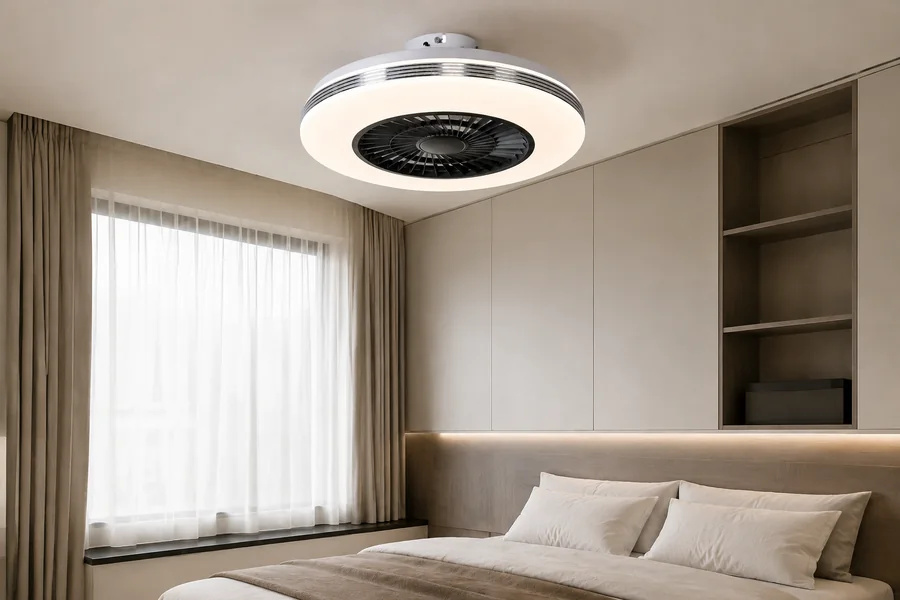
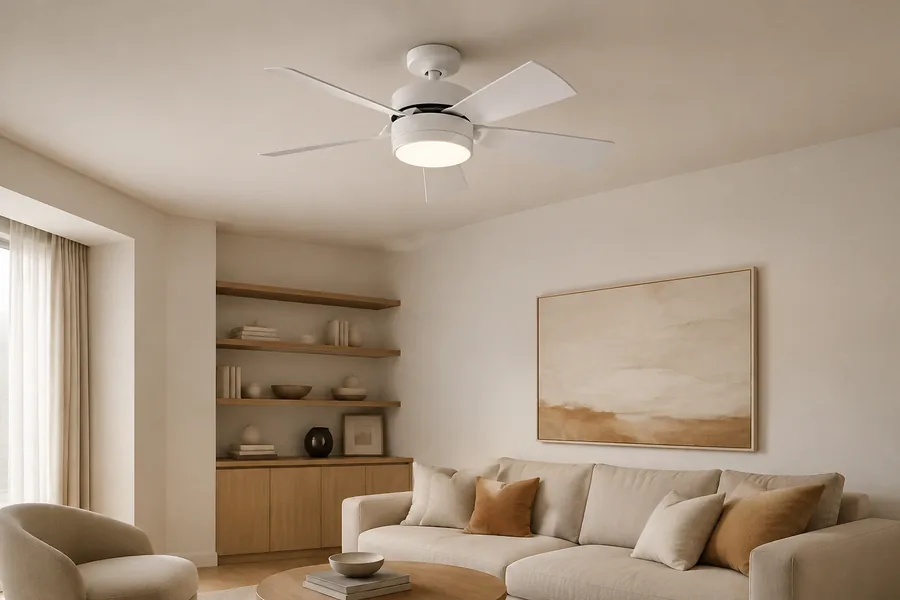
A flush mount ceiling fan is often the most practical option because it keeps the motor and blades close to the ceiling. A flush mount DC fan light for bedrooms shows the kind of low-profile direction that can suit compact rooms.
The goal is not to use the smallest fan possible. The goal is to choose a fan that gives useful airflow while keeping the room open and safe.
2. What Blade Clearance Should You Check First?
2-1. Check floor, wall and furniture clearance
Blade clearance is not only the distance from the floor. In real homes, blades also need enough distance from tall cabinets, bunk beds, pendant lights, doors, beams and upper shelves.
Before choosing a product, measure the ceiling height, the fixture depth and the furniture below. A fan that looks fine in a catalogue may feel too low after installation.
2-2. Treat electrical safety seriously
Low ceiling installation still needs correct support, wiring and mounting hardware. The CPSC overview of electrical safety is a useful external reminder that ceiling fixtures should be installed with safety in mind, not only appearance.
For project buyers, ask the supplier for mounting details, rated support requirements and control wiring information before confirming the order.
3. Is a Flush Mount Ceiling Fan Always Best?
3-1. It is best for most low living rooms
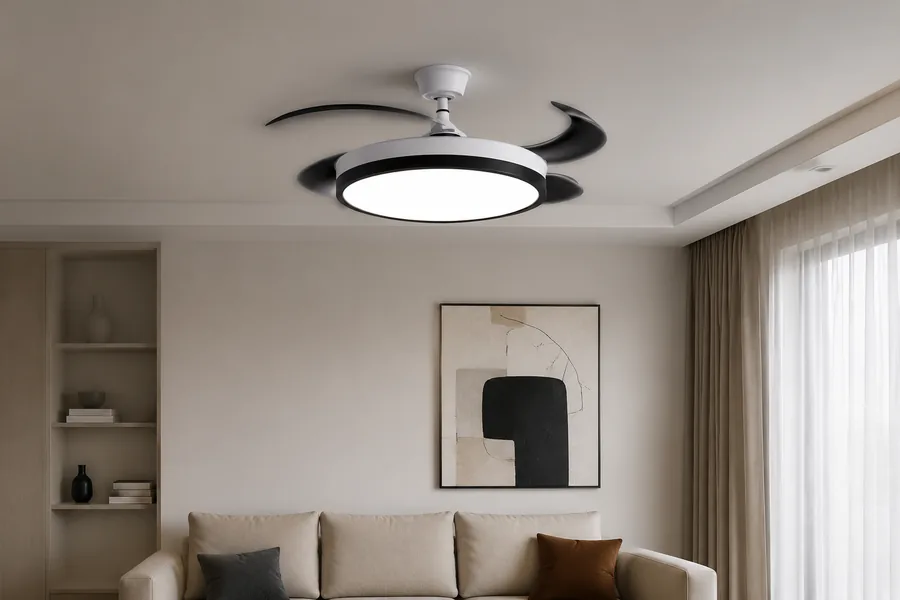
For a living room ceiling fan for low ceiling use, flush mount is usually the cleanest option. It reduces visual drop, protects headroom and keeps the blades closer to the ceiling plane.
This is especially useful when the room has an 8-foot flat ceiling and standard furniture. A low profile living room ceiling fan can make the room feel calmer than a hanging fixture.
3-2. It still needs enough airflow design
A flush mount design can sometimes move less air than a downrod fan because the blades sit closer to the ceiling. Good blade shape and motor control become more important.
Do not assume every low-profile product performs the same. Compare motor type, speed range, noise level and diffuser quality before choosing.
4. Should You Avoid Downrod Fans on an 8-Foot Ceiling?
4-1. Long downrods are usually wrong
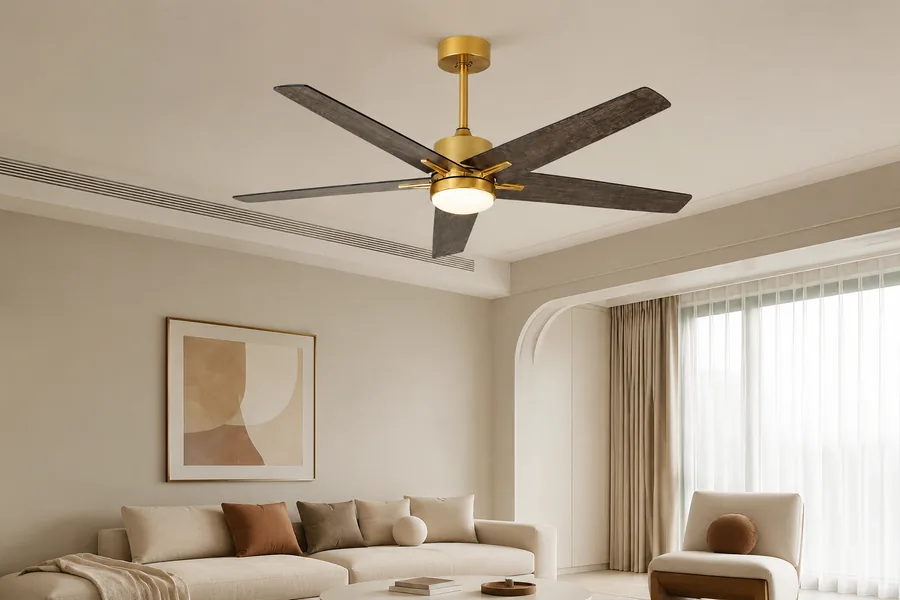
A long downrod on an 8-foot ceiling usually reduces clearance too much. It can make the fan feel low, interrupt sightlines and increase the chance of contact with raised arms or tall furniture.
This does not mean every non-flush fan is impossible, but the total drop must be checked carefully. In most residential cases, a flush mount ceiling fan is safer and cleaner.
4-2. Large fan lights need extra caution
A big 66 inch wood ceiling fan light can be useful in larger rooms, but it is not automatically suitable for an 8-foot ceiling. Blade span and fixture depth both have to fit.
If the room is wide but low, choose width carefully and avoid heavy visual forms that make the ceiling feel lower.
5. What Size Fan Works Best for Low Ceilings?
5-1. Match size to the room, not only height
Low ceilings do not always mean tiny fans. A small bedroom may need a compact fan, while a living room may still need a 48 or 52 inch fan with a shallow body.
For broader size decisions, compare the living room sizing articles on 52 inch ceiling fans and 60 inch vs 72 inch ceiling fans before applying the height filter. If the room feels closer to a tall great room than a standard low room, review the great room fan size guide separately.
5-2. Compact fans suit small adjacent rooms
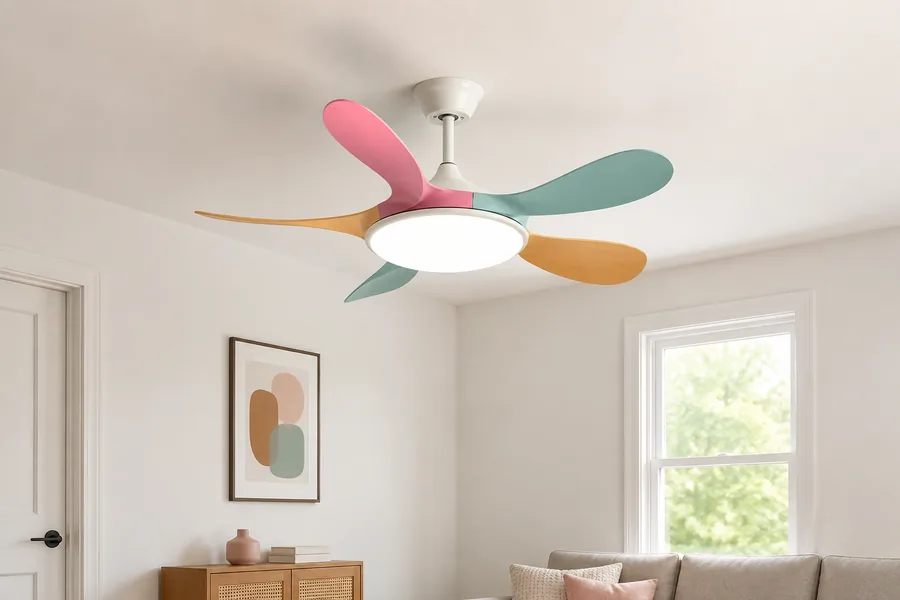
A compact product such as a small colourful silent fan light may suit small rooms beside the living area, but it may not provide enough visual scale for a main living room.
Think about where the fan will be used. A low ceiling hallway, child room and living room do not need the same fan size.
6. Can a Decorative Fan Light Work on a Low Ceiling?
6-1. Decorative depth is the risk
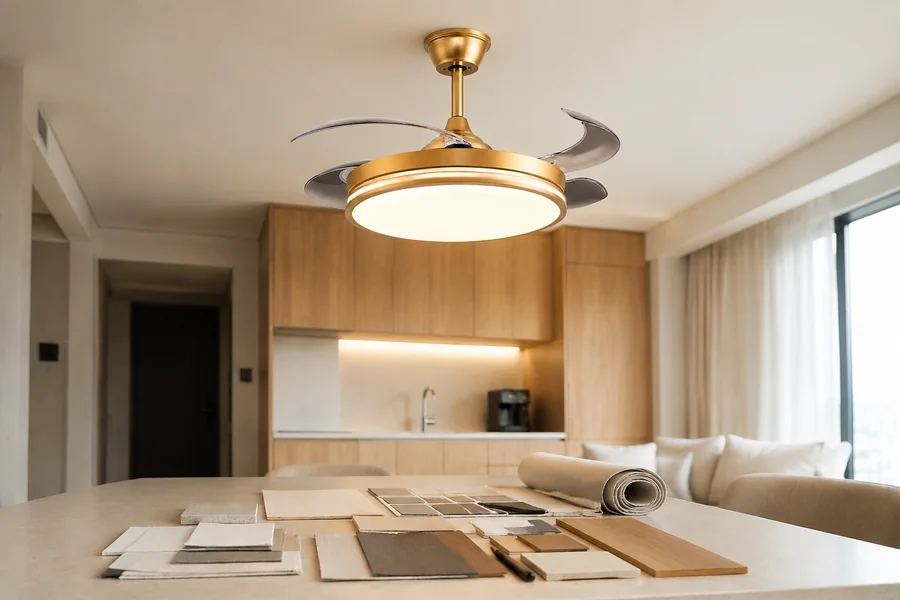
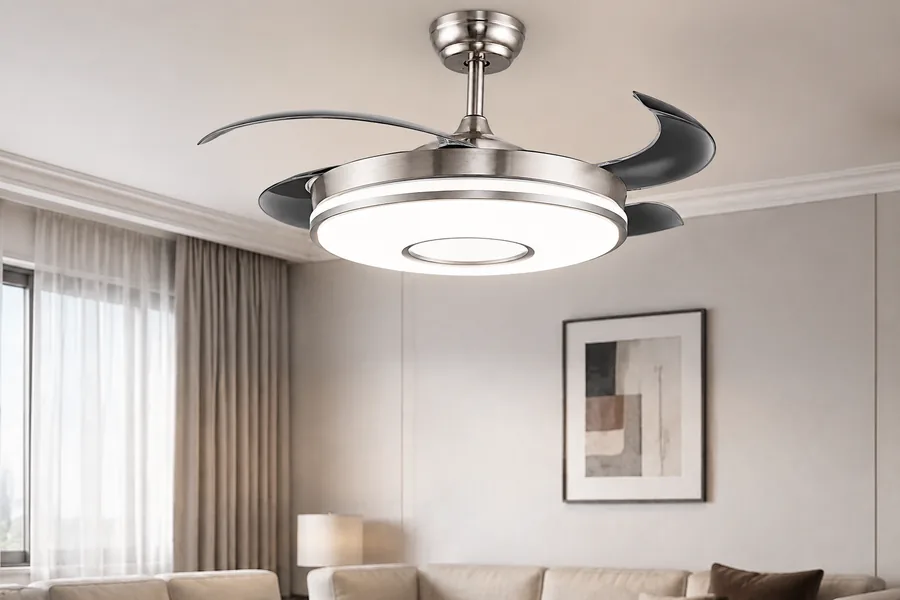
Decorative fan lights can look attractive, but many have deeper light bodies or retractable structures. On an 8-foot ceiling, that depth can matter more than the blade span.
A crystal retractable fan light should be checked for total installed depth and blade opening space before being considered for a low ceiling room.
6-2. Use decorative fans in the right room
If the living room is small and low, a simpler low-profile design usually feels more comfortable. If the room has a slightly higher ceiling transition or a formal seating zone, a decorative fan may work better.
The design should still leave enough headroom and avoid glare from the light diffuser. Comfort matters more than the fixture looking impressive in isolation.
7. What Installation Problems Are Common?
7-1. Weak support is a serious issue
A ceiling fan needs proper support because it moves and vibrates in use. An ordinary light box may not be suitable unless it is rated for fan installation.
Buyers should ask installers or suppliers about mounting brackets, screw points and ceiling structure. This is especially important when replacing a ceiling light with a fan light.
7-2. Poor balance feels worse in low rooms
In a low room, wobble and vibration are more noticeable because the fan is closer to people. Even a small imbalance can make the room feel uncomfortable.
DC motors, good blade consistency and stable mounting help reduce this risk. Sample testing is useful before project orders.
8. How Should Lighting Be Chosen for an 8-Foot Ceiling?
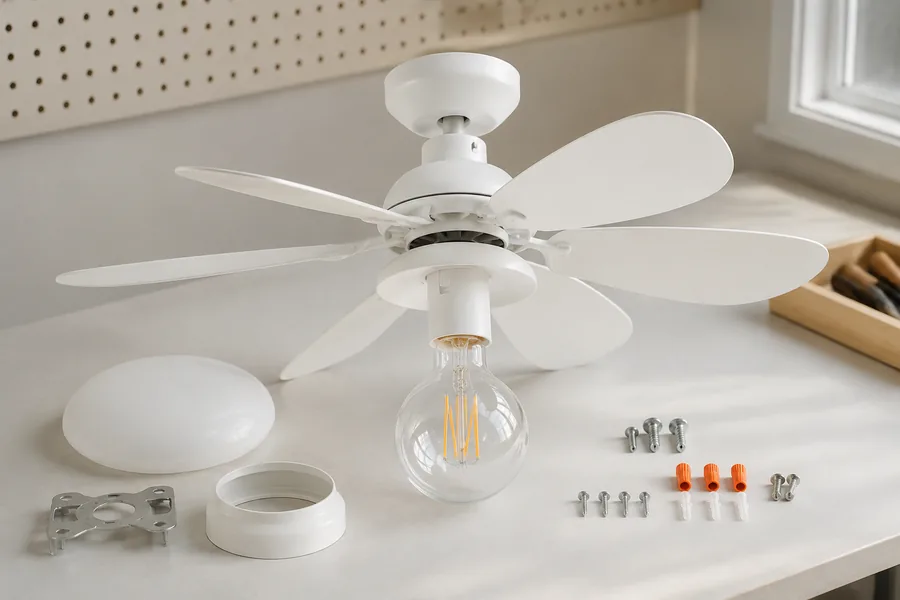
8-1. Avoid glare from shallow fixtures
Low profile fan lights sit close to eye level compared with higher ceiling fixtures. A harsh diffuser or exposed LED can create glare when people sit below it.
Choose soft diffusers, sensible brightness and dimming when possible. The light should support daily living, not feel like a bright ceiling disk.
8-2. Separate light and fan control helps
In low living rooms, users may want airflow without light during the day and light without airflow in the evening. Separate controls make the product easier to use.
For open layouts, the guide on how many ceiling fans an open concept living room needs also helps decide whether one low-profile fan should serve one zone or several zones.
9. What Should Buyers Avoid?
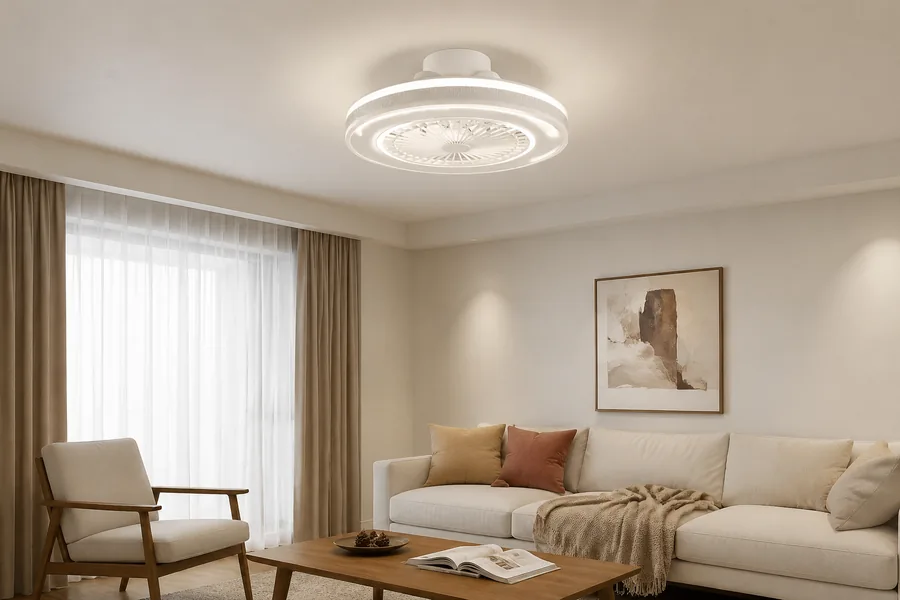
9-1. Avoid choosing a fan only by style
A beautiful fan can still be wrong if it hangs too low, has poor blade clearance or makes the ceiling look heavy. Low ceilings punish poor proportion quickly.
Use the complete guide on large living room fan coverage if the room is both wide and low, because size and height have to be solved together. If the layout is unusually long, compare one large fan or two smaller fans before forcing one low-profile fan to cover everything.
9-2. Avoid ignoring future maintenance
A fan installed close to the ceiling should still be easy to clean, service and control. If the diffuser is difficult to remove or the remote system is unreliable, daily use suffers.
For retail products, explain replacement parts and after-sales support clearly. Low-profile products are practical only when service access is practical too.
10. What Is the Best Practical Choice?
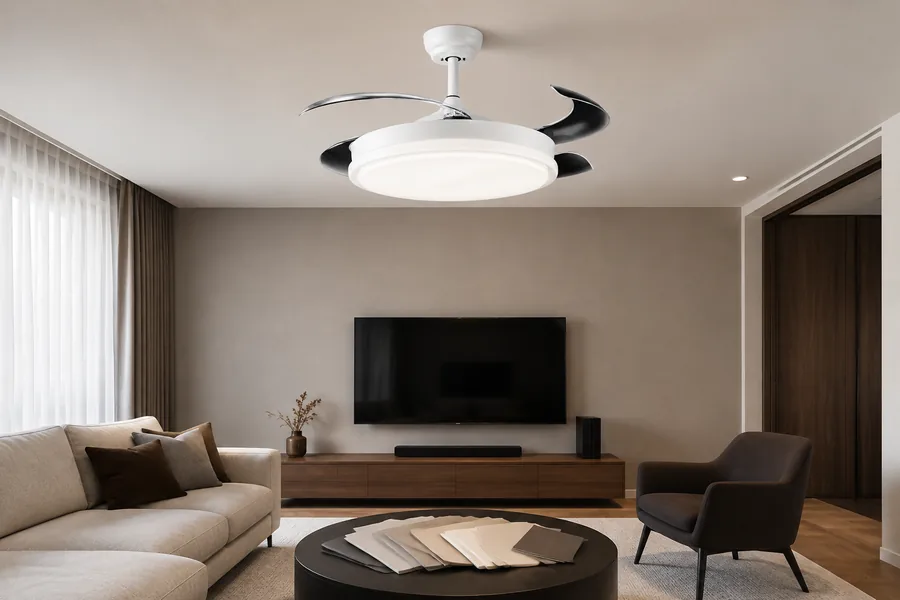
10-1. Choose low profile for most 8-foot rooms
For most 8-foot living rooms, a low profile living room ceiling fan with integrated light is the best starting point. It protects clearance, keeps the ceiling tidy and still supports everyday airflow.
If the room is large, compare blade span carefully instead of jumping to a deep or oversized fixture. The room-by-size ceiling fan guide can help narrow the range.
10-2. Confirm the final product with measurements
Before ordering, confirm ceiling height, fixture depth, blade span, support box, wall distance, control type and lighting output. This final check prevents most low-ceiling buying mistakes.
For more room-specific options, compare models from the living room ceiling fan category and choose the shallowest practical product that still suits the room size.
If you are looking for a better ceiling fan light solution for your project, NEBOLA can provide one-stop support from product selection to customization. We focus on ceiling fan light R&D and manufacturing, helping brands, importers, and distributors find products that better match real space needs.
Need Help Choosing the Right Ceiling Fan Light?
Tell us your room size, ceiling height, lighting needs and project plan. NEBOLA can help match the right fan light style and configuration.
Get a QuoteFAQ About Ceiling Fans for 8 Foot Ceilings
Can you install a ceiling fan on an 8-foot ceiling?
Yes, you can install a ceiling fan on an 8-foot ceiling if the fan is low profile, properly supported and leaves safe practical clearance.
Should an 8-foot ceiling use a flush mount ceiling fan?
Yes, a flush mount ceiling fan is usually the safest and cleanest choice because it keeps the fixture close to the ceiling.
Is a downrod fan a bad idea for an 8-foot ceiling?
Yes, a long downrod is usually a bad idea on an 8-foot ceiling because it reduces headroom and can make the room feel crowded.
Can a large fan work on an 8-foot ceiling?
No, not always. A large fan can work only when the room width, blade span and installed depth still leave comfortable clearance.
Should lighting be checked separately from fan size?
Yes, lighting should be checked separately because a low-profile fan light can still create glare if the diffuser or brightness is poorly designed.
Can NEBOLA help with low ceiling fan selection?
Yes, NEBOLA can help compare flush mount depth, blade span, LED diffuser style and DC motor options for low ceiling rooms.