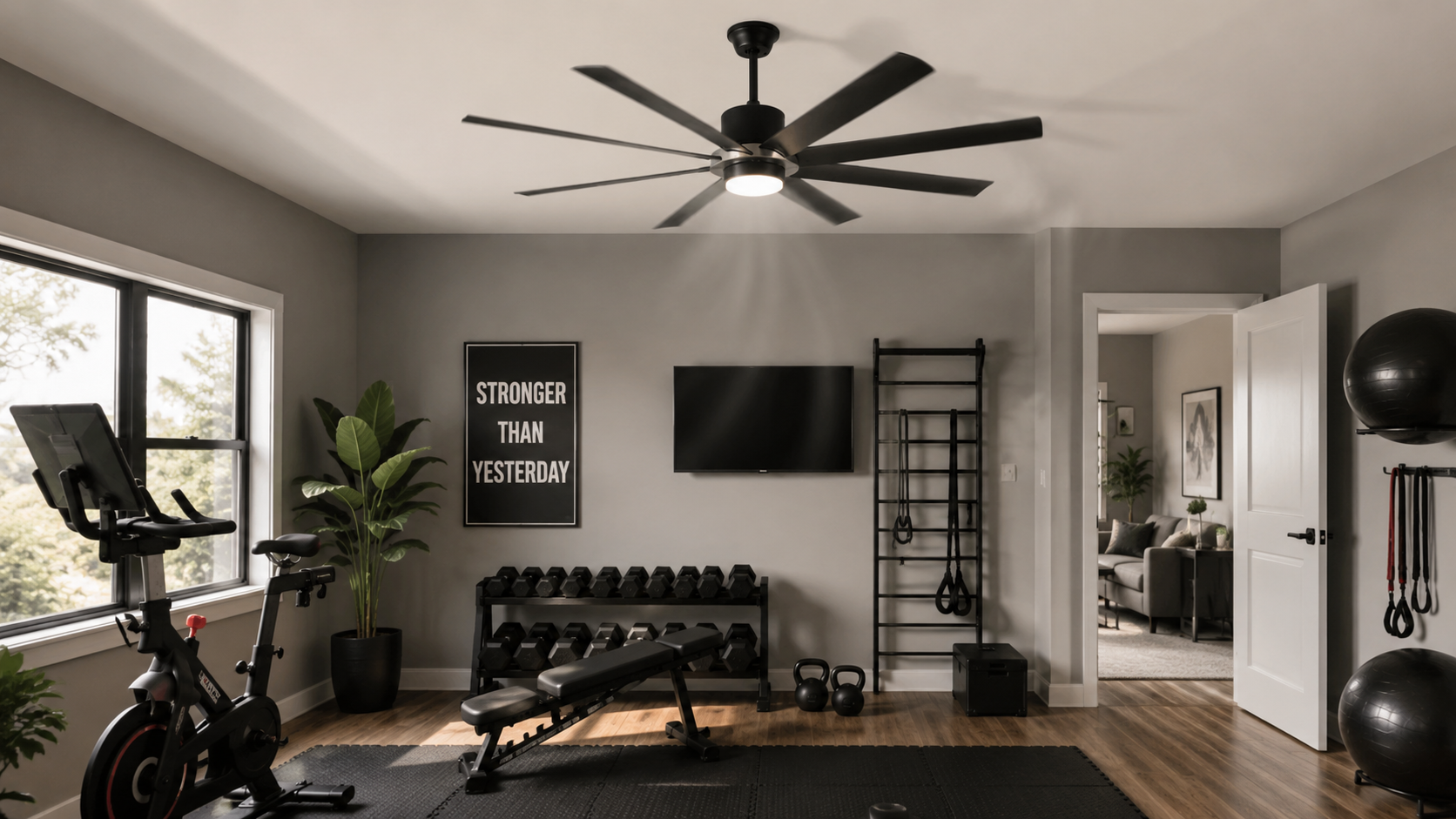


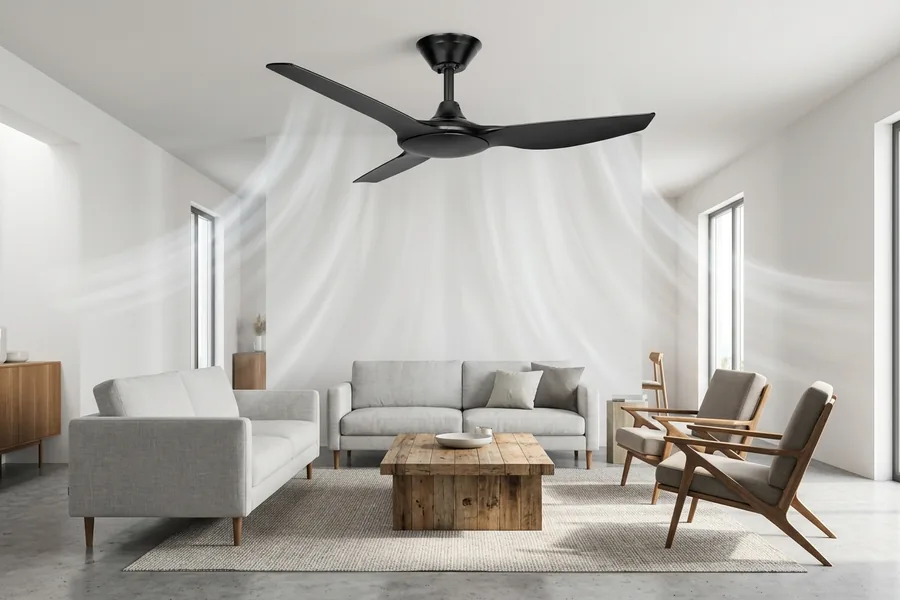
A wide ceiling fan can look powerful. But diameter is only the size of the circle the blades make. It does not tell the whole story of airflow. If you want a fan that feels calm, fresh, and useful every day, you need to look at ceiling fan CFM, motor power, blade design, and energy efficiency together.
This guide explains why two fans with the same diameter can move air very differently. It also shows how to compare airflow in a simple way before choosing a ceiling fan for a bedroom, living room, apartment, hotel room, or open-plan space.
Contents
1. Why Diameter Alone Cannot Tell You Airflow
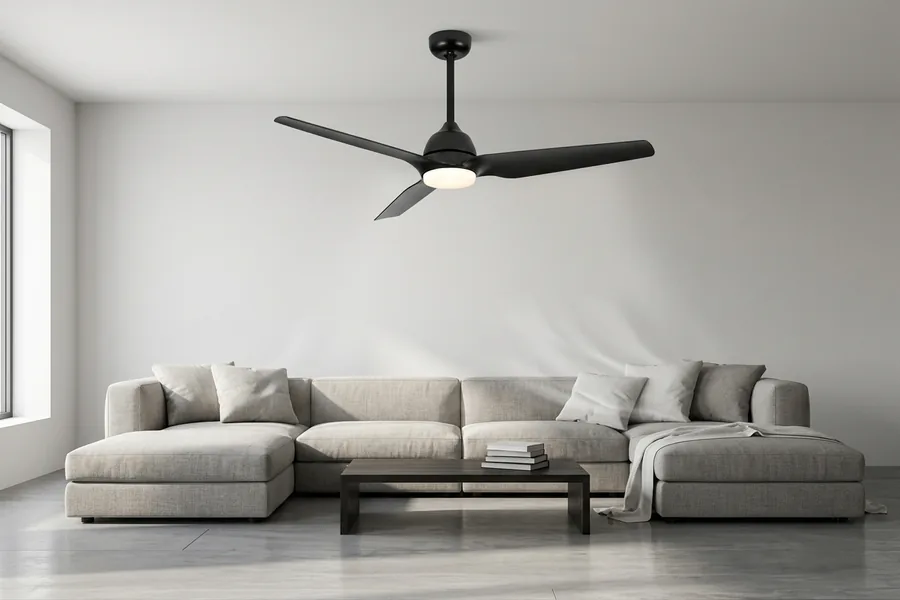
Ceiling fan diameter is easy to see. A 42 inch fan looks smaller than a 52 inch fan. A 60 inch fan looks ready for a wide room. This is why many buyers start with size.
That is a good start, but it is not the finish line. Diameter tells you how wide the fan is. It does not tell you how much air the fan can move, how smooth the air will feel, or how much power the fan will use to do the job.
1-1. What fan diameter really measures
Fan diameter means blade span. It is the distance across the full circle made by the rotating blades.
This measurement helps you judge room coverage. A wider blade span can reach a wider area. That matters in large bedrooms, living rooms, dining areas, and open spaces.
But blade span is not airflow by itself. A wide fan with weak motor power may turn slowly and move less useful air than expected.
1-2. Why two 52 inch fans can feel different
Two 52 inch ceiling fans can look almost the same in size, but feel very different in use.
One may have a strong DC motor, well-shaped blades, quiet low speeds, and good airflow efficiency. The other may have flat blades, weak speed control, and poor balance. Both are 52 inches. Only one may feel comfortable.
This is why size charts are helpful, but not enough. The better question is not only, “What diameter is this fan?” It is also, “How well does this fan move air?”
1-3. Where diameter still matters
Diameter still matters because air needs coverage. A small fan may create movement directly below it, but leave the edges of a wide room still.
For a compact bedroom, a smaller fan may be enough. For a living room or open area, a wider fan can spread air more evenly. Diameter gives the fan reach. CFM tells you how much air is being moved.
2. What Ceiling Fan CFM Means

2-1. CFM in simple words
Imagine the fan pushing a large invisible box of air every minute. CFM tells you the size of that box.
A higher CFM usually means stronger air movement. But the best CFM depends on the room. A small bedroom does not need the same airflow as a large living room. A dining room does not need the same wind feel as a patio or open commercial space.
2-2. Why CFM is useful for comparing airflow
CFM helps you compare fans that look similar. A 52 inch fan with better CFM may outperform another 52 inch fan with a weaker motor or poor blade design.
It also helps you avoid buying only by appearance. A fan may look large and stylish, but if the airflow number is low, it may not move enough air for the space.
2-3. Why CFM should not be read alone
CFM is important, but it is not the only number. A very high CFM fan may be too strong for a small room. It may also create more noise if it only performs well at high speed.
The best choice balances CFM, speed range, noise level, watts, motor quality, and room layout. Strong airflow is useful. Controlled airflow is better.
3. Size vs CFM: How They Work Together
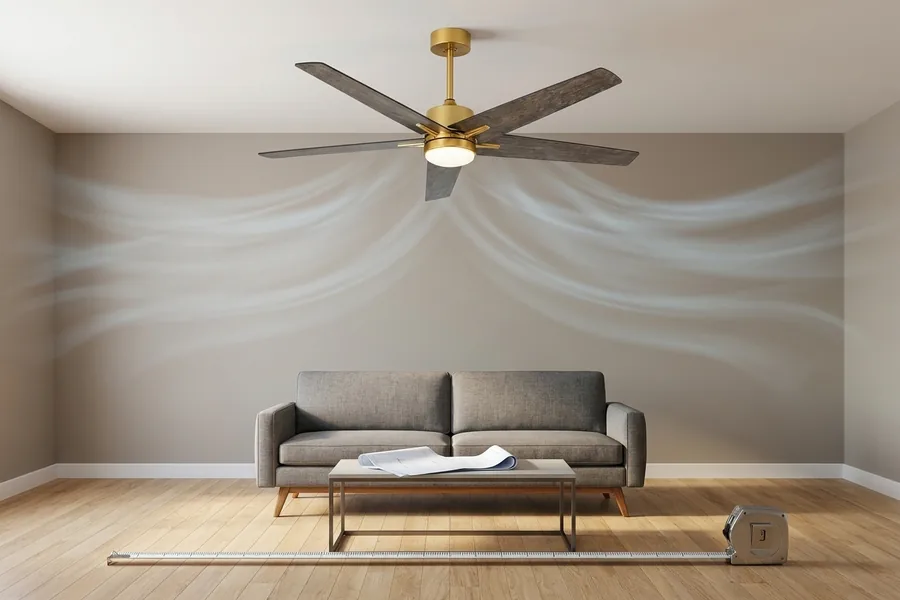
Size and CFM are not enemies. They work together. Diameter helps air reach more space. CFM shows how much air the fan can move.
The best fan is usually the one that matches both the room size and the way people use the room.
| What You Check | What It Tells You | Why It Matters |
|---|---|---|
| Diameter | How wide the fan is | Helps with room coverage |
| CFM | How much air the fan moves | Helps compare airflow |
| Watts | How much power it uses | Helps judge efficiency |
| Motor type | How smoothly it runs | Affects noise and speed control |
| Mounting height | Where airflow reaches | Affects real comfort |
3-1. Blade span controls coverage
Blade span controls how wide the airflow can spread. This is why larger fans often work better in wider spaces.
But a wide fan still needs the right motor and blade pitch. Without them, the fan may cover a wide circle but move air weakly.
3-2. CFM shows movement
CFM shows movement, not just size. If two fans are the same diameter, the one with stronger CFM will usually move more air.
This matters when choosing between similar products. If the room is warm, wide, or used often, CFM can help you find the fan that will feel more useful.
3-3. Why room shape changes the result
Room shape changes how airflow feels. A square room, a long room, and an open-plan room may need different fan choices even if the total square footage is similar.
In a long room, one high-CFM fan may still leave the far end still. In that case, two smaller fans can work better than one oversized fan.
4. Motor Power and Airflow Performance
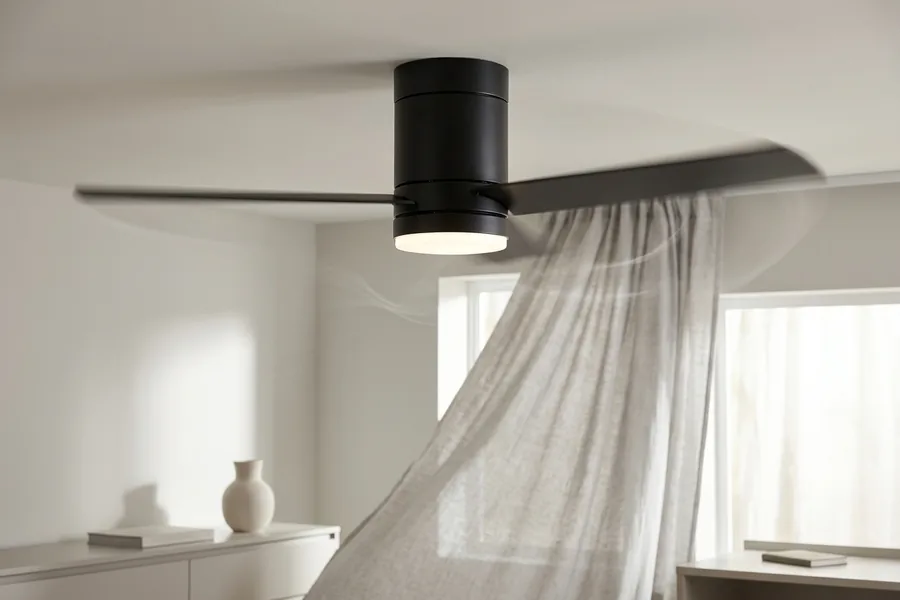
Motor power is the quiet force behind fan performance. It decides how well the fan can turn the blades, hold speed, and stay stable.
A good motor does not only create stronger airflow. It also helps reduce wobble, hum, and uneven speed changes.
4-1. Why motor strength matters
Blades need power to push air. If the motor is weak, the fan may look large but feel lazy.
Motor strength is especially important when the fan has wider blades, steeper blade pitch, or a larger diameter. The motor must be strong enough to move the blades without strain.
4-2. AC vs DC motor behaviour
Traditional AC motors are common and reliable. Many older ceiling fans use them. They can work well, but they often have fewer speed options and may use more energy.
DC motors are popular in modern ceiling fan lights because they are quieter, lighter, and more efficient. They usually offer smoother speed control, which helps the fan feel better in bedrooms and living rooms.
4-3. How speed control affects comfort
Speed control matters because people rarely use maximum airflow all day. Most rooms need gentle airflow most of the time.
A fan with good low-speed control can run quietly for longer periods. It can move air without making the room feel windy. This is often more valuable than a fan that only feels strong at full speed.
5. Blade Pitch, Blade Shape, and Real Air Movement
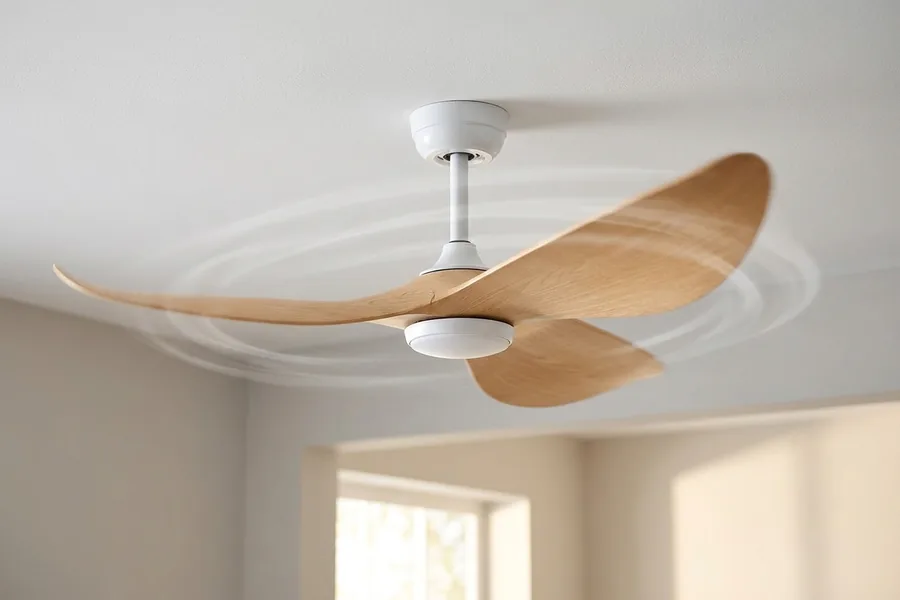
The blades are not just decoration. Their angle, shape, length, and material all affect how air moves.
This is why two fans with the same motor and diameter can still feel different.
5-1. Why blade angle changes airflow
Blade pitch means the angle of the blade. A flat blade may spin quickly but move less air. A better angle can push more air with each turn.
But more pitch needs stronger motor power. If the angle is steep and the motor is weak, the fan may slow down, wobble, or use more energy than expected.
5-2. How blade shape guides air
Blade shape changes airflow direction. Some blades create a soft, wide flow. Some push air more directly down. Some are shaped to reduce drag and improve airflow efficiency.
For daily use, smooth airflow often feels better than harsh airflow. This is why blade design matters as much as blade size.
5-3. Why blade count is not the main answer
More blades do not always mean more airflow. Blade count can affect style, balance, sound, and the feel of the air, but it is not the main performance number.
A well-designed three-blade fan can move air better than a five-blade fan with poor motor control. Look at the full design, not only the blade count.
Ready to Find the Right Smart Ceiling Fan for Your Home?
Compare styles, sizes, smart features, and lighting options to find the perfect fan for your space.
Get a Quote6. Energy Efficiency: More Air With Less Power

Energy efficiency means the fan moves useful air without wasting power. For a fan used every day, this matters.
A fan may have strong CFM, but if it uses too much energy or makes too much noise, it may not be the best long-term choice.
6-1. What airflow efficiency means
Airflow efficiency compares airflow with energy use. In simple terms, it asks: how much air does the fan move for each watt of power?
This helps you compare performance more fairly. A fan that moves good air with lower watts can be a better buy than a fan that only looks powerful on paper.
6-2. Why watts matter beside CFM
Watts show how much electricity the fan uses. CFM shows airflow. Read them together.
If Fan A has slightly lower CFM but uses much less power, it may be better for daily use. If Fan B has very high CFM but needs high wattage and makes more noise, it may be better only for large or demanding spaces.
6-3. How efficient fans support long daily use
Ceiling fans often run for hours. In bedrooms, they may run through the night. In living rooms, they may run all afternoon.
An efficient fan makes this easier. It supports comfort, reduces energy waste, and usually works better with quiet DC motor control.
7. Matching CFM to Room Size and Use
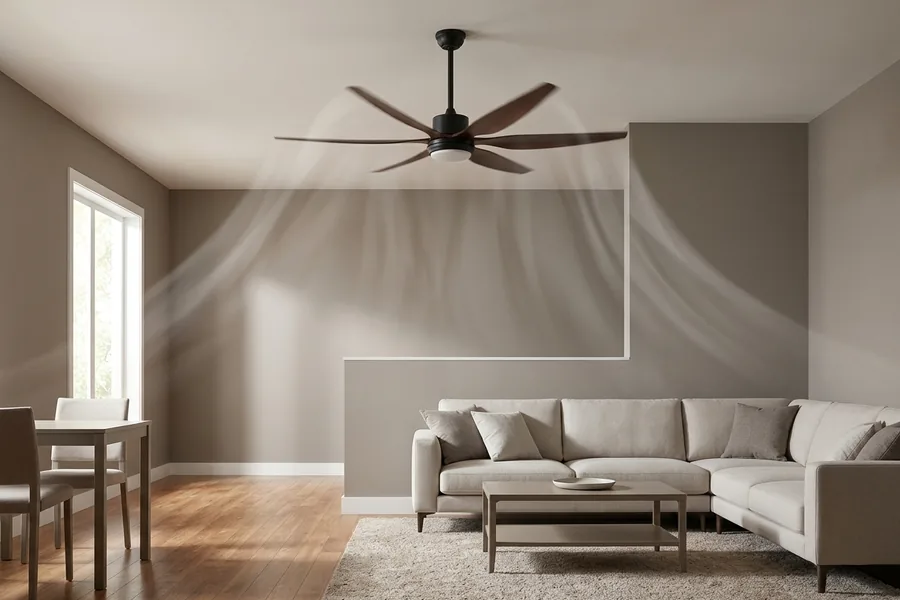
The right CFM depends on where the fan will be used. A fan for a compact bedroom should not feel like a workshop fan. A fan for a large living room should not feel weak in the corners.
Start with the room, then choose the airflow.
7-1. Small rooms and soft airflow
Small rooms need gentle airflow. A fan with too much CFM can feel too direct, especially above a bed or desk.
For small bedrooms, study rooms, and apartments, comfort matters more than maximum power. Look for quiet speed control, compact blade span, and steady low-speed airflow.
7-2. Medium rooms and balanced airflow
Medium rooms usually need balanced airflow. A 48 inch or 52 inch fan can often work well if the CFM, motor, and blade design are suitable.
This is where many buyers should compare CFM carefully. The right fan should move enough air without noise, wobble, or an oversized look.
7-3. Large rooms and stronger coverage
Large rooms need wider coverage and stronger airflow. A 56 inch, 60 inch, or larger fan may be useful when the room is wide and open.
But size still needs performance. A large fan should have enough CFM, stable motor power, and good low-speed control so it can move air smoothly without feeling harsh.
7-4. Open spaces and airflow zones
Open spaces need airflow zones. A kitchen, dining area, and sofa area may not all feel the same airflow from one fan.
In a long or divided space, two fans may create better air circulation than one very large fan. The goal is not only high CFM. The goal is useful airflow where people actually spend time.
8. Ceiling Height and Installation Can Change CFM Feel

CFM is usually measured in controlled conditions. Your home is not a test room.
Ceiling height, mounting type, furniture, beams, and fan position can all change how airflow feels.
8-1. Why tested airflow may feel different at home
A fan may have a good CFM number, but if it is installed too high, the airflow may not reach the people below. If it is too close to the ceiling, airflow can be restricted.
This is why installation matters. The same fan can feel strong in one room and weak in another.
8-2. Low ceilings and flush mount fans
Low ceilings usually need flush mount or low-profile fans. These fans protect head clearance and make the room feel safer.
However, some flush mount fans have less space above the blades, which can reduce airflow. Choose one with suitable CFM and a motor designed for low-profile use.
8-3. High ceilings and downrods
High ceilings often need a downrod. A downrod brings the fan closer to the living area, where airflow can be felt.
If the fan stays too close to a high ceiling, it may move air above the room instead of through the room. Correct height can make the same CFM feel more useful.
9. Common Mistakes When Comparing Ceiling Fan CFM
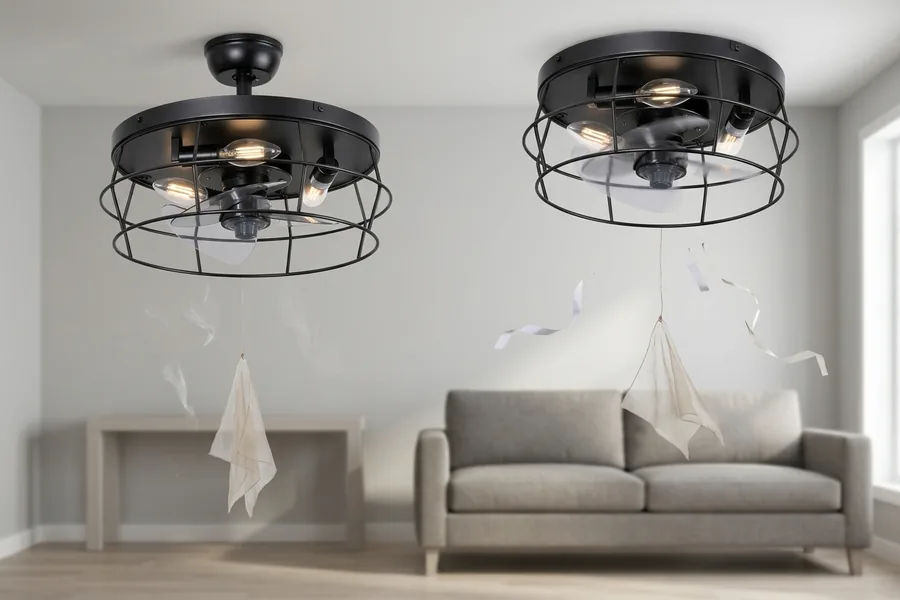
Many buyers compare ceiling fans too quickly. They see a large diameter or a high airflow number and stop there.
That is how mistakes happen.
9-1. Choosing only by diameter
Diameter is visible, so it feels easy. But a large fan with poor airflow performance can disappoint.
Use diameter to judge coverage. Use CFM, motor type, and watts to judge performance.
9-2. Choosing only by the highest CFM
The highest CFM is not always the best choice. A very strong fan may be uncomfortable in a small room. It may also be noisier at high speed.
Choose the right CFM for the room, not the biggest number on the page.
9-3. Ignoring noise and low-speed control
Noise can ruin a good fan. If a fan hums, rattles, or wobbles, people may stop using it.
Low-speed control is also important. A fan that feels good at low speed will be used more often than one that only works well at full speed.
9-4. Forgetting real room layout
Furniture, room shape, and seating position all affect airflow. A fan placed in the centre of the ceiling may not be centred over the living area.
Before buying, ask where people sit, sleep, work, and walk. That is where airflow needs to reach.
10. Ceiling Fan CFM Buying Checklist

Before choosing a fan, use this simple checklist. It will help you compare diameter and CFM without getting lost in numbers.
| Check | What to Ask |
|---|---|
| Diameter | Is the blade span wide enough for the room? |
| CFM | Is the airflow suitable for the space? |
| Watts | Does the fan move air efficiently? |
| Motor | Is it quiet, stable, and smooth? |
| Speed range | Does it offer comfortable low speeds? |
| Mounting | Is it right for the ceiling height? |
| Layout | Will airflow reach the main use area? |
10-1. Diameter and room coverage
Start by matching diameter to room size. A small fan may not cover a wide room. A large fan may feel too heavy in a compact space.
The right diameter gives the fan reach without overpowering the room.
10-2. CFM and speed range
Check CFM to understand airflow. Then check the speed range to understand comfort.
You want a fan that can move enough air when needed, but also run quietly at low and medium speeds.
10-3. Motor type and energy efficiency
Look for a motor that supports stable performance. DC motors are often a strong choice for modern homes because they can reduce energy use and improve speed control.
Energy efficiency matters most when the fan will run for many hours.
10-4. Ceiling height and mounting type
Choose the mounting type after checking ceiling height. Low ceilings may need flush mount fans. High ceilings may need downrods.
The best CFM number will not help much if the fan is installed at the wrong height.
10-5. Comfort test before buying
The final test is simple: will this fan feel good in real life?
A good fan should move air evenly, stay quiet, use energy wisely, and fit the room. Diameter helps you choose the reach. CFM helps you understand the airflow. Motor power and energy efficiency tell you whether the fan can perform well every day.
Final Thoughts
Ceiling fan diameter is important, but it is not everything. It tells you how wide the fan is, not how well it performs.
CFM gives a better view of airflow, but it should still be read with motor power, blade pitch, speed control, watts, ceiling height, and room layout. A smart choice is not the biggest fan or the highest CFM fan. It is the fan that gives the right airflow for the right space with the least waste and the most comfort.
When size, CFM, motor design, and energy efficiency work together, the ceiling fan does more than spin. It makes the room feel fresh, balanced, and easy to live in.
Ready to Find the Right Smart Ceiling Fan for Your Home?
Compare styles, sizes, smart features, and lighting options to find the perfect fan for your space.
Get a Quote