

Kitchen ceiling fan size is not only about square footage. A kitchen has cabinets, islands, range hoods, pendant lights, heat, cooking moisture and people moving around with hot pans or dishes.
The best ceiling fan for kitchen use should be compact enough for clearance, strong enough for gentle air movement and simple enough to clean. In many kitchens, the right answer is not the biggest fan. It is the fan that improves comfort without fighting the cooking layout.
This kitchen fan size guide explains fan dimensions, blade span, ceiling height, lighting, airflow, control and common mistakes. For the full sizing background, start with the ceiling fan size guide.
1. Why Is Kitchen Ceiling Fan Size Harder Than Bedroom Size?
A kitchen is a work room. People stand, cook, carry dishes and open cabinets. A fan that feels fine in a bedroom may feel intrusive in a kitchen if it is too wide or too low.
1-1. What makes a kitchen ceiling different?
Kitchens often include cabinets, range hoods, islands, recessed lights and pendant fixtures. Compare options inside the kitchen ceiling fan category only after checking these real ceiling conditions.
1-2. Should the fan be strong or gentle?
Kitchen airflow should be gentle. Strong wind can disturb steam, move paper towels, cool food too quickly and feel uncomfortable while cooking.
1-3. Why does cleaning matter in kitchens?
Grease and dust can collect faster in kitchens. Simple blade shapes, smooth surfaces and accessible light covers are easier to maintain than ornate designs.
2. How Should You Measure Kitchen Fan Dimensions?
Measure the clear ceiling area rather than the whole kitchen. Cabinets and lighting can reduce the usable fan zone.
2-1. Which measurements matter most?
- Room length and width.
- Clear ceiling area away from cabinets.
- Distance to pendant lights and range hood.
- Ceiling height and fixture depth.
- Island or dining nook position.
- Door swing and cabinet opening paths.
2-2. Why should the fan avoid the cooking line?
A fan should not blow directly across a stove or cooking surface. It can disturb heat, smoke or steam direction. Keep airflow useful for comfort, not disruptive for cooking.
2-3. What if the kitchen is open to another room?
Open kitchens need zone thinking. A kitchen connected to a dining or living area may not need one oversized fan. The room-by-room ceiling fan size guide helps compare each zone separately.
3. What Size Ceiling Fan Works for Small Medium and Large Kitchens?
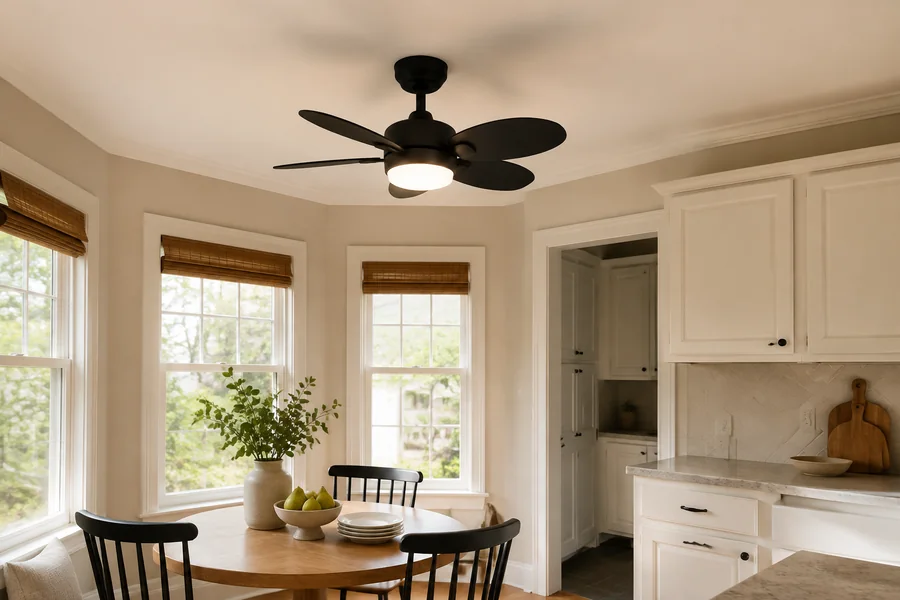
Most kitchens use smaller or mid-size fans. The exact size depends on clear ceiling area, layout and ceiling height.
| Kitchen type | Typical fan direction | Main check |
|---|---|---|
| Small galley kitchen | 20 to 36 inch compact fan | Cabinet and light clearance |
| Small square kitchen | 30 to 42 inch fan | Gentle airflow and low fixture depth |
| Medium kitchen | 42 to 48 inch fan | Island, dining nook and ceiling height |
| Open kitchen-dining area | 52 inch or separate zones | Avoid direct wind over cooking and dining |
3-1. Is a small kitchen fan better for tight rooms?
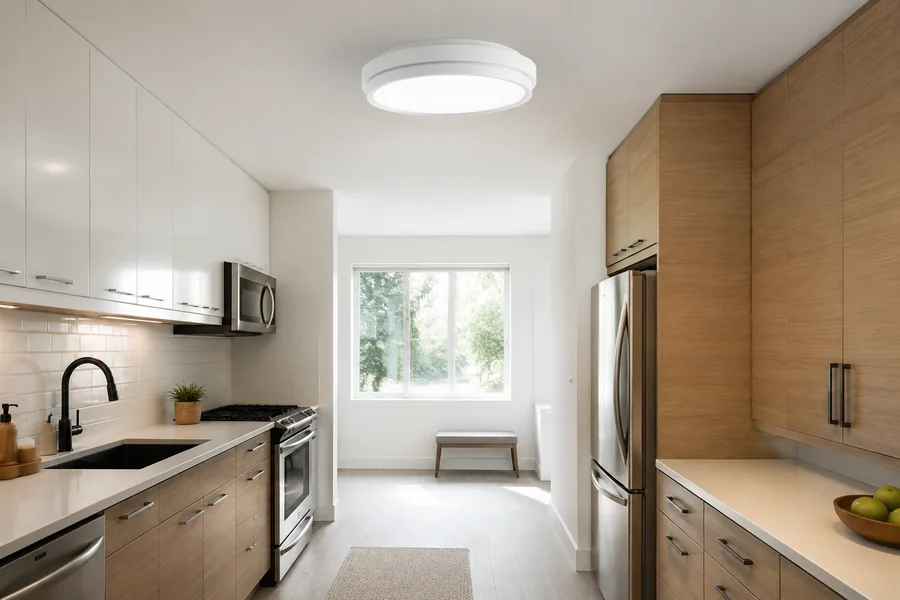
Yes, a small kitchen fan is often better where cabinets and low ceilings limit space. A modern 20 inch flush mount ceiling fan light with remote can suit compact kitchens that need light and gentle air movement in a tight fixture.
3-2. When can a 42 inch fan work in a kitchen?
A 42 inch fan can work in a small to medium kitchen with a clear ceiling zone. If you are choosing between nearby sizes, the 42 inch vs 52 inch ceiling fan guide helps explain the comfort difference.
3-3. Is 52 inch too large for a kitchen?
A 52 inch fan may be too large for many enclosed kitchens, but it can work in an open kitchen-dining zone if the fan is placed over the sitting area rather than directly over the cooking line.
4. How Does Ceiling Height Affect a Ceiling Fan for Kitchen Use?
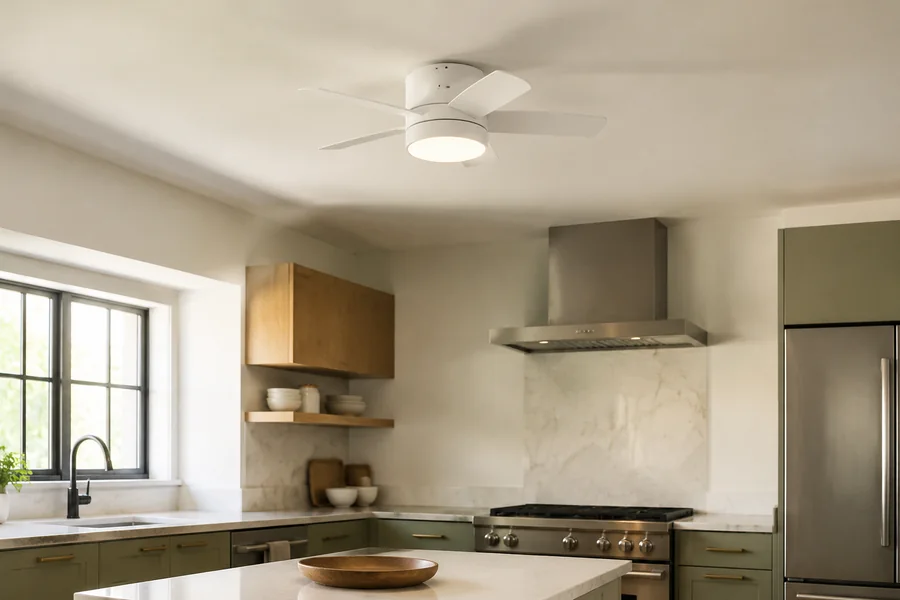
Kitchen fans must protect head clearance because people stand and move around constantly. Total fixture depth matters as much as blade span.
4-1. When should kitchens use flush mount fans?
Flush mount fans are useful in low kitchens because they keep the fixture close to the ceiling. A low profile hugger ceiling fan with light for kitchens can combine compact height, light and airflow in one practical direction.
4-2. When is a downrod a problem?
A downrod can hang too low in many kitchens, especially above an island or walking path. Use it only when the ceiling is high enough and the fan clears daily movement.
4-3. How should low ceilings be judged?
Low kitchens should be compared with the low ceiling fan size guide and the article on ceiling fan size for different ceiling heights before ordering.
5. How Should Kitchen Airflow Work With Cooking Ventilation?
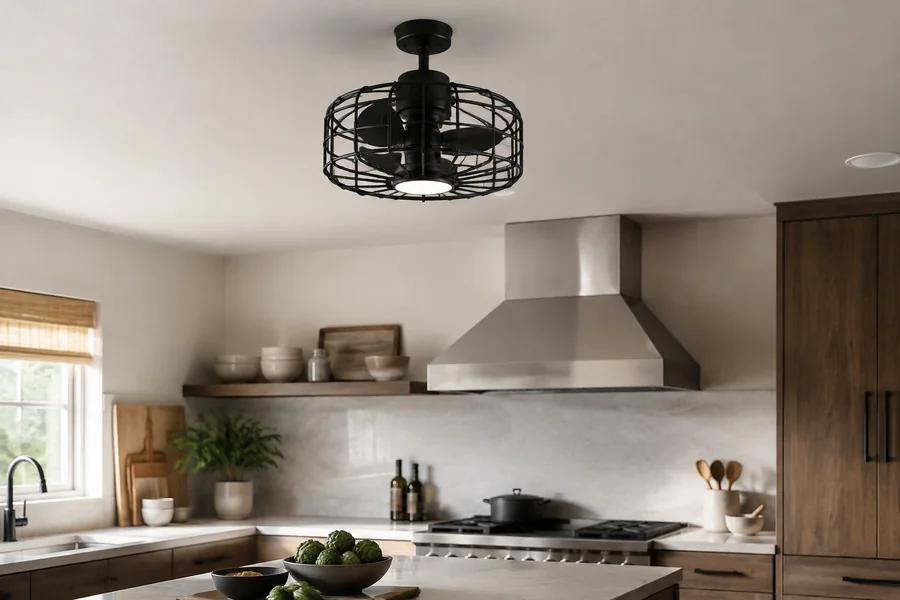
A kitchen fan can make the room feel less hot, but it should not be confused with ventilation. Cooking particles and moisture need proper capture and exhaust where required.
5-1. Can a ceiling fan replace a range hood?
No. A ceiling fan moves air inside the room, while kitchen ventilation removes or captures cooking pollutants. EPA information on indoor particulate matter from cooking is a useful reminder that cooking can affect indoor air quality.
5-2. Where should airflow be directed?
Airflow should support comfort around the kitchen, breakfast nook or island seating. Avoid direct airflow across flames, steam, lightweight items or the range hood capture area.
5-3. How much airflow is comfortable?
Comfort airflow is not always maximum airflow. Read the guide on whether a bigger ceiling fan improves airflow before choosing a fan that is too large for a small kitchen.
6. Should a Kitchen Ceiling Fan Include a Light?
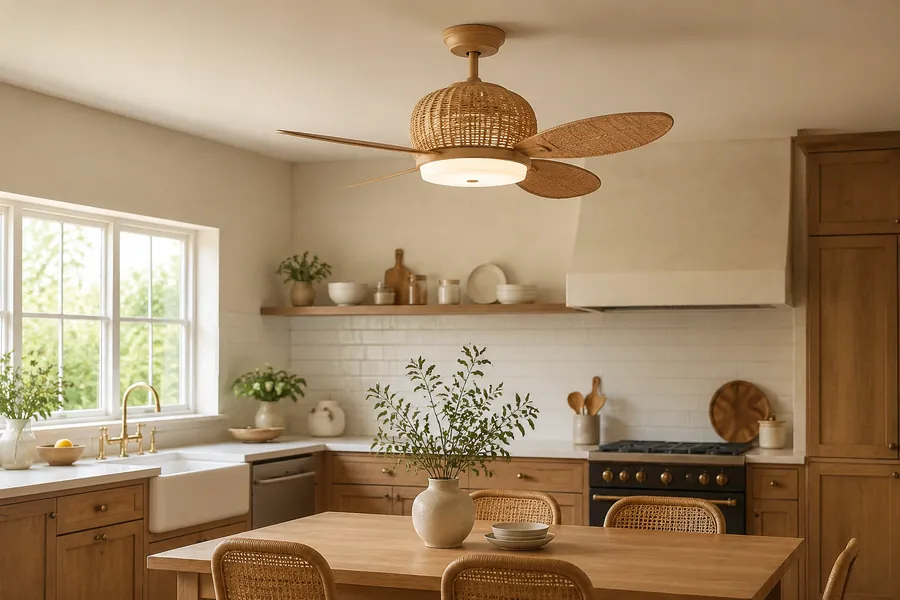
Many kitchens already have task lighting. A fan light can add general light, but it should not create glare or moving shadows over counters.
6-1. When is a fan light useful?
A fan light is useful in compact kitchens where one ceiling fixture must provide both light and gentle air movement. It can also reduce ceiling clutter.
6-2. What light quality should kitchens check?
Neutral white or adjustable colour temperature can be practical for food preparation. The diffuser should be soft enough to avoid glare, but clear enough for daily kitchen tasks.
6-3. When does a caged fan make sense?
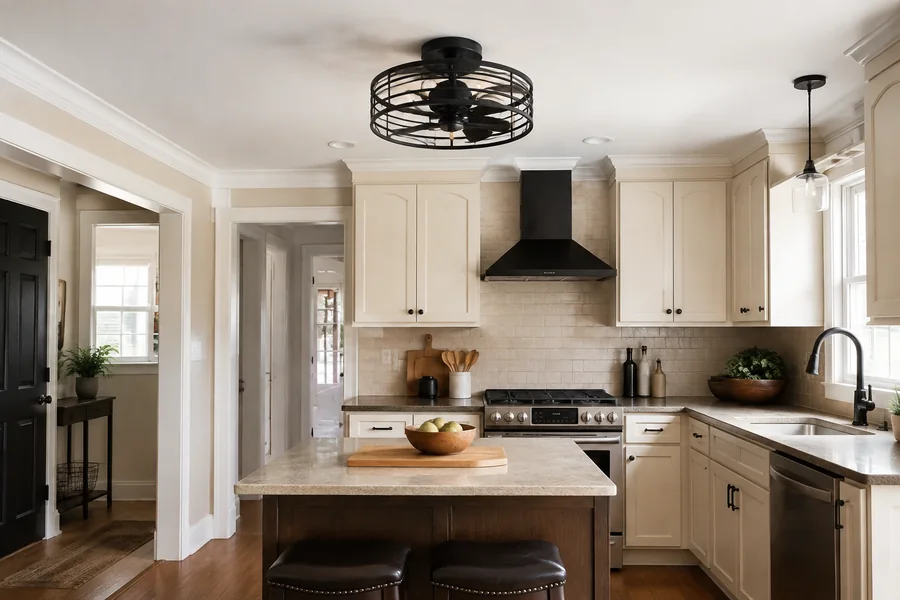
A black caged flush mount ceiling fan with light can fit kitchens with a more industrial or utility style, but the room must still have enough visual space so the cage does not feel heavy.
Need Help Choosing the Right kitchen ceiling fan size?
Tell us your room size, ceiling height, airflow needs, lighting plan and order quantity. NEBOLA can help match a practical fan light solution.
Get a Quote7. What Product Features Matter for Kitchen Fans?
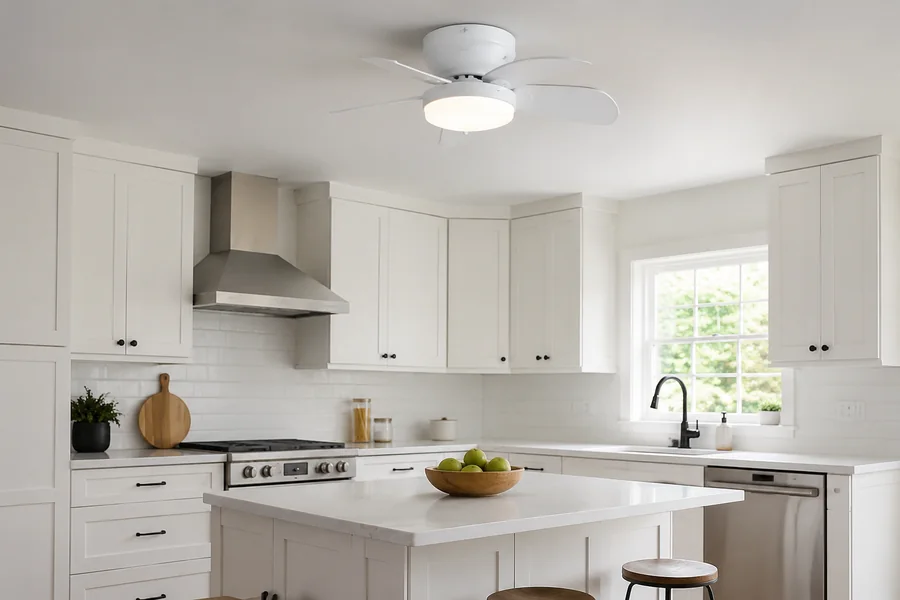
Kitchen fans should be easy to clean, easy to control and stable at low speed. Decorative details should not make maintenance difficult.
7-1. Why is low-speed control important?
Low-speed control lets the fan support comfort without blowing strongly across food or cooking areas. This is especially important in small kitchens.
7-2. What materials are easier to maintain?
Smooth blades, simple housings and sealed light diffusers are easier to wipe. Avoid deep grooves and dust-catching decorative parts near cooking areas.
7-3. Should kitchens use smart controls?
Smart control can be useful if it is simple. For broader market trends, compare this with the ceiling fan size trends 2026 article.
8. How Do Kitchen Fans Compare With Other Room Sizes?
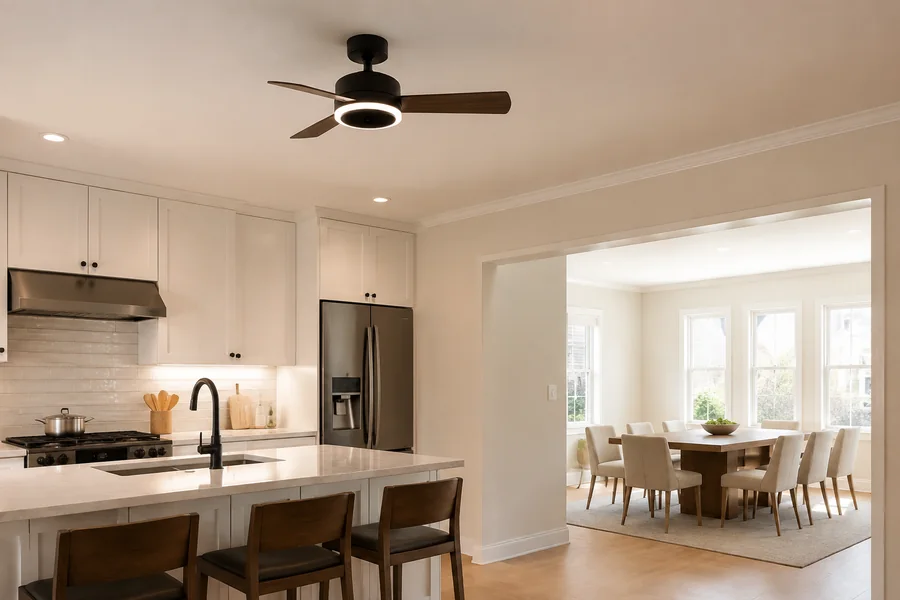
Kitchen sizing borrows from small room and living room logic, but it must be adjusted for cabinets, lighting and cooking activity.
8-1. What can small room guides teach kitchen buyers?
The small room ceiling fan size guide is helpful for compact kitchens because it explains why smaller fans can be more comfortable in tight rooms.
8-2. What can living room guides teach open kitchens?
Open kitchens connected to sitting areas can borrow ideas from the living room ceiling fan size guide. The fan should still avoid direct airflow over cooking.
8-3. What can restaurant kitchens and dining spaces teach us?
For commercial-style layouts, the restaurant ceiling fan size guide helps explain why airflow should protect comfort without disturbing food and service.
9. What Kitchen Fan Buying Mistakes Should You Avoid?
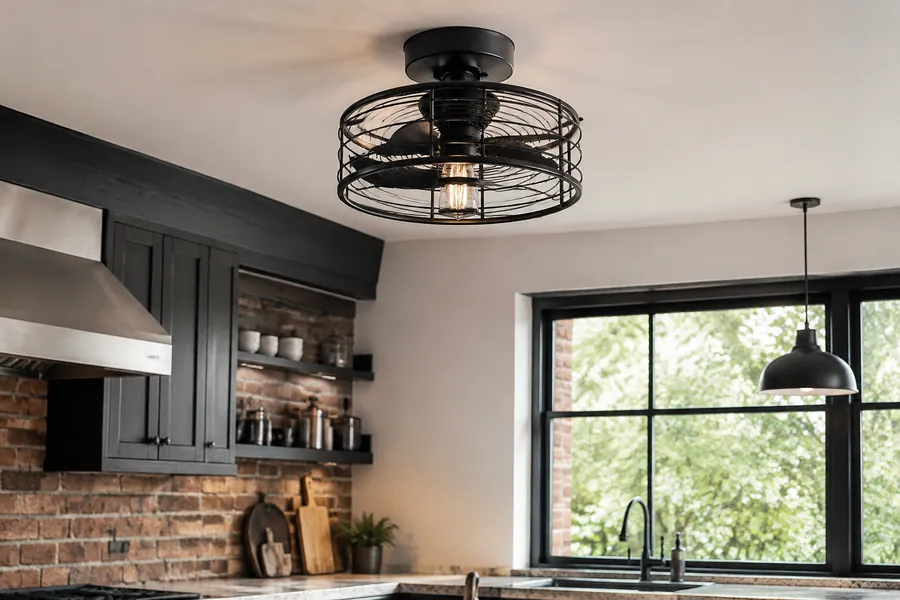
Kitchen fan mistakes often come from treating the kitchen like a normal square room. The room may be the same size as a bedroom, but the ceiling and activity are different.
9-1. Is choosing by square footage alone a mistake?
Yes. Square footage ignores cabinets, islands, light fixtures and cooking zones. The common ceiling fan buying mistakes guide is useful before ordering.
9-2. Is choosing a fan that is too decorative a mistake?
It can be. Decorative fans may collect grease and dust more easily. In kitchens, the fan should look good but still be easy to clean.
9-3. Should project buyers copy hotel or office sizes?
Not directly. The hotel ceiling fan guide and office ceiling fan size guide are useful references, but kitchen airflow has its own clearance and cooking requirements.
10. What Final Checklist Helps Choose the Right Kitchen Fan?
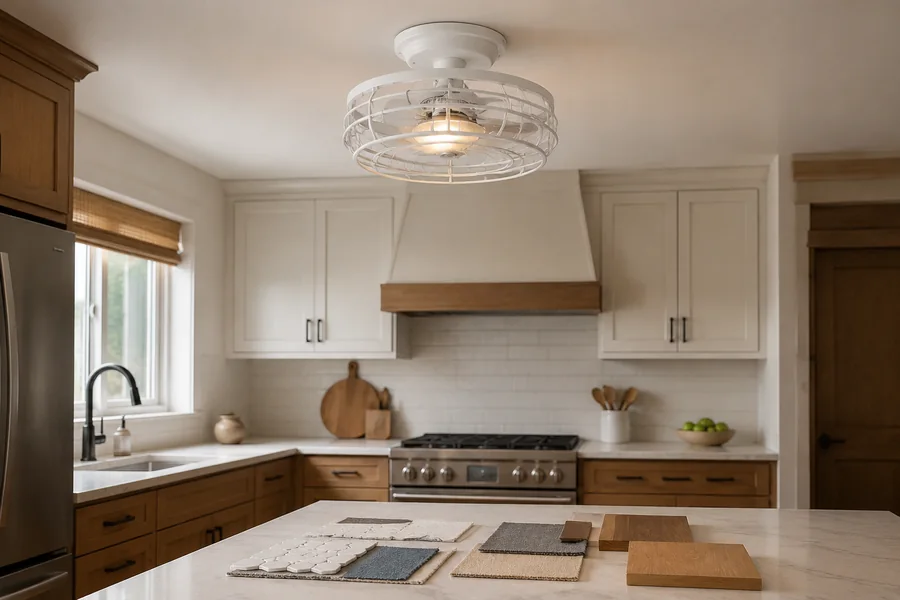
Before buying a ceiling fan for kitchen use, check the fan as an installed object, not only as a product photo.
10-1. What should homeowners check?
- Clear ceiling area.
- Distance to cabinets and pendant lights.
- Ceiling height and total fixture depth.
- Airflow direction away from cooking line.
- Light output and glare.
- Cleaning access and control method.
10-2. What should importers and retailers check?
Build a kitchen fan range with clear size roles. The ceiling fan importer size range and popular ceiling fan sizes articles help buyers avoid overstocking similar compact models.
10-3. How should the final size be chosen?
Choose the smallest fan that can move useful air across the active kitchen zone without crowding the ceiling. If the kitchen is part of a larger open plan, compare with the 60 inch size guide for large rooms and the garage airflow logic in the garage ceiling fan size guide.
For a wider room-by-room sizing framework, return to the NEBOLA ceiling fan size guide and compare blade span, ceiling height and airflow before choosing the final model.
Need Help Choosing the Right kitchen ceiling fan size?
Tell us your room size, ceiling height, airflow needs, lighting plan and order quantity. NEBOLA can help match a practical fan light solution.
Get a QuoteFAQ About Kitchen Ceiling Fan Size
Is a ceiling fan good for a kitchen?
Yes, a ceiling fan can be good for a kitchen when it is sized carefully, mounted safely and used for gentle comfort airflow. It should not replace a range hood or proper kitchen ventilation.
Is a 52 inch fan too big for a kitchen?
Yes, a 52 inch fan can be too big for many enclosed kitchens. It may work in an open kitchen-dining area, but only if clearance, airflow direction and visual scale are suitable.
Should a small kitchen use a small ceiling fan?
Yes, a small kitchen usually works better with a compact fan because cabinets, lights and walking paths reduce usable ceiling space. The fan still needs enough airflow for the active cooking zone.
Can a kitchen fan include a light?
Yes, a kitchen fan can include a light if the light is bright enough, softly diffused and easy to clean. It should support task lighting rather than create glare or moving shadows.
Do kitchen fans need flush mount installation?
Yes, many kitchens benefit from flush mount or low-profile fans because ceiling height and cabinet clearance are often limited. Always check total fixture depth before buying.
Should kitchen airflow blow toward the stove?
No, kitchen airflow should not blow directly toward the stove or range hood. The fan should support room comfort without disturbing steam, heat, smoke or cooking safety.