

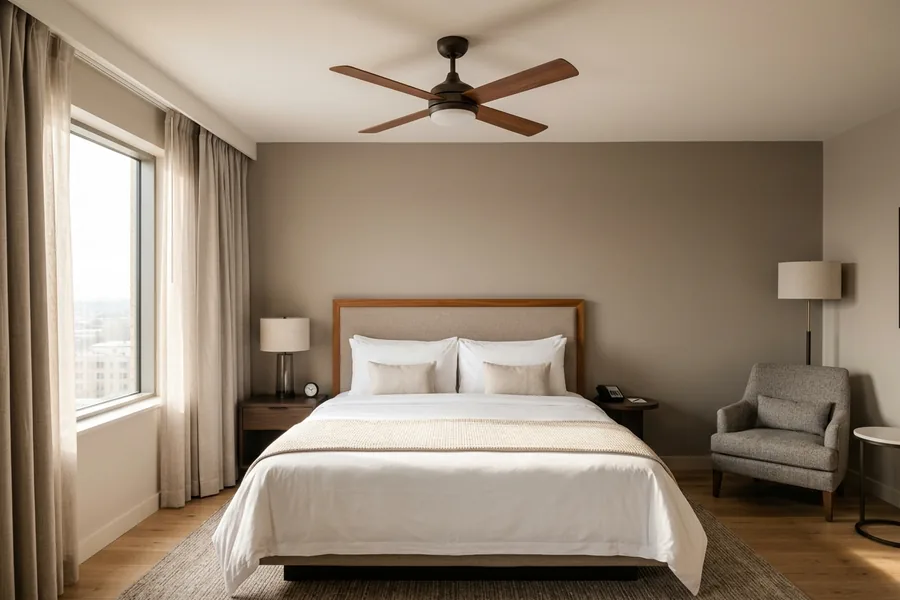
A hotel ceiling fan is not chosen in the same way as a normal home fan. In a hospitality project, the fan must support comfort, quiet sleep, energy efficiency, safe installation, easy cleaning, and a consistent room style. The right choice starts with room size and ceiling height, but it also needs a clear project solution for bulk supply, installation, and long-term use.
This guide is written for hotel owners, project buyers, interior designers, distributors, and contractors who need a practical way to choose ceiling fans for guest rooms, suites, villas, apartments, restaurants, and other hospitality spaces.
Contents
1. Why Hotel Ceiling Fans Need a Project-Based Selection Method
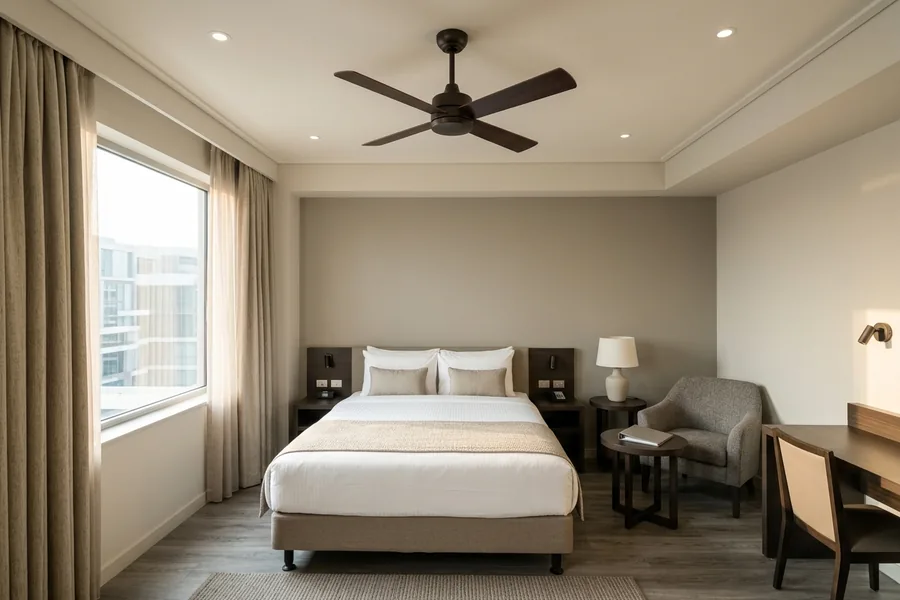
Hotel spaces are used by many different guests. A fan that feels acceptable in one home may not be reliable enough for a hotel room that runs every day, is cleaned often, and must suit many users.
That is why hotel fan selection should begin with the project, not only with one attractive product photo.
1-1. Hotel rooms are different from normal home rooms
A home fan is usually chosen by one family. A hotel ceiling fan must work for many guests with different habits.
Some guests want stronger airflow. Some want almost silent night use. Some may never read instructions. The fan must be easy to use, stable, and comfortable without needing much explanation.
1-2. Guest comfort, maintenance, and brand image must work together
In hospitality projects, comfort is only one part of the decision. The fan also affects room appearance, housekeeping work, maintenance cost, and the guest’s first impression.
A fan that looks good but makes noise can hurt reviews. A fan that is cheap but hard to clean can increase labour time. A fan that does not match the room design can make the space feel unfinished.
1-3. Why one fan model may not fit every hospitality project
Different areas need different fans. A compact guest room may need a quiet low-profile fan. A villa suite may need a larger decorative model. A restaurant or lobby may need stronger airflow and a more visible design.
The project plan should divide spaces by room type before choosing models.
2. Define the Hotel Space Before Choosing the Fan
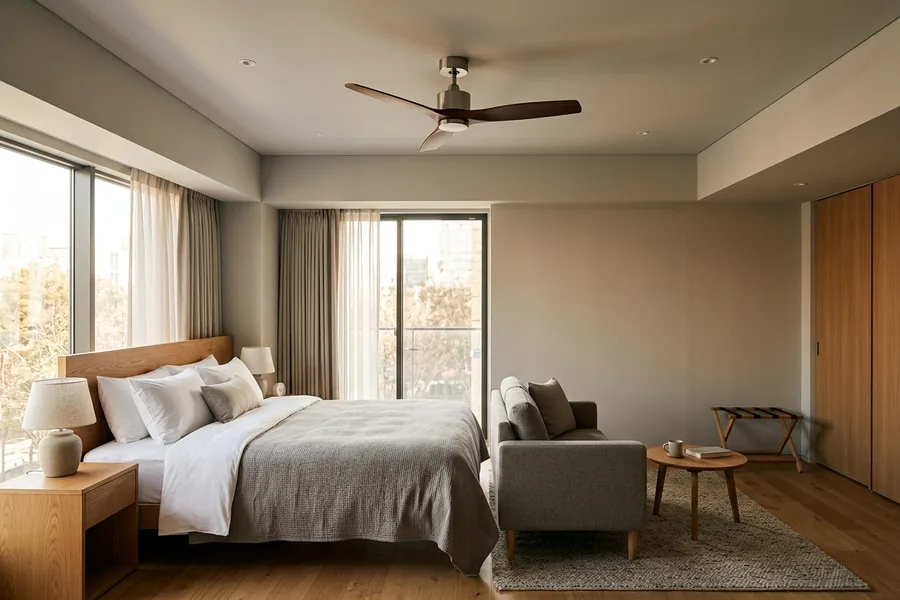
The first question is not “which fan looks best?” The first question is “where will this fan be used?”
Hotel projects often include more than one room type, and each space has different airflow, lighting, and installation needs.
2-1. Guest rooms, suites, corridors, lobbies, restaurants, and villas
Guest rooms usually need quiet airflow and simple controls. Suites and villas may need larger fan sizes and more decorative finishes. Restaurants and lobbies may need stronger airflow and a more commercial fan structure.
Corridors and small service areas may use compact fans or ceiling fan lights only when airflow and clearance are suitable.
2-2. Room size, ceiling height, and installation position
Room size decides how much coverage is needed. Ceiling height decides whether the fan should be flush mount, standard mount, or installed with a downrod.
Installation position also matters. The fan should serve the main guest area, such as the bed, seating area, or dining zone. A fan placed in the wrong ceiling position can feel weak even if the product itself is good.
2-3. Indoor, damp, and semi-outdoor hospitality areas
Hotels may include indoor rooms, bathrooms with nearby humidity, covered balconies, outdoor lounges, and semi-open dining spaces.
Not every fan is suitable for every area. For damp or semi-outdoor spaces, buyers should check the product’s rated use environment, material finish, and electrical safety requirements before bulk ordering.
3. Choose the Right Fan Size for Hotel Rooms
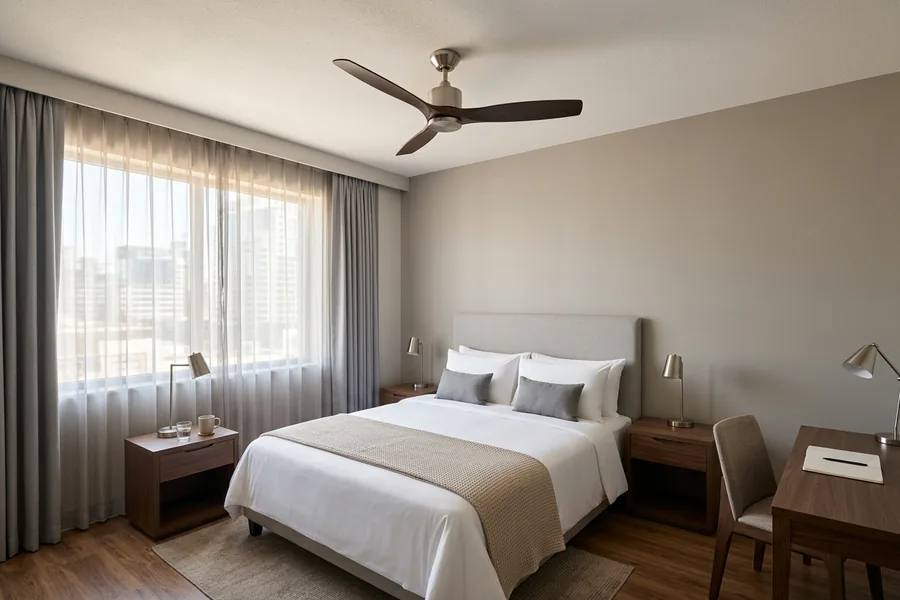
Fan size should fit the room, not just the design style. A fan that is too small may not move enough air. A fan that is too large may feel heavy, noisy, or uncomfortable above the bed.
For hotel rooms, the best size is usually the one that gives gentle coverage at low or medium speed.
3-1. Small hotel rooms and compact ceiling fans
Small hotel rooms, serviced apartments, and compact guest rooms often need a smaller fan. A 36 inch or 42 inch ceiling fan can work well when the room is narrow or the ceiling is low.
Low-profile fans are often useful in these spaces because they save head clearance and keep the ceiling area clean.
3-2. Standard guest rooms and 42-52 inch options
Many standard hotel rooms work well with 42 inch to 52 inch ceiling fans, depending on room width, ceiling height, and bed position.
A 52 inch fan may be suitable for larger guest rooms, especially when it has quiet low-speed control. But for a very small room, 52 inches may feel too strong or too visually heavy.
3-3. Suites, villas, and larger hospitality spaces
Suites, villas, and larger hospitality spaces may need 56 inch, 60 inch, or larger fans. These fans can spread airflow more widely and often feel smoother at low speed.
Some villa rooms also include a living room-style lounge area, so the fan should be chosen for the seating zone as well as the sleeping area.
Large spaces should be checked by zone. One fan may not cover a long suite, open-plan villa, or restaurant area evenly.
3-4. Why oversized fans can hurt guest comfort
Bigger is not always better in a hotel room. An oversized fan can create direct airflow over the bed, make guests feel cold, or look too dominant on the ceiling.
Hotel comfort is about balance. The fan should support the room quietly, not take over the room.
4. Airflow, Noise, and Sleep Comfort
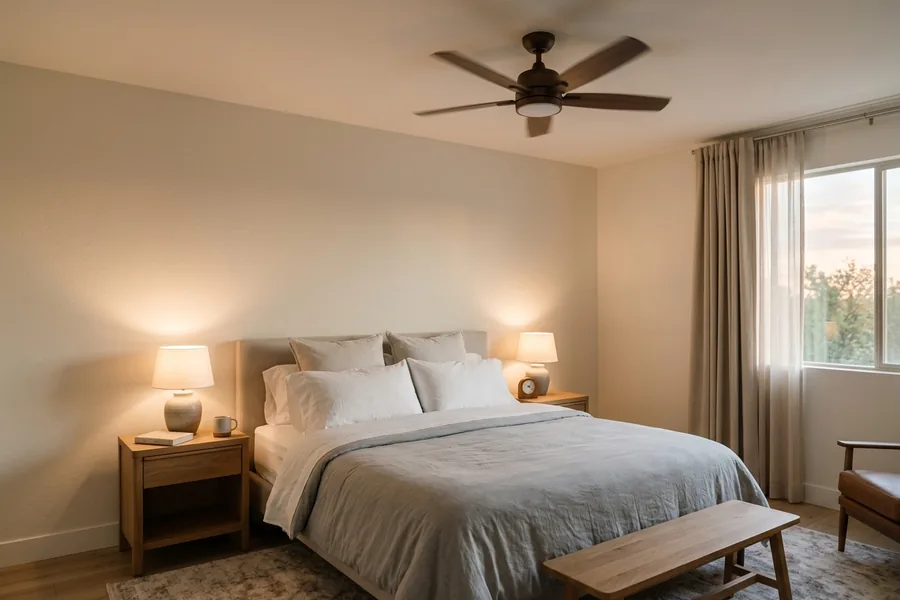
Airflow is important, but hotel rooms need soft airflow more than harsh wind. Guests often use the fan at night, so the fan must feel calm and stable.
This is where CFM, speed range, blade design, and motor quality all matter.
4-1. Why quiet airflow matters in hotel rooms
Noise is one of the fastest ways to make a guest unhappy. A fan that hums, clicks, or wobbles can disturb sleep and create complaints.
For a hospitality project, noise control should be checked during sample testing, not after the whole order is installed.
4-2. CFM, speed settings, and soft air movement
CFM tells you how much air the fan can move. But hotel buyers should not choose by the highest CFM alone.
A good hotel ceiling fan should provide enough airflow at low and medium speeds. This gives guests comfort without making the room feel windy.
4-3. Low-speed performance for night use
Low-speed performance matters because many guests use the fan while sleeping. The airflow should be steady, quiet, and gentle.
If the fan only feels useful at high speed, it may not be the right choice for guest rooms.
4-4. Avoiding wobble, vibration, and motor hum
Wobble and vibration can come from poor product balance, weak mounting, or incorrect installation. Motor hum can come from lower-quality motors or unsuitable controls.
For project buyers, sample testing should include long running time, different speed settings, and real installation checks.
5. Motor Type and Energy Efficiency for Hospitality Projects
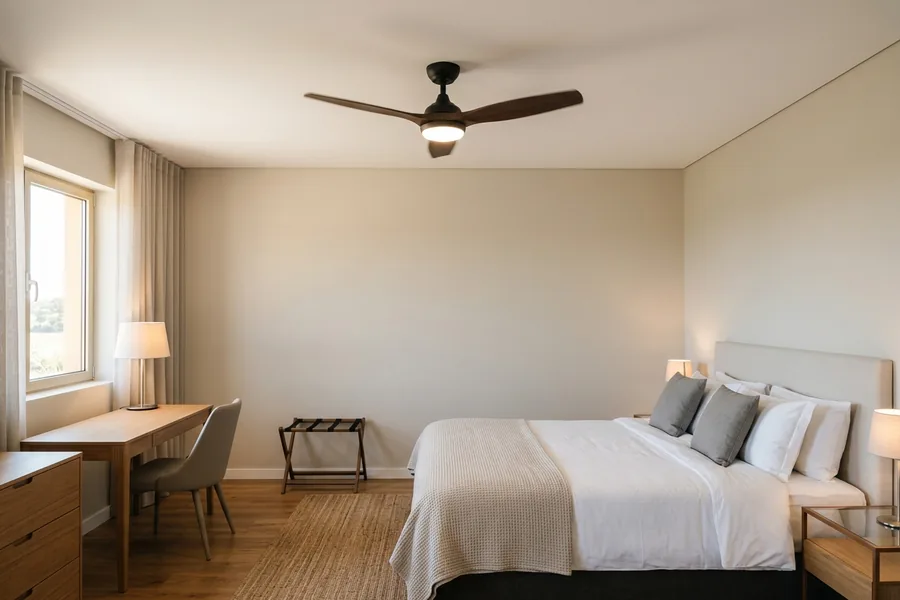
Hotels may use many fans across many rooms. Even small differences in energy use, noise, and maintenance can become important across a full hospitality project.
This is why motor choice matters.
5-1. Why DC motors are preferred in modern hotel ceiling fans
DC motors are common in modern hotel ceiling fan designs because they are quiet, efficient, and flexible. They often support more speed settings and smoother low-speed control than many traditional AC motors.
For guest rooms, this can improve sleep comfort. For hotel operators, it can support lower daily running costs.
5-2. Energy use across many rooms
One fan may not use much power. But a hotel may have dozens or hundreds of rooms.
Energy efficiency becomes more important when fans run for long hours across many rooms. Buyers should compare motor type, watts, airflow, and lighting efficiency before choosing a model.
5-3. Long operating hours and lower maintenance pressure
Hotel fans may run every day. A commercial fan for hospitality use should be stable enough for long operating hours.
The fan should also be easy to maintain. Standardised parts, clear installation instructions, and consistent product batches can reduce future pressure on maintenance teams.
5-4. How efficient fans support hotel operating costs
Efficient fans can help reduce reliance on air conditioning by improving air movement. They do not replace cooling systems, but they can make rooms feel more comfortable.
For hotels, the goal is not only product price. The better question is total value across purchase, installation, energy use, guest comfort, and maintenance.
Ready to Find the Right Smart Ceiling Fan for Your Home?
Compare styles, sizes, smart features, and lighting options to find the perfect fan for your space.
Get a Quote6. Ceiling Fan With Light for Hotel Room Design
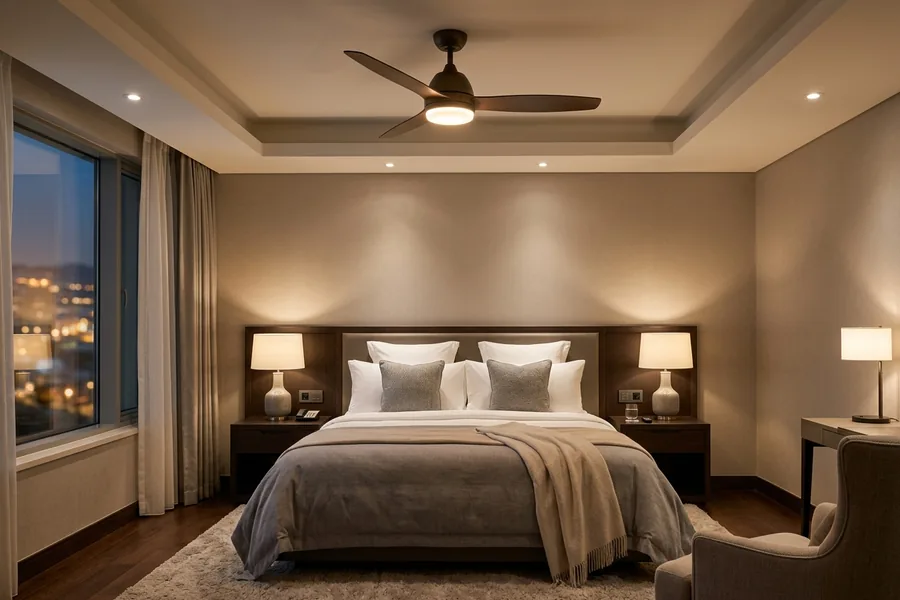
Many hospitality projects choose ceiling fans with integrated lights because they combine airflow and lighting in one ceiling fixture.
This can be useful, but the lighting must suit hotel use.
6-1. When integrated LED lighting is useful
Integrated LED lighting is useful when the room has limited ceiling space or needs a cleaner look. It can reduce the number of separate ceiling fixtures and make installation simpler.
In compact hotel rooms and serviced apartments, this can be a practical choice.
6-2. Dimmable light and warm colour temperature
Hotel rooms should feel comfortable, not harsh. Warm light and dimmable settings are often better for bedrooms and guest suites.
Cool bright light may be useful for cleaning, but it can feel too sharp for rest. A good hotel fan light should support both practical use and guest comfort.
6-3. Separate fan and light control
Guests should be able to control the fan and light separately. This is important because some guests want airflow without light, while others want light without fan movement.
Simple controls are better than complicated controls. Hotel products should be easy to understand at first use.
6-4. Avoiding glare, flicker, and poor bedroom lighting
Poor lighting can make a good fan feel cheap. Glare, flicker, uneven colour, and harsh brightness can affect the room experience.
Before bulk purchase, check LED quality, colour temperature options, dimming performance, and driver stability.
7. Control Options for Hotel Guests and Operators
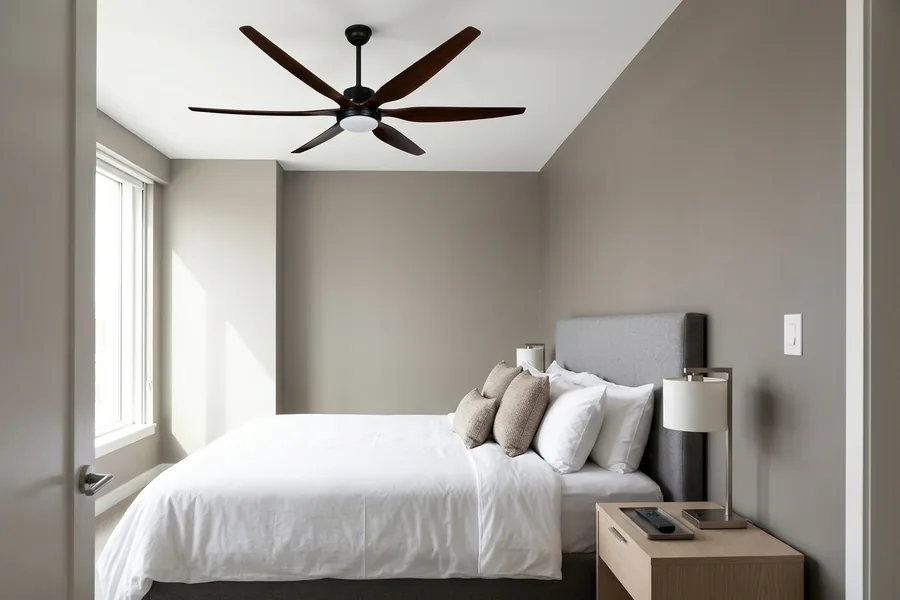
Controls should be simple, durable, and suitable for hotel operation. A fan that is hard to use can create front desk calls and guest frustration.
The right control method depends on room type, hotel level, and project budget.
7-1. Remote control for simple guest use
Remote control is common in hotel rooms because it is easy for guests. It allows fan speed and light settings to be changed from the bed or seating area.
However, hotels should plan for remote storage, battery replacement, and spare remote availability.
7-2. Wall control for fixed room management
Wall controls can reduce the risk of lost remotes. They also make the room feel more fixed and managed.
For some hotels, a wall control may be better than a handheld remote, especially in high-turnover rooms.
7-3. Smart control for apartments and premium hospitality projects
Smart control can be useful in serviced apartments, premium suites, villas, and smart hotel rooms. App control, voice control, or central control options may improve the guest experience.
But smart features should be used carefully. If the system is too complex, it can create more support work instead of less.
7-4. Why controls must be easy, not confusing
A hotel fan should not need a long manual. Guests may stay only one night. They should understand the fan quickly.
Use clear speed settings, simple icons, and reliable control response.
8. Commercial Fan Quality: Safety, Materials, and Durability
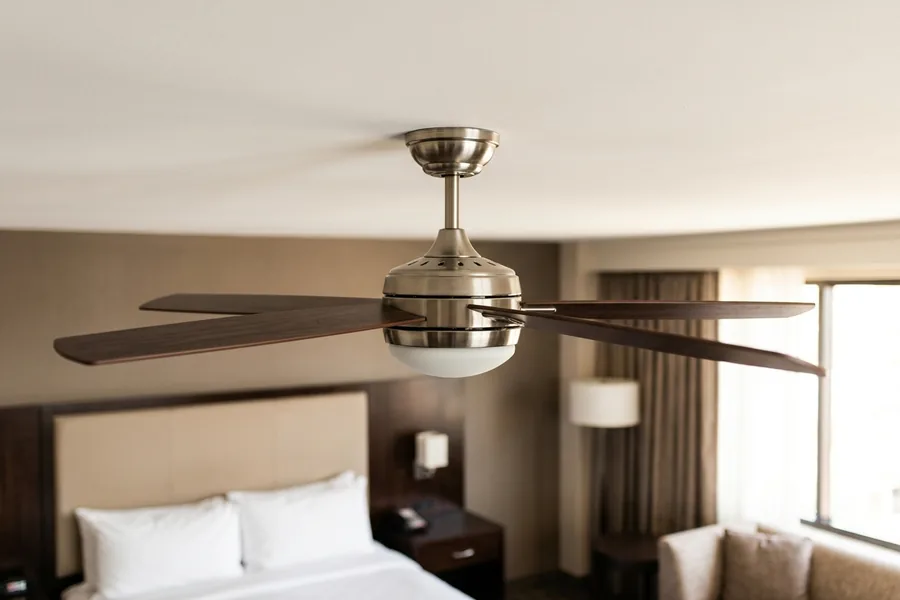
A hospitality fan is part of a commercial environment. It must be safe, stable, and durable enough for repeated use.
Project buyers should check more than the surface design.
8-1. Stable mounting and certified electrical components
Stable mounting is essential. A ceiling fan must be fixed securely, especially in guest rooms where safety and quiet operation are both important.
Electrical components should match the target market’s safety and certification requirements. Depending on the region, this may include CE, RoHS, ETL, UL, CB, or other relevant standards.
8-2. Blade material, finish, and anti-rust performance
Hotels can have different environments. Coastal hotels, humid rooms, and semi-outdoor spaces need stronger material and finish choices.
Blade material, metal coating, motor housing finish, and screw quality should all be checked before selecting a fan for a hospitality project.
8-3. Easy cleaning for housekeeping teams
Housekeeping teams need products that are easy to clean. Fans with too many small gaps, rough surfaces, or delicate decorative parts can take longer to maintain.
Smooth finishes and simple blade shapes usually make daily cleaning easier.
8-4. Safety checks before bulk installation
Before bulk installation, sample fans should be tested for mounting stability, speed control, noise, light function, and long running performance.
It is better to find problems in a sample room than after hundreds of rooms have been installed.
9. Design Consistency Across a Hospitality Project
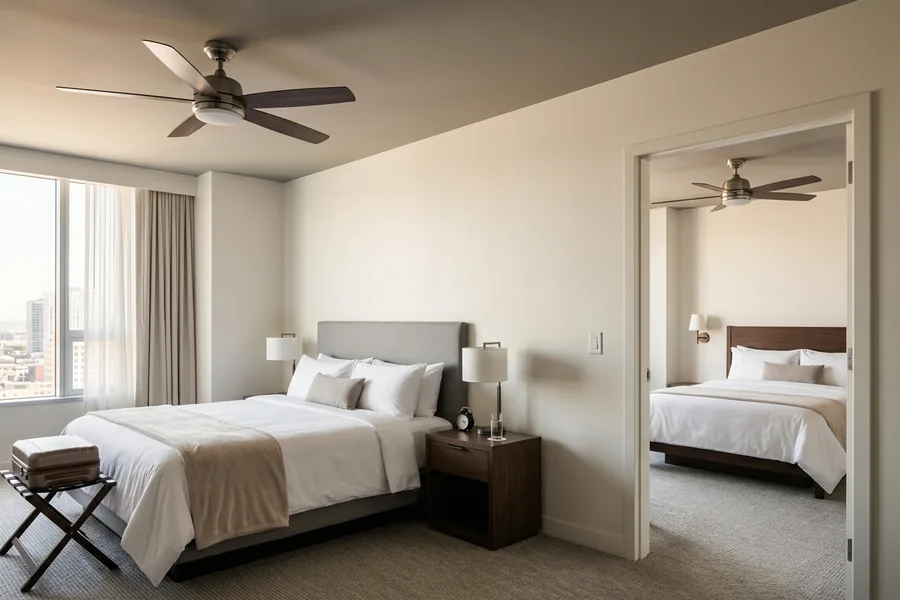
Hotel design should feel intentional. A ceiling fan is part of the room design, not only a piece of equipment.
The fan should match the interior style and stay consistent across room types.
9-1. Matching fan style with hotel interiors
Modern hotels may prefer slim white, black, or wood-tone fans. Boutique hotels may prefer decorative fan lights. Resort spaces may use rattan, wood, or outdoor-style finishes.
The fan should support the design language of the room.
9-2. White, black, wood, and decorative finishes
White fans often suit clean modern rooms. Black fans can add contrast. Wood finishes can feel warm and natural. Decorative fan lights can suit suites, villas, or themed spaces.
Choose finishes based on the room design, not only on product popularity.
9-3. Low-profile fans for modern compact rooms
Many hotel rooms have limited ceiling height. Low-profile fans can help keep the ceiling clean and safe.
For compact rooms, a low-profile design can look better than a long downrod fan, as long as airflow performance is still suitable.
9-4. Keeping the same design language across room types
A hotel may use different fan sizes in different rooms, but the style should still feel connected.
For example, a project can use one finish family across guest rooms, suites, and villa spaces, while adjusting fan size and mounting type by room.
10. Procurement and Project Solution Planning
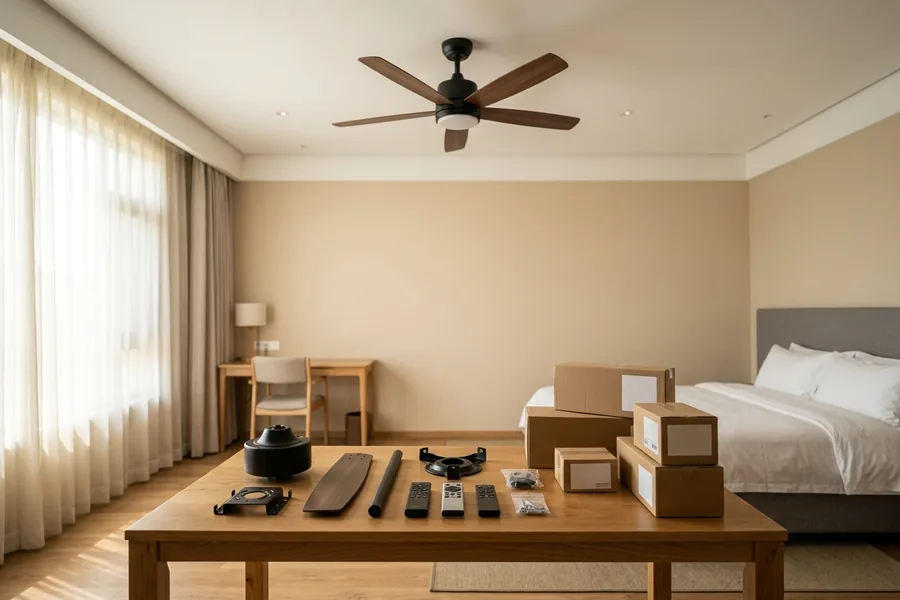
Hospitality projects need planning beyond product selection. The buyer must think about samples, production, packaging, delivery, installation, and after-sales support.
As a ceiling fan light manufacturer, NEBOLA usually looks at hotel fan projects as a complete project solution: product matching, size options, motor choice, lighting configuration, control method, and batch consistency should all be considered together.
10-1. Sample testing before bulk order
Sample testing is one of the most important steps. Install the fan in a real or mock-up room, then test noise, airflow, lighting, control, and guest comfort.
The sample should be checked by procurement, design, engineering, and housekeeping teams if possible.
10-2. Model consistency, spare parts, and packaging
For hotels, consistency matters. Fans across the same room type should match in colour, finish, size, and control method.
Spare parts should also be planned. Remotes, receivers, blades, light modules, and downrods may be needed later for maintenance.
10-3. Lead time, MOQ, and phased delivery
Hotel projects often have delivery schedules. Some projects need phased supply, while others need all rooms installed before opening.
Buyers should confirm MOQ, sample time, production time, packaging needs, and shipping plan before placing the full order.
10-4. How NEBOLA can support customised hotel ceiling fan solutions
NEBOLA can support hospitality buyers with different fan sizes, DC motor options, LED lighting, remote control, smart control, finishes, blade styles, and project packaging.
For hotels, serviced apartments, villas, and distributors, this flexibility can help match the product to the room design and project budget without forcing every space into one standard model.
11. Common Mistakes When Choosing Hotel Ceiling Fans
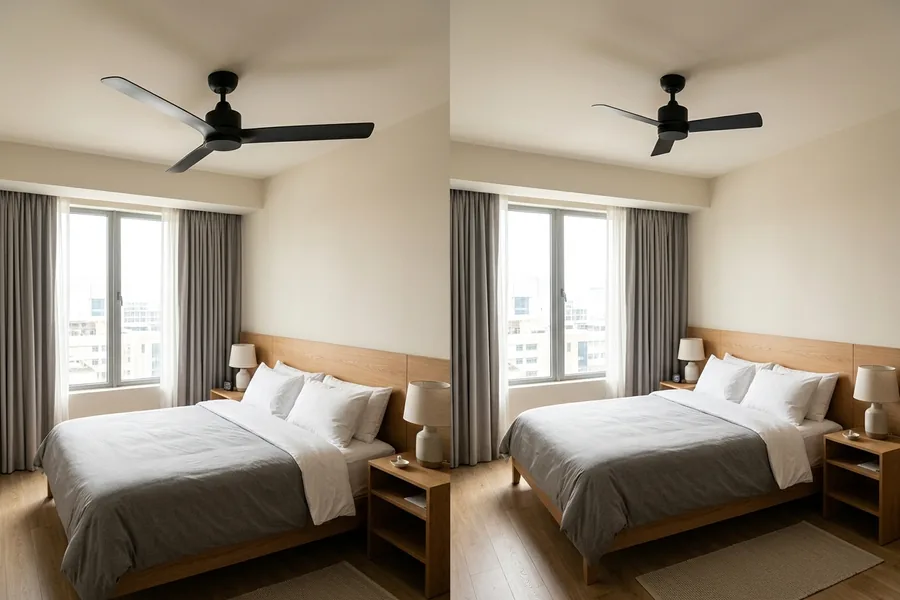
Many hotel fan problems begin before installation. They begin when the project chooses only by price, appearance, or a single product parameter.
Avoiding these mistakes can protect guest comfort and project cost.
11-1. Choosing only by price
Price matters, but the cheapest fan can become expensive if it creates complaints, noise, replacement work, or maintenance issues.
Look at total value, not only unit price.
11-2. Ignoring noise level in guest rooms
Noise is more serious in hotels than in many other spaces because guests expect rest. A noisy fan can affect sleep and reviews.
Always test low, medium, and high speeds before bulk purchase.
11-3. Using home-grade fans for commercial projects
Some home-grade fans may not be suitable for frequent hotel use. A hospitality project needs stable products, consistent batches, clear installation support, and suitable safety standards.
Choose fans with the project environment in mind.
11-4. Forgetting installation height and maintenance access
Installation height affects both comfort and safety. Maintenance access affects long-term operation.
A beautiful fan that is hard to reach, clean, or repair may not be the best project choice.
11-5. Choosing too many different models in one project
Too many models can make ordering, spare parts, installation, and maintenance harder.
It is usually better to create a clear model plan: one or two main room fans, one suite or villa fan, and one special-use fan if needed.
12. Hotel Ceiling Fan Buying Checklist
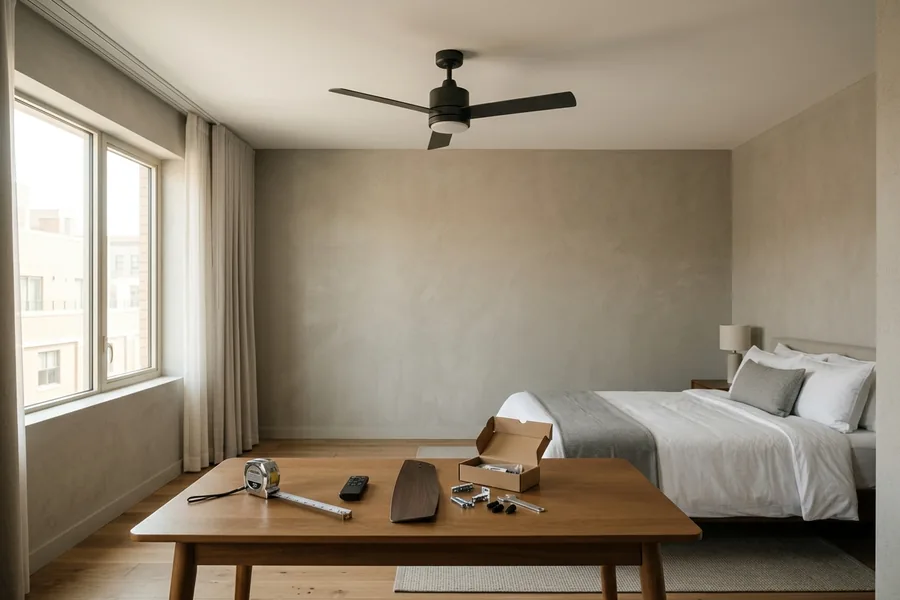
Before confirming a hotel ceiling fan order, use a checklist. It keeps the project practical and reduces mistakes.
| Check | What to Confirm |
|---|---|
| Room type | Guest room, suite, villa, lobby, restaurant, or apartment |
| Fan size | Blade span matched to room size and ceiling height |
| Airflow | Enough CFM without harsh wind |
| Noise | Quiet low-speed and stable operation |
| Motor | DC motor or other suitable commercial fan motor |
| Lighting | LED quality, dimming, colour temperature, and control |
| Safety | Mounting stability and market certifications |
| Maintenance | Easy cleaning, spare parts, and service support |
| Delivery | MOQ, sample time, lead time, and phased shipping |
12-1. Room type and fan size
Start with room type. A compact hotel room, a master suite, and an open restaurant do not need the same fan.
Choose size after checking square footage, ceiling height, furniture layout, and guest use area.
12-2. Airflow and noise level
Airflow should be enough, but noise must stay low. For hotel rooms, a quiet medium airflow is usually better than a loud high-speed fan.
Guest comfort should lead the choice.
12-3. Motor type and energy efficiency
Motor type affects noise, speed control, and energy use. For many hospitality projects, DC motor fans are a strong option.
Energy efficiency matters because hotel fans may run for many hours across many rooms.
12-4. Lighting and control method
If the fan includes a light, check brightness, colour temperature, dimming, and separate control.
Controls should be simple enough for guests and reliable enough for hotel operations.
12-5. Safety, certification, and durability
Check mounting parts, electrical components, material finish, and target market certifications.
A hotel ceiling fan should be safe, stable, and suitable for repeated daily use.
12-6. Project delivery, samples, and after-sales support
Before bulk order, confirm samples, packaging, lead time, spare parts, and after-sales support.
The right fan is not only a product. It is part of the full hospitality project solution.
Final Thoughts
Choosing a hotel ceiling fan is a project decision. Size, airflow, motor type, lighting, control, safety, design, and delivery all matter.
For small rooms, quiet compact fans may be best. For standard guest rooms, balanced 42 inch to 52 inch fans often work well. For suites, villas, lobbies, and open hospitality areas, larger fans or multiple airflow zones may be needed.
The best hotel fan is not simply the most decorative or the most powerful. It is the fan that supports guest comfort, fits the space, saves energy, reduces maintenance pressure, and works smoothly across the whole project.
Ready to Find the Right Smart Ceiling Fan for Your Home?
Compare styles, sizes, smart features, and lighting options to find the perfect fan for your space.
Get a Quote