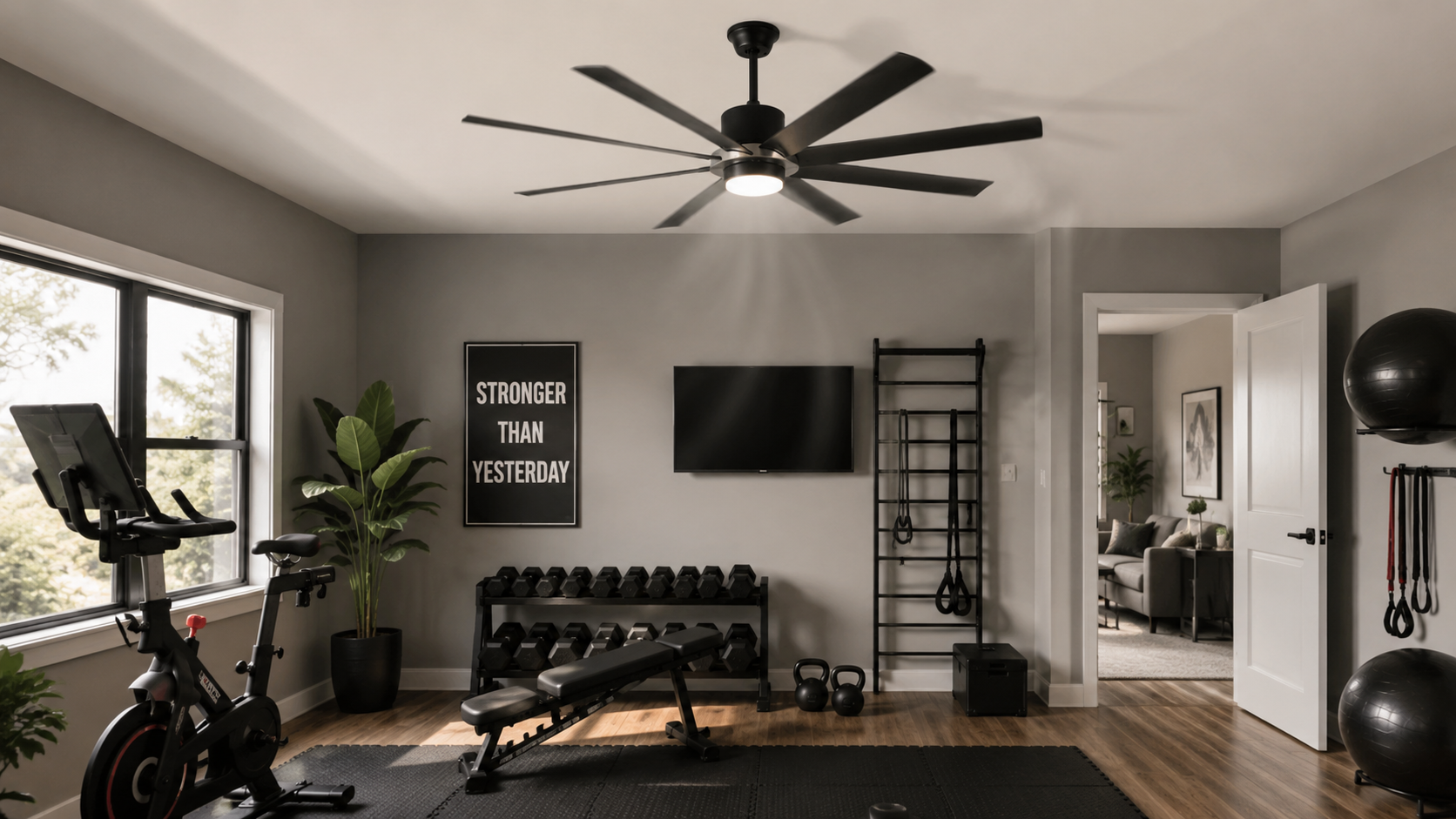



The ceiling fan market is not moving in one straight line. In the US, larger homes and open living rooms often support wider fans. In Europe, compact rooms, lower ceilings, heatwaves, and energy costs are making smaller and quieter fans more important. For importers, the real question is not which size is popular everywhere. The better question is which sizes deserve stock, which sizes need testing, and which sizes should stay project-based.
I write this from a product range point of view. A size trend is useful only when it helps reduce buying risk, improve sell-through, and match real rooms. A 52 inch fan can be a strong core SKU in one market, while a 42 inch or 48 inch fan may be the cleaner choice in another.
Contents
1. Why Ceiling Fan Size Trends Change From Market to Market

Popular ceiling fan sizes change because homes, weather, ceilings, and buying habits change. A range that works in Texas may not work in Berlin. A fan that looks right in a villa may feel heavy in a compact apartment.
This is why global planning should start with market behaviour, not only a factory catalogue.
1-1. Climate decides how often ceiling fans are used
In hot and humid markets, ceiling fans are often used every day. They support comfort, reduce reliance on air conditioning, and help move air through the whole room.
In milder markets, the fan may be used more seasonally. The product still needs to look good, stay quiet, and feel easy to control, but the buyer may not need the strongest airflow in every room.
1-2. Home size changes the most popular fan diameter
Larger homes usually support larger blade spans. Open living areas, high ceilings, patios, and villas can make 56 inch, 60 inch, and even larger fans more attractive.
Compact homes often move in the other direction. A 36 inch, 42 inch, or 48 inch fan can feel more balanced when the room is narrow or the ceiling is low.
1-3. Ceiling height affects both size and mounting type
Ceiling height can change the right fan size. A wide fan may have good airflow, but if the ceiling is too low, it may not feel safe or look balanced.
Low ceilings often need flush mount or low-profile models. Higher ceilings may need downrods so the fan sits at a useful height for airflow.
1-4. Sales channel demand shapes the final size range
Online channels often need simple sizes that are easy to explain. Retail showrooms need models that look good on display. Wholesale channels need repeatable SKUs. Project channels may need custom sizes, finishes, and mounting options.
So the same market may need different size strategies by channel.
2. How to Read Ceiling Fan Size Trends Correctly

A size trend is only a clue. It should not become a fixed buying rule.
The most common mistake is to look at fan diameter alone. Blade span matters, but airflow, motor quality, ceiling height, and room use all change the final result.
2-1. Blade span is only the starting point
Blade span tells you the width of the fan. It is the number most people compare first, such as 42 inch, 52 inch, or 60 inch.
But blade span does not tell the whole story. Two fans with the same diameter can feel very different if the motor, blade angle, speed range, or mounting height is different.
2-2. CFM shows whether the size can move enough air
CFM helps show how much air the fan can move. A larger fan should normally cover a wider area, but poor design can still lead to weak airflow.
For import planning, CFM is useful because it helps compare fan performance across similar sizes. It is especially important for large rooms, open spaces, and hot-climate markets.
2-3. Motor quality changes airflow, noise, and comfort
Motor quality affects more than power. It affects low-speed comfort, noise, vibration, energy use, and long-term stability.
This is why DC motor and BLDC motor fans are becoming more attractive in many markets. They can support smoother speed control and quieter daily use.
2-4. Lighting and controls can change size demand
In many homes, the ceiling has only one main fixture point. A ceiling fan with light can solve airflow and lighting at the same time.
Remote control, wall control, and smart control can also affect demand. A standard size with better controls may sell faster than a larger fan with weak user experience.
3. Core Ceiling Fan Sizes in Global Markets

Most global product ranges can be built around a few core sizes. The aim is not to cover every possible size. The aim is to cover the rooms that repeat most often.
For many importers, the practical range starts with compact sizes, then builds a strong middle category, then adds large sizes carefully.
3-1. 36 inch and 42 inch for compact rooms
The 36 inch and 42 inch range is useful for small bedrooms, apartments, children’s rooms, study rooms, and narrow urban spaces.
These sizes are also helpful in low-ceiling markets because they look lighter and reduce the risk of the fan feeling too wide for the room.
3-2. 48 inch for small to medium residential spaces
The 48 inch fan sits between compact and mainstream. It can work well in small living rooms, medium bedrooms, dining rooms, and some apartments.
For markets where 52 inch feels slightly large, 48 inch can be a safer bridge size.
3-3. 52 inch as the strongest middle size
The 52 inch fan is one of the most flexible sizes in many markets. It can serve bedrooms, living rooms, dining rooms, and medium residential spaces.
For wholesale planning, this size often becomes a core SKU because it is easy to understand and covers many common room types.
3-4. 56 inch for larger rooms and wider coverage
The 56 inch size is useful when 52 inch feels slightly short, but 60 inch feels too strong or too large.
It can work well for larger bedrooms, bigger living rooms, open kitchen-living areas, and homes where wider airflow is needed without moving into oversized territory.
3-5. 60 inch and above for open spaces
The 60 inch and above category is more specialised. It works best for large living rooms, villas, high-ceiling rooms, open-plan spaces, patios, and some commercial areas.
These sizes can carry premium value, but they should be planned carefully because they take more storage space and shipping volume.
4. US Ceiling Fan Market Size Trends

The US ceiling fan market often supports larger sizes than many compact urban markets. Bigger homes, open layouts, patios, and warm regions all help explain this.
But the US market is not only about size. It also looks at airflow, design, control, damp rating, and energy use.
4-1. Why 52 inch remains a mainstream size
The 52 inch ceiling fan remains a strong mainstream size because it fits many bedrooms, dining rooms, and living rooms.
It is large enough to feel useful, but not so large that it becomes difficult to sell. For importers, it is often the safest size to use as a central stock item.
4-2. Why 56 inch and 60 inch fans are growing
Open-plan homes, larger living rooms, and higher ceilings make 56 inch and 60 inch fans more attractive.
These sizes can cover more space and support a stronger design statement. They also work well when the room needs calm airflow over a wider seating area.
4-3. Open-plan homes and large living rooms
Open-plan rooms are difficult because the airflow zone is not always the same as the total square footage. One large fan may work in some spaces, but long rooms may need two smaller fans.
For this reason, large fans should be matched with layout, not only room area.
4-4. Outdoor and patio fan demand in warm regions
Warm regions often create demand for outdoor and patio fans. These products may need damp-rated or wet-rated designs, stronger finishes, and suitable blade materials.
Size demand can also be larger because patios and covered outdoor spaces often need wider airflow.
5. European Ceiling Fan Size Trends
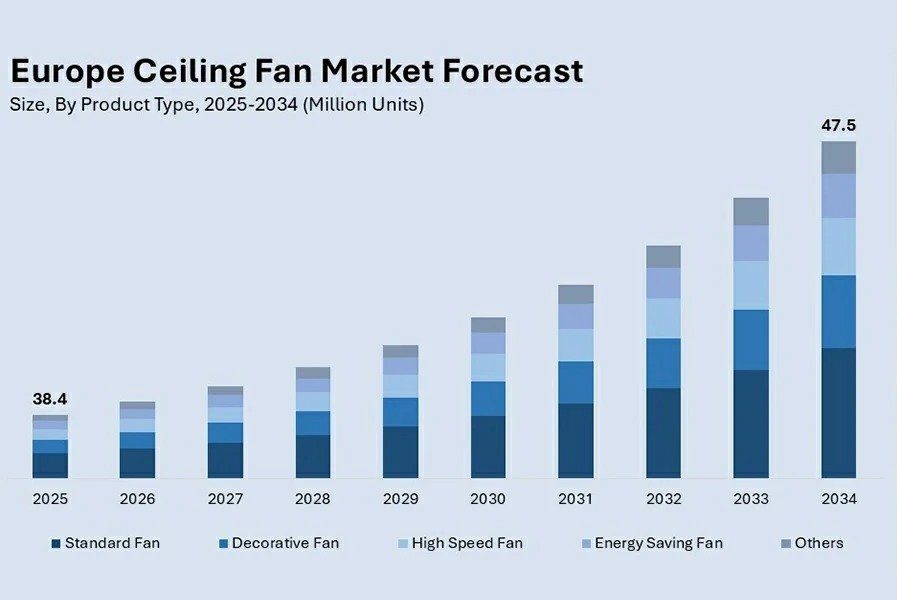
The European ceiling fan market is changing. Heatwaves, energy costs, compact housing, and lower air-conditioning use are making ceiling fans more relevant.
At the same time, European homes often need quieter, smaller, and cleaner designs. A fan must fit the room visually as well as functionally.
5-1. Compact homes and lower ceilings
Many European homes and apartments have smaller rooms than large US suburban homes. Ceiling height may also be more limited.
This makes compact fan sizes important. A large fan can look heavy if the room is narrow or the ceiling is low.
5-2. Why 36 inch, 42 inch, and 48 inch fans matter
The 36 inch, 42 inch, and 48 inch sizes can be useful in bedrooms, apartments, kitchens, home offices, and compact living rooms.
These sizes also make it easier to offer ceiling fans with light without overwhelming t he room.
5-3. Quiet DC motor fans for daily comfort
In Europe, quiet comfort can be more important than strong wind. Many users want a fan that can run gently while sleeping, working, or relaxing.
DC motor fans can help because they often support lower noise, better energy use, and smoother speed settings.
5-4. Heatwaves and energy costs changing demand
As summer heat becomes a bigger concern, more European homes are looking for ways to improve comfort without relying only on air conditioning.
Ceiling fans can support air movement with lower energy use, especially when they are correctly sized and used with practical speed settings.
Ready to Build the Right Ceiling Fan Range for Your Market?
Compare sizes, motors, lighting options, finishes, and MOQ plans to test demand before building heavy stock.
Get a Quote6. Hot-Climate Markets and High-Use Ceiling Fans

In hot-climate markets, ceiling fans are not only decorative. They are daily comfort products.
This changes the product range. Stronger airflow, reliable motors, easy controls, and durable finishes become more important.
6-1. Ceiling fans as everyday cooling products
When a fan is used every day, small weaknesses become visible quickly. Noise, wobble, weak remote control, poor LED quality, or low motor stability can damage repeat sales.
For these markets, the product should be tested more carefully before deep stock.
6-2. Why 48 inch, 52 inch, and 56 inch sell steadily
The 48 inch, 52 inch, and 56 inch sizes can cover many everyday rooms in hot climates. They are practical, easy to sell, and not too niche.
This middle range often forms the backbone of a wholesale ceiling fan programme.
6-3. BLDC motors for long daily running time
BLDC motor fans are attractive where the fan runs for long hours. They can support better energy efficiency, lower noise, and smoother control.
This is useful for homes, apartments, hotels, offices, and rental spaces where comfort and running cost both matter.
6-4. Practical airflow matters more than oversized design
An oversized fan is not always better. In a small or medium room, too much airflow can feel harsh.
The better choice is a fan that can move enough air at a comfortable speed, without noise or direct wind that feels tiring.
7. Apartment and Urban Market Size Demand

Urban markets often need ceiling fans that do more in less space. A compact fan must still look modern, move air well, and provide useful lighting.
This is where smaller sizes can still carry strong product value.
7-1. Small rooms need compact but useful fan sizes
Small bedrooms and apartments often favour 36 inch, 42 inch, and 48 inch sizes.
The fan should not dominate the ceiling. It should feel clean, quiet, and correctly scaled for the space.
7-2. Ceiling fans with light for limited ceiling points
In many apartments, one ceiling point must handle both lighting and airflow. This is why ceiling fans with light can be important.
Warm light, dimming, and separate fan-light control can make the product more useful in bedrooms and living spaces.
7-3. Flush mount fans for low ceiling homes
Flush mount fans can help when the ceiling is low. They keep the fan closer to the ceiling and improve head clearance.
This category is useful for apartments, small rooms, rental homes, and urban markets where downrods may not be suitable.
7-4. Why smaller fans can still support better margins
Smaller fans do not need to be low-end products. A compact fan with a quiet motor, LED light, remote control, and modern finish can still sit in a better price position.
For importers, this can be useful because smaller cartons may reduce shipping pressure while still serving clear demand.
8. Large Homes, Villas, and Open Space Demand

Large homes and open spaces create demand for wider blade spans. But this category needs careful planning.
Large fans can improve product positioning, but they can also become slow stock if the market is not ready.
8-1. When 60 inch and larger fans become necessary
The 60 inch and larger range becomes useful when rooms are wide, ceilings are high, or seating areas are spread out.
Large living rooms, villas, covered patios, restaurants, and open commercial spaces may need wider airflow coverage than a 52 inch fan can provide.
8-2. Open living rooms need wider airflow coverage
Open living rooms are not always simple squares. They may combine a sofa area, dining area, kitchen, and walkway.
A large fan can work when the airflow zone is centred. In long rooms, two medium fans may sometimes work better than one oversized fan.
8-3. Large fans as premium and project-focused SKUs
Large fans often look more premium. They can support villa, hotel, and project channels when the design fits the space.
But they are not always ideal as deep warehouse stock. They are better introduced through demand data, project orders, or controlled trial batches.
8-4. Why large sizes should not be overstocked too early
Large fans use more carton space, require higher shipping cost, and may need more careful installation.
For a new market, it is safer to test demand first. Once sales data is clear, stock depth can increase.
9. Building a Size Range for Import and Wholesale Channels

A good import range should not be too wide at the start. It should cover the most likely room types, then expand through proof.
The aim is to create a range that feels complete to the customer, but still stays controlled for inventory planning.
9-1. Core sizes for repeat wholesale demand
Core sizes are the models that should sell again and again. In many markets, this may include 42 inch, 48 inch, 52 inch, and selected 56 inch models.
These SKUs should have stable packaging, reliable lead time, clear specifications, and simple reorder rules.
9-2. Test sizes for new market response
Test sizes are useful when demand is possible but not yet proven. This may include 36 inch compact fans in a new apartment market, or 60 inch fans in a market moving towards larger homes.
These should be ordered in smaller quantities first.
9-3. Project sizes for hotels, villas, and commercial spaces
Project sizes should be planned separately from regular stock. A hotel or villa project may need a specific finish, size, LED option, or control system.
This kind of demand can be strong, but it may not repeat in normal retail channels.
9-4. Small-batch testing with NEBOLA from around 10 units
As a ceiling fan light manufacturer, NEBOLA can support importers who want to test a controlled size range before committing to large inventory.
With MOQ starting from around 10 units, a market can test different fan sizes, DC motor options, LED lighting, finishes, and control systems in smaller batches. This is useful when the trend is clear, but the exact local demand still needs proof.
10. Matching Ceiling Fan Sizes With Sales Channels

Size planning becomes easier when it is matched with the sales channel. Each channel has a different job.
The right question is not only “Which size is popular?” It is also “Where will this size sell, and how will it be explained?”
10-1. Online channels need clear and fast-moving sizes
Online channels need simple, understandable choices. A customer should quickly see which room the fan fits, what size it is, and what features it includes.
For online sales, 42 inch, 48 inch, 52 inch, and selected 56 inch models can be easier to manage than a very wide range.
10-2. Retail showrooms need display-friendly models
Showrooms need fans that look good in person. Finish, blade shape, light design, and scale all matter.
A showroom may need fewer models, but each model should show a clear purpose, such as compact bedroom, standard living room, or large open space.
10-3. Wholesale channels need stable repeat SKUs
Wholesale channels need consistency. The product must be easy to reorder, easy to explain, and reliable across batches.
This makes the middle size range important. Too many experimental sizes can slow down wholesale selling.
10-4. Project channels need flexible size and finish options
Project channels often need more flexibility. Hotels, villas, offices, and commercial spaces may need different sizes within one design language.
This is where supplier flexibility matters. A controlled project solution can serve special needs without turning every option into regular stock.
11. Common Mistakes in Global Ceiling Fan Size Planning

Size trends are helpful, but they can also mislead when they are used too simply.
The biggest risk is copying a successful range from one market into another without checking real housing, ceiling height, and channel demand.
11-1. Copying one market’s size range into another
A US-focused size range may be too large for some European apartments. A compact European range may feel too small for large American living rooms.
Each market needs its own size logic.
11-2. Ignoring ceiling height and room layout
Ceiling height affects safety, comfort, and visual balance. Room layout affects how airflow is felt.
A size that looks right on paper may fail if the fan is mounted too high, too low, or too far from the main sitting area.
11-3. Stocking too many large fans before demand is clear
Large fans can look attractive in a catalogue, but they need the right room and the right customer.
If demand is not proven, large sizes should start as test SKUs or project SKUs, not deep stock.
11-4. Choosing diameter without checking CFM
Diameter is visible, but CFM shows airflow performance. A wider fan with weak airflow may disappoint customers.
Check blade span, motor system, speed range, CFM, and noise level together before confirming stock.
11-5. Treating trend data as a fixed rule
Trend data should guide planning, not replace judgement. A trend may show what is growing, but it does not show what will sell in your exact channel.
The best decisions come from trend data, local feedback, sample testing, and reorder history.
12. Global Ceiling Fan Size Range Checklist

A checklist keeps the range clear. It also helps avoid emotional buying when a new design looks attractive but has no clear place in the market.
Use this checklist before adding a new ceiling fan size.
| Planning Point | What to Check |
|---|---|
| Market type | US, Europe, hot climate, apartment, villa, or project |
| Core room type | Bedroom, living room, patio, hotel room, office, or open space |
| Size logic | Compact, middle, large, or project size |
| Ceiling height | Flush mount, standard downrod, or longer downrod |
| Airflow | CFM, speed range, motor quality, and noise |
| Function | Light, remote control, smart control, or basic fan |
| Stock role | Core SKU, test SKU, project SKU, or custom SKU |
| Reorder rule | Sales data, enquiry volume, and repeat customer demand |
12-1. Match fan size with local housing type
Local housing should guide the first size range. If most homes are compact, smaller sizes matter. If open-plan homes are common, 52 inch, 56 inch, and 60 inch models deserve more attention.
12-2. Check ceiling height before choosing stock sizes
Ceiling height can change the product category. Low ceilings may need flush mount models. High ceilings may need downrod options.
This affects packaging, accessories, installation guidance, and after-sales support.
12-3. Use 52 inch as a core size only where it fits
The 52 inch fan is a strong size, but it is not universal. It works best where room size, ceiling height, and design expectation support it.
In very compact markets, 42 inch and 48 inch may deserve more attention.
12-4. Balance compact, middle, and large-size options
A healthy range usually needs balance. Compact sizes serve apartments and bedrooms. Middle sizes serve repeat residential demand. Large sizes support premium and project use.
The exact balance should follow local demand, not guesswork.
12-5. Review demand before expanding the range
Do not expand only because a supplier can make more sizes. Expand because sales data, enquiries, or project demand support the move.
This keeps the range useful and protects cash flow.
13. Final Thoughts on Popular Ceiling Fan Sizes

Popular sizes should guide planning, not control it. The US ceiling fan market may favour larger middle and open-space sizes, while the European ceiling fan market may give more room to compact, quiet, energy-conscious designs.
The strongest range is usually built in layers: compact sizes for small homes, 48 inch and 52 inch models for repeat residential demand, 56 inch for wider rooms, and 60 inch+ options for open spaces and projects.
When popular ceiling fan sizes are matched with housing type, ceiling height, airflow, sales channel, and inventory risk, the range becomes easier to sell and easier to manage.
Flexible MOQ also matters. With a practical test order, importers can follow ceiling fan market trends without turning every new size into heavy stock too early.
Ready to Build the Right Ceiling Fan Range for Your Market?
Compare sizes, motors, lighting options, finishes, and MOQ plans to test demand before building heavy stock.
Get a Quote