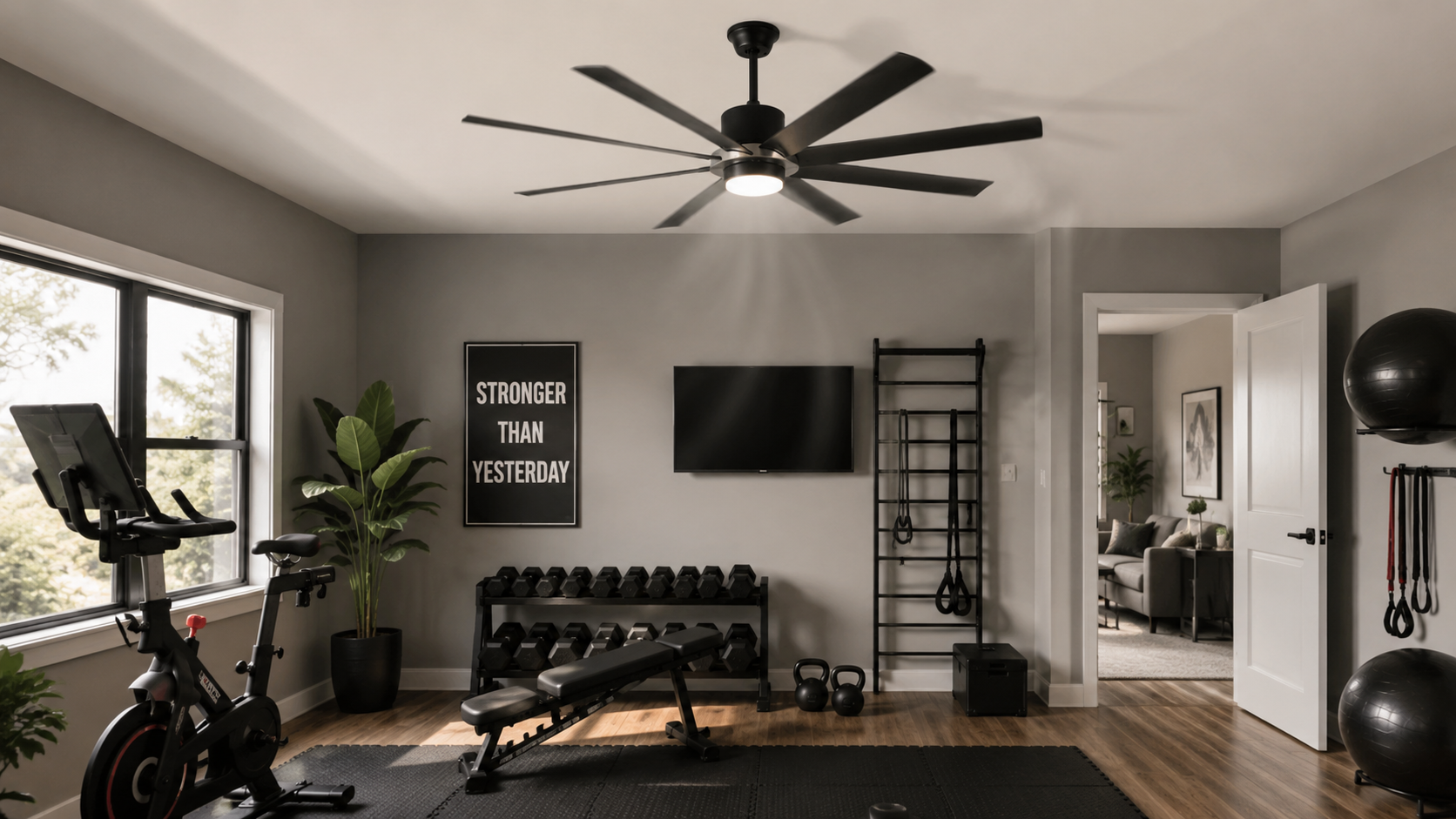



Choosing a ceiling fan looks simple until the wrong model is already on the ceiling. Many ceiling fan buying mistakes start with one rushed decision: looking at style before checking the ceiling fan size guide. The fan may look beautiful online, but if the size, height, airflow, and installation needs are wrong, the room will not feel comfortable.
I see this often from a product and sourcing point of view. A wrong fan size does not only create poor airflow. It can also cause noise, wobble, visual imbalance, installation problems, and returns. The better approach is slower, clearer, and more practical: understand the room first, then choose the fan.
Contents
1. Mistake One: Choosing Fan Size Only by Appearance

The first mistake is choosing a fan because it looks good in a photo. Style matters, but the room has the final say.
A fan that looks slim in a product image may look too small in a wide living room. A dramatic fan that looks premium online may feel too heavy in a compact bedroom. Good buying starts with fit, not only finish.
1-1. Why product photos can be misleading
Product photos usually show the fan in a perfect space. The ceiling is clean, the room is balanced, and the camera angle makes the product look natural.
Real homes are different. The ceiling may be lower. The bed may sit off-centre. The furniture may block airflow. So the photo should inspire the choice, not decide it.
1-2. Why room scale comes before style
Room scale decides whether the fan feels right. The blade span should match the space, and the body should not look too small or too heavy.
Before choosing colour or blade finish, measure the room and think about where people actually sit, sleep, and move.
1-3. How this mistake leads to returns
When the fan looks wrong after installation, the problem is hard to fix. Returning a ceiling fan can mean taking it down, repacking it, and handling shipping damage risk.
This is why the buying guide should begin before the order, not after the mistake.
2. Mistake Two: Ignoring Room Size

The second mistake is choosing a fan without measuring the room size. Guessing is not enough.
A room that feels medium to one person may be large to another. A simple length and width measurement gives a better starting point.
2-1. Why square footage matters
Square footage helps match fan diameter to the room. A small room usually needs a compact fan, while a large room needs wider blade coverage.
This does not mean a chart gives the whole answer, but it gives the first safe direction.
2-2. Why room shape changes the result
Two rooms can have the same area but feel different. A square room may work well with one central fan. A long narrow room may need a different solution.
In a long space, one wide fan may still leave still air at the ends of the room.
2-3. How to avoid the mistake
Measure the length and width of the room. Multiply them to get square footage. Then check room shape, ceiling height, and the main activity area.
This small step can prevent many wrong fan size decisions.
3. Mistake Three: Using a Fan That Is Too Small

A fan that is too small may look neat, but it may not move enough air. This is a common mistake in bedrooms, dining rooms, and open spaces.
The fan may need to run at high speed all the time. That can make it louder and less comfortable.
3-1. What happens when blade span is too short
When blade span is too short, airflow stays close to the centre of the fan. People near the edges of the room may feel very little air movement.
This can make the room feel uneven, especially in warm weather.
3-2. Why small fans may work harder
A small fan in a large space often has to run faster. Higher speed can increase noise, reduce comfort, and make the airflow feel sharp rather than calm.
The right fan should not need to work at its limit every day.
3-3. Where small fans make sense
Small fans are useful in a small room, hallway, kitchen corner, apartment bedroom, or children’s room. They are not wrong products. They are just wrong when used in the wrong place.
For compact spaces, a low-profile fan or a smaller fan light can be a very practical choice.
4. Mistake Four: Choosing a Fan That Is Too Large

Bigger does not always mean better. An oversized fan can make a room feel windy, crowded, or visually unbalanced.
This mistake often happens when buyers think a bigger ceiling fan will always improve comfort.
4-1. Why oversized fans can feel harsh
If the fan is too large for the room, the airflow may feel too direct. Instead of gentle circulation, the room may feel draughty.
This is especially uncomfortable in bedrooms, where soft low-speed airflow matters more than power.
4-2. Why clearance can become a problem
A large fan needs enough distance from walls, cabinets, beams, lights, and tall furniture. If the blade tips sit too close to nearby objects, the installation can feel unsafe or cramped.
Clearance should be checked before the order is placed.
4-3. When large fans are the right choice
Large fans are useful in large rooms, villas, open living spaces, patios, and high-ceiling areas. The key is matching the fan to the scale of the room.
A 60 inch fan can be excellent in the right space, but it should not be treated as a universal upgrade.
5. Mistake Five: Treating 42 Inch and 52 Inch Fans as the Same

The difference between 42 inch and 52 inch fans looks small on paper, but it can feel big in a room.
This mistake is common because both sizes appear in many residential product ranges. Yet they often serve different room needs.
5-1. Where 42 inch fans usually fit
A 42 inch fan often works well in compact bedrooms, small dining rooms, apartments, and rooms where a 52 inch fan would feel too wide.
It can be a comfortable choice when the room does not need wide airflow coverage.
5-2. Where 52 inch fans usually fit
A 52 inch fan is often better for standard bedrooms, medium living spaces, and rooms that need more balanced airflow.
It can serve as a strong middle size, especially when the room is not too small and not too large.
5-3. Why the wrong middle size causes problems
If the fan is too small, it may not cool the room well. If it is too large, it may feel strong and look heavy.
This is why 42 inch and 52 inch fans should not be treated as interchangeable.
Ready to Avoid the Wrong Ceiling Fan Size?
Compare room size, ceiling height, airflow, lighting, and control options before choosing the fan for your space or market.
Get a Quote6. Mistake Six: Forgetting Ceiling Height

Ceiling height is one of the most common installation problems. A fan may be the right diameter but still the wrong choice if the mounting type does not fit the ceiling.
Low ceilings, standard ceilings, and high ceilings need different solutions.
6-1. Low ceilings need careful mounting
Low ceilings often need flush mount or low-profile fans. This keeps the fan closer to the ceiling and helps maintain head clearance.
In these rooms, a thick fan body or long downrod can make the room feel uncomfortable.
6-2. High ceilings may need a downrod
High ceilings usually need a downrod so the fan sits lower in the room. If the fan is too high, airflow may not reach people well.
The fan can look right on the ceiling but still perform poorly at sitting level.
6-3. Vaulted ceilings need extra checks
Vaulted or angled ceilings may need special mounting hardware. The angle, downrod length, and blade clearance all matter.
This should be checked before buying, not during installation day.
7. Mistake Seven: Looking at Diameter but Ignoring CFM
Fan diameter is easy to see. CFM is easier to forget. But airflow performance depends on both.
A wide fan with weak airflow may disappoint. A well-designed fan with the right motor can feel smoother and more useful at lower speeds.
7-1. What CFM means in simple terms
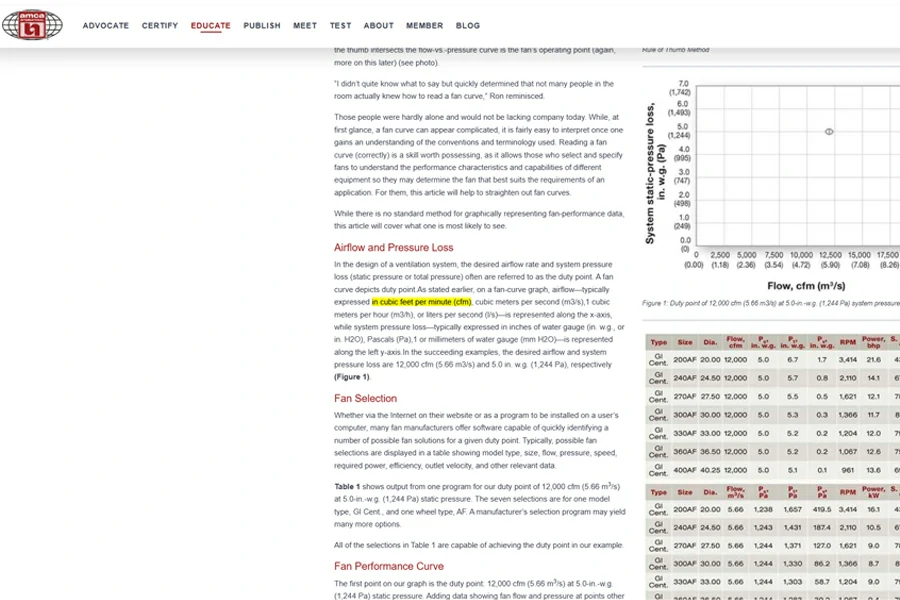
CFM (Cubic Feet per Minute) measures how much air a fan can move in one minute. It is a key indicator of airflow performance and is commonly used to compare fan performance between different models. According to AMCA fan performance principles, airflow is one of the main factors shown on a fan performance curve and helps evaluate how effectively a fan moves air under operating conditions.
For warm rooms, open spaces, and everyday cooling needs, CFM should be considered together with fan size, blade design, and motor performance. A larger CFM rating generally means stronger airflow, but the best choice depends on the room size and intended use.
Reference: AMCA International – Fan Performance & Airflow Principles
7-2. Why motor quality changes comfort
Motor quality affects noise, speed control, energy use, and airflow stability. This is why DC motor and BLDC motor fans are often useful in modern homes.
Good airflow is not only strong. It should also feel steady and quiet.
7-3. Why low-speed airflow matters
Many people use ceiling fans while sleeping, reading, or relaxing. In those moments, low-speed airflow matters more than maximum power.
A fan that is smooth at low speed can feel better than a fan that only performs well on high speed.
8. Mistake Eight: Ignoring the Main Room Use

The same fan size can feel different in different rooms. A bedroom, kitchen, living room, hotel room, and patio do not use airflow in the same way.
This is why room use should guide the final choice.
8-1. Bedroom comfort is not the same as living room airflow
A bedroom needs quiet, gentle airflow. A living room may need wider coverage because people sit in different places.
For a large bedroom, the fan should feel calm above the bed and still cover the room well.
8-2. Kitchens and compact spaces need practical clearance
In kitchens and compact rooms, clearance matters. Cabinets, lights, and movement paths can limit fan size.
A ceiling fan with light can be useful when one ceiling point must handle both lighting and airflow.
8-3. Project rooms need consistent planning
For hotel and hospitality projects, one wrong model can repeat the same problem across many rooms. Size, noise, light quality, mounting type, and spare parts should be checked carefully.
Project planning should be more structured than one-room buying.
9. Mistake Nine: Forgetting Indoor and Outdoor Conditions

Some fans are made for indoor rooms. Others are made for damp or outdoor-style use. Choosing the wrong type can cause finish damage, safety concerns, or poor long-term performance.
This mistake is common for patios, covered terraces, sunrooms, and semi-open spaces.
9-1. Why location affects product choice
Moisture, heat, dust, and changing air conditions can affect the motor, blades, lighting, and finish.
If the fan will be used outdoors or in a semi-open area, choose a model designed for that environment.
9-2. Why blade material matters
Some blade materials work better in dry indoor rooms. Others handle humidity better.
For outdoor and patio use, the fan should be selected for the real environment, not only the design style.
9-3. Why installation problems appear later
The fan may look fine after installation, but problems can appear later if the environment is wrong. Noise, rust, blade warping, or lighting failure may show up over time.
Choosing the correct product type at the start is safer than fixing damage later.
10. Mistake Ten: Buying Without a Clear Range Plan

For importers, retailers, and project buyers, the final mistake is buying fan sizes without a clear range plan.
One fan choice may be simple. A full product range is not. Without structure, it is easy to overstock the wrong size and miss the size that sells every week.
10-1. Why popular sizes still need local testing
Popular ceiling fan sizes can guide planning, but they should not replace local market feedback.
A size that sells well in one market may move slowly in another because room size, ceiling height, and design taste are different.
10-2. Why inventory planning matters
Inventory planning helps decide which fans are core SKUs, which are test SKUs, and which should stay project-based.
This protects cash flow and reduces the risk of filling a warehouse with slow-moving products.
10-3. How NEBOLA can support controlled testing
As a ceiling fan light manufacturer, NEBOLA can support buyers who want to test a controlled range before building heavy stock.
With MOQ starting from around 10 units, buyers can test different fan sizes, DC motor options, LED lighting, finishes, and control systems in smaller batches before expanding the range.
11. Checklist Before Buying a Ceiling Fan

Before buying, slow down and check the basics. Most ceiling fan buying mistakes can be avoided with a few clear questions.
| Check | Why It Matters |
|---|---|
| Room size | Prevents choosing a fan that is too small or too large |
| Room shape | Helps decide whether one fan is enough |
| Ceiling height | Prevents mounting and clearance problems |
| Blade span | Sets the first size direction |
| CFM | Shows real airflow performance |
| Motor type | Affects noise, comfort, and energy use |
| Main room use | Matches airflow to daily habits |
| Indoor or outdoor location | Protects long-term performance |
| Lighting needs | Decides whether a fan light is useful |
| Stock role | Helps importers avoid slow-moving inventory |
The right fan should fit the room, the ceiling, the airflow need, and the way people actually live in the space. A good fan size guide is not just a chart. It is a simple way to avoid the wrong fan size, reduce installation problems, and make the buying decision easier.
Ready to Avoid the Wrong Ceiling Fan Size?
Compare room size, ceiling height, airflow, lighting, and control options before choosing the fan for your space or market.
Get a Quote