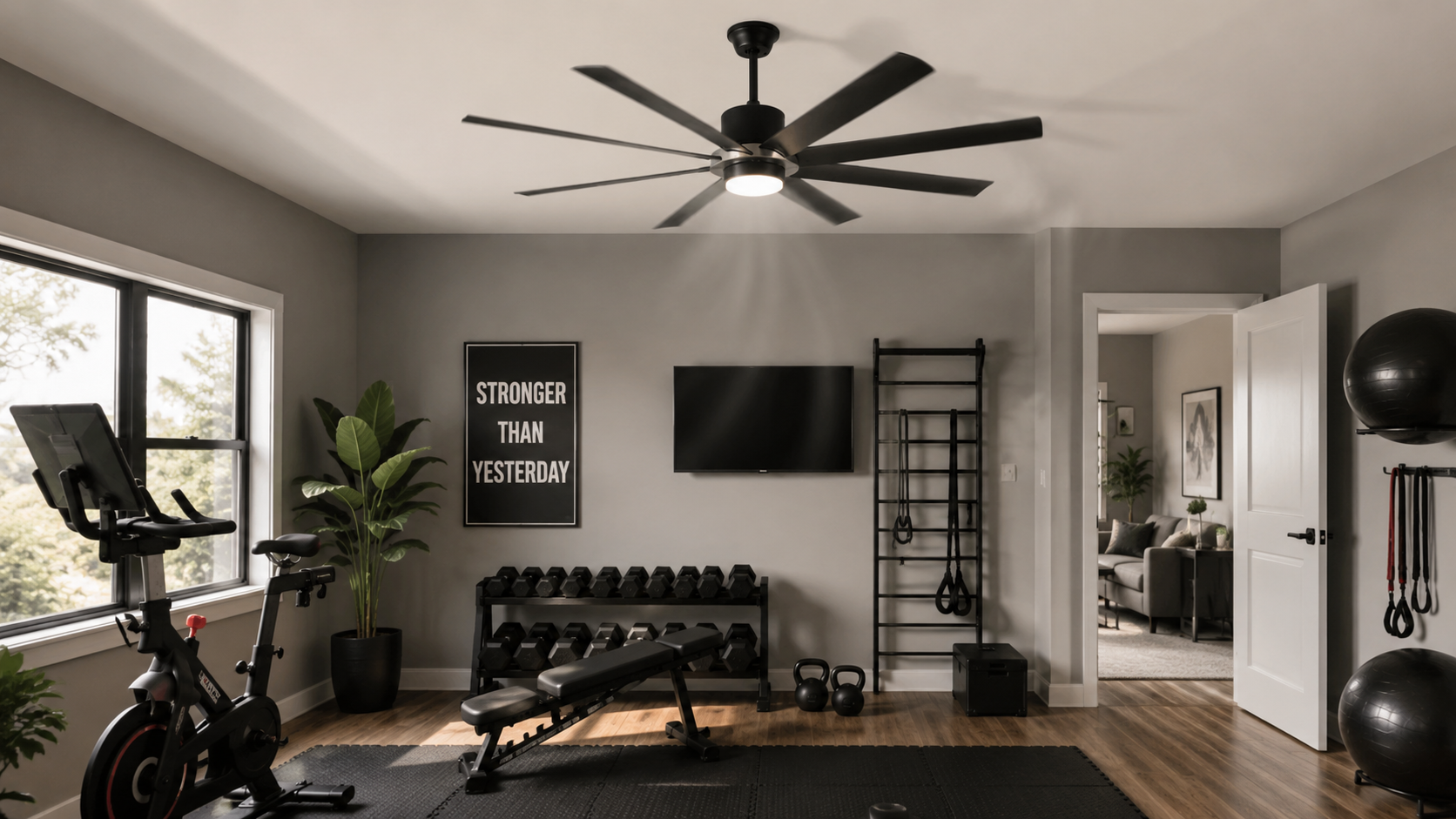


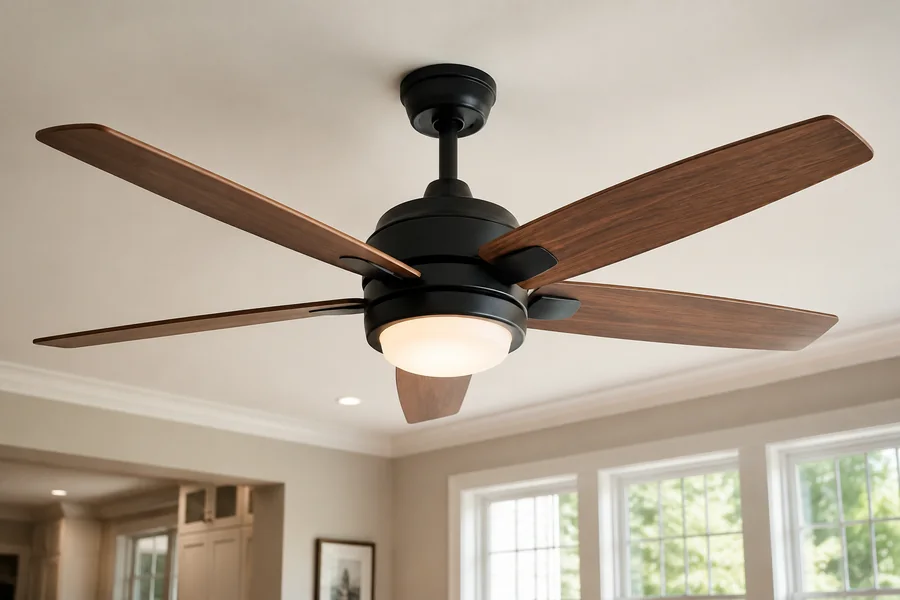
Blade pitch is the angle of each fan blade, while blade span is the diameter covered by the rotating blades. Pitch affects how the blade pushes air, but motor torque, RPM, blade shape, CFM, mounting height, and room layout also decide the airflow you feel. You can compare our living room fan collection after identifying the technical values that matter for your room.
What Does Ceiling Fan Blade Pitch Mean?
What is blade pitch in simple terms?
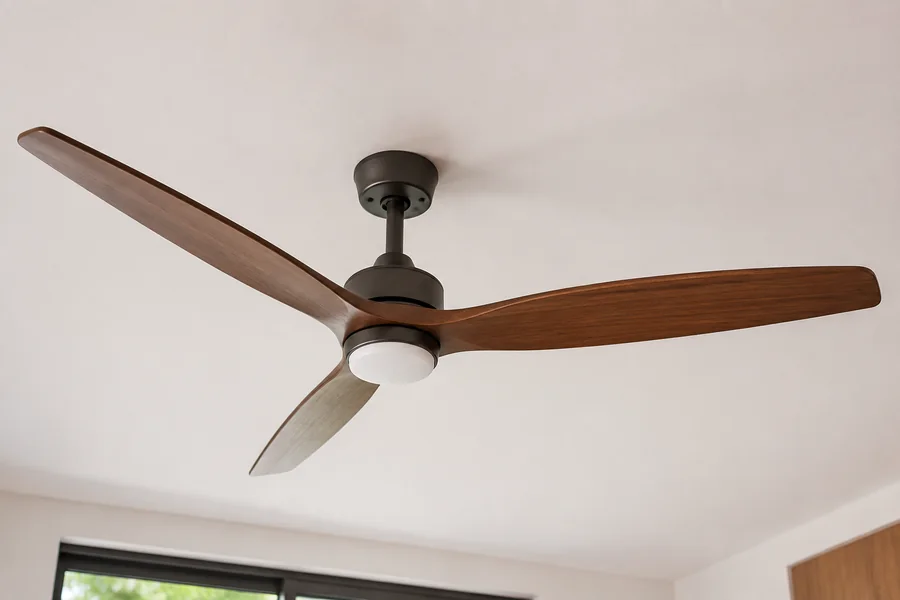
Blade pitch is the angle at which each fan blade meets the air. A flatter blade usually creates a lighter push, while a steeper blade can push more air when the motor has enough torque and the blade shape is designed for it. Research on airflow geometry and movement shows why one isolated specification cannot describe the whole airflow result.
When you look at a fan, imagine the blade as a small wing. Pitch describes how much that wing is tilted as it rotates. It is not the same as the number of blades, the fan diameter, or the speed setting.
Why is pitch not a standalone performance score?
A steep pitch can increase resistance. If the motor is not strong enough, the fan may run slowly, draw more power, or feel uneven. A moderate pitch paired with a well-controlled DC motor may feel smoother and more useful than a steep pitch paired with a weak motor.
You should therefore read pitch together with motor type, RPM range, CFM, blade shape, blade material, and the height where the fan will be installed.
You can see blade pitch most clearly from the side of a stationary fan. A shallow blade looks nearly flat, while a steeper blade rises more sharply from the hub to the tip. That visible angle influences how the blade meets air during rotation, but it does not tell you the full airflow story by itself.
Pitch also is not a quality grade. A low-pitch fan may be designed for quiet, gentle circulation, while a higher-pitch fan may be built for stronger airflow. Which is better depends on your room, the fan height, and whether you prefer a light breeze or more noticeable movement.
When you compare pitch values, make sure you are comparing the same type of information. Some product listings highlight the blade angle, while others lead with CFM or motor type. You need all of those details to understand the likely result.
You can think of pitch as the blade’s working attitude toward the air. A small change in angle may look minor on paper, but it can alter how the fan starts, sounds, and feels once it is spinning above a real room.
How Does Blade Pitch Affect Airflow?
How does a steeper pitch change the air movement?
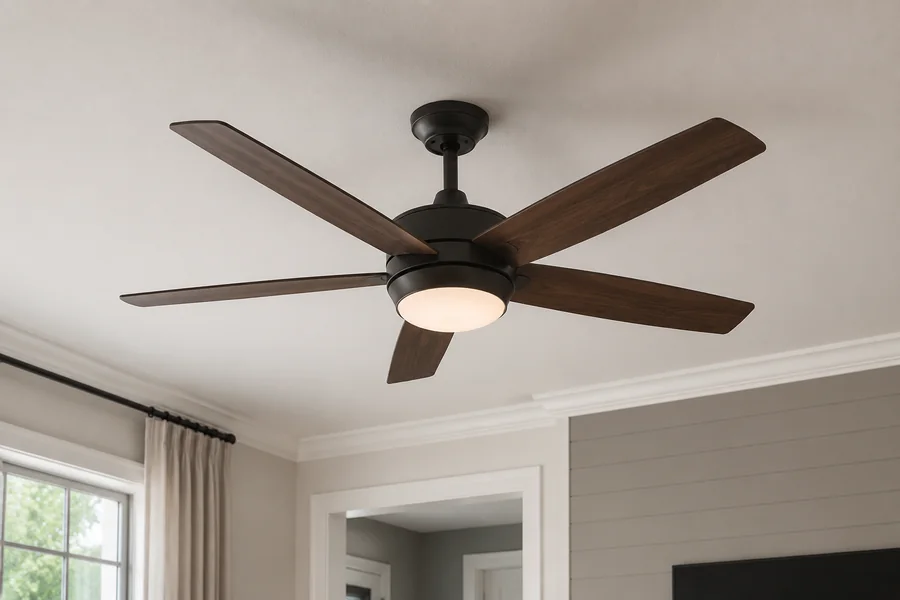
A steeper blade angle presents more surface to the air during each rotation, so it can create stronger movement at a suitable speed. The trade-off is that the motor has to work harder to keep the blades turning smoothly.
If you want a firm breeze, pitch matters. If you want quiet circulation for a bedroom or television room, you also need to check low-speed control and noise. Stronger is not always more comfortable.
What can make a steep pitch feel disappointing?
A steep pitch can feel weak when the motor cannot maintain its intended RPM, when the blades are poorly shaped, or when the fan is mounted too high for the room. It can also feel too aggressive when the fan is close to the seating area.
Use the pitch as part of a system. You should ask what airflow the fan produces at different speeds, not only what angle appears in the specification sheet.
The blades create airflow by pushing and guiding air as they rotate. With more pitch, each blade can engage more air, but the motor must overcome greater resistance. That is why a steeper blade is not automatically more powerful in a finished product.
Blade design also affects the result. Width, taper, thickness, leading edge, trailing edge, and surface texture can change how smoothly air moves across the blade. Two fans with the same stated pitch can therefore create different airflow and different levels of noise.
You should think about the speed you will actually use. A fan that feels strong only at its top setting may be less useful than a fan that creates a comfortable medium-speed breeze quietly. Everyday comfort comes from a usable range, not a single headline number.
Airflow depends on how the blade meets the air on every rotation, so pitch is one part of a moving system. The result you feel in the room is the sum of pitch, speed, motor force, and the height where the fan is installed.
What Is the Difference Between Blade Pitch and Blade Span?
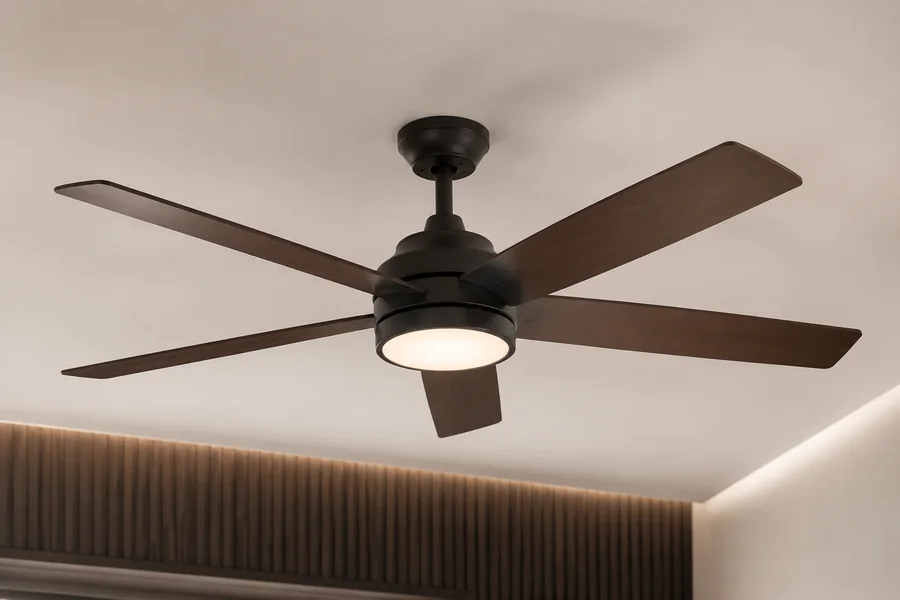
What does blade span tell you?
Blade span is the total diameter covered by the rotating blades. It helps you estimate coverage across the floor area. A 52-inch fan guide is useful when you are deciding whether a medium fan can cover a defined room or seating zone.
A larger span can move air across a wider area, but the fan still needs enough motor output and the correct mounting height. Diameter tells you where the air can reach; it does not tell you how strongly the air will move.
What does blade pitch tell you?
Blade pitch tells you how aggressively the blades are angled into the air. You can think of span as the coverage dimension and pitch as one part of the pushing action.
Two fans can share a 52-inch span and still feel different. The 42- to 72-inch size guide helps you compare size, but you should add pitch, motor, RPM, and CFM before making a performance judgment.
Blade span tells you the diameter of the rotating circle. It helps you choose coverage for the room. Pitch tells you one part of how the blades push air. These two measures work together, but they answer different questions, so neither can replace the other.
A wider span often lets a fan cover a larger area at a lower rotational speed. That can be useful in a living room where you want broad, quiet circulation. A smaller span may need higher speed to create the same feeling in the seating area.
You should not compare a 42-inch and a 60-inch fan only by pitch. The bigger fan has a larger blade path and may move more air at a lower RPM, while the smaller fan may create a more focused breeze. The room layout determines which experience is useful.
Span tells you how wide the fan reaches, while pitch tells you how the blades push. If you mix those two ideas together, it becomes easy to choose the wrong fan for a room that needs either broader coverage or a stronger local breeze.
Why Can Two Same-Size Ceiling Fans Feel So Different?
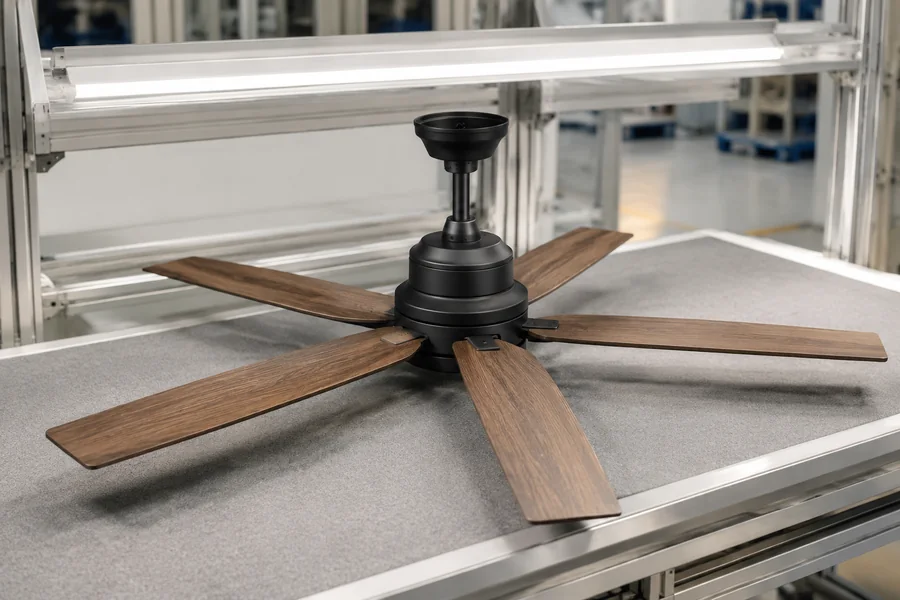
How does the motor change the result?
Motor torque determines how well the fan can maintain speed against blade resistance. A strong, well-controlled motor can keep a steeper blade pitch moving smoothly, while a weaker motor may lose speed or create more vibration.
You should compare the motor platform and speed curve, not only the motor label. DC motors often allow more gradual control, but the actual comfort still depends on the fan’s blade design and installation.
How do RPM and air velocity affect comfort?
RPM tells you how quickly the blades rotate. Air velocity describes how fast the moving air reaches a point in the room. Higher RPM can create a stronger breeze, but the best setting depends on where you sit, the room temperature, and your tolerance for direct airflow.
A fan may have a high maximum airflow and still be pleasant at low speed. You should look for a useful range of settings rather than choosing only by the biggest number.
Motor torque is what keeps the blades turning at the intended speed when they meet air resistance. A fan with a well-matched motor and blade set can maintain a smooth speed curve. A poorly matched combination may sound strained, change speed unevenly, or produce less airflow than the blade angle suggests.
RPM is also not a standalone quality measure. Higher RPM can create stronger airflow, but it can increase noise and make a direct breeze feel uncomfortable. The best RPM range gives you control from gentle circulation to stronger cooling support without abrupt changes.
If you use the fan while watching television, working, or sleeping near an open living space, pay special attention to low-speed smoothness. A quiet motor and well-balanced blades often matter more in daily life than a small gain in maximum airflow.
Two same-size fans can feel different even when the housings look similar because the hidden engineering is not the same. Motor strength, blade shape, and speed control can change the comfort more than the outside diameter suggests.
How Do Motor Type, RPM, and CFM Change Airflow?
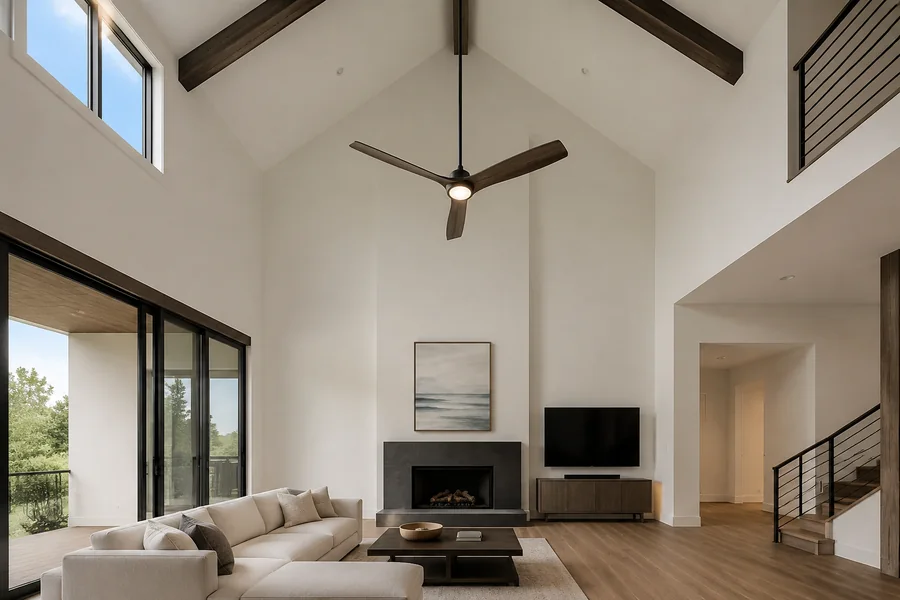
What should you learn from CFM?
CFM means cubic feet per minute, or how much air the fan moves in one minute. It helps you compare airflow volume, but the test speed and mounting conditions matter. A maximum CFM figure does not tell you exactly how the fan will feel at low speed.
When you compare two fans, check whether their CFM values are measured at the same speed and under similar conditions. Then consider low-speed airflow, noise, and whether the air reaches the area where you sit.
Why should you check the whole speed range?
Your room may need different airflow at different times. You may want a low, quiet setting while reading and a stronger setting during a hot afternoon. RPM steps, remote control, reverse mode, and motor response determine how easy that adjustment feels.
For a large room, compare airflow with the large living room coverage guide rather than using pitch or CFM alone. Coverage, height, and fan size still control the final experience.
CFM helps you compare air volume, while air velocity helps explain how that air feels at a particular place in the room. A fan can move a large volume of air but feel weak at the sofa if it is mounted too high or placed away from the seating zone.
When you see a high CFM figure, ask which speed produced it and whether the number applies to the exact version with or without a light. You should compare like with like. A light kit, blade design, and control setting can all affect the final performance.
The practical test is whether you can feel a comfortable, even breeze where you sit. That is why CFM should be combined with mounting height, blade span, room width, and fan placement rather than treated as a winner-takes-all number.
A useful comparison looks at both volume and feel. A fan that moves a lot of air at maximum speed is helpful only if it also has a lower setting that stays quiet enough for daily use.
Does a Steeper Blade Pitch Work Better in High Ceilings?
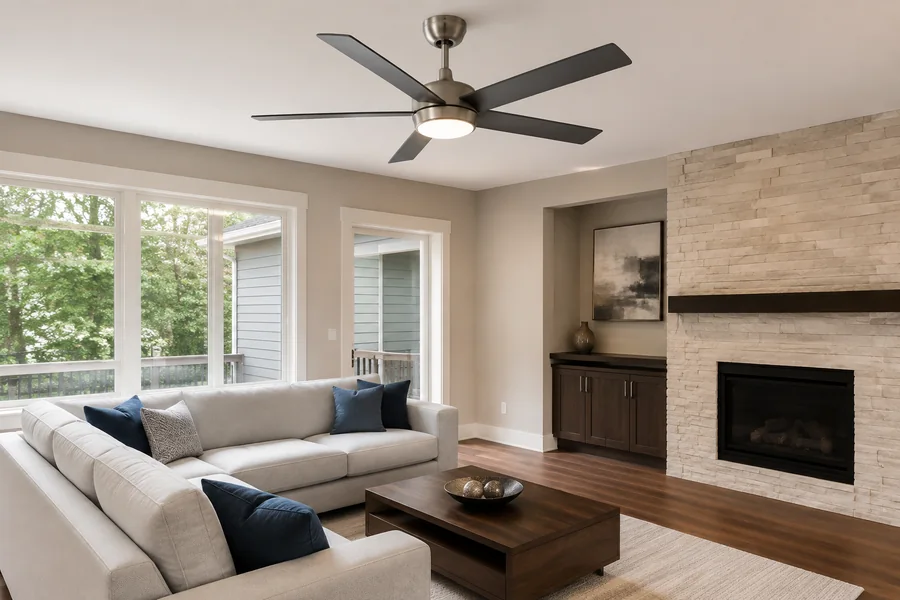
How do pitch and downrod work together?
A steeper pitch can help create stronger movement, but it cannot fix a fan that is too high above the occupied zone. In a tall room, you need to bring the blades closer with the right downrod and then choose a motor and blade combination that can move air at that height.
The high-ceiling fan guide explains why blade height and room coverage come before choosing a single performance number.
Can strong airflow become uncomfortable?
Yes, direct high-speed airflow can feel unpleasant when you sit below the fan for a long time. You should choose a fan that can move enough air for the room but also offers quiet, lower-speed settings.
In a cathedral or vaulted room, the cathedral ceiling setup guide can help you consider pitch together with downrod length, blade height, and the shape of the ceiling.
High ceilings make mounting height especially important. A well-designed fan with a moderate pitch can still feel ineffective if the blades remain close to a tall ceiling. The downrod brings the whole airflow system closer to the room, which is often more valuable than chasing a small change in pitch.
In a cathedral room, the ceiling angle and blade clearance also affect the choice. You may have space for a larger fan but still need to control the total drop carefully. The best result is a balanced combination of pitch, motor, span, and installation height.
You should also consider where the breeze will land. A stronger pitch and higher speed may work well over an open living room but feel too direct above a reading chair or dining table. Good control lets you tailor the air movement to the activity below.
In tall rooms, pitch is only helpful when the blades are low enough for the air they push to matter. A carefully mounted fan with moderate pitch can outperform a high-pitch fan that is placed too close to the ceiling.
Which Blade and Motor Details Should You Compare Before Choosing?
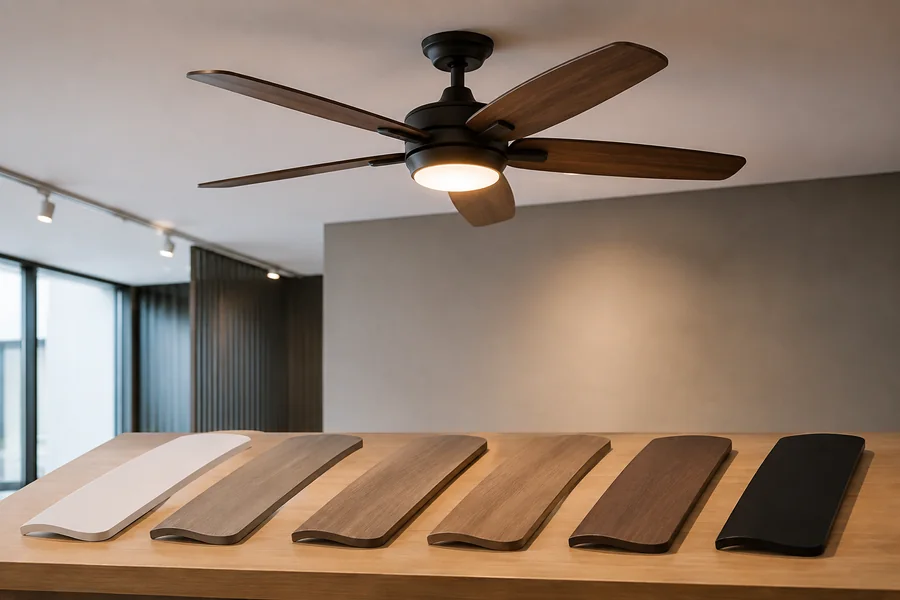
Which technical specifications matter most?
Ask for blade pitch, blade span, blade material, motor type, RPM range, CFM, power input, noise information, control steps, and recommended room size. You should also check whether the figures apply to the lighted or non-lighted version you are considering.
Blade shape matters because two blades with the same pitch can have different widths, tapers, and trailing edges. Those details change how smoothly the air is moved and how much load the motor experiences.
How can you compare products honestly?
For a practical comparison, look at the 52-inch wood blade fan, the 54-inch DC fan light, and the black DC fan light. Compare pitch, motor, RPM, blade shape, and airflow rather than assuming the largest diameter will feel strongest.
| Specification | What it tells you | Why it matters |
|---|---|---|
| Blade pitch | How steep the blade is | Changes how much air each rotation can push |
| Blade span | Total fan diameter | Helps you judge room coverage |
| Motor type | How the blades are driven | Affects smoothness, noise, and control |
| RPM / CFM | Speed and airflow volume | Shows how the fan may feel at different settings |
If the room is tall, compare the 12- to 20-foot downrod guide and the vaulted ceiling installation guide as well. A pitch comparison is incomplete until the mounting height and room shape are understood.
Blade material can influence stiffness, weight, and long-term stability. A well-designed ABS blade can be consistent and moisture resistant, while a wood blade can bring warmth and a different visual character. The material itself does not decide airflow; the final blade shape and motor match still matter.
Look at the number of speed settings and the control response. More useful speed steps can help you find a comfortable setting, especially in a bedroom-adjacent living area. A fan that jumps from very gentle to very strong gives you less control over the breeze.
You should also check the off-state design. The blade pitch may be technically correct, but the fan still needs to look proportionate in the room. Blade finish, housing depth, and light shape all affect whether it works with your ceiling and furniture.
The best comparison is the one that lets you imagine the finished room rather than just the spec sheet. If you can picture where the breeze lands and how loud the fan sounds, you are comparing the right variables.
What Should You Ask Before Buying a Fan Based on Blade Pitch?
What should you ask about the test conditions?
Ask at which speed the airflow and CFM were measured, whether the fan had a light installed, how high it was mounted, and whether the figure describes the maximum or a typical operating setting. These questions help you avoid comparing numbers that were produced under different conditions.
If you are choosing for a large or open room, the 60-inch versus 72-inch comparison can help you separate coverage from airflow intensity. You should also check whether one fan or two fans will serve the furniture zones more evenly.
How do you judge real comfort after installation?
Stand or sit in the places where you will use the room and test low, medium, and high speed. Listen for motor noise, watch for wobble, and notice whether the airflow feels even or too direct. A specification sheet can narrow your options, but your room decides the final comfort.
If the fan will be installed on a slope, check the adapter, blade clearance, and total drop before you compare pitch. Installation geometry can change the result as much as a small difference in blade angle.
Before buying, collect the specifications in one place: blade pitch, span, blade material, motor type, RPM range, CFM, wattage, noise information, control method, and recommended room size. Missing information is not proof that a product performs badly, but it makes a technical comparison less reliable.
Ask how the fan behaves at medium speed, not only at maximum speed. That is where many people actually use a ceiling fan. You want enough airflow to notice, enough control to soften the breeze, and a motor that remains smooth when it is not working at full output.
After installation, test the fan in the real room. Sit in the main chair, stand near the kitchen edge, and try low, medium, and high settings. The best pitch-and-motor combination is the one that gives you useful, comfortable air in the places where you live.
The final decision should come from how you will actually live with the fan. Sit where you read, work, or watch TV, then ask whether the chosen pitch and motor give you a breeze you can keep using all day.
If you are looking for a better ceiling fan light solution for your project, NEBOLA can provide one-stop support from product selection to customization. We focus on ceiling fan light R&D and manufacturing, helping brands, importers, and distributors find products that better match real space needs.
NEBOLA Ceiling Fan Light Support
Need help comparing fan airflow?
Share the fan size, motor details, and room conditions, and NEBOLA can help you compare blade pitch, airflow, and everyday comfort.
FAQ
Does a steeper blade pitch always create more airflow?
No, a steeper pitch can move more air only when the motor, blade shape, RPM, and control system can support it.
Is blade pitch the same as blade span?
No, blade pitch is the angle of the blade, while blade span is the total diameter covered by the rotating blades.
Can two same-size fans have different airflow?
Yes, two fans with the same blade span can feel different because motor torque, pitch, blade shape, RPM, and mounting height differ.
Should you choose a fan by blade pitch alone?
No, compare pitch with CFM, motor type, RPM range, blade span, noise, and the actual room where you will use the fan.