

A fandelier often looks more decorative than a standard ceiling fan, but that does not automatically mean it moves less air. The real question is whether the style choice takes away blade size, motor strength, or installation freedom that the room actually needs. In many living rooms, the better-looking fixture is only better if it still gives enough airflow at a comfortable speed.
If you are still comparing room size and fan coverage, start with the living room fan collection so the style decision stays connected to the room first.
Fandelier vs Ceiling Fan: Does Better Style Mean Less Airflow?
Often, yes, but not always. A fandelier may sacrifice some airflow efficiency because it adds decorative mass around the fan body and can limit the blade shape or size. A standard ceiling fan is usually built to prioritize air movement first, then style second.
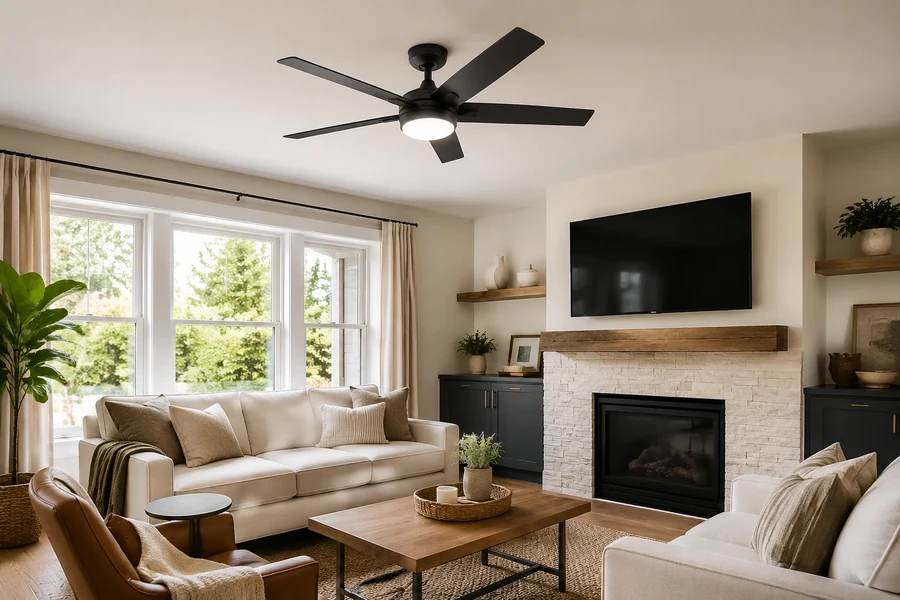
The style question becomes important because a living room ceiling fixture is always visible. A fandelier can make the room feel more designed, especially when the sofa, coffee table, and ceiling line are part of one decorative plan. But airflow is felt, not just seen, so the fixture still has to move enough air at a comfortable speed.
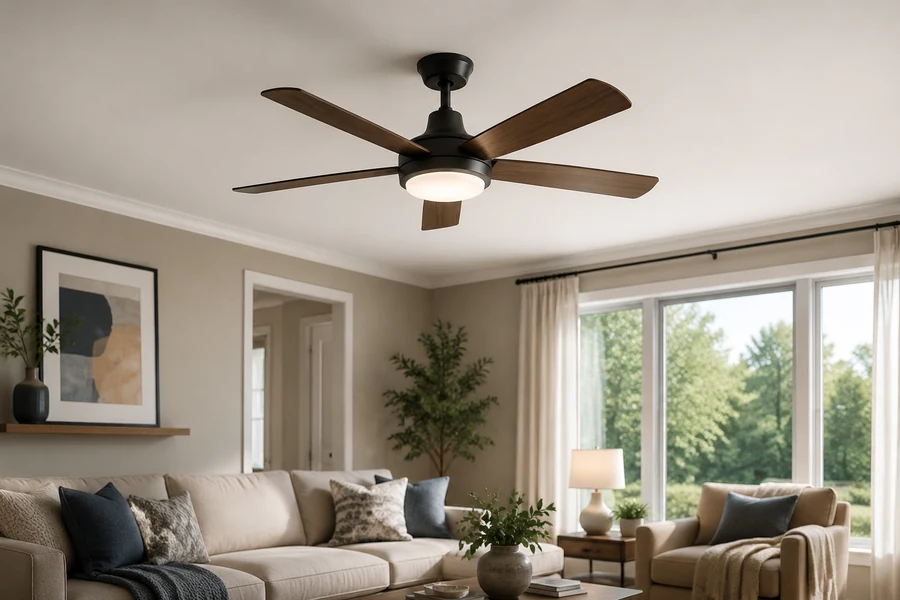
A standard ceiling fan usually has a clearer job. It is less decorative, but it often gives the blades more room to work. If your living room gets warm, has a wide seating area, or depends heavily on fan airflow, that simpler structure can be an advantage rather than a compromise.
| Category | What it usually gives you | Best fit |
|---|---|---|
| Fandelier | Stronger visual presence, more decorative detail | Premium living rooms, feature ceilings |
| Standard ceiling fan | Stronger airflow focus, simpler structure | Comfort-first living rooms, larger rooms |
| Fan light | Balanced lighting and movement | Everyday family spaces |
| Ceiling fan with light | Practical overhead comfort | Rooms that need both light and air |
How should you read the choice for your room?
If style is the main priority, a fandelier can be a great fit. If airflow and everyday comfort matter more, a standard ceiling fan is usually the safer choice. The right answer depends on how you use the room every day.
What happens when style gets ahead of comfort?
Your room may look finished but still feel warm or still. A beautiful fan that does not move enough air becomes a design object rather than a comfort fixture, and you will notice that most when you are sitting under it for a long evening.
What Makes a Fandelier Different From a Standard Ceiling Fan?
A fandelier combines fan and chandelier ideas in one product, so the visual language is more decorative. That can be ideal for a living room that wants a focal point, especially when the ceiling treatment is already part of the design story.
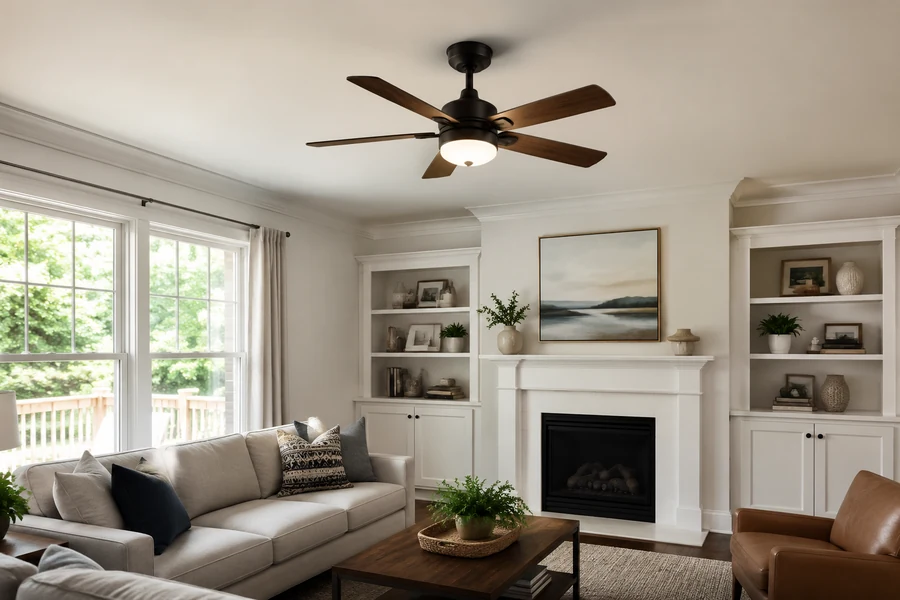
A fandelier usually puts the light fixture and decorative body closer to the center of the design. The blades may be shorter, hidden, retractable, or shaped around the decorative frame. That can look more polished, but it also means you need to check the actual blade span and airflow path, not just the overall fixture diameter.
A standard fan usually makes the blades the main feature. That can look simpler, but it often gives better airflow control. In a living room where comfort matters every day, the standard fan may feel more practical even if the fandelier looks more impressive in a showroom photo.
How does the structure change the result?
The decorative shell around a fandelier may change blade exposure, airflow path, and visual weight. In some cases, that is worth it because the room gains a richer look. In other cases, the room needs the simpler fan body instead.
What room types suit a fandelier best?
A fandelier usually suits a formal living room, a polished lounge, or a room where you want the lighting fixture itself to feel intentional. It may be less comfortable in a plain family room where your main goal is steady air movement.
A fandelier is usually chosen because you want the ceiling fixture to be seen. That can be the right decision in a living room where the fan is part of the design plan. The standard fan is usually chosen because you want the fixture to work quietly in the background.
The difference becomes clear at night. A fandelier may add sparkle, layered light, or a more formal ceiling presence. A standard fan may look simpler, but it often gives you more predictable airflow and easier cleaning.
Why Can Some Fandeliers Move Less Air Than They Look Like They Should?
The visual size of a fandelier can be misleading. A fixture may look large because of its decorative ring, crystal trim, or layered frame, while the actual airflow area is smaller than the body suggests.
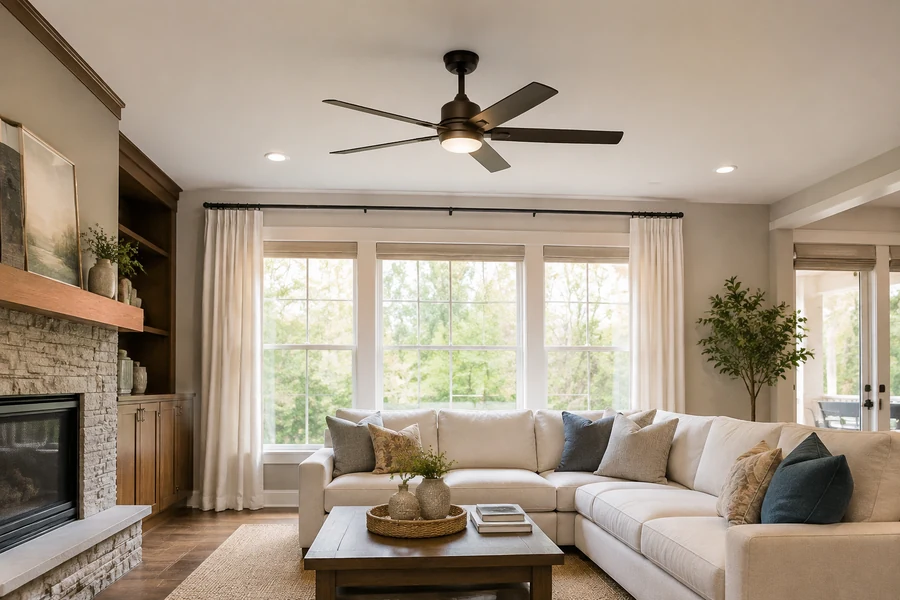
Decorative size is easy to misread. A chandelier frame can make a fixture look large, but the moving blade area may be much smaller. If the air-moving part is small, you may need higher speed to feel the same comfort, and higher speed can bring more sound or stronger draft.
Some fandeliers are also designed for visual balance rather than maximum blade pitch. That does not make them poor products. It simply means they belong in rooms where style and moderate airflow are the goal, not rooms where the ceiling fan has to do heavy cooling support.
Which design details can reduce airflow?
A heavy outer shell, reduced blade exposure, lower RPM target, or a tighter decorative shape can all reduce the air-moving feel. That does not make the fixture bad, but it does mean you should compare it as a style-forward fixture, not a pure airflow machine.
How do you judge airflow honestly?
Use room size, blade span, mounting height, and real use condition. If the fan sits too high or the room is too wide, decorative style will not save it. The airflow has to reach the seating zone, not just look good in the center of the ceiling.
When Does a Regular Ceiling Fan Win on Real Comfort?
A regular ceiling fan wins when the living room needs dependable airflow every day. It usually has a cleaner path for air movement, fewer decorative interruptions, and a broader range of practical sizes.
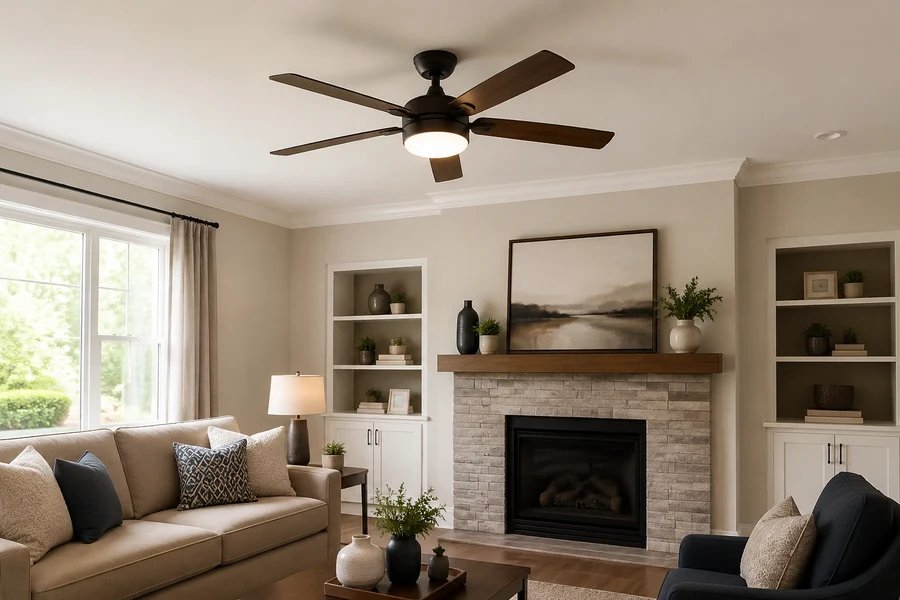
A regular ceiling fan wins when you want steady comfort without thinking about the fixture. If you sit in the living room for long periods, you usually notice airflow quality more than decorative detail. A fan that moves air smoothly at low or medium speed often feels better than a fandelier that has to work hard.
It also wins in wide rooms, open layouts, and spaces with higher ceilings. Those rooms usually need blade span, mounting flexibility, and a clean airflow path. A decorative fixture can still work, but it has less room for error.
When do families feel the difference?
You notice it most in rooms where you sit for long periods. If you spend time reading, watching TV, or hosting guests for hours, a fan that moves air smoothly at a low setting often feels better than a showpiece fan that needs to work harder.
What does the ceiling fan research suggest?
Recent thermal comfort research on ceiling fans in overheated indoor spaces shows that fans can reduce thermal discomfort and support more comfortable conditions. That reminds us that airflow is not decorative; it affects how your room feels while you actually use it.
How Do Room Size and Ceiling Height Change the Choice?
A smaller room can often tolerate a more decorative fan because it does not need as much air movement. A larger living room or higher ceiling usually pushes you back toward a more direct airflow design.
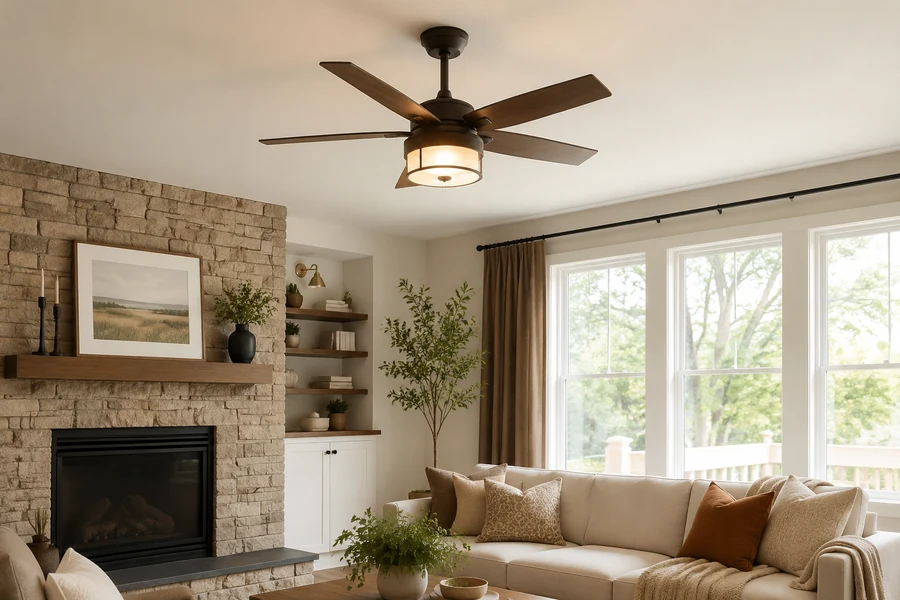
How should you compare room size first?
If the room is large, review the 52-inch living room guide, 60 vs 72-inch guide, and size comparison article. Those articles help you decide whether the room needs more blade span before style enters the conversation.
How should you compare ceiling height?
High or angled ceilings may require a downrod or special mounting plan. The high ceiling fan guide, downrod length article, sloped ceiling guide, cathedral ceiling setup, and blade pitch guide are all useful before you choose a decorative ceiling fixture.
Room size changes the risk. In a smaller room, a fandelier may provide enough gentle airflow while improving the look. In a larger room, the same decorative fixture may feel underpowered because the blades or airflow path are limited by the design.
Ceiling height changes the visual effect too. A low ceiling can make a detailed fandelier feel heavy, while a higher ceiling can give it room to breathe. A standard fan is often easier to place when clearance is tight or when the room needs stronger airflow.
How Can You Match Decorative Fan Style With a Living Room?
If you want a premium decorative statement, a crystal fandelier can bring more sparkle and visual weight into your room. If you want a more architectural decorative fan, a gold wood fandelier can feel warmer and more grounded.
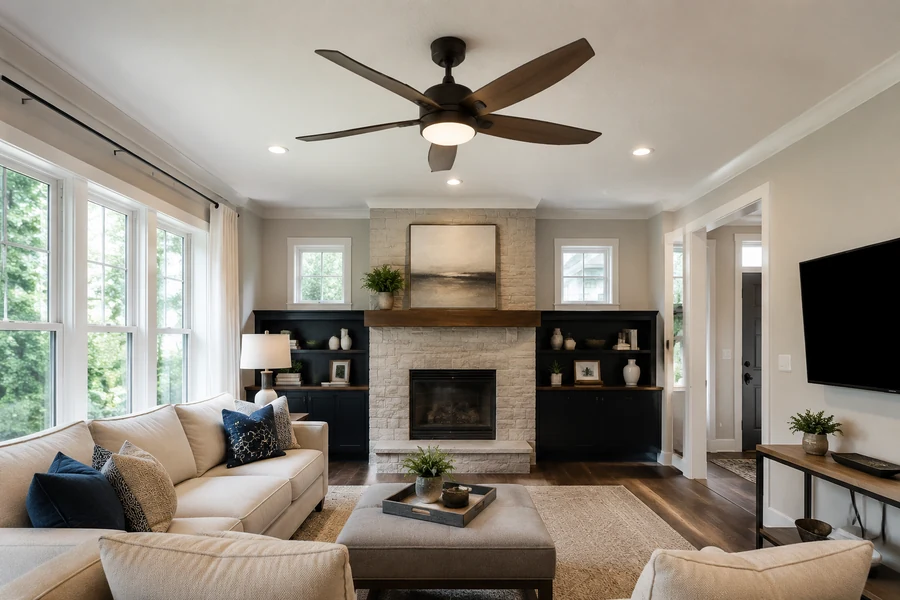
The room should tell you how decorative the fixture can be. If the ceiling is plain and the furniture is understated, a fandelier can become the focal point. If the room already has bold lighting, artwork, or heavy furniture, a simpler fan may keep the space from feeling crowded.
Scale is the next check. A decorative fan that is too small can look like an ornament instead of a room fixture. A fandelier that is too large can dominate the seating area. The best match feels intentional from the sofa, not just from a product photo.
If you want to stay in the decorative fan category but keep the structure cleaner, a decorative chandelier fan gives you a style-forward direction that is easier to compare with standard fan performance. That makes it easier to decide whether your room wants more drama or more air movement.
How can you use these options without forcing the room?
Use the decorative product where style leads your room, and use the standard fan where comfort leads. That rule is simple, but it helps you avoid mismatched choices later.
What Trade-Offs Should You Check Before You Buy?
Before you buy, ask whether the room really needs a statement piece or whether it simply needs better comfort. A fandelier can be the right answer when the room already has enough airflow support and the ceiling fixture should add visual value.
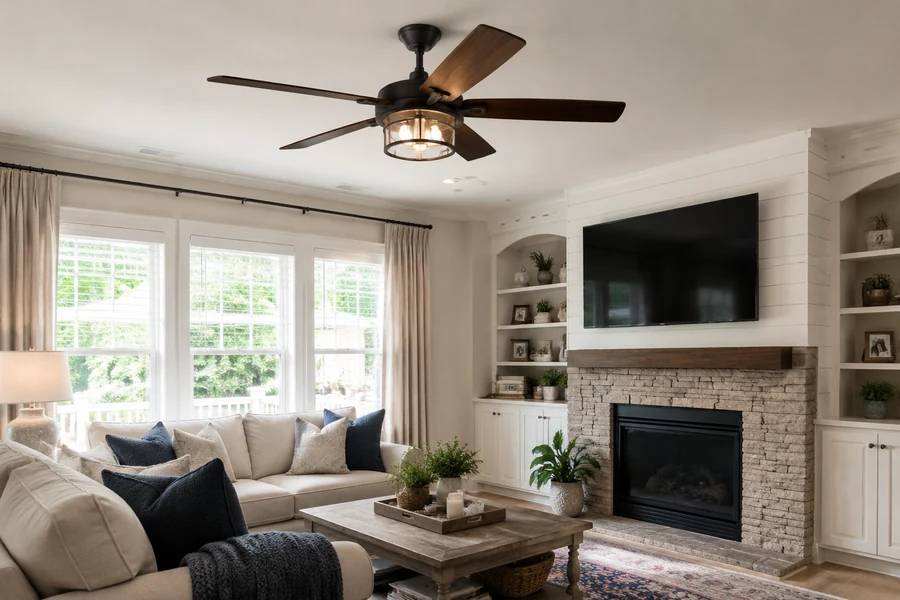
Check cleaning and maintenance before falling in love with the style. Crystal pieces, layered shades, and detailed frames collect dust differently from simple blades. If the room is used every day, easy maintenance can become part of comfort.
Also check how the light and airflow work together. Some decorative fixtures look beautiful when the light is on but move air only gently. That may be fine for a formal room, but it may not be enough for a warm family living room.
Check whether the decorative value is solving a real design problem. If the room lacks a focal point, a fandelier may be worth the airflow trade-off. If the room already has strong furniture, lighting, and wall decor, a simpler ceiling fan may fit better because it does not compete with everything else.
Also check maintenance. Crystal trim, layered frames, and tighter housings can require more cleaning than a standard fan. If the living room is used every day, easy cleaning and reliable low-speed performance may matter more than the first impression.
What should you ask yourself first?
Ask whether you want the fixture to be noticed, or to disappear into the room and just do its job. That single question often reveals whether a fandelier is the right fit or whether a more direct ceiling fan is the better move.
What does comfort research add here?
The useful lesson from ceiling fan and thermal comfort research is simple: airflow is not an optional extra. A room that feels better is often the room that is easier to live in, even if the fixture itself is less ornate.
Look at the fixture from normal seating height, not only from directly below. A fandelier can look beautiful in a close product image but feel visually heavy from the sofa. A standard fan can look plain in isolation but feel balanced once the furniture, windows, and ceiling height are considered.
Also consider how often the fan will run. If it runs daily, airflow, noise, and cleaning become more important than decorative novelty. If it runs only occasionally, the style value may reasonably carry more weight.
How Should You Decide Between Style and Airflow?
Start with the room’s real purpose. If you need atmosphere first and comfort second, a fandelier can make sense. If you need daily comfort first, choose the fan that gives you the best air movement at the lowest practical speed.
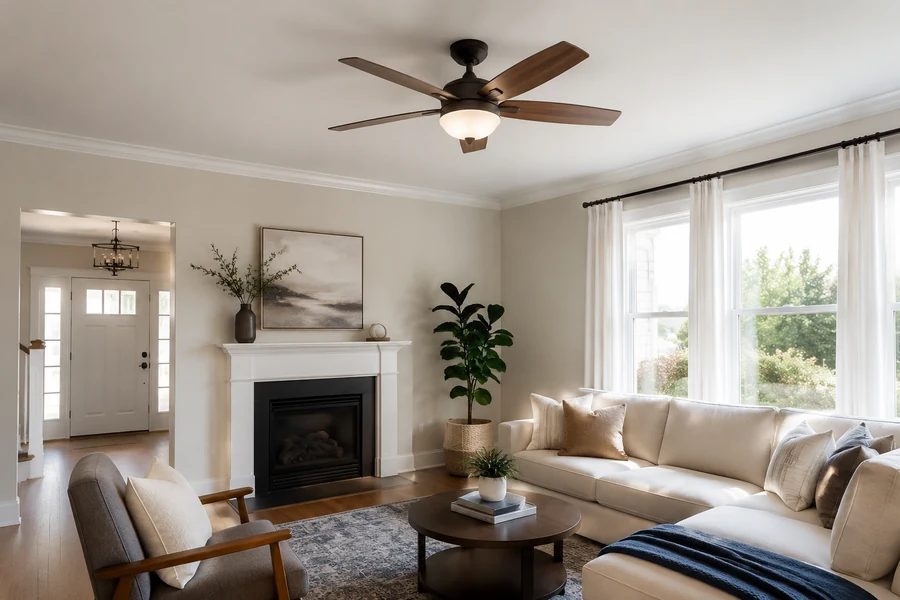
If the room already feels comfortable and only needs a stronger visual centerpiece, style can lead. If the room gets warm, feels still, or has a wide seating area, airflow should lead. This simple order keeps the decision from becoming only about appearance.
The best choice is the one you stop noticing for the right reason. A fandelier should feel beautiful without making the room uncomfortable. A standard fan should feel useful without making the ceiling look unfinished.
A practical decision starts with one question: do you want the ceiling fixture to lead the room visually, or do you want it to quietly support comfort? If the fixture should be a feature, a fandelier makes sense. If the room already has enough style and mainly needs airflow, a standard fan is usually easier to live with.
What rule helps you decide?
Choose the fixture that matches how you actually use the room, not the one that looks most impressive in isolation. In a living room, style matters, but the room still has to feel good after you sit down. If you are still comparing room size and coverage, the living room fan guide can help you match the fixture to your space before you decide.
For a living room, the best fixture is the one that still feels right after the first impression fades. If the fandelier continues to support comfort, it is a good style choice. If the standard fan keeps the room comfortable without hurting the design, it may be the smarter long-term decision.
If you compare samples, run each option at the speed you would actually use while sitting in the room. This keeps the comparison honest, because a fandelier at high speed and a standard fan at low speed are not giving you the same daily experience.
A final review should include both the daytime look and the nighttime feel. During the day, the fixture affects the ceiling line and overall style. At night, airflow, light quality, and noise become more noticeable. A good choice should pass both tests, not just one.
If you are looking for a better ceiling fan light solution for your room or project, NEBOLA can support you from product selection to customization. We focus on ceiling fan light R&D and manufacturing, helping you find products that match real space needs.
If you are choosing for a room people use every day, comfort should lead the decision. You can still choose a beautiful fixture, but it should not make the room warmer, noisier, or harder to maintain. Style is valuable only when the room still works.
If you are choosing for a formal room used less often, style can carry more weight. In that case, a fandelier may be the better emotional fit even if a standard fan would move more air. The right choice depends on how often the room needs real cooling support.
A fandelier can be the right choice when the living room needs a centerpiece and only moderate airflow. It can make the ceiling feel more intentional and connect the fan to the room’s decorative language. But if the room already struggles with heat or still air, the fixture has to prove that it can move enough air before style takes over.
A standard ceiling fan is often the better choice when comfort is the daily complaint. You may not notice the simpler design after a week, but you will notice whether the room feels cooler and easier to use. That is why airflow should lead when the room is used often, especially in warm climates or open layouts.
The cleanest decision is to rank the room’s needs before comparing products. If the top need is beauty, choose the decorative fixture that still provides acceptable airflow. If the top need is comfort, choose the fan with the stronger blade span, motor performance, and mounting fit, then select the best-looking version within that group.
This approach keeps the choice honest. You are not asking whether a fandelier is good or bad in general. You are asking whether this room can afford the airflow trade-off that comes with a more decorative ceiling fixture.
You can also think about the room’s tolerance for compromise. A formal sitting room may tolerate gentler airflow because the fixture is mainly part of the atmosphere. A family living room usually has less tolerance because people expect the fan to make the space more comfortable every day.
Before choosing a decorative model, check whether the fan can work at a comfortable low or medium speed. If it only feels useful at high speed, the style advantage may fade quickly because noise and draft become part of the experience.
A good fandelier should not ask you to choose beauty while giving up basic comfort. A good standard fan should not make the room feel unfinished. The right product is the one that keeps both the visual plan and the comfort plan believable.
NEBOLA Ceiling Fan Light Support
Need help choosing style or airflow first?
Share your room size and design goal, and we can help you decide whether a fandelier or a standard ceiling fan is the better fit.
FAQ
Is a fandelier always less powerful than a ceiling fan?
No, not always, but many fandelier designs prioritize appearance over raw airflow.
Can a fandelier work in a living room?
Yes, it can work well in a living room when the room size and airflow needs are modest.
Should you choose a fandelier for a large room?
No, a large room usually needs stronger airflow and a more direct fan design.
Is a standard ceiling fan better for everyday comfort?
Yes, a standard ceiling fan is usually the safer choice when airflow matters most.
Can a decorative fan still be practical?
Yes, if the room is not too large and the fixture still provides enough usable airflow.