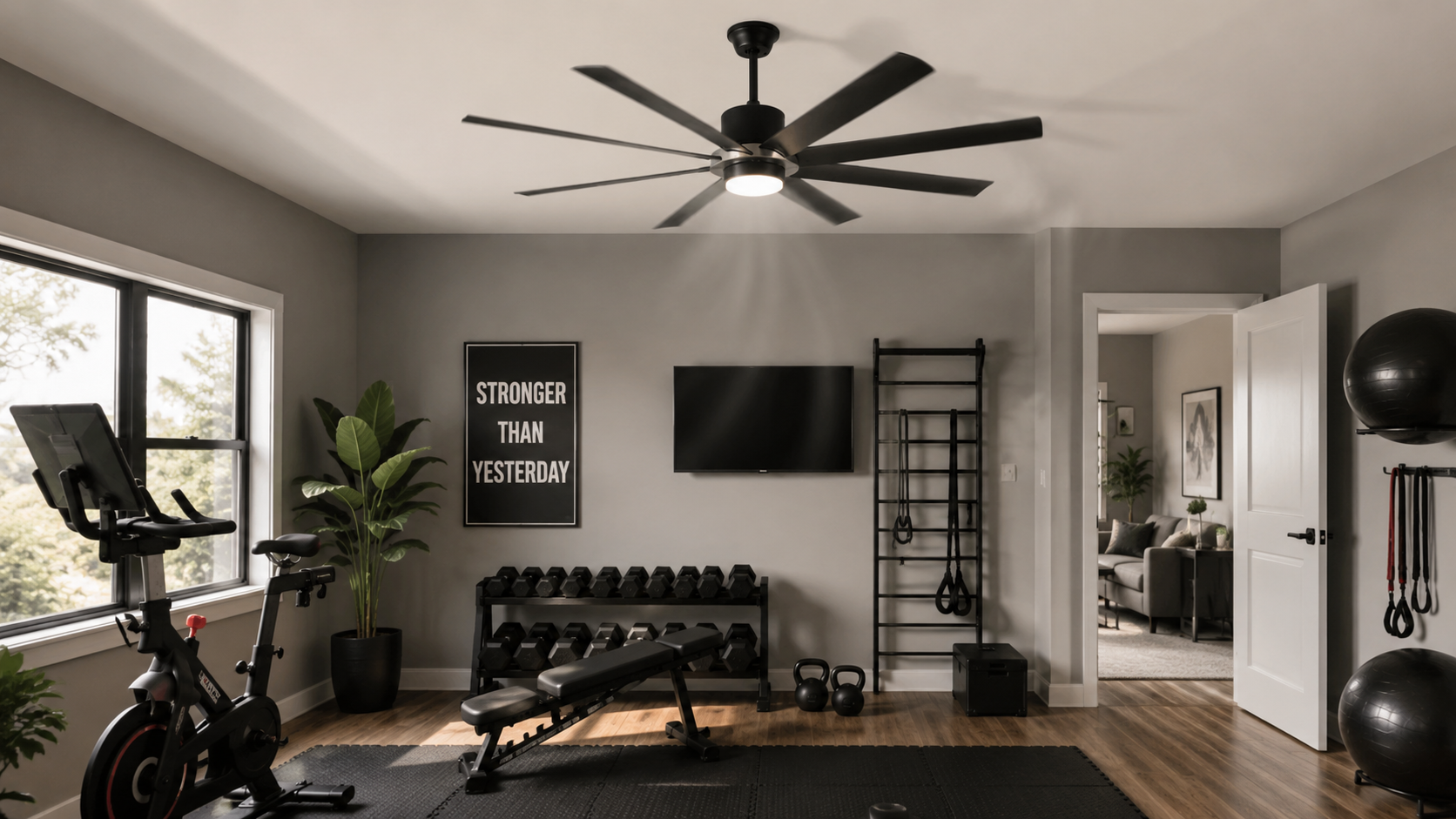


Some ceiling fans look cheap because the details do not hold together. The blades may be the wrong scale, the finish may look too shiny, the light diffuser may look thin, or the motor housing may feel bulky from below. In a high-end living room, these small problems become very visible.
If you want a luxury living room ceiling fan that feels refined, start with the room before the product. The living room fan collection can help you compare scale and style before you decide which premium direction makes sense.
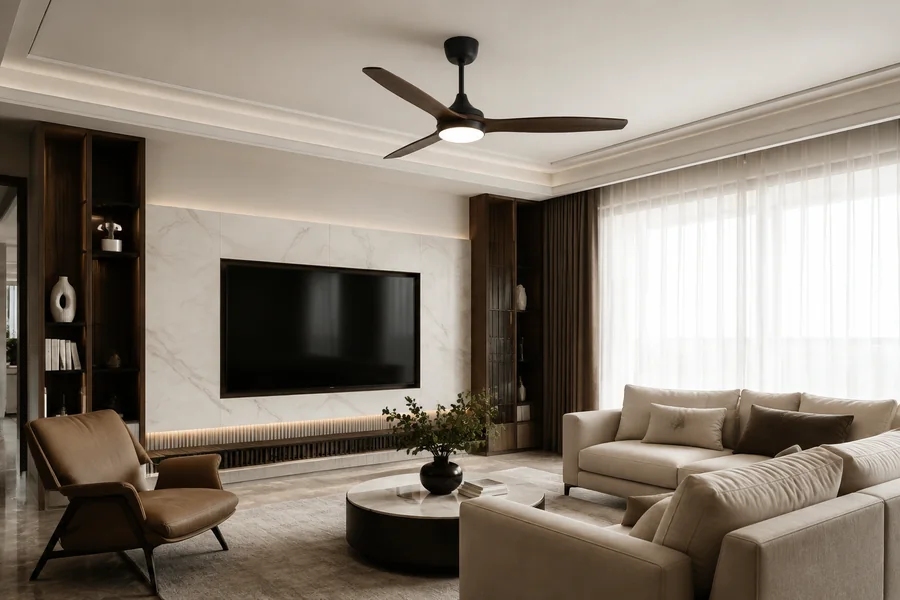
Why Do Some Ceiling Fans Look Cheap in a High-End Living Room?
A ceiling fan usually looks cheap when it feels separate from the room. The finish may fight with the furniture, the body may hang too low, the light may glare, or the blades may look too thin for the space. A high-end room exposes those mismatches because everything else is already more considered.
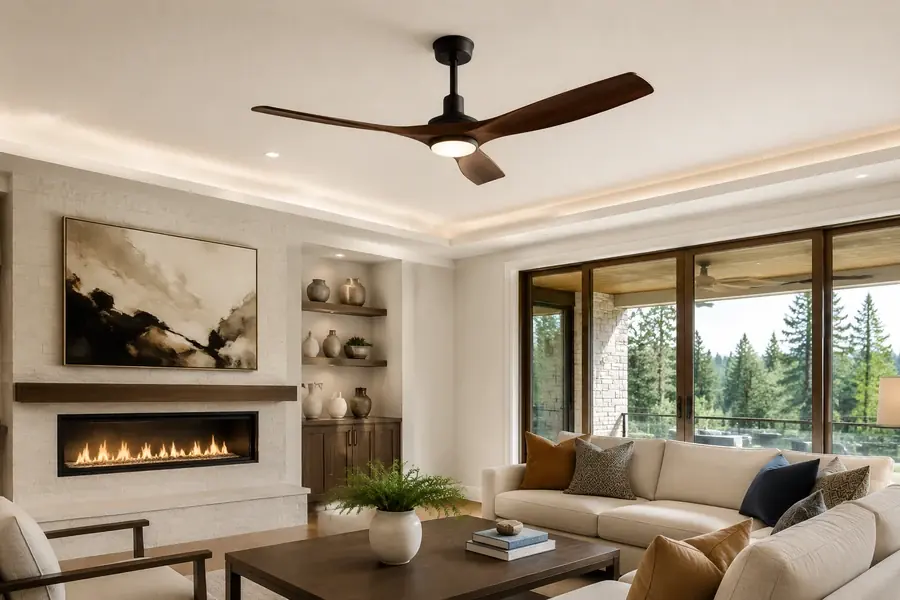
We should not judge luxury by shine. A fan can look expensive with a quiet matte finish, clean lines, and solid proportions. It can also look cheap with too much gold, too much plastic, or too many decorative pieces competing for attention.
What is the fastest way to spot a cheap-looking fan?
Look at the fan from below. If the center body looks swollen, the diffuser looks cloudy, the blade roots look messy, or the canopy does not feel integrated, the fan may look less refined after installation. Product photos rarely show this angle clearly enough.
Why does craftsmanship still matter in a style decision?
The V&A’s introduction to the Arts and Crafts movement is a useful reminder that material honesty and workmanship affect how objects feel. In a ceiling fan, that translates into better finish control, cleaner joins, and a product that does not look disposable.
A high-end room makes shortcuts easier to see. If the ceiling is clean, the furniture is balanced, and the lighting is soft, a weak fan finish or awkward body shape stands out quickly. The fan needs the same level of discipline as the rest of the space.
We should also remember that cheap-looking does not always mean low price. Sometimes the problem is mismatch: a shiny fixture in a matte room, a small fan in a grand room, or a decorative fan where the room needed something calmer.
The ceiling fan is also harder to hide than many accessories. A throw pillow can be changed, a table lamp can move, but the fan stays centered above the room. That fixed position makes every proportion and finish decision more important.
We should judge the fan as part of the architecture, not as a loose decorative object. If the canopy, rod, body, blades, and light feel like one resolved fixture, the room looks more intentional. If those parts feel unrelated, the product starts to look cheap.
Which Proportion Problems Make a Fan Look Less Premium?
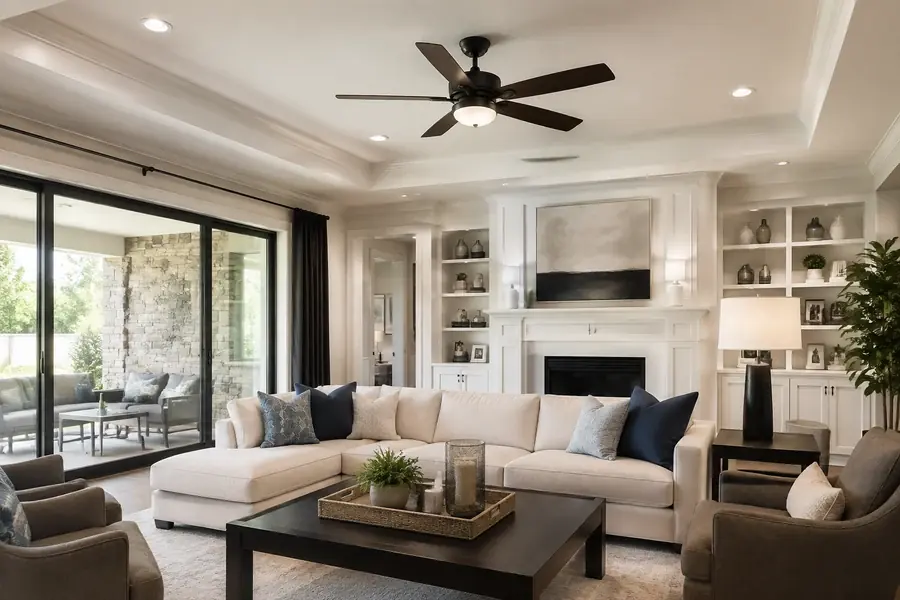
Proportion is usually the first problem. A fan that is too small can look like an afterthought. A fan that is too large can make the ceiling feel heavy. A fan that hangs too low can make even a beautiful room feel compressed.
| Problem | What you notice | Better direction |
|---|---|---|
| Small blade span | The fan looks weak in the room | Match span to seating area |
| Bulky motor body | The ceiling feels crowded | Choose a cleaner housing |
| Low hanging light | The room feels compressed | Check total drop height |
| Over-decorated trim | The fan fights the room | Use fewer, better details |
How do you fix weak scale?
Start with the actual seating zone. If your living room is medium sized, review the 52-inch guide. If the room is large, compare the large fan guide before choosing a luxury finish.
How does ceiling height affect luxury feeling?
Ceiling height affects whether the fan feels elegant or intrusive. A high-end room should have enough visual breathing space around the fixture. If height is uncertain, the 8-foot ceiling guide and 9-foot mount guide help you avoid the wrong drop.
The fan should feel sized to the seating zone, not only to the ceiling box. If the fan is centered in the room but the sofa sits off to one side, the result can feel wrong even if the installation point is technically centered. Luxury spaces need alignment with use, not only geometry.
We should also check body-to-blade proportion. A very large motor housing with short blades can look clumsy. Long blades with a tiny center can look weak. The relationship between parts should feel stable from below.
A luxury living room often has larger furniture and more visual weight than a simple apartment. If the fan is too delicate, it can look underpowered. If it is too thick, it can overpower the ceiling. The premium choice usually sits between those extremes.
We should also consider the space around the fan. A high-end fixture needs negative space to be appreciated. If it is crowded by beams, recessed lights, or a chandelier zone nearby, even a good fan can look visually stressed.
Which Finishes Make a Ceiling Fan Look Cheap?
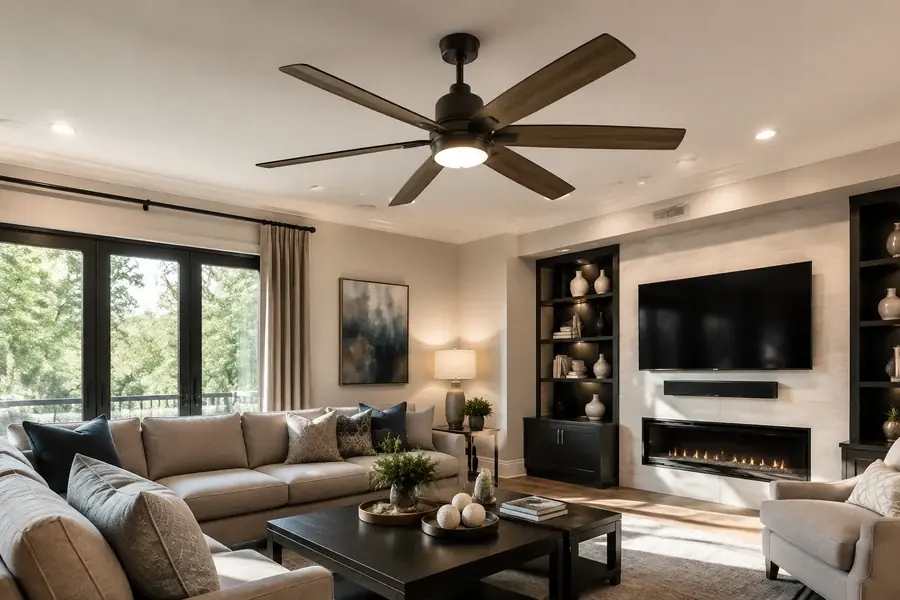
The finish can make or break a high-end living room fan. Very shiny gold, flat black plastic, uneven faux wood, or a white finish that looks gray under light can all reduce the room’s quality. Luxury usually feels better when the finish is calmer and more controlled.
When does gold look refined instead of cheap?
Gold looks refined when it is softened, balanced, and repeated in the room. A gold wood fandelier can work when your room already has warm metal, rich texture, and enough ceiling height to support a stronger fixture.
When does black look premium?
Black looks premium when it is matte, simple, and connected to other black details. If the body is too bulky or the finish looks glossy and uneven, black can look cheaper than white. The room decides which finish feels more elevated.
Shine is the most common trap. A finish can look luxurious online because it reflects light, then look harsh in your room because it catches every ceiling reflection. Softer metal, matte paint, and controlled wood grain usually feel more expensive over time.
Finish consistency matters too. If the canopy, downrod, motor body, blade brackets, and light trim do not match or intentionally coordinate, the fan can look assembled from separate parts. A premium room needs the fixture to feel resolved.
The wrong finish temperature can also weaken the room. A yellow gold fan in a room with brushed brass may look off. A cool silver detail in a warm layered room may feel disconnected. Matching the finish family matters more than simply choosing a premium-sounding color.
We should be careful with imitation finishes. Faux wood, faux crystal, or painted metal can work if the surface is controlled, but they can look weak when the pattern is repetitive or the shine is uneven. High-end rooms make imitation easier to spot.
How Do Blades Change the High-End Look?
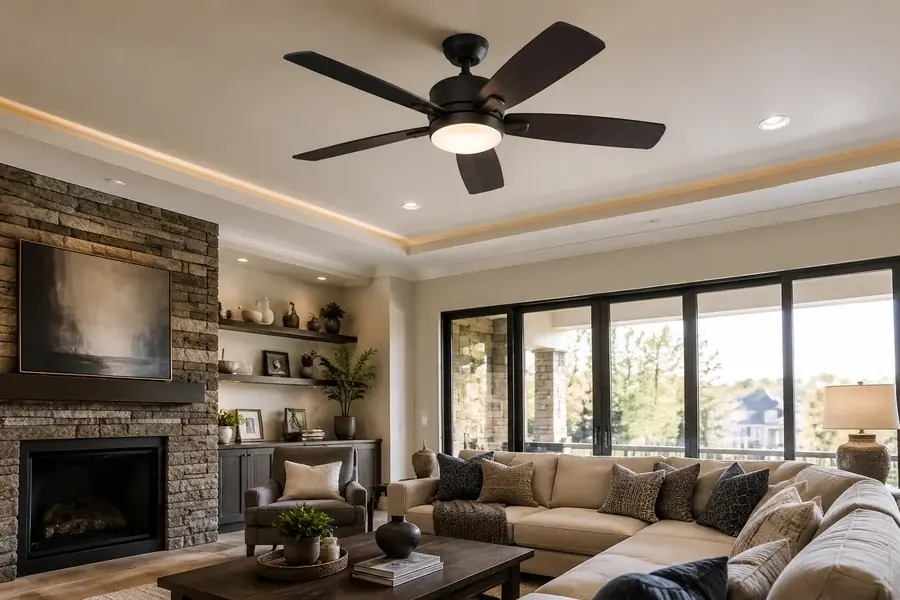
Blades carry most of the visual weight. Cheap-looking blades often feel too thin, too flat, too shiny, or disconnected from the motor body. Better blades feel intentional in shape, thickness, finish, and angle.
Why does blade span still matter in luxury rooms?
Luxury does not replace scale. A premium fan that is too small will still look wrong. Use the blade span comparison if you need to compare size before choosing a decorative finish.
Why does blade pitch affect perceived quality?
Blade pitch affects airflow, but it also affects how purposeful the fan looks. A blade that feels engineered usually looks more convincing than one that looks like a flat strip attached to a decorative center. The blade pitch guide explains the airflow side of that decision.
Blade shape should match the room’s level of refinement. Thin flat blades can work in a minimalist room, but in a high-end living room they need crisp edges and a convincing finish. If the blade looks flimsy, the whole fan feels weaker.
Wood-look blades need special care. A subtle grain can add warmth, but an exaggerated printed grain can look artificial. If the room has real wood furniture or flooring, the fan blade finish should not compete with it in an obvious way.
Blade thickness should feel believable. In a large living room, very thin blades can look fragile unless the design is intentionally minimal. In a formal room, a blade with better edge treatment and a more substantial profile often feels more appropriate.
The blade connection is just as important as the blade itself. If the root area looks messy, exposed, or poorly aligned, the fan loses refinement. A clean blade-to-body transition is one of the details that makes a fan feel designed rather than assembled.
How Can the Light Kit Make a Fan Look Cheap?
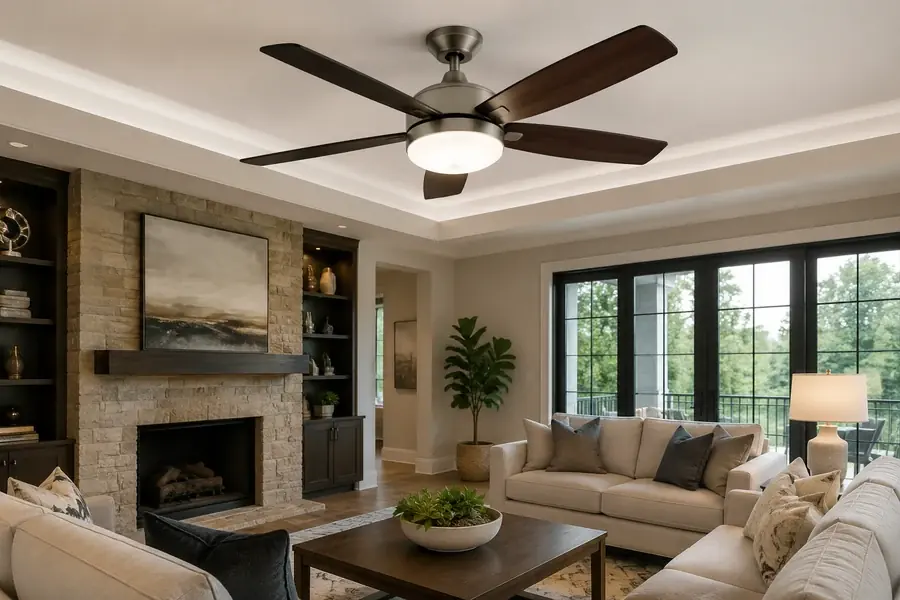
A weak light kit can ruin an otherwise good fan. Harsh glare, a thin plastic diffuser, uneven brightness, or an oversized lamp bowl can make the ceiling feel less refined. In a high-end living room, lighting should feel soft, layered, and controlled.
When does a decorative fan light work?
A decorative fan light works when the room has enough scale and the lighting element looks integrated. A crystal fandelier can be beautiful in a polished room, but it needs the right ceiling height, furniture style, and light control.
What lighting specs protect the premium feeling?
Check lumens, color temperature, diffuser quality, dimming, and CRI. If the light feels wrong at night, the fan will look wrong every night. The lumens guide and 3000K vs 4000K guide can help you set the lighting direction.
Light quality becomes part of material quality once the fan is installed. A glare-heavy diffuser can make the ceiling look flat and the room feel less comfortable. A soft diffuser with smooth dimming usually feels more polished even when the fan body is simple.
We should also avoid lighting that looks added after the design was finished. If the light kit sticks out visually or changes the fan’s proportions, the product can lose the clean high-end feeling you wanted. The light and fan body should look designed together.
A premium light kit should look good when the light is on and off. When it is off, the diffuser should sit cleanly in the body. When it is on, it should spread light evenly and avoid making the fan look like a bright plastic disk.
Color temperature can also change perceived quality. A decorative gold or wood fan may look richer under warmer light, while a crisp modern fan may tolerate a cleaner neutral tone. We should choose the light mood as part of the material story.
When Does a Fandelier Look High-End Instead of Overdone?
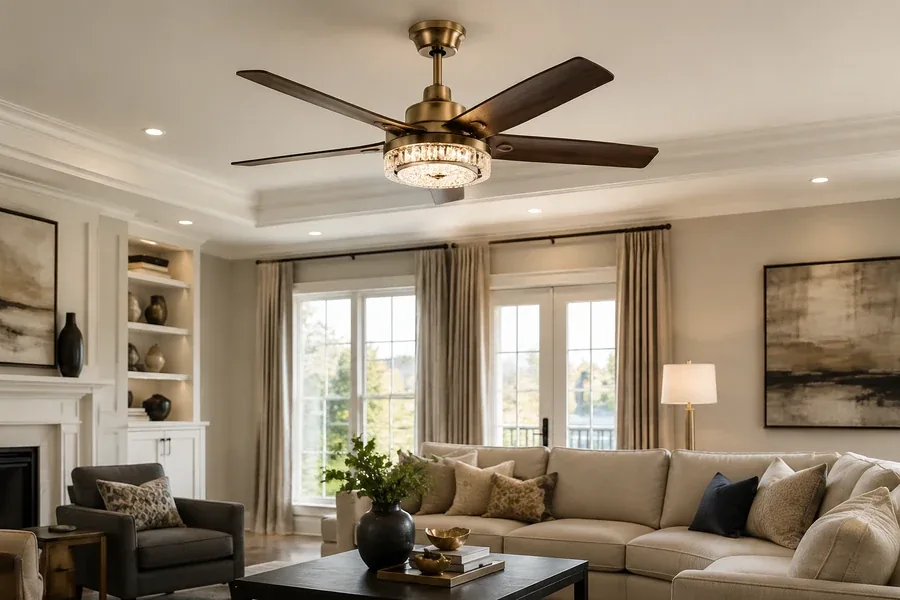
A fandelier looks high-end when it has restraint. It can have crystal, gold, or a chandelier-style body, but the details need to feel edited. If the fixture combines too many finishes, too many shapes, and too much sparkle, the room can look less expensive, not more.
How do you choose a fandelier without losing airflow?
Compare the decorative body with the real fan function. A fandelier should still give enough airflow for the seating zone. The fandelier airflow guide is helpful if you are deciding whether style is taking too much away from comfort.
Which product direction fits a refined decorative room?
A luxury LED fan can be a better fit when you want a polished ceiling feature but do not want the room to feel overloaded. The best decorative choice should still feel calm once the fan is running.
A fandelier needs room around it. If the ceiling is low or the room is small, crystal, gold, and decorative layering can feel crowded. In a taller or more formal room, the same idea can feel elegant if the details are controlled.
We should also separate sparkle from quality. A high-end decorative fan does not need to reflect light from every surface. It needs proportion, stable operation, good lighting, and a finish that looks calm under real living room conditions.
A fandelier works better when the room has a clear reason for decoration. If your room already has formal furniture, layered lighting, or warm metal details, the fandelier can connect to that language. If the room is very plain, the same fixture may feel like it arrived from another design story.
We should also look at the fan function carefully. Some decorative fixtures look large but have limited blade exposure or weaker airflow. A high-end living room still needs comfort, so the decorative choice has to perform quietly and reliably.
How Do Noise, Wobble, and Control Affect the Luxury Feeling?
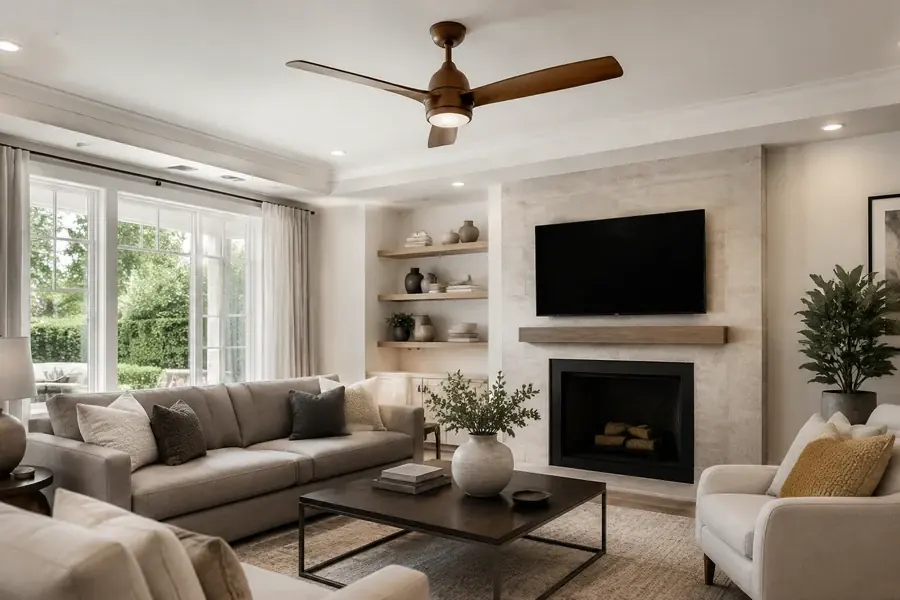
A fan can look premium when it is off and cheap when it runs. Noise, wobble, clicking controls, and rough speed transitions all weaken the experience. In a high-end living room, the fan should feel smooth enough that you stop thinking about it.
Why does quiet operation change the room mood?
Quiet operation protects the room’s calm. If you hear hum during conversation or TV time, the fixture becomes a problem. The dB level guide can help you compare noise claims more realistically.
Why should control feel simple?
A premium room should not feel hard to use. Remote, wall control, or smart control can all work if the experience is smooth. The control method should support the room, not make you fight the fan every time you want softer air or softer light.
Luxury is felt over time. The first impression may come from finish and shape, but the long-term impression comes from the way the fan runs every evening. Smooth low-speed airflow can make a room feel much more refined than raw maximum power.
We should listen for the kind of noise that becomes annoying in quiet moments. A slight hum may not seem serious in a showroom-like video, but it can feel intrusive during conversation or reading. Quiet performance protects the entire room mood.
Wobble is especially damaging because it draws the eye again and again. Even a small movement can make a refined fan feel unstable. A luxury room needs the fan to look visually calm while it runs, not only while it is off.
Control quality matters because it is the part you touch. If the remote feels light, the buttons feel unclear, or the dimming jumps in rough steps, the product feels less premium. A smooth control experience supports the visual quality.
What Should You Check Before Choosing a Luxury Living Room Fan?
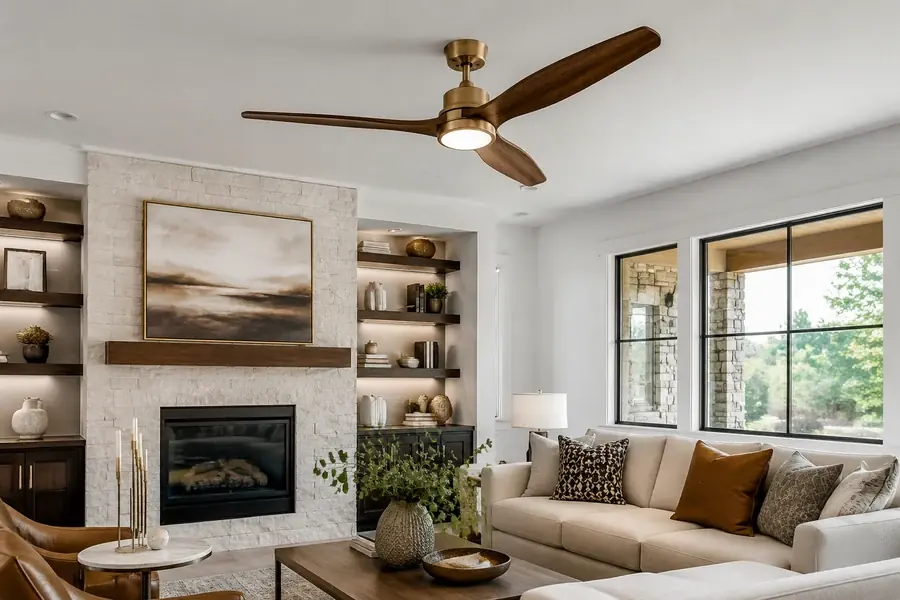
Before you choose the final fan, check scale, drop height, finish, blade shape, light quality, noise, and how the fixture looks from below. This is where many high-end rooms go wrong: the fan looks attractive alone but not in the full room.
| Check | What we want | Why it matters |
|---|---|---|
| Scale | Correct span for the seating zone | Prevents weak or oversized look |
| Finish | Calm and consistent surface | Avoids cheap shine or mismatch |
| Lighting | Soft diffuser and useful dimming | Protects evening comfort |
| Mounting | Correct drop for ceiling height | Keeps the room open and safe |
| Operation | Quiet, stable, smooth control | Makes the product feel premium over time |
Should you choose one fan or two in a large luxury room?
Sometimes two quieter fans look and feel better than one oversized showpiece. If your living room is long or open, the open concept fan guide can help you decide whether one central fixture is enough.
How can NEBOLA help with a high-end direction?
At NEBOLA, we can help you compare finish samples, fan body shapes, lighting modules, motor options, and mounting styles before you commit. When you want a luxury ceiling fan that feels refined in the real room, we can help you turn the design intention into a product direction. You can return to the living room fan collection when you want to compare options.
A helpful final test is to remove the brand name and judge the object. Does the shape still look balanced? Does the finish still fit the room? Does the light still feel comfortable? If the answer is yes, the fan is more likely to hold up after installation.
We should also ask whether the fan gives you enough flexibility. A high-end living room may change with seasons, furniture, or lighting preferences. Dimming, reversible airflow, quiet speed settings, and the right mounting option help the fixture stay useful as the room evolves.
Before ordering, it helps to build a short room brief. Write down the ceiling height, main finishes, room mood, lighting role, and whether the fan should blend in or become a feature. That brief keeps the decision grounded when many products look attractive online.
We should also compare the fan with the other permanent fixtures in the room. If the fan feels less refined than the recessed lights, wall sconces, or furniture hardware, it may pull the room down. The ceiling fan should belong to the same quality level as the rest of the fixed design.
If you are comparing several premium-looking fans, choose the one with the fewest unresolved details. A high-end room does not need every feature; it needs the features that are there to look and feel resolved.
If you are looking for a better ceiling fan light solution for your room or project, NEBOLA can provide one-stop support from product selection to customization. We focus on ceiling fan light R&D and manufacturing, helping you find products that better match real space needs.
NEBOLA Ceiling Fan Light Support
Need a ceiling fan that looks high-end after installation?
Share your room style, ceiling height, finish palette, and lighting expectations. We can help you choose or customize a ceiling fan light that feels refined in the real living room.
FAQ
Can a ceiling fan look luxurious without being ornate?
Yes, a ceiling fan can look luxurious without being ornate. Clean proportion, quiet finish, smooth operation, and better lighting often look more expensive than heavy decoration.
Does a gold ceiling fan always look high-end?
No, a gold ceiling fan does not always look high-end. It needs a soft finish, good proportion, and a room that already supports warm metal details.
Can a fandelier work in a high-end living room?
Yes, a fandelier can work in a high-end living room when the ceiling height, room scale, lighting quality, and decorative restraint are all right.
Should you avoid plastic diffusers in premium fan lights?
No, you do not need to avoid every plastic diffuser, but the diffuser should look even, soft, and well integrated. Thin, cloudy, or harsh diffusers can make the fan look cheaper.
Is quiet operation part of a luxury ceiling fan choice?
Yes, quiet operation is part of a luxury ceiling fan choice because noise and wobble can make even a beautiful fixture feel low quality after installation.