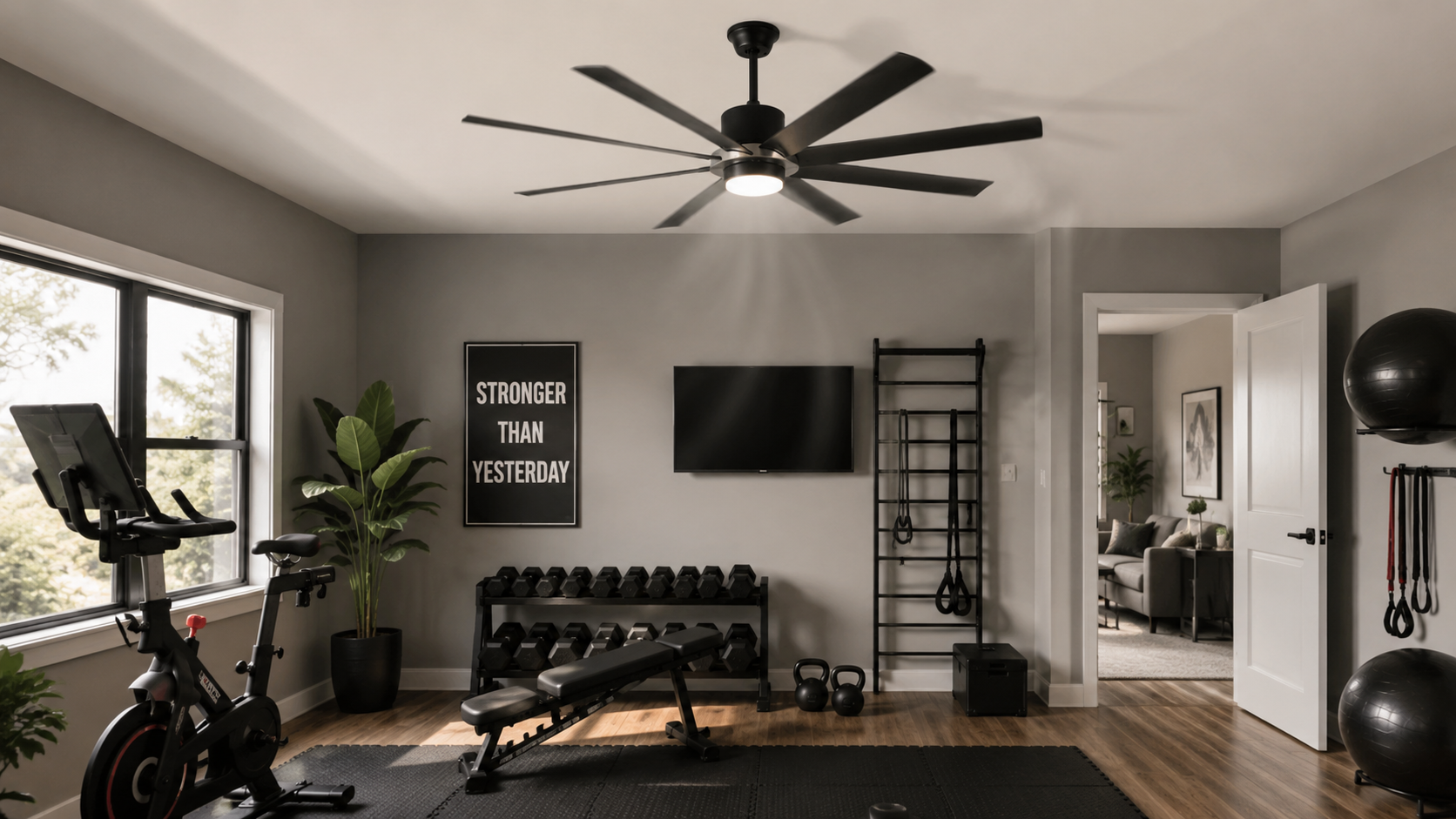


Modern, minimalist, and contemporary ceiling fans are not the same thing. A modern fan usually has clean design language and current engineering. A minimalist fan removes visual noise. A contemporary fan follows the style of the room now, which can be sleek, sculptural, warm, or decorative depending on the interior.
If you are comparing style terms because you want a better living room result, begin with the living room fan collection. It helps you connect the style label to size, airflow, and ceiling layout before you choose a final model.
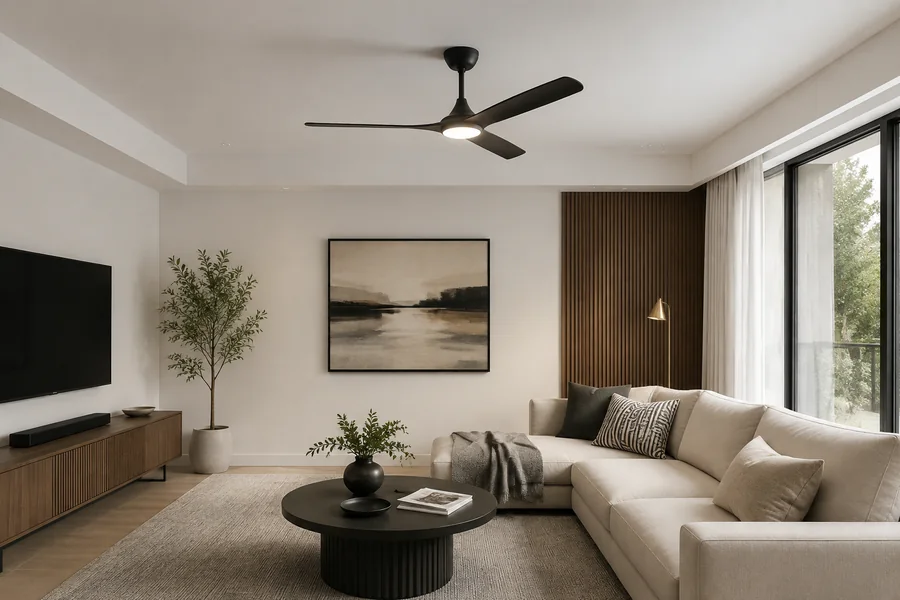
What Is the Real Difference Between Modern, Minimalist, and Contemporary Fans?
The simplest way to separate them is this: modern describes a clean design direction, minimalist describes restraint, and contemporary describes what feels current. They can overlap, but they do not always point to the same ceiling fan.
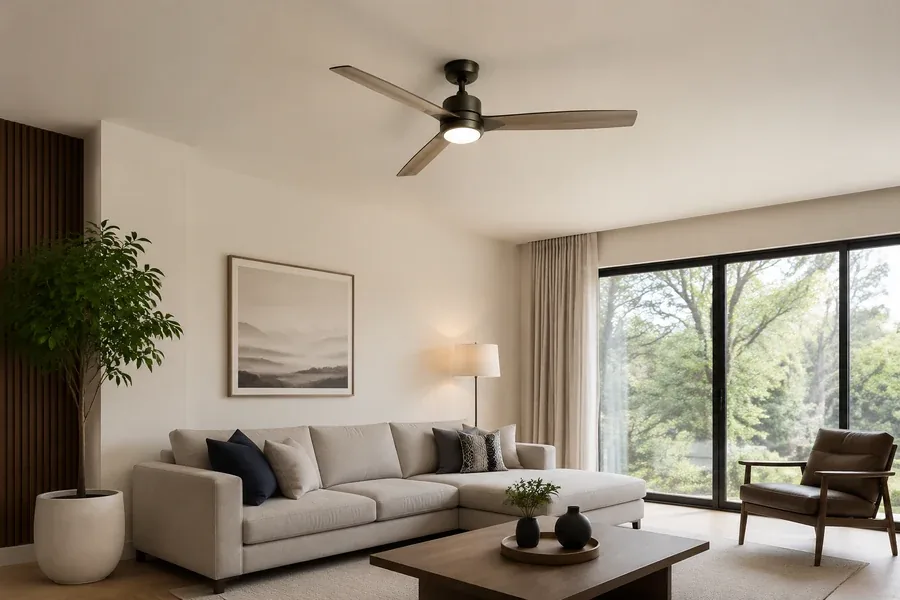
| Style term | What it usually means | How it looks in a living room |
|---|---|---|
| Modern | Clean lines, updated function, simple structure | Balanced, fresh, and easy to pair |
| Minimalist | Less visual detail and fewer distractions | Quiet, light, and almost hidden |
| Contemporary | Current style with more freedom | Can be sleek, bold, warm, or sculptural |
| Modern minimalist | Modern function plus restrained form | Best when you want a calm ceiling |
Why do these labels get confusing?
They get confusing because product pages often use all three words at once. A fan can be modern without being minimalist. It can be contemporary without being quiet. It can be minimalist but still look cheap if the proportions are weak.
How should you use these terms when choosing?
Use the terms as a starting point, not as the final decision. We should still check blade span, ceiling height, light style, finish, and room mood. The label helps you search; the room tells you what actually fits.
A practical way to test the difference is to ask what the fan is trying to do visually. Modern tries to feel current and functional. Minimalist tries to reduce attention. Contemporary can follow today’s softer, warmer, or more sculptural room trends.
We should not treat the words as quality levels. Minimalist is not automatically better than contemporary, and contemporary is not automatically more expensive than modern. The better style is the one that solves your room without adding visual friction.
We can also think about the emotional result. Modern should feel fresh and useful. Minimalist should feel calm and edited. Contemporary should feel connected to how your room looks now, not to a fixed historical rule.
If two fans look similar, compare what they remove and what they emphasize. The minimalist one usually removes more detail. The modern one usually balances clean form with practical features. The contemporary one may keep a little more personality.
What Makes a Ceiling Fan Look Modern?
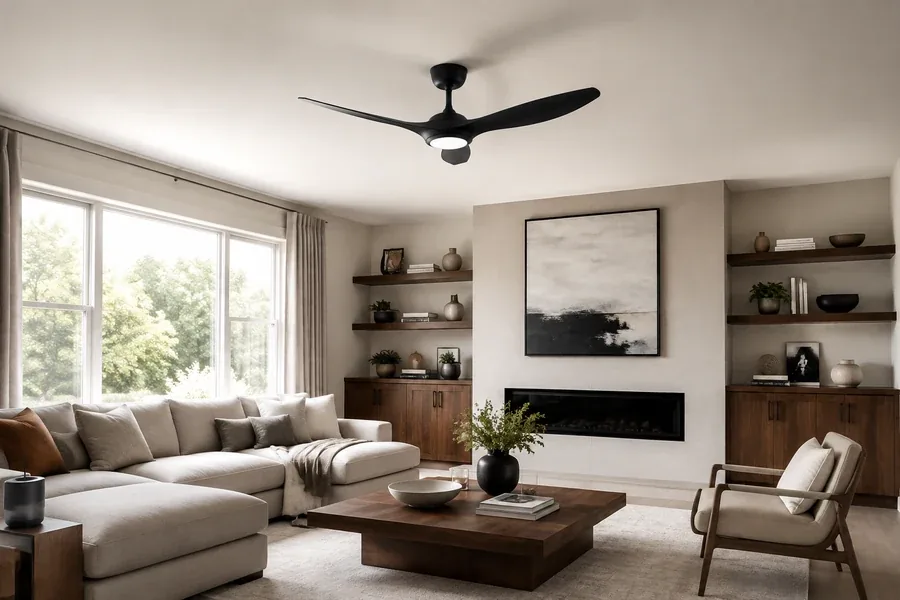
A modern ceiling fan usually feels clean, functional, and visually controlled. It often uses simple blades, a smoother motor housing, integrated LED lighting, or smart control. The goal is not decoration for its own sake. The goal is a fixture that feels current and easy to live with.
Does modern always mean new?
No, modern style is not only about the newest product. Tate’s overview of modernism shows how modern design often grew from a desire to move away from old forms and use a clearer language. In a fan, that usually means the design should feel purposeful instead of ornamental.
Which modern fan direction works in most living rooms?
A clean LED fan, a simple DC motor fan, or a low-profile body can all look modern if the room supports them. A thin white fan light is a practical direction when you want modern function without visual heaviness.
Modern fans usually work best when the structure is easy to understand. You can see the blade span, the body, the light, and the control logic without feeling that the product is hiding behind ornament. That clarity is part of why modern fan designs can age well.
We should still keep comfort in the decision. A modern fan that is too noisy or too harshly lit will not feel modern in daily use. The design language and the experience need to point in the same direction.
A modern fan also tends to respect technology without showing too much of it. Remote control, DC motor performance, and LED lighting can all be present, but the room should not feel like it is displaying a gadget on the ceiling.
When we choose modern style, we should look for a product that feels current from every viewing angle. A fan can look modern from the side but dated from below if the light kit, brackets, or blade roots are not handled cleanly.
What Makes a Ceiling Fan Look Minimalist?
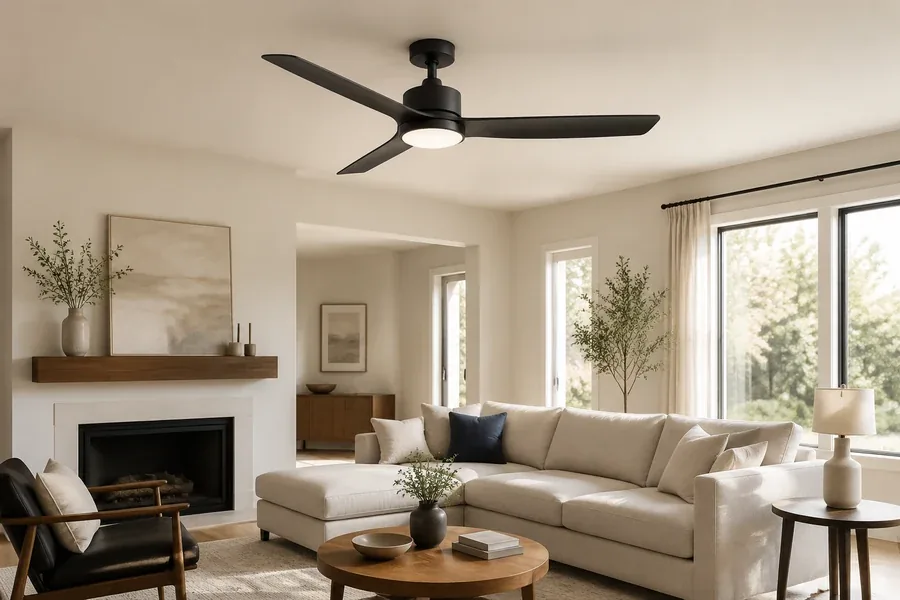
A minimalist ceiling fan removes anything that does not help the room. It usually has fewer visual breaks, simpler blades, quieter finishes, and a body that does not call for attention. The fan may be white, black, wood, or metal, but the overall effect should feel calm.
When does minimalist style work best?
Minimalist style works best when your living room already has strong architecture, a clean sofa line, or a narrow finish palette. The fan should not add another competing object. It should help the ceiling feel finished without making the room busier.
When can minimalist style feel too empty?
Minimalist style can feel too empty when the room has little texture, weak lighting, or very plain furniture. In that case, a slightly warmer finish or a more defined blade shape may look more complete than a fan that tries too hard to disappear.
Minimalist does not mean there is nothing to see. It means the fan shows only what the room needs. The blade shape can be beautiful, but it should not create extra visual noise or fight the ceiling line.
A minimalist fan also needs better proportion because there is nowhere for weak details to hide. If the body is slightly too bulky or the diffuser edge feels rough, the whole product can look less refined. Simplicity makes accuracy more important.
Minimalist choices are especially useful when you do not want the ceiling to become the focal point. If your room already has art, a sculptural sofa, a feature wall, or strong daylight, the fan can stay nearly silent visually.
The best minimalist fan still needs enough airflow and light for the room. If we remove too much size, too much blade area, or too much lighting capability, the room may look calmer but feel less comfortable.
What Makes a Ceiling Fan Look Contemporary?
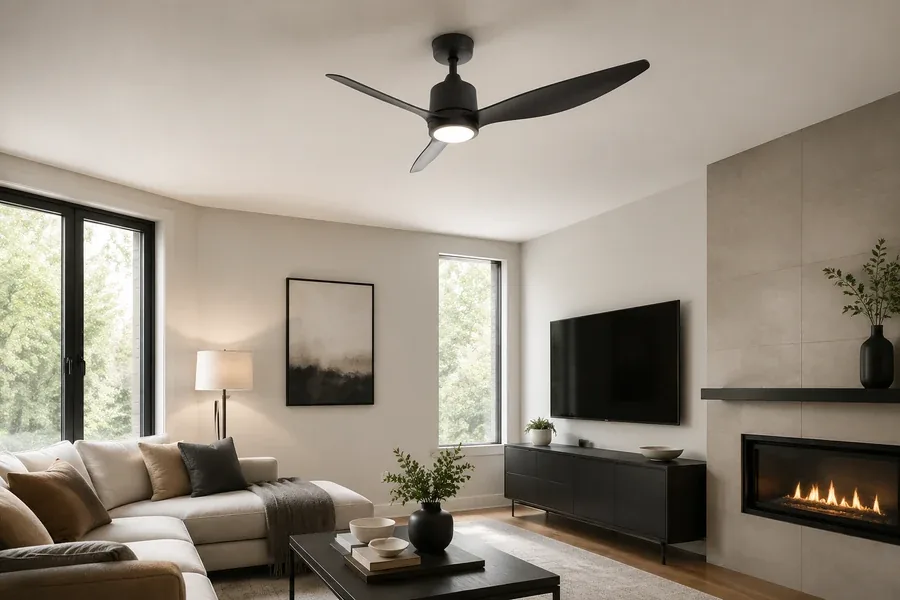
A contemporary ceiling fan is shaped by the way rooms look now. It may be slim and quiet, or it may be more sculptural. Contemporary style gives you more freedom than strict minimalism, but it still needs discipline so the fan does not become a random statement piece.
When does contemporary mean more decorative?
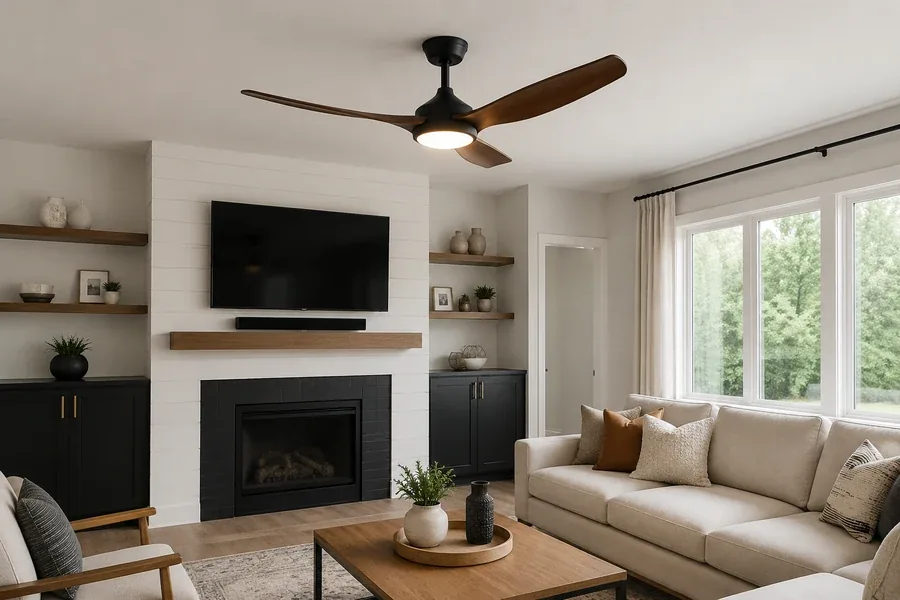
Contemporary can mean more decorative when the room has a polished ceiling, warmer metals, textured walls, or a design feature that calls for a stronger fixture. A modern retractable fan can fit this direction when you want the ceiling to read more like a light fixture at rest.
When does contemporary mean cleaner?
Contemporary can also mean cleaner when the room has sharp lines and fewer finishes. In that case, the fan should feel current through proportion and control, not through extra detail.
Contemporary style gives you room to respond to the interior you have now. If your living room uses curved furniture, warmer metals, or layered textures, a slightly softer fan shape can feel more current than a strict minimalist fixture.
The risk is that contemporary can become vague. If we cannot describe why the fan belongs in the room, the choice may be relying too much on trend language. We should connect the shape, finish, and light to something specific in your space.
A contemporary fan can be the best choice when the room is not strictly minimal. Maybe your living room has rounded furniture, warmer neutral colors, or mixed materials. In that setting, a fan with a little softness can feel more natural than a very severe minimalist shape.
We should still avoid using contemporary as a permission slip for clutter. The product can be expressive, but the number of visible ideas should stay low. One strong shape is usually better than several small decorative gestures.
How Do These Styles Change the Fan Body, Blades, and Light?
The style label should show up in the physical choices. Modern fans often use simple integrated forms. Minimalist fans reduce visible parts. Contemporary fans may allow more shape, warmer finishes, or a decorative light element.
| Fan part | Modern choice | Minimalist choice | Contemporary choice |
|---|---|---|---|
| Body | Smooth, compact, current | Very quiet and low visual bulk | Can be sculptural or softened |
| Blades | Simple span and clean edges | Plain, thin, visually light | May use wood, curve, or contrast |
| Light | Integrated LED | Hidden or soft diffuser | Decorative LED or fandelier direction |
| Control | Remote or smart control | Simple visible interface | Flexible features if still clean |
Why should we compare parts instead of labels?
Labels can hide a lot. A fan called modern may have a bulky light kit. A fan called minimalist may have weak blade proportions. If we compare the body, blades, light, and controls, we can see whether the product really supports the style.
How does lighting change the style?
Lighting can make a fan look more technical, decorative, or quiet. If lighting is central to your living room, the LED fan spec guide helps you compare more than wattage before you decide.
The body usually carries the style signal first. A modern body feels clean, a minimalist body feels reduced, and a contemporary body may feel more designed. The blades then either support that idea or weaken it.
The light kit is just as important. A large glowing disk can make a minimalist fan feel less minimal. A decorative light can make a contemporary fan feel more complete if the room has enough scale and the diffuser is not harsh.
A good comparison is to cover the product name and look only at the parts. If the blades, body, light, and canopy all tell the same story, the style is probably coherent. If each part feels like it belongs to a different fan, the label is not helping.
This also helps when you compare similar white or black fans. Two products may share the same color, but one may look more minimal because the body is thinner and the diffuser is quieter. Color alone is not the style.
Which Style Works Best for Different Living Room Types?
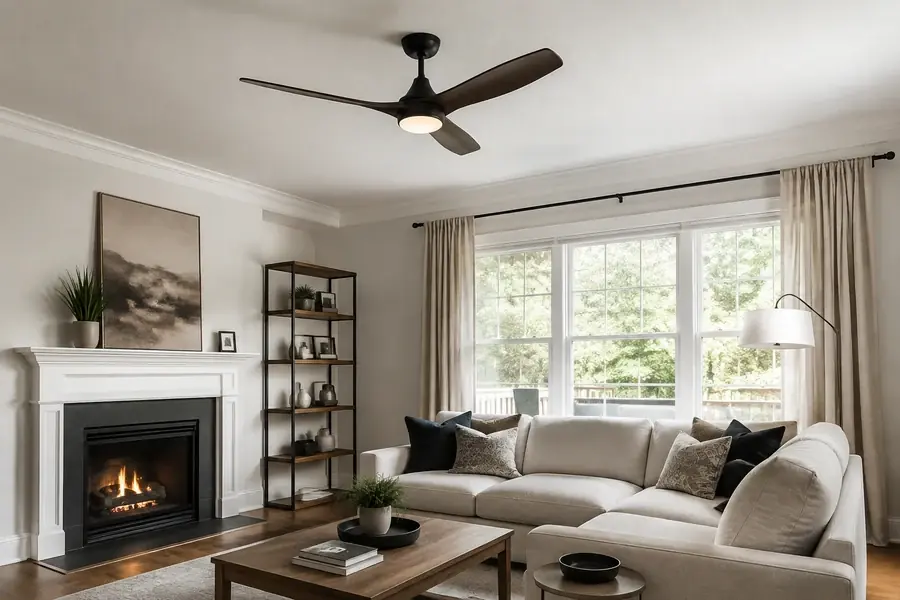
The right style depends on your room’s mood. A small apartment may need a minimalist fan to keep the ceiling light. A large open living room may need a modern fan with stronger scale. A high-end room may need a contemporary fan with better material presence.
What works in a small modern living room?
In a small room, we usually protect height and openness first. A compact modern fan light can make sense when you need airflow and light without overloading the ceiling.
What works in a larger living room?
A larger room can carry more span and a more defined shape. Before you choose style, check whether one fan is enough with the large room fan guide and whether the room needs one fan or two.
If your room is narrow or low, minimalist choices usually protect openness. If your room is square and balanced, a modern fan with a clean light can feel easiest. If your room is taller, warmer, or more decorated, contemporary may give you the right amount of presence.
We should also consider how long you plan to keep the room’s style. Minimalist and simple modern fans are easier to live with through future furniture changes. Contemporary fans can be more expressive, but they need stronger confidence in the room direction.
For a rental-style or simple apartment living room, we usually want a fan that works with many future furniture choices. That often points to modern or minimalist. For a custom living room with a stronger design direction, contemporary can give the ceiling more personality.
We should also judge the room’s sound and lighting expectations. A quiet minimalist fan may be ideal for a calm lounge, while a contemporary fan light may suit a room where the ceiling fixture also needs to act as the main visual feature.
How Do Finish and Material Separate the Three Styles?
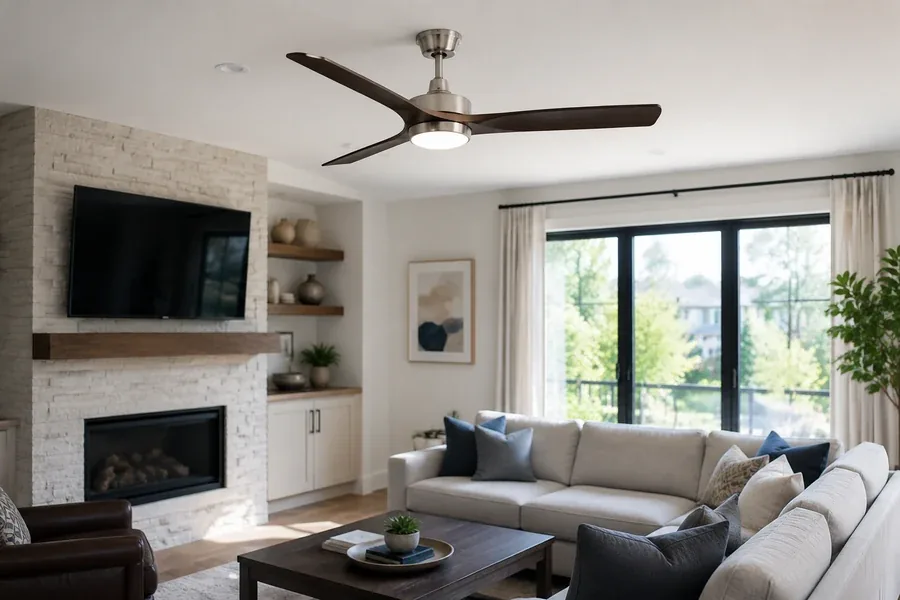
Finish is one of the easiest ways to tell whether a fan is modern, minimalist, or contemporary. Modern may use white, black, brushed metal, or wood in a clean way. Minimalist keeps finishes quiet. Contemporary may bring in warmer metal, texture, or a more decorative lighting surface.
When does a white finish make the most sense?
White makes sense when the fan should recede into the ceiling. It is often the safest choice for minimalist rooms and light modern interiors. A soft white ceiling fan can support that look without adding too much contrast.
When does wood or metal feel better?
Wood or metal feels better when the room needs warmth or a stronger visual connection to furniture. We should avoid using a finish only because it looks premium online. The finish should repeat something already present in the room.
A minimalist finish should stay quiet even when the fan is running. A modern finish should look clean from different angles. A contemporary finish can be warmer or more textured, but it still needs to feel controlled and consistent.
Material contrast should be intentional. If you mix wood blades, metal housing, and an LED diffuser, each material needs a reason to be there. Random mixing is one of the fastest ways for a fan to look less considered.
In modern style, materials should look precise. In minimalist style, materials should look quiet. In contemporary style, materials can feel richer, but they still need to sit inside a controlled palette.
If you are not sure which finish belongs, compare it with three points in the room: the ceiling color, the largest furniture finish, and the main metal detail. If the fan connects to at least one of those clearly, it has a better chance of looking intentional.
What Mistakes Happen When You Choose a Fan by Style Name Alone?
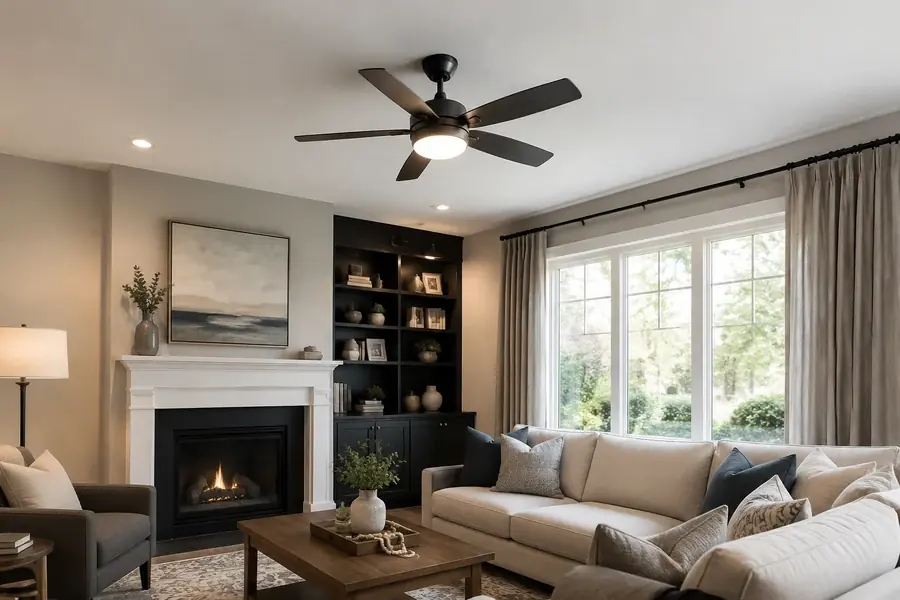
The most common mistake is believing the product name solves the room. A fan can say modern and still look wrong if the blade span is too small. A fan can say minimalist and still feel cheap if the light diffuser is harsh. A fan can say contemporary and still feel noisy if the finish palette is confused.
Can the wrong size ruin the right style?
Yes. If the fan is the wrong size, the style no longer matters very much. Use the size comparison guide and the great room size guide when the room scale is uncertain.
Can ceiling shape change the style choice?
Yes. A sloped, vaulted, or cathedral ceiling can make a fan look different from a flat-ceiling product photo. If the ceiling is angled, the sloped ceiling guide and cathedral setup guide help you keep both style and placement under control.
Style names can hide installation problems. A minimalist fan can still hang too low. A modern fan can still be too small. A contemporary fan can still create glare. We need to check the room conditions before trusting the label.
The other mistake is copying a room image without matching your ceiling. A fan that looks perfect in a tall staged room may feel heavy in an 8-foot room. We should borrow the idea, not the exact product, unless the room conditions match.
Another mistake is assuming minimalist means lower cost or fewer decisions. In reality, minimalist products often need better detail control because fewer elements are visible. If the finish, diffuser, or blade line is weak, there is no ornament to distract from it.
A contemporary label can create the opposite problem. Because the word feels flexible, it can be used for almost anything. We should still ask whether the fan solves a real room need: scale, softness, light, warmth, or stronger visual focus.
How Should You Choose the Right Style Without Overthinking It?
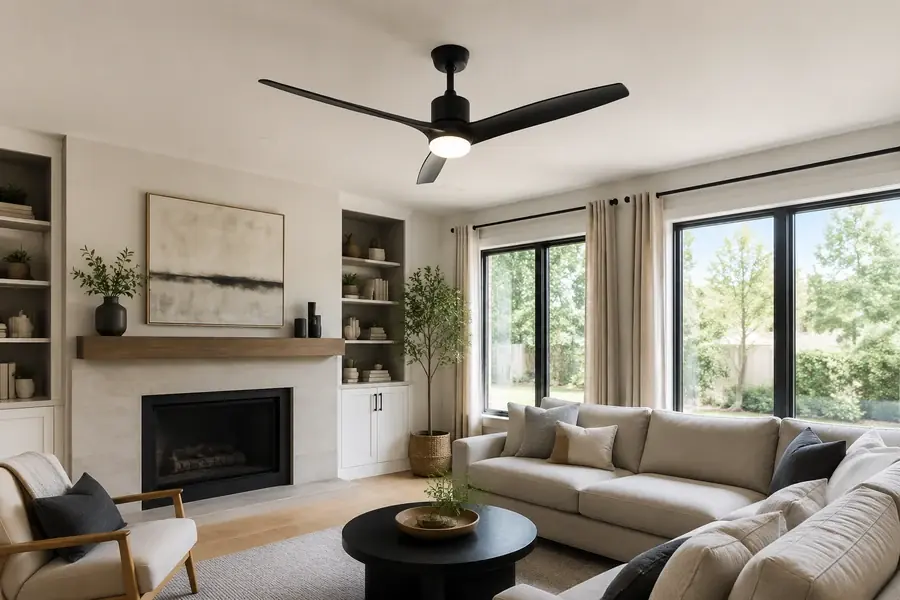
Choose modern if you want clean function and a current room. Choose minimalist if you want the fan to stay quiet and almost invisible. Choose contemporary if you want more design expression while still keeping the room controlled.
What is the easiest decision path?
Start with ceiling height and fan size. Then decide whether the fan should blend in, soften the room, or become a gentle focal point. After that, compare finish, light, and noise. This order keeps you from choosing a beautiful fan that does not fit the room.
How can NEBOLA help compare the three directions?
At NEBOLA, we can help you translate the style word into a real fan specification: blade span, motor type, light module, finish, control method, and mounting style. If you want to compare modern, minimalist, and contemporary directions side by side, return to the living room fan collection and use the room as the filter.
If you feel stuck, choose the style that removes the biggest problem in the room. If the ceiling feels busy, go minimalist. If the room feels unfinished, go modern with a clean light. If the room feels too plain, choose a contemporary fan with a little more presence.
We should also keep one practical standard: the fan should look good when it is off and feel good when it is on. If one of those is missing, the style word is not doing enough work for your room.
If you can describe your room in one phrase, the fan style usually follows. Clean family room often points modern. Quiet apartment points minimalist. Warm polished lounge points contemporary. This simple language can be more useful than scrolling through many similar product names.
We should then test the choice against daily use. If the room is used for long evenings, quiet operation and soft light may matter more than the style category. The best fan style still has to support how you live in the room.
If two styles both seem right, choose the one that gives you more confidence at low speed, with the light dimmed, in the evening. That is often when the living room reveals whether the ceiling fan truly belongs.
If you are looking for a better ceiling fan light solution for your room or project, NEBOLA can provide one-stop support from product selection to customization. We focus on ceiling fan light R&D and manufacturing, helping you find products that better match real space needs.
NEBOLA Ceiling Fan Light Support
Need help turning a style word into the right fan choice?
Tell us whether your room should feel modern, minimalist, or more contemporary, and we can help you match the right ceiling fan light structure and finish.
FAQ
Is a modern ceiling fan the same as a contemporary ceiling fan?
No, a modern ceiling fan and a contemporary ceiling fan are not always the same. Modern usually points to clean design and updated function, while contemporary points to what feels current in today’s room styles.
Is a minimalist ceiling fan always plain white?
No, a minimalist ceiling fan does not have to be plain white. It can be black, wood, or metal if the form stays quiet and the finish does not add visual clutter.
Can a contemporary fan still look simple?
Yes, a contemporary fan can still look simple when the room needs a clean ceiling. Contemporary style allows more flexibility, but it should still feel balanced.
Should you choose style before fan size?
No, you should not choose style before fan size. Size and mounting type decide whether the fan feels right in the room, and style should come after those basics.
Can NEBOLA support different modern style directions?
Yes, NEBOLA can support different modern style directions through fan size, finish, lighting, mounting, and control options. The better choice depends on how your room should feel and function.