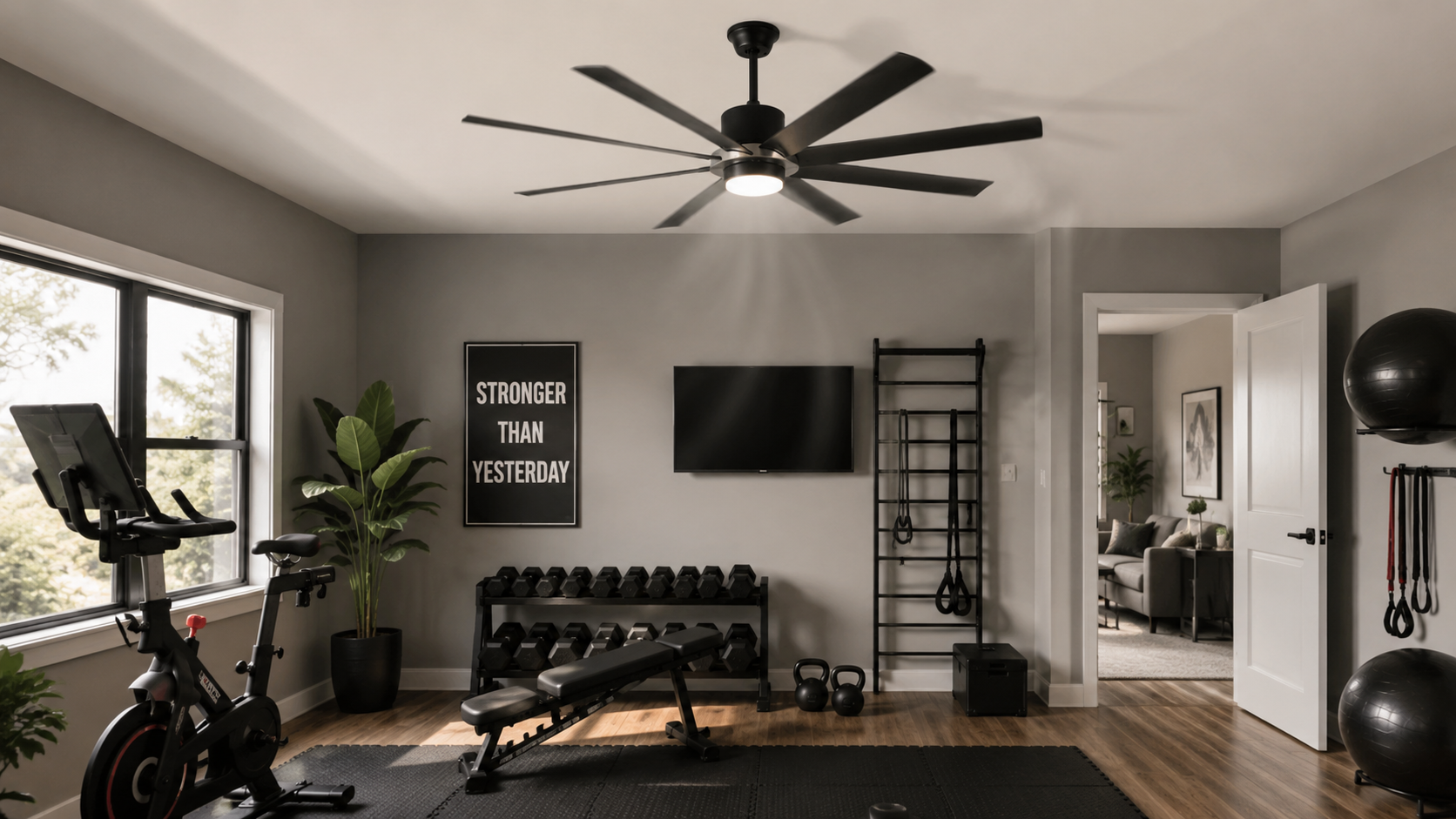


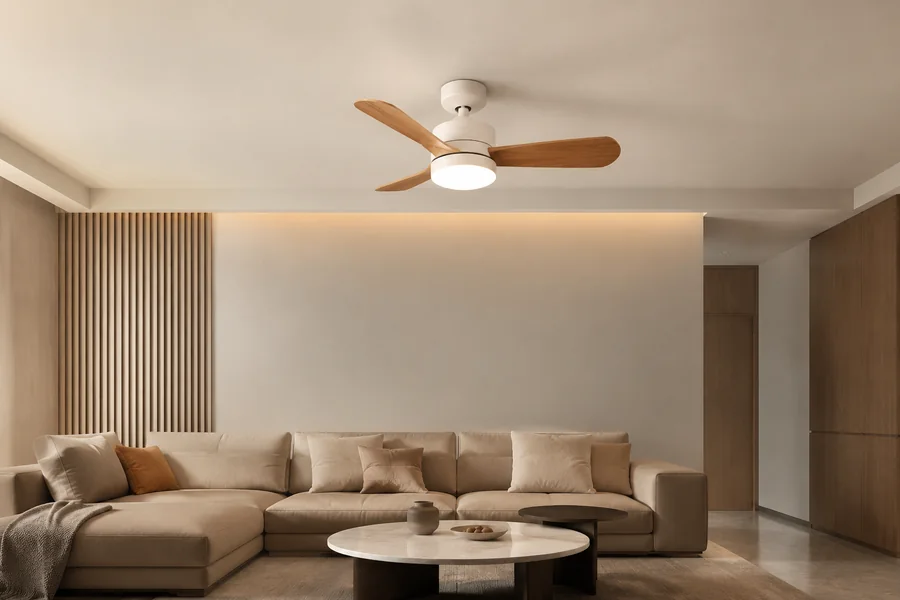
When a ceiling is low, fan choice becomes a clearance question as much as a size question. The fan needs to fit the room, stay comfortable to walk under, and still move air where people actually sit or sleep. A good ceiling fan size guide should therefore combine blade span, fixture depth, and installation style instead of looking at diameter alone.
In low-ceiling rooms, a bigger fan is not automatically a better fan. A 42 inch model can be more useful than a 52 inch model if the housing is slimmer, the light kit is shallower, and the total drop stays out of the way. As a ceiling fan light manufacturer, Nebola usually checks room height first, because the same fan can feel perfectly balanced in one room and awkward in another.
1. Why Low Ceilings Change the Sizing Decision
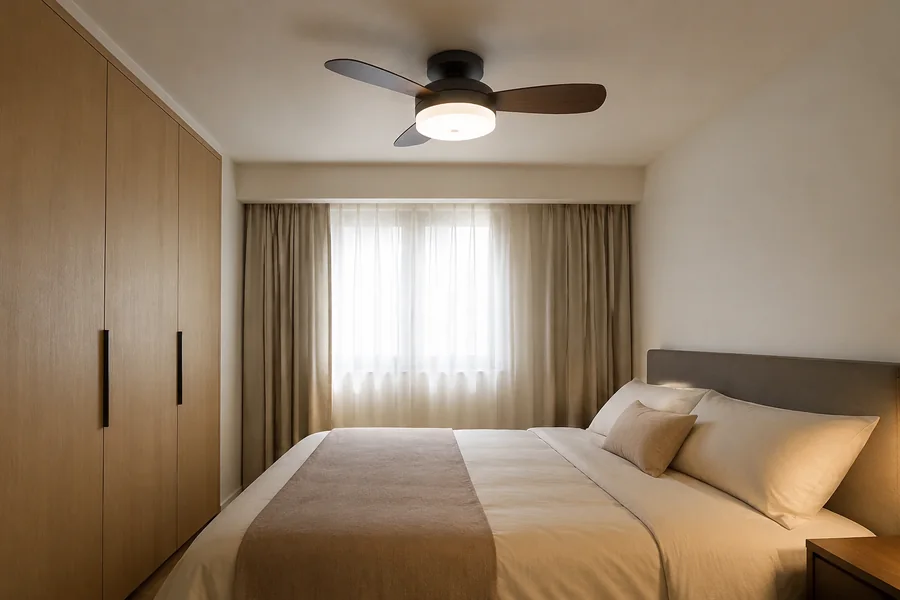
Low ceilings change how a fan looks, feels, and performs. Even if the blade span seems correct on paper, the fixture can still feel too close to the head, too deep once the light is added, or too bulky for the room.
This is why a low ceiling fan size guide has to look at the whole installation, not only the blade diameter. If you are still comparing the basics, start with how to choose the right ceiling fan size before narrowing the choice for a shorter ceiling.
1-1. Blade diameter is only part of the answer
Blade diameter tells you how wide the fan is, but it does not tell you how the fan will sit in the room after installation. A slim 42 inch fan may work better than a deeper 36 inch model if the total height is lower and the blades stay in the right position.
1-2. Fixture depth matters more in tight rooms
Low ceilings leave less room for the canopy, motor housing, blade pitch, and light kit. That extra depth can make a fan feel much lower than expected. In a compact room, total fixture depth often matters more than a small difference in blade span.
1-3. Light kits can change the whole profile
If the fan includes a light, the fixture may hang lower than the product photo suggests. A deep decorative shade can be a problem in a low room, while a slimmer diffuser usually keeps the ceiling line cleaner. This is why light depth should be checked at the same time as fan size.
2. How to Measure Ceiling Height and Clearance
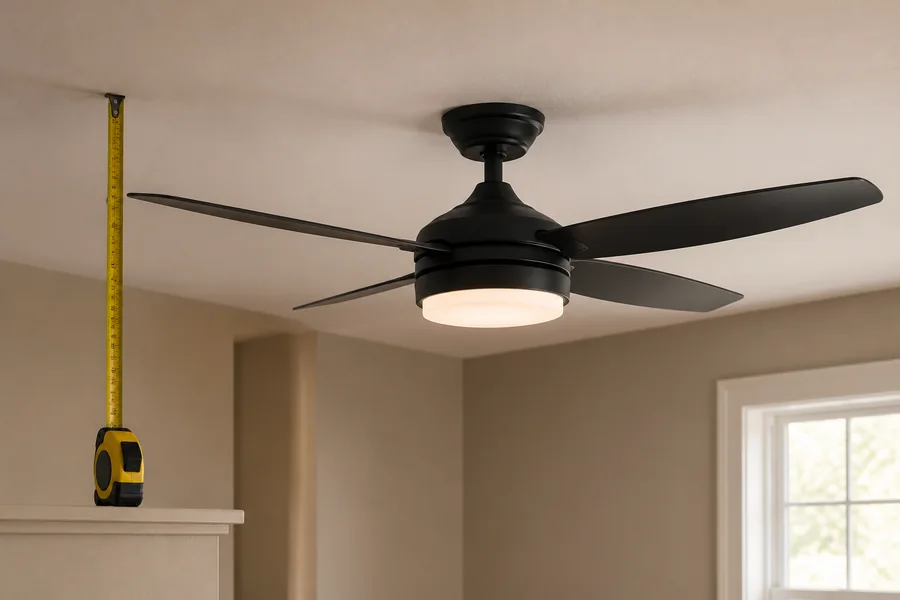
A practical ceiling fan height guide starts with a tape measure, not a guess. You need the actual room height, the product’s total drop, and the clear space below the blades before you can say whether a fan is safe and comfortable.
For a more complete ceiling-height comparison, the guide on ceiling fan size for different ceiling heights is useful because it shows how installation height and room use work together.
2-1. Measure from floor to the fan location
Do not measure only the centre of the room and assume every spot is the same. Beams, dropped areas, and ceiling transitions can change the real installation point. Measure where the fan canopy will actually sit.
2-2. Check the total drop height of the fixture
The total drop includes the canopy, motor body, blades, and light kit. This is the number that decides whether a fan is truly low-profile or just short in the product name. Ask for a dimension drawing if the product page does not make it clear.
2-3. Leave room for real movement around the fan
Clearance is not only about headroom. Doors, wardrobes, bunk beds, tall cabinets, and even the edge of a dining table can make a low room feel tighter. A fan should fit the daily layout, not just the empty ceiling space.
3. What Fan Size Usually Works Best for Low Ceilings

For most low-ceiling rooms, the best size is the one that gives enough airflow without making the fixture feel heavy. Smaller blade spans often work well, but a slim 42 inch fan can still be the better answer if the room is not too small.
If you are comparing common sizes, the article on 42 inch vs 52 inch ceiling fan is helpful because it shows why ceiling height and room layout can matter more than blade diameter alone.
3-1. 36 inch fans suit very compact rooms
A 36 inch fan is often the safest starting point for small bedrooms, compact studies, and narrow apartments with limited headroom. It can keep the room comfortable without dominating the ceiling line. The best small room ceiling fan size guide gives a useful room-size comparison.
3-2. 42 inch fans work for many low rooms
A 42 inch fan often gives a better balance between air coverage and visual scale. For many low-ceiling bedrooms and small living rooms, it offers enough airflow while still looking clean and proportional. The key is to keep the fixture slim.
3-3. 48 to 52 inch fans can still work in larger low rooms
A larger blade span is not forbidden just because the ceiling is low. In a wider low room, a 48 or 52 inch fan can work if the profile is shallow and the blades still clear nearby furniture. The living room ceiling fan size guide is useful for this kind of room-by-room judgment.
4. Flush Mount Fan Size vs Low Profile Ceiling Fan Dimensions
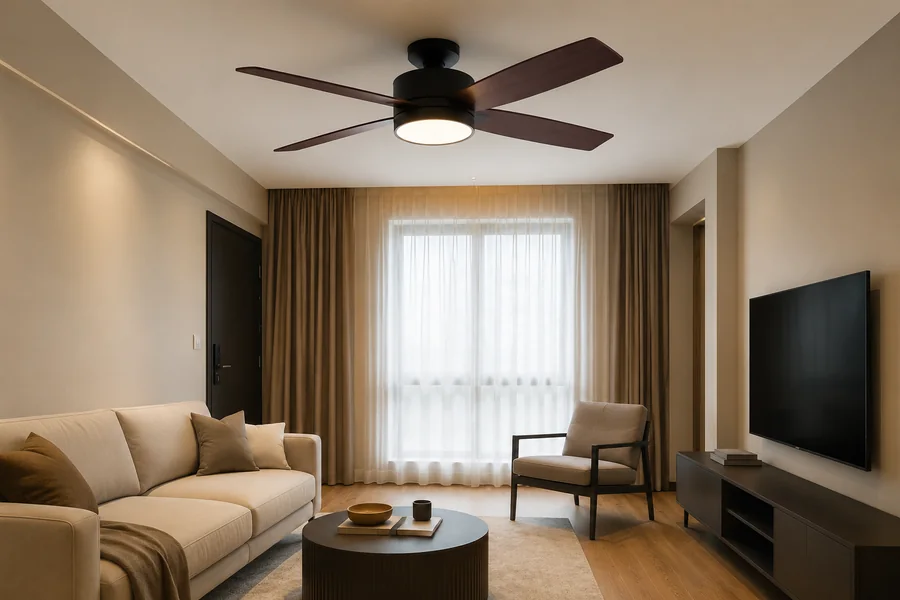
People often use “flush mount” and “low profile” as if they mean the same thing. In practice, the best choice depends on how much space is left between the ceiling and the rest of the fixture, plus whether the light kit adds extra depth.
If you want a broader mounting comparison, the ceiling fan mount types guide explains why flush mount, downrod, and sloped installations solve different ceiling problems.
4-1. Flush mount keeps the fan close to the ceiling
A flush mount fan is designed to reduce total drop and stay tight to the ceiling. That makes it a natural choice for low rooms where headroom matters most. ENERGY STAR’s Ceiling Fan Basics also points buyers toward practical installation and efficient everyday use, which is exactly what a short room needs. It is usually the first option to consider before moving to anything deeper.
4-2. Low profile dimensions are more than just blade span
Low profile ceiling fan dimensions should include housing depth, blade clearance, and light depth. Two fans with the same diameter can have very different total heights. A low-ceiling buyer should care about the full measurement, not only the nominal size.
4-3. A slim light kit can make or break the fit
If the light kit is bulky, the fan may no longer feel low profile even if the motor body is compact. This is why slim LED diffusers often work better in short rooms. For flat low rooms, the flush mount ceiling fans for low ceilings guide remains one of the most relevant references.
5. Room-by-Room Recommendations for Low Ceilings
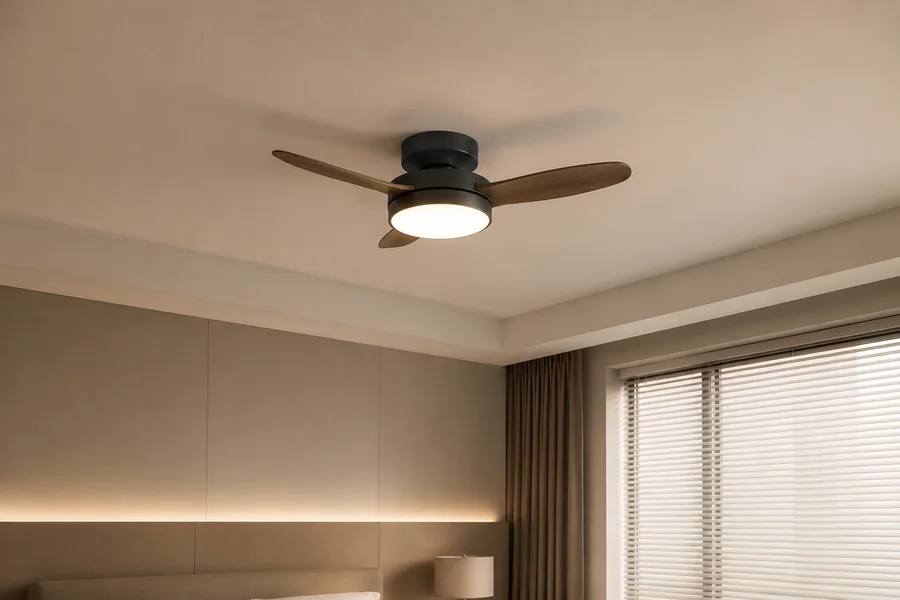
Low ceilings do not behave the same in every room. A bedroom has different comfort needs from a living room, and a kitchen or hallway needs different clearance than either of them.
If you want to compare room type before buying, the guide on what size fan do I need is a good companion read because it shows how room shape changes the decision.
5-1. Bedrooms need quiet airflow and careful headroom
Bedrooms usually need the fan to feel light, quiet, and out of the way. A low-profile fan with a shallow light kit is often more comfortable than a deeper decorative model. For larger bedrooms, the guide on master bedroom and large bedroom ceiling fan size is worth comparing before choosing a wider blade span.
5-2. Living rooms need wider coverage without visual weight
Living rooms often need a bit more coverage than bedrooms, but the fan still has to stay visually calm under a short ceiling. A slim 42 or 48 inch fan may be enough for a compact living room, while a wider room may need a larger but still shallow model. The ceiling fan size trends 2026 article shows why buyers now care about slim profiles as much as raw size.
5-3. Kitchens, hallways, and project rooms need safe clearance first
In kitchens and hallways, safe clearance can matter more than airflow quantity. People move through these rooms quickly, so the fan should not feel close or visually busy. If you are planning for projects or commercial rooms, the hotel ceiling fan for hospitality projects guide is a useful way to compare practical room needs.
Need the Right Ceiling Fan for a Home, Project, or Commercial Space?
Tell us your space type, ceiling height, airflow needs, lighting options, certification direction, and order plan. We’ll help match the right solution.
Get a Quote6. Product Examples That Fit Low Ceilings

When a fan must work in a short room, the product page should tell you more than the photos do. Check the stated size, the total height, and whether the fan is built as a low-profile or flush mount model.
The following examples show the kind of product directions that usually fit low ceilings better than deep hanging models. They are not the only choices, but they are the kinds of layouts that usually keep headroom safer and the ceiling line cleaner.
6-1. A compact hugger style for small rooms
For compact rooms, a Low Profile Hugger Ceiling Fan With Light Kitchen Small Room is the kind of product that keeps the fan close to the ceiling while still giving useful light. It suits users who want a simple fit without extra visual bulk.
6-2. A slim flush mount model for everyday bedrooms
For a bedroom or small apartment, a Modern Flush Mount Ceiling Fan Light Remote Led 20inch is a good example of how a shallow fixture can still feel modern. The key value is not just the size, but the way the body stays close to the ceiling. If the room is a little more utility-focused, a Low Profile Ceiling Fans Black Cage Led Light or a Black Caged Flush Mount Ceiling Fan With Light can work as compact directional options where the ceiling still needs to stay visually open.
6-3. A quiet white low profile fan for low rooms
When the room needs a calm finish, a White Bedroom Bedroom Ceiling Fan Flush Mount Dc Silent Light can be a practical direction. White finishes usually help low rooms feel less crowded, especially when the ceiling and walls are also light in tone.
7. Airflow and Motor Performance in Low Ceiling Rooms
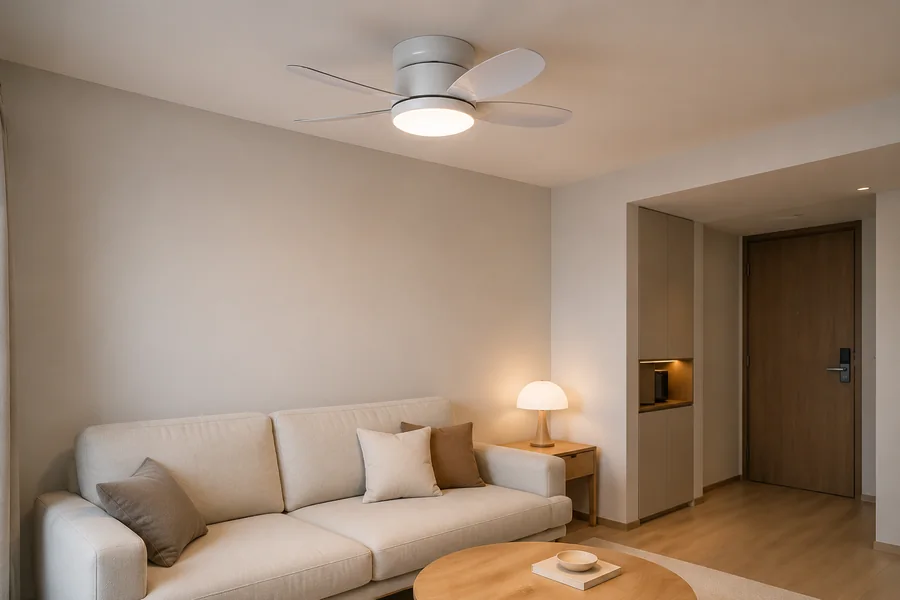
Low ceilings do not mean weak airflow, but they do change how airflow feels. A fan installed too close to people can feel harsh, while a fan that is too small may not move enough air through the room.
If you want to separate real airflow from simple diameter claims, compare ceiling fan CFM vs size before assuming a bigger fan will solve everything.
7-1. Bigger blades are not always the better answer
A larger blade span can help in some rooms, but not if the fixture becomes too deep or too visually heavy. In a low ceiling room, the best performance often comes from a balanced size rather than the widest model available.
7-2. Motor quality matters more when the fan sits close to people
Low rooms make small problems more obvious. If the motor hums, clicks, or wobbles, people will notice it quickly. Nebola often treats motor stability and blade balance as core choices, because a low ceiling gives less room for weakness to hide.
7-3. Low-speed comfort is the real daily test
Most people use low or medium speed in bedrooms and living rooms. A fan that only feels effective on high speed can be uncomfortable in a short room. The best low-ceiling fan should feel smooth, quiet, and useful at everyday speeds.
8. Lighting Choices for Low Ceilings
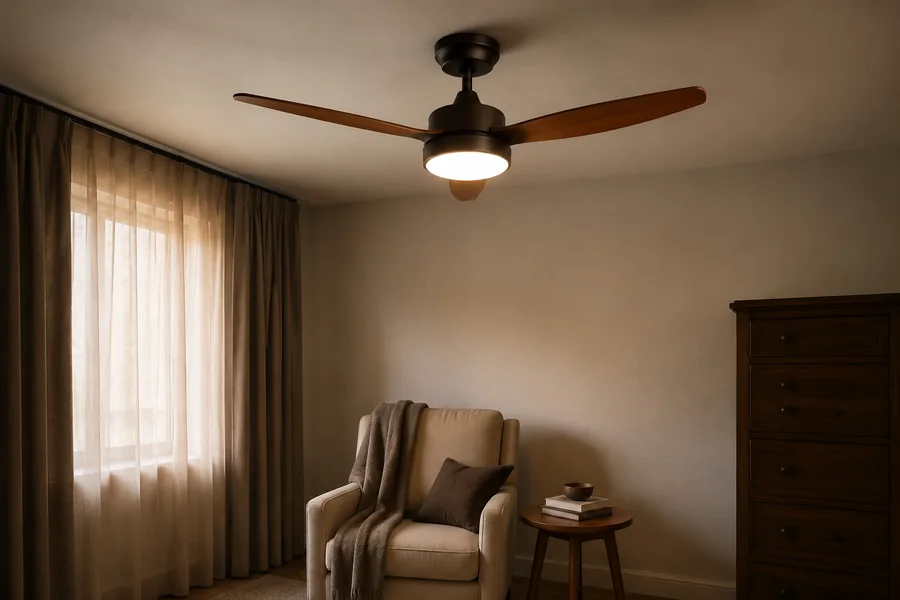
Light depth is one of the most overlooked parts of low-ceiling planning. A fan can fit the room physically and still feel wrong if the light kit hangs too far down or throws harsh light into a small space.
For a broader view of integrated lighting in short rooms, the flush mount ceiling fan with light guide is a useful reference because it shows how light and clearance should be designed together.
8-1. Keep the diffuser slim
A shallow LED diffuser usually works better than a deep decorative shade. It keeps the fixture cleaner and protects headroom. That matters most in bedrooms, apartments, and hallways where the ceiling already feels close.
8-2. Choose lighting based on room use
Bedrooms usually need softer light, while kitchens and work areas may need stronger illumination. The fan should match the room’s purpose instead of using one universal brightness level everywhere. Dimmable lighting is often the most flexible option.
8-3. Avoid heavy decorative light shapes
Large glass bowls or tall decorative shades can make a low room feel tighter. If the design is already busy, the fan should not add more visual weight. A compact light keeps the ceiling line simpler and the room easier to live in.
9. Common Mistakes to Avoid
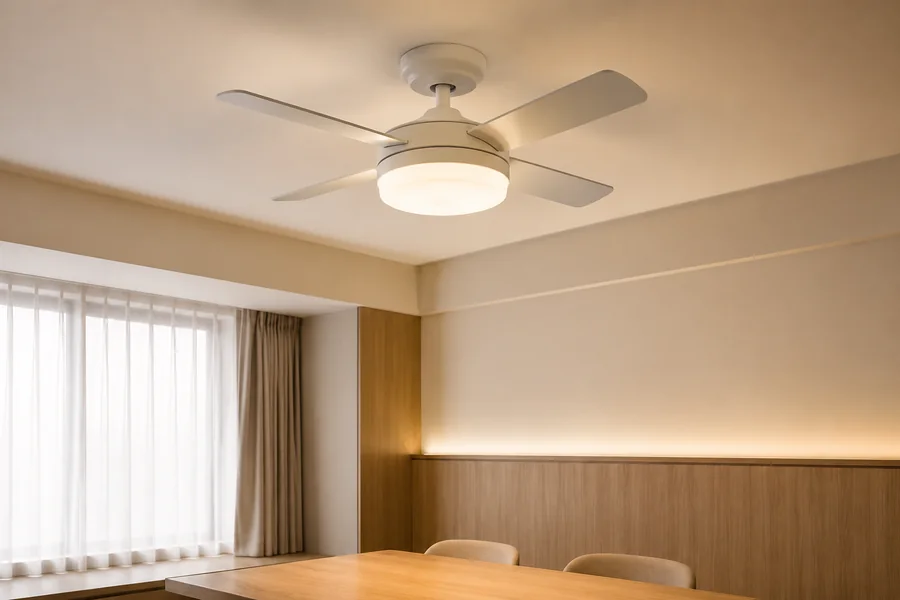
Most low-ceiling buying mistakes happen before installation, not after. Buyers see the style they want, but they forget to check the total fixture size, the room layout, or the way the light kit changes the profile.
The article on 10 common ceiling fan buying mistakes is useful if you want to avoid the most common sizing errors before ordering.
9-1. Choosing by square footage alone
Room area is important, but it is not enough. A small room with a low ceiling may need a very different fan from a similar room with a taller ceiling. Ceiling height changes the whole decision.
9-2. Forgetting furniture, doors, and walking paths
Some fans fit the room on paper but fail in daily use. A wardrobe door, cabinet top, bunk bed, or hallway path can make the fan feel too low even when the measurements seem fine. Always think about movement in the room.
9-3. Ignoring mounting style and product depth
A deep fan can ruin a low room even when the blade span is correct. This is why mounting style matters as much as diameter. If you are comparing products for multiple markets, the popular ceiling fan sizes in global markets guide also helps show how demand changes by room type and ceiling height.
10. Final Checklist Before You Buy
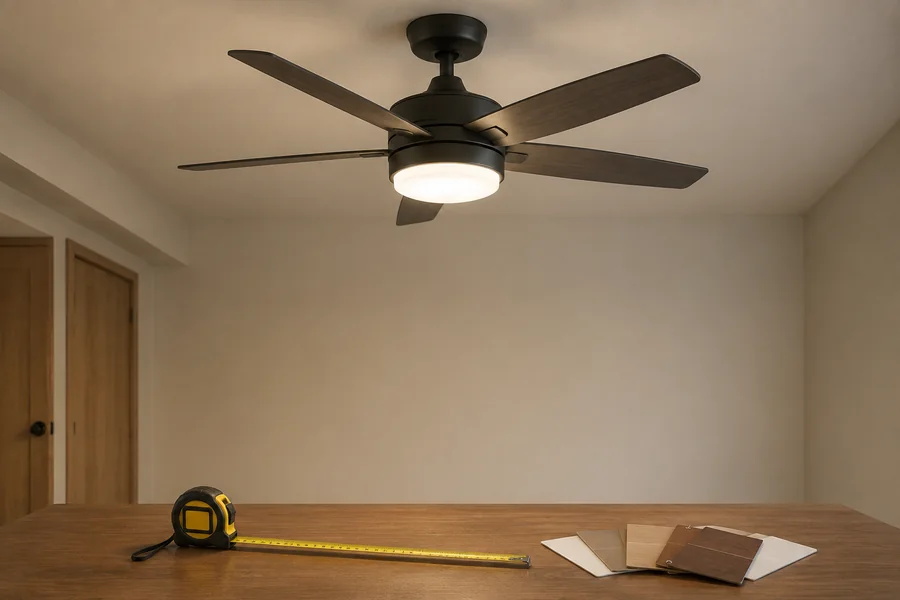
Before you choose a low ceiling fan, check the ceiling height, total drop, light depth, blade span, and the space below the fan. If any of those numbers are off, the room may feel cramped even if the fan looks good online.
For a bigger market view, the ceiling fan size guide and the ceiling fan size for different ceiling heights article together give a solid starting point before you make the final choice.
10-1. Start with the ceiling, not the style
Measure first, then choose. Decide whether the room needs flush mount, low profile, or another shallow installation style before you focus on finish or design. That keeps the buying process practical.
10-2. Match the fan to the room’s real use
Think about whether the room is for sleep, cooking, sitting, or walking through. The right low-ceiling fan should support that use without making the space feel tight. If you are buying for a project or a broader product line, Nebola usually recommends starting from the room layout before the blade count.
10-3. Narrow the choice with performance and clearance together
Once the ceiling height is known, compare size, lighting depth, airflow, and installation height side by side. A good low-ceiling fan should feel invisible in the best way: present enough to be useful, but not so low that it dominates the room.
Need the Right Ceiling Fan for a Home, Project, or Commercial Space?
Tell us your space type, ceiling height, airflow needs, lighting options, certification direction, and order plan. We’ll help match the right solution.
Get a QuoteFAQ
Is a flush mount fan always best for a low ceiling?
Yes, in many low rooms a flush mount fan is the safest and cleanest choice because it keeps the fixture close to the ceiling. But the best option still depends on blade span, light depth, and room layout.
Can a 42 inch fan work on a low ceiling?
Yes, a 42 inch fan can work well on a low ceiling if the body is slim and the total drop stays controlled. For many bedrooms and small living rooms, that size offers a good balance of air and clearance.
Is a bigger fan always a bad idea for low ceilings?
No, a bigger fan is not always a bad idea. In a wider low room, a larger fan can still work if the installation is shallow and the room has enough open space.
Do low ceilings need special light planning?
Yes, low ceilings need special light planning because the light kit can add extra depth. A slim diffuser or shallow LED design is usually better than a tall decorative shade.
Should I choose size before mounting style?
No, mounting style should usually come first in a low-ceiling room. Once you know whether the room needs flush mount or low profile installation, choosing the right blade span becomes much easier.
Can Nebola help with low-ceiling fan selection?
Yes, Nebola can help because low-ceiling fan selection is really a mix of size, clearance, airflow, and light depth. The right recommendation depends on the room, not just the product image.