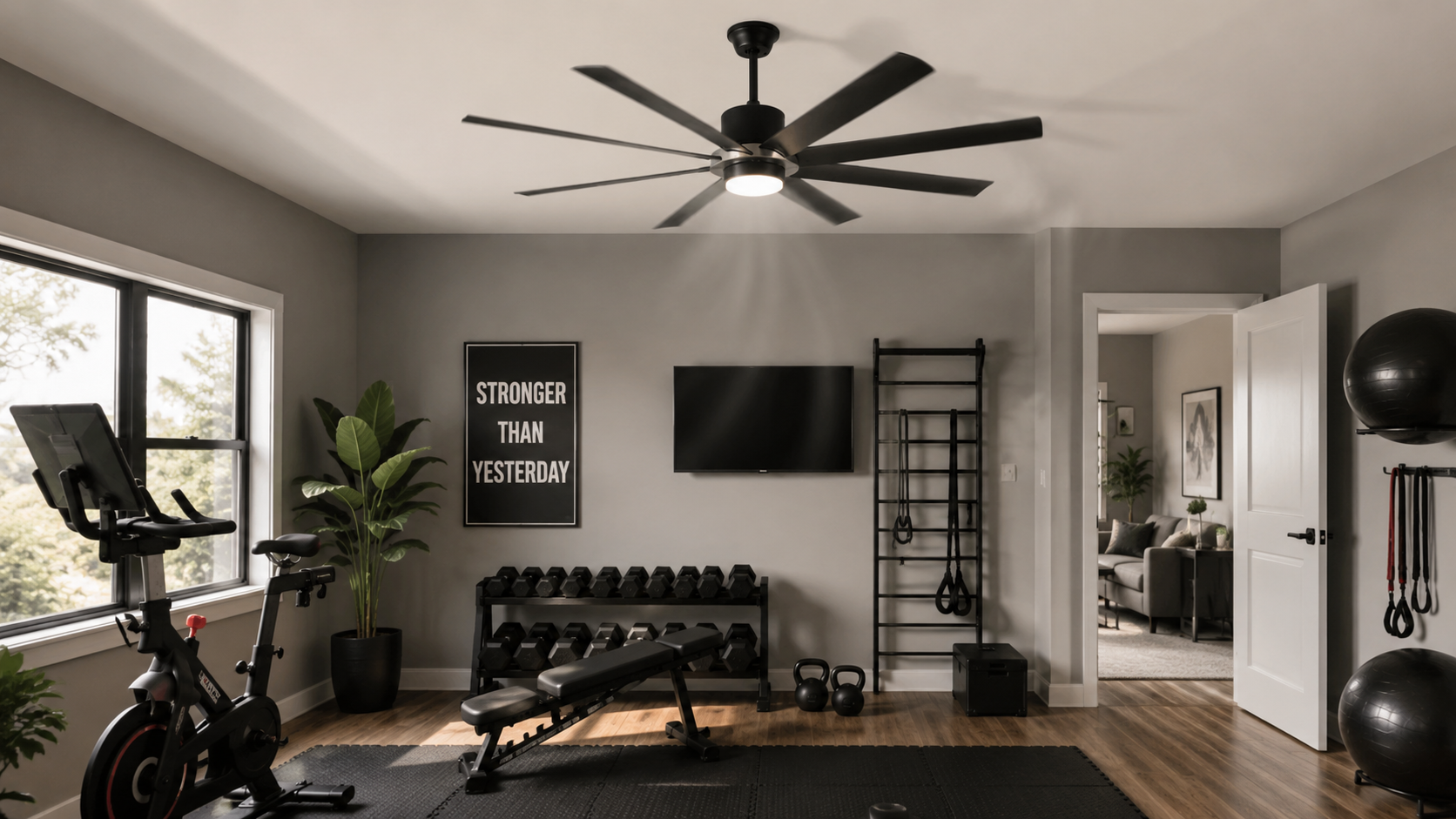


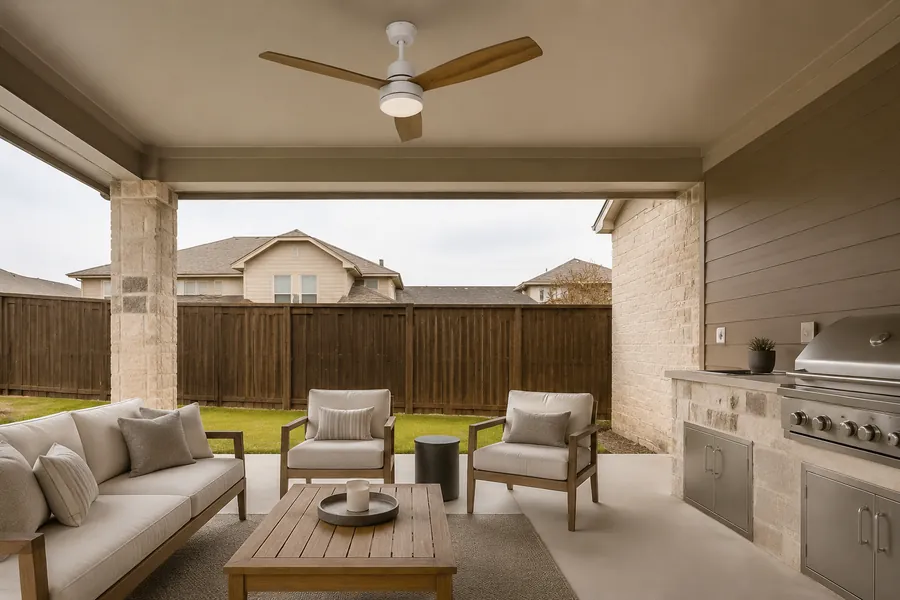
Outdoor fan size is not only about airflow. A patio ceiling fan size choice also has to fit the roof height, the way people sit, the amount of cover above the space, and how exposed the fan will be to wind, humidity, or rain. If you are still learning the basics, the broader ceiling fan size guide is a useful starting point before you narrow the choice for a patio, porch, or gazebo.
Patio, porch, and gazebo fans are often treated as one category, but they do not behave the same way. A porch ceiling fan may need to stay compact under a shallow roof. A gazebo ceiling fan may need a larger blade span because the seating area is more open. A covered patio may sit somewhere in between. As a ceiling fan light manufacturer, Nebola usually checks space type, ceiling height, and exposure level first, because the same size can feel perfect in one outdoor space and wrong in another.
1. Why Outdoor Ceiling Fan Size Is Different
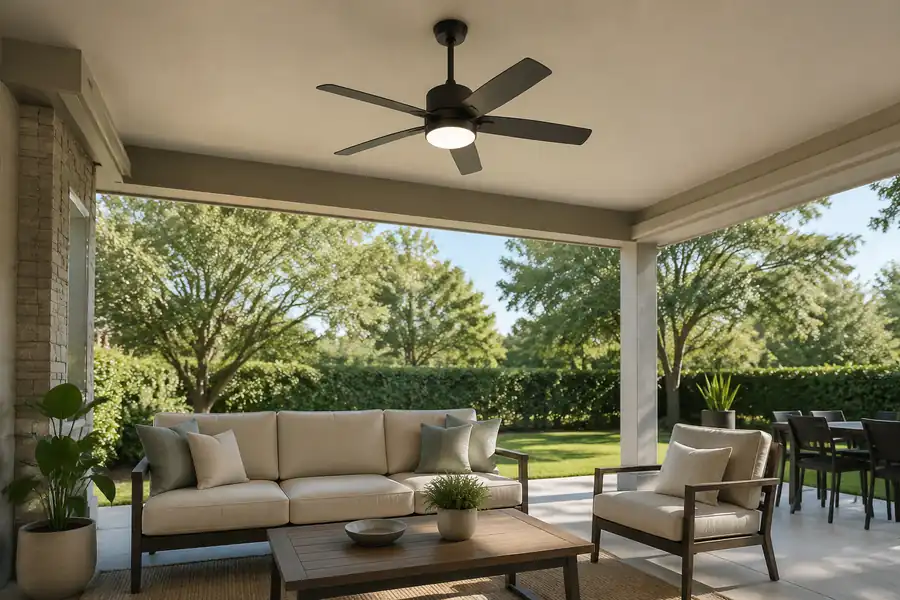
Outdoor ceiling fan size is different because the air does not move the same way outside as it does in a closed room. A breeze can disperse faster, the roof can be higher or lower than expected, and the fan may face more moisture and dust than an indoor model.
If you are comparing fan size as a first step, it helps to look at what ceiling fan size do I need and then apply the same logic to the covered outdoor space. The room-by-room thinking still matters, but the outdoor version has to respect weather exposure and mounting limits as well.
1-1. Outdoor spaces lose air faster
Air movement outdoors does not stay trapped the way it does in a bedroom or living room. That means size and placement need to work harder to create a comfortable zone. A fan that feels strong indoors may feel weaker once it is placed under a patio roof or open gazebo.
1-2. The roof is part of the sizing decision
The roof height above a patio or porch changes the total drop and the feeling of airflow. A low covered porch may need a compact fan, while a higher gazebo roof may support a larger blade span or a longer downrod. If you want a clearer height comparison, the ceiling fan size for different ceiling heights guide is still useful here.
1-3. Outdoor fans must fit the environment, not just the look
Style matters, but outdoor use is more demanding than an indoor room. A fan should be rated for the environment and should still look balanced once the furniture, roof height, and open edges are taken into account. This is why outdoor size planning should begin with the space itself.
2. Patio, Porch, and Gazebo Need Different Fan Logic
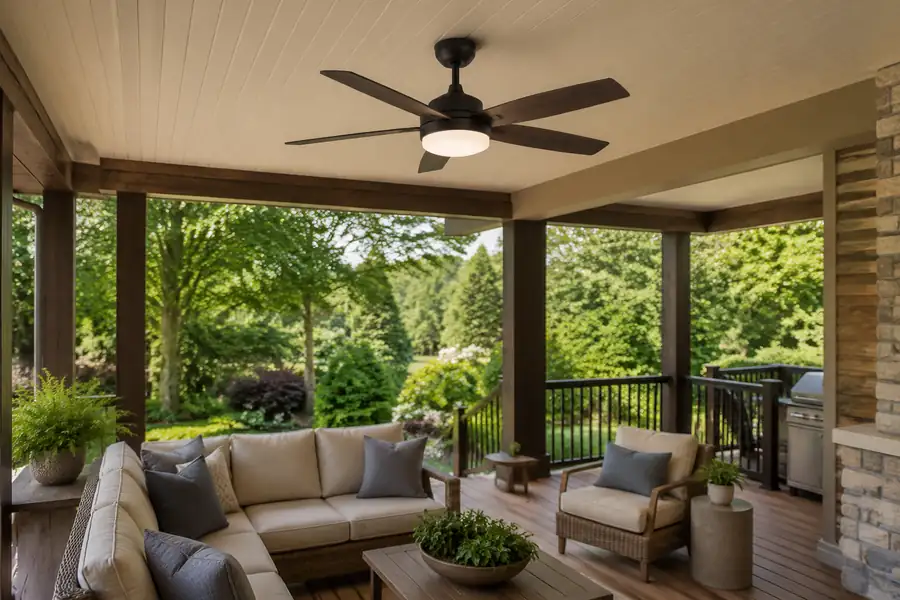
A patio ceiling fan size decision is usually driven by the seating layout and roof coverage. A porch ceiling fan often needs to stay slimmer because porches can be narrow. A gazebo ceiling fan may need a wider blade span because the structure is often more open and circular.
For a quick size comparison, the same logic used in 42 inch vs 52 inch ceiling fan still applies outdoors, but only after you adjust for roof height and exposure. Outdoor rooms are often more about coverage than simple square footage.
2-1. Patios usually need wider comfort coverage
Covered patios often serve as dining or lounge zones, so the fan should cover the main seating area without looking too heavy. A patio ceiling fan size between 52 inch and 60 inch often works when the roof is high enough and the furniture layout is open.
2-2. Porches usually need a cleaner, smaller profile
Porches are often narrow and close to walls, columns, or entry paths. That means a porch ceiling fan should usually stay more compact and visually simple. A smaller fan can feel better here than a larger one because the goal is comfortable movement without crowding the space.
2-3. Gazebos often need a rounder layout approach
A gazebo ceiling fan should match the shape of the structure, not just the total floor area. In a circular or octagonal gazebo, the fan should sit at the centre of the seating pattern and move air evenly across the table or chairs below. That often pushes the choice toward a wider or more decorative fan.
3. How to Measure Outdoor Ceiling Height and Clearance
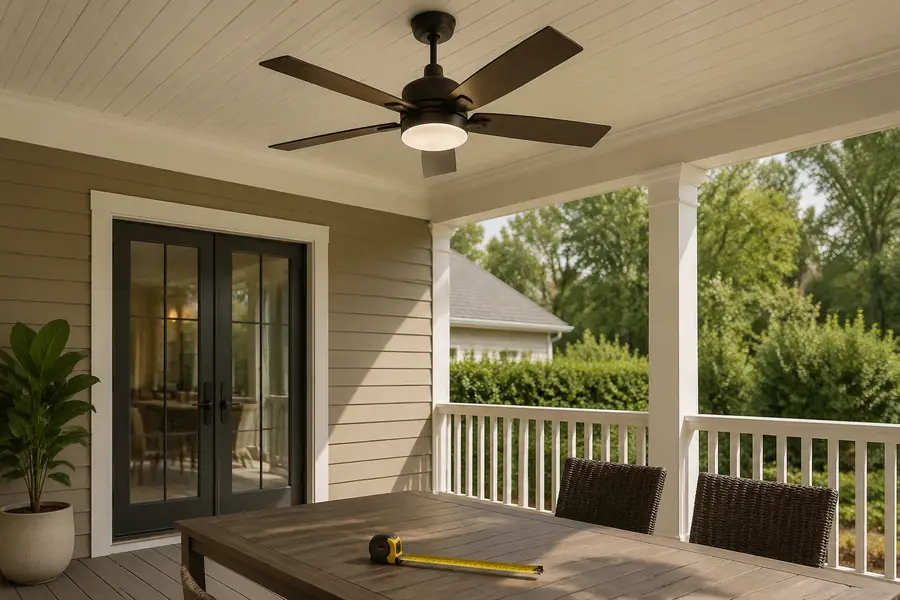
The best outdoor ceiling fan size starts with measuring the real structure, not the idea of the structure. Covered outdoor spaces often have beams, sloped trims, ceiling panels, lighting, and hanging features that change the usable height.
If you are comparing outdoor height against compact indoor logic, the ceiling fan size for low ceilings guide is useful because it shows how total fixture depth affects clearance. Outdoor roofs may be taller, but the same clearance logic still matters.
3-1. Measure the finished ceiling point
Measure from the finished floor to the actual fan location, not to the highest point of the roof. On a covered patio or gazebo, the mount point may sit lower than the roof ridge, and that difference changes the final fan height.
3-2. Check furniture and walking space
Outdoor fans should not interfere with chairs, table movement, entry doors, or tall decorative items. A fan that fits on paper can still feel too low once the table is in place. Always check the area where people actually sit and stand.
3-3. Decide whether the roof needs a short or longer drop
Some outdoor rooms need a short mount because the roof is already low. Others need a downrod because the roof is high and the fan would otherwise sit too far above the people below. The fan should feel present in the space without becoming the visual focus.
If you are still unsure how size and installation errors happen in normal rooms, the complete guide to avoid buying mistakes gives a useful baseline before you apply the extra outdoor checks.
4. Common Outdoor Fan Sizes and When They Make Sense
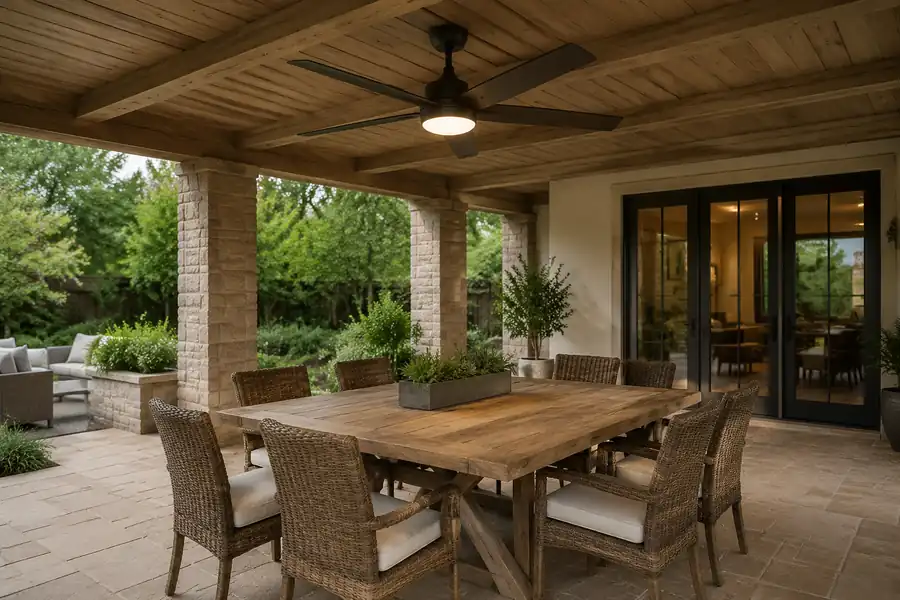
Outdoor fan sizes usually follow the same general pattern as indoor fans, but the right option depends more on the roof and seating zone. Smaller patios can work with compact fans, while wide covered lounges or gazebos often need larger diameters.
For buyers comparing room scale and airflow, the guides on best small room ceiling fan size and living room ceiling fan size still help as size benchmarks, even though outdoor spaces are more open.
4-1. 36 to 42 inch fans suit compact porches
A 36 to 42 inch fan often fits a smaller porch or narrow covered entry where the roof is close and the main goal is gentle air movement. This size range keeps the fixture from feeling heavy while still giving enough comfort for a small sitting area.
4-2. 52 inch fans suit many patios
A 52 inch patio ceiling fan size is often the most flexible option for average covered patios. It gives a better balance between coverage and visual scale, especially when the furniture sits around a dining table or lounge set. This is one reason the size is so common in both outdoor and indoor living spaces.
4-3. 60 inch and larger fans suit bigger gazebos and outdoor lounges
For a larger gazebo or wide covered patio, a 60 inch or bigger fan may be more effective. The wider blade span can move air across a broader area and help cover a seating ring or dining zone. If the space is especially large, the why large rooms need bigger ceiling fans guide gives a helpful comparison.
When the outdoor seating area behaves more like a big social room, the logic in the best master bedroom and large bedroom ceiling fan size guide can also help as a rough size reference, because it shows how larger comfort zones change the fan choice.
5. Wet, Damp, and Covered Location Ratings Matter
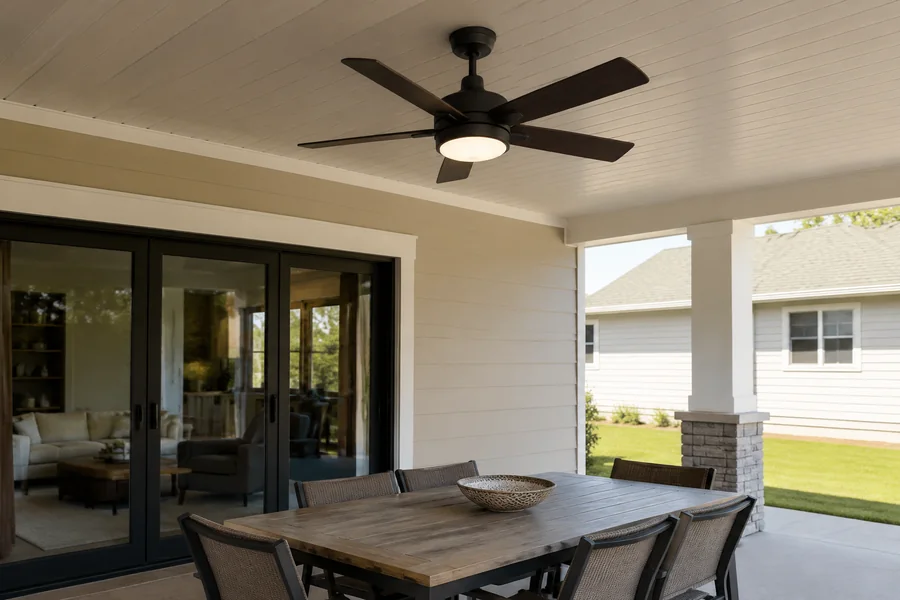
Outdoor ceiling fan size is only one part of the decision. The fan also has to match the amount of moisture exposure, because a covered patio is not the same as a fully sheltered porch or an open gazebo edge.
The eCFR ceiling fan test procedure is useful here because it lists measurable fan attributes such as airflow, blade span, blade RPM, power consumption, and the distance between the ceiling and the lowest point of the fan blades. Outdoor buyers should still confirm damp or wet location suitability separately with the product label and supplier documents.
5-1. Covered areas still need the right rating
Even if rain does not hit the fan directly, outdoor air can still carry humidity and dust. A covered patio or porch should use a fan that is designed for that environment, not just a standard indoor model. The product should match the exposure level of the space.
5-2. Gazebos may need more protection than expected
A gazebo ceiling fan may look sheltered, but wind-driven moisture and open sides can still affect the fixture. The rating should match how exposed the structure really is. That is why a pretty fan is not enough if the location is not suitable.
5-3. Outdoor lighting should stay practical
If the fan includes light, the diffuser and housing should also suit the outdoor environment. A covered patio may need simple, easy-to-clean lighting, while a gazebo may need softer light that does not feel harsh during evening use. The light should support the space rather than overpower it.
Need the Right Ceiling Fan for a Home, Project, or Commercial Space?
Tell us your space type, ceiling height, airflow needs, lighting options, certification direction, and order plan. We’ll help match the right solution.
Get a Quote6. Outdoor Airflow and CFM Need a Different Reading
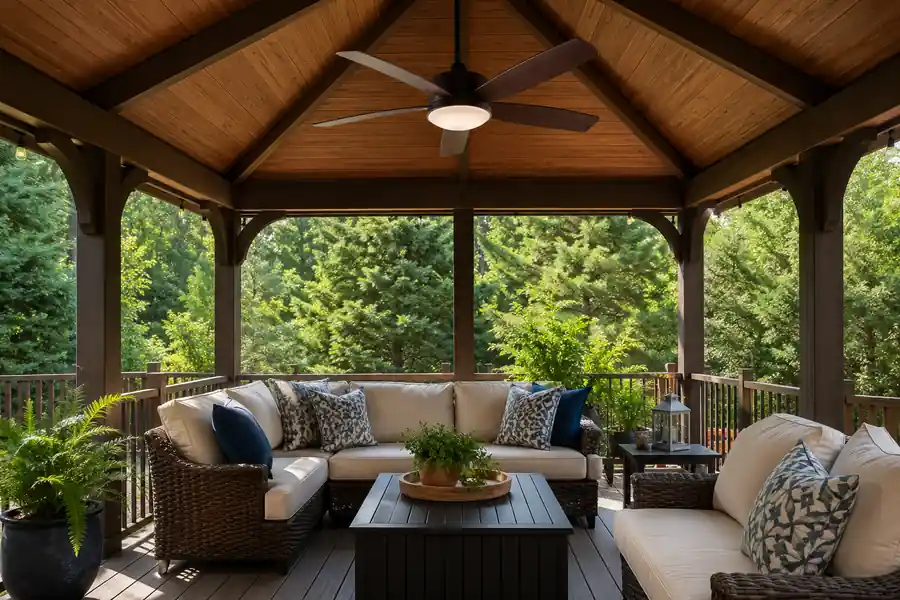
Outdoor airflow works differently because air escapes more easily. That means the fan should be sized to move useful air across the seating zone, not just to claim a high number on a spec sheet.
If you want to compare airflow claims more carefully, the article on ceiling fan CFM vs size is still useful outdoors. A larger blade count or bigger diameter does not automatically create better comfort on a patio or porch.
6-1. Airflow should reach the seating area
The main outdoor comfort zone is usually the table, sofa, or lounge chairs. The fan should move air where people sit, not only above the roof line. This is especially important on patios where the roof is higher than a normal room.
6-2. More blades do not always mean better comfort
Some outdoor buyers think more blades will automatically create more breeze. In practice, blade pitch, motor strength, and mounting height matter just as much. The does a bigger ceiling fan improve airflow article explains why raw diameter alone does not tell the full story.
6-3. Quiet comfort still matters outside
Outdoor fans do not need to be silent in the same way as a bedroom fan, but they should still run smoothly. A noisy motor can be distracting on a quiet porch or evening gazebo. Good airflow should feel like background comfort, not a mechanical interruption.
7. Mounting Type, Slope, and Support Are Critical Outdoors
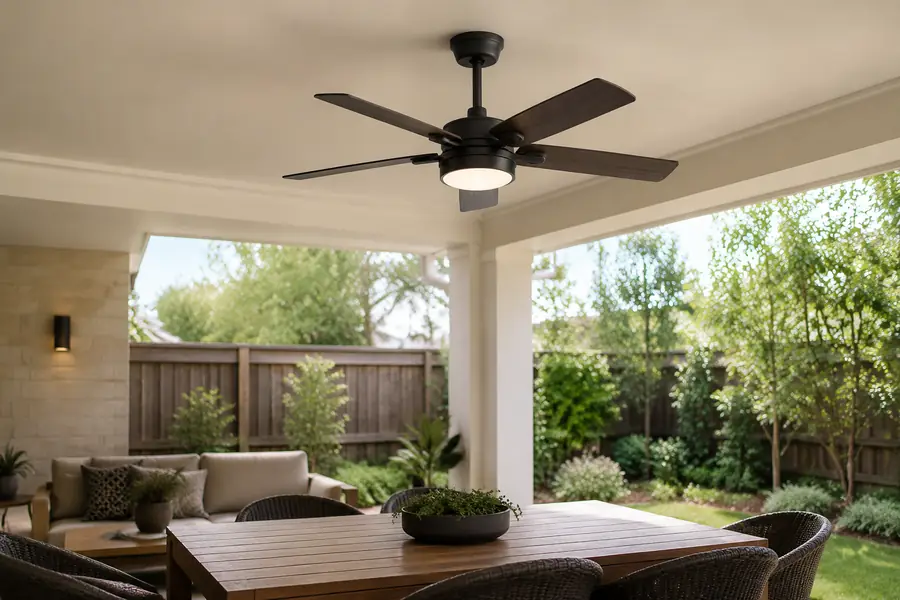
Outdoor roofs often have more slope, more structural variation, or more height change than indoor ceilings. That makes mounting type a major part of the buying decision, not an afterthought.
If you are comparing the mounting logic itself, the ceiling fan mounting types guide explains why flush mount, downrod, and angled mounting solve different ceiling problems. For a sloped gazebo or porch roof, the sloped ceiling fan installation guide is also useful before choosing the final model.
7-1. Flush mount works best only when the roof is low and flat
If the patio roof is low and flat, a flush mount may be the safest and neatest choice. It keeps the fan close to the ceiling and helps protect clearance. But it is not the answer for every outdoor structure.
7-2. Downrods are useful for high covered roofs
If the roof is high, a short or medium downrod can bring the blades closer to the seating zone. This often makes the fan more effective and more balanced visually. The downrod ceiling fans guide is helpful when you want to think through the drop height before ordering.
7-3. Sloped roofs may need an angled adapter
A porch or gazebo with a sloped roof may need special hardware so the fan hangs level. Without that, the fan may tilt or clear the ceiling unevenly. The mount should always follow the structure, not fight it.
8. Product Examples for Patios, Porches, and Gazebos
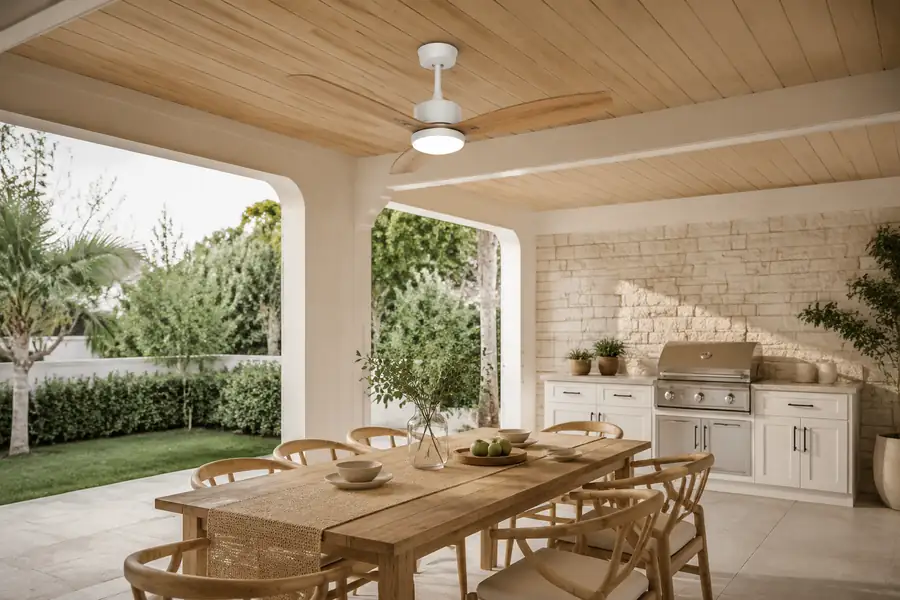
The product choice should follow the space. A small porch may need a compact option, while a larger patio or gazebo may need a bigger decorative or wood-tone fan. The examples below show a range of directions that fit outdoor and covered semi-outdoor spaces.
For buyers comparing outdoor demand with broader size planning, the article on popular ceiling fan sizes in global markets can help show why 52 inch, 60 inch, and larger formats remain common in covered space planning.
8-1. A covered patio option with a clean wood tone
A Outdoor Ceiling Fans With Lights Oak White works well as a covered patio reference because it combines airflow, light, and a finish that suits relaxed outdoor dining or lounge areas.
8-2. A simpler covered porch direction
A 52 Inch Wood Ceiling Fan No Light Supplier can suit a porch that already has separate lighting and needs a cleaner ceiling profile. This is often a practical path for a porch ceiling fan where the main goal is breeze and visual simplicity.
8-3. A larger gazebo or outdoor lounge option
A Big 66 Inch Wood Ceiling Fan Light DC Motor Remote OEM can be a better fit for a larger covered gazebo or wider outdoor lounge. When the space is broad, a larger fan can help keep the airflow more even across the seating area.
8-4. A slim profile option for covered low roof areas
An Ultra Thin Ceiling Fan White Modern 52 Inch LED DC Motor can be considered when a covered outdoor-adjacent space needs a cleaner profile and lower visual weight. For a low porch ceiling or enclosed patio transition area, total fixture depth can matter as much as blade span.
8-5. A larger airflow direction for covered commercial spaces
A Large Ceiling Fan Industrial Warehouse 70 Inch LED gives a useful reference for bigger covered structures where the comfort zone is wide and airflow demand is higher. In these cases, buyers should confirm mounting support, exposure rating, and local installation requirements before ordering.
9. Common Outdoor Buying Mistakes
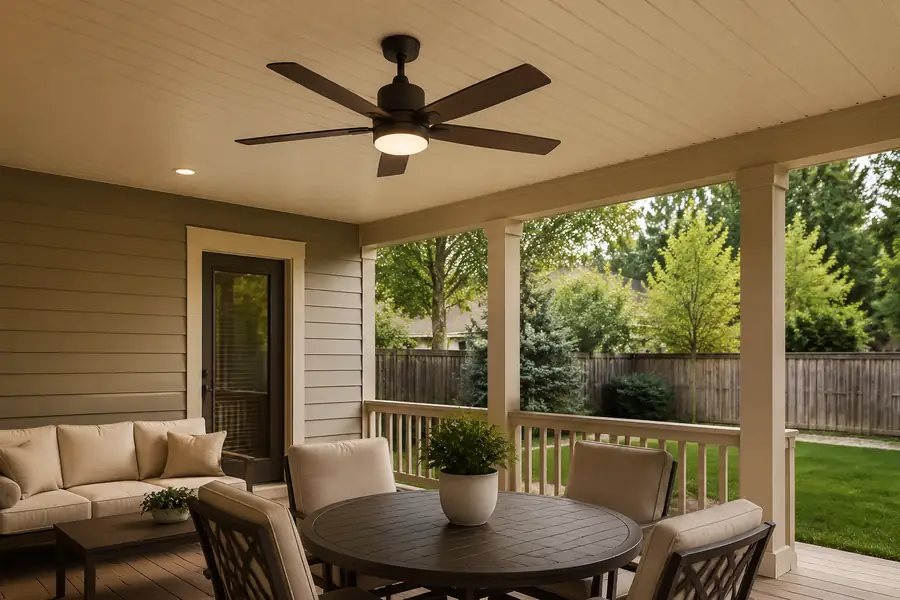
Outdoor buyers often choose by style first and rating later. That can create problems, especially when a covered patio or gazebo needs a specific size, mounting method, or moisture rating.
The guide on 10 common ceiling fan buying mistakes is useful because many of the same mistakes happen outdoors: wrong size, wrong height, wrong lighting depth, and wrong installation assumptions.
9-1. Picking a fan without checking exposure level
Not every outdoor-looking fan is actually suitable for a covered patio or gazebo. The fan should match the weather exposure, not just the decor style. This is a common mistake in semi-outdoor spaces.
9-2. Ignoring the roof height and seating layout
A fan may look right in a product photo but still fail if it sits too high above the chairs or too low over the table. Outdoor clearance should be checked with the actual furniture layout in mind. The ceiling fan size for different ceiling heights guide helps make that kind of check more precise.
9-3. Buying one size for every outdoor space
A narrow porch, medium patio, and large gazebo do not need the same fan size. The smarter approach is to build the choice around each space instead of trying to force one model into every setting. That is also why how a ceiling fan importer can build a size range without overstocking matters for B2B buyers.
For hospitality patios, resort balconies, and covered dining areas, the same mistake can scale across many rooms. The hotel ceiling fan selection guide is a useful reference when outdoor comfort has to feel consistent across a project instead of just one home.
10. Final Outdoor Fan Checklist
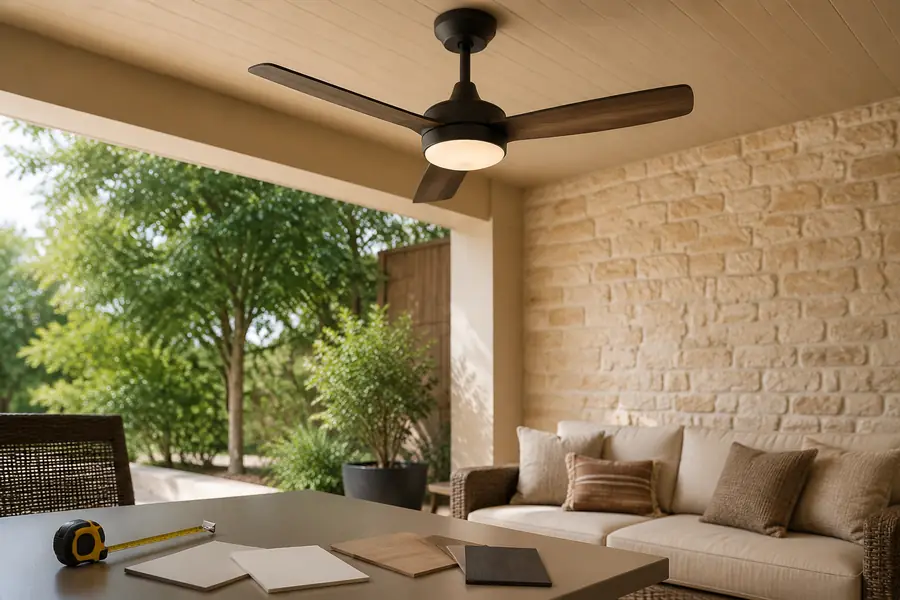
Before you choose an outdoor fan, check the structure, the roof height, the seating area, the moisture exposure, and the total fixture height. If the patio or porch is small, keep the profile slimmer. If the gazebo is large, look for a bigger blade span and better coverage.
If you want a broader selection framework, the ceiling fan size guide and the ceiling fan size trends 2026 article both help explain why size, comfort, and layout are now linked more closely than before. For low covered porches, the ceiling fan size for low ceilings guide is also useful as a clearance check.
10-1. Start with the space type
Decide whether the fan is for a patio, porch, or gazebo first. That single choice changes the ideal size, height, and rating. It also helps you decide whether a compact or larger fan will feel balanced.
10-2. Match the fan to the real environment
Choose a fan that suits covered, damp, or more exposed conditions. A fan should not only look good outdoors. It should also work safely and comfortably in the actual setting where it will be installed.
10-3. Check size, height, and mounting together
Do not treat outdoor ceiling fan size as a one-number decision. The right choice combines blade span, ceiling height, downrod length, mounting type, and exposure level. When those parts line up, the fan usually feels right from the start.
Need the Right Ceiling Fan for a Home, Project, or Commercial Space?
Tell us your space type, ceiling height, airflow needs, lighting options, certification direction, and order plan. We’ll help match the right solution.
Get a QuoteFAQ
Does an outdoor ceiling fan need a bigger size than an indoor fan?
No, not always. An outdoor ceiling fan size depends more on the covered area, roof height, and seating layout than on the fact that it is outside. Some patios work best with 52 inch fans, while larger gazebos may need 60 inch or bigger.
Is a porch ceiling fan usually smaller than a patio fan?
Yes, a porch ceiling fan is often smaller because porches are narrower and may have lower roofs. A compact flush mount or smaller blade span can keep the space comfortable without making the ceiling feel crowded.
Can a gazebo ceiling fan use a downrod?
Yes, a gazebo ceiling fan often uses a downrod if the roof is high enough. The rod helps place the fan in a more useful airflow zone and keeps the visual proportion balanced under the roof.
Do outdoor fans need special ratings?
Yes, outdoor fans need ratings that match their exposure level. A covered patio, damp porch, and more open gazebo do not all face the same moisture conditions. The product should match the environment before it matches the style.
Is a 52 inch fan good for a covered patio?
Yes, a 52 inch fan is often a good starting point for a covered patio because it gives a balanced mix of coverage and visual scale. If the patio is much larger, a 60 inch or bigger option may be better.
Can Nebola help with outdoor fan sizing?
Yes, Nebola can help because outdoor ceiling fan sizing depends on the space type, height, rating, and airflow goal. The best recommendation is the one that fits the patio, porch, or gazebo as it actually exists, not just as it looks in a photo.